
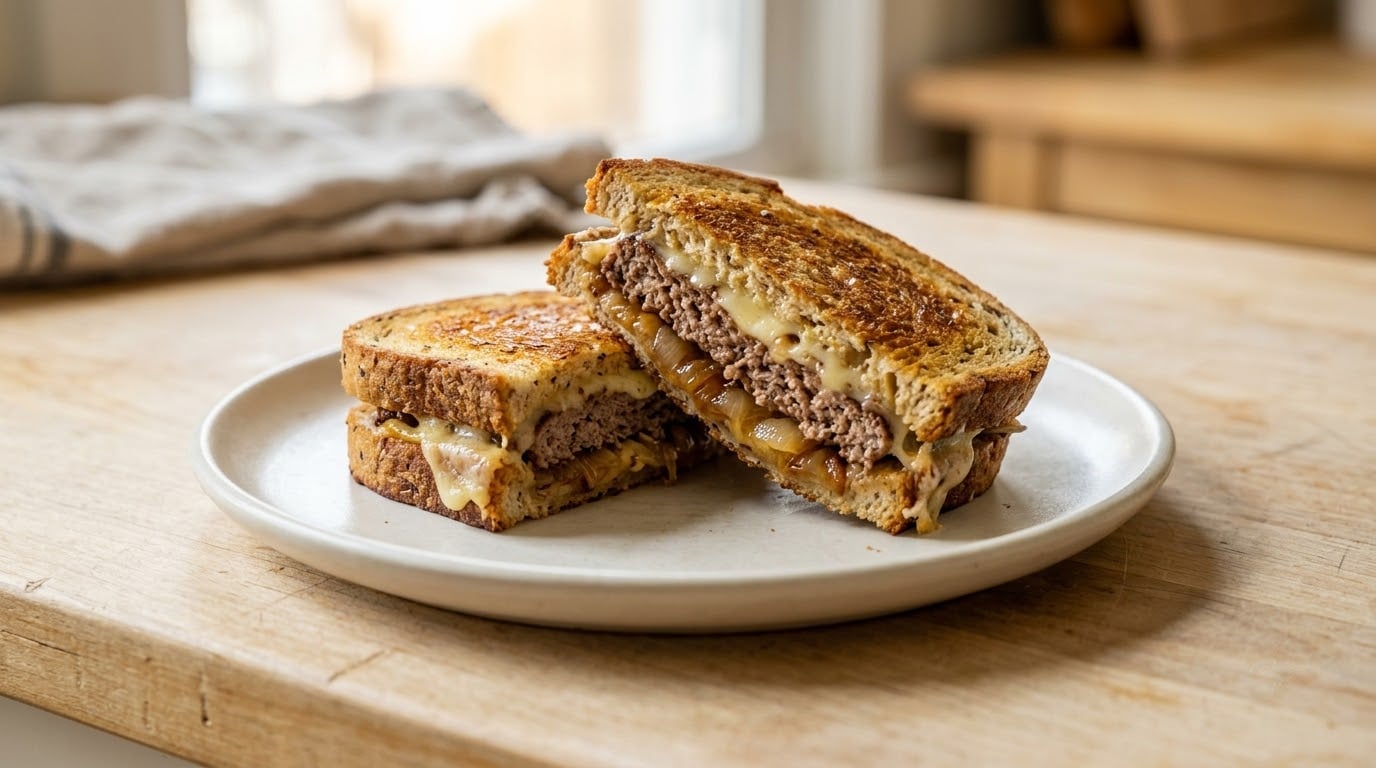
A patty melt is thin seasoned beef, caramelized onions, and melted cheese stacked between slices of buttered rye or sourdough bread, then griddled on both sides until the bread is crisp and the cheese runs. Here is how to make a patty melt at home in about 30 minutes with one skillet, no griddle and no fancy press required.
It is a forgiving sandwich, but four things decide whether it turns out well: patties thin and even, onions taken all the way to caramelized, cheese on both sides of the meat, and the assembled sandwich pressed in a buttered skillet. Skip any one of those and you end up with a soggy cheeseburger instead.
Start the onions first. They need 20 to 25 minutes of patient cooking, and everything else fits inside that window.
Table of Contents
What You Need
These quantities make two sandwiches, which is the practical batch for a cast iron skillet or a 10-inch stainless pan.
- 8 ounces ground chuck, 80/20 fat
- 1 large yellow onion, sliced into thin half-moons
- 4 slices rye, marble rye, sourdough, or Texas toast
- 4 to 8 slices cheese, Swiss or a Swiss and sharp cheddar blend
- 3 tablespoons butter, plus a tablespoon of oil for the pan
- 2 tablespoons mayonnaise, for the sauce
- 1 tablespoon ketchup
- 1 tablespoon sweet pickle relish
- 1 teaspoon yellow or Dijon mustard
- 1 teaspoon Worcestershire sauce
- 1/2 teaspoon garlic powder
- Kosher salt and black pepper
For the sandwich itself you need a wide skillet, a thin metal spatula, and tongs. A second heavy skillet, a foil-wrapped brick, or a small plate works as a press. That is the whole equipment list. No griddle, no double burner, no restaurant equipment.
A few substitutions worth knowing. Sourdough and marble rye stand in for plain rye without any problem, and marble rye draws the most praise from the sandwich crowds online because the crust holds up to the onions. Monterey Jack, provolone, and gruyere all melt well; a blend of Swiss plus sharp cheddar gives you the diner flavor and the stretch. If you like griddle cooking, our guide to making a cheesesteak at home covers the same thin-slices-and-hot-pan thinking in more detail.
Step-by-Step: How to Make a Patty Melt
1. Heat the Skillet and Prep the Bread
Set a wide skillet over medium heat and add the tablespoon of oil. While it warms, mix the sauce: stir the mayonnaise, ketchup, relish, mustard, Worcestershire, and garlic powder together in a small bowl with a pinch of salt and pepper. Thousand Island dressing works as a one-step shortcut if you have no relish.
Butter one side of each bread slice, about a teaspoon per slice. You worked this out before the beef is ready on purpose, because the bread waits and the beef will not. You will know the skillet is ready when a drop of water skitters and vanishes instead of sitting on the surface.
2. Form Thin, Uniform Patties
Divide the beef into two loose mounds, roughly 4 ounces each. Do not pack or knead the meat. Handle it as little as possible and press each one into a patty about a quarter inch thick, shaped into a circle slightly wider than your bread. That extra diameter is the whole trick: the overhang gets seared and turns crisp-edged, which is the signature look of a patty melt.
If you want the flatter, diner-style version, use two thin patties per sandwich instead of one. Most home cooks who double up report the thin patty is what keeps the sandwich from feeling bready in the middle.
3. Sear the Beef Until Well-Browned
When the pan is hot, lay the patties down and press them flat for about ten seconds, then leave them alone. Moving them early tears the meat and releases fat into the pan instead of browning it.
Season with salt and pepper only after the first side has browned, so the crust stays crisp. Cook the first side until deeply brown and crusted, roughly 3 minutes at medium-high heat, then flip and cook 2 to 3 minutes more. The USDA recommends a minimum internal temperature of 160°F for ground beef, so check the thickest part with an instant-read thermometer. A clear thermometer read beats guessing, and because the patty cooks a second time while it toasts, pull it the moment the thermometer hits 160°F rather than cooking it further.
4. Cook the Onions Until Caramelized
Slide the patties out onto a plate. Add the onion slices to the same skillet with a pinch of salt and a splash of water if the pan looks dry, then turn the heat down to medium.
Give them a stir every minute or two and let them soften, then turn golden, then deep brown and sweet. That takes 20 to 25 minutes, and there is no shortcut. Crowded onions steam in their own liquid and turn limp and gray instead. If you are short on time, cook them in a separate pan alongside the beef.
5. Toast the Bread and Melt the Cheese
Lower the heat to medium-low. Wipe out the excess beef fat, leaving just a thin film. Put two bread slices in the pan buttered side down and toast until golden, about 1 to 2 minutes. Flip them, lay 2 slices of cheese on each, and top one of them with a cooked patty and its onions right away so the residual heat starts the melt.
Set the second toasted slice on top, buttered side up, and add the remaining cheese and second patty if you are doubling up. Press the sandwich with a second skillet or a foil-wrapped brick and cook 1 to 2 minutes per side until the cheese is fully liquid and the bread is crisp all the way through.
6. Assemble and Serve the Patty Melt
Lift the sandwich out with the spatula and tongs and rest it on a cutting board for one minute, then cut it on the diagonal with a serrated knife. A clean cut shows the thin patty, the cheese layer, and the onion color, which is exactly the photo diners take.
Eat it right away while the bread still crunches. A patty melt that sits for ten minutes goes limp, and if you want to know the mechanics behind that, why tomatoes make sandwiches soggy explains the same moisture problem clearly.
What the Finished Patty Melt Should Look Like
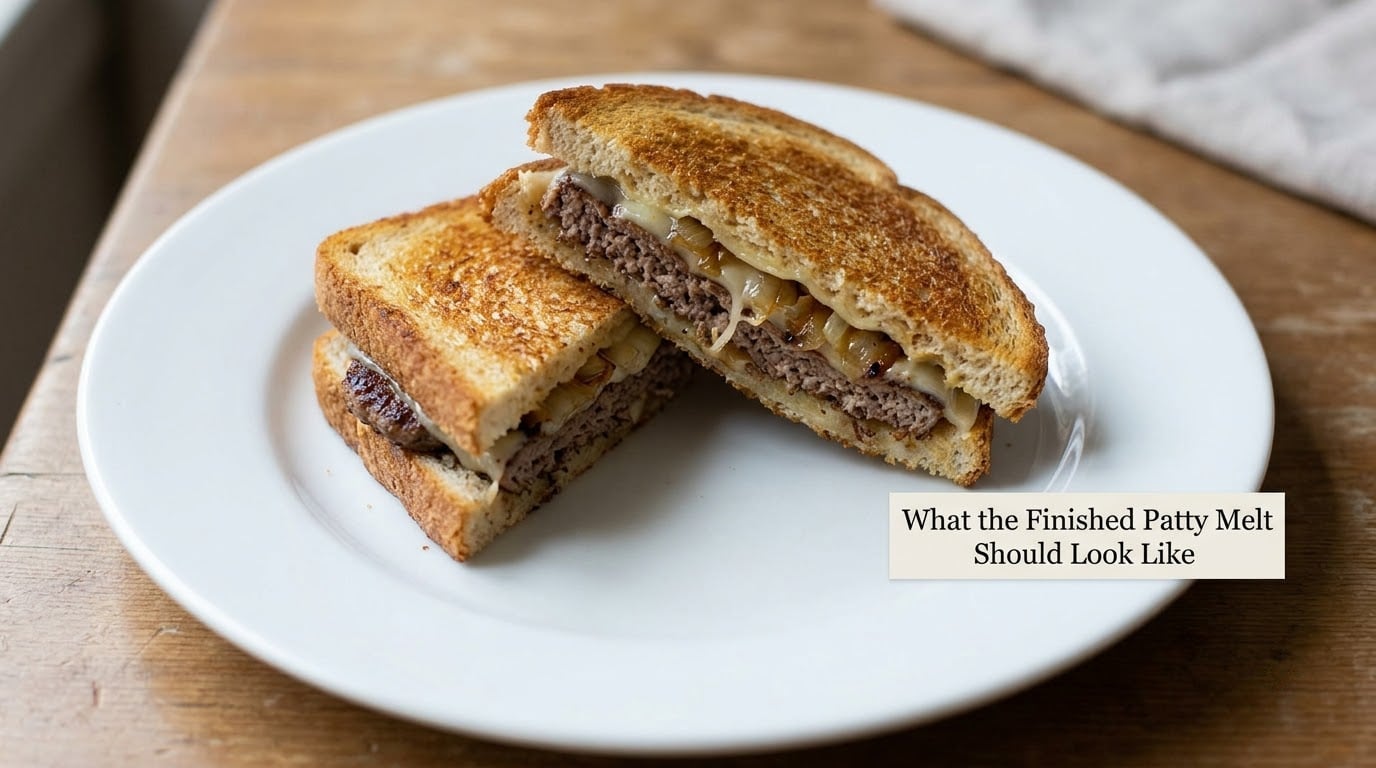
Look for four things: a patty you can see the edges of, cheese that has actually melted rather than softened, visible caramelized onion, and a golden surface with butter still shining. If you see none of these, something in the last two steps went wrong rather than the first.
Common Mistakes and Helpful Tips
Uneven patties. A thick center stays raw and a thin edge burns. Weigh them if you have a scale, or compare them against each other by eye before they hit the pan. The reason a patty melt falls apart in the sandwich is usually that it was thicker in the middle than the bread can support, which is also why the technique in keeping an overstuffed sandwich together applies here.
Beef that looks underdone. Usually a fat color issue, not a temperature issue. Lean 90/10 patties need a longer sear than an 80/20 patty before they take on color. Press a finger into the cooked side: it should spring back, and the juices should run clear.
Soggy bread. The main causes are assembling too early, loading too much filling, or toasting over high heat. Toast the bread first and assemble immediately before the beef goes in, and press the finished sandwich so the cheese and onion juices are squeezed out rather than left to steam inside.
Cheese that will not melt. Too-thick patties block the heat, and a screaming-hot pan scorches the bread before the cheese softens. Drop to medium-low for the toast stage, use thin slices rather than a thick block, and put the cheese on the bread, not the beef, so it contacts the heat directly.
Overcrowding the skillet. Two patties fit comfortably in a 12-inch cast iron. Crowding drops the pan temperature and traps steam, and the beef browns unevenly. Cook in batches for four or more sandwiches.
Onions that boil instead of browning. They release water as soon as they hit the pan. Keep the heat medium, leave room between the slices, and keep stirring. Twenty-five minutes is normal.
Cooking the beef twice. The patty sears, then toasts again in the sandwich. Pull it as soon as the thermometer reads 160°F, and the toast stage finishes the job.
Frequently Asked Questions
What kind of ground beef is best for a patty melt?
Ground chuck at 80/20 or 85/15 fat is the standard choice, because the extra fat gives you a browned crust and keeps the patty juicy through the second cook in the sandwich. Lean 90/10 works but sears less quickly, so give it a little more time on the first side. Pre-formed frozen patties are an option too, since they hold their shape without shrinking.
How do I know when the beef patty is fully cooked?
Check with an instant-read thermometer in the thickest part. The USDA recommends a minimum internal temperature of 160 F for ground beef, and that is the number to hit every time. The patty toasts again inside the sandwich, but do not plan around that second cook, since a thin patty loses heat fast. Press the cooked side with a finger as a second check: it should spring back and the juices run clear.
Can I make a patty melt without a griddle?
Yes, and most home cooks never use one. A 10-inch stainless skillet or a 12-inch cast iron skillet on a stovetop reproduces the diner result, because the real requirements are a wide hot surface and a heavy press on top of the sandwich. A heavy pan, a foil-wrapped brick, or a second skillet stands in for a press.
Should I add onions to a patty melt?
Traditional patty melts include grilled onions, and most cooks treat them as essential rather than optional. Slice one large onion thin and cook it in the same skillet for 20 to 25 minutes until deep golden and sweet. Caramelized onions add moisture, so drain them well and press the sandwich to keep the bread from going soft.
How do I store and reheat leftover patty melt sandwiches?
Store the components separately in the fridge for up to 3 to 4 days, since an assembled melt turns limp overnight. To reheat, put the sandwich in a dry skillet over medium-low heat with a splash of butter on the outside, and press it. Two to three minutes per side brings the cheese back to melted and re-crisps the bread. The microwave will warm it but leave the bread soft.
Conclusion
Start with the onions, since they take the longest, then mix the sauce while they cook. When the pan is hot, press the beef into patties a little wider than your bread and leave them alone until deeply browned.
Everything after that is a short sequence: toast the buttered bread, lay on cheese, add the patty and onions, cover, and press until the cheese is liquid and the bread is golden. Cook the beef to 160 F, take it out as soon as the thermometer says so, and serve the sandwich immediately. That is how to make a patty melt that crunches on the first bite instead of sagging.