
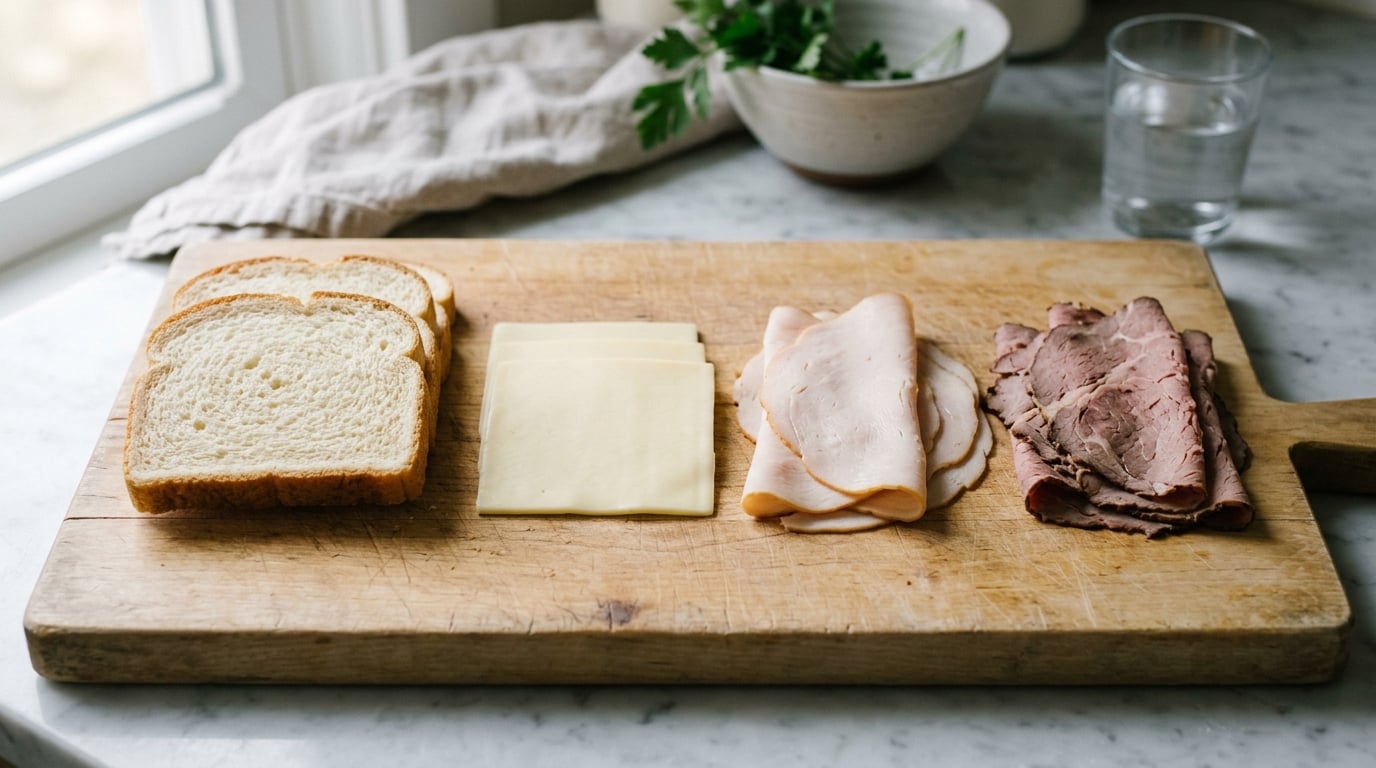
American, cheddar, or Swiss? Pick American when the melt is the point, cheddar when you want actual cheese flavor, and Swiss when the filling is mild and the sandwich is cold or pressed. Match the cheese to the filling and the cooking method, not to a single universal winner.
That is the whole argument, really. These three cheeses are not competing on one axis. They behave completely differently under heat and cold, which is exactly why the same slice that makes a perfect patty melt turns into a rubbery disappointment in a turkey sub.
I have assembled a lot of sandwiches for a small shop, and the useful question is never “which cheese is best.” It is “best on this sandwich.” So this guide breaks the three down by flavor, texture, melt behavior, and then maps them to the classic sandwiches people actually build: grilled cheese, patty melt, Reuben, turkey melt, BLT, cheeseburger, cheesesteak, and the cold deli sub.
Table of Contents
- American vs. Cheddar vs. Swiss: Picking the Right Cheese for Every Classic Sandwich at a Glance
- How Do American, Cheddar, and Swiss Taste and Feel?
- What Is the Difference in Melt and Browning?
- Which Cheese Works Best with Classic Sandwich Fillings?
- How Do You Keep a Cheese Sandwich From Getting Soggy?
- How Do You Store Opened American, Cheddar, and Swiss?
- Which Should You Choose?
- Frequently Asked Questions
- Choose Your Cheese Before You Build the Sandwich
American vs. Cheddar vs. Swiss: Picking the Right Cheese for Every Classic Sandwich at a Glance
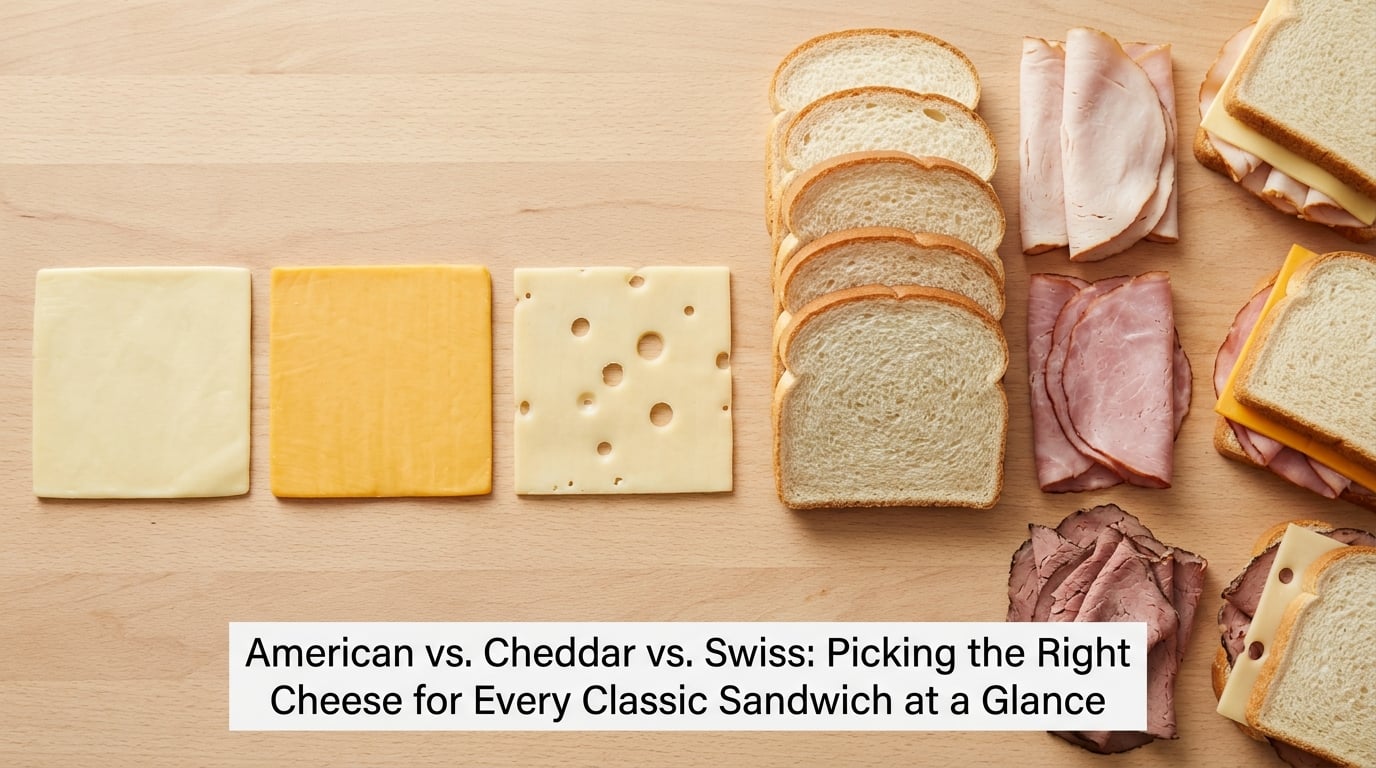
| Factor | American | Cheddar | Swiss |
|---|---|---|---|
| Flavor | Mild, creamy, faintly tangy | Buttery at mild, sharp and tangy when aged | Mild, nutty, slightly sweet |
| Texture | Semi-soft, uniform, no holes | Firm, dense, crumbly when aged | Semi-firm, rubbery, visible eyes |
| Melt | Uniform and forgiving at high heat | Good on medium heat, splits if pushed | Good melt, needs medium-low heat |
| Browning | Browns evenly, stays glossy | Browns fast, can scorch | Light golden browning, holds shape |
| Best on | Patty melt, cheeseburger, breakfast sandwich, kid grilled cheese | Grilled cheese, BLT, cheesesteak, ham and cheese | Reuben, turkey melt, roast beef sub, cold deli sandwiches |
| Weak spot | Bland and rubbery cold | Oily and rubbery when overheated | Can disappear against bold fillings |
| Label reality | Usually a cheese product with added emulsifiers | Real cheese, aged from weeks to years | Real cheese, aged six months or more |
Read that last row before anything else. American cheese is the only one of the three that is usually not real cheese on its own, and that single fact explains most of the differences in the other rows.
How Do American, Cheddar, and Swiss Taste and Feel?
Flavor and texture are where the three split most sharply, and the differences are big enough to change what you pair them with.
What American cheese actually is
American cheese is a processed cheese product: natural cheese, most often cheddar or Colby, blended with milk, whey, and emulsifying salts such as sodium citrate. That blend is why it tastes mild and creamy instead of sharp, and why it feels uniform with no holes and no crumbly edge.
The emulsifiers are the useful part. They keep fat and water in a stable suspension so the slice melts as one sheet rather than breaking into oil and rubber. In a sandwich, that predictability is worth a lot.
Why cheddar sharpness depends on age
Cheddar is a natural aged cheese, and its flavor is a function of time. Mild cheddar is creamy and buttery, sharp cheddar is tangy and toasty, and long-aged cheddar develops a crumbly texture with white tyrosine crystals that crunch.
That flexibility is both a strength and a hazard. Sharp enough cheddar will punch straight through a mild turkey and roast beef, while a mild slice can feel like nothing at all next to a BLT’s bacon. Pick sharp for bold fillings, mild for delicate ones.
How Swiss gets its nutty sweetness
Swiss is a semi-firm aged cheese with a mild, nutty, slightly sweet flavor and the characteristic holes called eyes, which form as the cheese ages. It is milder than most people expect, and less salty than cheddar.
Texturally it stretches well and holds its shape when warm, which makes it the most versatile of the three. The one complaint I hear constantly is that the holes make a slice look small, so you think you are getting less cheese. You are getting exactly a slice’s worth of cheese, just less of it by volume.
The real head-to-head
Cheddar versus Swiss comes down to sharp versus mild, and the right answer depends entirely on the filling. Deli roast beef and turkey want Swiss, because they are mild enough that a sharp cheese would drown them. Bacon and caramelized onions want cheddar, because they need something to push back against. Swiss holds a panini together better than cheddar does.
What Is the Difference in Melt and Browning?
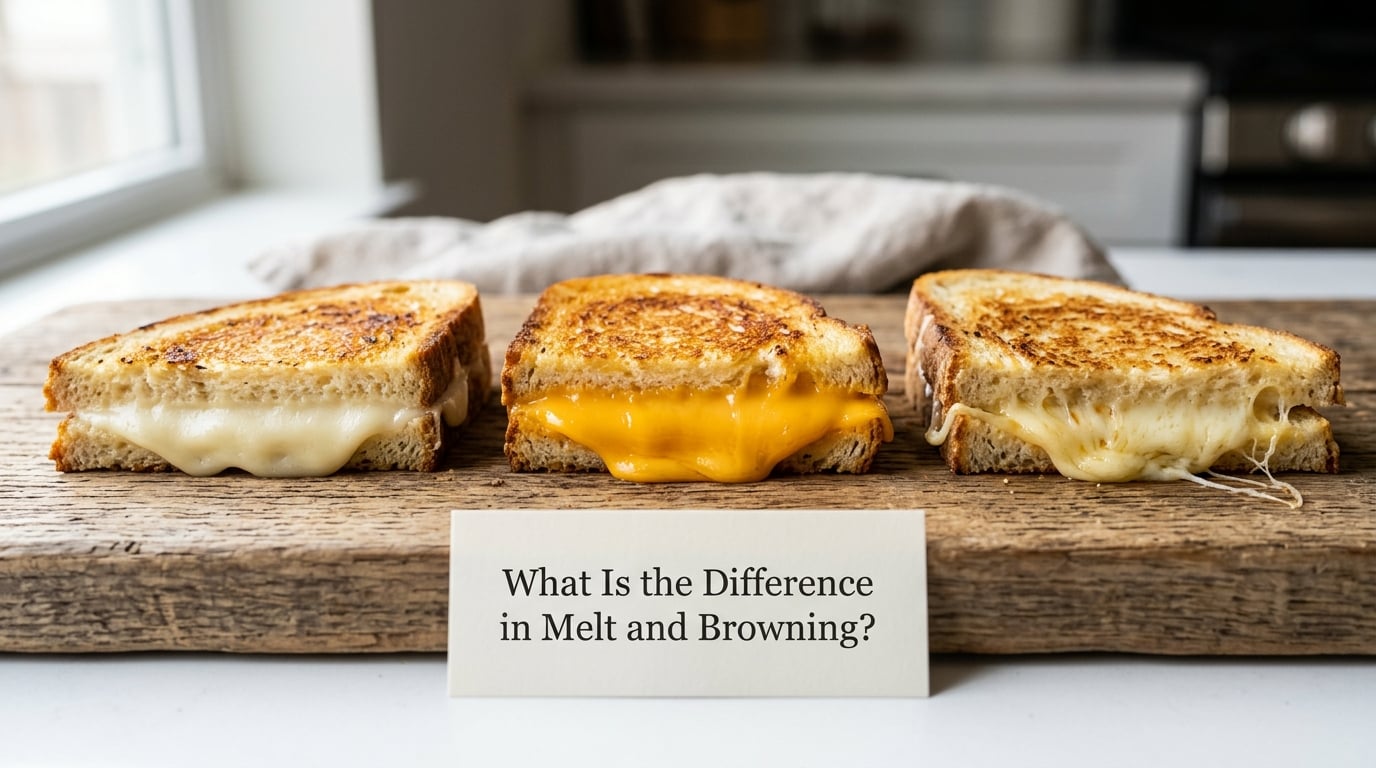
American melts the most evenly and browns the most predictably. Cheddar melts glossier and browns faster, and will separate into oil if you push it. Swiss browns lightly to golden, keeps more structure, and pulls into a mild stretch rather than a long cheese pull.
Emulsifiers explain most of that. American cheese can take direct pan heat because the fat and protein stay bound together. Cheddar and Swiss have nothing holding them together except heat and patience, so go past their melting point and the fat renders out before the casein softens. That is the greasy puddle and the tough translucent edge.
Cold, the three diverge sharply. Melting makes American smooth and creamy, which is its entire purpose, so a cold slice is just mildly flavored plastic. Cheddar cold is firmer and tastes more like itself than it does hot. Swiss cold is where it is happiest, staying supple and nutty against cold meat. That is why the cold deli sub is Swiss territory and why American is a weak choice there.
How to avoid oily cheese in a hot sandwich
Cook on medium-low rather than medium-high, give the pan about 30 seconds to warm before the sandwich goes in, and put a lid or a weighted press on top so the trapped heat melts the center before the outside burns.
Grate rather than slice when you want speed, since thin shavings hit melting temperature in a fraction of the time and give you more even coverage. Layer one even sheet instead of piling slices, and build with less filling so the cheese is not buried. Assemble and cook immediately; a sandwich that sits assembled goes soggy before it ever reaches the pan.
Another trick that works: melt your cheese first, top with the filling, and finish with a top slice of bread. It is faster and it gives you direct control over how long the cheese sits on the heat.
The two-cheese blend
Cooks who work in sandwich shops have been blending for years, and the logic is mechanical rather than indulgent. American provides the emulsified scaffold that makes a semi-firm cheese melt evenly, and the second cheese brings the flavor.
In the patty melt threads on r/Cooking, the most-upvoted practical answer is exactly this: use American for melt reliability and Swiss for flavor, one slice of each. Forum cooks treat blending as expert technique rather than indecision, and it is the single most useful move on this list if you have never tried it.
Other pairings worth trying: Swiss plus aged cheddar on a Reuben for a sharper, nuttier edge, and Swiss plus American on a turkey melt where the turkey is mild and you still want a clean melt.
Which Cheese Works Best with Classic Sandwich Fillings?
Match the intensity of the cheese to the intensity of the filling. A mild cheese under a bold filling disappears; a very sharp cheese over a delicate filling overwhelms it.
Hot sandwiches: where American vs cheddar vs Swiss splits
| Classic sandwich | Best cheese | Why it works |
|---|---|---|
| Patty melt | American and Swiss, one slice each | American melts the onions and patty evenly, Swiss keeps flavor in a sandwich people expect to be mild |
| Grilled cheese | Cheddar | Sharp enough to taste through buttered bread, and it browns into a proper crust |
| Cheeseburger | American | Melt reliability against a hot patty, plus a kid-friendly flavor that does not fight the beef |
| Reuben | Swiss | The traditional pairing with corned beef, sauerkraut, and Russian dressing |
| Turkey melt | Swiss | Mild and nutty under turkey, and it holds together when pressed |
| Cheesesteak | American or provolone | The roll is soft and hot, so you need a cheese that melts fast and does not seize |
| Hot ham and cheese | Cheddar or Swiss | Cheddar for flavor in a griddled version, Swiss for a milder pressed one |
| BLT, grilled | Sharp cheddar | Bacon needs something with backbone, and sharp cheddar browns well against tomato |
| Breakfast sandwich | American | Melt over egg and sausage without adding noise to a simple sandwich |
Provolone and mozzarella get the same job done on a cheesesteak or a hot sub, just with different flavor. They sit outside this comparison, but if your cheesesteak needs more melt than flavor, they are the swap.
Cold sandwiches: where Swiss wins and American falls flat
Cold changes the answer completely. Swiss, with its mild nuttiness and supple texture, is the best of the three for a roast beef or turkey deli sub, a ham sandwich, or a club. Sharp cheddar is the right cold pick for a BLT because bacon and tomato both need the bite.
American is the weak choice cold. Without heat it is bland and slightly rubbery, which is exactly the complaint that shows up again and again when sandwich builders argue about it online. There is a loud anti-American streak on burger polls and sandwich subs, and cold-sandwich taste is most of the reason.
For hot deli meat, roast whole cuts to 145°F (63°C) and poultry to 165°F (74°C), and refrigerate sliced deli meat promptly. Cheese choice does not change any of that, but a sandwich shop that gets it right is worth trusting on it.
One more note for cold builds: let Swiss or cheddar sit out on the counter for 15 minutes before assembling. Firm cheese straight from the refrigerator makes a tough sandwich, while American at room temperature goes soft and clingy, which is another point for the other two in cold applications.
How Do You Keep a Cheese Sandwich From Getting Soggy?
Soggy sandwiches are an assembly problem more than a cheese problem, though the cheese you pick changes how forgiving you need to be.
Use a thin, even spread of mayonnaise rather than a thick layer. It creates a moisture barrier, and a light coat does the job without pushing water into the bread.
Drain wet toppings properly. Tomato slices salted on a plate for five minutes release noticeably less liquid, and that is the difference between a crisp sandwich and a damp one. Lettuce should be dry, not rinsed and dripping.
Toast the bread first, especially for rye or seeded loaves. A toasted surface absorbs moisture instead of wicking it, and it is the single most effective change for a cold sub.
Layer cheese against the warm filling, not against the bread. Cheese slows moisture movement, so putting it on the filling side protects the bread. Build in order: bread, spread, cheese, filling, then a top slice.
Do not overstack. Every extra layer adds weight and moisture, and once the stack is too tall the bottom slice compresses. Two substantial fillings beat four thin ones. Finally, eat cold sandwiches within an hour and hot ones immediately, since the bread is only crisp for a short window.
How Do You Store Opened American, Cheddar, and Swiss?
Refrigerate all three at or below 40°F (4°C) as soon as they are opened, and reseal the package tightly or transfer the slices to a sealed bag or airtight container.
Re-wrapping matters more for the natural cheeses than for American. Cheddar and Swiss lose moisture once cut, so exposed slices dry at the edges and go crumbly within a few days in a loose package. American is more forgiving, since the emulsifiers hold its texture together even when it dries slightly.
What you will notice first in cheddar is aroma. A properly stored block smells clean and mildly tangy, and a sharp piece keeps that bite for weeks. Aged cheddar is sturdy; if yours was only mildly aged, plan on a couple of weeks for best texture.
Swiss keeps longer still, and it is the most forgiving of the three, though light aging means it fades in flavor after a month or so. If a slice smells sour or ammoniated rather than clean and nutty, it has gone past its window and should be discarded rather than eaten around.
Freezing works for grated cheddar and Swiss for later use, but neither comes back with anything close to its original texture once sliced, so plan to freeze grated rather than whole slices.
Which Should You Choose?
Use American if the melt is the point: patty melt, cheeseburger, breakfast sandwich, or a grilled cheese for someone who wants no argument about flavor. It browns evenly, survives high heat, and forgives overstuffing.
Use cheddar when you want to taste cheese: grilled cheese, hot ham and cheese, a cheesesteak with character, or a cold BLT. Match the age to the filling, since a sharp cheddar will bury a turkey sandwich.
Use Swiss when the filling is mild and you want structure: Reuben, turkey melt, roast beef sub, cold deli sandwich, or panini. It is the most versatile of the three and the safest pick when you are unsure.
When a sandwich calls for a different cheese entirely, provolone and mozzarella cover the melt-heavy Italian sub, Gruyere and Emmental cover alpine and French-style sandwiches, and Havarti or Monterey Jack cover softer creamier melts. Colby is the mild, non-sharp option that behaves like American without the emulsifiers.
On the label question that comes up constantly: if it says “cheese product” or “pasteurized process cheese,” it contains added emulsifiers and behaves like American. If it says “cheese,” you get natural cheddar or Swiss and you manage the heat yourself. Knowing which one you are holding tells you everything about how to cook it.
Frequently Asked Questions
Can I use cheddar instead of Swiss on a turkey sandwich?
Yes, and it is a common swap. Turkey is mild, so a sharp cheddar can overwhelm it, but a mild or medium cheddar works well, especially in a pressed turkey melt where you want browning. Use medium heat and expect slightly more separation than Swiss. If the sandwich is cold, Swiss stays softer and more flexible, so it is the better textural choice.
Are American, cheddar, and Swiss cheeses good for grilled cheese sandwiches?
All three work, for different reasons. Cheddar is the classic pick because its sharpness survives the butter and browns into a crust. American gives the smoothest, most forgiving melt and is hard to overcook. Swiss melts well but stays milder, which some people like. Cook any of them on medium-low heat with a lid for an even melt without a greasy pan.
Which of these cheeses melts best without becoming oily?
American, by a wide margin. Its emulsifying salts, often sodium citrate, keep fat and water in a stable suspension so it melts at higher heat without separating. Cheddar and Swiss have no added emulsifiers, so both can render fat before they melt through. Cooking either on medium-low heat, grating instead of slicing, and putting a lid on the pan all reduce the oil.
How long can opened sliced cheese stay refrigerated?
Keep it sealed at or below 40°F (4°C) and use sliced Swiss and cheddar within about two to three weeks for best texture, though aged cheddar keeps longer. Sliced American is usually fine for a few weeks if resealed tightly. Freezing is safe but ruins the texture, so freeze grated cheese instead of slices. Discard anything that smells sour or ammoniated.
Can I use a mix of American and cheddar for a sandwich?
Yes, and it is standard practice among sandwich cooks. American acts as a melt scaffold so the cheddar melts evenly instead of breaking into oil, while the cheddar supplies the flavor American lacks. One slice of each is the usual ratio for a patty melt or burger. The same principle works with Swiss instead of cheddar when you want a milder, nuttier result.
Choose Your Cheese Before You Build the Sandwich
Decide the cheese first, using the filling as the guide. American for reliable melt on burgers and patty melts, cheddar for flavor on grilled cheese and BLTs, Swiss for mild fillings and cold deli sandwiches.
Then check the label, warm the pan to medium-low if you are using a natural cheese, and build the sandwich last so nothing sits soggy while you cook. If you remember nothing else, try the two-cheese blend once. It is the fastest way to fix a sandwich that was missing something.