
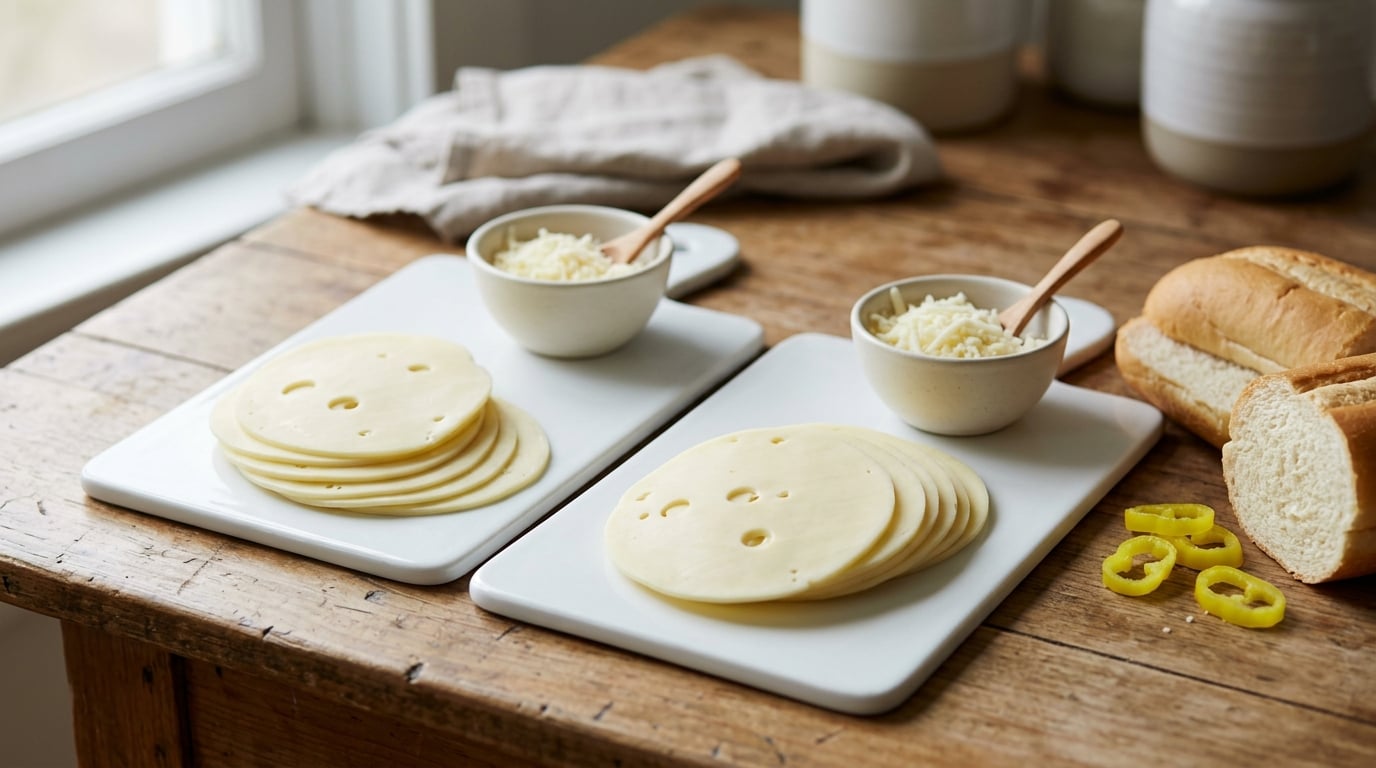
Sharp provolone is the better pick for a hot sub or one built on loud toppings, because its tang and salt hold their own beside cured meat and hot peppers. Mild provolone wins on a cold sub, where you want the salami and capicola to lead and the cheese to stay soft. Cold or hot is the deciding variable in sharp vs mild provolone, not which one tastes better. Rechecked for 2026.
Both are the same cheese, made from stretched curd, and the difference comes down to age. A young provolone is soft, milky and buttery. An aged one is firmer, saltier and tangier, with a bite that some people describe as cutting.
Table of Contents
- Sharp vs. Mild Provolone: Which Is Better for Italian Subs? at a Glance
- What Is the Difference Between Sharp and Mild Provolone?
- Which Provolone Has the Better Flavor for an Italian Sub?
- How Do Sharp and Mild Provolone Melt and Brown Differently?
- How Does the Cheese’s Texture Change the Sandwich?
- Which Provolone Works Best with Common Italian Sub Fillings?
- Sharp or Mild Provolone for a Hot Italian Sub?
- Which Provolone Is Better for a Cold Italian Sandwich?
- Which Should You Choose?
- Frequently Asked Questions
- Conclusion
Sharp vs. Mild Provolone: Which Is Better for Italian Subs? at a Glance
| Factor | Sharp provolone | Mild provolone |
|---|---|---|
| Flavor intensity | Tangy, savory, assertive, sometimes garlicky | Buttery, milky, gently sweet |
| Salt level | Noticeably saltier, especially aged | Mild enough for a kid’s palate |
| Melt speed | Slower, tighter sheet, clingy to meat | Faster, looser, spreads evenly |
| Browning | Blisters and browns well under high heat | Softens first, browns later |
| Texture bite | Firm, can crumble at the edges | Soft, creamy, folds without cracking |
| Effect on the roll | Less moisture released, holds structure better | More moisture, dries the bread sooner |
| Best on a cold sub | Fine in thin slices, adds contrast | The default choice |
| Best on a hot sub | The stronger pick on a griddle or pan | Better for thin, delicate meats |
| Flavors that pair with it | Long hots, ban peppers, fried onions, roast pork | Turkey, ham, bland cold cuts, tomato |
What Is the Difference Between Sharp and Mild Provolone?
Provolone is a semi-hard stretched-curd cheese, sold in two main styles. In Italy they are named provolone dolce and provolone piccante, and the label term you will see most often in the US is just sharp versus mild.
Dolce: the young, mild style
Dolce is aged briefly, sometimes only a few months, and it keeps more moisture. That moisture is why it melts quickly and evenly, drapes over meat in a thin film, and stays soft at room temperature on a cold sub. The flavor reads as milky and buttery with a faint tang underneath, and the salt stays low enough that cured meats are not pushed into a salty corner.
Piccante: the aged, sharp style
Piccante is aged far longer, often a year or more, and the longer rest drives off moisture and concentrates both salt and tang. The result is a denser cheese with a firmer bite and, some say, a garlicky or savory note. That same density is why it resists a quick melt. It is also what a deli is likely to mean when it says it uses sharp provolone.
One wrinkle worth knowing: the same cheese can be cow’s milk or buffalo milk, and buffalo-milk versions often taste richer and milder, while cow’s-milk versions are usually firmer and sharper. The milk changes the texture and the flavor, but age does the heavy lifting on the sharp-versus-mild question.
Which Provolone Has the Better Flavor for an Italian Sub?
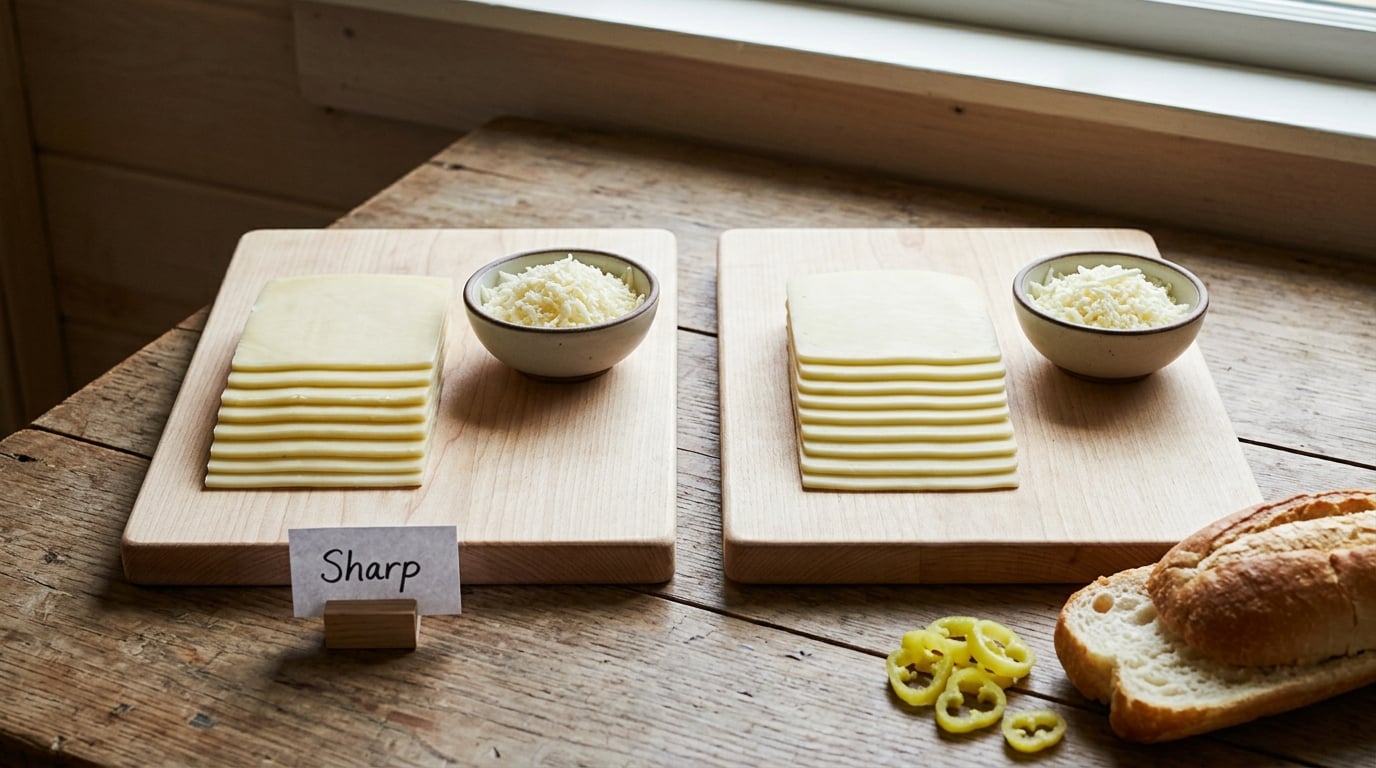
Sharp provolone tastes tangy, salty and fairly loud. Mild provolone tastes buttery and balanced, and it tends to disappear a little into whatever surrounds it. Neither is better in the abstract. The right answer depends on what else is in the sandwich.
When sharp provolone wins on flavor
Sharp earns its place when the toppings are already strong, because it holds up rather than getting buried. A sub with genoa salami, long hots, fried onions or a pile of shredded roast pork already has plenty of noise, and a tangy cheese adds a third voice instead of a second. It also carries through a warm sandwich better, since heat mutes flavor while the sharp cheese keeps climbing.
When mild provolone wins on flavor
Mild wins when the sandwich is built on quiet ingredients. Turkey, ham, bologna and a basic stack of cold cuts have no tang of their own, so an assertive cheese takes over a sandwich that should be about the meat. In a mixed group of eaters, mild is the version nobody argues with, which is why most delis put it on a plain sub by default.
A partial slice of sharp plus the rest mild is a fair middle path on a big sub, and it gives you the aroma without turning the whole sandwich sharp.
How Do Sharp and Mild Provolone Melt and Brown Differently?
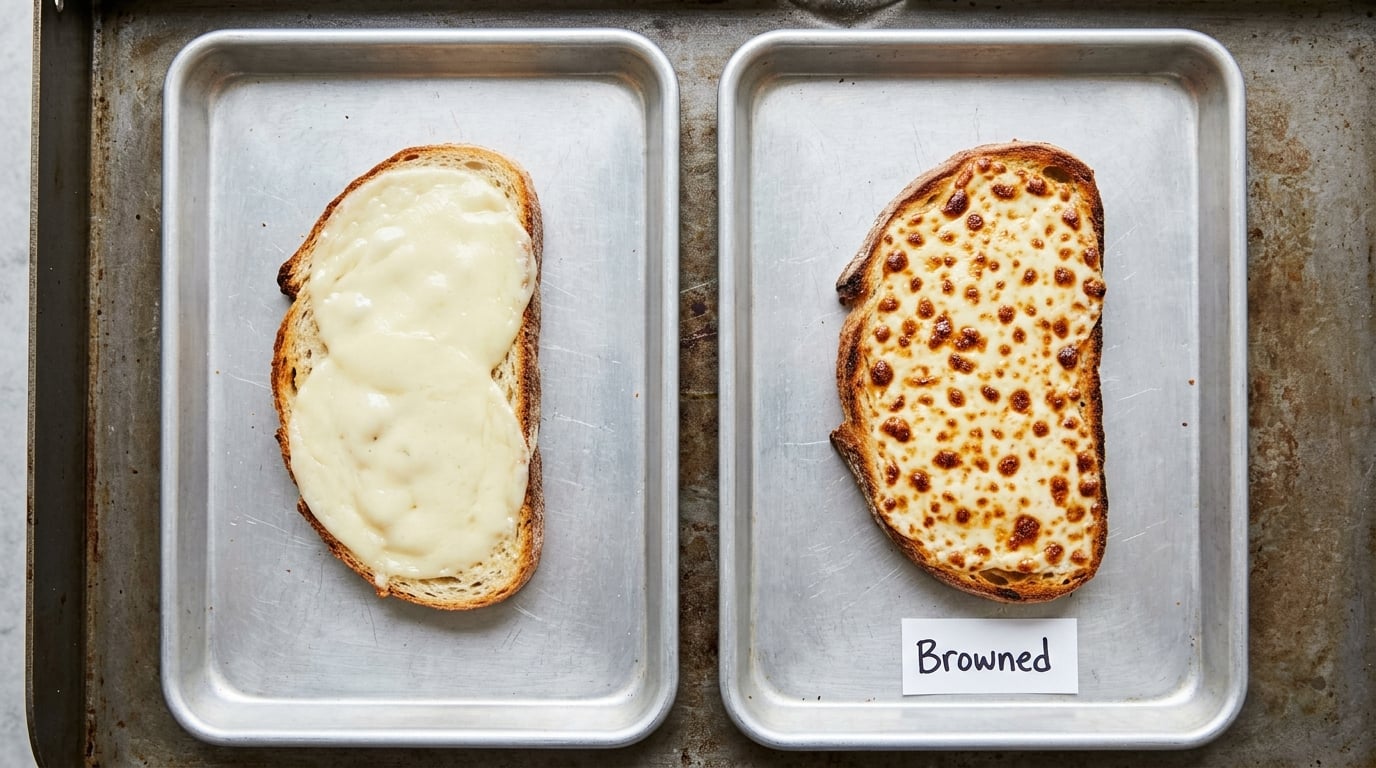
Mild provolone melts fast. It softens within seconds, spreads across the meat, and turns glossy before it browns. Sharp provolone takes a little longer and behaves more like a sheet than a sauce: it softens, clings, and holds a defined edge instead of flowing.
That is the source of the complaint that sharp provolone melts badly. The claim is half true. Sharp does not melt into an even blanket the way mild does, and on a home griddle with dry heat it can catch and turn grainy at the edges before the middle softens. But the fix is technique, not a swap to mild.
Two moves solve it. Keep the heat moderate and give the pan a lid, an inverted metal bowl or even a sheet of foil for 30 to 45 seconds, so trapped steam softens the cheese evenly before the direct heat browns it. And slice thinner, roughly one-eighth inch, so the cheese has less distance to travel before it gives up its structure.
Sharp actually browns better than mild, which is why toasted subs lean on it. Give the underside of the bread a minute on the hot pan first, add the cheese after the meat is nearly done, and you get a browned, blistered melt rather than a rubbery one.
How Does the Cheese’s Texture Change the Sandwich?
Aged sharp provolone is firmer and can crumble slightly at the cut edge, especially if it is cold from the fridge. It gives the sandwich a real bite, and it holds its shape in a hot, generously filled sub where a soft cheese would slump into the bread.
Mild provolone is soft and creamy, so it folds around salami without cracking and feels easier to eat. The trade is that it releases more moisture as it warms, which is why a heavily loaded cold sub built on mild can turn the bottom of the roll damp within an hour.
Let either one sit out for 15 or 20 minutes before building a cold sub. Tempered provolone is flexible and much easier to layer, and it takes on the oil and vinegar dressing instead of repelling it.
Which Provolone Works Best with Common Italian Sub Fillings?
Match the cheese to the loudest ingredient, then step back from the other direction. Here is how the pairings actually land.
- Cold cuts and turkey: mild. Turkey and ham have no tang, so sharp provolone reads as the only interesting thing in the sandwich. Mild lets the meat stay the point.
- Capicola, genoa salami, soppressata: sharp. These are already salty and spicy, and sharp provolone matches them instead of competing.
- Mortadella: mild. Mortadella is soft, peppery and rich, and a sharp cheese on top makes the whole thing too loud.
- Roast pork and grilled onions: sharp. Fat, char and tang together are the classic roast pork sandwich profile, and mild cheese disappears in it.
- Long hots and banana peppers: sharp. Vinegar and heat cut through the salt and the tang, which is why sharp with vinegar peppers is such a common order.
- Broccoli rabe or roasted peppers: sharp if the vegetables are charred and oily, mild if they are simply steamed.
- Turkey with tomato and shredded lettuce: mild. A cold, watery, fresh sub wants the soft, low-salt cheese.
- Meatballs or chicken parm: either. Sharp adds a savory note next to the sauce, mild melts into a smoother blanket over bread.
The regional split is real and worth copying. Shops in the Philadelphia and South Jersey area lean sharp on almost everything, while general sub shops tend to default to mild, and reviews of both kinds of place argue the same point from opposite directions.
Sharp or Mild Provolone for a Hot Italian Sub?
Sharp, in most cases. Heat mutes flavor, and mild provolone is the version that fades fastest, so on a toasted or pressed sub the sharper cheese is what still registers at the first bite. It also releases less water into the bread, which is the single most common complaint about hot subs.
Layering both is the move people use when they want the melt of mild and the flavor of sharp: mild slices directly against the meat for an even melt, then sharp slices on top where the heat reaches them and browns them. The tradeoff is a heavier sandwich, so cut back on the total slice count.
Two slices per sub is the common starting point for a hoagie roll. A third helps on a tall sub, a fourth rarely does anything except soak through the bread.
Which Provolone Is Better for a Cold Italian Sandwich?
Mild, for most cold subs. Sliced cold and eaten without heat, mild provolone is soft, low in salt and easy to fold around thin-sliced meats. Sharp provolone does work cold, but it needs thinner slices, and the firmer texture reads as harder to bite through on a cold day.
The exception is a cold sub that is mostly flavor-forward cured meat, with salami, soppressata or long hots doing the work. There, sharp provolone in thin slices is the better call, and it is the version people order when they want the sandwich to taste like something.
Keep the cheese off the tomato and the wet pickles if you are building ahead. Mayo or oil and vinegar works better as a spread, and the roll holds longer without the water that sliced tomato pushes out.
Which Should You Choose?
Choose sharp provolone for a hot sub, a roast pork sandwich, or any sub where long hots, ban peppers or fried onions are doing the seasoning. It survives heat, browns cleanly, adds tang, and keeps the bread drier. Choose mild provolone for a cold sub, for turkey or ham, and for a mixed group of eaters. It melts faster, folds without cracking, and never fights the meat. That is the whole of sharp vs mild provolone for Italian subs: heat and loud seasoning on one side, cold and quiet on the other.
Use both when the sandwich is big and opinions are split. Mild underneath, sharp on top, two slices total rather than four.
At the deli counter, ask. Most shops will tell you whether the provolone on the board is sharp or mild, and it is worth knowing before you order, since the difference is not visible from the counter.
Frequently Asked Questions
Is sharp provolone the same as pepper jack?
No. They are different cheeses from different countries. Pepper jack is a mild American cow’s-milk cheese with a scattering of jalapeno or green pepper, so it brings heat and a creamy melt. Sharp provolone is an aged Italian stretched-curd cheese with tang and salt but no pepper heat. If a sub needs both tang and a little spice, sharp provolone with long hots is usually a better fit than pepper jack.
Can I use mozzarella instead of provolone in an Italian sub?
You can, and the sandwich will still work, but the result is different. Low-moisture mozzarella melts smoother and stretchier and stays milder, which suits turkey or a simple cold sub. Provolone is firmer, saltier and tangier, so it holds up beside cured meats and survives a griddle without turning rubbery. Mozzarella also releases more water, so drain it well or drain it on paper first.
Does mild provolone melt better than sharp provolone?
Yes, and the difference is mostly about moisture. Mild provolone holds more water, so it softens fast and spreads into an even layer. Aged sharp provolone is denser and melts more slowly, clinging to the meat as a defined sheet. It is not a poor melter, though. Slice it thin, keep the heat moderate, and cover the pan for 30 to 45 seconds so steam softens it before the direct heat browns it.
How should leftover provolone be stored after opening?
Keep it in the original wrapping if you have it, or press it against the inside of a sealed container so the surface does not dry out and harden. Refrigerate it, and expect sliced cheese to stay good for a couple of weeks this way. Bring it back to room temperature for 15 or 20 minutes before serving so it bends rather than cracks, and skip freezing slices, which come out crumbly.
Which provolone is best for people who prefer a mild flavor?
Mild provolone, which is sold as provolone dolce or simply young provolone. It is soft, buttery and low in salt, so it disappears into a sandwich rather than announcing itself. It is also the easier cheese for kids and for anyone who finds aged cheese tang too strong. For the same reason, mild is the better match for turkey, ham and cold sub sandwiches with fresh vegetables.
Conclusion
Sharp provolone is the better cheese for a hot sub and for cold subs built on strongly seasoned cured meats. Mild provolone is the better cheese for a cold sub with quiet fillings, for a fast melt, and for a mixed table of eaters. Start there, and if you want the tang without committing, layer mild underneath and sharp on top with two slices total.