
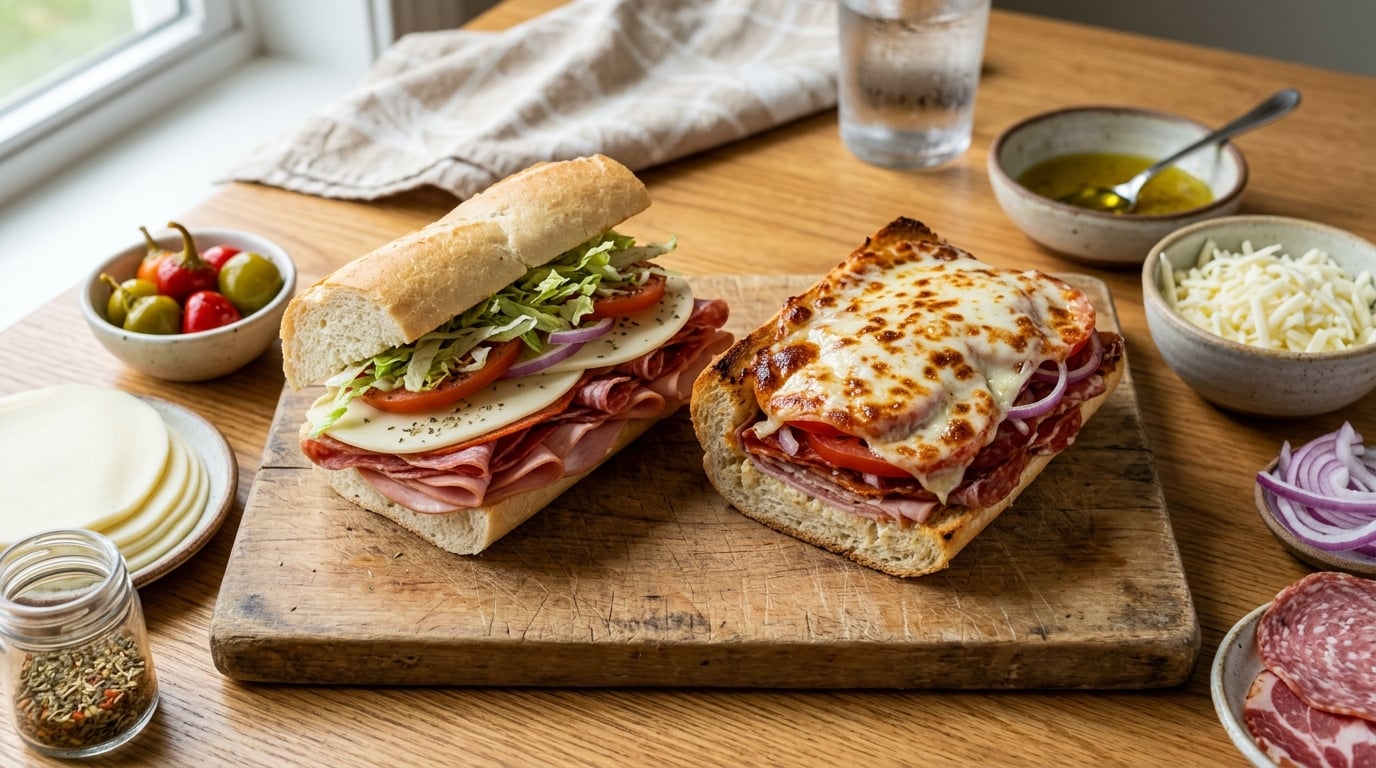
The best cheese for an Italian sub depends almost entirely on how you serve it. A cold sub wants provolone, firm enough to slice thin and hold a tall stack of cured meat without folding. A toasted or pressed sub wants low-moisture whole-milk mozzarella, which melts into a clean, even layer instead of releasing water into the bread.
That is the whole argument, and most sandwich arguments about cheese come down to somebody mixing up the two. I have assembled more cold heroes than I care to admit, and the mistake I see most often is a bag of pre-shredded cheese going into a toasted sub, then wondering why it never melted.
There is also a regional wrinkle worth naming up front. The East Coast hero is a cold sandwich built around sharp cured meats and a cold, firm cheese. The Midwestern grinder is the same ingredients pushed flat and toasted, where the cheese is a vehicle for browning. Each tradition wants a different cheese, and treating the toasted version as a corrupted cold sub is why people end up disappointed by both.
Table of Contents
- Best Cheese for Cold Italian Subs vs. Toasted Italian Subs at a Glance
- Which Cheeses Work Best Cold?
- Which Cheeses Melt Best for Toasted Italian Subs?
- How Cheese Flavor Changes When the Sandwich Is Toasted
- Best Cheese Pairings by Italian Sub Filling
- Provolone Is the Best Cheese for Cold Italian Subs
- Low-Moisture Mozzarella Is the Best Cheese for Toasted Italian Subs
- How to Choose Cheese for the Sandwich You Are Making
- Which Should You Choose?
- Frequently Asked Questions
- Conclusion
Best Cheese for Cold Italian Subs vs. Toasted Italian Subs at a Glance
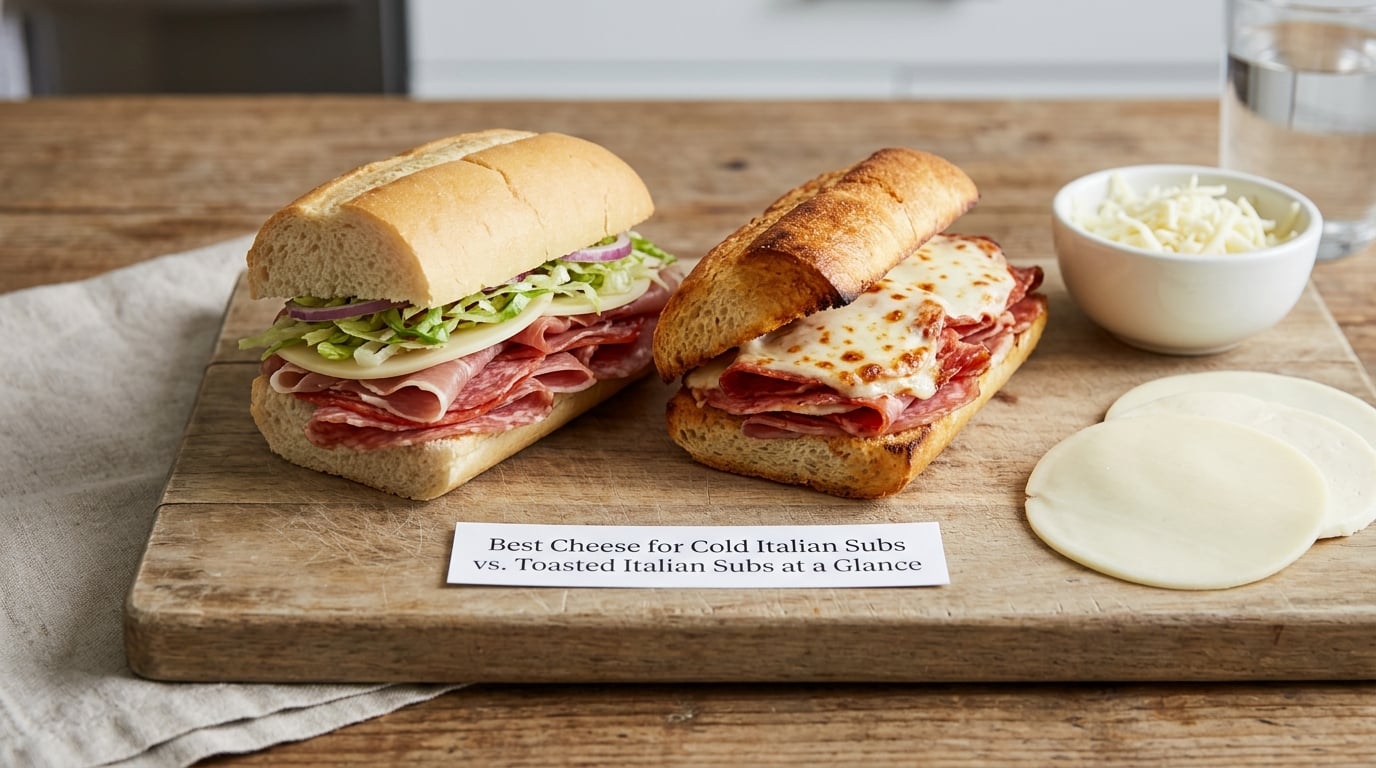
The table below is the short version. Read the verdict column first, then the rows for the cheese you already have in the fridge.
| Cheese | Flavor intensity | Melt | Texture | Moisture | Best Italian sub fillings | Better served |
|---|---|---|---|---|---|---|
| Sharp provolone | Sharp, nutty, salty | Fast, then turns rubbery if left | Firm and sliceable cold | Low | Salami, capicola, coppa, hot peppers | Cold |
| Mild provolone | Mild, milky, buttery | Clean and quick | Soft but holds a slice | Low to medium | Ham, salami, shredded iceberg, oil and vinegar | Cold or toasted |
| Low-moisture whole-milk mozzarella | Mild, milky, creamy | Best clean melt of any sub cheese | Soft, glossy when hot | Low | Meatballs, roasted peppers, ham, sausage | Toasted |
| Fresh mozzarella | Mild, delicate, milky | Poor: releases water and turns to mush | Creamy cold, sloppy hot | High | Caprese-style cold builds only | Cold |
| Pecorino Romano | Sharp, salty, peppery | Melts fast, crisps at the edges | Hard and crumbly when sliced | Very low | Salami, broccoli rabe, hot peppers | Cold, shaved thin |
| Parmigiano-Reggiano | Nutty, salty, aged | Melts slowly, browns well | Firm; brittle if thick | Very low | Roasted vegetables, turkey, mushrooms | Either, shaved |
| Swiss | Mild, nutty, slightly sweet | Excellent stretch, stays creamy | Medium-firm, sliceable | Low to medium | Ham, turkey, salami with mustard | Cold or toasted |
| Muenster | Mild, buttery, tangy rind | Very good, smooth and glossy | Soft, creamy | Medium | Ham, roast beef, sliced tomato | Toasted |
| Pepper jack | Mild with a peppery kick | Good, melts fast | Soft and smooth | Low | Salami, sausage, hot peppers | Toasted |
| Cheddar | Sharp and tangy, sharpens with age | Excellent, oiliest melt | Firm cold, dense hot | Low | Turkey, roast beef, burger-style subs | Either, thin slices |
Two rows in that table explain most of the confusion. Provolone is not wrong on a toasted sub, it is just the wrong tool for a long toast, because it goes from melty to rubbery faster than mozzarella does. And fresh mozzarella is not a better mozzarella, it is a different food, which is a distinction I will come back to below.
Which Cheeses Work Best Cold?
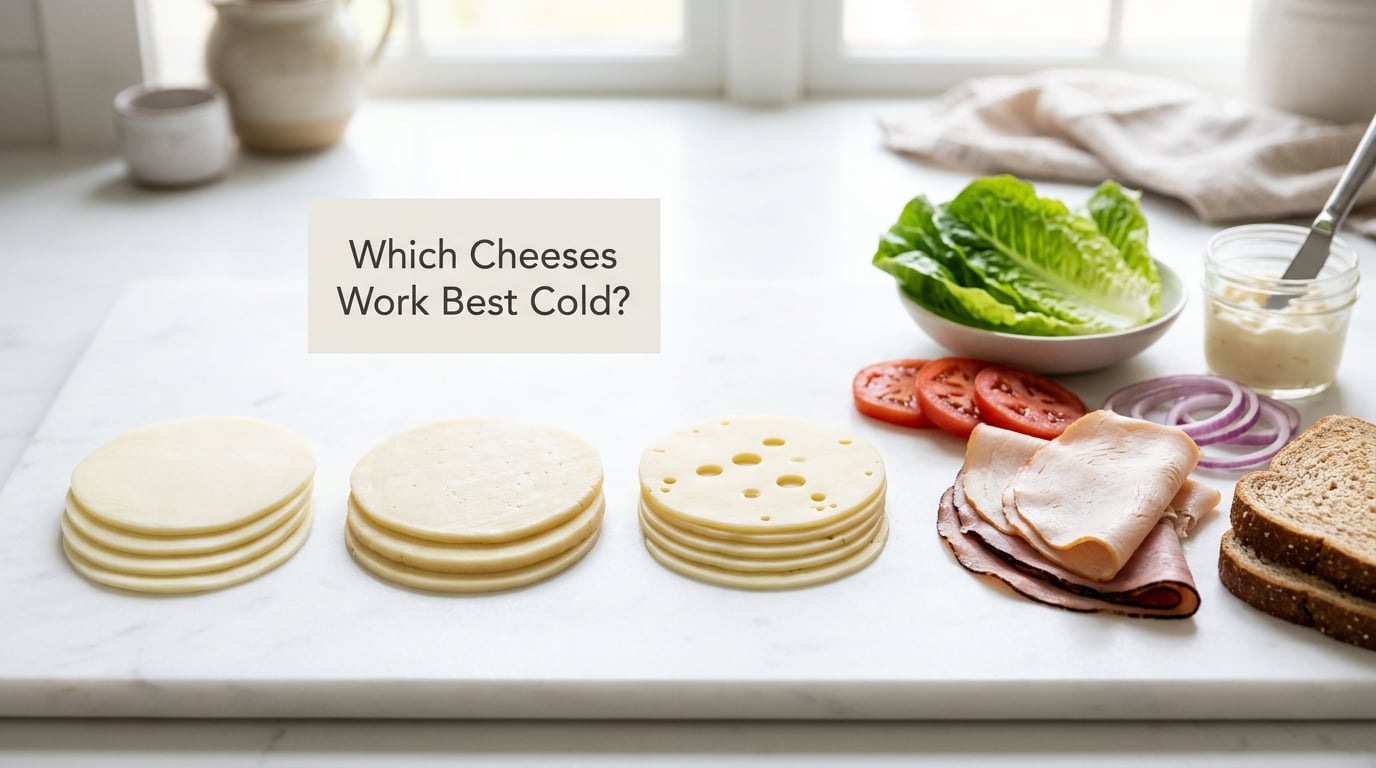
A cold sub cheese has one job beyond tasting good, and that job is structure. It has to sit in a tall sandwich, hold its own weight, and not turn the bread into a wet brick by lunchtime.
That means firmness first. Provolone, Swiss and sharp cheddar all slice thin without tearing and hold a stack of capicola and salami. Fresh mozzarella fails this test badly, since it compacts and squeezes as soon as the sandwich is wrapped. Sliceability matters for the same reason: deli meat is cut paper thin, and a cheese that tears instead of slices ruins that rhythm.
Salt is the second qualification, and it works differently from what people expect. Cured meats already carry a lot of salt, and Italian sub dressing adds red wine vinegar and olive oil on top. A sharp or salty cheese pushes into that background and stays legible, while a very mild cheese disappears entirely.
Acidity is the third. Red wine vinegar is a fixed part of most cold sub builds, and it will cut a fat, creamy cheese down to nothing if the cheese is mild and the vinegar is generous. Sharp provolone and pecorino can stand up to the dressing. Mild provolone needs the vinegar spread thin and the oil applied mostly to the bread.
Where the cheese sits in the stack matters more than most people think. Put cheese directly against the tomato and the wet shredded lettuce, and you get a slippery layer that slides out on the first bite. Put the cheese nearer the bread and keep wet ingredients on the far side, and the same cheese behaves like a structural layer.
Which Cheeses Melt Best for Toasted Italian Subs?
Low-moisture whole-milk mozzarella is the best melt of any cheese you can buy for a toasted sub, and the reason comes down to water. Mozzarella comes in two distinct forms: low-moisture mozzarella, which is firm, stretchable and roughly half water by weight, and fresh mozzarella, which is packed in brine and is mostly water. Under heat, that water has to go somewhere.
Low-moisture mozzarella gives up its fat and protein together in a smooth, even layer. Fresh mozzarella releases a startling amount of liquid, the proteins tighten around what little structure they have, and you get a cheese soup with a bread slice floating in it. The same fresh mozzarella in a caprese is delightful precisely because nothing needs to hold together.
Provolone is a very close second and the better choice when the sub has a lot of salami or capicola in it, since its sharper flavor stands up to the meat. The catch is timing. Provolone reaches its melt point quickly, browns fast, and then tightens into a chewy sheet that pulls out of the bread in one piece. Give it 30 to 45 seconds more than you think and the sandwich turns to rubber.
Swiss and muenster both melt well and stay creamy, which makes muenster a genuinely good option for a ham sub. Cheddar has the most flavorful melt of the American-style cheeses, though it releases oil and the sandwich needs something acidic to cut it. Pepper jack melts fast and adds a low heat that plays well with sausage and hot peppers.
Parmesan and pecorino are the awkward ones. Shaved thin, they melt and crisp into a savory top layer, which is genuinely delicious. Sliced thick, they never soften at all and you lift a cracker out of the sandwich.
Pre-shredded bagged cheese is the other thing that refuses to melt. Those bags contain anti-caking agents, usually cellulose, to keep the shreds separated on the shelf. Those same agents keep the strands from fusing together in the pan, so the cheese warms, softens slightly and stays a pile of individual shreds. Shred your own from a block, or buy slices, and the problem disappears.
How Cheese Flavor Changes When the Sandwich Is Toasted
Heat does not make a cheese taste better or worse. It moves the flavor somewhere else, and most of the surprise people report on toasted subs comes from not expecting the shift.
Salt concentrates. Water leaves the cheese as steam, so the same slice that tasted gently salty on a cold sub tastes noticeably saltier after a few minutes under the press. This is the number one reason a cheese people liked cold disappoints them toasted, and the fix is usually just less cheese rather than a different cheese.
Acid reads differently. Vinegar tastes sharper in a hot sandwich because the warmth makes it more volatile, so a cold build with a generous vinegar splash may need a lighter hand once it is toasted. Oil, meanwhile, tastes rounder and more buttery when warm.
Fat and texture change together. Cold provolone is firm and crumbly in the mouth; melted provolone is smooth and rich for about a minute, then chewy. A cheese that tastes flat and chalky at room temperature can taste pleasantly nutty and savory once melted, because the fat has finally melted too and is coating your tongue.
There is a browning effect too, and it is real flavor, not just color. Toast a slice of cheese directly against the pan and the surface sugars and proteins brown, producing nutty, roasted notes a cold sandwich can never have. That is the whole argument for the grinder tradition, and it is why a mild cheese is often better toasted than a sharp one.
Best Cheese Pairings by Italian Sub Filling
Salami and capicola
Sharp provolone, cold. The salami is salty, the capicola is peppery and fatty, and the provolone is the only common sandwich cheese salty and nutty enough to keep up. This is the build most readers mean when they ask about the best cheese for an Italian sub.
Ham and Swiss
Swiss, cold or lightly toasted. Ham is mild and slightly sweet, so a mild cheese would just sit there. Swiss has enough nuttiness to register and enough body to survive the vinegar. Sharpened ham pushes toward a sharper Swiss or a mild aged cheddar.
Turkey and cheddar
Sharp cheddar, sliced thin. Turkey needs fat and salt to feel like anything, and cheddar supplies both. Toasted is better here, because the melt binds the turkey to the bread instead of letting a pile of dry slices sit loose.
Meatballs and roasted vegetables
Low-misture whole-milk mozzarella, toasted. Mozzarella is the classic pairing and the only one that behaves: it melts into the gaps between the meatballs and creates the stretch that holds the sandwich together. Provolone also works cold on a meatball sub, but it does not coat the way mozzarella does.
Hot peppers, giardiniera or cherry peppers
Pepper jack or provolone. The heat needs something fatty to land on. Provolone handles a strong giardiniera, and pepper jack adds its own gentle warmth without fighting the peppers.
Roasted vegetables and mushrooms
Parmigiano-Reggiano, shaved thin, or fontina. Both are nutty, both brown well, and neither is so heavy that it overwhelms vegetables. Fontina in particular melts quietly and never goes rubbery.
Two cheeses on one sub works better than most people expect. Provolone plus a thin shave of pecorino gives a cold sub a salty, peppery finish without doubling the salt load, and provolone plus low-moisture mozzarella gives a toasted sub both the flavor and the melt coverage. Put the melting cheese closest to the pan, and keep wet toppings on the side that stays cool.
Provolone Is the Best Cheese for Cold Italian Subs
Provolone wins the cold version for one reason: it is the only cheese most Italian-American delis use on a hero, and it is the only cheese that behaves like a layer rather than a filling. Sharp provolone is my pick for a meat-heavy sub, and mild provolone is the safer choice when the dressing is heavy on vinegar or the sandwich is for someone who does not want a strong cheese flavor.
Buy it sliced from the deli case if you can. Pre-sliced provolone from the grocery dairy aisle is usually fine, but it is often thinner and drier than what a counter slicer cuts, and it sometimes has a waxy coating that dulls the flavor.
To keep a cold sub from turning into a brick, slice the cheese thinner than the meat, and layer it so it overlaps the meat rather than sitting in one flat sheet. Keep the tomato and the dressed lettuce on the top half of the sandwich rather than against the cheese, and dress the bread with olive oil and oregano instead of letting the vinegar run across everything.
Make-ahead is fine for a few hours, wrapped in parchment rather than foil or plastic, and the sandwich keeps well in the fridge for up to three days. Beyond that the bread starts to lose its crust and the problem is the bread, not the cheese.
Low-Moisture Mozzarella Is the Best Cheese for Toasted Italian Subs
Low-moisture whole-milk mozzarella wins the toasted version, and the reason is empirical rather than nostalgic. It melts evenly, browns at the edges, does not release water, and does not need a second oven minute to stop being a solid slab.
Provolone is the runner-up and a very close one. Choose it when the sub is mostly cured meat, or when you want the sharper, saltier flavor to survive the toast. Watch the clock, because it turns from creamy to rubbery faster than mozzarella does. Muenster and Swiss take the top slot on a ham sub, where their mild sweetness suits the meat better than mozzarella does.
Cheddar and pepper jack both melt well and both brown aggressively, so they reward a lower heat. A cast iron skillet on medium rather than high gives them time to melt without burning the bread underneath. Shred the cheese yourself if you are shredding at all, since bagged shredded cheese will not fuse into a proper layer.
Parmesan and pecorino are finishing cheeses, not structural ones. A thin shave over a hot sub crisps at the edges in under a minute and adds a lot, but a thick slice just sits there warm. If you want the sharp flavor in a cold sub, shave the same cheese on top after assembly.
One safety note for pressed and toasted subs: heat deli meat and reheated meatballs to an internal temperature of 165°F, and keep cooked sandwiches refrigerated until you serve them. A toasted sub is a hot sandwich, not a room-temperature food.
How to Choose Cheese for the Sandwich You Are Making
Start with the temperature, because that single question eliminates most options. Cold and room temperature, and you are choosing a firm sliceable cheese: provolone, Swiss, sharp cheddar, or a firm aged cheese shaved thin. Toasted or pressed, and you are choosing by melt: low-misture mozzarella, provolone, muenster, Swiss, fontina, pepper jack or cheddar.
Next, match the cheese to the dominant filling. Peppery or fatty cured meats take sharp, salty cheese. Mild ham takes a nutty cheese. Vegetables take an aged or hard cheese. If the sandwich is loaded with hot peppers, pick something fatty to absorb the heat.
Then pick your sharpness honestly. Sharp provolone, aged cheddar and pecorino will fight a mild sub and disappear in a spicy one. Mild provolone and whole-milk mozzarella are the two safe middle choices that most people mean by classic Italian sub flavor.
Slice thickness is the setting most people miss. Thin slices melt and brown faster, which matters in a press, and they lay down more even coverage. Thick slices stay cold in the middle of a toasted sandwich, which is a fine outcome on a hot sub but a problem on a cold one.
Moisture decides whether the bread survives. Dry, low-moisture cheese plays nicely with bread. Anything packed in liquid, including fresh mozzarella and wet shredded cheese packed in the sandwich, adds water the bread will absorb.
Portion size is the last lever, and it is the most useful one for a toasted sub. Two thin slices outperform one thick slice, and two thin slices of a mild cheese plus a sharp accent shave beat a single slice of anything.
Where you shop matters less than people think, but two habits help. Buy cheese by weight if the deli counter will cut it to your preferred thickness, and buy blocks to shred yourself if you are pressing a sandwich. Store cheese wrapped in parchment or wax paper rather than plastic, and let it come to room temperature for about 20 minutes before serving it cold, which softens the flavor noticeably.
Which Should You Choose?
Cold or crisp, provolone. That is the pick for a New York-style hero, a chopped cold Italian, or anything assembled in advance and eaten hours later. Sharp provolone for salami and capicola, mild for ham and a heavy vinegar dressing, and keep the wet ingredients off the cheese.
Toasted or browned, low-misture whole-milk mozzarella. That is the pick for a grinder, a pressed panini-style sub, and anything with meatballs or roasted vegetables. Swap in provolone for a sharper result, muenster for ham, or cheddar if you want the most flavorful melt of the lot.
For a mixed-temperature sandwich, which is common at Italian-American counters, use two cheeses or one cheese in two forms. Provolone cold with a warm cheese melted over the top gives you both the structure and the melt without committing to one texture.
For substitutions, most grocery stores carry provolone, low-milk and whole-milk mozzarella, Swiss, muenster, cheddar and pepper jack. What you will not find is a good deal of fontina or a fresh baked loaf to use as a hero roll, and those are the two substitutions home cooks miss most often. A crusty Italian bread, a ciabatta roll or a thin baguette all work, sliced horizontally and hollowed slightly before filling.
Frequently Asked Questions
What is the best cheese to put on an Italian sub?
Provolone is the best cheese to put on an Italian sub when you are serving it cold, because it is firm, sliceable and salty enough to hold a stack of cured meat. For a toasted or pressed sub, use low-moisture whole-milk mozzarella, which melts evenly and does not release water. Buy slices or a block, not pre-shredded bagged cheese, which will not melt properly.
What goes on a cold Italian sub?
A cold Italian sub is built from thin-sliced cured meats, provolone, shredded iceberg tossed in red wine vinegar, and condiments added last. Layer the cheese near the bread, then meat, then the dressed lettuce, and keep wet ingredients away from the cheese so the sandwich does not slip apart. Finish with olive oil, dried oregano, and cherry peppers or hot peppers if you like heat.
Should an Italian sub be toasted?
Both versions are legitimate and they are regional traditions rather than a right and a wrong. The East Coast hero is served cold, with a firm cheese like provolone. The Midwestern grinder is pressed and toasted, with a melting cheese like low-misture mozzarella. The sandwich does not need to be toasted, but if you toast it, use a cheese chosen for melting rather than the one you would layer on a cold sub.
What type of cheese is best for a cold sandwich?
A firm, aged, sliceable cheese works best on a cold sandwich. Provolone is the top pick for an Italian sub, and Swiss, sharp cheddar and shaved Parmesan or pecorino all hold up well. Avoid fresh mozzarella and other high-moisture cheeses for a sandwich you will wrap or store, because they release water and compress the bread.
Which cheese is better, mozzarella or provolone?
Provolone is better on a cold Italian sub and low-misture mozzarella is better on a toasted one. Provolone is firmer, saltier and holds its shape in a tall sandwich without folding. Low-misture mozzarella melts smoothly and evenly and does not turn the bread soggy. Fresh mozzarella, packed in brine, is the version that turns to mush under heat and is best reserved for cold, freshly built sandwiches.
Which cheese is better on a meatball sub, mozzarella or provolone?
Low-misture whole-milk mozzarella is the better choice on a meatball sub. It melts into the spaces between the meatballs and creates the stretch that holds the sandwich together, and it browns at the edges without turning rubbery. Provolone works if you want a sharper, saltier flavor, but it melts faster and needs less time in the pan than most people give it.
Conclusion
Start with provolone for a cold Italian sub and low-moisture whole-milk mozzarella for a toasted one. That single swap solves most of the disappointment people bring to this sandwich, because the two versions ask different things of the cheese.
After that, adjust for your filling and your tolerance for sharpness. Sharp provolone for a meat-heavy cold sub, mild provolone for a heavy dressing, muenster for ham, cheddar for turkey, and a shaved Parmesan or pecorino finish for vegetables. Everything on this list is in an ordinary grocery store, and the whole decision takes about ten seconds once you know which temperature you are serving at.