
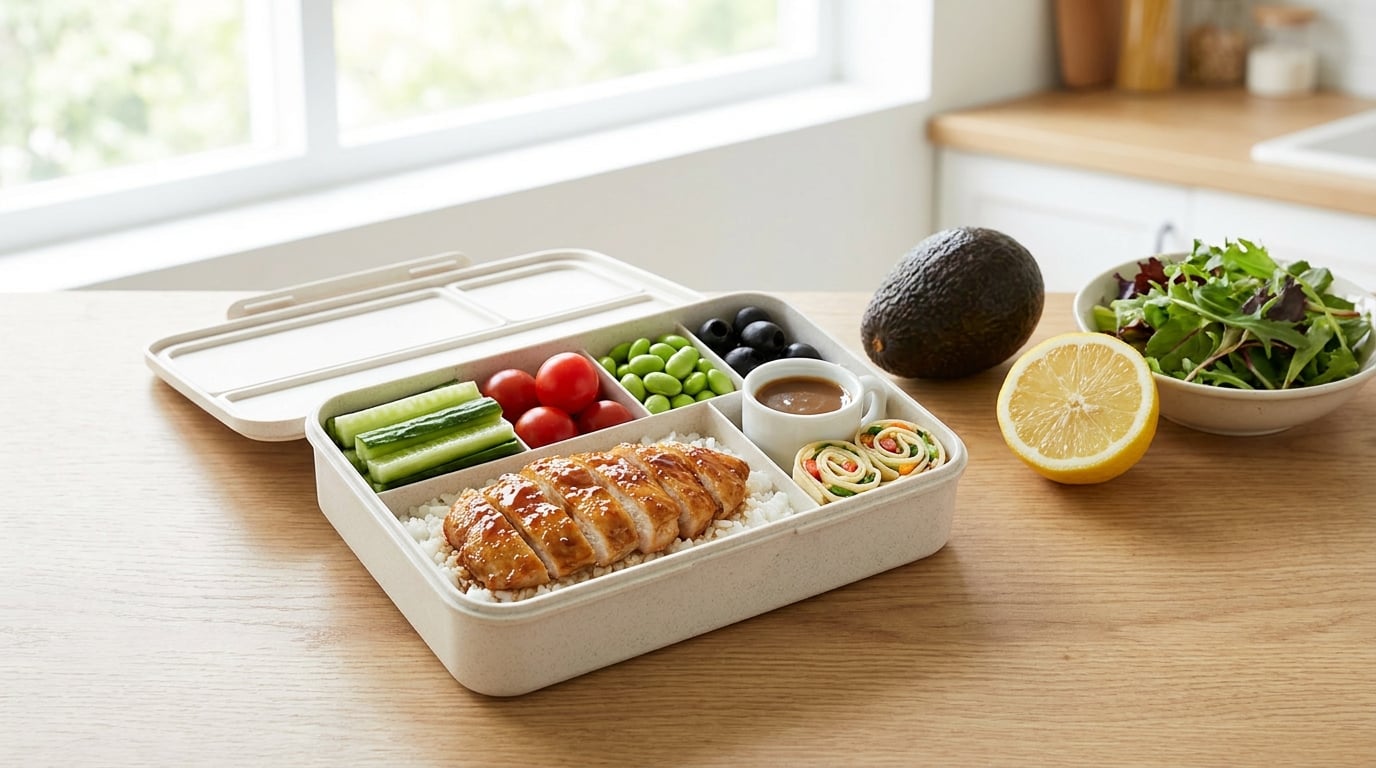
A bento lunch is a balanced meal packed into a compartmentalized container and eaten cold or at room temperature, built from a protein, a whole grain or other carb, several vegetables and fruits, and one small snack element. That structure is exactly why these bento lunch ideas for adults work on a weekday: portions are set by the compartments, nothing needs reheating, and the box still tastes like a meal rather than a stack of leftovers.
Most bento content out there is written for school lunches. This is the adult version, built around ingredients you can cook on a Sunday and combine differently through the week so nothing gets stale.
The formula underneath every box below is the same: a protein, a quality carb, produce with volume, a fat or sauce for staying power, and something small and fun in the last compartment. Aim for roughly half the box as vegetables and fruit, a quarter lean protein, and a quarter quality carbohydrate. A three-quarter cup scoop of rice or quinoa and three to four ounces of protein usually fills an adult box without weighing it out first.
Table of Contents
- Best Bento-Style Lunch Ideas for Adults at a Glance
- 1. Teriyaki Chicken Bento Box
- 2. Mediterranean Chicken and Hummus Bento
- 3. Salmon Sushi Bento Box
- 4. Turkey and Sweet Potato Lunch Bento
- 5. Black Bean and Corn Burrito Bento
- 6. Italian Sub-Inspired Bento Box
- 7. Miso Tofu and Rice Bento
- 8. BBQ Beef and Corn Bento
- 9. Greek Chicken and Feta Bento
- 10. Chickpea and Roasted Vegetable Bento
- 11. Tuna Nicoise Bento Box
- 12. Leftover Steak and Rice Bento
- Food Safety and Bento Storage
- Frequently Asked Questions
- Where to Start Tonight
Best Bento-Style Lunch Ideas for Adults at a Glance
| Idea | Main protein | Produce | Prep effort | Best for |
|---|---|---|---|---|
| Teriyaki chicken | Chicken thigh | Cucumber, edamame, cabbage | Low once cooked | Office lunches with no microwave |
| Mediterranean chicken and hummus | Chicken and hummus | Cucumber, peppers, olives | 10 minutes | Vegetables-first days |
| Salmon sushi bento | Cooked salmon | Cucumber, avocado, edamame | 25 minutes | Fish days with fridge access |
| Turkey and sweet potato | Roast turkey | Broccoli, cranberries | Roast batch | Hearty winter lunches |
| Black bean and corn burrito | Black beans | Avocado, cabbage, tomato | 10 minutes | Vegetarian lunches |
| Italian sub-inspired | Chicken or turkey | Cherry tomatoes, cucumber, greens | 10 minutes | Cold pasta lunches |
| Miso tofu and rice | Baked tofu | Broccoli, carrots, edamame | 30 minutes | Plant-forward boxes |
| BBQ beef and corn | Shredded beef | Corn, slaw, cucumber | Slow cook or leftover | Big appetite lunches |
| Greek chicken and feta | Lemon-herb chicken | Cucumber, tomato, peppers | 15 minutes | Fresh, bright lunches |
| Chickpea and roasted vegetable | Chickpeas | Zucchini, peppers, carrots | Roast batch | Vegetarian and vegan |
| Tuna Nicoise | Canned tuna | Green beans, tomato, cucumber | 15 minutes | No-cook desk lunches |
| Leftover steak and rice | Cooked steak | Edamame, pickled onion, greens | 10 minutes | Using leftovers well |
1. Teriyaki Chicken Bento Box
Sliced teriyaki chicken over rice with cucumber ribbons, shelled edamame and shredded cabbage is the most forgiving bento to build, because every component holds its shape overnight. Chicken thigh cooks and slices better than breast, which is what keeps it from drying out by noon.
For batch prep, cook six thighs at once, cool them in the sauce so they stay glossy, then slice and refrigerate. The rice goes in first as the base, the cold vegetables go on top so nothing steams, and the sauce gets a small separate cup if you like the chicken less sweet.
Reheating teriyaki chicken without a microwave
If your office has a microwave, thirty seconds on half power keeps the chicken from rubberizing. Without one, take the chicken out of the sealed container at home, let it come to fridge temperature in the morning rather than reheating at lunch, and pack a wide-mouth insulated bottle of hot water beside the box to warm the rice compartment in place.
2. Mediterranean Chicken and Hummus Bento
Hummus is the anchor here rather than a side dish: scoop a third of a cup into one compartment and let it double as the sauce for cucumber spears and pepper strips. Add sliced chicken breast, a few olives, halved cherry tomatoes, a square of whole-grain pita, and a handful of greens tucked in beside the tomato so they do not wilt.
The texture contrast is the whole point. Soft pita, creamy hummus, crunchy peppers and juicy tomato mean the box does not get boring on the fourth lunch of the week, and it assembles in about ten minutes from fridge staples.
3. Salmon Sushi Bento Box
A sushi-style box works because everything is already bite-sized and seasoned: cooked salmon sliced thick, sushi rice seasoned with a splash of rice vinegar and a pinch of sugar, cucumber matchsticks, edamame, pickled ginger and a fan of avocado. Pack the rice in the small round well or a leak-proof cup so it does not press into the fish.
Cooked salmon keeps fine for hours refrigerated, but this is the one box on the list that genuinely needs to stay cold. Pack it with an ice pack or keep it in the fridge until you leave, and eat it the same day. If there is no fridge at work, swap in a hard-boiled egg or marinated tofu and save the salmon for a day you can refrigerate it.
4. Turkey and Sweet Potato Lunch Bento
This is the box for the day you are genuinely hungry at 11:30. Roasted turkey, cubed sweet potato, quinoa or brown rice, roasted broccoli, a spoonful of dried cranberries for tartness, and a small portion of pumpkin seeds add fat and crunch without much weight.
Roast a tray of sweet potato and broccoli on a Sunday, cool it uncovered in the fridge so the steam escapes, then store it loosely covered. Crowded containers are the reason leftovers turn soggy, and packed lunches have the same problem.
5. Black Bean and Corn Burrito Bento
Seasoned black beans, corn, rice, salsa, cubed avocado, shredded cabbage and a few crisp tortilla strips build a vegetarian box that travels extremely well. Keep the salsa in a separate cup until lunchtime and add the avocado right before you close the lid, because both go watery and brown fast.
Heat level is a per-person decision, so pack pickled jalapenos and hot sauce in the small compartment rather than stirring them into the beans. Cheese and sour cream also go in separate cups so the rice underneath stays dry.
6. Italian Sub-Inspired Bento Box
Take the flavors of a sub and spread them across compartments instead of stacking them in a roll: sliced roasted chicken or turkey, a forkable cold pasta salad, halved cherry tomatoes, cucumber slices, olives, leafy greens and a small serving of crackers or bread.
This is a good box when you want something that reads as a proper lunch without a stove. Toss the pasta salad at home with olive oil and a splash of pickle brine, and pack the tomatoes in a separate cup so they do not pool juice into the greens.
7. Miso Tofu and Rice Bento
Baked or pan-seared tofu brushed with a miso glaze, seasoned rice, steamed broccoli, carrot sticks, edamame and a sesame dressing in a small cup make a plant-forward box with more substance than a salad. Press the tofu for fifteen minutes before cooking and it holds its shape instead of falling apart in the box.
Bake a sheet pan at once and use the extras for the whole week, sliced thin and layered with rice and greens. The glaze keeps in a sealed jar for five days, which makes this one of the cheapest boxes on this list to build in bulk.
8. BBQ Beef and Corn Bento
Shredded barbecue beef over brown rice with corn, black beans, a small scoop of slaw, cucumber and a tangy sauce. The flavor combination is strong enough that it stays interesting as leftovers, which matters because this is usually a cook-once, eat-three-times protein.
Soggy beef is the failure mode. Drain the beef well, let it cool uncovered before it goes in the container, and pack the sauce and any slaw with tomato in separate cups. A paper towel under the beef absorbs residual moisture without drying it out noticeably.
9. Greek Chicken and Feta Bento
Lemon-herb chicken, quinoa, cucumber, tomato, feta, olives, roasted peppers and greens give you a box that tastes bright at noon rather than tired. Marinate the chicken in lemon, olive oil, oregano and garlic overnight, then grill or pan-sear it for a fast weekday cook.
Feta and fresh vegetables are fine together for a few hours, but if you want them to look like they did on Sunday, keep the feta and tomatoes in one small sealed compartment. A little separation is all it takes to keep the presentation clean and the greens crisp.
10. Chickpea and Roasted Vegetable Bento
Roasted zucchini, peppers and carrots, chickpeas, couscous or rice, cucumber, fresh herbs and tahini sauce on the side. Roast the vegetables until they have real color and caramelized edges, not just softened edges; that is what keeps the box tasting good after four hours at room temperature.
Tahini and any oil-based dressing thicken and go dull in a compartment, so they belong in a leak-proof cup you add at lunch. For a vegan box, that is the only swap needed, and it is already built that way.
11. Tuna Nicoise Bento Box
Classic Nicoise is a composed salad, which means every element has to earn its place in a separate section: flaked tuna with a little olive oil and lemon, boiled potatoes, green beans, a halved hard-boiled egg, tomato, cucumber, olives and greens.
Keep the canned tuna oil under control, since excess liquid is what makes a packed salad wet, and store it in the can if it fits or in a cup if it does not. Follow the same food safety rules as any fish dish: keep it chilled until lunch and eat it the day it was packed. On a no-refrigeration day, use a shelf-stable tuna pouch instead of canned tuna.
12. Leftover Steak and Rice Bento
Cooked steak and leftover rice turn into a real lunch with five minutes of assembly. Slice the steak thin against the grain, pack it beside rice, roasted vegetables, edamame, quick-pickled onions and sesame seeds, and keep any sauce in its own cup for moisture control.
This is the most efficient box on the list because it starts from dinner you already ate. Sear a thicker cut specifically for lunch, chill it in a shallow container so it cools evenly, and slice it the next morning rather than the night before.
Food Safety and Bento Storage
How long a cold bento stays safe without a fridge
A packed lunch should not spend more than two hours unrefrigerated, and that drops to one hour when the outside temperature is above 90 degrees. If your workplace has no fridge, an insulated lunch bag with a frozen gel pack keeps perishable food safely under 40 degrees for most of a workday.
Two habits do most of the work. Cool everything fully before you close the lid, because trapped steam condenses and makes the box damp, and keep the gel pack on top of the food rather than underneath it, where it gets warmed first.
USDA safe minimum internal temperatures
Follow these minimum internal temperatures when cooking the proteins in this guide: 165 degrees Fahrenheit for poultry, 160 degrees Fahrenheit for ground meat, and 145 degrees Fahrenheit for whole cuts of meat and fish. Let poultry rest three minutes after cooking before you pack it.
Whole fruit, whole vegetables, unopened shelf-stable items and items like dried cranberries carry the lowest risk, which is why they show up so often in boxes designed for long workdays. If you are ever unsure about something that has been sitting out, throw it out rather than guessing from smell alone.
Frequently Asked Questions
How long can a bento-style lunch stay cold?
A packed bento should stay under 40 degrees for up to four hours if you use an insulated bag with a frozen gel pack. Without a cold source, perishable food should not sit out longer than two hours, or one hour when it is above 90 degrees outside. Cool every component fully before sealing the lid, and place the gel pack on top of the food rather than under it.
Are bento boxes suitable for meal prep?
Yes, and they are one of the better systems for it. Cook proteins, grains and roasted vegetables on a Sunday, store each one separately and cooled, then combine them through the week. Varying the sauce and the raw vegetables changes the flavor while the prep stays identical, which is exactly how you avoid a week of identical lunches.
What foods should not be put in an adult bento?
Very wet foods like salad with watery dressings, freshly cut fruit such as apples and pears that brown, and anything that needs reheating to taste good. Also avoid packing hot food into a sealed box, since trapped steam makes everything damp. Cooked eggs, cut tomatoes and deli meat are fine refrigerated, but they belong in a box that stays cold until lunch.
How can I keep rice and vegetables from getting soggy?
Pack the rice separately from anything moist and let it cool uncovered in the fridge first, because hot rice seals in steam. Put dressings, salsa, tahini and pickled items in leak-proof cups and add them at lunch. Keep wet vegetables such as cucumber and tomato in a small sealed compartment, and avoid stacking rice directly under saucy items like teriyaki chicken or barbecue beef.
Can I make a bento lunch without a microwave?
Every box on this list is designed to be eaten cold or at room temperature, so a microwave is optional rather than required. If you want something warm, pack a wide-mouth insulated bottle with a hot soup or curry and add rice and vegetables separately. Avoid hot food in the bento itself, since a sealed box holds heat long enough to grow bacteria.
What is a good portion size for an adult bento?
Most adults do well with a box that is roughly half vegetables and fruit, a quarter lean protein and a quarter quality carbohydrate. That usually means three to four ounces of protein, about three-quarters cup of rice, quinoa or pasta, and two or three cups of produce. Add a fat such as olive oil, tahini, hummus or nuts if you find yourself hungry mid-afternoon.
Where to Start Tonight
If you only build one box from this guide, make the Mediterranean chicken and hummus version. It needs no cooking if you have leftover chicken, it assembles in about ten minutes, and every component survives a night in the fridge without turning soft. Cook a batch of rice and a tray of roasted vegetables for the week, then let the sauces and raw vegetables do the variety work.