
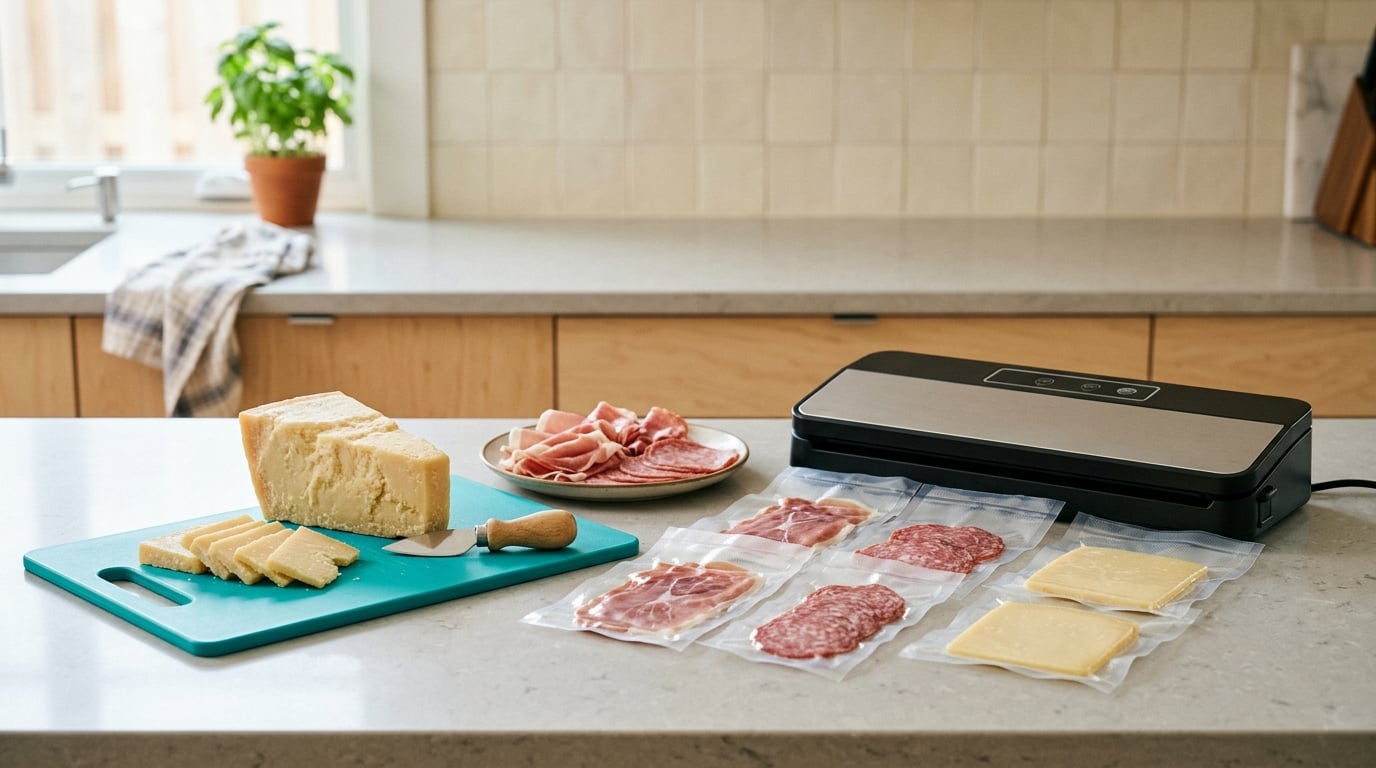
A good vacuum sealer for deli meat and cheese does three things well: it pulls the air out of thin, flat bags without crushing the contents, it heat-seals those bags across an 8 to 11 inch span so a full deli package fits in one pass, and it runs a gentle or pulse setting that keeps liquid out of the vacuum channel. Deli meat and cheese are dry, low-moisture foods, so you do not need a chamber machine here. You need a countertop external sealer with a wide seal bar, a dry or moist mode, and a bag opening that accepts any embossed roll you buy.
That last point matters more than most spec sheets admit. The best vacuum sealers for deli meat and cheese earn their place on a sandwich counter by sealing bag after bag in a row, taking deli-counter size packages, blocks of cheese cut into weekly wedges, and lunch prep packs of sliced turkey and provolone without the bag collapsing inward or the seal failing on the second try.
We looked at the machines that come up repeatedly in owner threads and compared them on the four things this workload actually stresses: seal width, suction on thin flat bags, moisture control, and whether they take third-party bags. No chamber units, no sous-vide angle, no machines built for one big steak.
Table of Contents
- Best Vacuum Sealers for Deli Meat and Cheese at a Glance
- 1. Best Budget Vacuum Sealer for Small Sandwich Portions
- 2. Best Vacuum Sealer for Wide Deli-Meat Bags
- 3. Best Vacuum Sealer for Cheese Storage
- 4. Best Vacuum Sealer for Thick Sandwich-Size Bags
- 5. Best Vacuum Sealer for Deli-Style Portioning
- 6. Best Compact Vacuum Sealer for Small Kitchens
- 7. Best Vacuum Sealer for Wet or Moist Foods
- 8. Best Vacuum Sealer for Long Food Storage
- 9. Best Portable Vacuum Sealer for Sandwich Prep
- 10. Best Premium Vacuum Sealer for Heavy Use
- Frequently Asked Questions
- What size vacuum sealer bags are best for deli meat and cheese?
- Can a vacuum sealer store deli meat and fresh cheese safely?
- Should I use a vacuum sealer for wet foods?
- How do I choose between a compact and wide-chamber vacuum sealer?
- How often should I clean a vacuum sealer?
- Can I vacuum seal sliced sandwich ingredients together?
Best Vacuum Sealers for Deli Meat and Cheese at a Glance
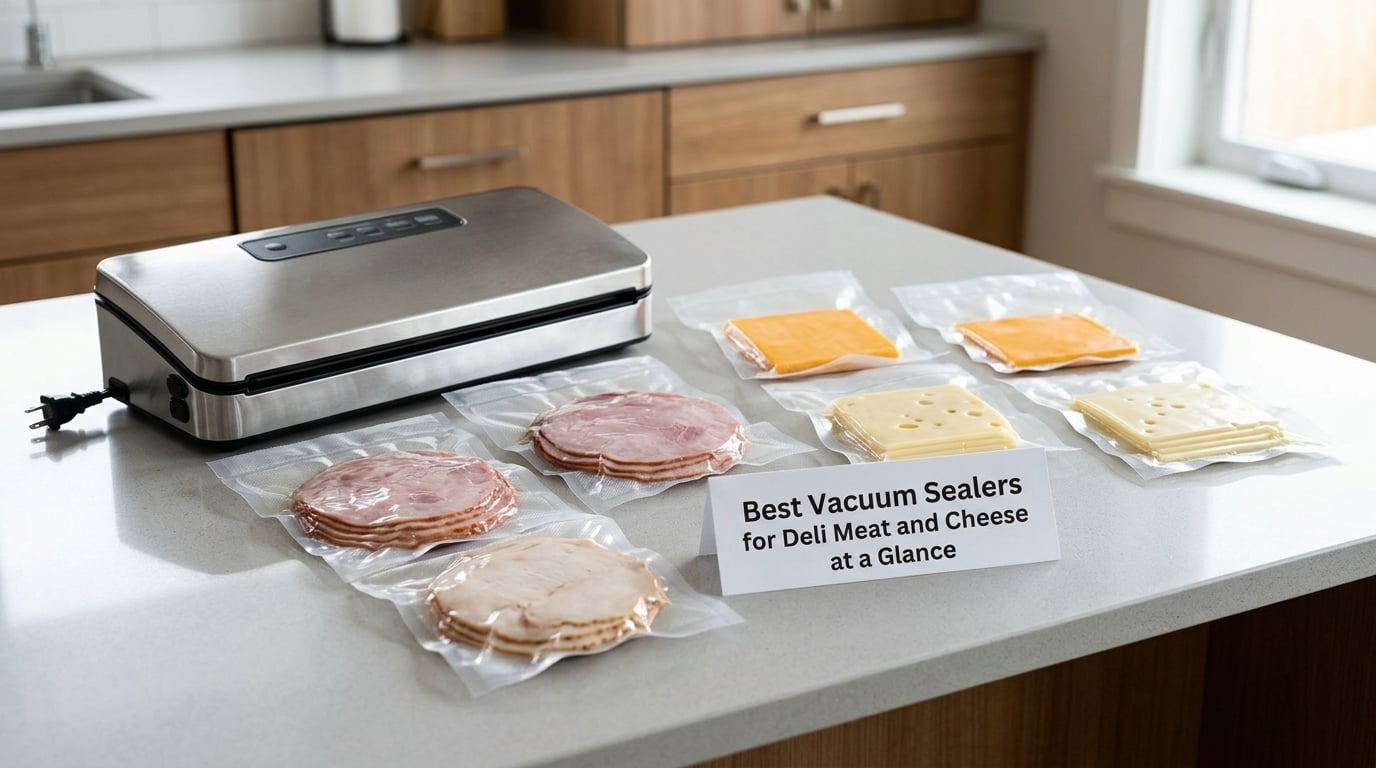
All ten of these are external countertop or handheld sealers. The table below gives you the short version so you can narrow the field before reading the individual picks.
| Model | Type | Best for | Watch out for |
|---|---|---|---|
| NutriChef PKVS | Compact countertop | Small sandwich-size portions on a budget | Short bags, slow on large packages |
| FoodSaver V3150 | Countertop | Full-size deli-meat packages | Noisy pump, plastic hinge |
| Anova Precision | Countertop | Cheese wedges and blocks | Limited bags included with some kits |
| FoodSaver V4400 2-in-1 | Countertop | Thick layered sandwich bags | Takes up counter space |
| NESCO VS-12 Deluxe | Countertop | Repeat deli-style portioning | Manual bag placement |
| GERYON E2900-MS | Compact countertop | Apartments and small kitchens | Modest suction on stiff bags |
| LEM MaxVac 500 | Countertop | Moist cheese and wetter foods | Bulkier body |
| Anova Precision Pro | Countertop | Long-term fridge and freezer storage | Bag roll costs add up |
| MXBOLD handheld | Portable handheld | Sandwich prep away from home | Battery life, small chamber |
| Weston Pro-2300 | Heavy-duty countertop | Daily commercial prep | Loud, large footprint |
One quick note on pricing: costs move constantly, and none of the picks below are chosen on price alone. We ranked on fit for the deli workload, and the ordering roughly follows how much each machine can handle before you have to work around it.
1. Best Budget Vacuum Sealer for Small Sandwich Portions
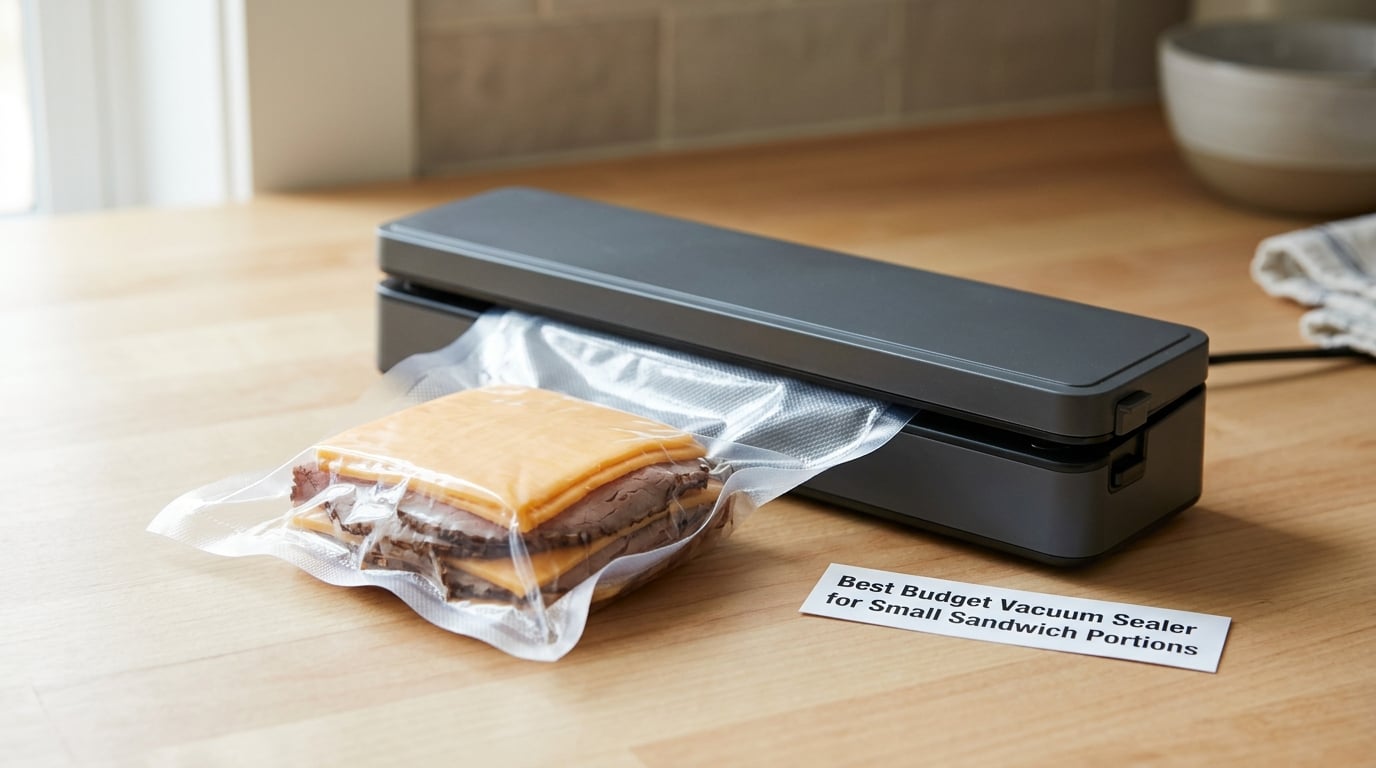
The NutriChef PKVS handles a single sandwich-size portion, which is exactly what most lunch prep calls for.
It seals a bag holding six to ten slices of turkey or a stack of salami with a slice or two of cheese, and it does it on a counter footprint small enough to keep out permanently. The dry setting is what you will use nine times out of ten, and on a dry sandwich bag the pump clears the air without dragging anything into the channel.
Where it stops is scale. A full one-pound deli package needs a bag wider than this unit comfortably handles, and the pump is not the strongest in this group, so thick or stiff bags take longer and occasionally need a second pass. If you are buying a deli counter pack every week, look at the FoodSaver V3150 below instead. For a Sunday lunch prep of five or six small bags, this is plenty.
2. Best Vacuum Sealer for Wide Deli-Meat Bags
The FoodSaver V3150 takes the bag sizes that come off a real deli counter, which is the whole point of the machine.
Its seal bar spans a full deli package, so a pound of sliced ham, turkey, or bologna fits across the sealing area without being crammed in sideways. That means you seal it flat, which produces an even, continuous seal instead of a narrow strip, and flat seals are what keep a stack of cold cuts from curling and drying in the fridge.
Owners describe it as loud. The pump is a real pump and you will hear it, which is fine in a kitchen and worth knowing if you plan to seal late at night. The hinge on some units feels light in the hand, so support the lid with your palm on a thick bag rather than relying on the latch alone. It accepts any embossed bag roll, which keeps the ongoing supply straightforward.
3. Best Vacuum Sealer for Cheese Storage
The Anova Precision is the pick for cheese because of how gently it treats a soft wedge, and because its controls make it easy to do the same thing every time.
Cheese is the awkward one. A hard block cut into wedges seals beautifully. A fresh soft-rind wheel can slump under full suction, and a bag full of cheese can collapse inward with nothing in it to hold the shape, which is the classic sign a sealer is too aggressive. This machine gives you a gentle setting and a manual seal option, so you can draw a partial vacuum, stop, and heat-seal without crushing the wedge.
Owners also like that the profile is low and flat, so a bag of provolone slices lies flat as it enters the channel. That flat entry is what keeps a hard cheese from cracking along the seal line. It is a well-regarded general pick too, and its wet mode gives you a fallback for a softer, moister cheese.
For grated or shredded cheese, the trick longtime owners use is to shred several portions at once, bag them, and seal in a single pass rather than sealing each small serving separately. Fewer seals, fewer failure points.
Wedges cut from a block and store-bought sliced packs are two different jobs. Cut your own and you control the thickness, which means you control how hard the sealer has to work. Store-bought sliced cheese often sits in a tray with a film over it, and that film is not a vacuum seal, so it is worth re-bagging your own portions rather than trusting the tray to hold.
One thing that catches people: hard cheeses are essentially unspoiled by air, so vacuum sealing a cheddar wedge is less about extending life and more about keeping it from drying out and picking up refrigerator odors. Semi-hard cheeses like provolone and Swiss benefit more, because they lose moisture faster once cut. Soft fresh-rind cheeses benefit least, since they are short-lived either way and prefer a different kind of packaging entirely.
4. Best Vacuum Sealer for Thick Sandwich-Size Bags
The FoodSaver V4400 2-in-1 is built for the bag that is already full before you close it, which is the normal state of a proper lunch pack.
A sandwich bag packed with meat, two kinds of cheese, lettuce, and a layer of something wet is a different job from sealing dry cold cuts. The bag is stiff, the contents resist the vacuum, and the seal has to hold real tension. This unit’s stronger pump pulls that down, and its double seal gives you two heat lines instead of one, which is what you want when the bag is under load in the freezer.
The trade is counter space. It is one of the larger units here, and it is built to stay out rather than go in a cupboard. Wet or moist items need the wet setting, or liquid gets drawn toward the channel. If your prep is mostly dry deli meat and firm cheese, this is more machine than you need. If you build full sandwich bags two or three nights a week, it earns its footprint.
5. Best Vacuum Sealer for Deli-Style Portioning
The NESCO VS-12 Deluxe is the pick when the job is repetition: many similar small portions, sealed one after another, in a predictable way.
Deli-style portioning means a pound of meat becomes four or five lunch bags rather than one large bag that goes stale in the middle. This machine handles that rhythm well. The controls are direct, the seal is consistent across repeats, and the body sits flat enough that you can feed bags in with one hand while the other works the food.
Bag sizing is the part that trips people up, so here is the arithmetic most people land on:
| What you are sealing | Typical portion | Bag size to use | Notes |
|---|---|---|---|
| Sandwich prep pack | 6 to 10 slices plus cheese | Pint | Leaves the headroom that keeps the bag from collapsing |
| One-pound sliced meat, split up | 4 to 5 bags per pound | Pint, sometimes sandwich | Flatten each bag before sealing |
| Cheese wedge or sliced cheese | One sandwich to one week | Pint or quart | Quart for a whole wedge or partial block |
| Full deli counter package | 8 to 12 ounces sliced | Quart | Lay the package flat, seal across the top |
| Cheese block, whole or wedge cut | Half pound to a pound | Quart or larger | Freeze 30 to 60 minutes first if soft |
One technique from a long-running smoking and preserving forum thread is worth stealing: when you only want a few slices at a time, cut the bag open at the end closest to the seal, not the food end. The bulk of the package stays sealed and intact, and you reseal after each use instead of opening the whole thing and re-vacuuming it.
6. Best Compact Vacuum Sealer for Small Kitchens
The GERYON E2900-MS is the pick when counter space is what decides it, which in a small apartment kitchen is usually what decides it.
It takes up noticeably less room than the wide-bar machines and still handles a pint bag of sliced meat and a bag of cheese wedges without complaint. For someone who seals a few portions a week rather than running batches, a smaller pump is not a real limitation. A sandwich bag and a cheese bag every Sunday is well within what it can pull.
It is less happy with very stiff embossed bags, and a big double-sealed bag can take a couple of attempts. That is where its size stops helping you. For daily portioning of sliced deli meat and cut cheese in an apartment or office kitchen, it is a good fit and it stores away when the counter is needed for food.
7. Best Vacuum Sealer for Wet or Moist Foods
The LEM MaxVac 500 is the pick when your deli work includes moist foods, or when fresh cheese and brined meat release liquid into the bag.
Most household sealers pull liquid toward the vacuum channel when you seal a wet item, and liquid in the channel is the number one way people damage an otherwise fine machine. Wet mode slows and stages the vacuum so the pump clears air first and the heat seal goes down after the moisture is managed. It is the setting you want for fresh cheese, brined pork, and anything where you see liquid beading on the food before you close the bag.
It also handles canister-style work through a suction hose, which is a bonus if you store dry goods alongside your deli portions. The body is bulkier than the compact picks, so plan the counter space. For strictly dry cold cuts and firm cheese, this is more machine than the job requires. For fresh cheese and brined items, it is the one that will not fight you.
8. Best Vacuum Sealer for Long Food Storage
The Anova Precision Pro is the pick when the plan is to freeze portions for weeks or months rather than eat them this week.
Long storage depends on an even vacuum and a seal that does not creep. The double-seal bar on this machine lays two heat lines across the bag, which is what resists freezer burn over time, and the pump holds pressure long enough to pull a flat package down properly. Owners running batch prep report that the seals stay intact through freezer cycles without re-vacuuming.
Here is what sealed portions realistically give you, assuming food is cooled before bagging and your fridge stays at 40F or below:
| Food | Sealed, fridge | Sealed, freezer | Unopened store package |
|---|---|---|---|
| Sliced turkey or ham | About 10 to 14 days | 2 to 3 months | Use by the date on the package |
| Bologna, salami, pepperoni | About 7 to 10 days | 2 to 3 months | Use by the date on the package |
| Hard cheese, block or sliced | 3 to 4 weeks | 6 months or more | Longer once cut, since the cut face dries |
| Semi-hard cheese, opened wedge | 2 to 3 weeks | 3 to 6 months | Wrap in the original |
| Soft cheese, fresh rinds | About 1 week | 1 to 2 months, texture softens | Refrigerate, use quickly |
Two things worth knowing about the texture change. Sliced ham and turkey firm up noticeably inside a sealed bag, and bologna casings tighten. Nothing is wrong with the food; the air removal is doing exactly what it should, and the change reverses once the bag is opened. If you find it off, cut the meat thinner next time rather than sealing it thicker.
9. Best Portable Vacuum Sealer for Sandwich Prep
The MXBOLD handheld is the pick when the sealing happens away from a home kitchen, and it is a genuinely different tool from the ten countertop machines above.
It is small, rechargeable, and seals a short bag in seconds. That makes it useful for portioning meat and cheese at a market, assembling sandwich prep packs at an office, or packing food before a trip, where a full countertop unit is not coming along. Owners like that it does one thing well with no settings to think about.
The tradeoffs are real. The sealing bar is short, so it handles a sandwich-size portion rather than a full deli package. Battery life is enough for a batch of a few bags, not a Sunday of bulk prep, and it is a handheld, so you feed the bag by hand. Treat it as a supplement to a countertop unit rather than a replacement, and it works best on small dry portions, which is what you are packing anyway.
10. Best Premium Vacuum Sealer for Heavy Use
The Weston Pro-2300 is the pick for someone sealing deli meat and cheese every single day, on a deli counter or in a high-volume lunch kitchen.
Its pump is the strongest in this group and the seal bar runs long, so a full deli package goes through in one pass without being trimmed. The build is metal rather than plastic in the areas that take the most abuse, and the accessories cover canister sealing and jar lids, which is what a working kitchen ends up needing. For repeated use over years, that is where the money goes.
It is loud, and it stays out on the counter. If you seal two bags a week, that is a poor exchange and any of the picks above will serve you better. If you are running dozens of portions a day, the vacuum strength, the long bar, and the serviceable parts make this the right machine. Keep an eye on the vacuum channel and wipe it between batches, especially when sealing moist cheeses.
Frequently Asked Questions
What size vacuum sealer bags are best for deli meat and cheese?
Pint bags suit sandwich prep packs of six to ten slices plus a slice or two of cheese, and they also cover most lunch-size portions. Quart bags are the right call for a full 8 to 12 ounce deli counter package, a wedge of cheese, or a large sandwich bag. Leave 2 to 3 inches of open bag above the food so it does not collapse during the vacuum, and flatten the contents before sealing.
Can a vacuum sealer store deli meat and fresh cheese safely?
Yes, provided the food is chilled and the bag goes straight into the fridge. Vacuum sealing removes oxygen, which slows spoilage in sliced meat and cut cheese, and sealed sliced deli meat generally holds about 10 to 14 days refrigerated against the few days an open package lasts. Soft fresh cheeses hold much less, roughly a week, so seal those in smaller portions.
Should I use a vacuum sealer for wet foods?
Only with the wet or moist setting. A wet or moist mode stages the vacuum so air clears first and the heat seal goes down after the liquid is managed, which is what keeps juices out of the vacuum channel. Dry mode on a wet item can pull liquid into the pump, and that liquid is the main thing that damages a sealer. Freeze soft cheese flat for 30 to 60 minutes before sealing it.
How do I choose between a compact and wide-chamber vacuum sealer?
Go compact if you seal sandwich portions and small cheese bags a few times a week in an apartment or office kitchen. Go wide if you handle full deli counter packages, one-pound packs, or a full block of cheese, because a wider seal bar means the bag lies flat and the seal runs the full width in one pass. Wide machines also give you a stronger pump for thicker, stiffer bags.
How often should I clean a vacuum sealer?
Wipe the vacuum channel and the sealing strip after every few uses, and give the machine a proper clean monthly or whenever you have sealed moist food. Most guidance is to keep the unit out of the dishwasher, since the high heat and detergent degrade the sealing strip and the plastics. Unplug it before you do anything near the channel, and clear out any stray crumbs while you are there.
Can I vacuum seal sliced sandwich ingredients together?
Yes. Pack the meat and cheese, flatten the bag, leave a few inches of open bag above the food, and use dry mode for a dry sandwich. Add a wet or moist setting for anything that releases liquid, and use a bag with a double seal if it is going into the freezer. Very soft ingredients like lettuce and tomato release enough moisture that sealing them separately and combining them at lunchtime gives a better result.
If you want one machine for deli meat and cheese, start with the wide-bar external sealer that takes any embossed bag roll and a dry mode that does not crush thin slices. Buy a wide bar if you handle full deli packages and blocks, a compact unit if you are sealing lunch-size portions in a small kitchen, and a wet or moist mode if fresh cheese or brined meat is part of the regular order. Then seal in batches on a Sunday, label each bag with a marker, and freeze flat so nothing bends in the freezer.
One safety note worth repeating. A sealed bag creates an oxygen-free environment, which is exactly what certain anaerobic bacteria need. Cool cooked food fully before bagging, refrigerate sealed food promptly at 40F or below, and discard any bag that is swollen or smells off when opened. Unpasteurized soft cheeses such as brie, camembert, ricotta, and unpasteurized blue are the ones to leave in their original packaging.