
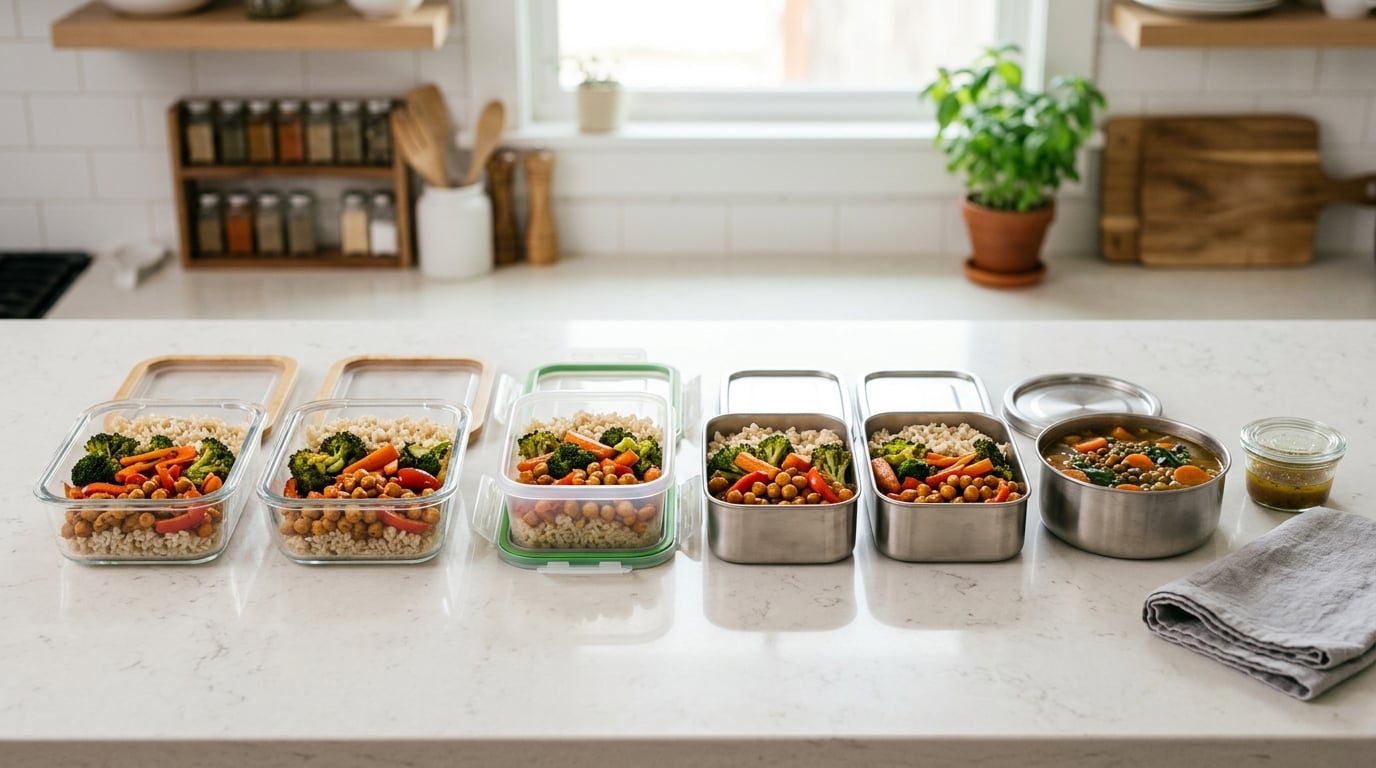
The best meal prep containers that don’t leak are the ones whose lid clamps down on a silicone gasket rather than just resting on the rim. For most people the Glasslock and Lock&Lock sets are the dependable all-rounders, Pactiv Evergreen and Sterilite cover plain packed lunches cheaply, and a Hydro Flask food jar wins outright for hot soup on the move. Nothing is completely spill-proof, so seal design still matters more than the logo on the box.
That last point is the honest one. A home meal-prepper in r/minimalist put it plainly: all food storage containers eventually leak, so don’t go expensive. That is fair advice about longevity, but it is not an argument for buying a set with a flat plastic lid that relies on friction, because friction fails on the first warm lunch and the first tilted bag.
What follows is a look at twelve formats that hold together well, why each one works, and where each one gives way. I also note the real failure patterns people report, because a container that leaks at month eight is a different problem from one that never sealed properly.
Table of Contents
- Best Meal-Prep Containers That Don’t Leak at a Glance
- 1. Glasslock Three-Piece Container Set
- 2. Lock&Lock 14-Piece Food Storage Container Set
- 3. OXO Good Grips Smart Prep Five-Piece Container Set
- 4. Pactiv Evergreen Five-Piece Rectangular Container Set
- 5. Tupperware CrystalWave Three-Piece Container Set
- 6. Pyrex Two-Piece Glass Container Set with Covers
- 7. Cambro Easy-Fit Food Pan and Cover
- 8. Hydro Flask 32-Ounce Food Jar
- 9. Contigo Stainless Steel Food Jar
- 10. Bentgo 50-Piece Plastic Meal-Prep Container Set
- 11. Sterilite 18-Piece Clear Food Storage Container Set
- 12. Stainless Steel Meal Container with Silicone-Lid Insert
- Frequently Asked Questions
- Conclusion: Start With Your Most Important Food
Best Meal-Prep Containers That Don’t Leak at a Glance
The quick version: leak resistance comes from the lid, not the box. A rigid container holds food in when locking tabs press a gasket against the rim with even pressure. Soup, salad dressing and yogurt are the real tests, because air and liquid find weak points that dry rice never will.
| Container | Material | Closure | Best for | Leak resistance | Cleaning |
|---|---|---|---|---|---|
| Glasslock Three-Piece Set | Borosilicate-style glass with plastic snap lids | Four-sided snap locks | Cooked meals, grains, sides, portioning | High with all four tabs seated | Hand-wash lids |
| Lock&Lock 14-Piece Set | Clear plastic | Four-side locking clips with gasket | Batch prep, sauce-heavy meals, light bag weight | High for soups and dressings | Lids usually hand-wash |
| OXO Smart Prep Five-Piece Set | Clear plastic with silicone seal | Snap lid over gasket channel | Dips, snacks, single portions | Good upright, limited when tipped | Dishwasher-friendly parts vary |
| Pactiv Evergreen Five-Piece Set | Clear plastic | Snap closures | Straightforward lunches and fridge storage | Moderate, dry foods only | Top-rack usually fine |
| Tupperware CrystalWave Three-Piece Set | Lightweight plastic | Fitted lid with tab seal | Salads, sides, full meals | Moderate to good when seated | Dishwasher safe |
| Pyrex Two-Piece Glass Set with Covers | Glass with plastic covers | Flat snap cover | Oven-to-fridge cooking, rice, vegetables | Good for solids, weaker for liquids | Glass dishwasher, covers by hand |
| Cambro Easy-Fit Pan and Cover | Translucent plastic | Fitted cover with side latches | Batch portions, soups, restaurant-style prep | High, deep and rigid | Dishwasher safe |
| Hydro Flask 32-Ounce Food Jar | Stainless steel, insulated | Screw lid with silicone seal | Hot soups, oats, warm grain bowls | Very high when upright and closed | Hand-wash recommended |
| Contigo Stainless Steel Food Jar | Stainless steel, insulated | Twist lid with carry handle | One-person hot meals, overnight oats | High, let steam vent first | Hand-wash |
| Bentgo 50-Piece Plastic Set | Clear plastic | Snap-lock lids, some vented | Several recipes, bento lunches, portioned salads | High on locking pieces | Hand-wash locking lids |
| Sterilite 18-Piece Clear Set | Clear plastic | Snap latches with side clips | Snacks, sandwiches, fridge organization | Moderate, not soup-grade | Dishwasher safe |
| Stainless Steel Container with Silicone Lid | Stainless steel with silicone insert | Gasket lid, clamp or press fit | Cold salads, dry snacks, non-acidic food | Good for cold, poor for hot liquids | Remove gasket and wash |
How to spot a container that will not leak in transit
Look for a gasket you can see and a lid with at least two independent points of closure on each long side. If the lid only sits in a groove with no clip, tab or screw thread, it is friction-sealed, and friction is exactly what a warm lunch and a jostling bag defeat.
Second, check whether the manufacturer says the lid can go in the dishwasher. Most locking lids are hand-wash only, and a lid run through a hot cycle can warp the sealing face so subtly that the leak shows up a month later. Forum complaints about containers that “used to be leak-proof” almost always trace back to a dishwasher cycle or a dropped lid.
Third, size for the journey. A container that has to be wedged into a cooler or squeezed into a small work bag will be crushed or jostled, and a crushed lid is an unseated lid. A r/Coolers user described exactly this with a well-regarded locking set: it worked, but the dimensions were awkward for a 45-quart cooler and the whole stack was bulky.
1. Glasslock Three-Piece Container Set
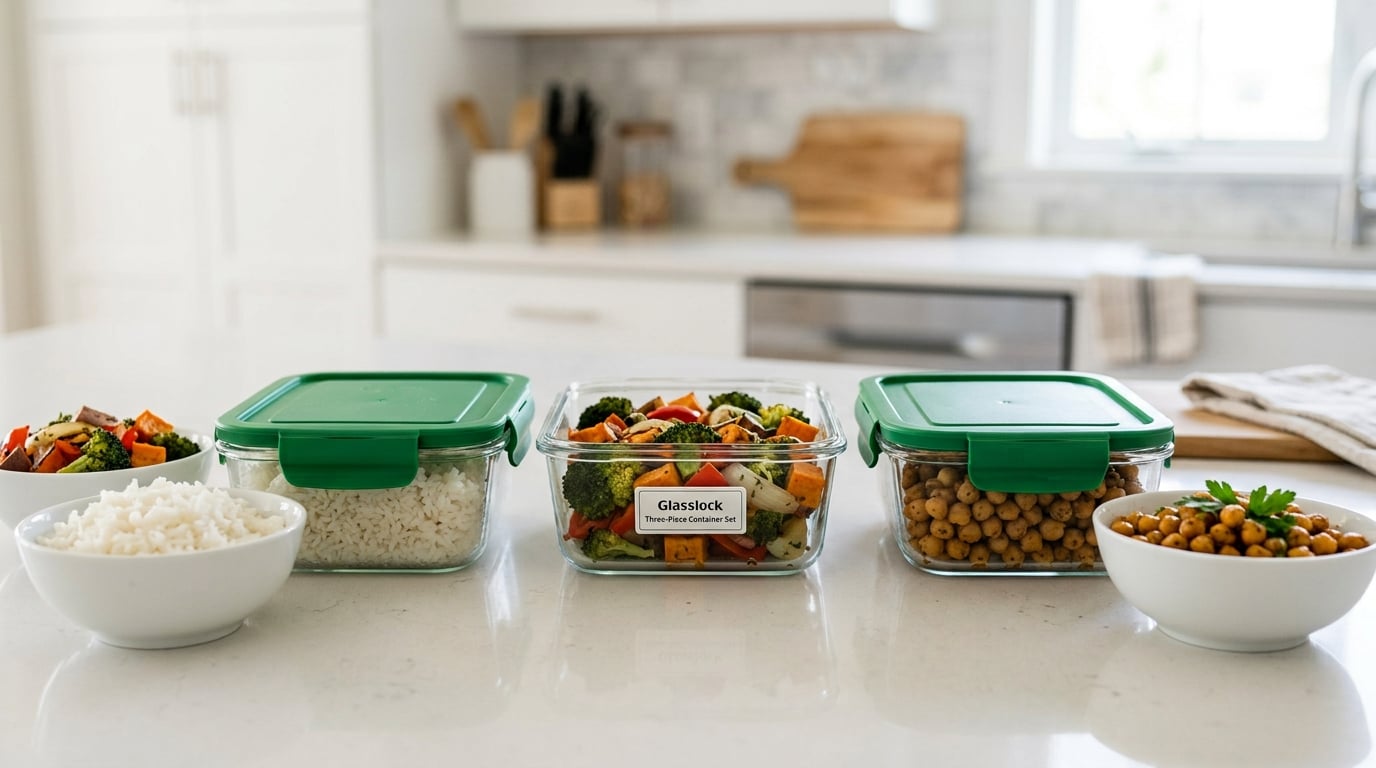
Glasslock is the pick I hand to people who want one answer for most meals. The snap-lock glass design is a strong all-around choice for vegetable sides, grains, cooked meals and portioning because the same lid geometry handles all of them.
Lid security is the reason it ranks here. Four tabs press down around the rim, so pressure comes from several directions instead of one hinge. Pop all four and the gasket compresses evenly; miss one and you have a gap that a spoonful of rice vinegar will find within a day.
Temperature handling is the strong point. Glass goes from the oven to the counter to the fridge without warping the way plastic can, so you can cook a sheet of roasted vegetables, put the cover on, and refrigerate it. The weight is the trade-off: a full glass container is noticeably heavier in a bag than the same meal in plastic, and a bag of five full ones gets genuinely tiring by Wednesday.
Cleaning is the other trade-off. The glass usually handles a dishwasher, but the snap lids are commonly hand-wash only, and a lid sitting in hot soapy water with the clips spread can lose tension.
Packing example: a two-cup container of roasted chickpeas, a three-cup of brown rice, and a small two-cup of roasted broccoli, all covered, all four tabs clicked. That trio fits a standard work bag and covers two lunches if you are hungry.
2. Lock&Lock 14-Piece Food Storage Container Set
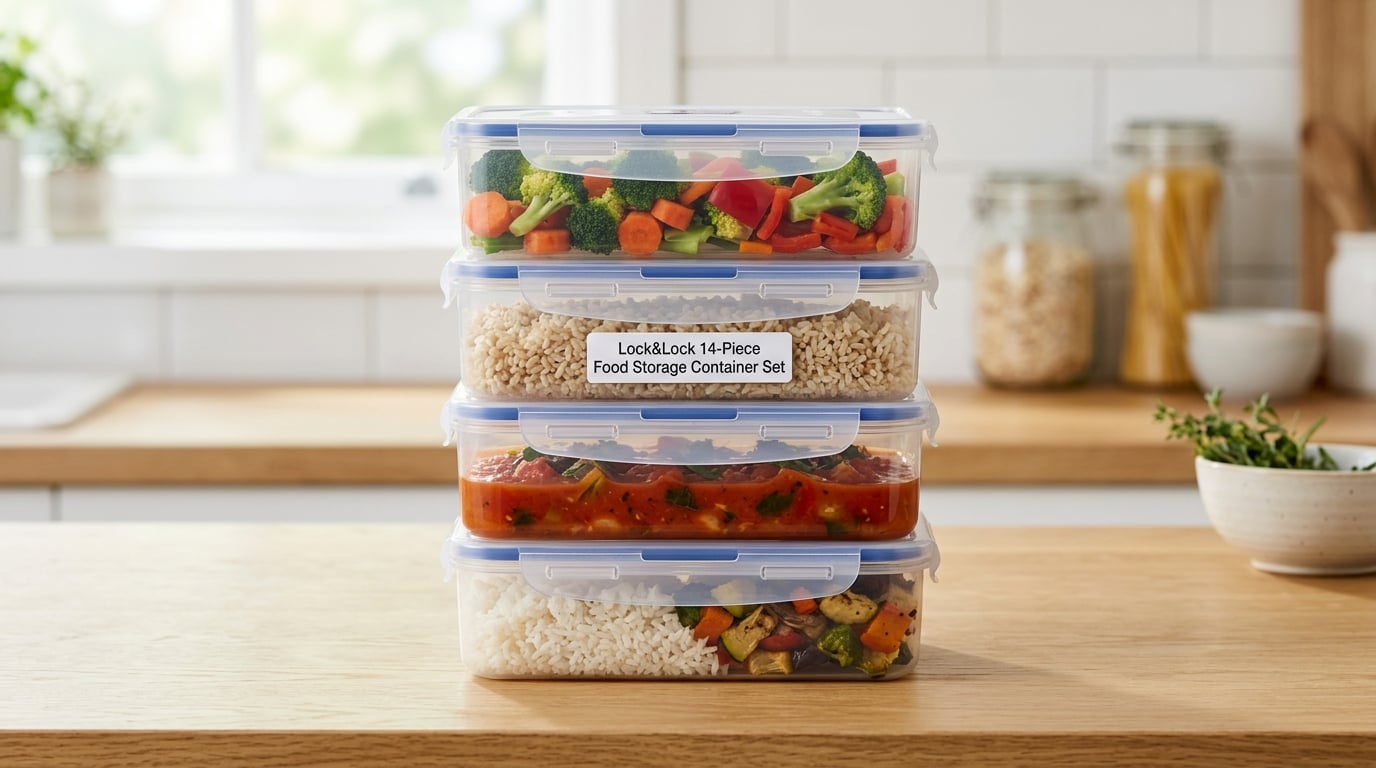
Lock&Lock is the one to pick when your prep is mostly batch cooking and your bag already has a laptop in it. The four-side locking plastic system handles meal-prep batches, refrigerated cooked food and lunch portions, and it does it at roughly a fraction of the weight of glass.
The clips are the whole design. Each side has a hinged latch that pulls the lid down onto a silicone gasket running the full perimeter, and that even compression is why locking plastic sets outperform snap-fit plastic for anything wet. For a sauce-heavy pasta or a lentil soup, this is a genuinely different level of protection.
Nesting is the underrated advantage. The tapered walls let an empty set stack into a small footprint, which matters when you are storing cooked food in the fridge for the week rather than eating it fresh. Glass sets take up a shelf; a nested plastic stack takes up one shelf’s depth.
Seal replacement is the part people miss. Gaskets on locking plastic wear out faster than the body does, and most sets include spare lids so you can swap one without buying the whole set again. Check the gasket sits flat in its channel before every use, and if it looks compressed, hard or curled, replace it rather than arguing with it.
Packing example: a small container of marinara kept in the same box as a larger one of plain penne, so the sauce coats the pasta at lunch instead of drying out overnight.
3. OXO Good Grips Smart Prep Five-Piece Container Set
The OXO Smart Prep set is built around the silicone-seal design, and its real strength is convenient everyday portions rather than soup. It is the set I would put in a desk drawer for dips, cut fruit and snack portions.
Know the limit. A silicone gasket held by a press-fit lid makes a good airtight seal for upright transport, and a much weaker one if the container goes into a bag on its side or gets tipped when you set your bag down. If your day involves a bike commute or a bus, treat this as a dry-food container.
Cleaning between components is simple if you take the pieces apart. The lid, gasket and body separate, each gets washed, and each gets dried. Reassemble dry, because a gasket that goes back on with a bead of water trapped underneath is a gasket that will smell within two prep cycles.
Use case: a portion of hummus, a small cup of cut carrots, and a shallow compartment of crackers for an afternoon snack.
4. Pactiv Evergreen Five-Piece Rectangular Container Set
Pactiv Evergreen is the budget-friendly plastic option for straightforward lunches and refrigerated cooked food. It does not try to solve the soup problem, and if you are honest about that up front it is a good buy.
The snap closures are simple and they work for dry or low-moisture food. Rice, vegetables, chicken, a sandwich cut to fit, a piece of fruit: all of that sits fine for the length of a work week. A dressing or a curry is a different story, because the closure is a snap rather than a clamp.
Durability is the other consideration. These lids are the part that gives out first, and a cracked or warped lid will not seat properly, which is why a spare lid is worth more than a spare container in any plastic set.
Fridge storage and odor transfer are worth knowing about. Refrigerated food is fine. Tomato-based sauces and sulfur-heavy foods like onion and garlic will linger in plastic where they would not in glass, and a white vinegar soak between uses helps more than most people expect.
Who it suits: anyone who wants a simple set at the low end and packs mostly solid food.
5. Tupperware CrystalWave Three-Piece Container Set
The CrystalWave set is a lidded plastic set that works well for salads, sides and full meals. Its lightweight construction is the reason it stays in rotation for anyone who carries lunch daily and does not want to think about weight.
Stackability is genuinely good here. The shapes nest with a small lip, so a week of prep stacks into one tidy column in the fridge or on a shelf, which is the difference between a routine you keep and a routine you stop because the fridge is chaos.
The closure design is a fitted lid with a tab seal rather than a four-clip clamp. Treat it as a solid-food container with occasional sauce rather than a soup vessel, and it will serve a year of lunches easily.
Cleaning is the easy part. These are among the few meal-prep plastics that are genuinely comfortable in a dishwasher, and the lids survive it better than most because they are not doing gasket work.
How to test the seal before putting it in a bag: run water around the rim, close the lid, press down along all four edges, then invert it over the sink and give it a hard shake. A weeping container shows it in about ten seconds. Dry it fully, and if it drips, that lid is the weak point, not the container.
6. Pyrex Two-Piece Glass Container Set with Covers
Sometimes a simple glass container with a secure cover is sufficient, and this is the format to reach for. The glass handles the cooking and the storage, and the covers handle the transport.
Temperature compatibility is the reason to own glass at all. It goes from freezer to oven without warping, and you can cook in it, cover it and refrigerate it, which shortens your prep night. The tradeoff is thermal shock: a glass container that goes straight from a hot oven into a cold tap, or from freezer to counter in a second, can crack.
Weight is the cost. Two filled glass containers in a shoulder bag add up fast, and most complaints about glass meal prep are about weight and breakage, not about sealing.
For soups and stews, use the cover properly seated and upright, and understand that a flat cover is doing less than a clamped one. If your week is mostly liquid, this is not the format to rely on.
One practical warning from a r/Cooking thread: Pyrex-style glass works with coordinating plastic covers, and those covers usually cannot go in the microwave. Take the cover off before reheating, or use a paper plate as a splatter shield. Forum readers in that thread recommended sturdy glass dishes with lids as leak-resistant basics, with the same caveat attached.
7. Cambro Easy-Fit Food Pan and Cover
The Cambro Easy-Fit pan and cover is a durable, reusable food-pan format built for batch meal prep and restaurant-style portions. If you cook for a week in one go, this is a genuinely practical option.
The cover is the reason it holds. It fits down over the pan rim with side latches, and the pan walls are deep and rigid, so there is very little flex when you clip it shut. That rigidity is what keeps a wide surface of liquid from finding a gap.
Deep capacity is the other strength. The volume suits soups, sauces, curries and large portions where a shallow container would be useless. The carrying weight is real, though: full pans with covers are the heaviest items on this list, and two of them is a workout, not a lunch.
Cleaning is straightforward. These pans and covers are built for commercial kitchens and tolerate dishwasher cycles well, which is a bigger advantage over time than most buyers expect, because plastic that survives the dishwasher is plastic whose seal geometry keeps its shape.
Best used for: a Sunday soup session where you portion eight servings into pans and refrigerate them, then take two to work.
8. Hydro Flask 32-Ounce Food Jar
The Hydro Flask food jar is the best option on this list for hot soups, oats and warm grain bowls, and the reason is insulation rather than locking clips. Double-wall stainless keeps food hot through a morning commute, and a wide mouth makes it easy to eat from and easy to clean.
Condensation control is the quiet benefit. Because the outside stays cool, the jar does not sweat the way a hot plastic container does, so it does not wet the pocket of a bag or leave a ring on a desk.
Opening and cleaning need a little care. Unscrew slowly and pause when you hear the seal break so escaping air or steam does not push food toward the rim, and hand-wash rather than putting the jar in a dishwasher, which dulls the powder finish and can affect the vacuum seal over time.
The one clear limit: this is not the container for a cold salad. A jar is narrow and vertical, so a chopped salad sits badly and a creamy dressing will coat the walls. If your prep is cold, keep a separate container for it.
9. Contigo Stainless Steel Food Jar
The Contigo jar is a stainless steel insulated alternative for hot meals and one-person portions, and it competes with the Hydro Flask mostly on handling. The carry handle is the practical difference, and for a commuter who walks or bikes it is a real one.
The closure is a twist lid with a silicone seal, which is a genuine seal rather than a snap, so leak resistance is high as long as the jar stays upright and closed.
Steam pressure is the thing to expect. A tight lid on a hot meal builds pressure, and forcing it open sloshes. Open it a quarter turn first to vent, then finish unscrewing. Over a day of hot food that habit is what keeps the jar genuinely leak-free.
Cleaning: hand-wash the jar and lid, and let the gasket area dry fully before reassembling.
Whether the narrower format works: for soups and overnight oats, yes, and the narrower shape means it fits a bag pocket better than a wide-mouth jar. For a grain bowl with crunchy toppings, the wide mouth wins. Pick by your meal, not by the jar.
10. Bentgo 50-Piece Plastic Meal-Prep Container Set
The Bentgo 50-piece set is for people who prep several recipes or cook for family portions. The compartment variety is the point: shallow divided trays, deep single containers and small sauce cups in one coordinated set, so a bento-style lunch and a one-pot dinner can come out of the same drawer.
Snap-lock lids on the deeper pieces give solid leak resistance, and the small cups with their own lids are what make salad-with-dressing work, since the dressing stays sealed until you tip it in at lunch.
Stackability is better than it has any right to be for 50 pieces, since the sizes are designed to nest into a limited number of stacks. That matters more than the piece count suggests.
Plastic flexibility is the honest downside. Flexible walls flex when you clip a lid on hard or when the container is squeezed in a bag, and a flexed rim is a rim that may not seat. The locking pieces are for cooked meals and sauces; the divided trays are for dry assemblies.
Examples: a divided tray with a protein, a grain and a vegetable, plus a sealed cup of dressing. Or five deep containers of chili for a family Sunday.
11. Sterilite 18-Piece Clear Food Storage Container Set
The Sterilite set is a versatile clear plastic set for dry snacks, sandwiches, refrigerated cooked food and general fridge organization. The clear walls are the underrated feature, because you can see what is in a container without opening it and lifting the lid.
Its straightforward latches and stackable shapes work well when everything in them is dry or semi-dry. A sandwich, cut fruit, crackers, cooked rice, a stack of roasted vegetables: all fine, all reliable.
Where it falls short is soup-level protection. The latch geometry is simpler than a four-clip clamp, and the gasket channel is shallower, so a thin liquid under movement is a fairer test for these than a thick stew. If your week includes a day of soup, use a locking set for that day and keep this set for everything else.
Cleaning and care are the easiest on this list, since the shapes are simple, dishwasher-friendly and easy to dry completely. That low maintenance is what keeps a set in rotation past year one.
12. Stainless Steel Meal Container with Silicone-Lid Insert
The last format is the reusable metal alternative: a stainless steel container with a silicone-lid insert. It suits cold salads, dry snacks and non-acidic foods, and it is the most reusable option here.
Durability is its headline. No glass to shatter and no plastic body to yellow or warp, which means the container itself can outlast almost everything else in a kitchen.
Gasket maintenance is what makes or breaks it. A removable silicone insert should come out and be washed on its own, dried fully, and checked for cracks and flattened spots. Metal containers with a press-fit or clamp lid are unforgiving of an uneven seal, so the gasket has to sit flat and clean every time.
Weight is real again, though it is distributed better than glass, and cleaning stainless is easy provided you wash the gasket separately.
Why it is less suitable for very hot foods and acidic tomato-based sauces: a stainless body is fine with heat, but a silicone insert has limits, and a hot liquid held against a gasket all morning is the hard case. Long-contact acidic food is better off in glass. For a cold salad with a lemon dressing, this container is excellent, and the material simply will not absorb odors the way plastic can.
Frequently Asked Questions
How do I test whether a meal prep container leaks?
Fill the container to the top with water, close the lid, and turn it upside down over the sink. Shake it hard for ten seconds, then leave it inverted for several hours. Any beading under the rim, or a damp patch on the counter, means that seal is not airtight. Test the lid separately from the body so you know which part to replace.
Can I put meal prep containers in the dishwasher?
The container usually can, the lid often cannot. Locking lids with silicone gaskets are commonly hand-wash only, and dishwasher heat can warp the sealing face or shrink the gasket so the container leaks a month later when it never did before. Wash lids by hand, let them dry fully open, and check the gasket sits flat in its channel.
Can I microwave a meal prep container with the lid on?
Usually not with a sealed lid. Steam builds inside a closed container, which is why most plastic and glass covers are vented or must be removed for microwaving. Take the lid off or loosen it, cover loosely with a paper plate to stop splatter, and remember that many coordinating plastic covers cannot go in a microwave at all. Check the piece before you reheat.
How many containers do I need for a five-day work week?
Five lids and containers is the minimum for one meal a day, and the useful number is higher because lids get lost and you want spares. For one meal a day, budget about eight containers and eight lids, since a container with no matching lid is just fridge storage. Prepping two meals a day doubles that, and divided trays cut the count when you pack components separately.
How do I store soup safely for several days?
Cool the soup fast: shallow containers, an ice bath, or the fridge within two hours, since the danger zone runs from about 40F to 140F. Keep the container in the coldest part of the fridge rather than the door, and eat refrigerated soup within three to four days, reheating to a steaming 165F. Freeze portions you will not eat that week, and reheat from frozen only once.
Conclusion: Start With Your Most Important Food
Choose glass with four-sided snap locks for hot meals and odor resistance, four-clip locking plastic for lightweight batch prep, or insulated stainless steel for a hot meal you carry across town. Those three cover almost every realistic week.
Whatever you pick, test the lid and inspect the seal before every use. A gasket that sits flat, a lid that clicks on all sides, and a bag you close gently will keep a leak-prone container in service far longer than a neglected one. And if leaks still happen, look for a doubled zip-top bag as a backup for the day; one r/Coolers user estimated that trick works about 80 percent of the time with liquids, which is useful context for how you should treat it.