
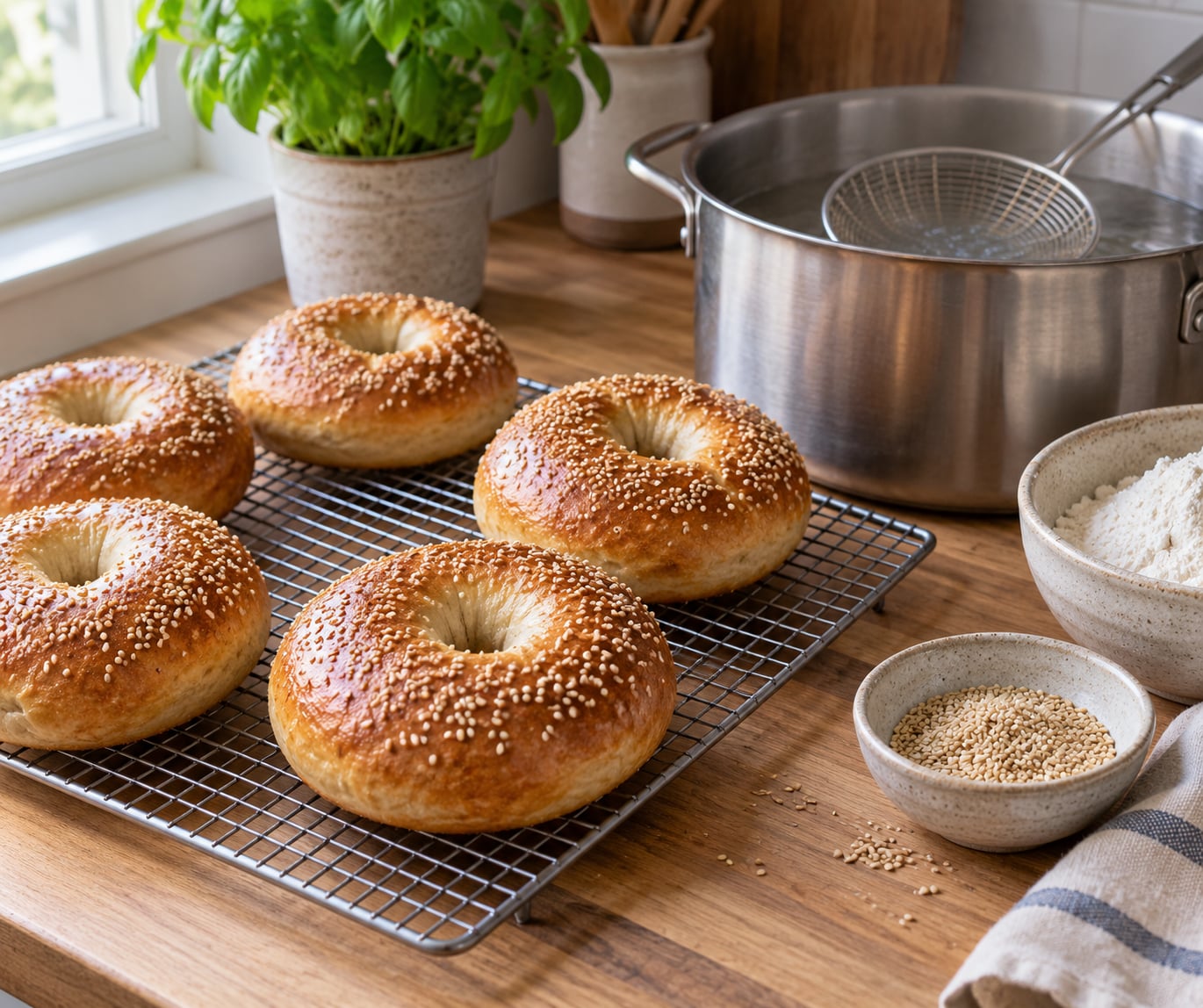
Learning how to make homemade bagels takes one afternoon of work, and the payoff is a hot, chewy ring with a glossy crust you made from four pantry ingredients. The method is the same one bakery ovens have used for a century: mix a stiff dough, knead it, let it rise, shape the rings, boil them in sweetened water for about a minute, then bake until deep gold. There is no specialty equipment involved, and nothing tricky happens quickly enough to burn. The one rule worth repeating before you start is that bread flour is not optional. All-purpose flour gives you a tighter, denser crumb because it does not have enough protein to hold the chew a bagel needs.
I have baked this dough roughly two dozen times over the past few years, and the same three mistakes keep showing up: water that is too hot for the yeast, dough that gets under-kneaded, and bagels that get squeezed shut during shaping. Every step below is written around how the dough should look and feel at that moment, because flour humidity and your kitchen temperature will move your timings more than any clock does.
Table of Contents
What You Need
The ingredient list is short, and every item earns its place. Weight measurements come first because a cup of flour can swing by 20 percent depending on how you scoop it, and that is enough to turn a workable dough into a brick.
Ingredients for 8 bagels
- 4 1/2 cups (540 g) bread flour, plus more for dusting the work surface
- 1 1/2 teaspoons instant yeast, or 2 teaspoons active dry yeast
- 1 1/2 teaspoons granulated sugar
- 1 1/4 teaspoons fine salt
- 1/4 cup (60 ml) warm water, about 110°F
- 2 tablespoons olive oil or neutral oil
- 1 tablespoon barley malt syrup, divided (1 teaspoon in the dough, the rest for the pot)
For the boiling water
- 4 quarts (3.8 L) water, enough that your pot is no more than half full
- 2 tablespoons barley malt syrup, honey, or 1 tablespoon baking soda plus 1 tablespoon honey
- Cornmeal or semolina for the baking sheet, a handful is plenty
- 1 egg white beaten with a splash of water for the wash
- Toppings: sesame seeds, poppy seeds, everything bagel seasoning, coarse salt, garlic or onion flakes, shredded cheddar, cinnamon sugar
Equipment
You need a pot wide enough for a bagel to lie flat without touching the sides, two baking sheets, a wire skimmer or slotted spoon, and a bench scraper or knife for cutting dough. A stand mixer with a dough hook works, and so does a wooden spoon followed by ten minutes of hand kneading. A kitchen scale is the single upgrade I would tell anyone to make. Beyond that, a pizza stone is a nice-to-have, not a requirement, because the bagels spend their first cooking stage in water rather than dry heat.
Two substitutions come up constantly. If you have no barley malt syrup, use honey in the pot; it gives you color and a slightly different flavor, and nobody will notice the difference on a breakfast bagel. For the flour, a high-gluten or Canadian bread flour works beautifully. All-purpose works too, just expect a firmer bagel, and mix in 2 to 3 extra tablespoons of flour if your dough feels slack.
How to Make Homemade Bagels: Step-by-Step
Step 1: Activate the Yeast
Stir the sugar into the warm water until it dissolves, then add the yeast and wait five minutes. Active yeast will bloom and turn foamy, which tells you it is alive. Instant yeast skips the foaming step and can go straight into the flour. If you keep yeast in the freezer, instant yeast mixes directly into the dry flour with no warming at all, while active dry yeast still needs that five-minute bath to prove itself. Water above 120°F kills both types, and water below 100°F wakes them up slowly.
Step 2: Mix and Knead the Dough
Combine the flour, salt, and the teaspoon of malt syrup in a large bowl. Pour in the yeast water and the oil, then stir with a sturdy spoon until no dry pockets remain. The dough will be shaggy and slightly tacky at this stage, which is exactly right.
Knead by hand for 10 to 12 minutes, or about 7 minutes on low in a stand mixer. Push the dough away with the heel of your hand, fold it back, quarter turn, repeat. You are looking for the windowpane test: pull a small piece of dough and stretch it thin, and it should form a translucent membrane with no tears. If it rips like wet paper, keep going. Under-kneaded dough is the number one reason home bagels come out dense and hard.
Step 3: Let the Dough Rise
Ball the dough, put it in a lightly oiled bowl, cover with a damp towel, and let it rise until doubled at room temperature, roughly 60 to 90 minutes. You do not need it doubled to move on; bagel dough is dense, and a rise of about 50 percent leaves plenty of structure. Over-proofed dough loses the gas needed for oven spring, so when in doubt, err early. The finger poke test tells you which side of that line you are on: press a floured finger about half an inch into the dough and pull it out. A slow spring back that leaves a slight dent means go ahead, while a quick rebound means wait, and a dent that stays means the dough is over-proofed. Shaping works best when the dough is cool and firm, so many bakers refrigerate it for 30 minutes first.
Step 4: Shape the Bagels
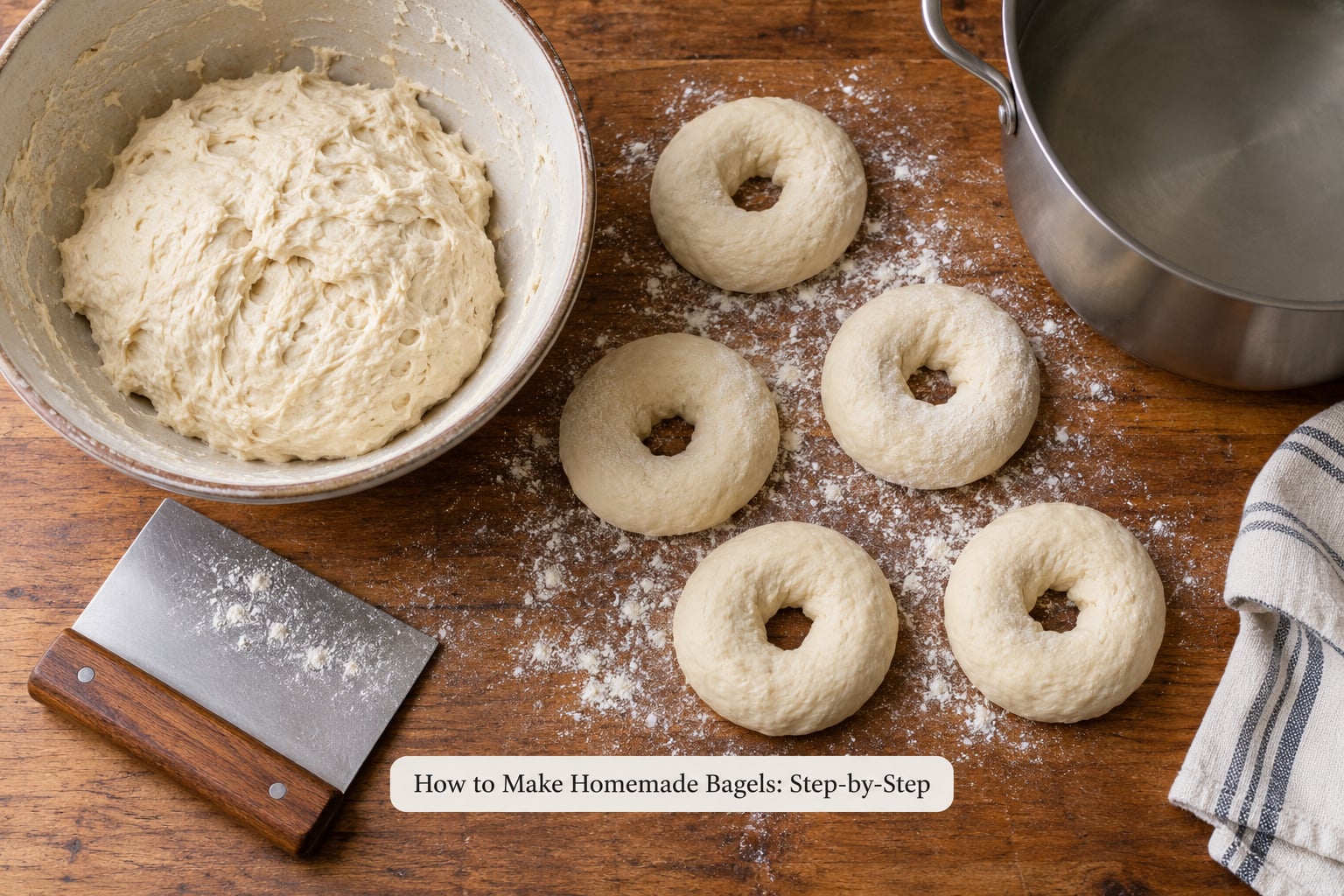
Turn the dough onto a lightly floured surface and divide it into eight equal pieces. Cup each piece and roll it into a smooth ball, letting it rest for a few minutes so the gluten relaxes and the ring does not snap back.
Now the finger-punch method: press your thumb straight down through the center of the ball, stopping about half an inch from the board, then rotate the dough a quarter turn and repeat three or four more times. The hole grows into a ring. Rolling it out afterward tears the gluten and gives you a dense, misshapen bagel. If the hole closes on you during the second rest, the gluten was overworked, which is one more argument for gentle handling.
Rest the shaped rings for 15 to 20 minutes under a towel. This bench rest is not optional. It lets the gluten relax enough that the rings keep their shape instead of slumping into ovals in the oven.
Step 5: Boil the Bagels
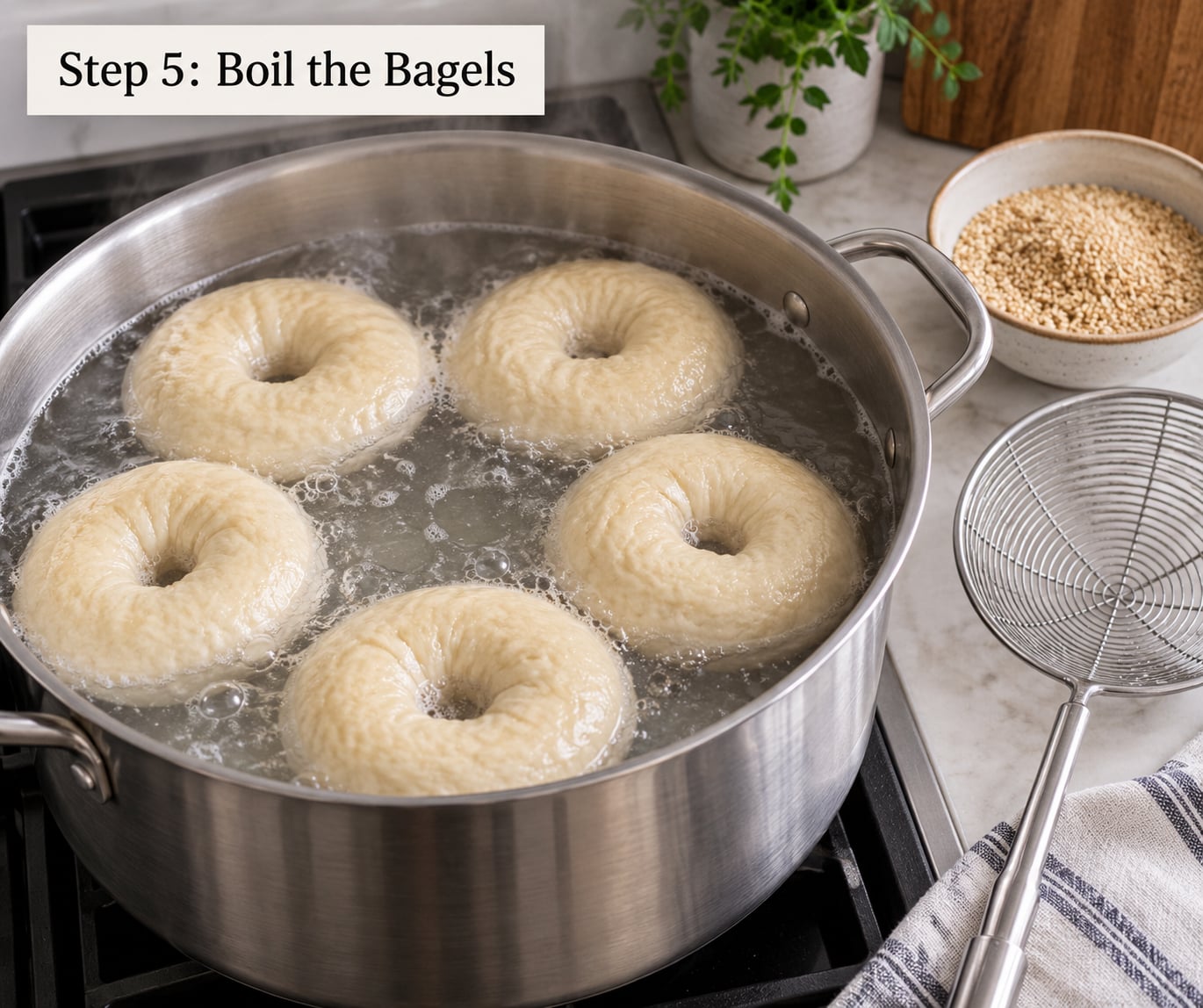
Bring 4 quarts of water to a hard boil with the malt syrup or honey, then lower the heat so the pot bubbles steadily rather than churning. Boil four bagels at a time, no more, so the temperature holds steady. Lower each ring into the water with a skimmer and cook for 45 to 60 seconds per side, about 90 seconds total, flipping once with the skimmer.
That 90-second bath is where bagels become bagels. The surface starch gelatinizes in the hot water and sets into a dense gel that resists the oven’s later expansion, which is why the crumb stays chewy instead of turning into ordinary bread. The sugar in the water browns during baking and gives the glossy shell. Boiling too long is the one mistake you cannot walk back: past two minutes the exterior starts absorbing water and the bagels turn gummy. The float test is your cue, since a properly proofed bagel floats within about 15 seconds of going in. Lift them out, let them drip over the pot for a full minute, and lay them on a cornmeal-dusted baking sheet.
Step 6: Top and Bake the Bagels
Heat the oven to 425°F (220°C) while the water comes to a boil, then brush each bagel with the beaten egg white and press on your toppings immediately, before the egg white dries. Everything bagel seasoning needs a damp surface to stick to, and the egg white gives it something to grip. Cheese goes on before the seeds so it does not slide off.
Bake for 18 to 22 minutes, swapping and rotating the two pans halfway through, until the bagels are deep golden brown on top and sound hollow when you tap the bottom. Bagels darken much less than rolls, so pull them the moment the crust turns from pale beige to a real brown, and if you are nervous, the crust color matters more than the clock. Let them sit on the sheet for a few minutes; the center is still cooking off steam.
Step 7: Cool and Store the Bagels
Cool them on a wire rack for at least 20 minutes. Trapping steam in a bag or a closed container is the fastest way to get a soggy crust and a rock-hard crumb by morning, so resist the urge to stack them while they are warm.
Bagels keep their crust best for two days at room temperature, stored in a paper bag or a loose towel, never plastic. If you want longer storage, slice them and freeze flat in a single layer, then move them to a freezer bag once solid. They hold up for about three months, and a slice that comes straight from the freezer can go into the toaster without thawing. To refresh a bagel that has gone quiet, run the whole thing under hot water for 20 seconds, then split and toast it. Five minutes in a 350°F oven works too.
Leftover bagels split into lunch surprisingly often. I keep our favorite bagels for sandwiches ranked on hand so I know what holds up best once you start layering. If you are packing them for midday, this one on keeping a morning sandwich fresh until lunch is worth reading, since a bagel needs the same care as thick bread. Stale ones also make excellent French toast and croutons, and doubling the batch is the easiest way to beat a cold morning. If you like baking on the same schedule every week, our beginner sandwich loaf recipes compared are a good weekend companion, since the yeasted dough behaves much the same way.
Common Mistakes
Dense, heavy bagels. Nearly always under-kneading, a short rise, or all-purpose flour in the bowl. Knead to the windowpane test every single time, weigh the flour, and let the dough rise until it has clearly grown. A second rise of 15 minutes after shaping helps too, and bagels made with a cold overnight ferment in the fridge come out noticeably lighter because the yeast works slowly for hours.
Tough, gummy centers. This one is about the boil. Under-boiled bagels bake into bread with a hole in it, while over-boiled ones turn to rubber. Ninety seconds total, a steady simmer rather than a rolling boil, and no more than four at a time.
Flat bagels or ovals that spread on the sheet. You skipped the bench rest, or your dough was too warm when you shaped it. Rest the rings 15 to 20 minutes before they go near the water, and refrigerate the dough briefly after the first rise if your kitchen runs warm.
The hole closes back up. Punch through in five or six passes around the dough rather than one violent thrust, and handle the rings gently from that point on. Slapping them down onto the baking sheet while transferring them from the pot causes this more than the shaping does, so use the skimmer and a slow hand.
Pale, dull crusts. You skipped the egg white wash, or your boiling water had no sugar in it. The malt syrup in the pot is what browns, and the wash is what gives the shine. Dip the boiled bagels in the wash before topping so everything has something to stick to.
Sticking to the sheet. You need cornmeal or semolina under the bagels, and parchment paper underneath that. A greased sheet alone will tear the skin right off.
Hard as a rock by day two. You stored them warm in plastic, or sealed them airtight. Paper for one to two days, sliced and frozen for anything longer.
Frequently Asked Questions
Do you need bread flour to make bagels?
For the classic chewy, bakery-style crumb, yes. Bread flour runs 12 to 13 percent protein, and that extra protein is what lets the dough stand up to boiling and baking without turning dense. All-purpose flour at around 10 percent works, but expect a firmer, tighter bagel. If you only have all-purpose, mix in 2 to 3 extra tablespoons of flour per cup to get closer to the right protein level.
What is the secret to chewy bagels?
The boil. Thirty to ninety seconds in sweetened water gelatinizes the starch on the surface, creating a thin gel layer that stops the dough from spreading and keeps the crumb dense and chewy. Sugar in that water, whether malt syrup or honey, browns during baking and gives the glossy shell. Skip the boil and you get a round loaf with a hole in it, not a bagel.
Why are my homemade bagels dense?
Three things cause it, in order of likelihood. You under-kneaded, so gluten never developed enough to trap gas. You did not let the dough rise long enough, or you used all-purpose flour instead of bread. Test your kneading by pulling a small piece of dough until you can see light through it, and push the first rise to 60 to 90 minutes in a cool room. A 30-minute chill after shaping firms things up nicely too.
Can you make bagels without boiling them?
You can, but they will not be bagels. Without the boil, the surface starch stays ungelatinized, the crumb spreads open, and the texture is closer to a soft dinner roll. You will still get a pleasant bread with a hole, and plenty of people enjoy it, so the step is worth skipping only if you want a lighter roll rather than a chewy bagel.
What can I use instead of barley malt syrup?
Honey is the easiest swap and works in both the dough and the boiling water. In the pot, one tablespoon baking soda plus one tablespoon honey gives a darker, more alkaline crust that is closer to a New York deli bagel. You can also use plain sugar, which browns the crust but adds no malt flavor. Sugar-free options leave the crust pale, so skip them.
How long do homemade bagels stay fresh?
Two days at room temperature is the honest answer, stored in a paper bag or loosely wrapped in a clean towel. Never seal warm bagels in plastic, because trapped steam softens the crust and then hardens the crumb as it cools. For longer storage, slice the cooled bagels, freeze them flat, and toast straight from frozen. They keep for about three months that way.
Conclusion
The whole method rests on four things happening in the right order: knead to a windowpane, let the dough rise, boil the shaped rings for about 90 seconds per bagel, then bake until the crust is genuinely brown. Set out your flour, salt, yeast, toppings, and a pot of water before you start mixing, so the shaping step is uninterrupted, and keep your hands dusted with flour during that part. When a step gives you a cue, such as a translucent windowpane, a slow-rebounding dent, or a bagel that floats, trust the cue over the timer. Bagels are forgiving about timing and unforgiving about texture, and those two cues are what separate a chewy bakery-style ring from a disappointing one. Once you have made them yourself, you will never look at a store-bought bagel the same way.