
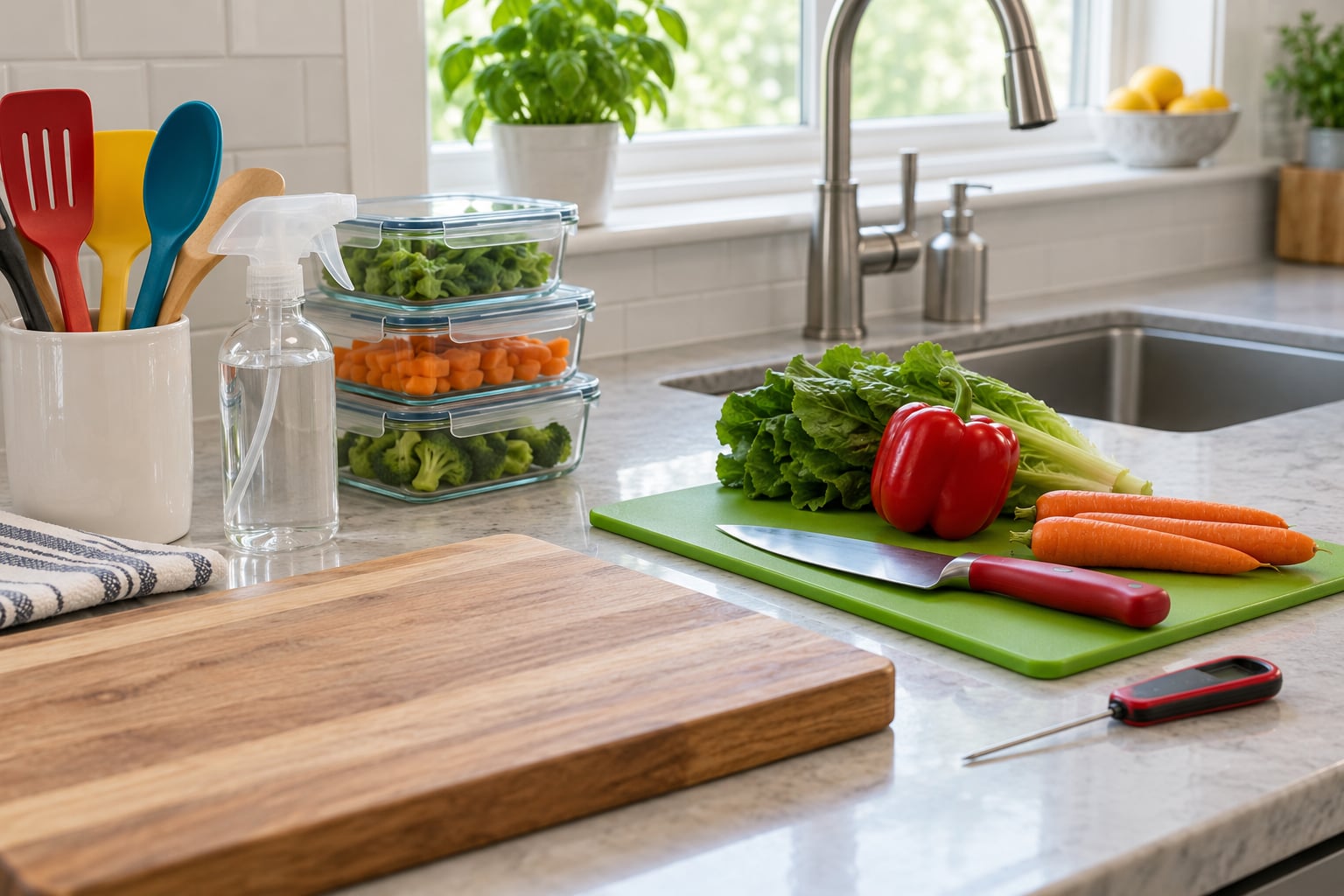
Cross-contamination happens when harmful bacteria, viruses or allergens move from one food to another, usually from raw meat, poultry, seafood or their juices onto food that gets eaten without further cooking. To prevent cross contamination in the kitchen, you separate raw from ready-to-eat food, wash hands often, store raw packages low in the fridge, and sanitize surfaces and utensils between jobs.
It takes about fifteen minutes of setup and a few habits during cooking. Most of it is free. The rest is a handful of tools you probably already own.
Last updated: October 2026
Table of Contents
What You Need to Prevent Cross Contamination
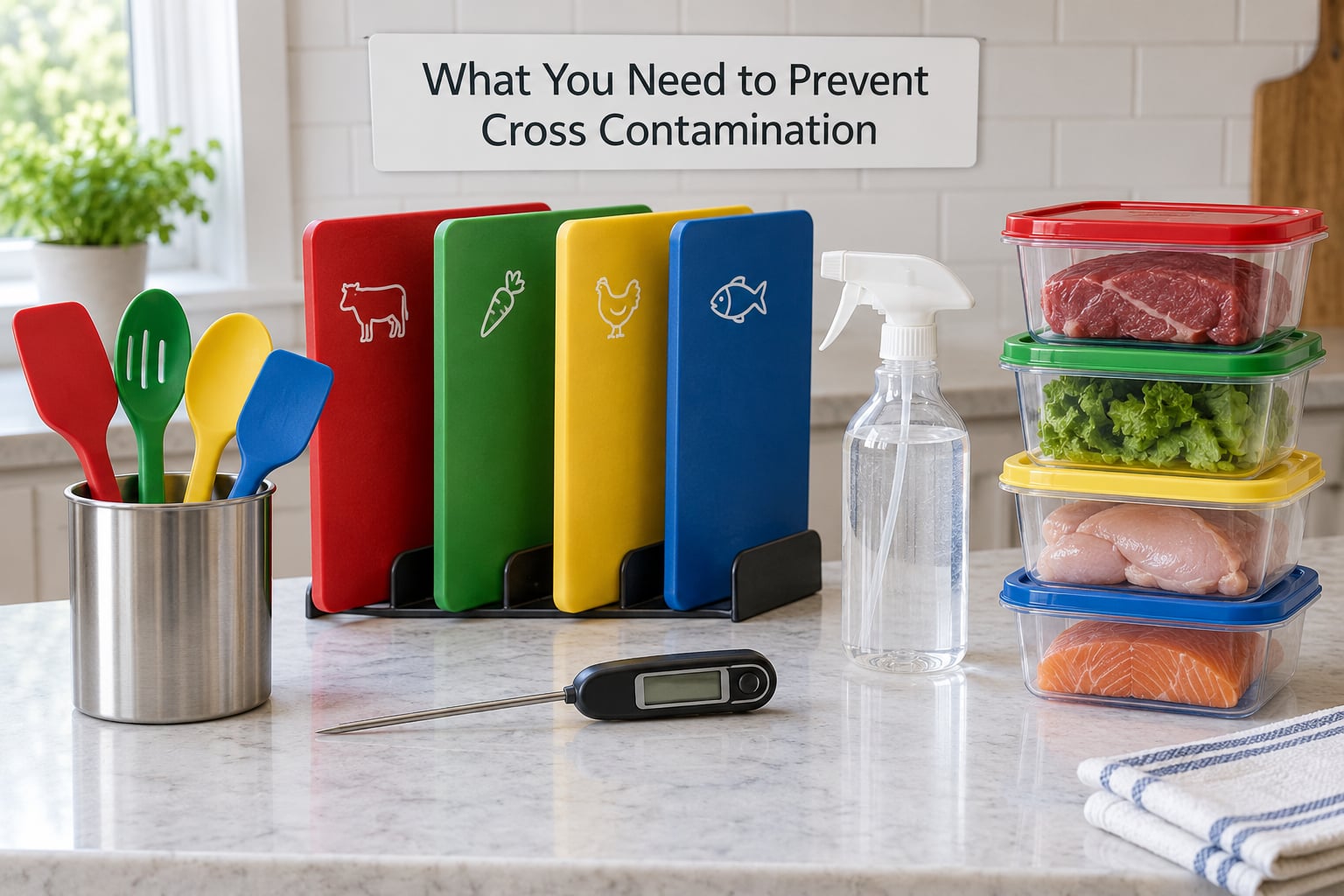
You do not need a commercial kitchen to do this properly. You need a small number of dedicated items, and most households can swap what they already have rather than buy anything.
- Two or three cutting boards. One for raw meat, poultry and seafood, one for vegetables and fruit, one for bread and ready-to-eat food. Color-coding them (red for raw, green for produce, yellow for bread) means you stop relying on memory at 6pm.
- A separate knife and utensils for raw protein. Tongs, a carving fork and a spoon that only ever touch raw meat save you washing up mid-cook.
- Unscented liquid soap and paper towels. Scented soap can leave residue on food contact surfaces. Paper towels beat a shared cloth towel for drying hands.
- A food-safe surface sanitizer or a dilute bleach solution. Follow the label. A no-rinse food-contact sanitizer is the easiest option if you dislike the smell of bleach.
- Leak-proof containers and bags. A sealed container or a zip bag on the bottom shelf stops juices reaching the shelf below.
- A reliable refrigerator thermometer and an instant-read food thermometer. The first tells you the fridge is cold enough, the second tells you the chicken is done.
- Clean dish towels, laundered and changed often. A damp towel used all evening is a damp towel carrying bacteria.
Step-by-Step: How to Prevent Cross Contamination While You Cook

Cross-contamination has three routes: direct (raw food touches ready-to-eat food), indirect (a board, knife, towel or hand carries it), and drips. The steps below close all three.
1. Separate Raw and Ready-to-Eat Foods
Ready-to-eat food is anything eaten with no further cooking: salad, cut fruit, bread, cooked rice, cold cuts, crackers. Raw proteins are the source; the ready-to-eat food is what gets infected.
Keep them apart in space, in tools and in time. Separate boards, separate knives, and separate spots in the fridge. If you have only one board, do vegetables and bread first, then wash and sanitize it before it touches raw meat, or cover the board with a sheet of plastic wrap, use it, and throw the wrap away.
For shopping, pick up produce and bread first, then meat, poultry and seafood last, and get those items into your cart in a separate bag. At home, unpack the cold items straight away rather than letting them sit on the counter next to a bag of lettuce.
How you know it worked: no raw juices on the produce, and nobody has to guess which board is which.
2. Wash Hands and Clean Surfaces Often
Wash with soap and running water for at least 20 seconds, then dry with a single-use paper towel. Scrub the backs of the hands, between the fingers and under the nails. Washing with soap is what removes the bacteria; a quick rinse does not.
Wash after handling raw protein, after using the bathroom, after touching your face or hair, after handling rubbish, and before you go back to anything that will be eaten raw. Gloves are not a substitute. They spread germs just as well, and a gloved hand touches your phone, the tap and the fridge door on the way.
Clean and sanitize counters, sink rims, handles, taps and utensils between tasks, not once at the end. Clean means washing away with soap and water. Sanitize means treating the surface with a food-contact sanitizer afterwards, and letting it air-dry. Wiping with a wet cloth does neither.
Throw the sponge away on a schedule, not when it looks bad. A used sponge is a warm, damp bacterial reservoir that gets recontaminated every time you wipe a counter. Microwaving a damp sponge for a minute kills a lot of what lives in it, but replacing it every few weeks is cheaper and easier.
How you know it worked: your hands smell like soap, not chicken, and the cutting board is dry and tacky-free before the next food goes on it.
3. Prepare Foods in the Right Order to Prevent Cross Contamination
Order of work is the cheapest control there is. Plan one direction and stick to it: ready-to-eat first, then raw.
- Make salad, chop fruit, slice bread, and portion out anything served cold.
- Wash hands, then move to vegetables that will be cooked.
- Wash hands again, sanitize the board, then handle raw meat, poultry or seafood last.
- Cook immediately, then use a clean plate to serve.
This order means you sanitize once instead of four times, and the raw work happens at the end, right before cleanup. Never go back from raw protein to a salad with the same knife. Put finished food on a clean plate, never back onto the plate that held the raw meat.
You also make fewer trips if you stage ingredients in the right places: raw items near the sink, ready-to-eat items far from it, and a scrap bowl within reach so vegetable peelings do not pile up on the board mid-prep. Keep that bowl out of the sink, away from the water where it can splash.
Never season raw meat by reaching for the spice jar with a raw-meat hand. That single move puts bacteria on a jar that then travels to the next meal. Set seasonings out in a small bowl, or wash and dry your hands first.
How you know it worked: you sanitized the board exactly once, at the moment you moved from produce to raw protein.
4. Store Raw Foods Below Ready-to-Eat Foods
Fridge organization is about drips. Raw packages go on the bottom shelf, inside sealed containers or leak-proof bags, so nothing can fall onto food that gets eaten as-is.
Top shelf: drinks, condiments, leftovers in sealed containers, and ready-to-eat items. Middle shelf: cooked foods and dairy. Bottom shelf: raw meat, poultry, seafood, and eggs in their original packaging or a leak-proof container.
Keep your refrigerator at 40°F (4°C) or below. Put a thermometer on the middle shelf and check it monthly, because a dial on the door is not a good read on the air temperature inside.
| Food | Refrigerator storage at 40°F or below | Freezer |
|---|---|---|
| Raw poultry and ground meat | 1 to 2 days | 3 to 4 months for best quality |
| Raw beef, pork and lamb steaks, chops and roasts | 3 to 5 days | 4 to 12 months |
| Raw fish and shellfish | 1 to 2 days | 3 to 8 months |
| Cooked leftovers and casseroles | 3 to 4 days | 2 to 3 months |
| Deli slices opened from a package | 3 to 5 days after opening | Not recommended |
Thaw in the refrigerator, in cold running water, or in the microwave. Thawing on the counter lets the outside of the food sit in the 40°F to 140°F (4°C to 60°C) danger zone while the centre is still frozen. If you marinate, keep the raw meat in the bottom third of the fridge and never reuse the marinade unless you boil it first.
Label and date containers you have not touched in three days, and bin anything past its time. A tidy fridge is a fridge you can actually audit, which is how you catch the sealed container at the back you forgot was there in June.
How you know it worked: nothing drips, everything is covered, and nothing in there is a mystery.
5. Use the Right Temperatures and Clean Equipment
Cooking kills most bacteria, but only if the centre actually reaches the right temperature. That is what an instant-read thermometer is for. Insert it into the thickest part, away from bone.
| Food | Safe minimum internal temperature |
|---|---|
| Poultry and ground meats, reheated leftovers | 165°F (74°C) |
| Ground beef, pork and lamb | 160°F (71°C) |
| Whole cuts of beef, pork, lamb and veal | 145°F (63°C) with a 3-minute rest |
| Fish and shellfish | 145°F (63°C) until flesh is opaque and flakes |
| Eggs | 160°F (71°C) |
Clean equipment is the last step of the same chain. Wash cutting boards, knives and utensils with hot soapy water right after use, and replace any board with deep grooves, splits or a permanently sticky surface. Those crevices are impossible to sanitize and they hold bacteria permanently. Plastic boards go in the dishwasher; wood boards dry upright, never stacked flat, so air can reach both sides.
Sanitize the sink itself. Raw meat is washed and trimmed over a sink, and that is where the contamination concentrates. Give the basin, drain board and taps a scrub with soap, then a sanitizer wipe, and dry them before you put clean dishes in.
Where germs actually travel in a home kitchen, and what fixes it:
| Location | How cross-contamination happens there | The fix |
|---|---|---|
| Cutting board | Knife grooves and one board used for raw chicken then lettuce | Separate boards, or sanitize between tasks |
| Fridge shelf | Raw package leaks onto produce below | Bottom shelf, sealed container or bag |
| Dish towel | Damp cloth used all evening, wiped between tasks | Paper towels for hands, launder the cloth often |
| Sponge | Reabsorbs bacteria from every surface it wipes | Replace every few weeks, use separate sponges for the sink |
| Reusable grocery bag | Leaks raw meat juice into produce carried alongside | Bag meat separately, wash the bag after use |
| Colander and sink | Rinsed produce water splashes onto raw meat below | Colander in the sink, meat prepped away from it |
| Phone and handles | Touched with raw hands, then to everything else | Wash hands, or set the phone down while prepping |
| Reusable container | Empty and rinsed, not washed, before storing ready-to-eat food | Wash with hot soapy water, not just a rinse |
How you know it worked: the thermometer reads the target number, and there is a clean plate waiting to serve from.
Common Mistakes That Spread Germs
Rinsing raw poultry before cooking it. It does not remove Salmonella or Campylobacter, it does not make the bird safer, and the splatter puts bacteria on your sink, faucet and nearby surfaces. Pat the meat dry with paper towel instead, and wash your hands.
Serving cooked food from the plate that held the raw meat. Heat kills bacteria in the food, not in the plate the meat sat on. Transfer to a clean plate, or to a clean platter, every time.
Wiping the counter with a cloth and calling it clean. Unless the surface was washed with soap and water first and then sanitized, you have just moved the bacteria around and left a damp surface for them to grow on.
Using one damp kitchen towel for everything all evening. This comes up constantly in professional kitchens and it is a genuine violation, not a myth. Launder cloths after every raw-meat job, or use paper towels for anything near raw protein and hand-drying.
Storing raw meat above salad ingredients. A single leak ruins everything on the shelf below. Bottom shelf, sealed, always.
Chopping vegetables, then going straight to raw chicken on the same unwashed board. The usual argument is that lettuce is never cooked, so it does not matter. That is exactly the problem: it is eaten raw, so nothing kills what lands on it.
Pouring used marinade over cooked meat. The marinade carried everything that came off the raw surface. Boil it for several minutes first, or discard it.
If you think contamination already happened, the decision is simple. Food that is ready-to-eat and has touched raw protein or an unwashed raw-meat surface goes in the bin. If a cooked dish is involved, reheat it to 165°F (74°C) and it is fine. Do not taste-test to see if it seems okay; you cannot detect pathogens by flavour.
Frequently Asked Questions
Do I really need separate cutting boards for raw meat and vegetables?
Not permanently, but you do need a clean-slate step between them. Wash the board with hot soapy water and sanitize it, then dry it, before you move from raw meat to vegetables, fruit or bread. Two boards remove the step entirely and stop you making the call in a hurry. If you are buying one, get a second board reserved for produce and bread, and a third for bread only if you bake often.
Should I wash raw chicken before cooking it?
No. Rinsing raw poultry does not remove Salmonella or Campylobacter, and the splashing pushes bacteria onto your sink, taps and surrounding surfaces. Pat the meat dry with paper towel, discard it, and wash your hands with soap for 20 seconds. Rinsing creates a bigger contamination problem than the one people are trying to solve.
How do you prevent cross contamination when cooking chicken?
Do the vegetables and bread first, then wash your hands, sanitize the board and knife, and handle the chicken last. Keep the raw package on the fridge’s bottom shelf in a sealed container so juices cannot drip. Cook it to 165°F (74°C) measured in the thickest part, then serve it from a clean plate rather than the one it sat on raw.
What are 5 safety rules in the kitchen?
Keep these five on the list: separate raw meat, poultry and seafood from ready-to-eat food; wash hands with soap and water for 20 seconds after handling raw protein; keep raw packages on the bottom shelf of the fridge, sealed; sanitize counters, boards and utensils between tasks; and cook to the right internal temperature, 165°F (74°C) for poultry and 160°F (71°C) for ground meat. Those five cover the overwhelming majority of home foodborne illness.
Can I use the same plate that held raw meat to serve the cooked food?
No, not if the cooked food goes straight onto it. Cooking kills bacteria in the food, but the plate can still carry live bacteria from the raw meat, so the heat never touches them. Move the cooked food to a clean plate, a clean platter, or a clean cutting board for carving. If you are serving a salad and raw meat together, keep the salad bowl away from the raw prep area entirely.
Conclusion
Start with the four things that stop most contamination: separate raw protein from everything eaten raw, wash hands with soap for 20 seconds, keep raw packages sealed on the bottom shelf of the fridge, and sanitize boards and surfaces between tasks.
Do those consistently and the rest is detail. Two cutting boards and a food thermometer make it easier, but the habit matters more than the equipment. Pick one item on this list to fix this week.