
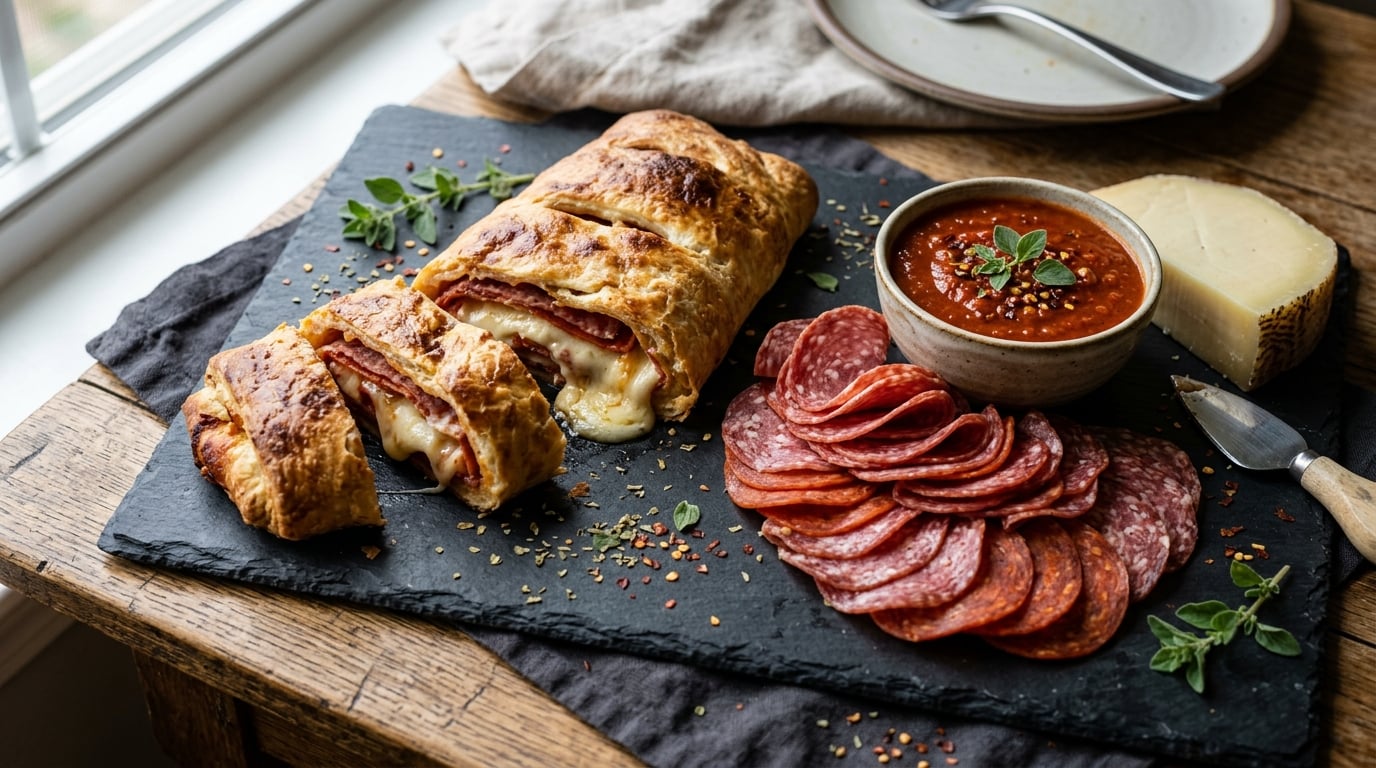
A stromboli punishes the wrong deli meat in a way a flat pizza does not. The roll bakes sealed, edge-down, for a good 18 to 25 minutes, so every drop of fat and water in your pepperoni or salami has time to soak into the dough and turn the bottom of the bread dense and heavy. The best pepperoni and salami for stromboli and hot subs are well-trimmed, dry-cured or properly dried cuts that stay chewy through the whole bake instead of weeping into the crust.
If you only buy two things, buy one dry-cured salami and one pepperoni with some heat to it, then layer a thin film of sauce, cheese, salami, pepperoni, more cheese. Plan on roughly 4 to 6 ounces of cured meat per pound of dough for a single filling, closer to 8 ounces once you add ham or sausage, and stop there. Overstuffed rolls leak fat onto the sheet pan, and that grease is where the soggy bottom comes from.
Below are ten options that hold up under that treatment, from budget sandwich packs to premium deli cases, with notes on how each one behaves in the oven.
Table of Contents
- Best Pepperoni and Salami for Stromboli and Hot Subs at a Glance
- 1. Applegate Naturals Uncured Pepperoni
- 2. Hormel Natural Choice Uncured Pepperoni
- 3. Boar’s Head Pepperoni
- 4. Citterio U.S.A. Salami
- 5. Hormel Italian Style Salami
- 6. Boar’s Head Salame
- 7. Citterio U.S.A. Soppressata
- 8. Hormel Hard Salami
- 9. Citterio U.S.A. Piccante Salami
- 10. Citterio U.S.A. Milano Salami
- Frequently Asked Questions
- Conclusion: Start With the Sandwich You Want to Eat
Best Pepperoni and Salami for Stromboli and Hot Subs at a Glance
Ten picks, sorted by where they sit in the sandwich rather than by any ranking. Pepperonis come first because they supply the cup, char and fat that make a stromboli look right, and the salamis follow because they bring the chew, the salt and the spice.
| Product | Type | Flavor | Melt | Best use | Buying consideration |
|---|---|---|---|---|---|
| Applegate Naturals Uncured Pepperoni | Pork and beef, uncured | Mild, clean, lightly seasoned | Moderate, softens without collapsing | Balanced two-meat stromboli | Check the label for current curing style and thickness, since the line changes |
| Hormel Natural Choice Uncured Pepperoni | Pork and beef, uncured | Savory, mild heat | Good, browns evenly | Everyday sub or batch cooking | Widest grocery footprint of the list |
| Boar’s Head Pepperoni | Beef-forward, deli style | Rich, seasoned, faint heat | High fat, curls in the oven | Meat-heavy stromboli, deli counter | Premium tier; buy smaller slices for a smaller roll |
| Citterio U.S.A. Salami | Pork, sandwich-style salami | Moderate spice, clean salt | Low, keeps its bite | Texture-forward hot sub | Sell-through date matters more than price on soft salami |
| Hormel Italian Style Salami | Pork, garlic-forward | Garlic, approachable spice | Low to moderate | Sub built with sausage and ham | Budget tier, easy to find |
| Boar’s Head Salame | Pork, deli-cut salame | Robust seasoning, meaty | Low, holds shape | Centerpiece of an Italian sub | Ask for end slices if you want more edge |
| Citterio U.S.A. Soppressata | Coarse-ground pork | Chile heat, garlic, bold | Low, chewy | Spicy stromboli variation | Heat is real; halve the pepperoni if serving kids |
| Hormel Hard Salami | Pork, dry-cured style | Concentrated, salty, firm | Very low, barely softens | Sub where salami texture should survive | Slice thin or it fights the bite |
| Citterio U.S.A. Piccante Salami | Pork, dry-cured | Peppery aroma, chile warmth | Very low | Sweet pepper, onion, mild cheese | Slice before baking, not after |
| Citterio U.S.A. Milano Salami | Pork, mild dry-cured | Balanced, mild, smooth | Very low | Mixed crowd, mild counterpoint | Pairs cleanly with both cheese types |
Best Pepperoni and Salami for Stromboli and Hot Subs: How We Chose
Every product on this list was judged against the same six questions, and each question exists because of a specific thing that goes wrong in a rolled sandwich.
Moisture and fat. The single biggest factor. A soft, lightly cured salami releases water into hot dough and the crust underneath it never recovers. Dry-cured and hard salame hold their own liquid, and well-trimmed slices have less fat to render onto the pan. Users cooking this at home repeatedly rank trimming above brand prestige, describing a slice as clearly well trimmed or cloaked in greasy pork fat, and that description lines up with how the roll bakes.
Melt behavior. Pepperoni should cup and char at the edges. Salami is not supposed to melt; if it does, it was the wrong cut for the job. Choosing a meat for how it behaves in heat matters more here than on a flat pie, where a single slice sees much less oven time.
Flavor balance against tomato and cheese. A stromboli is already salty and acidic. Meats that are loud on their own collapse into a single note, so each pick below is paired with the sauce and cheese it works with instead of being ranked in a vacuum.
Texture after baking. The consensus among home cooks is a narrow window: chewy, not crumbly-dry and not rubbery-wet. Dry salame that crumbles and soft salami that turns to mush are the two ways a filling fails.
Value and sourcing. Prices for these meats move around, so each pick is labeled by tier rather than a figure. Nearly all of them are sold in ordinary supermarkets, club stores and online, and the premium picks are worth it only when the roll is big enough to justify the fat.
Quantity per roll. Forum recipes for this dish almost always specify counts rather than weights, and the counts cluster in the same range. Translating them to weight is the single most useful adjustment a home cook can make, because the number that works for a pepperoni roll is frequently too much for a stromboli.
1. Applegate Naturals Uncured Pepperoni
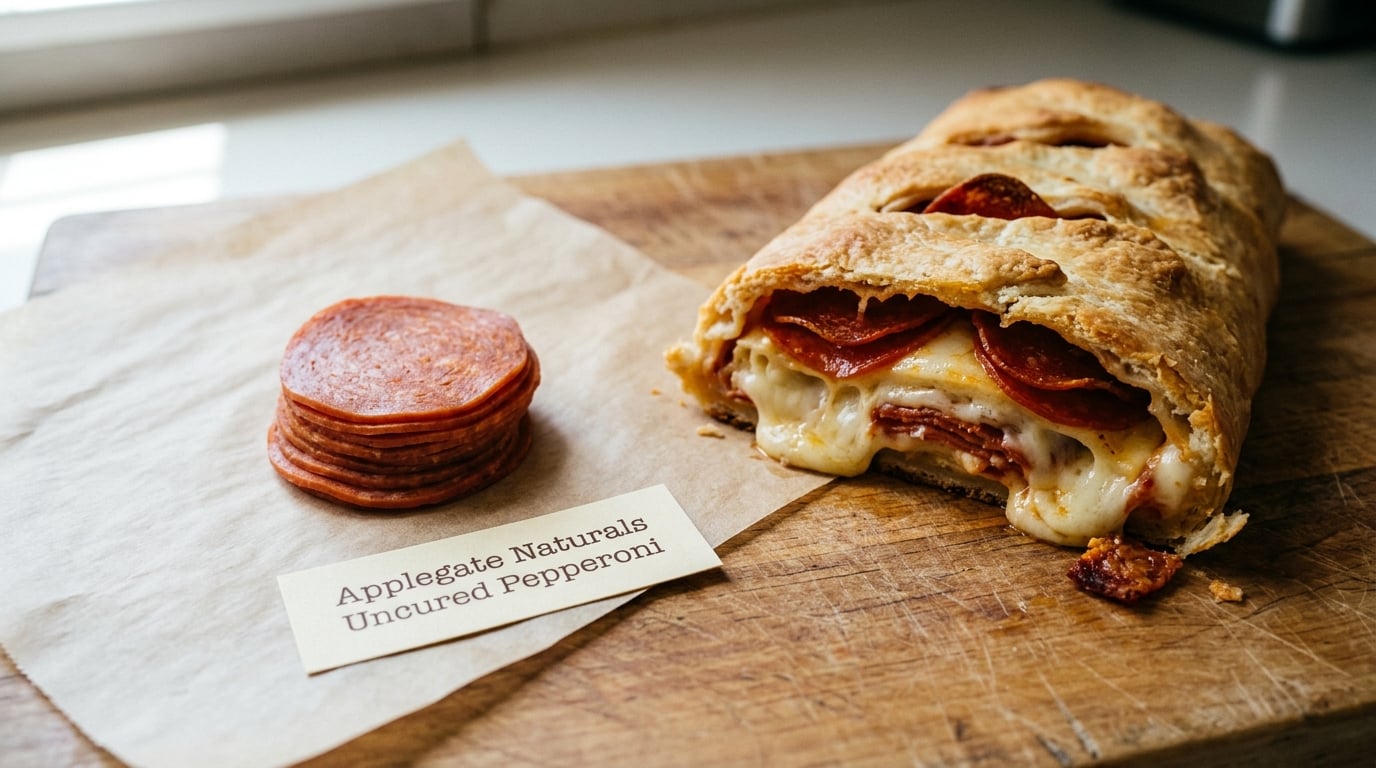
This is the one to buy when you want a filling that plays well with a second meat instead of dominating it. Uncured here means no added nitrites, with curing coming from naturally occurring nitrates, and the flavor lands mild and clean rather than aggressively seasoned.
In the oven the slices soften and brown without collapsing into a greasy puddle, which makes them a safe middle layer between cheese and salami. For a two-meat stromboli, put Applegate under the salami so the spicier meat sits on top and you can taste it first.
Formulations shift between production runs, so read the label before you buy and check the slice thickness. Thick slices in a small roll crowd the center; thin ones dry out faster in a long bake. Most people land somewhere in the middle and stop worrying about it.
2. Hormel Natural Choice Uncured Pepperoni
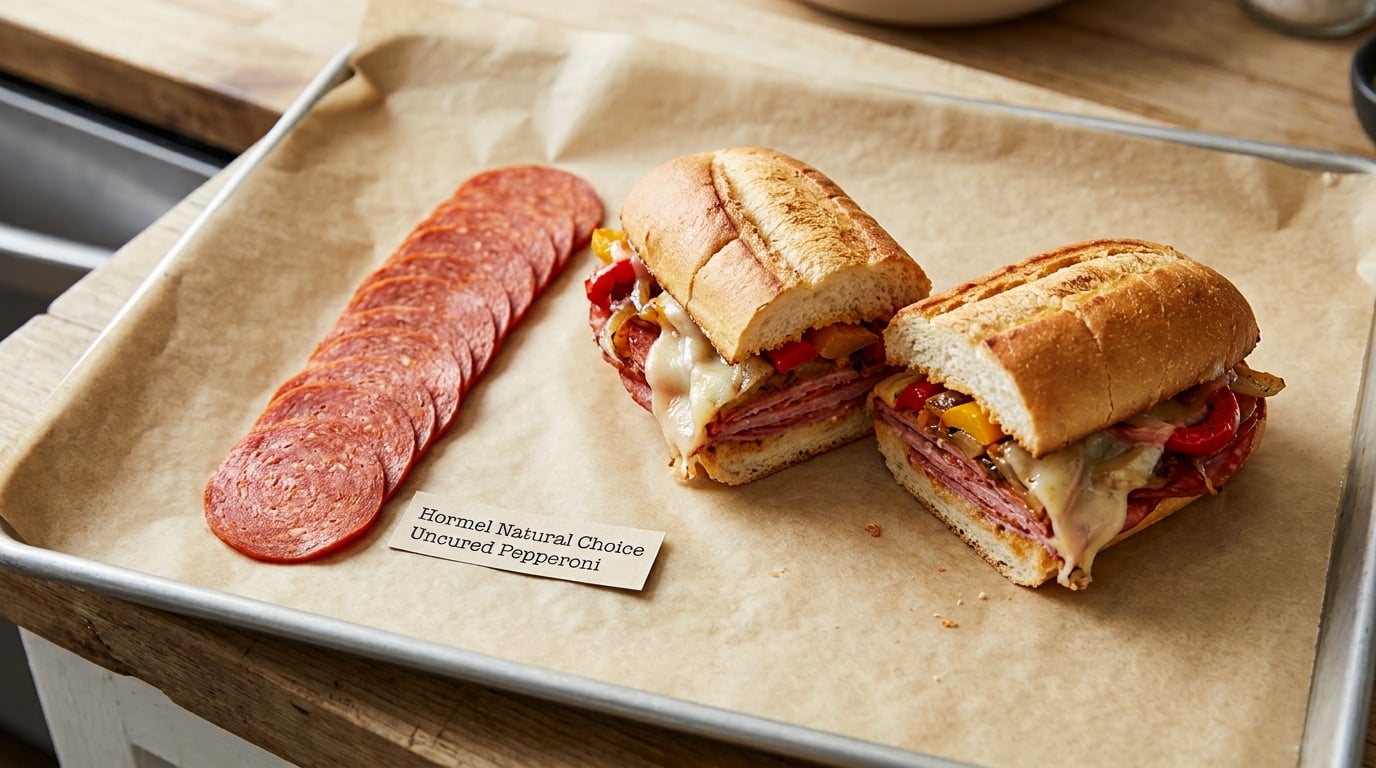
Hormel’s uncured pepperoni is the easy pick for a weeknight sub, mostly because it is the hardest one to get wrong. The flavor leans savory with a small kick of heat that reads well against provolone and roasted peppers.
It browns evenly in a home oven or toaster oven, which matters more than it sounds. Pepperoni that spots and scorches in patches leaves you with some slices bitter and some pale, and a sub cut into portions ends up tasting uneven from end to end.
It also holds up as the only meat in the roll if you are feeding people with different tastes, which is a different problem than building the most interesting sandwich. Two of these plus a salami next door is a good compromise for a mixed table.
3. Boar’s Head Pepperoni
Boar’s Head brings the flavor intensity that a deli counter promises. The seasoning is deeper and the slices run on the richer side, with a beef-forward character that carries through a heavy bake rather than disappearing into the cheese.
That fat is the point and also the risk. In a meat-heavy stromboli, lay these slices in a single layer near the top of the filling so they cup against the cheese and char at the edge instead of sitting in the middle where they render into the dough.
The premium tier is justified when the roll is large. On a small one, the richness crowds out the salami and the marinara, and a mid-tier pepperoni gives you more of the roll’s own character. Ask for a hand-trimmed slice if the deli case offers it; the trimming difference shows up as grease on the sheet pan.
4. Citterio U.S.A. Salami
This is the pick for anyone who finds soft sandwich salami disappointing. Citterio’s U.S.A. salami has a firmer texture and a moderate spice that survives the oven without dissolving, so a bite of the finished roll still has structure to it.
Layer it directly on the cheese rather than against the dough. Cheese is the barrier that keeps meat moisture out of the bread, and meat sitting on cheese loses very little of what it carries.
Because this salami barely softens, give it a thin enough slice to fold into the roll without tearing the seam. A sandwich-style salami that refuses to bend will push the filling out the ends during the bake, and that is the most common reason home stromboli leak.
5. Hormel Italian Style Salami
Garlic does the work here. Hormel’s Italian Style salami is approachable rather than spicy, and it is the one I would hand to someone who says they do not like salami but wants to try it inside a sub.
It is also the most flexible of the ten because it plays well with other meats. Add sausage, ham or a second salami and the garlic gives the whole filling a spine without competing with the other flavors, which is exactly what you need in a three-meat sub.
The budget tier matters more than it sounds here. A stromboli built on this plus a grocery-store pepperoni can land close to a deli counter version for a fraction of the cost, and the quality difference is mostly about fat, not seasoning.
6. Boar’s Head Salame
Boar’s Head salame is the centerpiece option for an Italian sub, hot or cold. The seasoning is more assertive than the standard deli salami and the texture is meaty and dense, so a couple of slices go a long way.
Use it as the anchor layer rather than as an accent. In an Italian cold sub, salame is usually the first thing laid down, with provolone, then the cured meats that are more about fat, like coppa, on top.
Expect it to hold its shape through the bake. That is a virtue in a hot sub and a limitation in a stromboli, where you want some of the meat to yield slightly to the cheese. Slice it thinner for a roll than you would for a cold sub.
7. Citterio U.S.A. Soppressata
Soppressata is a coarse-ground salami, and the texture is the point. It reads meatier and rougher than a smooth sandwich salami, holds a firm bite, and brings garlic and chile heat that survives the oven rather than mellowing out.
It suits cooks who want a hot stromboli and do not mind serving one. Pair it with a mild pepperoni and sharp provolone so the heat has something to push against, and skip sweet heat entirely if the roll also gets banana peppers.
One thing to plan for: coarse-ground salami renders differently from smooth salami, and it can be a little heavier on the pan. Keep the filling below the seam line and leave the top third of the dough clear so you have a place to roll that stays clean.
8. Hormel Hard Salami
Hard salami is the most misunderstood pick in the list. People assume it will be tough and unpleasant in a hot sub, and it will be, if you slice it thick and bake it for the full 20 minutes at high heat.
Sliced thin and given less time, it is excellent. The flavor is concentrated and salty in a way that works with a light tomato sauce, and it barely softens, so a hot sub built on it still has a chewy, substantial bite when it comes out of the oven.
This is also the sogginess answer. Hard salami carries far less water than soft sandwich salami, which is why cooks chasing a crisp crust reach for dry-cured cuts first. Pair it with more cheese and less sauce to balance the salt.
9. Citterio U.S.A. Piccante Salami
Piccante is aromatic before it is hot. The pepper hits the nose first, then the chile warmth arrives a few seconds later, which is a different experience from a salami that simply tastes spicy.
It wants sweet and mild partners. Roasted red pepper, sautéed onion and a soft, mild cheese like provolone cut the pepper without flattening it, and a light tomato sauce keeps the whole thing from getting too rich.
Treat it as a finishing meat rather than a base. Because it holds its character through baking, put it near the top of the filling where a slice in every bite will pick up the flavor. A piccante-heavy stromboli is a good sandwich to make for people who ask for hot food and then eat three slices anyway.
10. Citterio U.S.A. Milano Salami
Milano is the safe salami and a genuinely useful one. The seasoning is mild and balanced, the texture is smooth rather than coarse, and it does not fight with anything else in the roll.
That makes it the pick for a table with a range of ages and appetites, or for a lunch where you want the sandwich to taste like the bread, cheese and sauce rather than the meat. It is the counterweight in a hot-and-mild build where the pepperoni brings the heat.
Since it barely softens, slice it thin and put it on cheese. In a large roll it is the piece that keeps the filling from tasting like a pile of pepperoni, and it costs little more than the entry-level options.
Frequently Asked Questions
What is the best pepperoni and salami for stromboli and hot subs?
One dry-cured salami plus one pepperoni with some heat is the reliable default. A Genoa or hard salame supplies chew and salt, a cup-and-char pepperoni supplies the fat and char, and together they layer cleanly with mozzarella or provolone without soaking the dough. Buy 4 to 6 ounces of cured meat per pound of dough, and add more only if you are also adding ham or sausage.
Is salami better than pepperoni for a stromboli?
Neither is better, they solve different problems. Pepperoni melts, curls and chars, which is what makes a stromboli look and taste like the thing. Salami holds its bite and brings concentrated salt and spice. Most of the best versions of this sandwich use both, with pepperoni on top for the visual and salami underneath for the chew.
Should I use thick or thin pepperoni in a hot sub?
Thin slices for a small sub, medium for a large one, and almost never thick. Thick pepperoni does not bend, so it pushes the filling out of a rolled sandwich during the bake. Thin slices dry out faster in a long bake, so if you are using them, keep the oven heat a little lower and check the roll ten minutes earlier than the recipe says.
Which cheese melts best with pepperoni and salami?
Low-moisture mozzarella melts reliably and does not release water into the dough, which makes it the safer choice for a crisp crust. Provolone melts smoother and sharper and pairs well with spicy salami, but it is oilier. Whole-milk mozzarella blended with a little provolone is the usual compromise, and wet shredded cheese is the fastest route to a soggy bottom.
How long can leftover stromboli with cured meat be stored?
Keep it in the refrigerator at 40°F or below and eat it within three to four days, per USDA guidance for cooked deli meat. Store it in a shallow airtight container so the crust does not go soft, and separate the leftover sauce from the bread if you can. Reheat only the portion you are eating, and heat it until the cheese is melted and the center is steaming hot.
Conclusion: Start With the Sandwich You Want to Eat
Mild and balanced, start with uncured pepperoni and a smooth salami such as Milano. Spicy, add soppressata or piccante and cut the pepperoni back. Firm texture, pick a hard salami and slice it thin. Deli-counter character, use Boar’s Head on a large roll only.
Whatever you choose, buy a package size that matches the number of rolls you are actually baking, and check the sell-through date on soft salami, which is the one product here where an old date changes how it performs. Layer sauce thin, put the cheese between the meat and the dough, and bake slightly less than you think.