
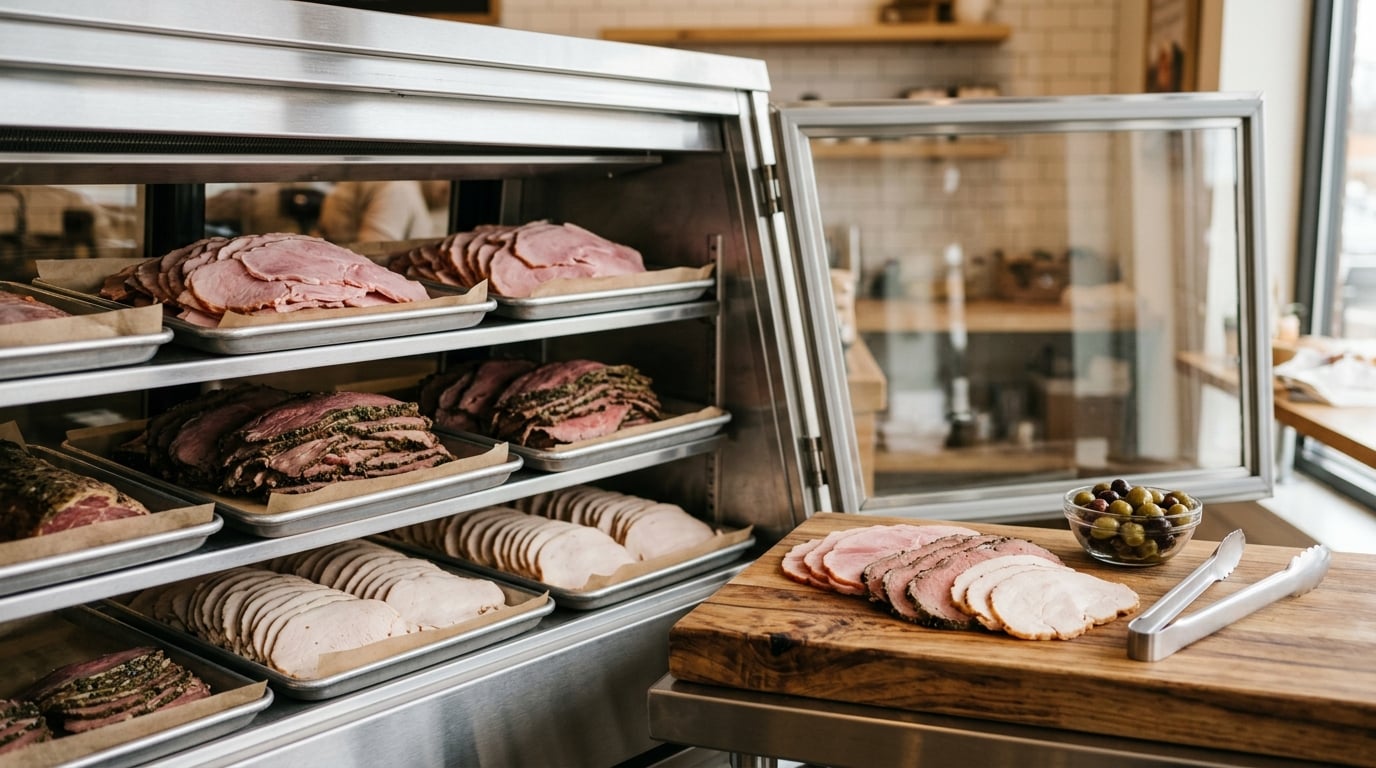
Costco deli meat is genuinely good for what it is: inexpensive, pre-sliced, generously packed lunch meat that turns into a sandwich in about a minute. It is not the same thing as fresh roast beef from a grocery store deli counter, and the confusing reputation comes from mixing it up with the plastic-wrapped staff-made sandwiches. Buy the ham, roast beef and turkey breast packs for everyday lunches. Skip the vague variety bags, the waterlogged bologna ends and anything bought on a whim because the tray looked big.
One more thing worth saying up front, because it trips up almost everyone: Costco’s raw meat counter and its deli department are two completely different businesses. Brisket, tri-tip and rotisserie chicken from the meat case earn near-universal praise from Costco members. The refrigerated packaged meat cases near the deli get far harsher reviews, mostly about saltiness, thinness and pack size waste. Everything below refers to the packaged sliced meat, not the meat counter.
Table of Contents
- Costco Deli Meat Worth Buying and What to Skip at a Glance
- 1. Kirkwood Signature Roast Beef: Worth Buying
- 2. Kirkwood Signature Honey Ham: Worth Buying
- 3. Kirkwood Signature Turkey Breast: Worth Buying
- 4. Kirkwood Signature Black Forest Ham: Worth Buying
- 5. Kirkwood Signature Deli Turkey and Ham Variety Packs: Check Before Buying
- 6. Prosciutto and Specialty Italian Meats: Buy for Special Occasions
- 7. Shredded and Rotisserie-Style Meat Products: Often Worth Buying
- 8. Deli Meat with Premium Branding: Compare Carefully
- 9. Highly Processed or Very Salty Options: Buy in Small Quantities
- 10. Deli Meat Bargains You Can Skip
- Frequently Asked Questions
- Is Costco deli meat cheaper than grocery-store deli meat?
- Which Costco deli meat is best for sandwiches?
- How should Costco deli meat be stored after opening?
- Can Costco deli meat be frozen?
- Are Costco’s premium deli meats worth the higher price?
- How do I compare the value of deli meat by price per pound?
- Start With These Four Costco Deli Meats
Costco Deli Meat Worth Buying and What to Skip at a Glance
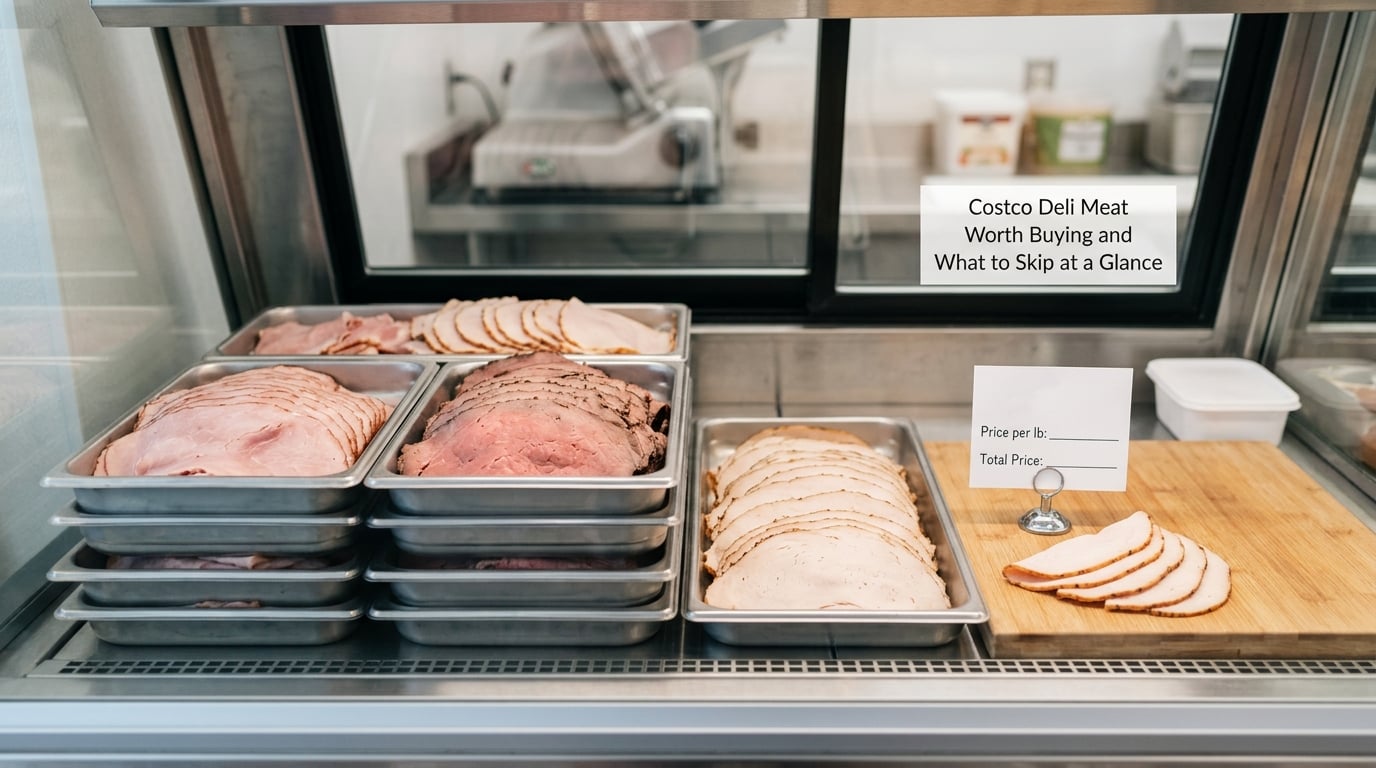
Ten categories, one verdict each. The table is sorted by how confidently I’d recommend the item, not by price.
| Deli meat | Best use | Value | Taste and texture | Convenience | Verdict |
|---|---|---|---|---|---|
| Roast beef | Cold roast beef sandwiches, wraps | Strong | Savoury, firm, adult | Slices well, no reheating | Worth buying |
| Honey ham | Kids lunches, cold sandwiches, party trays | Strong | Slightly sweet, juicy | Best pack for small households | Worth buying |
| Turkey breast | Sandwiches, wraps, salads, snack plates | Strong | Lean, mild, sometimes processed-tasting | Slices and freezes well | Worth buying |
| Black Forest ham | Sandwiches, snack plates, charcuterie boards | Good | Smoky and bold | Pre-sliced, resealable | Worth buying |
| Prosciutto and specialty Italian | Occasions, charcuterie, finishing a pizza | Weak per pound | Salty, nutty, delicate | Thin, easy to tear | Buy for special occasions |
| Shredded and rotisserie-style meats | Tacos, sandwiches, sheet-pan meals | Good if you use the whole pack | Moist, sometimes saucy | Ready to eat, heats fast | Often worth buying |
| Variety packs, mixed turkey and ham | Sample sizes, party platters | Depends on the household | Varies slice to slice | Small packs, many kinds | Check before buying |
| Premium-branded deli meat | Deli-style sandwiches, gift baskets | Weak | Usually better texture | Smaller packs, higher per-pound cost | Compare carefully |
| Very salty or heavily processed options | Flavour base, cooked dishes | Fine in small amounts | One-note, oversalted | Fine | Buy in small quantities |
| Thin, watery bargain bologna and ham ends | Filler in cooked dishes only | Poor | Watery, tears apart | Fine | Skip |
How to read the value column without a calculator: divide the shelf price by the net weight on the tray, then divide again by the number of slices. Most Costco deli packs run three to four pounds and yield somewhere between 40 and 60 slices, so a single sandwich costs a small fraction of what a lunch costs at a deli counter.
Two practical notes. Store opened deli meat in the original resealable tray or a sealed container in the coldest part of the fridge, and use it within three to five days of opening. For anything beyond that, freeze it in single-slice portions laid on a sheet pan, freeze flat, then bag it up, which is the trick Costco shoppers keep recommending to each other for months-long storage.
1. Kirkwood Signature Roast Beef: Worth Buying
Why roast beef is the safest Costco deli meat worth buying
Roast beef is the one Costco deli meat that behaves like what it looks like. The slices are firm, dry enough to hold up in a sandwich, and they taste like roast beef rather than like a generic pressed loaf. That makes it the least risky buy in the case.
It holds up cold, which is the point. Roast beef does not need a microwave, does not weep water into the bread, and survives a commute in a lunchbox without turning rubbery. Turkey breast, by contrast, loses something in a warm sandwich, and ham slices tend to go slick after a week in the fridge.
Where it does not shine is warmth and quantity. If you want a hot roast beef sandwich that tastes like the roast beef you buy fresh, the packaged slices will not get there. They are also a thinner, leaner product than deli-counter roast beef, so plan on two slices per sandwich rather than one.
Verdict: worth buying for everyday lunches, wraps and quick dinner additions. If your household prefers something milder, the honey ham is the better everyday pairing.
2. Kirkwood Signature Honey Ham: Worth Buying
Honey ham is the most crowd-pleasing item in the whole case, and the reason is simple: it works for adults and kids without a fight. The flavour is mildly sweet, the texture stays moist, and it is the one Costco deli meat most people reach for twice without noticing.
It is also the most forgiving pack for a small household. Honey ham usually comes in a smaller tray than the turkey and roast beef packs, which matters a lot for one or two people. For a two-person household, a honey ham tray is often the only pack that gets finished before the use-by date.
Serving ideas that go beyond plain sandwich bread: fold it into a wrap with apple slices and a mustard spread, cube it for a pasta salad, or lay it out on a tray with crackers and cheese for an easy snack plate. Warming it briefly in a pan with a little butter and mustard turns it into a quick sauce for potatoes.
Storage is the one thing to watch. Opened honey ham dries out faster than roast beef, so press the plastic down to push air out before you seal it. If a tray is going to take more than a few days, portion and freeze it rather than trying to make the whole pack last.
Verdict: worth buying, and the first tray to grab if you are feeding a mixed-age household.
3. Kirkwood Signature Turkey Breast: Worth Buying
Turkey breast is the item Costco members search for most, and it is the one with the most divided reviews. Some buyers slice it and freeze it for weeks and never buy deli turkey anywhere else. Others say it tastes processed and saltier than they expected for a breast.
Both reactions are fair. The texture is a uniform, slightly dense slice rather than the stringy texture of oven-roasted deli turkey from a grocery store, and the seasoning is noticeably forward. If you are used to a mild, additive-light turkey, the first bite surprises you. If you like a slice that carries flavour without a heavy condiment, it is exactly what you want.
For sandwiches, wraps and salads, this is a strong buy. It is also the best Costco deli meat for freezing because the slices are already uniform, so you can lay them flat, freeze them individually and pull out one at a time. Members on Costco forums repeatedly describe slicing the pack at home and portioning it precisely for that reason.
Buy smaller packs than you think you need. A large tray is great value only if it is finished, and a part-used turkey tray in the back of the fridge is the most common way Costco deli meat gets wasted.
Verdict: worth buying, particularly for wraps and meal prep, if you portion and freeze what you will not eat within a few days.
4. Kirkwood Signature Black Forest Ham: Worth Buying
Black Forest ham is the smoky option, and it earns its place because it does something the plain hams do not. The smoke is noticeable, the seasoning is savoury, and it holds its flavour after a couple of hours in a lunchbox, which makes it a better sandwich for a full workday than a milder ham.
It works in sandwiches, on snack plates and on a charcuterie-style spread alongside a hard cheese and some crackers. The slices are thin enough to layer two or three without the sandwich falling apart, and they are pre-sliced, so there is no knife work at all.
The trade-off is that the flavour divides households. If someone in your house prefers sweet ham, a smoky slice on their sandwich reads as salty or burnt by comparison. It is also a smaller pack, so the per-pound price is not always the friendliest in the case.
Verdict: worth buying if you want a ham with more character. It is a better fit for adults and older kids than for a five-year-old’s lunchbox.
5. Kirkwood Signature Deli Turkey and Ham Variety Packs: Check Before Buying
Variety packs are the item that most often disappoints Costco shoppers, and the reason is arithmetic rather than quality. Each slice type may only be a handful of slices, so you get a small taste of six kinds of meat instead of a full tray of one good kind. For a small household, that is a lot of packaging for very little lunch meat.
Ask three questions before you put one in the cart. Do you actually like all six kinds, or are you buying the idea of variety? How much freezer or fridge space will six half-used trays take up? And will you realistically use the leftover kinds, or will you find a forgotten turkey tray behind the mustard three weeks later?
Where variety packs make sense: a party platter, a house where everyone wants something different, or a first Costco trip when you are trying to figure out what the family likes. Take a photo of the pack and the net weight so you can compare it to the per-pound price of the single-meat trays next to it.
Verdict: check before buying, and skip it if your household is small or opinionated. Buy single-meat packs instead and make your own sampler with three or four slices of each.
6. Prosciutto and Specialty Italian Meats: Buy for Special Occasions
Prosciutto and the other imported Italian cured meats cost several times more per pound than the standard trays, and the difference is real rather than marketing. The slices are thinner, the fat is finer, the flavour is nuttier and saltier, and the texture is closer to restaurant charcuterie.
That payoff is real, but it is also the part most people skip. Prosciutto is thin enough that two slices make a sandwich, so a small pack can disappear in two lunches. The question is not whether it is good. It is whether you are actually going to use it for the occasions where it earns its price: a charcuterie board, a flatbread, a caprese, a pizza finished after baking, or a holiday grazing table.
If it is a plain Tuesday sandwich, the standard ham tray gives you a better sandwich for a fraction of the cost per slice. If it is a grazing board for eight people, the imported pack is the correct choice and the price is easy to justify across eight portions.
Verdict: buy for special occasions, and keep the daily sandwich meat on the standard trays.
7. Shredded and Rotisserie-Style Meat Products: Often Worth Buying
Ready-to-eat shredded chicken and pulled-pork style packs sit in the same refrigerated area and follow a different value rule from sliced deli meat. They are useful in cooked dishes, not cold sandwiches, and the bulk format only works if you cook the whole pack within a few days.
The convenience is real. Shredded chicken turns into tacos, a sheet-pan dinner, a wrap filling or a soup in about fifteen minutes with almost no prep, which beats slicing deli turkey by hand on a weeknight. The moisture level tends to be higher than a freshly roasted breast, which makes it better in saucy dishes and worse in a plain cold sandwich.
Check the net weight and the pack count before you buy, and count how many meals a pack actually gives you. A pack that feeds four people twice is excellent value. A pack that feeds two people once, in a single-person household, is an expensive convenience meal you will not repeat.
On reheating, warm it in a skillet with a splash of liquid rather than in the microwave alone, which keeps it from drying out. For food safety, treat anything you add to it as a cooked dish: heat poultry-based reheated meals to 165 degrees Fahrenheit, and refrigerate leftovers within two hours.
Verdict: often worth buying, provided you plan the meals before you open the pack.
8. Deli Meat with Premium Branding: Compare Carefully
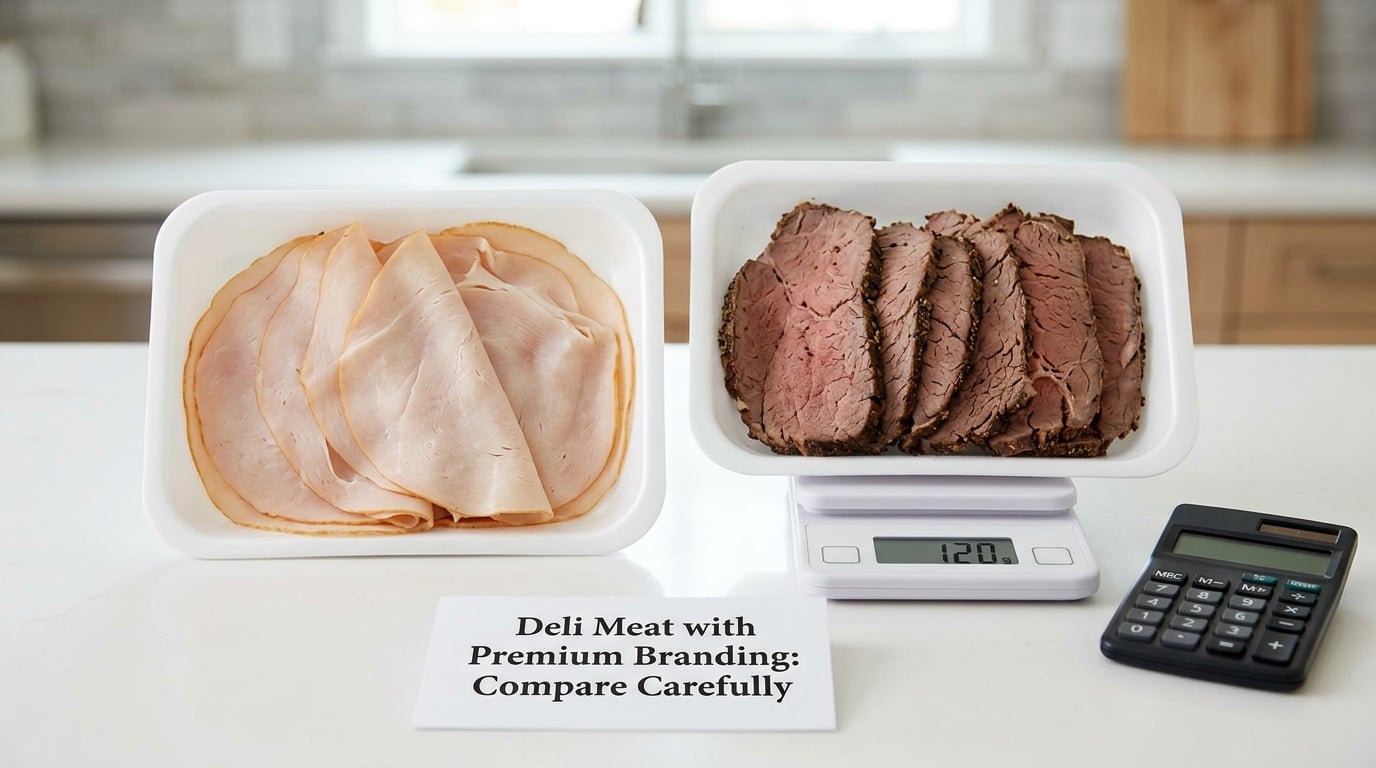
Costco carries a smaller selection of premium-branded deli meat alongside the Kirkwood Signature trays, and it is the section where shoppers get the worst value for money. The reason is not quality. It is pack size: premium trays come in noticeably smaller weights, and shoppers tend to eyeball the tray rather than the weight, so the per-pound figure lands much higher than the standard tray next to it.
Judge the premium claim on four things instead of the packaging. Price per pound, compared directly against the Kirkwood tray. Slice thickness, because a tray sliced too thin doubles in cost per sandwich. Texture, which is where premium trays do tend to be better, with less uniform, more natural-looking slices. And serving size, since a smaller tray with the same slice count costs you more per slice, not less.
What justifies the higher per-pound price: a noticeably better texture, an ingredient list without the additives the standard tray carries, or a flavour strong enough to build a sandwich around on its own. What does not justify it: a foil tray, a fancier label, or a cured and organic claim that you are not actually trying to act on.
Verdict: compare carefully, and buy premium trays for sandwiches you make often rather than for a one-off event.
9. Highly Processed or Very Salty Options: Buy in Small Quantities
Some trays in the case are essentially a flavour base rather than a lunch meat. Very salty options, heavily cured bologna-style products and anything waterlogged from its own packaging are fine ingredients, just poor main sandwiches. Used in small amounts, they add savoury depth to pasta salads, sheet-pan meals and soups. Used as the whole sandwich, they leave you wanting something else an hour later.
The tell is in the first bite. If the salt arrives before the flavour and stays with you, the per-slice cost is paying for seasoning rather than meat. If a slice leaves a puddle in the bottom of the container, the pack has more water than protein, which also drags down what you are actually paying per pound of meat.
Balance it at the table rather than in the aisle. Pair a salty slice with unsalted accompaniments like unsalted crackers, plain mustard, fresh fruit, cucumber or a sharp cheese, and skip the mayo and the sweet sauces that push the same salt further. That is a serving suggestion rather than dietary advice; if you have been told to limit sodium or processed meat, ask your doctor or a registered dietitian where these fit into your plan.
Verdict: buy in small quantities for cooked dishes, and keep them out of the rotation for daily lunches.
10. Deli Meat Bargains You Can Skip
These are the trays where the bargain is an illusion. The giveaway is always the same combination of thin slices and a large-looking tray that is not very heavy.
Thin slices that tear when you lift them cost you more per sandwich, because you use two and then wait for the third to hold together. Watery texture means the weight includes liquid, so the per-pound number flatters the product. Excessive sweetness is mostly a marshmallow texture in disguise, and it narrows who will actually eat it. Unclear value per pound happens when the net weight is printed small and the tray is big, which is exactly how big packs are designed to look.
Limited reuse is the fourth point, and it is the one that decides the purchase. A pack you will eat twice is a bad buy no matter what it costs per pound. A pack that feeds one person eighteen lunches is a good buy even at a higher per-pound number. For small households, this is where a simpler grocery store purchase of a single-pack lunch meat often wins on value once you count what gets thrown away.
Also skip the impulse tray at the end of the case. Costco carries a rotating selection, and something being available today does not mean it will be there next month. That is worth knowing for the good items too, so grab the packs you actually plan to eat rather than one for a menu you have not decided on yet.
Verdict: skip. Buy the smaller single-meat tray instead, and spend the difference on produce and bread, which costs more per pound and improves the sandwich far more than the meat does.
Frequently Asked Questions
Is Costco deli meat cheaper than grocery-store deli meat?
Usually, on a per-pound basis, the large Kirkwood Signature trays come out ahead of a grocery store deli counter for meat you will finish. The saving disappears for small households, where a heavier tray means a good share gets thrown away. Compare net weight, not tray size, and work out the cost per slice before you buy.
Which Costco deli meat is best for sandwiches?
Honey ham for a cold sandwich everyone will eat, roast beef for an adult sandwich that holds up all morning, and turkey breast for wraps and salads. Smoked Black Forest ham works when you want a stronger flavour. Avoid the thinnest slices for sandwiches, since they tear and cost you more per serving.
How should Costco deli meat be stored after opening?
Keep the tray sealed in the coldest part of the fridge and use the opened pack within three to five days. Press the plastic down before resealing so the air is pushed out. Do not rely on the use-by date once a pack is open, and do not leave deli meat on a counter or a warm car, even briefly.
Can Costco deli meat be frozen?
Yes, and it is the best way to make a large pack work in a small household. Lay the slices flat on a sheet pan, freeze them until solid, then move them into bags or a freezer container in single-portion amounts. Thaw in the fridge overnight rather than on the counter, and use thawed slices straight from cold in sandwiches.
Are Costco’s premium deli meats worth the higher price?
Sometimes. Premium trays tend to slice thinner, texture better and list fewer additives, and they are worth the per-pound price if you build sandwiches from them most days. They are a poor value for an occasional treat, and the smaller pack size is the part people underestimate. Always compare the net weight and price per slice before choosing.
How do I compare the value of deli meat by price per pound?
Divide the shelf price by the net weight on the tray, then divide that per-pound cost by the number of slices. This second number is the one that matters for sandwiches. Two trays can have the same per-pound cost and very different cost per slice if one is sliced twice as thin. Add the price of bread, cheese and produce when you compare an entire meal.
Start With These Four Costco Deli Meats
Grab the roast beef, the honey ham, the turkey breast and the Black Forest ham, and skip the rest on a first trip. Check the net weight, work out the cost per slice, portion the packs you will not finish before they go in the fridge, and come back for the specialty trays when you have a specific plan for them.