
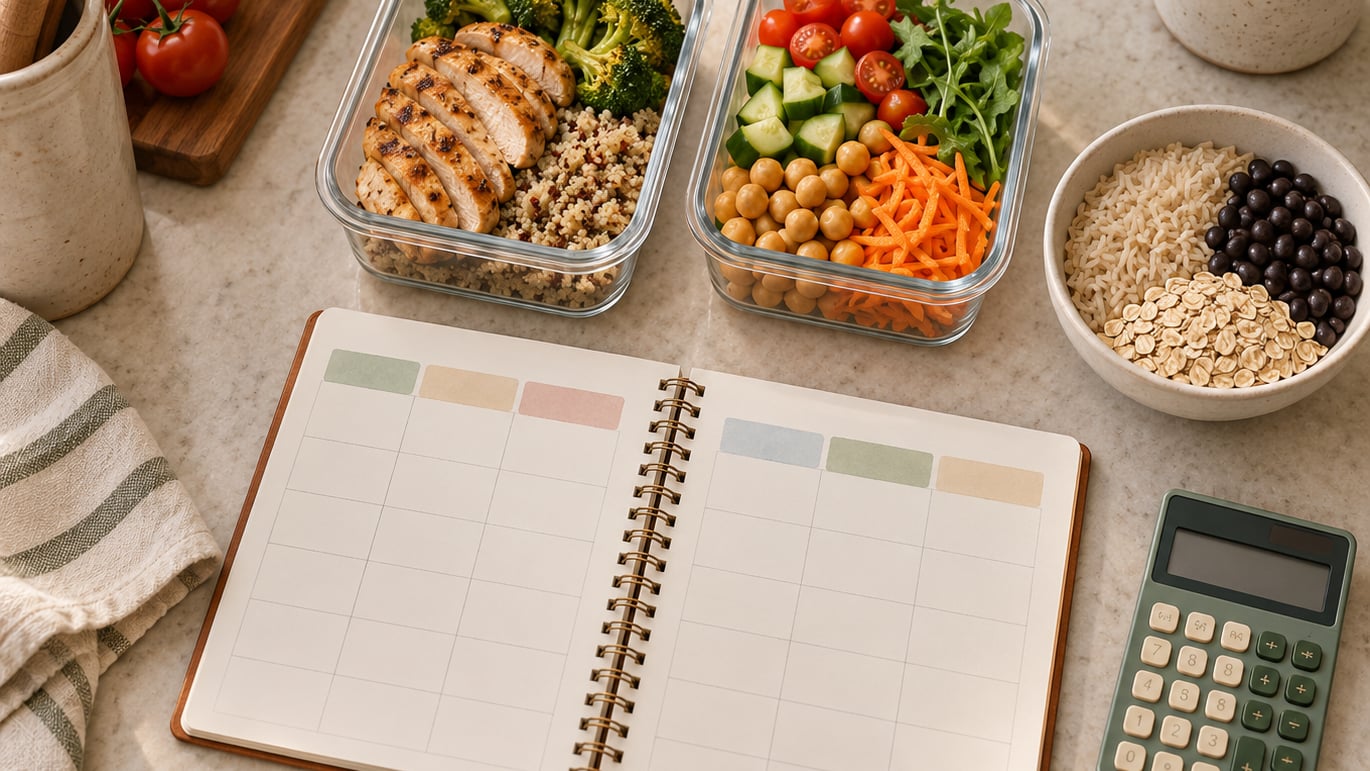
To meal plan on a tight budget, take inventory of your kitchen, set a weekly grocery number, and build a seven-day menu around two or three cheap proteins you buy on sale. Planning alone does nothing for your budget. The saving happens when every item on the list has a meal attached to it before you walk into the store.
The system takes about 20 minutes on a Sunday, plus whatever cooking the week requires. It works for a family of four or for one person cooking for one, and it keeps working once the first week is behind you.
Below is the whole process: what to gather, seven steps in order, the mistakes that quietly undo the plan, and answers to the questions people ask most.
Table of Contents
What You Need
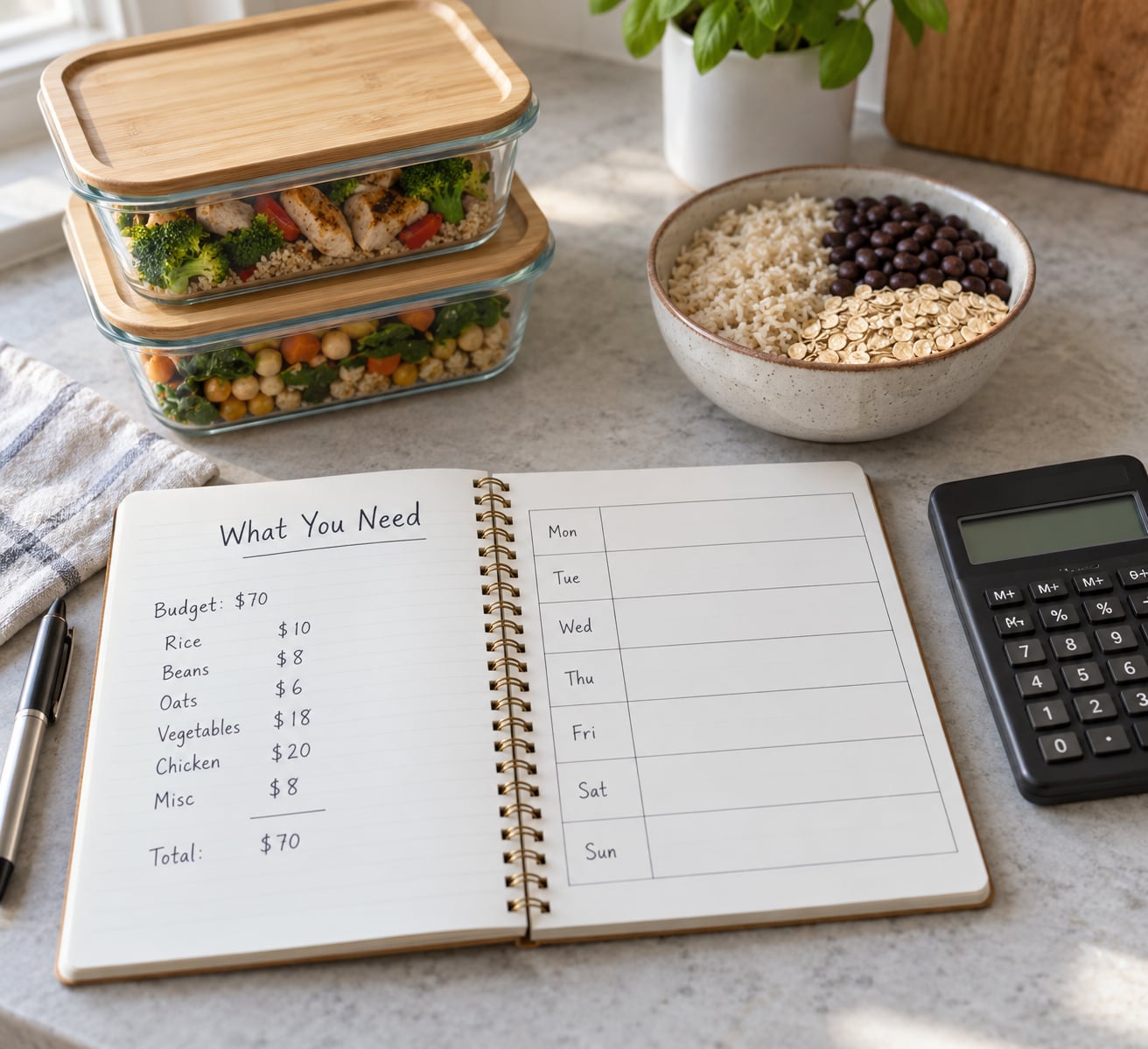
None of this is expensive. Most of it you already own.
- A weekly grocery number. One figure, written down, that you decide before you shop rather than discover afterward.
- A household meal schedule. Who is home on which night, who packs a lunch, and which night is already spoken for.
- Fridge and freezer space. Freezer space is what lets you cook once instead of five times, so know how much of it you have.
- A list you can write on. Paper works. So does a notes app, a shared list, or the store’s own app.
- Reusable containers. Four or five is enough for a family, two for one person. They are what turn cooked food into planned lunches.
- A few pantry staples. Rice, oats, dried or canned beans, canned tomatoes, onions, and a couple of seasonings. These are the backbone that keeps a week from costing too much.
Step-by-Step: How to Meal Plan on a Tight Budget
1. Set a realistic grocery limit
Work backward from what is actually coming in. Take your income, subtract fixed costs like rent, utilities, transport and debt payments, and look at what is genuinely left for food. That number is your food ceiling for the month.
From there, divide by four to get a weekly target. For a household of four, most people land somewhere between 50 and 100 dollars a week for groceries, with the spread depending heavily on how much you already keep in the pantry.
Turn that into a per-meal ceiling: take the weekly number, divide by seven days, divide by three meals, then divide by the number of people eating. For four people on a 60-dollar week, that works out to roughly 70 cents a head per meal. Real dinners will cost more and breakfast will cost less, and that is fine. The number is a check, not a law.
If you need a starting point, here is what each weekly tier tends to buy in the current US grocery market. Prices vary by region and change over time, so treat these as shapes, not promises.
- 30 dollars a week: one or two people. Rice and beans, eggs, oats, canned tuna, frozen vegetables, one bag of chicken thighs. Repeats are unavoidable at this level.
- 50 dollars a week: a family of three, or a family of four eating simple meals. Three proteins, canned goods, a bag of rice, pasta, fresh produce at its cheapest.
- 80 dollars a week: a family of four with room for fresh meat twice, better produce, and a treat or two.
- 100 dollars a week and up: room for variety, more frozen convenience, and eating out once.
2. Look at what you already have
This is the step most people skip, and it is the one that saves the most. Before you build a menu, spend 15 minutes on your pantry, fridge and freezer.
Write down what you have in three columns: use first, use soon, and does not matter. Anything with an expiration date inside a week goes in the first column and gets planned into the first two days.
Then look for ingredients that do double duty. A can of tomatoes can be sauce, soup base or chili. Cooked chicken from one dinner becomes a sandwich, a salad topper and a bowl of rice. Half a bag of rice becomes fried rice later in the week. On r/EatCheapAndHealthy, this idea gets called a pantry challenge: cooking one open bag of something until it is gone before opening the next.
On r/povertyfinance, people regularly offer to build shopping lists and loose meal plans for complete strangers inside their own budget. The plan is free. The list of what you already own is the part most households have never written down.
3. Choose a meal template and build your week around cheap proteins
The easy way to meal plan on a tight budget is to stop choosing seven different dinners. Pick two or three proteins and reuse them in different shapes.
Every affordable meal can be described with four parts: a starch, a protein, a vegetable, and something to tie it together. Once you can do that quickly, you can build a week in minutes.
- Rice, beans, cheese, frozen mixed vegetables, salsa.
- Pasta, canned meatballs or ground beef, jarred sauce, frozen broccoli.
- Tortillas, canned tuna or leftover chicken, bagged cabbage slaw, sour cream.
- Rice, shredded chicken, shredded cabbage, soy sauce and a little oil.
- Oats, peanut butter, banana, handful of raisins.
- Eggs, potatoes, onions, whatever vegetable is closest to going.
Sandwiches and wraps fit the same template, which makes them a cheap lunch that travels. If you are prepping bread-based lunches for a week, this guide on meal prepping sandwiches without soggy bread handles the storage side so nothing turns to mush by Thursday.
Cheap proteins worth rotating: eggs, canned tuna, canned beans, dried beans, chicken thighs, ground beef, frozen fish fillets, and plain yogurt. Chicken thighs cost less than breasts and are harder to ruin.
4. Plan for leftovers and flexible meals
Dinner on Monday becomes lunch on Tuesday with no extra cooking. Double what you cook, write it into the plan as two meals, and your effective cooking time drops.
Build one flexible meal into the week, usually midweek, and give it no ingredients of its own. It takes whatever is sitting in the fridge. Frittata for eggs, soup for canned goods and a tired vegetable, quesadillas for tortillas and cheese.
On storage: refrigerate most cooked leftovers within two hours, use them within three to four days, and reheat until steaming hot, which means 165F or 74C. Cook poultry to 165F, ground meat to 160F, and whole cuts and fish to 145F.
5. Build a low-cost grocery list
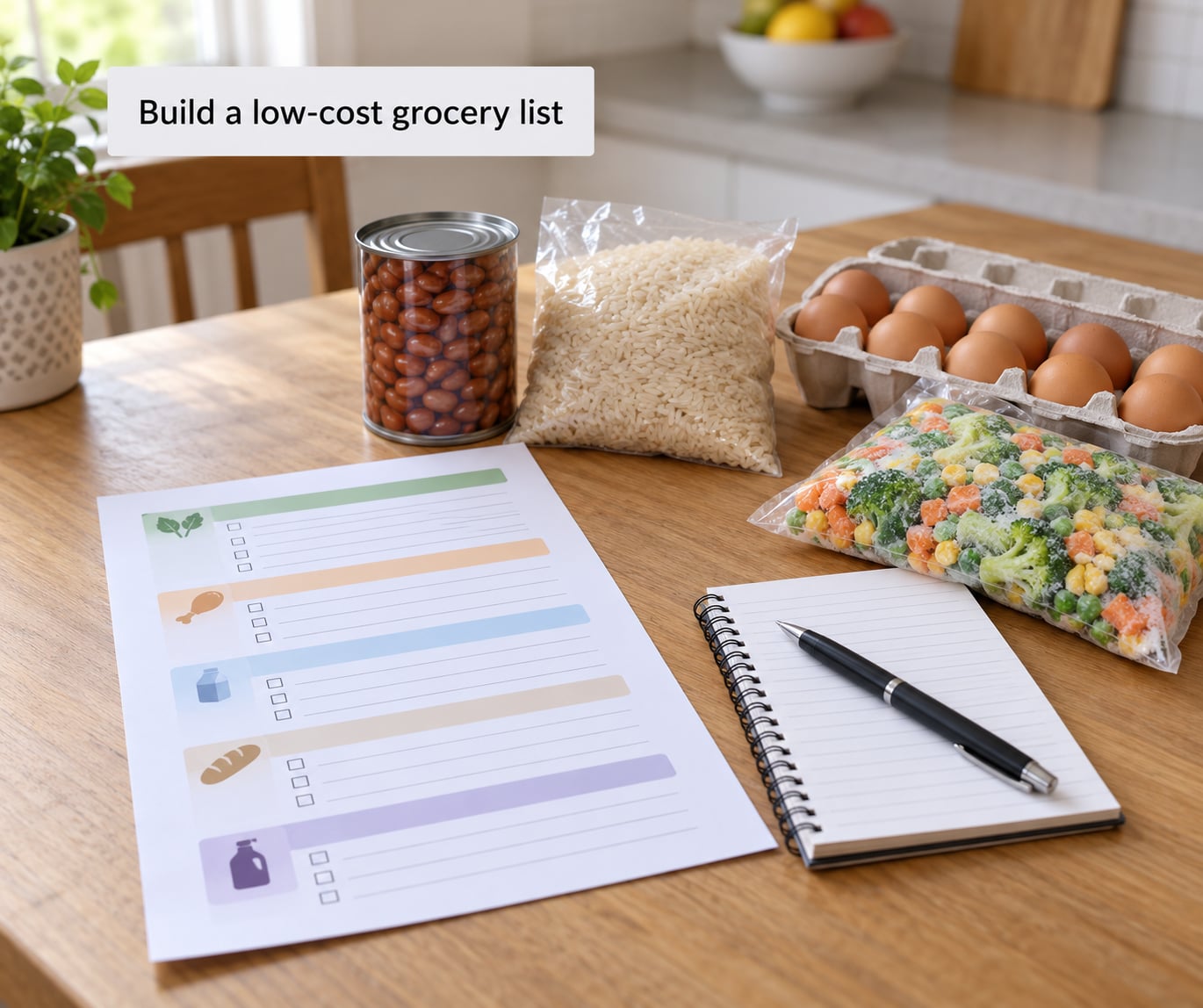
Group the list the way the store is laid out. It cuts the trip, and a shorter trip means fewer unplanned additions.
A workable list for a family of four looks roughly like this:
- Produce: two onions, three pounds of potatoes, a cabbage, carrots, a bag of apples, frozen broccoli or mixed vegetables.
- Protein: two pounds of chicken thighs, a pound of ground beef, a dozen eggs, two cans of tuna, three or four cans of beans.
- Pantry: a large bag of rice, pasta, canned tomatoes, broth, oil, salt, pepper, and whatever seasoning you actually cook with.
- Lunch and snacks: tortillas, a block of store-brand cheese, peanut butter, oatmeal, fruit, and crackers that your kids will eat.
- Frozen: a bag of frozen vegetables and a bag of frozen berries or peas for lunches.
What to cut first when money is tight, in this order: pre-cut produce and pre-washed greens, single-serve anything, premium deli meat and specialty cheese, name-brand pantry items when the store brand works, and frozen prepared meals. The cheapest food in the aisle is often the food you already have and will not eat.
Users in budget communities call out good cheese, quality chocolate and fancy produce as the items that are “really pricey per serving,” so those are sensible first cuts.
6. Shop in a strategic order
Walk the store in one direction: produce and pantry staples first, refrigerated and frozen next, impulse aisles last. Walking the whole store before picking anything is how a list gets abandoned.
Learn to read the unit price on the shelf tag, not the price on the front. A large package is only cheaper per ounce if you will actually eat all of it. Buying a twenty-pound bag of rice to stretch a four-dollar bag of rice is not saving money, it is creating a storage problem and eventually a moth problem.
Two habits from forum readers are worth stealing. Keep a small price book: an index card listing the per-ounce price of the items you buy most, so you learn what good looks like at your store. And check the markdown rack and the day-old bread cart near closing time. One reader reported buying a two-pack of day-old Italian bread for under a dollar and freezing it.
Different stores reward different habits. Discount chains push store brand and seasonal produce. Warehouse clubs are only worth it if you have freezer space and will use a whole case. A food co-op with good markdowns can beat a discount chain late in the week. If you have no full kitchen, this all changes, and that is worth a separate plan.
When you shop for sandwiches and wraps for the week, it helps to know which base actually holds up best after a few hours, covered here in our sandwich vs. salad vs. grain bowl comparison.
7. Cook once, assemble several meals
Set aside 60 to 90 minutes. Put a tray of vegetables in the oven, start a batch of rice, and cook one protein. That single session produces dinner plus two or three packed lunches.
Portion as you pack rather than scooping from the pan at midnight. Label containers with the day so you grab them front to back, and put anything going into the freezer at the back where you will find it.
For lunches that stay interesting through Thursday, rotate the base rather than repeating one meal all week. That idea is covered in best meal-prep lunches that don’t get boring by Thursday.
Common Mistakes
Planning meals nobody likes. This is the reason budget plans collapse in week three. People on r/EatCheapAndHealthy say plainly that food boredom is what sends them back to delivery. Include at least two meals per week that you genuinely enjoy, even if they are the pricier ones.
Shopping before taking inventory. Fix: photograph your pantry shelves and open the freezer before you pick up the list. It takes five minutes and it changes what you buy.
Buying packages you cannot finish. Fix: check the unit price, then ask honestly whether the extra amount gets eaten before it goes off. Freezing bread, rice and cooked meat is the answer for most of it.
Ignoring expiration dates. Fix: sort the fridge into a “use this week” zone at the front and an “eat first” zone on the top shelf where you will see it every day.
Treating leftovers as an afterthought. Fix: write the leftover meal into the plan as a real meal before you cook the original, not as a gap to fill later.
Not planning lunch and breakfast. Most household food budgets leak in two places: the weekday lunch bought out of habit, and breakfast bought on the way to work. Plan those like any other meal and the weekly number holds.
Going to the store without a list. Every budget community agrees on this one, without exception. Even an imperfect list keeps you out of the impulse aisles.
Frequently Asked Questions
What is the 3-3-3 rule for meals?
The 3-3-3 rule is a simple planning habit: plan three breakfasts, three lunches and three dinners, then repeat the pattern to cover the week. On a tight budget it is easier to follow than a seven-day plan because you only have to make three dinner decisions instead of seven, and the leftovers from each batch cover the rest of the week.
What is the 5 4 3 2 1 rule for groceries?
The 5-4-3-2-1 rule is a shelf-stable framework: keep five types of shelf-stable protein on hand, four vegetables, three fruits, two grains, and one seasoning or sauce you actually use. People who follow it say buying the same small number of items in larger sizes, rather than a wide variety of small ones, is what makes a budget week run out of ingredients.
How do you feed yourself on 100 dollars a month?
Treat it as about 25 dollars a week and skip variety rather than portions. Buy rice, dried beans, eggs, canned tuna, oatmeal, frozen vegetables and canned tomatoes, plus onions and cabbage. Buy store brand, cook one pot of rice and beans twice, and freeze half. Skip fresh meat except when it is marked down. Shop the markdown rack near closing time.
How do I meal plan on a tight budget for a family of four?
Set a weekly number first, then plan around two or three proteins rather than seven different dinners. Buy one protein in a larger size so it appears in three or four meals, and cook rice or pasta in one batch. Build one flexible midweek meal around whatever is left, and plan lunch explicitly, because that is where family grocery budgets usually leak.
How do I stop ordering takeout when money is tight?
Plan meals you actually like to eat, not just cheap ones. Keep two reliable favorites in the rotation and treat them as non-negotiable. Make the first three dinners in advance so the decision is already made, and keep a shelf-stable backup meal on hand for nights when you are exhausted. Ordering less is usually about planning, not willpower.
How do I adjust a meal plan when life changes without wasting food?
Move meals instead of deleting them. If Tuesday dinner does not happen, slide it later in the week rather than throwing out the food, and keep a list of cooked portions that need using. Fridge leftovers usually last three to four days, so anything older than that moves to the freezer. Plan midweek meals around whatever is closest to going.
Conclusion
Start smaller than you think. Look inside your pantry, fridge and freezer and write down what is already there. Set one weekly grocery number and divide it by the number of people eating.
Then pick two or three meals that reuse the same ingredients and make enough for lunch the next day. That single decision does more for your budget than any list of tips, and it is the whole point of how to meal plan on a tight budget. Repeat it next week with what you learned, and by the third week the number stops being a fight.