
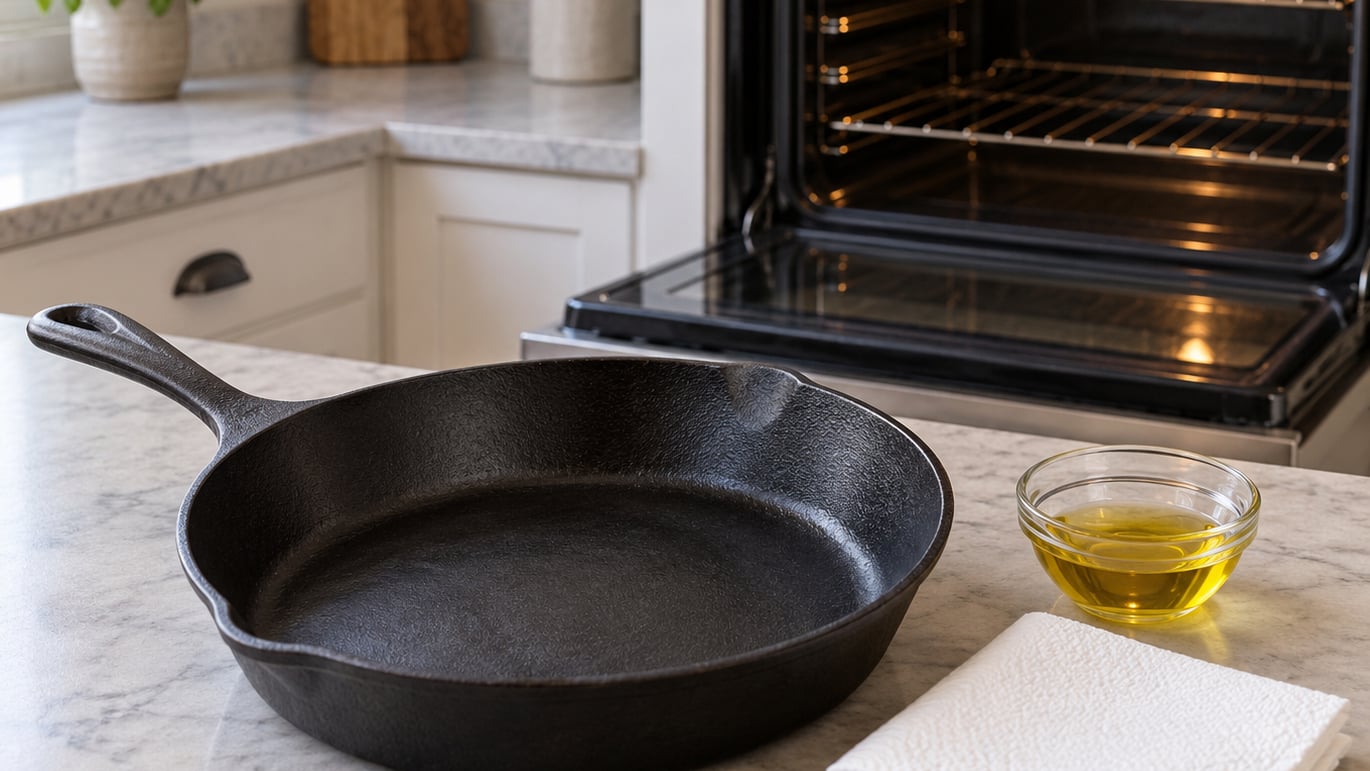
Seasoning cast iron is a bake, not a coating you buy. Wash the pan, dry it completely, wipe on a layer of high smoke point oil so thin it looks dry, then bake the skillet upside down at 450°F for about an hour. Repeat the cycle once or twice and the pan is ready to cook on.
The whole job takes around 30 minutes of actual work plus an hour of oven time per layer. That sounds intimidating for what ends up being a Saturday afternoon task you may only do twice in the life of a pan.
Here is the honest version of how to season a cast iron skillet, including the step where people go wrong, how to tell when your pan is actually done, and what to do if yours already went wrong.
What You Need
You need very little, and almost all of it is already in your kitchen.
- The skillet, new or used. Pre-seasoned pans from the factory work fine, you are just refreshing the layer.
- A high smoke point oil. Vegetable oil, canola, grapeseed, avocado or even Crisco all work. You do not need a specialty product.
- Paper towels or a clean cotton cloth for applying and wiping off the oil.
- An oven, or a gas or induction stovetop if you would rather not use the oven.
Two optional supplies matter only if the pan needs rescue: a chainmail scrubber or a piece of steel wool to strip stubborn seasoning, and a little white vinegar for rust spots. Skip both on a fresh pan.
If you own one of the cast iron sandwich presses and grill presses from our buying guide, they follow the same seasoning rules as a skillet. Same oil, same thin coat, same bake.
Step-by-Step
There are five moves to seasoning a cast iron skillet, and the order matters more than the number of times you repeat it. Active work runs about 30 minutes; the oven does the rest for you.
1. Clean the Cast Iron Skillet
Scrape out any food, then wash the pan with hot water and a small amount of dish soap. Soap is fine here — a short hot soapy wash does not strip seasoning, and a quick scrub with a chainmail scrubber or non-abrasive pad clears stubborn residue.
For a brand-new pan, check whether the factory left a wax or resin film on it. Boil a shallow layer of water in the pan for a few minutes, wipe it out, and dry immediately. Skipping that step bakes wax into your first seasoning layer.
Dry the skillet hard. Set it on a burner over low heat for two or three minutes until it stops steaming, then wipe it with a dry towel. Water hiding in the pores is the single most common reason rust spots show up a week later.
2. Apply a Thin Layer of Oil
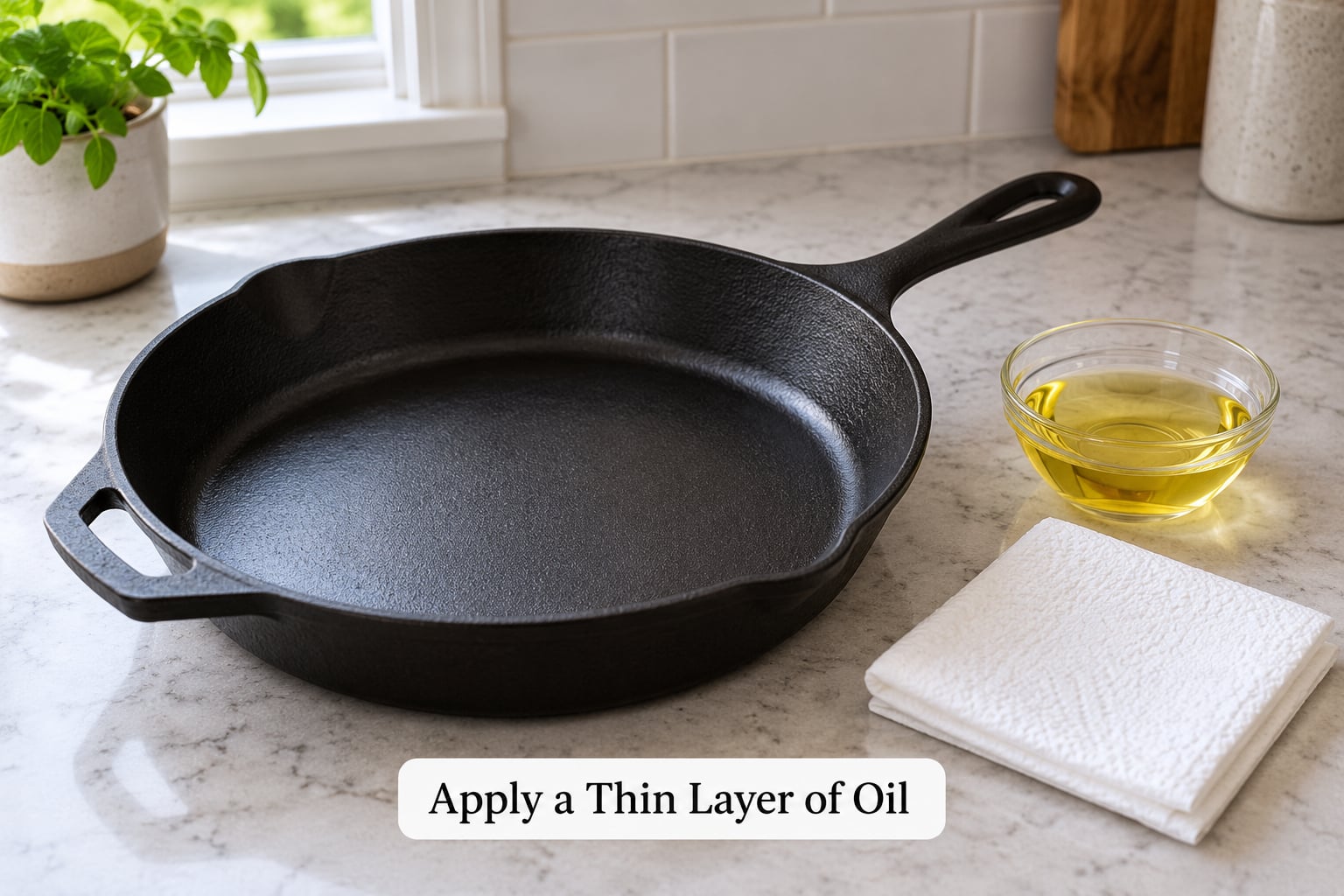
Put a small amount of oil on a paper towel, less than a teaspoon for a 10 or 12 inch skillet. Wipe it across the entire cooking surface, the walls and the base.
Then wipe the pan again with a clean, dry portion of the towel until it looks dry to you. Seasoning cast iron is not about adding oil; it is about removing oil. What is left should be a faint sheen you can barely see.
That dry look is the test. If the pan looks glossy or feels slick, keep wiping. Thick oil beads up, runs downhill during the bake and polymerizes into a gummy patch instead of a hard film.
3. Heat the Skillet
For the oven method, place the skillet upside down on a center rack with a sheet of foil or a baking sheet beneath it. The upside-down position lets condensation fall away instead of pooling in the cooking surface, which is where that sticky, patchy film comes from.
Ventilate the kitchen and crack a window. Seasoning oil is thin, and the faint smell near the end is normal, though a smoky kitchen is a sign you went heavy on the coat.
For the stovetop method, set the pan on medium heat for a few minutes until the oil darkens and stops smoking, then move it to a cool burner or a heatproof surface to cool. Seasoning over an open gas flame indoors is a real fire risk if the pan has more than a trace of oil on it, so keep the burner on moderate heat and never walk away.
4. Bake or Heat Until the Surface Cures
Bake at 450°F for one hour. Some guides say 500°F and some say 350°F, and the honest answer is that reputable sources genuinely disagree — Lodge, Wikipedia and the food science crowd all recommend slightly different numbers. Anywhere from 400°F to 500°F for an hour produces a sound seasoning.
If you see faint smoke in the first ten minutes, you applied too much oil. Leave the door cracked and let it finish; the smoke will stop once the excess burns off.
The pan is ready when the surface turns from dull grey to a dry, even bronze or near-black with a satin sheen. On the stovetop method, watch for the oil to darken, stop smoking and stop running.
5. Cool, Wipe, and Repeat
Let the skillet cool on the burner or on the stovetop until you can comfortably hold it. A cast iron pan pulled from a hot oven will crack if it hits cold water or a wet counter.
Wipe the surface with a clean dry paper towel. Some people find the finished pan faintly tacky right out of the oven; that is unpolymerized oil, and it wipes away rather than meaning you failed.
Do a second coat. Put on a fresh thin layer, bake another hour and cool again. Two or three cycles give you a seasoning layer with real depth, and you can stop the moment the pan passes the tests below.
How to Tell When Your Cast Iron Is Properly Seasoned
Run three quick checks and you never have to wonder again.
- Look at it. The surface should be an even bronze, brown or black with a satin sheen. Blotchy light grey patches mean thin or uneven seasoning.
- Drip water on it. A drop should bead up and roll instead of soaking in. If it spreads, the layer is still porous.
- Cook an egg. Heat the pan medium, add a spoon of oil and a teaspoon of water, then crack in an egg. If it slides around without tearing, you are done.
A well-seasoned pan is not nonstick the way a modern coating is. Eggs release, burgers release, fish releases — but a cold pan or a crowded pan will still stick. Heat control does as much work as the seasoning itself, which is the point most guides miss.
Cook Fatty Foods and Call It Good
Long-term cast iron owners tend to say the oven cycle is one good start and then you just cook on it. Bacon, eggs, burgers and roasts add oil to the surface every time you use the pan, and the seasoning rebuilds itself as you go.
That opinion splits the internet in half, and both camps are partly right. The oven method gives you a reliable starting layer, and daily use keeps it healthy. What nobody argues with is that a pan you never cook on is not going to get better.
Common Mistakes
Almost every disappointing cast iron pan traces back to one of five things.
- Too much oil. The pan looks glossy instead of dry. Wipe it back with a clean towel, or scrub it off and start again. Sticky seasoning that peels in black flakes is old oil that never fully cured.
- Seasoning over high stovetop heat. A screaming flame burns oil unevenly and produces a patchy, brittle layer. Medium heat on a burner, or the oven, cures it evenly.
- Leaving soap or water behind. A film of detergent or a drop of water traps moisture against the iron and rusts it. Rinse and dry on a burner, then wipe again.
- Storing the pan damp. Damp storage is the top cause of rust spots on a perfectly seasoned skillet. Store it bone dry with a coin-thin film of oil in a dry cupboard, not stacked on a damp shelf.
- Mistaking baked-on residue for a failed seasoning. Dark flecks on a well-used pan are usually burned carbon from food, not failed seasoning. Simmer water with a scrubber, dry it, and put a thin coat back on.
Blotchy grey patches are usually thin seasoning. Either run one more bake cycle, or scrub to bare metal with a chainmail scrubber and start clean, which is what most experienced owners do rather than layering a patchy surface indefinitely.
Rust spots need a slightly different rescue. Soak the pan in white vinegar for a few hours, scrub with steel wool, rinse, dry on the burner, then run two full seasoning cycles. The vinegar lifts the rust, the steel wool takes it back to bare iron.
Soap is not a seasoning killer. A short wash with dish soap and hot water leaves a good pan alone. What destroys seasoning is soaking in water for hours and then putting the pan away wet.
Cooking acidic foods is also fine in moderation. A pot of tomato sauce for dinner will not ruin a pan, though very long simmering of a very acidic dish can dull the flavor of the seasoning. Most test kitchens agree that normal use is not a problem.
Frequently Asked Questions
What happens if you use too much oil when seasoning cast iron?
The oil beads up, runs to the bottom of the pan and bakes into a thick, gummy layer that stays sticky and later peels away in black flakes. If it looks glossy after you wipe, keep wiping with a clean dry towel until the pan looks dry. If the damage is already done, scrub the pan with a chainmail scrubber or steel wool back to bare metal and run two fresh cycles.
Should I season cast iron at 350 or 450?
Both work. Reputable sources genuinely disagree, with some recommending 350°F and others 450°F or 500°F, so there is no single correct answer. Anywhere from 400°F to 500°F held for about an hour polymerizes the oil into a hard, even layer. Go with 450°F for one hour as your default and stop worrying about the debate.
Why is my cast iron sticking after seasoning?
Nine times out of ten it is heat, not the pan. A cold skillet plus a lump of cold butter will stick to almost any surface, seasoned or not. Preheat the pan medium for a few minutes, add a thin film of oil once it just starts to shimmer, then add your food and leave it alone for a minute before touching it.
How do I know if I seasoned my cast iron correctly?
Look for an even bronze, brown or black surface with a satin sheen, not blotchy light grey patches. Drop a little water on the pan and it should bead up and roll rather than soak in. As a final check, heat the pan, add oil and a teaspoon of water, crack in an egg and see whether it slides without tearing.
Can I use soap to wash cast iron?
Yes. A short wash with hot water and dish soap will not strip a good seasoning layer. What actually causes rust is leaving the pan wet or soaking it in water for hours, so rinse, dry it on the burner over low heat, and wipe it with a dry towel before putting it away.
How do I get rust off a cast iron skillet?
Soak the pan in white vinegar for a few hours to dissolve the rust, then scrub it with steel wool or a chainmail scrubber until you see grey bare iron. Rinse, dry it thoroughly on the burner, and run two full oven seasoning cycles at 450°F. Do not stop after one cycle or the rust will return.
Conclusion
Start tonight: wash the pan, dry it on the burner, and wipe on the thinnest coat of oil you can manage. Put it upside down at 450°F for an hour, cool it, wipe it, and repeat once more. Two cycles and a bead of water will tell you everything you need to know about whether it worked.
Keep the two rules that matter most: the coat should look dry, and the pan should be bone dry before the oil goes on. Everything else, including the oven versus stovetop debate, is preference. Follow the care card that came with your skillet if the maker’s instructions differ from these, and then just cook on it — regular fatty cooking is what keeps cast iron in good shape. For more ways to put a seasoned pan to work, browse our cast iron sandwich press and grill press picks.