
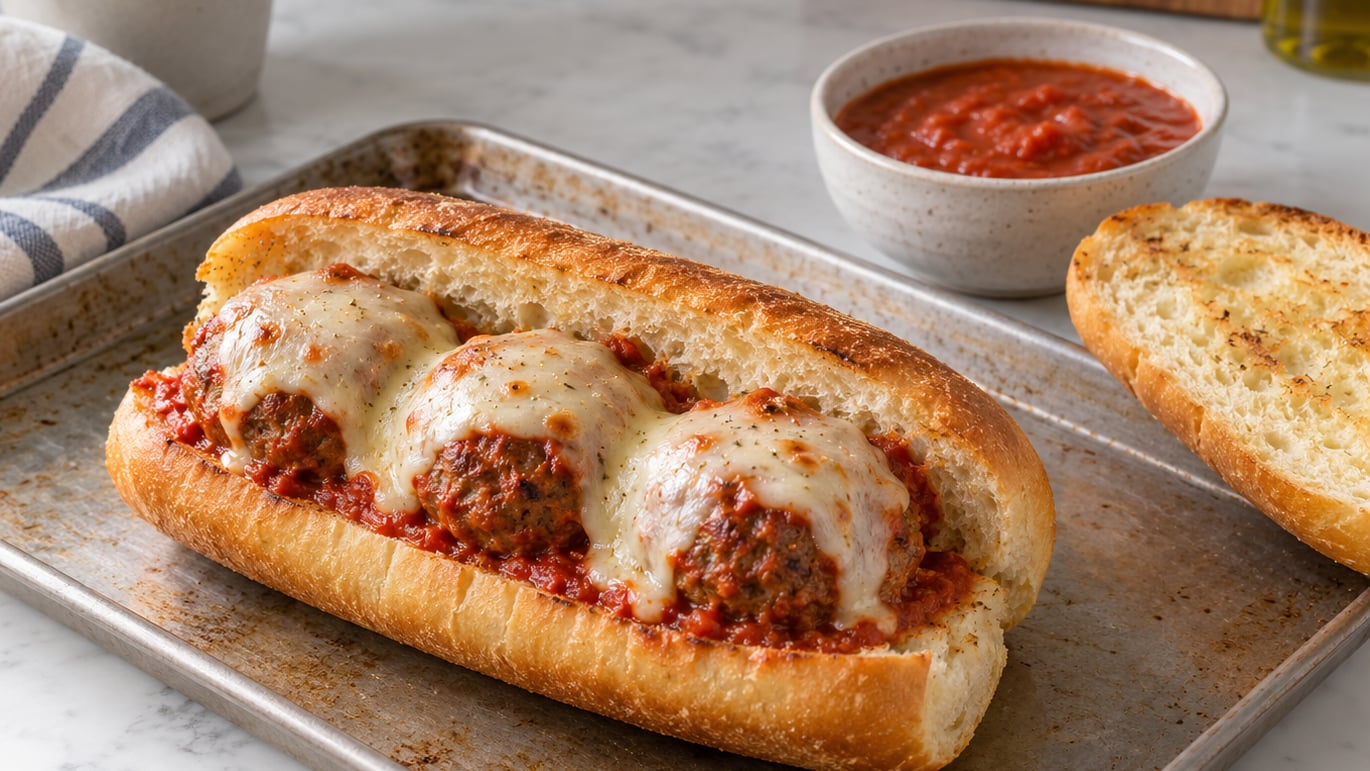
Meatball subs fall apart for three reasons: the meat mixture has no binder, it gets overworked or handled roughly while you shape it, or the sauce floods the bread. Fix those three things and a sub will hold together from counter to first bite. The whole job takes about 45 minutes, and most of it is hands-off.
Knowing how to make meatball subs that don’t fall apart comes down to the sequence. Build a wet, sticky mixture, chill it before it touches a hot pan, brown it hard enough to form a crust, and keep the sauce off the bread’s surface until the very last second.
Table of Contents
- What You Need
- Step-by-Step: How to Make Meatball Subs That Don’t Fall Apart
- Common Mistakes
- Frequently Asked Questions
- Can I make meatball subs ahead of time?
- How do I keep meatballs from falling apart when cooking?
- What is the best sauce for a meatball sub that holds together?
- Should I toast the sub roll before adding meatballs and sauce?
- How do I reheat a meatball sub without making it soggy?
- How long can I store leftover meatball subs safely?
- Conclusion
What You Need
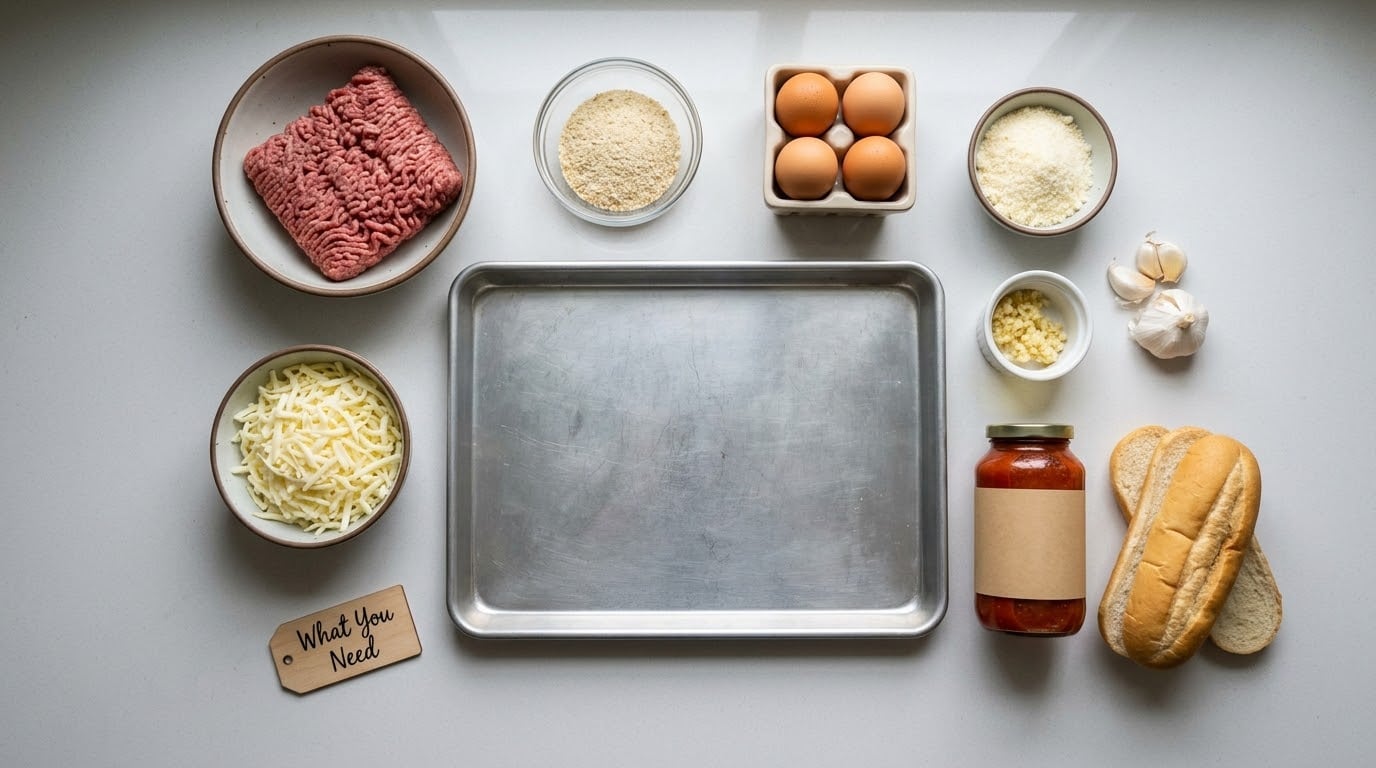
Most of what you need is probably already in your kitchen. The items below are split into what builds the meatball and what builds the sandwich, because they fail for different reasons.
For the meatballs
- 1 to 1.25 pounds of ground beef, ideally 80/20. Some pork mixed in adds fat and binds better than beef alone.
- 3/4 cup of Italian-style dry breadcrumbs per pound of meat. Panko works and gives more crunch; it drinks up more liquid, so use a little less.
- 1 egg per pound of meat.
- 2 to 3 tablespoons of milk or water, optional. It hydrates the breadcrumbs so they swell instead of staying dry and loose.
- 1/2 teaspoon of salt per pound, plus black pepper, garlic powder, and dried oregano or parsley.
- 1/4 cup of grated Parmesan. The cheese adds fat and protein that set with the egg.
Egg alone is not enough. The egg sets the meat protein into a firm gel, but the breadcrumbs are what physically hold the pieces to each other. Without both, you get a loose mixture that sheds into the pan.
For the sandwich
- Hoagie or submarine rolls, one per serving. A sturdy crusty roll carries a wetter filling better than a soft dinner roll.
- 1 to 1.5 cups of marinara or tomato sauce. Thick, low-moisture sauce works better than thin pizza sauce.
- Butter or olive oil for the inside of the roll.
- 4 to 6 slices of provolone or low-moisture mozzarella per sub.
For equipment you need a rimmed baking sheet lined with parchment, a wide skillet, a small scoop or portion tool for even sizing, and a fork for the meatballs. A digital thermometer is genuinely useful here.
What you can swap
Ground turkey works, but it is leaner, so bump the breadcrumbs to a full cup per pound and add one extra egg. A pork and beef blend gives you the fat that turkey lacks. Any thick tomato sauce works; thin sauce is the enemy, because it soaks through the bun instead of sitting on it.
If you want more ideas on building a sandwich that survives being picked up, our guide on how to make an overstuffed sandwich hold together covers the loading rules that apply here too.
Step-by-Step: How to Make Meatball Subs That Don’t Fall Apart
1. Make a Sticky Meatball Mixture
The mixture should look like wet clay, not like kneaded dough. Combine the meat, breadcrumbs, egg, milk, Parmesan, and seasonings, then mix with a light hand until you just stop seeing dry crumbs.
Stop there. Overmixing develops gluten in the meat proteins and makes the finished meatball dense, chewy, and prone to splitting when you flip it. Thirty seconds of gentle mixing beats two minutes of thorough mixing every time. Most home cooks who struggle with broken meatballs are guilty of this one step.
The doneness cue is visual: pinch a bit together in your palm and it should hold without feeling greasy or dry. If it crumbles, add another splash of milk. If it sticks to everything, add a tablespoon of breadcrumbs.
2. Chill the Meatballs Before Cooking
Shape the mixture into two or three logs, chill them for 10 minutes, then cut into even slices and roll each slice into a ball with wet hands. Chilling firms up the fat, which is the whole point: cold fat stays solid and the meatball keeps its shape in the pan.
Use a small scoop or a portion tool so every ball is the same size. Even size means even cooking, and evenly cooked meatballs don’t need to be cut in half or broken up to finish cooking.
For a full 20-minute chill, spread the shaped balls on a tray and space them an inch apart so they don’t touch. If the mixture gets tacky while you roll, put it back in the fridge for five minutes rather than fighting it.
3. Brown the Meatballs Until Firm
Browning is what gives you the crust that resists the sauce. Heat oil in a wide skillet over medium-high and give each ball room around it. Sear two to three minutes per side until the bottoms are deep brown, then finish at 350°F for 12 to 15 minutes, or until the center hits 160°F on a thermometer.
Ground meat should reach 160°F for food safety. Baked on a lined sheet pan, they take about 20 minutes at 400°F, turning once halfway so they brown evenly.
Don’t drop raw meatballs into a simmering sauce if structure is the goal. The gentler raw-in-sauce method does give a lighter, more even texture, and some cooks prefer it, but the sauce picks up fat it can’t shed and the meatballs have no crust. Once cooked, simmer them in sauce for no more than 15 minutes at a bare simmer, never a rolling boil. Boiling is what shreds them.
4. Toast the Sub Bread and Control the Sauce
Cut the roll three-quarters of the way through from top to bottom, leaving the bottom crust intact. That partial cut lets the roll open like a boat under the broiler without splitting in half, and the intact bottom is what carries the weight.
Butter the cut faces lightly and toast them in a 350°F oven for four to five minutes. A toasted inner face resists moisture instead of absorbing it, which is the single biggest difference between a crisp sub and a soggy one.
For the sauce, warm it in a separate pan and drain off any watery liquid at the top. A thicker sauce spreads more evenly and does less damage. Some cooks toast a thin layer of shredded cheese onto the bread first, then add drier meatballs on top and sauce last, which keeps the moisture off the crumb entirely. Pick one approach and stay with it.
More on moisture control: why tomatoes make sandwiches soggy covers the same physics on a fresh tomato.
5. Layer the Meatballs Without Overloading
Two to three meatballs per roll, no more. A well-sauced trio beats a stuffed six every time, because a sub that bows in the middle when you lift it is already failing.
Build in this order: bread, a thin sauce layer directly on the toasted crumb, the meatballs, more sauce over the top, then cheese. That first sauce layer is your barrier. It sits between the wet filling and the bread so moisture never touches the crumb face directly.
Add shredded lettuce, banana peppers, or onion after the meatballs but before the cheese, and keep wet toppings like sliced tomato and drained pickles to a light hand. Place cheese over the meatballs rather than under them, so it melts into a lid that holds the filling down.
Wrap each finished sub in parchment or foil, seam side down, before cutting. The wrap is what keeps the bottom crust from peeling away as you slice.
6. Melt the Cheese and Rest the Subs
Broil from about 6 inches away for three to five minutes until the cheese bubbles and browns in spots. Watch it the entire time, because the cheese goes from perfect to burnt in about 30 seconds at close distance.
Then let the subs rest for two minutes before you cut. The cheese and sauce set slightly as they cool, and that short pause is what gives you a clean first slice instead of a flood of sauce running out the side.
Slice with a serrated knife in one motion, straight down through the middle, and serve right away. A sub that holds on the board holds on the plate.
Common Mistakes
Meatballs crumble in the pan
You skipped the binder or you mixed too hard. Mix gently with 3/4 cup of breadcrumbs and one egg per pound, then chill the shaped balls before cooking. Cooking them at a rolling boil also breaks them apart, so keep the simmer gentle.
Meatballs are grey outside and raw inside
They are unevenly sized or cooked too fast. Bring them to an even size with the log-and-slice method and finish at 350°F until a thermometer reads 160°F. A very hot pan builds color long before the center cooks through.
The bun bottom goes soggy
Sauce is sitting directly on un-toasted bread. Toast the cut faces first, add only a thin sauce layer as a barrier, drain watery sauce, and add the wetter second layer above the meatballs. Keep the finished sub off a plate for a couple of minutes so steam escapes instead of condensing into the bread.
The roll splits in half when lifted
The bun was cut all the way through or the sub is overloaded. Cut only three-quarters of the way, stay at two or three meatballs, and wrap the sub before lifting it. A loose foil sleeve adds structural support for serving.
Sauce leaks out the first slice
Too much sauce and not enough rest. Use about a quarter cup per sub, then wait two minutes after broiling. Cutting a hot sub immediately releases liquid that had not finished soaking into the bread.
Cheese slides out and burns the top
Cheese placed under the meatballs melts and runs onto the element. Put cheese on top, broil from a distance, and stay at the oven door the whole time.
How to hold and store finished subs
Hold assembled subs in a single layer in the fridge for up to two days, and keep them unwrapped so condensation doesn’t soften the crust. Cool cooked meatballs to room temperature before refrigerating, and use them within three to four days.
For longer storage, freeze the meatballs on a tray first so they don’t clump, then move them to a bag. Reheat from frozen in a covered skillet over low heat, or in the oven at 350°F, rather than microwaving, which steams the bread and dries the meat. Bring the oven or skillet temperature up to 160°F before serving.
Frequently Asked Questions
Can I make meatball subs ahead of time?
Yes, but build them in stages. Cook the meatballs a day ahead and refrigerate them covered; make the sauce a day ahead and refrigerate it separately. Assemble the subs on baking day with the toast, sauce barrier, and broil still fresh. If you assemble a full sub ahead, hold it cut-side-up in the fridge and skip the final broil until serving, so the bread doesn’t turn soft.
How do I keep meatballs from falling apart when cooking?
Use 3/4 cup of dry breadcrumbs and one egg per pound of meat, mix the meat gently until the crumbs disappear, and chill the shaped balls 10 to 20 minutes before cooking. Brown them in a skillet or bake them rather than dropping them raw into a rolling boil. Finished meatballs should reach 160°F, and a bare simmer for the final sauce stage keeps them whole.
What is the best sauce for a meatball sub that holds together?
A thick marinara or plain tomato sauce with low moisture works best because it clings instead of pooling. Thin pizza-style sauce soaks through the bread and turns the bottom into mush. Skip any sauce with a watery layer on top, or drain it off before warming. Using about a quarter cup per sub gives you enough flavor without a flood.
Should I toast the sub roll before adding meatballs and sauce?
Yes. Cut the roll three-quarters of the way through, butter the cut faces, and toast at 350°F for four to five minutes. A toasted inner face forms a barrier that resists moisture, and the partial cut lets the roll open like a boat under the broiler without splitting. Add sauce last, directly onto the toasted crumb, in a thin layer.
How do I reheat a meatball sub without making it soggy?
Skip the microwave, which steams the bread from the inside. Reheat in a 350°F oven for about 10 minutes with the sub on a rack so air moves underneath, or in a covered skillet over low heat for 6 to 8 minutes. Leave the foil slightly open or off so moisture escapes. Add cheese only after reheating if you want it bubbly.
How long can I store leftover meatball subs safely?
Refrigerate cooked meatballs within two hours of cooking and use them within three to four days. Store them in sauce or with sauce kept separate so the bread doesn’t absorb liquid overnight. Keep assembled subs in a single layer and eat within two days. For freezing, freeze meatballs alone rather than inside the bread, since bread never recovers well from frozen.
Conclusion
Start with the mixture, not the sandwich. Use 3/4 cup of breadcrumbs and one egg per pound of meat, mix it gently, chill the balls, and brown them until the center hits 160°F. Then toast the roll, lay down a thin layer of sauce as a barrier, load two or three meatballs, and rest the sub two minutes before cutting.
The result you’re aiming for is a sub you can pick up with one hand and eat standing up. If you want to see the same loading principles applied to a different filling, read our guide to a cheesesteak that holds up like a real one, then make this batch tonight.