
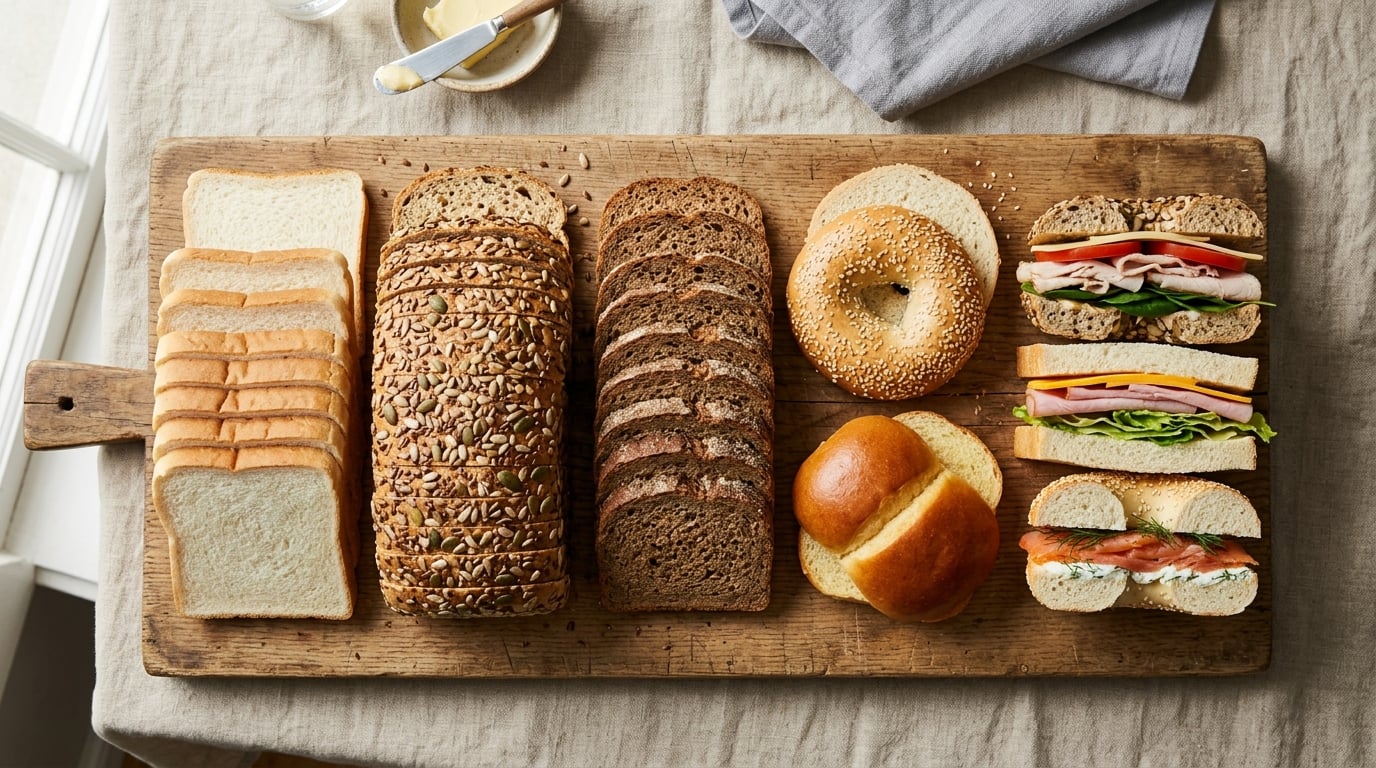
Wonder Classic White is the most dependable store-bought sandwich bread for everyday lunches, and it is the loaf most of us keep coming to without thinking. This guide breaks down twelve brands worth knowing, ranked by how well they hold up under a filling and how they taste on their own, so you can pick the right one for a turkey club, a PB&J, or a pressed ham and cheese.
The catch with sandwich bread is that the two things people want fight each other. You want a crumb soft enough to feel like bread rather than a cracker, and a slice firm enough that a wet filling does not turn the whole thing into a wedge of mush.
Machine slicing is part of why so many loaves disappoint. The blade compresses the crumb as it passes, so a thin slice from a big automated slicer can feel flimsy in the bag and fragile in your hands. The brands below are the ones that keep their structure after slicing, after a few days in a bread box, and after a trip through a toaster.
Everything here is editorial, based on ingredient panels, texture and typical store presence rather than a laboratory test with instruments. Recipes change, slice thicknesses shift, and availability differs by region, so check the current label before you commit. Think about the sandwich you build most: a soft white for a school lunch, something sturdier and heartier for a deli stack, and a sweet enriched loaf when ham and cheese are the whole point.
Table of Contents
- Best Store-Bought Sandwich Bread Brands at a Glance
- 1. Wonder Classic White
- 2. Sara Lee Delightful Wheat
- 3. Nature’s Own Honey Wheat
- 4. Arnold Whole Grains 100% Whole Wheat
- 5. Pepperidge Farm Whole Grain
- 6. Thomas’ Whole Wheat
- 7. Oroweat 12 Grain
- 8. Lender’s Whole Grain Bagels
- 9. Schwebel’s Original White
- 10. King’s Hawaiian Sweet Brioche
- 11. D’Italiano Original Italian
- 12. Vienna Bread
- Frequently Asked Questions
- What is the best store-bought sandwich bread for everyday lunches?
- Are whole-wheat sandwich bread brands better for you than white bread?
- Which sandwich bread brands are usually the most affordable?
- How should store-bought sandwich bread be stored at home?
- How can I keep a sandwich from getting soggy before lunch?
- Conclusion
Best Store-Bought Sandwich Bread Brands at a Glance
| Brand | Bread style | Texture | Grain type | Best for | One reason to choose it |
|---|---|---|---|---|---|
| Wonder Classic White | Classic white | Soft, mild | Refined white | Everyday lunches | Spreads easily and holds common fillings |
| Sara Lee Delightful Wheat | Wheat | Soft with grain flavor | Wheat | PB&J, grilled cheese | More grain character without a dense slice |
| Nature’s Own Honey Wheat | Honey wheat | Very soft, lightly sweet | Wheat | Kid lunches | Mild sweetness kids actually eat |
| Arnold Whole Grains 100% Whole Wheat | Whole wheat | Firm, sturdy | 100% whole wheat | Ham and Swiss, pressed sandwiches | Resists sogginess under wet fillings |
| Pepperidge Farm Whole Grain | Seeded whole grain | Soft center, seeded crust | Whole grain with seeds | Turkey and avocado | Familiar soft crumb plus real texture |
| Thomas’ Whole Wheat | Whole wheat | Hearty, structured | Wheat | Roast beef stacks | Enough structure for a tall sandwich |
| Oroweat 12 Grain | Multigrain | Chewy, seedy | 12 grains and seeds | Toasted, pressed sandwiches | Strong grain flavor and a real chew |
| Lender’s Whole Grain Bagels | Bagels | Dense, chewy | Whole grain | Breakfast sandwiches | Holds a filling with no squashing |
| Schwebel’s Original White | Classic white | Soft, slightly cakier | Refined white | Bologna and cheese | A softer, cakier white where carried |
| King’s Hawaiian Sweet Brioche | Sweet enriched | Very soft, sweet | Wheat | Ham, pulled pork, breakfast | Built for a showpiece sandwich |
| D’Italiano Original Italian | Italian roll | Soft crumb, firmer crust | Wheat | Chicken parmigiana, meatball sub | Roll shape handles generous fillings |
| Vienna Bread | Compact white or wheat | Moderately firm | White or wheat | Grilled, pressed, deli | Compact slices for a two-slice sandwich |
Rankings are recommendations, not lab results, and every row is a starting point rather than a verdict. Prices move around, and a few of these brands are carried in some regions and not others.
1. Wonder Classic White
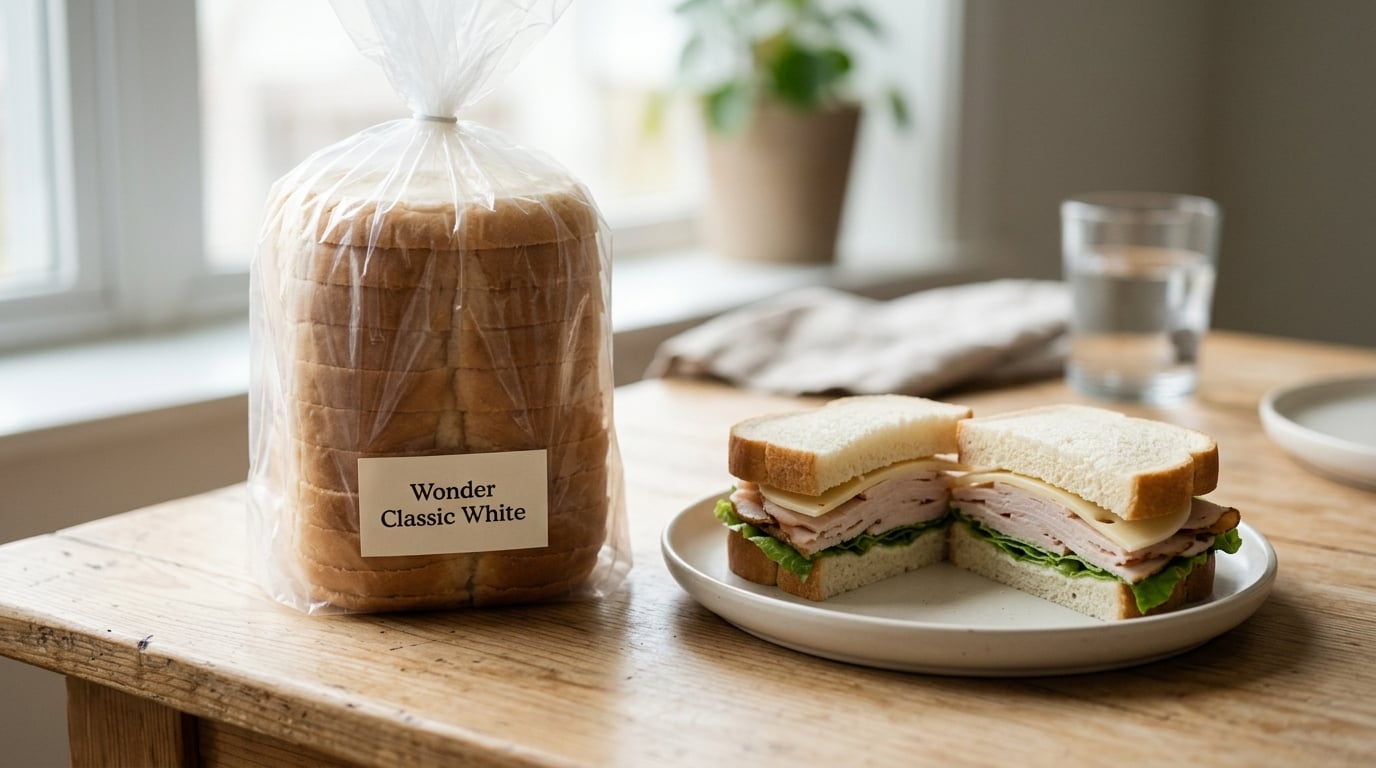
Wonder Classic White is the dependable everyday choice, and for most kitchens it does the job without a second thought. The crumb is soft, the flavor is mild, and the slices spread easily with butter, mayo, or mustard without tearing.
It holds common sandwich fillings well. Turkey, sliced cheese, and mayonnaise is the test that matters most, because that combination is wet, salty, and built to make bread give up. Wonder’s slices stay in one piece and compress rather than split.
Check the ingredient and allergen panel before buying, particularly if anyone in the house reacts to wheat, milk, soy, or sesame. Against premium bakery-style loaves, Wonder costs noticeably less and, for a sandwich that gets eaten at a desk, gives up very little.
2. Sara Lee Delightful Wheat
Sara Lee Delightful Wheat is a balanced pick when you want more grain flavor than white bread delivers but not the density of a true whole-wheat loaf. The crumb stays soft and the wheat taste is noticeable without turning the sandwich into a whole-grain statement.
It spreads well and toasts evenly, which makes it a good fit for a peanut butter and banana lunch or a grilled cheese where you want flavor in the bread itself. The slices are not thick, so plan on two per side for a filling-heavy sandwich.
Compared with the bakery loaves that cost noticeably more, this one sits in the middle of the store shelf and usually sits near the bottom of the ticket. That balance is why it keeps showing up in packed lunches.
3. Nature’s Own Honey Wheat
Nature’s Own Honey Wheat is the loaf for lunches where a little sweetness helps. The crumb is among the softest here, with a mild honeyed finish that disappears around savory fillings but makes a plain slice with butter genuinely pleasant.
For adults and children alike, that sweetness is the feature rather than a flaw, and it does something useful with fillings that taste flat on white bread: sliced chicken, lettuce, and a mild spread reads better with a touch of honey in the background.
Check the package for the main allergens, since wheat, milk, and soy are common across this brand’s lineup, and some varieties carry seeds. If a sandwich is going into a lunchbox, the soft crumb is a plus; the mild flavor means even picky eaters usually accept it.
4. Arnold Whole Grains 100% Whole Wheat
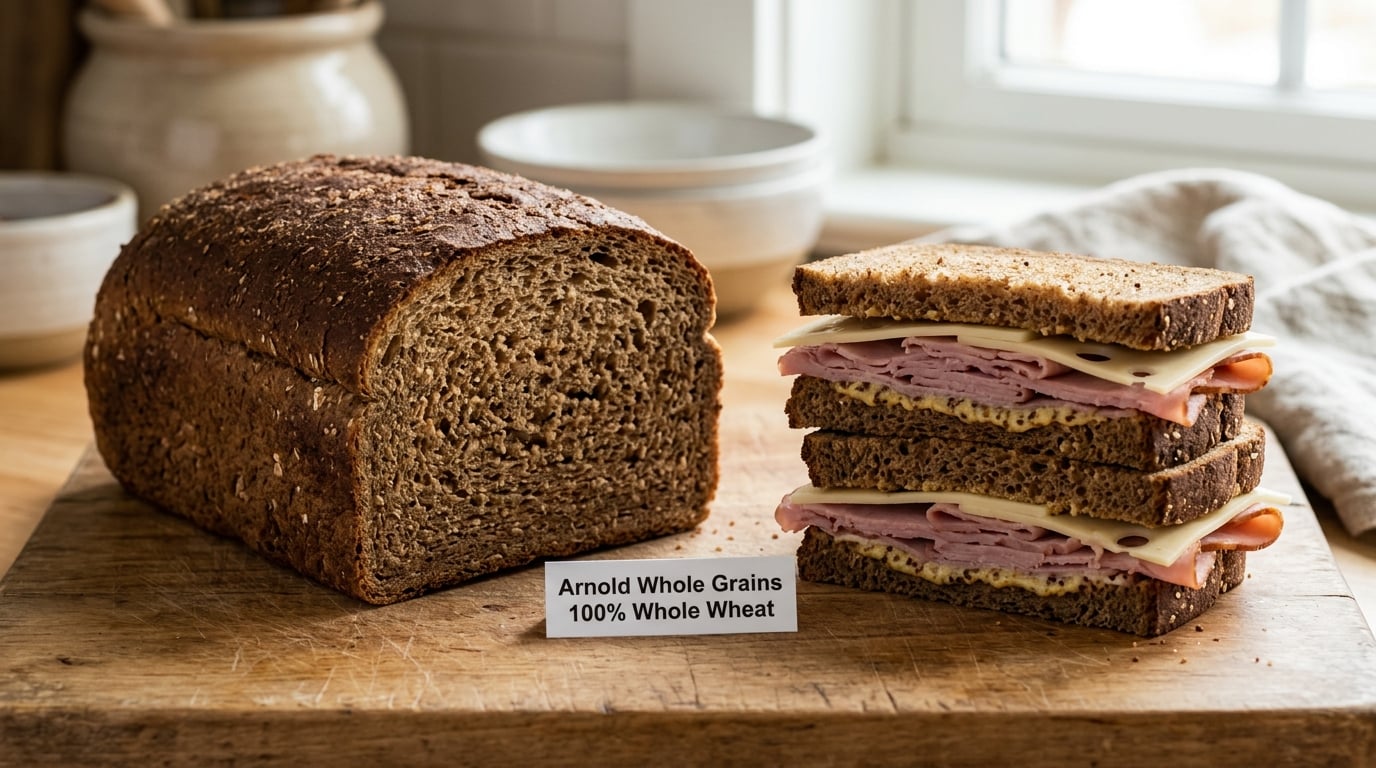
Arnold Whole Grains 100% Whole Wheat is the pick when the ingredient list matters more than novelty. It reads as a straightforward whole-wheat loaf with nothing decorative in it, and that plainness is exactly why some people buy it every week.
The texture is firmer than the white and wheat options, and that firmness is the point. It resists sogginess under tomato, deli meat, and mustard far better than a soft slice does, which is why a ham, Swiss, and mustard sandwich holds together all the way to the last bite.
Firmer also means drier, so a couple of small habits help. Toast the slices first for a pressed sandwich, and keep the loaf in a bread box or sealed bag so the crumb does not lose what moisture it has. Bread that has been sealed a few days slices and presses better than a loaf left open on the counter.
5. Pepperidge Farm Whole Grain
Pepperidge Farm Whole Grain splits the difference in a way most loaves do not: a soft, familiar center with seeds and grains scattered through it and a lightly sweet finish. It is a compromise that works for people who want visible texture without losing the plush crumb.
It does particularly well toasted, where the seeds crisp and the interior softens. Turkey and avocado is the pairing to try, since the mild filling does not fight the seeds and the soft crumb handles the avocado without splitting.
If you prefer a clean, mild taste with nothing in it, pick a plain white loaf instead. Read the ingredient and allergen panel, since seeded varieties commonly carry wheat, milk, soy, and sesame, and check whether the loaf also includes nuts or sunflower-type seeds you would rather avoid.
6. Thomas’ Whole Wheat
Thomas’ Whole Wheat is one of the most recognized names in the aisle, and the loaf backs that up with a hearty wheat flavor and enough structure for a substantial sandwich. The crumb springs back rather than flattening, which is what a tall stack needs.
The brand makes several wheat varieties, so read the specific panel rather than trusting the logo. One loaf may be 100% whole wheat while another blends refined and whole grains, and the fiber numbers move with that choice. If you care about the numbers, this is the label to check.
A roast beef, lettuce, tomato, and horseradish sandwich shows what it can do. The wet ingredients sit on top instead of soaking through, and the bread still cuts cleanly with a serrated knife.
7. Oroweat 12 Grain
Oroweat 12 Grain is the multigrain option for readers who want a seed-filled loaf with a chewy texture and a strong grain flavor. The bite is real, and the flavor is not shy, which means the bread stays interesting on its own.
It is at its best toasted or pressed. The seeds and grains brown in a skillet or panini press, and the denser crumb stands up to a hot filling without turning to paste. A black bean, corn, and pepper spread works well, since the bread’s own flavor carries heavy vegetable fillings.
Some shoppers find the texture too intense, particularly children who want a soft, mild slice. If that describes your household, a wheat or honey wheat loaf will land better. Oroweat makes sense when you want the bread to be the point of the sandwich.
8. Lender’s Whole Grain Bagels
Lender’s Whole Grain Bagels are not sliced sandwich bread, and treating them as a loaf substitute is a mistake. They are useful for a different job: a bagel-style sandwich that survives transport without turning into a compressed disc.
The chew is denser than any loaf in this list, the shape holds, and nothing squashes out of the bottom. That makes them portable in a way two flat slices are not. Check the nutrition and ingredient panel for sodium if you eat them often, and expect a denser, heavier sandwich than a loaf gives you.
For a breakfast sandwich, split one and fill it with cream cheese, egg, and vegetables. The chew holds through the morning, where a soft white slice would be soggy by mid-morning.
9. Schwebel’s Original White
Schwebel’s Original White is a regional alternative for readers who prefer soft white bread with a slightly cakier crumb than a standard sandwich loaf. It is the pick for bologna and cheese, where the bread should be soft and quiet and not compete.
Availability is the catch. It is carried in many stores in the Northeast and in pockets elsewhere, and it is not part of most national chains, so you may have to look for it at your local supermarket or order it. Before switching, compare the nutrition label with the store brand you already buy.
That comparison is usually close. The real difference is texture, and the cakier crumb is a genuine preference rather than a measurable upgrade. If your store does not carry it, a good private label white loaf will cover the same sandwiches.
10. King’s Hawaiian Sweet Brioche
King’s Hawaiian Sweet Brioche is a best-in-show pick rather than a neutral bread choice. The dough is soft, sweet, and enriched, and it is built for a sandwich where the bread is meant to be noticed.
Ham and cheese, pulled pork, and cream cheese breakfast sandwiches are the pairings that suit it. The enriched crumb absorbs sauce and juice without falling apart, which is why it shows up at deli counters for pressed and toasted sandwiches.
Where King’s Hawaiian Fits Among the Best Store-Bought Sandwich Bread Brands
Place it at the opposite end of the list from Arnold Whole Grains. Arnold is the choice when you want the bread to disappear behind the filling, and King’s Hawaiian is the choice when you want a soft, sweet bun that changes the meal.
Two cautions. The sweetness can overwhelm vegetable-forward fillings, so a lettuce-and-tomato sandwich tastes better on a plain loaf. And the slices are rich, so for children I cut one in half rather than handing over the whole thing. It is a treat bread, and treating it that way keeps it working for you.
11. D’Italiano Original Italian
D’Italiano Original Italian is the answer when you want a roll rather than a slice. The crumb inside is soft and mild, the crust is firmer than a sandwich loaf, and the shape gives you a top and a bottom instead of two identical pieces.
That shape changes how the sandwich behaves. It takes a generous filling without the sides collapsing, and the crust toasts and crisps while the center stays soft, which is exactly what a chicken parmigiana or a meatball sub needs.
Availability differs by region and by style of store, so expect to find the classic Italian more widely than the sesame-topped varieties. If you buy it for reheating, the crust holds up to a second oven or toaster pass better than most soft white bread.
12. Vienna Bread
Vienna Bread is the versatile traditional option, and it earns its place through grilled, pressed, and deli-style sandwiches. The slices are compact, which sounds like a small thing until you try building a two-slice sandwich that actually fits in one hand.
The crumb is moderately firm, more structured than the lightest white bread, so it takes heat and pressure well. A Reuben, or a pressed ham and cheese, comes out of the skillet without the filling shooting out of the sides.
The brand makes both a plain and a wheat variety, and the wheat version is the more textured of the two. Pick plain for cured meat and mustard, where you want a quiet background, and wheat when the filling is mild and you want some body in the bread. For very soft spreads like mayonnaise, a lighter white slice serves you better.
Frequently Asked Questions
What is the best store-bought sandwich bread for everyday lunches?
Wonder Classic White is the most reliable pick for packed lunches because the crumb is soft, mild, and flexible enough to spread with mayo or mustard without tearing, while the slice still holds a turkey-and-cheese filling together. Many families keep a second loaf in reserve for a bread that toasts well, such as Sara Lee Delightful Wheat. Which one you choose depends more on the filling than the brand, so test two or three before you commit.
Are whole-wheat sandwich bread brands better for you than white bread?
Whole-wheat loaves generally carry more fiber and more of the grain than refined white bread, and that is a real nutritional difference, not a marketing one. The trade-off is texture: whole wheat tends to be firmer, drier, and more strongly flavored, and some varieties go stale faster once the bag is opened. If you are switching for health reasons, start with a wheat blend such as Sara Lee Delightful Wheat, which is softer and easier to eat daily, then move to a 100 percent whole-wheat loaf if you want the full grain.
Which sandwich bread brands are usually the most affordable?
Store-brand and private-label white loaves are almost always the least expensive option, and for a simple turkey and cheese sandwich the difference in quality is small. Among the national brands, Wonder Classic White and Nature’s Own Honey Wheat tend to sit at the lower end, while seeded and bakery-style loaves such as D’Italiano or King’s Hawaiian cost noticeably more. If you buy the same loaf every week, the difference adds up over a year, which is worth weighing against how much the pricier loaf actually changes your sandwiches.
How should store-bought sandwich bread be stored at home?
Keep the loaf in its original bag and store it at room temperature, never in the refrigerator, because cold temperatures make bread go stale faster. A bread box or a cabinet away from the stove works well. For longer storage, slice the loaf, lay the pieces flat on a baking sheet, freeze them, then move them to a bag or container so they do not stick together. Toast frozen slices straight from the toaster and they come out close to fresh.
How can I keep a sandwich from getting soggy before lunch?
Spread mayo or mustard right to the edges of the bread, since the fat creates a barrier that wet fillings cannot pass through. Toast the slices first, which dries the surface and firms the crumb, and double up the bread on the wet side of the filling. Let tomatoes, pickles, and other watery ingredients sit on a paper towel for a few minutes, and pack lettuce separately so it does not press moisture into the bread. A sandwich assembled right before eating solves it entirely.
Conclusion
Start with Wonder Classic White if you want a mild, soft loaf that spreads easily and handles ordinary lunchbox fillings, and move to Arnold Whole Grains 100% Whole Wheat when you need something sturdier under tomato and deli meat. Oroweat 12 Grain is the right call when you want grain flavor and chew, and King’s Hawaiian Sweet Brioche turns a ham and cheese sandwich into an event.
Check the current ingredient panel, slice thickness, and what your local store actually carries before you buy, since recipes and availability change. Updated for 2026.