
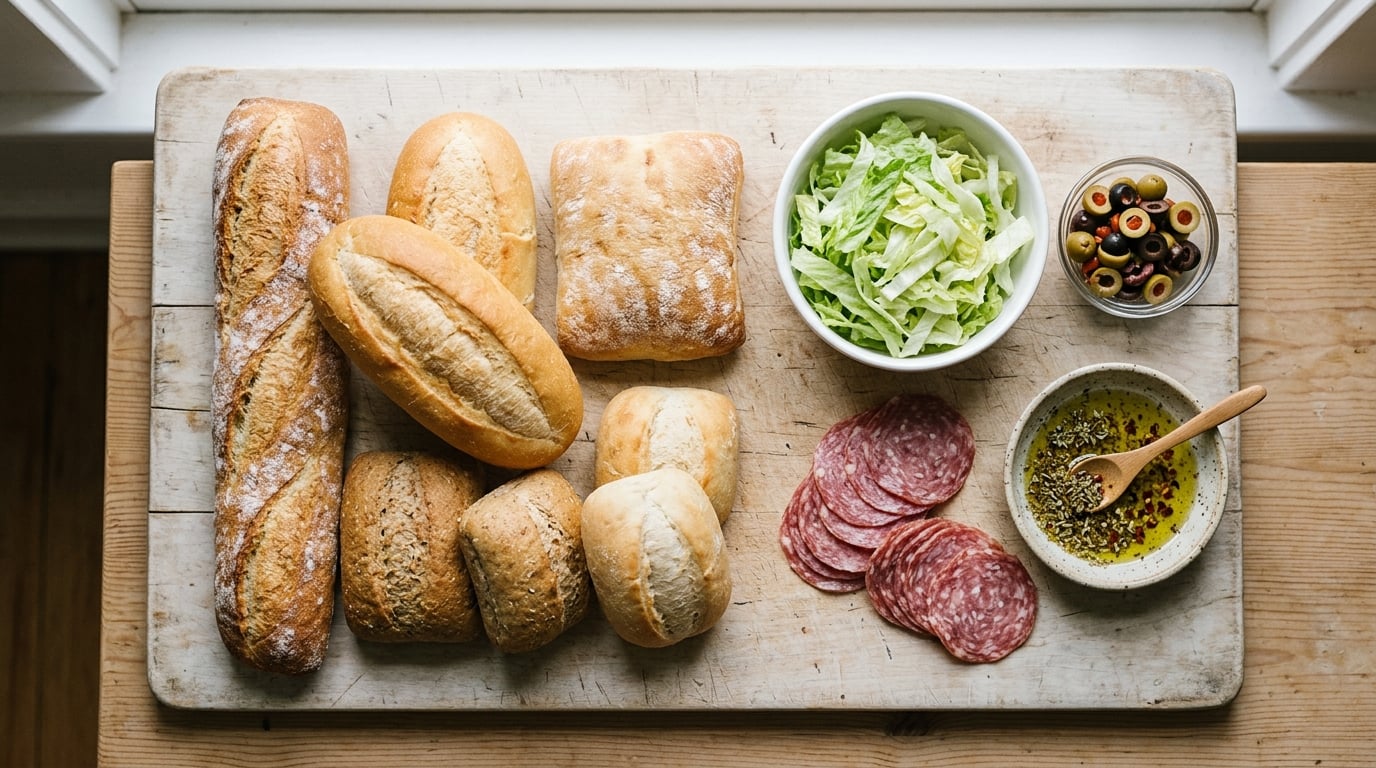
If you want the short answer on the best rolls for Italian subs you can buy at the grocery store, it is a classic long roll: 8 to 12 inches, a thin crisp crust, and a soft chewy interior, sliced lengthwise but hinged at the bottom edge so cold cuts, provolone and shredded vegetables stay put. Too soft and it collapses under tomato and oil. Too firm and you chew through a loaf of bread before you reach the meat.
There are far fewer sub roll choices than the search results suggest. Most grocery aisles carry the same half-dozen brands, and the difference between them is texture, not flavor. So rather than ranking breads by popularity, I matched each one to the filling it handles best.
Below is the short version. A classic unseeded Italian-style roll for an all-purpose cold-cut sub. A sesame hoagie roll when you want crunch and a slightly sweet finish. Ciabatta or a cut baguette section when the sandwich is going to be toasted and the fillings are wet. A potato roll when the meat is warm and the sandwich is for a kid. Mini rolls for party platters and small appetizer subs.
Table of Contents
- Best Rolls for Italian Subs You Can Buy at the Grocery Store at a Glance
- 1. Classic Italian-Style Sub Rolls
- 2. Sesame Seed Hoagie Rolls
- 3. Mini Sub Rolls
- 4. Ciabatta Rolls
- 5. French Bread or Baguette Sections
- 6. Whole Wheat Sub Rolls
- 7. Potato Rolls
- 8. Pumpernickel or Rye Rolls
- 9. Garlic or Herb Rolls
- 10. Frozen Sub Rolls
- 11. Multigrain Sub Rolls
- 12. Flatbread or Focaccia Rolls
- Frequently Asked Questions
- Conclusion: Choose Your Roll by Filling and Texture
Best Rolls for Italian Subs You Can Buy at the Grocery Store at a Glance
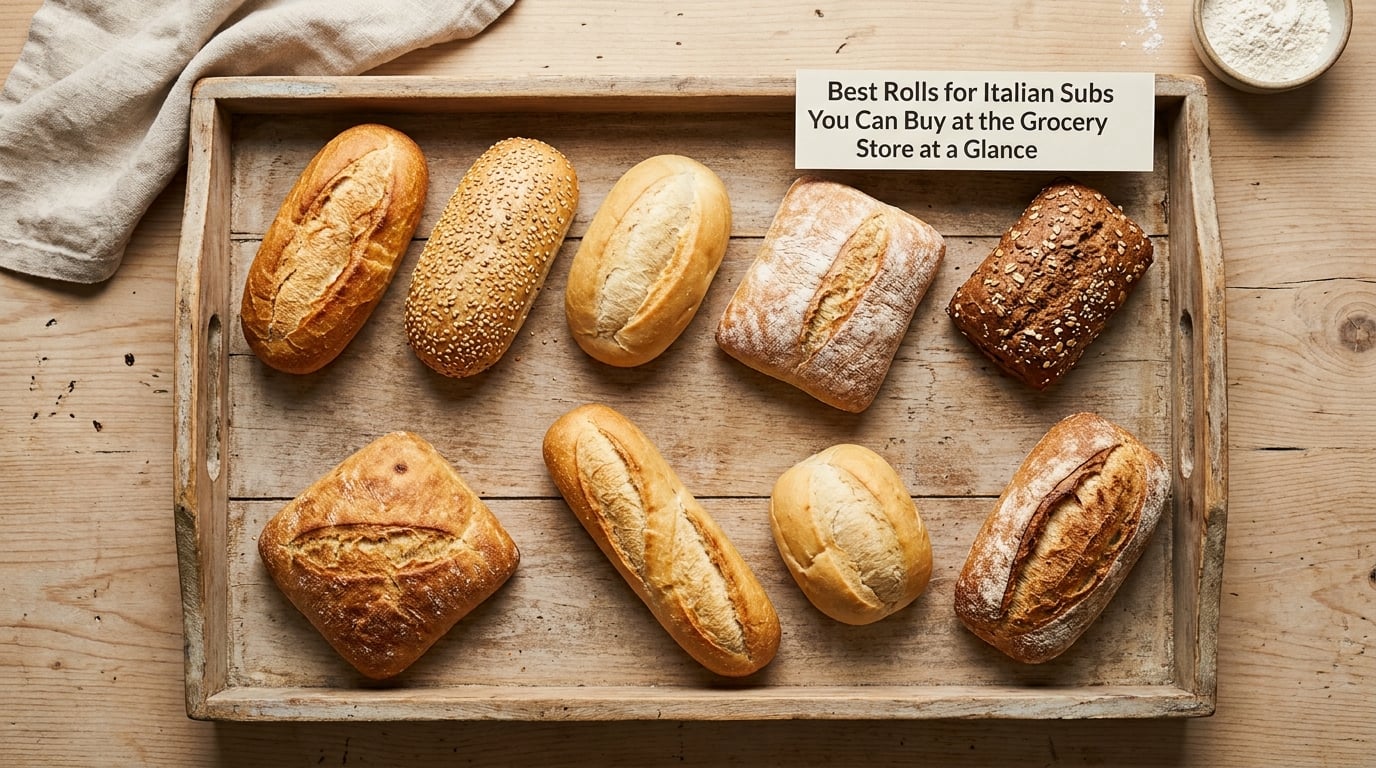
Every roll below can be bought at a normal grocery store. What changes is the crumb, the crust, and the size, and those three things decide what you should put inside it.
| Roll type | Texture | Typical size | Best for | Filling that suits it |
|---|---|---|---|---|
| Classic Italian-style sub roll | Soft, sturdy crumb, thin crust | 11 to 12 inches | All-purpose cold-cut subs | Salami, capicola, provolone, shredded lettuce |
| Sesame seed hoagie roll | Soft with a light crunch on top | 11 to 12 inches | Everyday subs and pressed sandwiches | Turkey, ham, roast beef, vegetables |
| Mini sub roll | Same as the full-size, smaller | 4 to 6 inches | Party platters, kids, appetizers | Two or three sliced cold cuts, one cheese |
| Ciabatta roll | Airy crumb, crackly crust, strong flavor | 8 to 11 inches | Toasted sandwiches, grilled filling | Turkey and provolone, portobello, cheese |
| French bread or baguette section | Firm, very crisp, hollow crumb | 6 to 8 inch section | Crisp traditional subs, po’ boy style | Shrimp, roast beef, ham, fried filling |
| Whole wheat sub roll | Denser, nuttier, more chew | 11 to 12 inches | Heartier sandwiches, higher fiber | Grilled vegetables, turkey, lean cold cuts |
| Potato roll | Pillow soft, very lightly sweet | 8 to 11 inches | Warm meat and cheese sandwiches | Meatball sub, turkey and Swiss, chicken salad |
| Pumpernickel or rye roll | Dense, moist, strong chew | 8 to 11 inches | Cured-meat and strong-cheese sandwiches | Pastrami, corned beef, aged cheddar, ham |
| Garlic or herb roll | Soft with savory seasoning | 8 to 11 inches | Savory, bold sandwiches | Roast beef, salami and provolone, mushrooms |
| Frozen sub roll | Varies, usually soft-baked style | 11 to 12 inches | Baking ahead, larger households | Whatever you want, baked then filled |
| Multigrain sub roll | Nuttier, moderately dense | 11 to 12 inches | Vegetable-heavy and grain-forward sandwiches | Roast vegetables, salami, feta, olives |
| Flatbread or focaccia roll | Broad, soft, oily, flexible | 6 to 8 inch round or oval | Overstuffed sandwiches, sharing | Grilled filling, chopped salad, deli meat piles |
1. Classic Italian-Style Sub Rolls
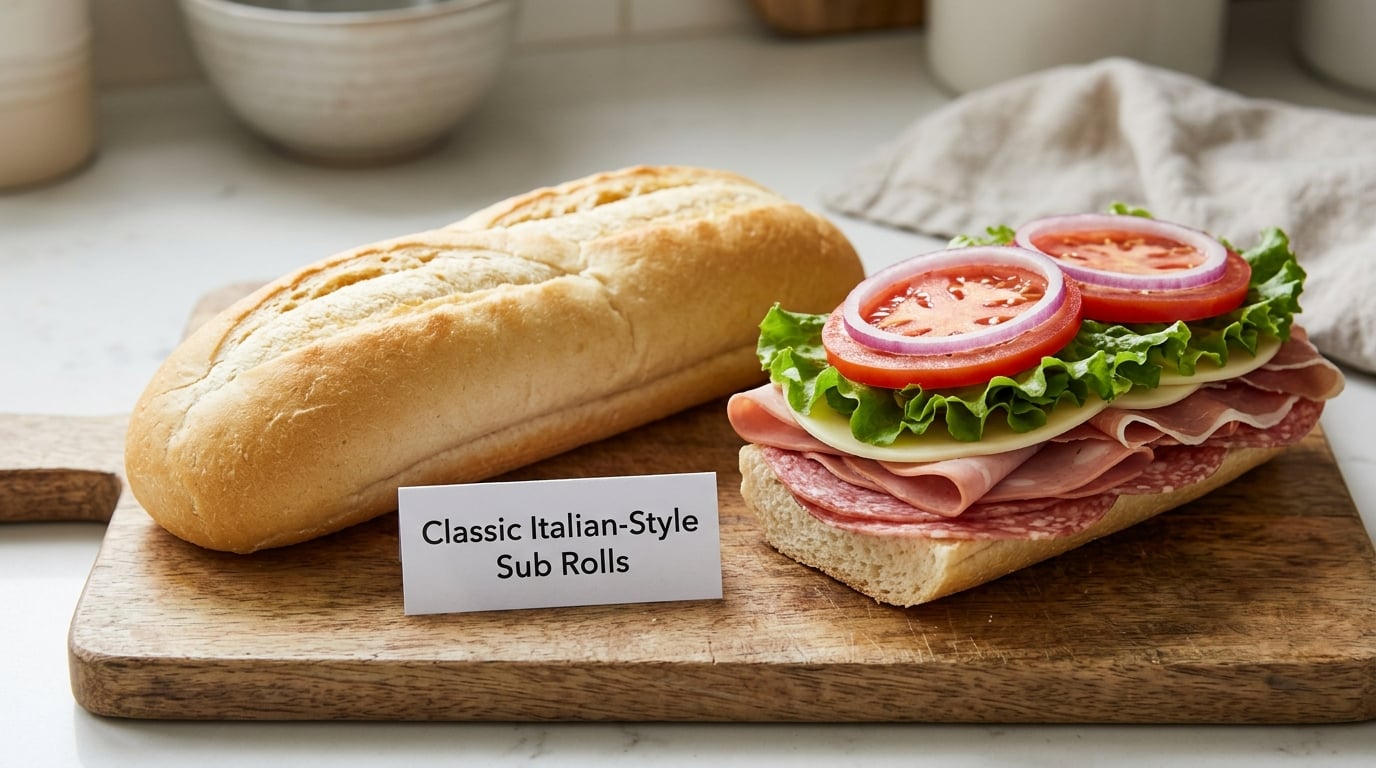
The classic unseeded Italian-style sub roll is the safest choice and the one I use most often. Amoroso’s, Cacia’s, Martin’s and most store brands are built on the same basic formula: a long white loaf with a thin crust and enough interior density to be sliced and hinged without splitting.
That density is the point. Cold cuts, oil, vinegar and shredded lettuce add moisture fast, and a roll with a spongy, open crumb soaks that liquid up in a couple of minutes. A denser crumb compresses instead of absorbing. Store-bought classic rolls also bend without cracking, which matters when you are layering a full pound of meat.
They are the most forgiving option for a first-time sub maker. If the sandwich is assembled a few minutes before eating and the bread is at room temperature, it works as-is with no special technique.
How to Choose a Classic Sub Roll
Check three things in the aisle. Length first: 11 or 12 inches is the useful range for a full sub, and anything under 10 inches becomes a snack. Crust thickness second: thin and crackly is what you want, because a thick crust eats the meal.
Then look at how it feels. A roll should compress easily between your fingers but not feel damp or dense as a brick. Squashed and frozen-dough-then-thawed rolls come out of the bag stiff and never soften properly, so leave those alone.
Fresh, refrigerated bakery-style rolls have the best crumb. Shelf-stable ones are more consistent through the week and travel better in a lunchbox. If you are buying ahead, the shelf-stable version loses less than you would think.
Seeded versus unseeded is the choice most people get wrong, and it changes what belongs inside. A seed crust adds crunch and a faint nuttiness that works with salami and provolone but competes with a mild filling such as turkey and buttery cheese. Unseeded bread is the closer match to a deli-counter sub, where the roll is there for structure and nothing else.
Those same four criteria, length, thin crust, dense crumb and a clean hinge, are what you are checking on every roll in this guide. They matter more than the brand name printed on the bag.
2. Sesame Seed Hoagie Rolls
Sesame hoagie rolls are the softest of the long rolls and the most subtly sweet, which makes them their own category among the best rolls for Italian subs you can buy at the grocery store. Home cooks describe the Pepperidge Farm version as fluffy with just enough crunch from the seeds to keep each bite from disappearing, and it is the one most often turned into a meatball sub.
That softness makes them ideal for pressed or toasted sandwiches and for cold cuts that are not dripping in oil, like turkey, ham and lean roast beef. They also work for a vegetable-heavy sub where the toppings are shredded lettuce, tomato and peppers rather than a stack of salami.
The tradeoff is wet fillings. A seeded roll has more surface area for oil to soak into, and the seeds themselves make it a little more fragile when you fold it. For a meatball sub or a sandwich dressed heavily with Italian dressing, choose a plainer roll.
3. Mini Sub Rolls
Mini sub rolls, usually 4 to 6 inches, solve a real problem: a full-size sub cut into portions is a mess to eat, and a full-size sub built for one person is often more than someone wants. Minis let you build two or three per adult.
They are the right call for party platters, for kids, and for appetizer-style Italian subs with two or three thin cold cuts and a single slice of cheese. The same filling rules apply, but the portions are lighter, so the bread is less likely to overwhelm the meat.
Mini baguette sections work the same way and give you a crisp exterior instead. Buy a bag, freeze half, and thaw at room temperature the morning of, or warm it straight from frozen in a 350°F oven for about 10 minutes.
4. Ciabatta Rolls
Ciabatta brings an open, airy crumb and a crackly crust, and it is the strongest-flavored roll on this list. That flavor is the point: ciabatta is meant to be toasted so the crust blisters and the filling roasts with it.
Choose ciabatta for a sandwich with a filling that likes heat, such as turkey with provolone, sliced portobello mushrooms, or anything you would pan-seer. Cut the roll, fill it, and run the whole thing under a broiler or in a pan for two or three minutes. The bread ends up crisp outside and still chewy in the middle.
Serve it untoasted and you will probably not like it. The open crumb soaks liquid almost immediately, so a tomato-heavy sub goes soft in the time it takes to carry it to the table. Ciabatta wants a drier filling, heat, and a short trip from kitchen to plate.
5. French Bread or Baguette Sections
A cut section of French bread gives you the crispest sub on this list. Francisco International’s French sandwich rolls are the grocery aisle stand-in for a bakery loaf, and they are a good match for shrimp po’ boys, ham and roast beef.
Width matters more than most people expect. Cut a section so it opens like a book and gives you a hinge, but wide enough that the meat covers most of the exposed crumb. A narrow cut leaves a visible stripe of bread on both edges that goes cold and hard while the filling stays warm.
Pick the loaf up and check the underside for gaps. A very airy section can have a hollow pocket where the filling sits and nothing underneath it, so a sandwich feels like it is holding nothing. Denser French bread also toasts better than an airy one, which is what you want with a fried or saucy filling.
6. Whole Wheat Sub Rolls
Whole wheat sub rolls trade delicacy for density and a nuttier flavor. The fiber makes the crumb tighter, which is a genuine advantage for sturdiness: they hold wet vegetables and dressing longer than white rolls, and they are less likely to tear when you fold them.
The question is whether you want a lighter taste or a heartier sandwich. If you are chasing the deli-counter experience with soppressata, provolone and oregano, white bread is closer to the real thing, and whole wheat will read as a different sandwich rather than an Italian sub.
Whole wheat also toasts well, so a toasted version with grilled vegetables and turkey is a good use of it. Just slice it a day ahead if you can, or let it sit uncovered so the crumb does not turn gummy by lunchtime.
7. Potato Rolls
Potato rolls are pillowy and mildly sweet because the dough carries a share of potato starch. They are softer than a classic sub roll and less crusty, which is exactly why they suit a warm filling.
Use one for a meatball sub, a turkey and Swiss pressed sandwich, or a chicken salad sub served at room temperature. The soft crumb cushions hot sauce and melted cheese instead of turning them into a mess, and kids tend to prefer them to seeded rolls.
Handle them gently. They compress under a heavy filling and the hinge tears more easily than a white roll’s, so scoop a little crumb out of the middle if you are loading it heavily. Reheat briefly so the bread warms through without drying out, and keep the oven under 350°F. If you are reheating a sandwich with leftover meatballs or cooked meat, bring it to 165°F before eating.
8. Pumpernickel or Rye Rolls
Pumpernickel and rye rolls are the darkest, densest option, with a moist crumb and a chew that stands up to a long assembly. They are not traditional Italian sub bread, but they pair well with the Italian-adjacent sandwiches that rely on salty cured meat.
Think soppressata, prosciutto, mortadella, and a strong aged cheese. The caraway or sour flavor of rye and the earthy sweetness of pumpernickel give you a sandwich with a point of view, rather than a neutral vehicle for cold cuts.
Watch for two things. Rye is a strong flavor, so light fillings get lost inside it. And the crumb is dense, which is a plus for sturdiness but means a very large sandwich becomes a brick. Use a shorter roll for a pumpernickel sub and keep the filling layered rather than piled.
9. Garlic or Herb Rolls
Garlic and herb rolls bring seasoning to the bread itself, usually garlic, parsley, and oil brushed onto the top before baking. The flavor reads as savory rather than sweet, which sits comfortably with an Italian filling.
They work when the sandwich is bold: roast beef with provolone, salami with hot peppers, mushrooms with melted cheese. The seasoning reinforces the filling instead of competing with it. I also like them for garlic bread subs, since the roll is already halfway there.
Skip them for a delicate combination, like ham with buttery cheese and plain lettuce, or a cold-cut sub where you want to taste the meat. A seeded roll has the same problem in a milder form, and so does anything with rosemary or Italian seasoning in the name.
10. Frozen Sub Rolls
Frozen rolls are a convenience purchase that most home sandwich makers underuse. They cost less per roll than bakery ones, keep for months, and bake up close enough to fresh that nobody at the table notices.
Thaw them the night before on the counter, uncovered, and bake or warm them the next day. Thawing wrapped or sealed traps steam and leaves the crust soft, so leave them out of any bag. If you need one faster, warm it straight from frozen at 350°F and give it extra time.
Bake frozen rolls rather than microwaving them. A microwave makes the crumb tough and the crust rubbery within minutes, while a ten-minute oven restores the crust. The texture is a little firmer than bakery bread and slightly less sweet, so they suit a filling-heavy sub better than a light one.
11. Multigrain Sub Rolls
Multigrain rolls are seeded and cracked throughout the crumb with oats, wheat, barley, flax, or sunflower seeds. The flavor is nuttier and slightly more bitter than white bread, and the texture runs from soft to moderately dense depending on the seed mix.
They suit heartier combinations: roast vegetables with feta and olives, salami with sharp mustard, a sandwich with a grain salad in the middle. The seeds add enough chew and flavor to keep a vegetable-heavy sub from tasting flat.
The risk is a dry result. A sandwich with lean, low-moisture filling, like turkey breast and dry mustard, turns crumbly. Offset that with mayonnaise-based dressings, a slice of cheese, and a little olive oil, and serve it within an hour. Sliced ahead of time and stored in the fridge, multigrain goes stale faster than white, so wrap it well.
12. Flatbread or Focaccia Rolls
Flatbread and focaccia-style rolls are broad, soft, and flexible, which makes them the easiest roll to overstuff. A round focaccia roll, split through the middle, takes a full layer of chopped salad and deli meat that a narrow sub roll would reject.
The oily top of a focaccia roll does something useful, too. It gives you a barrier between the filling and the crumb, so dressing and tomato water are less likely to reach the bread. That makes a focaccia roll a decent choice for a chopped Italian or a warm, saucy filling.
The crumb is soft and wide, so it drinks liquid unless you toast it. Toast the cut side briefly before assembling, and pat wet vegetables dry first. For a crisp grilled filling, the flatbread is better served warm than cold, and cut it once assembled so the slices hold together.
Frequently Asked Questions
What is the best grocery-store roll for an Italian sub?
A classic unseeded Italian-style sub roll is the best all-purpose choice. Look for 11 or 12 inches of length, a thin crackly crust, and a dense crumb that compresses without tearing. Choose ciabatta or a cut French bread section when you plan to toast a wet filling, and a potato roll when the meat is warm. Sesame hoagie rolls suit soft cold cuts and pressed sandwiches.
Are hoagie rolls and Italian sub rolls the same thing?
Often yes, and the names are used interchangeably in most of the country. A hoagie roll is a long, soft roll, usually seeded and slightly sweeter, while a sub roll is a broader term that can include a crustier French-style loaf. In Philadelphia, a hoagie is a specific sandwich on a specific soft roll, and a sub is the general category. What matters is texture, not the label.
Should I toast sub rolls before adding cold cuts?
For a cold-cut sub, serve the roll at room temperature or warm it for a minute. Toasting dries the crumb, which fights the oil and vinegar in an Italian dressing. Toast the roll when the filling is hot or grilled, when the sandwich needs a crisp exterior, or when the filling is wet and you want the bread to hold up longer.
How do I keep a sub roll from getting soggy?
Dress the vegetables, not the bread. Toss shredded lettuce, tomato and onion with oil and vinegar separately, then drain them before they go in. Scoop a little crumb from the middle of the roll, pat wet ingredients dry, and eat the sandwich within about 20 minutes. Chilling the roll for 20 minutes before assembly also slows the sogginess considerably.
Can I use frozen sub rolls instead of fresh bread?
Yes, and most people cannot tell the difference once the sandwich is assembled. Thaw rolls on the counter overnight, uncovered, then warm them at 350°F until the crust is back. Baking beats microwaving every time, since microwave heat makes the crumb tough. Frozen rolls are firmer and less sweet, so they suit a filling-heavy sub better than a light one.
What size roll is best for a large Italian sub?
An 11 or 12 inch roll is the standard for a large sub, and it takes about a quarter to a third of a pound of meat. Anything under 10 inches cannot be loaded without the sandwich becoming mostly filling, and a full French bread loaf is usually too much bread for one person. Buy the longer roll and cut it in half if you are serving two smaller portions.
Conclusion: Choose Your Roll by Filling and Texture
Start with a classic 11 or 12 inch Italian-style sub roll if you want one dependable choice from the best rolls for Italian subs you can buy at the grocery store. Reach for ciabatta or a cut French bread section when the sandwich is going to be toasted and the filling is wet, and pick a potato roll when the meat is warm. Once the crust, crumb and size line up with the filling, assembly takes about four minutes.