
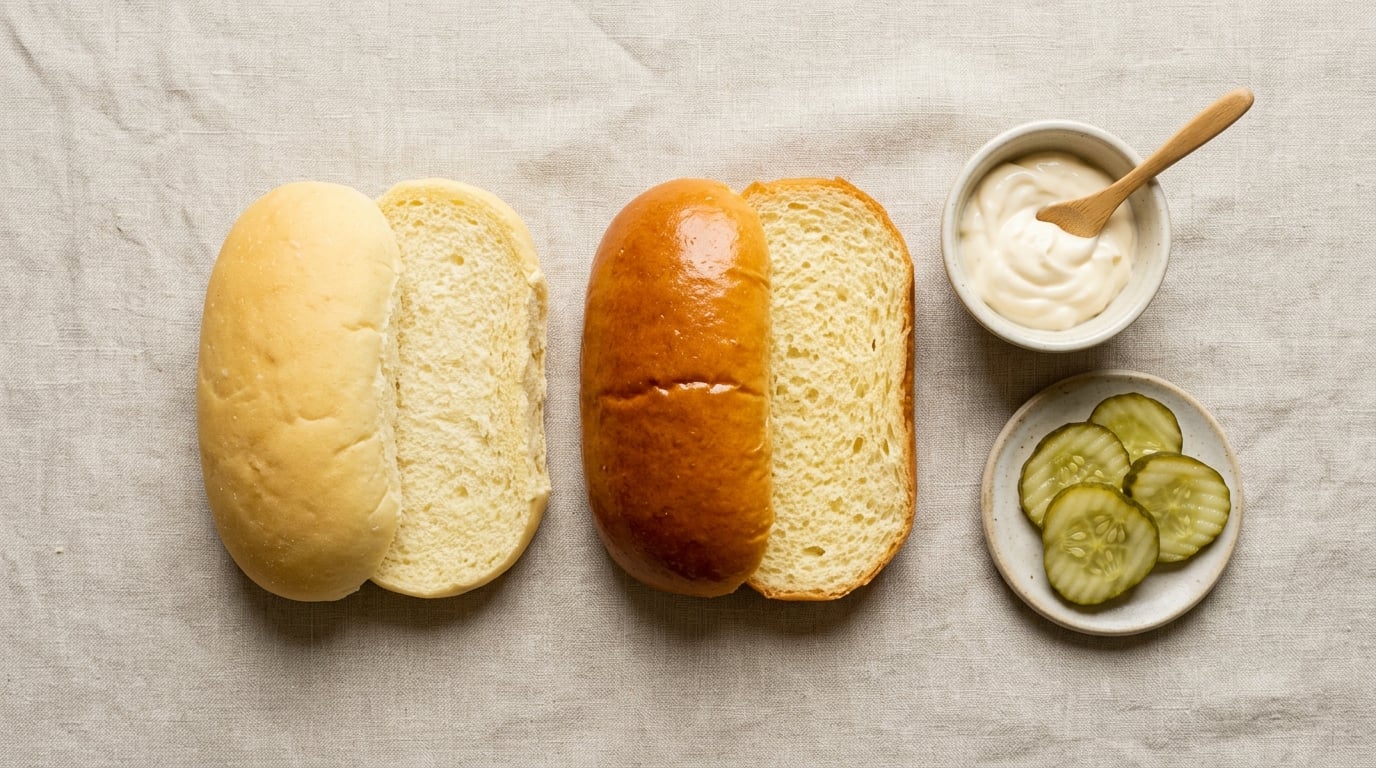
If you are weighing Martin’s Potato Rolls vs. Brioche Buns, the short version is this: a potato roll is the better landing for a hot, wet, messy filling, and a brioche bun is the better landing for a rich, dry, neatly stacked one. Neither wins everywhere, and the failure modes are opposite. Potato rolls can feel too soft and run small against a thick patty. Brioche can taste too sweet and collapse under sauce.
Below is the breakdown I use when I am building sandwiches for other people or for a party tray. I have baked both, toasted both, and let both sit under a puddle of barbecue sauce longer than I should have. Read the table first if you want the decision in one screen, then jump to the section for the filling you are actually making.
Table of Contents
- Martin’s Potato Rolls vs. Brioche Buns: Which Is Better at a Glance?
- Flavor: Buttery Brioche or Savory Potato Bread
- Texture: Soft Potato Roll or Pillowy Brioche
- Structure: Which Bread Holds Fillings Better?
- Size and Shape: Sandwiches vs. Sliders
- Browning and Toasting
- Ingredients and Dietary Considerations
- Serving, Storage, and Ordering
- Martin’s Potato Rolls vs. Brioche Buns for Common Fillings
- Which Should You Choose?
- Frequently Asked Questions
- Conclusion
Martin’s Potato Rolls vs. Brioche Buns: Which Is Better at a Glance?
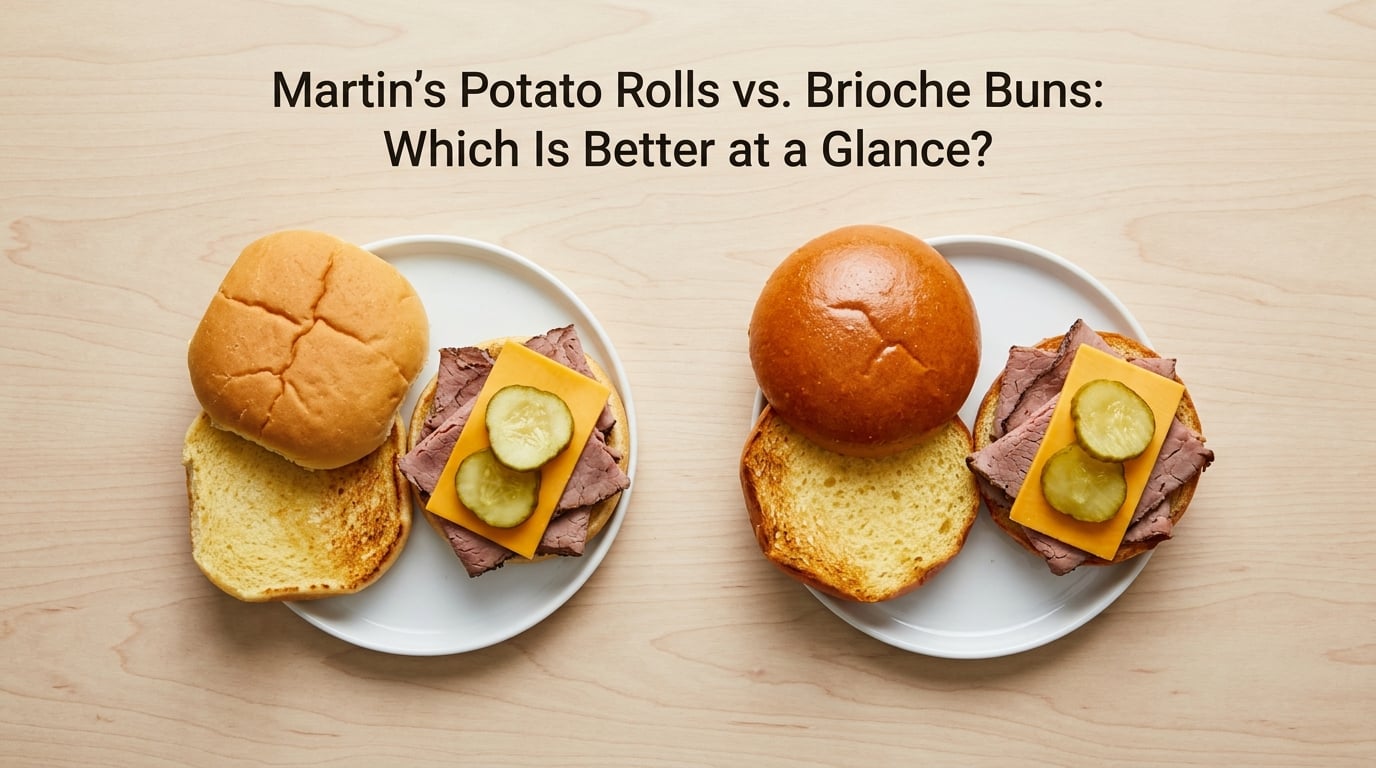
There is no universal winner here, and anyone who tells you otherwise is only telling you about their favorite filling. The table below compares the two on the traits that actually change how a sandwich eats.
| Criterion | Martin’s potato roll | Brioche bun |
|---|---|---|
| Flavor | Mild, savory, faintly sweet from the dough, very neutral | Rich and buttery with clear added sweetness |
| Texture | Pillowy and springy, compresses without tearing | Very soft, cakier, slightly denser bite |
| Density | Light and airy, squeezes easily in one hand | Heavier for its size thanks to fat and egg |
| Slice size | Runs modest; check the label for exact dimensions | More consistently built, often wider; check the label |
| Structure under a wet filling | Holds shape longest, absorbs liquid without going flat | Soaks through quickly and turns soft underneath |
| Structure under a dry filling | Fine, though a heavy patty can push through | Sturdier wall, better for tall stacks |
| Best fillings | Pulled pork, fried chicken, chopped salad, saucy barbecue, deli stacks | Bacon-wrapped burgers, egg and cheese, mild chicken, ham and cheese |
| Ideal uses | Sliders, smashburgers, catering batches, messy sandwiches | Breakfast sandwiches, burgers with dry toppings, refined plates |
| Toasting | Toasts fast; buttering the cut face can flatten it | Handles butter and a griddle well, browns evenly |
| Dietary notes | Potato starch and wheat flour; not a gluten-free bun | Usually contains eggs, milk and butter; not vegan |
| Storage | Freezes well; soften slightly at room temperature | Freezes well; goes stale at the cut face faster |
Flavor: Buttery Brioche or Savory Potato Bread
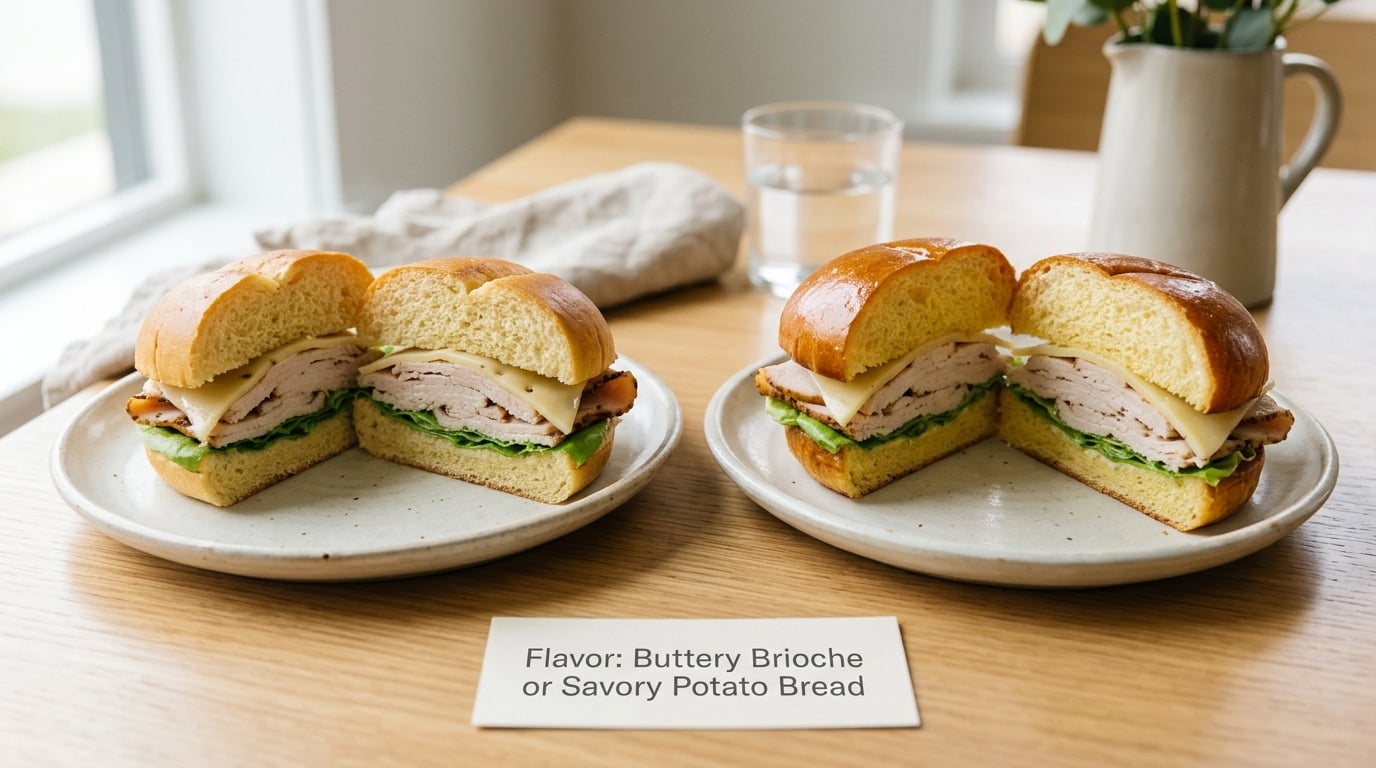
A potato roll is a blank canvas. The flavor sits close to neutral with a faint sweetness that reads as baked bread rather than dessert, which means the filling is what you taste. That is exactly what you want with roast beef, turkey, chopped salad or a saucy shredded pork.
Brioche is the opposite. Butter, milk, eggs and sugar put flavor in the bread itself, so a plain brioche bun with butter and jam is already a good sandwich. That richness is the reason it disappeared into fried chicken sandwiches and breakfast sandwiches, and the reason some people find it too sweet beside a salty burger patty.
Pairing rule of thumb: wet and savory fillings go on potato rolls, rich and mild fillings go on brioche. Barbecue sauce on brioche turns cloying fast. A turkey and provolone on potato bread tastes like the turkey instead of the bread.
Texture: Soft Potato Roll or Pillowy Brioche
Both buns are soft, and that is where most of the confusion comes from. A potato roll is soft with spring in it. Squeeze one and it pushes back, then returns to shape. Brioche is soft without much spring, so it feels denser and cakier in the mouth even though it looks equally lofty.
Home cooks in burger communities usually praise potato rolls for exactly that forgiving squish, and it is a real advantage with a crisp-edged smash patty. The same quality is the complaint from people stacking two patties, who find the roll compresses into the filling by the third bite.
Brioche holds its shape better in a tall stack because of the fat and egg in the dough, but the crumb gives up sooner once it is wet. A dry brioche sandwich stays excellent. A saucy one, eaten after a fifteen-minute delay, does not.
Structure: Which Bread Holds Fillings Better?
The potato roll wins the wet test. Its starch-based crumb takes on juice and sauce and stays springy rather than turning to paste, which is why pulled pork and sloppy joe sandwiches hold together far longer on potato bread.
Brioche wins the dry test. A thick, crumbly patty or a bacon-wrapped burger sits on a wall that resists compression, and the bottom half does not disappear into the top.
Three habits change the result more than the brand. Toast the cut face first and you buy yourself a barrier layer. Put the sauce on the filling rather than painting the bread. And drain or pat wet toppings, especially chopped salad with tomato, because no bun on earth can rescue a puddle.
Size and Shape: Sandwiches vs. Sliders
Dimensions differ between brands, products and package revisions, so check the current panel or the product page rather than trusting a number you remember. What is consistent is the pattern: Martin’s potato rolls are on the modest side, and brioche slider buns are usually cut for a single small portion.
That is the practical pain point people hit repeatedly. A full-size potato roll paired with a double patty produces a sandwich that overhangs on both sides and sheds filling on the plate. Two workarounds solve it. Slice the roll horizontally and use the halves as a top and bottom, or quarter a full-size roll for genuine sliders.
For party trays, plan on three to four small portions per full-size roll if you are quartering them, and keep a platter of open faces for anyone who prefers a deconstructed slider.
Browning and Toasting
Brioche is the easier bun to toast because of its fat content. Butter the cut face and it browns evenly in a skillet or on a griddle, and the outside gets a proper crust while the middle stays soft.
Potato rolls brown fast, and steam is the thing to watch. A roll toasted cut-side down in a buttered pan can deflate and go flat because the moist crumb gives up water to the hot fat. Dry toasting on a griddle or under a broiler for a short time gives you the same crust with none of the collapse.
For a mixed tray, toast the potato rolls first, set them aside, and toast the brioche after. They brown at different rates, and the rolls will be sitting too long while the buns finish.
Ingredients and Dietary Considerations
Potato rolls are built on wheat flour with potato starch or potato flour added for that tender, moist crumb. Published ingredient lists for Martin’s potato rolls have also included milk, sugar, a blend of oils, butter and turmeric for color. Brioche leans on enrichment: eggs, butter, milk and a meaningful amount of sugar.
Two things people get wrong. A potato bun is not a gluten-free bun, because the starch sits alongside wheat flour rather than replacing it. And brioche labels vary widely, so a vegan or dairy-free brioche exists while a standard bakery one does not.
Check the current ingredient panel and allergen statement every time. Recipes and nutrition panels change between package revisions, and both of these are labels-first decisions.
Serving, Storage, and Ordering
Both buns freeze well and both are best used fresh. Room temperature in a sealed bag is fine for a day or two; beyond that, the cut face dries and the roll loses the squish that made it worth choosing.
Pre-sandwiched batches need more care than the bread does. Assemble filled sandwiches no more than two hours before serving if they will sit at room temperature, and refrigerate anything with meat, cheese or egg. Cook poultry to 165°F (74°C), ground meat to 160°F (71°C), and whole cuts and fish to 145°F (63°C). Discard perishable fillings that sat out beyond two hours or above 40°F (4°C).
Follow the manufacturer’s storage directions on the bag, and for a catering run, slice only what you plan to use. Cut faces are where the softness and staleness both start.
Martin’s Potato Rolls vs. Brioche Buns for Common Fillings
Matching bread to filling is a short decision once you name the filling. The two breads fail in opposite ways, so the question is only whether your filling is wet and messy or rich and dry.
Martin’s Potato Rolls vs. Brioche Buns for Burgers and Sliders
For smashburgers, pulled pork sliders and sloppy joes, choose the potato roll. It is more forgiving of moisture, survives a longer hold before service, and compresses instead of cracking, which matters when a tray of sliders sits for a while before anyone eats. Brioche is the better choice for a breakfast sandwich or a fried chicken sandwich eaten immediately, where the buttery crumb is the point and the bite is finished in a few minutes.
Which Should You Choose?
- Classic deli sandwiches: potato roll. Neutral flavor keeps the meat and cheese in front.
- Mini sliders: potato roll, quartered from a full-size roll, or a dedicated slider bun if you want uniform portions.
- Smashburgers: potato roll, toasted dry on a griddle.
- Fried chicken sandwiches: either. Brioche for richness, potato roll if the sandwich will sit in a bag.
- Breakfast egg and cheese: brioche, toasted in butter.
- Vegetarian and chopped salad sandwiches: potato roll, with the wet ingredients pressed or drained first.
- Large-format or double-patty sandwiches: brioche for the sturdier wall, with a slice-and-rebuild if the stack is tall.
- Catering batches: potato roll, assembled closer to service, because it tolerates the wait better.
If you want both in one spread, buy a bag of each. Brioche for the neat, rich sandwiches and potato rolls for the messy tray. That is the setup most sandwich shops run, and it stops the debate entirely.
Frequently Asked Questions
Are Martin’s potato rolls better than brioche for sliders?
Martin’s potato rolls are usually the better slider bun because they absorb sauce and pulled pork juices without going flat, and they hold up when a tray sits for a while before service. Brioche slider buns are the better pick for a neater, sweeter mini sandwich eaten right away, such as an egg and cheese slider. For party portions, quarter a full-size potato roll rather than assuming a dedicated slider bun is needed.
Are potato rolls healthier than brioche buns?
Neither is a health food, and the honest answer depends on the label in front of you. Brioche usually lists more fat and more added sugar because of the butter, milk and eggs. Potato rolls replace some wheat flour with potato starch, which changes texture more than nutrition. Check the nutrition panel on the exact package, and remember that a potato bun still contains wheat flour and is not gluten free.
Can I use Martin’s potato rolls in a hamburger?
Yes, and for a single smash-style patty they are among the best choices. The springy crumb compresses under a crispy-edged patty and soaks up juices without tearing. For a double or thick patty, slice the roll horizontally and rebuild it, since full-size potato rolls are modest in diameter and a tall stack will overhang. Toast the cut faces dry on a griddle for a crust that holds.
Which roll is best for a turkey and cheese sandwich?
A potato roll. Turkey and provolone or cheddar are mild and salty, and a neutral potato crumb lets those flavors read clearly instead of competing with a buttery, sweet bun. Brioche works too, especially on a toasted breakfast turkey melt where the richness suits the egg. For a sandwich that will sit in a bag for an hour, the potato roll holds its texture better than brioche.
Can potato rolls be toasted like brioche buns?
They can, with one adjustment. Potato rolls brown faster and release steam, so a buttered cut face in a hot pan can deflate and go flat. Toast them dry on a griddle or briefly under a broiler, cut side down, and you get a crisp exterior with a soft center. Brioche tolerates butter in the pan without that risk because the dough already carries fat.
Which bread is better for a large party sandwich?
Brioche wins on a large stacked sandwich, because its fat and egg content create a sturdier wall that resists compression under a tall pile. For a party tray of many small sandwiches, the potato roll is the better choice, since it stays springy while the batch waits to be eaten. Assemble filled sandwiches no more than two hours before serving, and keep anything with meat, cheese or egg chilled.
Conclusion
Start with the filling. Choose Martin’s potato rolls for soft, savory, saucy and mini sandwiches, and choose brioche when you want a richer, sturdier bite that suits a hearty, drier stack. Before you order, read the current ingredient panel and check the dimensions on the package, because both change between products and revisions. Then buy one bag of each and stop guessing.