
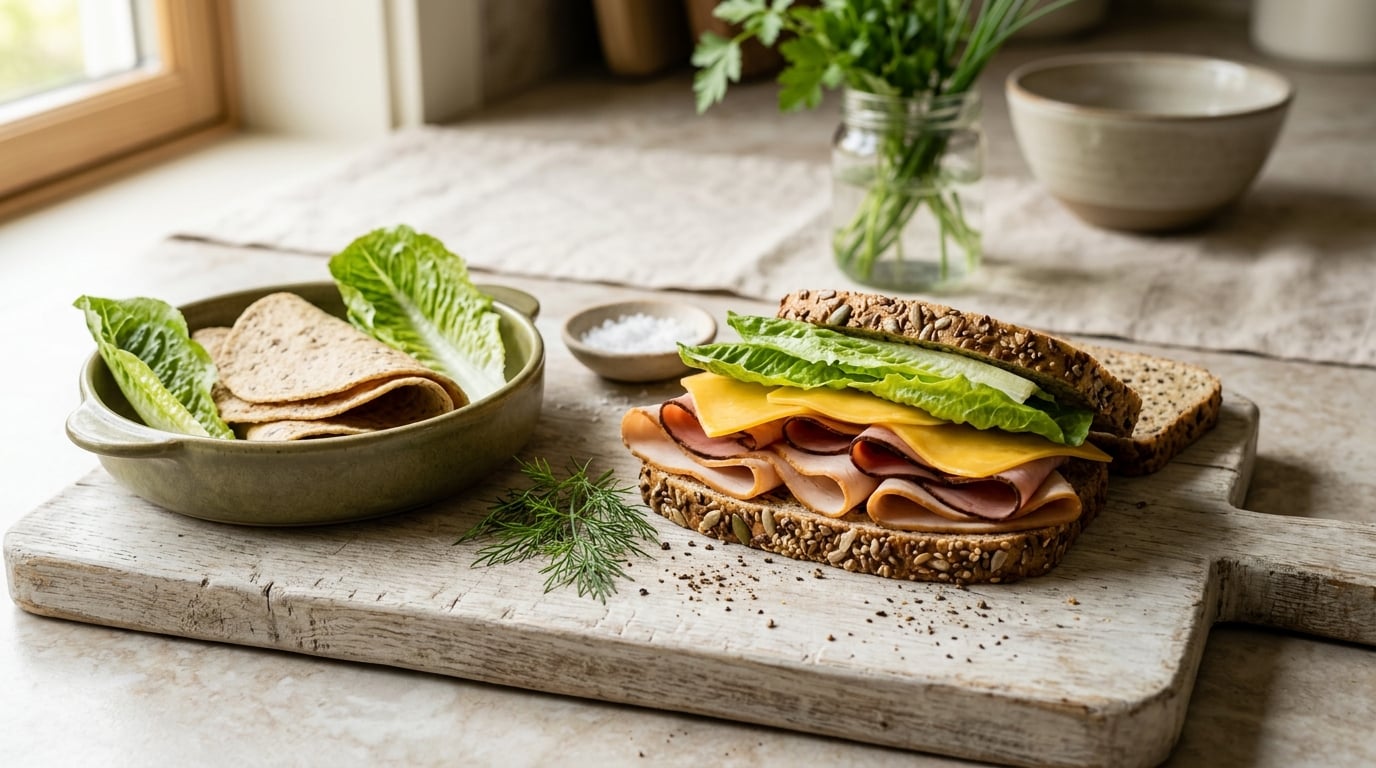
Cloud bread and thin chia or flaxseed loaves sit at the very bottom of the range, landing around 1g net carbs per slice, while almond flour sandwich loaves usually run closer to 3g and egg-based cloud bread closer to zero. That spread is small next to the roughly 15g of carbs in a standard slice of wheat bread, which is why the best keto and low-carb breads for sandwiches come down to texture rather than the number on the label. We built this list around the only test that matters: does the slice survive a toaster, a lunchbox and a filling that wants to slide out?
This is for people who eat sandwiches every day for work, school or breakfast and are tired of giving them up. Ten options, ordered roughly from lowest carbohydrate to most filling, with a concrete sandwich for each one so you can picture it in your kitchen rather than on a lab shelf.
Table of Contents
Best Keto and Low-Carb Breads for Sandwiches at a Glance
Everything below is a sandwich carrier you can buy or make without a wheat-flour base. Net carb figures are typical published values per slice and will shift a little between batches and brands, so treat them as a ranking tool, not a promise.
| Bread | Main style | Typical net carbs | Best texture | Strongest use | Where it comes from |
|---|---|---|---|---|---|
| Cloud bread | Egg white based | About 0-1g | Light, airy, almost soufflé soft | Cold sandwich, breakfast | Homemade |
| Keto bread | Almond or coconut flour | About 3g | Dense, moist, close to wheat | Hearty cold and hot sandwiches | Homemade |
| Flaky fathead | Cheese dough | About 2-3g | Crisp edges, soft middle | Grilled cheese, hot sandwiches | Homemade |
| Low-carb wraps | Flour or specialty wrap | About 2-4g | Flexible, rolls when warm | Lunchbox, portable meals | Store-bought |
| Egg roll wraps | Egg only | About 0-1g | Rubbery, needs warming | Breakfast wraps | Store-bought |
| Lettuce wraps | Raw leaves | About 1g | Crunchy, fragile when wet | Salads, cold lunch | Fresh produce |
| Low-carb sourdough | Yeast loaf | About 3-4g | Firm crust, chewy crumb | Deli meat, roast beef | Both |
| Parmesan cheese bread | Hard cheese and egg | About 1g | Crisp, cracker-like | Open-face, toasted | Homemade |
| Chia seed bread | Chia and flax | About 1g | Mild, slightly crumbly | Hummus, cold fillings | Both |
| Packaged low-carb | Baked gluten-free loaf | About 1-5g | Varies widely by brand | Everyday packed lunch | Store-bought |
Two details in that table matter more than the carb counts. The “best texture” column is doing most of the work, because a slice that crumbles at the cut is a bad sandwich regardless of its label. And the last column tells you how much work you are signing up for: homemade options taste better and cost less, but they are a Sunday project.
1. Cloud Bread
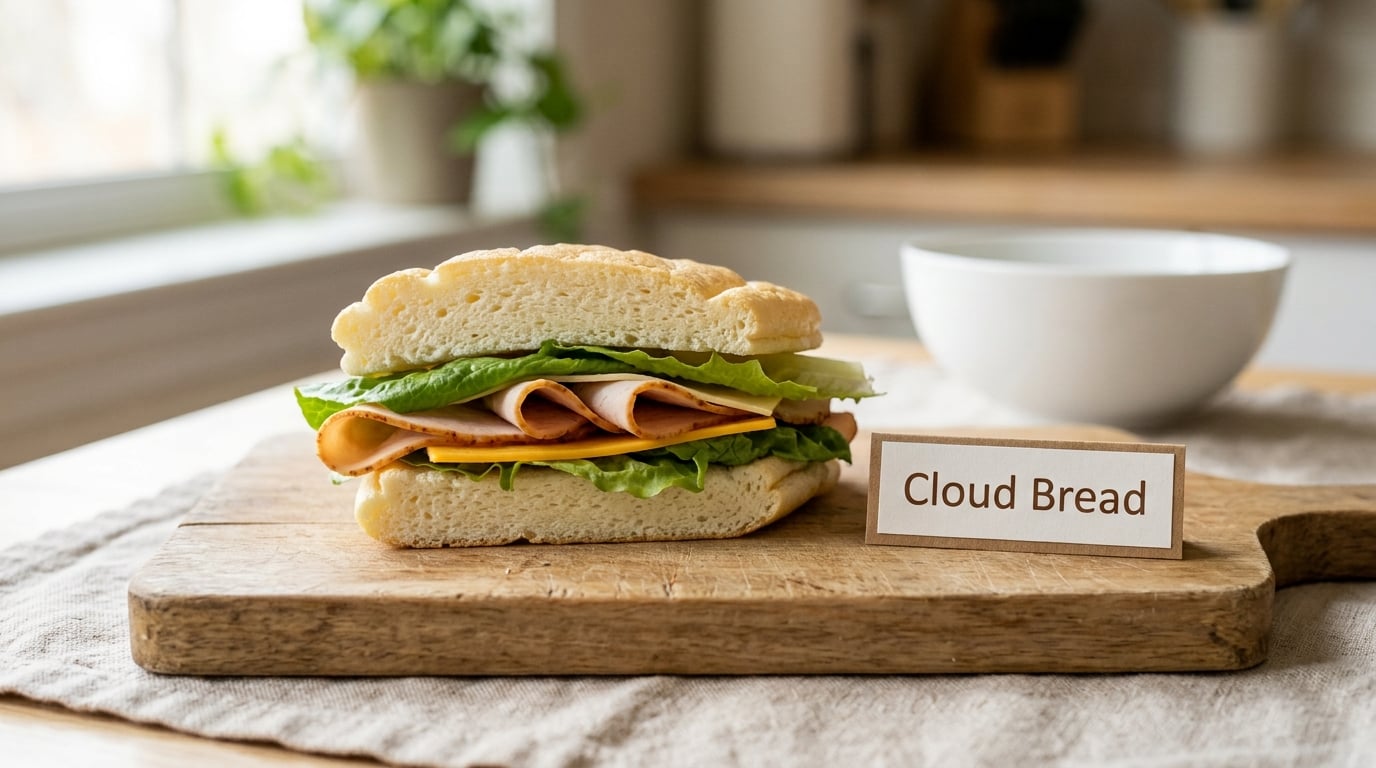
Cloud bread is a whipped egg-white loaf, and the reason it works is chemistry rather than substitution. You separate the whites, beat them to stiff peaks with cream of tartar, fold in the yolks, and the trapped air gives you a crumb that is closer to a soufflé than to bread.
That crumb is very light and very fragile. It behaves nothing like a wheat slice: it compresses under the weight of a thick filling, it does not brown the way a loaf does, and after an hour in a lunchbox it flattens. What it does have is a carbohydrate count that barely registers, and a neutral flavor that will not compete with anything you put in it.
The sandwich to build on it is a cold one with soft ingredients. Fold two slices of turkey, lay on a slice of cheddar, add lettuce and a thin layer of mayonnaise, and press gently. Because the bread has no structural strength of its own, go easy on the condiment and heavy on something like avocado or cream cheese that binds the layers together. Toast it briefly and the outside firms up enough to hold.
2. Keto Bread
This is the everyday answer for anyone who wants a sandwich that feels like a sandwich. A typical loaf is built from almond flour or coconut flour with eggs, psyllium husk for structure and a small amount of sweetener, and it comes out dense and slightly moist rather than light.
Dense is the feature, not a flaw. A dense slice stands up to a thick filling, stays soft for a full day in the fridge, and reheats without turning to cardboard. It also slices cleanly, which matters when you are building ten sandwiches on a Sunday for the week ahead.
Build a turkey and avocado sandwich on it: mayo on both slices, three slices of turkey, a quarter of an avocado mashed with a little salt, and a few peppercorns. For storage, let the loaf cool completely before slicing, keep it in a sealed bag at room temperature for a day or two, then move it to the fridge where it holds for close to a week. Slice it before freezing and lay the slices flat with parchment between them; they thaw in a toaster without reheating the whole loaf.
3. Flaky Fathead Bread
Fathead dough is mostly cheese and eggs, and that combination is what gives it the best hot-sandwich texture of anything on this list. The edges crisp like a tortilla chip while the middle stays soft and chewy, and it browns faster than any other keto bread because there is so much fat in the pan.
The problem is that it is rich. A fathead sandwich eaten on its own at 2pm leaves you tired, and stacking it with cheese, butter and bacon pushes a single meal well past what most people want in a midday sandwich.
Keep it balanced by using it as the bread and skipping the butter, or by pairing it with something lean. A bacon, egg and tomato sandwich is the classic version: cook the bacon crisp, fry one egg, add a slice of tomato and a pinch of salt and pepper, and serve on one slice of warm fathead with the second slice on top. Two slices of egg with no added cheese keeps the meal from tipping over.
4. Keto Tortilla Wraps
Wraps solve a problem sliced bread cannot: portability. A tortilla-style wrap folds around a filling instead of being stacked, so it survives a bag at an angle, a car seat and a long commute without a rigid box around it.
Two things to know before you buy. Regular flour tortillas are not low-carb at all, so you need either a specialty low-carb wrap or a thin, flexible low-carb flatbread, and you should check the label because “wrap” on the front means nothing. Second, most low-carb wraps crack when cold, so warm one for ten to fifteen seconds before rolling it.
A chicken salad wrap is the test case. Mix shredded chicken with mayo, chopped celery, a little dill and a pinch of salt, pile it along the center of a warmed wrap, add a few spinach leaves, roll it tight, and cut it in half on the diagonal. Compared with sliced bread, you lose the clean two-triangle presentation and gain something you can eat with one hand on a train.
5. Egg Roll Wraps
Egg roll wrappers are made almost entirely from egg, and the net carb count is so low it is close to irrelevant. For someone running a strict daily carb target, they are one of the few sandwich carriers that barely registers.
The trade-off is texture. A cold egg wrap is rubbery and tears when you fold it, and it turns chewy rather than crisp in a hot pan. They also have no flavor of their own, which is useful in one way and a problem when a sandwich needs a bread note.
Use them warm and for filling-heavy meals. A vegetable and cream cheese breakfast wrap works well: warm the wrap in a dry pan for a minute until pliable, spread cream cheese over the middle, add scrambled eggs, sliced peppers and a little black pepper, and fold the sides in before rolling. Keep the seam on the bottom, and eat it while the eggs are still warm so the whole thing holds together.
6. Lettuce Wraps
Lettuce is the bread-free option and the fastest one, since there is no baking, no toasting and no label math. You tear a leaf, add a filling, and eat it. On carb count alone it is hard to beat.
Structure is the deciding factor, and the three usual choices behave differently. Romaine is the best all-rounder because its ribs are sturdy and its leaves are long enough to wrap. Butter lettuce is softer and sweeter but collapses under anything wet, so keep the filling drained. Cabbage leaves are the sturdiest of the three and take a heavy filling without tearing, which makes them the better choice for tuna or chicken salad.
Build a chicken, vegetable and avocado version: shred cooked chicken, combine it with chopped celery, red onion and a mayonnaise-based dressing, and scoop it into a romaine leaf. Add thin avocado slices and a squeeze of lime just before eating, because acid keeps the lettuce crisp and stops it going watery.
7. Low-Carb Sourdough
A genuine low-carb sourdough is the closest thing to traditional sandwich bread that fits a low-carb diet, and the difference is in the process rather than the ingredients list. A real starter-fed loaf needs time and a slow rise, which is what builds the firm crust and open, chewy crumb you use for deli meat.
Be careful with the packaged version, because “sourdough” on the front of the box often means a style rather than a culture. Check whether the loaf lists a sourdough starter or a lactic acid bacteria culture in the ingredients, and whether it gives a rise time. If it bakes in an hour with no mention of a starter, it is a sweetening-free white loaf shaped to look rustic, and it will behave like any other soft sandwich bread rather than the firm, sliceable thing you wanted.
For a roast beef and horseradish sandwich, toast one slice lightly, spread cream cheese mixed with prepared horseradish on both slices, layer on cold rare roast beef folded rather than laid flat, and add a few cornichons. Firm crumb is what makes this work: it resists the moisture from the meat and the horseradish cream, and you can cut it without it collapsing.
8. Parmesan Cheese Bread
Parmesan cheese bread is a small, fast bake of grated Parmesan and egg, and it behaves more like a crisp cracker than a loaf. It is the most useful item here for open-face sandwiches and for anyone who wants the crunch element that most keto bread lacks entirely.
It has two clear limits. It is fragile, so it needs a flat surface and a topping that will not slide, and it is very salty, so salty fillings turn it into a salt bomb. Anything wet on the bottom is a bad idea.
The best use is a toasted open face: bake or warm one round, spread pesto over the top, add a slice of mozzarella and two slices of tomato, then finish under a hot grill until the cheese bubbles. Cut it into four wedges and serve as a starter, or make it a lunch by adding a handful of arugula after it comes out. It also works as the top of a pressed sandwich if you are careful folding it.
9. Chia Seed Bread
Chia and flaxseed breads are the quiet performers. Chia seeds absorb water and form a gel that binds the loaf, and because neither seed carries much of its own flavor, the result is mild and close to neutral.
The texture is the tradeoff. These loaves are noticeably more crumbly and denser than an almond flour version, and the crumb does not spring back the way a wheat crumb does. That matters most when the filling is dry and crumbly, such as tuna salad, and least when the filling is moist and creamy.
A hummus, cucumber and turkey sandwich shows it at its best. Thinly slice a loaf horizontally if you can, spread hummus on both cut sides, add turkey and thin cucumber rounds, and season with pepper and a little lemon. Let the assembled sandwich sit for five minutes before cutting so the hummus softens the interior crumb. Skip tomato on this one, since the extra water makes the crumb fall apart.
10. Store-Bought Low-Carb Bread
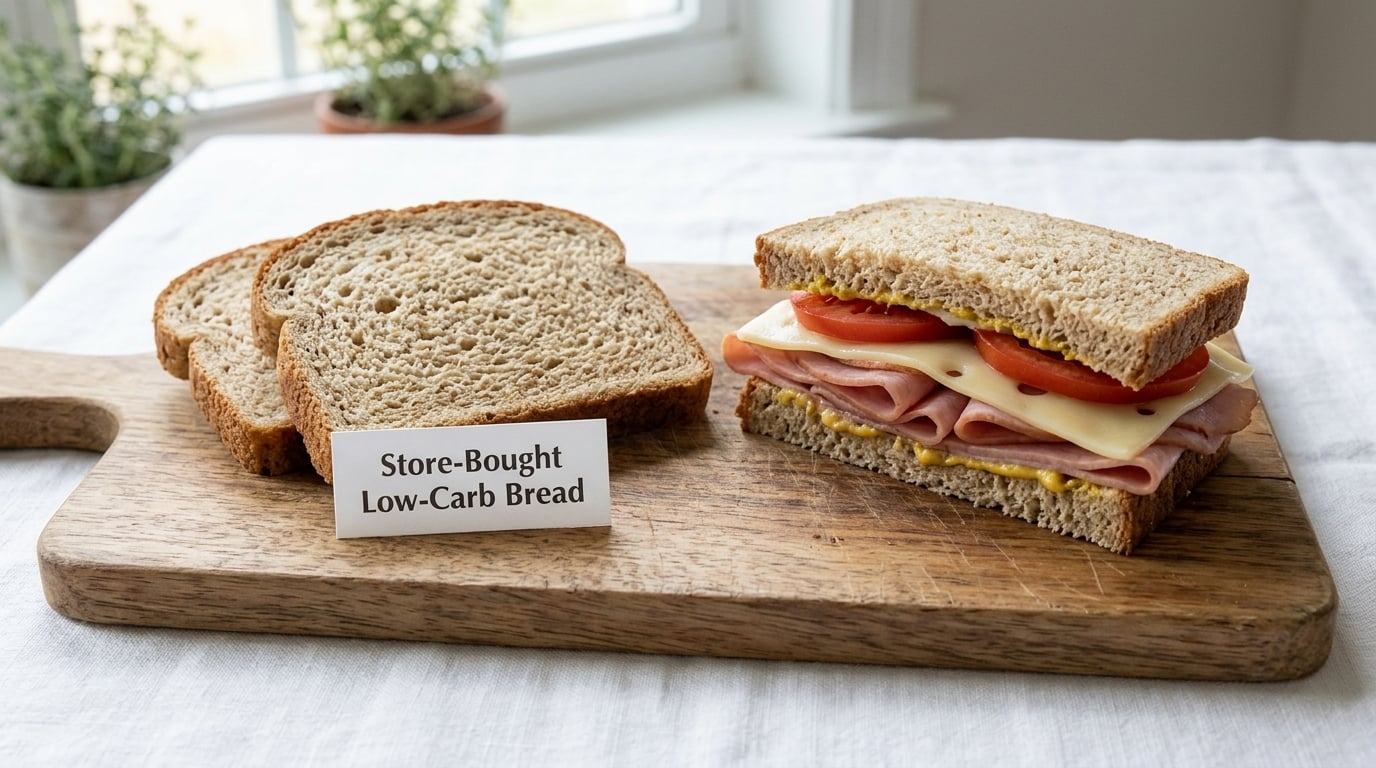
The packaged loaf is the option most people actually buy, and it is the one that needs the most label reading. Net carbs on these breads typically fall between 1g and 5g per slice, with texture ranging from genuinely chewy to soft and spongy, so the brand matters more than the number.
Check five things. Start with total carbohydrates, then subtract dietary fiber to get net carbs, and do the subtraction yourself rather than trusting a claim on the front. Look at added sugars, since honey and syrup will undo the whole exercise. Treat sugar alcohols such as erythritol, monk fruit and maltitol carefully: erythritol and monk fruit contribute very little, while maltitol and sorbitol can cause digestive trouble for some people. Then check the serving size, because a listed slice is often smaller than the slice the brand means. Finally, read the ingredient list top to bottom, and treat a long list of gums and syrups as a sign the loaf is engineered rather than baked.
Brands you will find in most major grocers include Carbonaut, Sola, Great Low Carb Bread Company, Arnold Keto, Base Culture, ThinSlim, Nature’s Own Life Keto and BeyondChipz, with SmartBuns and KetoBakes more common in specialty and online only. Community consensus has leaned toward SmartBuns on texture and toward Nature’s Own and store-brand Carbmaster for general use, and the main recurring complaint is that these loaves are heavy on fiber, which leaves some people bloated after two slices.
For a plain ham and cheese, keep the filling simple. Two slices of ham, one slice of cheddar, a tomato slice and a thin line of mustard, built on toasted bread. Mustard matters more than it sounds here: unlike ketchup or barbecue sauce, it adds almost no sugar, and it is the difference between a sandwich that tastes complete and one that needs salt on top.
One technique worth adopting from people who make these daily. If a slice comes out of the bag feeling soft or rubbery, put it in the air fryer for three to four minutes instead of a toaster. The dry heat firms the surface, browns it properly, and turns a slice that would have been disappointing into one that eats like bread. It is also the method most people use before putting a burger between two halves.
Frequently Asked Questions
What is the lowest-carbohydrate bread for sandwiches?
Egg-based cloud bread and egg roll wrappers come out lowest, at roughly 0-1g net carbs per slice, followed by chia and flaxseed loaves at about 1g. Parmesan cheese bread is similar. Almond or coconut flour keto loaves sit closer to 3g, and packaged low-carb sandwich bread usually lands between 1g and 5g. Any of these beats a standard wheat slice, which carries roughly 15g of carbs.
Are keto breads better than lettuce wraps for sandwiches?
It depends on the filling. Lettuce wins for speed, freshness and carb count, and cabbage leaves handle a heavy tuna or chicken salad better than anything else on this list. Keto bread wins when you want something that feels like a sandwich, holds a hot filling, travels in a bag, or survives a toaster. Most people use both in the same week rather than picking one.
How do I keep low-carb bread from becoming soggy?
Toast the bread first, and it is a single-technique fix. A dry, crisp surface resists moisture far better than a soft one, which is why warm or air-fried slices keep a sandwich together far longer. Beyond that, drain wet fillings like tuna, tomato or pickles on a paper towel, spread mayo or butter on both slices as a barrier, and avoid stacking wet ingredients directly against the crumb.
Can I freeze homemade keto sandwich bread?
Yes, and it freezes better than most store-bought versions. Cool the loaf completely, slice it while cold, and lay the slices flat with parchment or plastic between layers so they do not stick. Thaw a single slice in a toaster or air fryer rather than warming the whole loaf. Almond and coconut flour loaves freeze reasonably well, while egg-heavy fathead and cloud bread come back softer and are better made fresh.
How should I read nutrition labels when shopping for low-carb bread?
Do the arithmetic yourself. Read total carbohydrates, subtract dietary fiber, and treat the remainder as your net carbs per slice. Check added sugars next, then read the sugar alcohol line, since erythritol and monk fruit count little while maltitol and sorbitol can bother some stomachs. Confirm the serving size matches a real slice, and read the ingredient list in order to judge how engineered the loaf is.
Conclusion
Start with the carrier that matches your filling, not the one with the lowest number on the label. Cold light sandwiches work on cloud bread or lettuce, hearty deli meat needs a firm loaf like keto bread or a real sourdough, hot sandwiches need fathead or crisp parmesan, and anything you are carrying in a bag wants a wrap. Add the five label checks from the final section, and you will pick a better sandwich bread in the aisle than most people manage.