
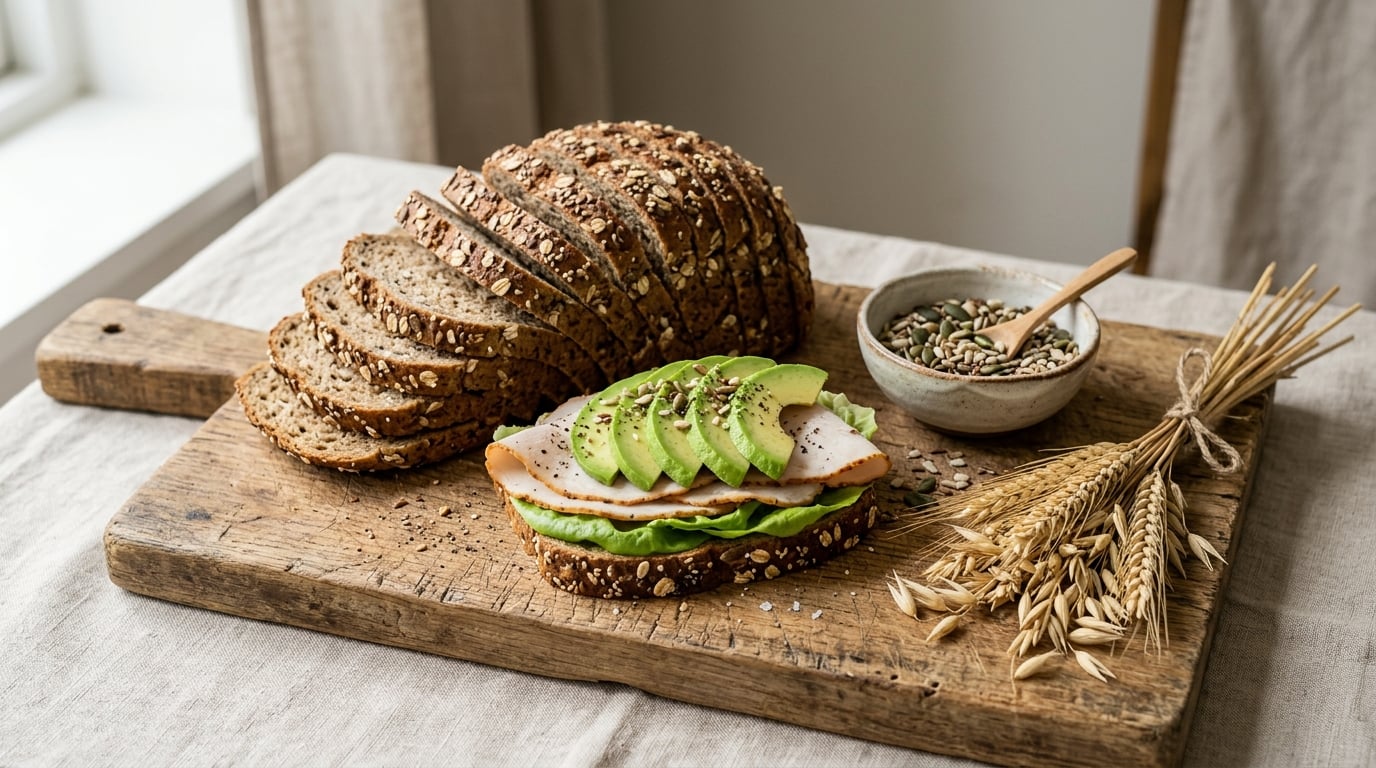
Sprouted and whole-grain bread only makes a good sandwich when the crumb can take the weight of the filling without collapsing or shattering. Soft sprouted wheat and seeded multigrain loaves handle everyday lunches, while dense spelt, einkorn and barley loaves handle griddles and open-faced stacks.
That is the part most sprouted bread roundups skip. They rank loaves by fiber and call it a day, then you spread mayo on a slice that tears into three pieces. This guide ranks them the other way around, by how the bread behaves once the filling is on it.
So the test is simple: does the slice fold, does it crack, and does it still taste good an hour later? Flavor and what to look for on the label matter too, but they come after that. Each style below gets a sandwich it suits, a filling it cannot handle, and a note on how to cut and spread it.
Table of Contents
- Best Sprouted and Whole-Grain Breads That Still Make a Good Sandwich at a Glance
- 1. Sprouted Whole-Wheat Bread
- 2. Sprouted Rye Bread
- 3. Whole-Grain Sourdough
- 4. Sprouted Wheat Berry Bread
- 5. Whole-Grain Multigrain Bread
- 6. Sprouted Einkorn Bread
- 7. Whole-Grain Barley Bread
- 8. Sprouted Oat Bread
- 9. Whole-Grain Spelt Bread
- 10. Sprouted Seeded Bread
- How to Choose a Bread That Holds Up in a Sandwich
- Frequently Asked Questions
- What is the best sprouted bread for everyday sandwiches?
- Is sprouted bread healthier than regular whole-grain bread?
- Which whole-grain bread is least likely to fall apart?
- Should I toast whole-grain bread before making a sandwich?
- How do I keep sprouted and whole-grain bread fresh?
- Which bread is best for grilled cheese and toasted sandwiches?
- Conclusion
Best Sprouted and Whole-Grain Breads That Still Make a Good Sandwich at a Glance
| Bread style | Sprouted or whole grain | Texture | Flavor | Best sandwich use | Watch out for |
|---|---|---|---|---|---|
| Sprouted whole wheat | Sprouted, whole grain | Soft, springy crumb | Mild, lightly nutty | Everyday deli stacks, turkey and avocado | Tears if you spread cold butter on it |
| Sprouted rye | Sprouted, whole grain | Firm, compact, dense | Savoury and earthy | Smoked salmon, corned beef, egg salad | Can taste sharp next to sweet fillings |
| Whole-grain sourdough | Whole grain, naturally leavened | Firm crust, open crumb | Tangy, fermented | Pressed sandwiches, grilled cheese, panini | Open crumb turns gummy if over-toasted |
| Sprouted wheat berry | Sprouted, whole grain | Hearty, slightly chewy | Sweet from the berries | Pressed meat and vegetable sandwiches | Sweetness clashes with cured meat |
| Sprouted multigrain | Sprouted, seeded | Medium density, seeded | Mild with a faint sweetness | Lunchboxes, ham and cheese, hummus | Very seed-heavy loaves crumble on the cut side |
| Sprouted einkorn | Sprouted, ancient wheat | Tight, very dense, moist | Nutty and sweet | Open-faced sandwiches, small portions | Too dense for a tall two-slice stack |
| Sprouted oat | Sprouted, whole grain | Soft, moist, cake-like | Mild, faintly sweet | Breakfast sandwiches, chicken salad, grilled fruit | Lower structural strength than wheat loaves |
| Whole-grain barley | Whole grain, sprouted versions exist | Chewy, firm | Malty and nutty | Thick, wet fillings like tuna or meatballs | Needs a sharp knife and a thin slice |
| Whole-grain spelt | Whole grain if listed first | Soft, tender, light | Very mild, slightly sweet | Delicate fillings, egg and cheese sandwiches | Many spelt loaves are mostly refined flour |
| Sprouted seeded | Sprouted with a seed blend | Dense, crunchy, sturdy | Rich, toasty, nutty | Grilled chicken, cream cheese, preserves | Heaviest spread of any loaf in this list |
1. Sprouted Whole-Wheat Bread
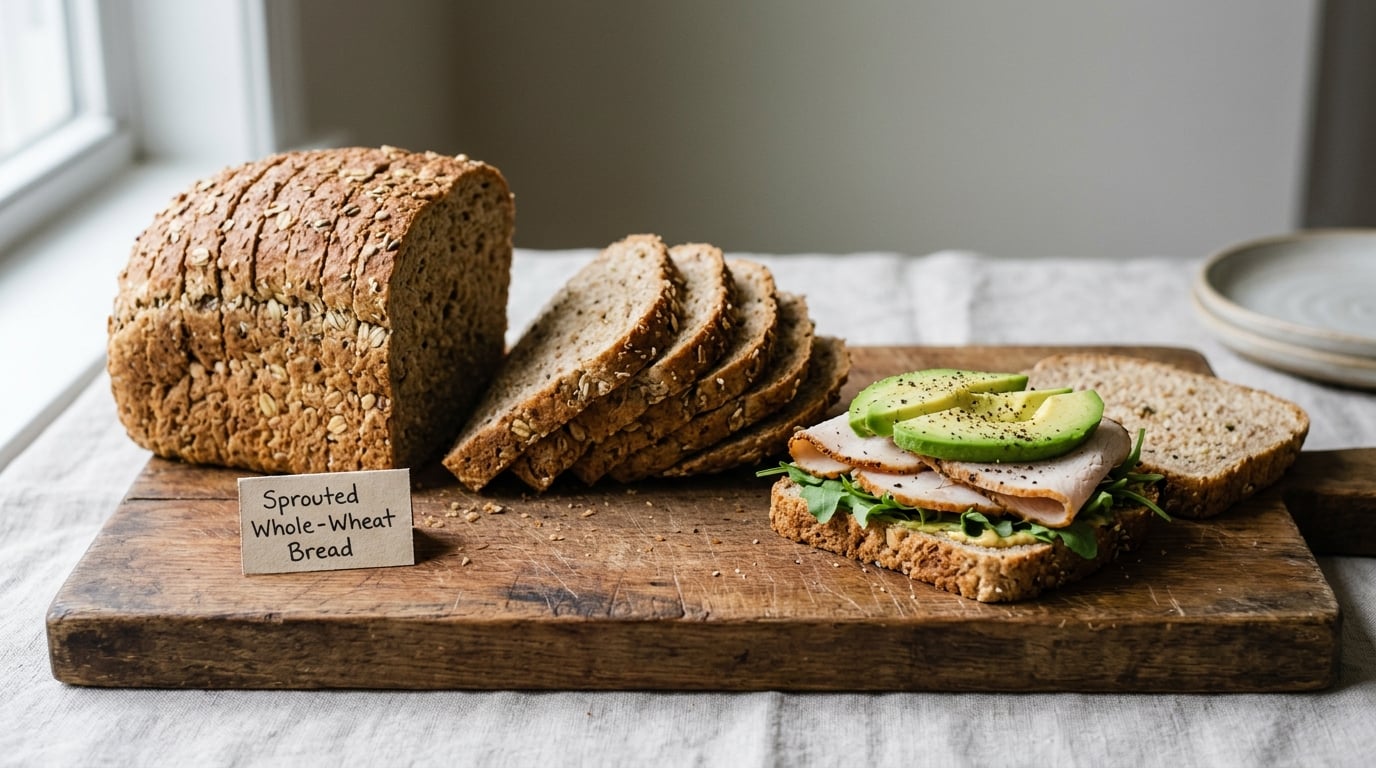
Sprouted whole-wheat bread is the easiest loaf in this list to eat every day, because sprouting softens the bran and the crumb springs back instead of crumbling. It is the sprouted sandwich bread most people will actually keep buying after the first week.
The flavor is quiet, which is a good thing for a sandwich. A slice of turkey, a few folds of lettuce, three thick slices of avocado, and a pinch of salt, and you get a sandwich that tastes like the filling rather than like the bread.
Two handling notes. Spread the mayo or butter on the cut face with a soft knife rather than a butter knife dragged hard across the crumb, and skip the toaster if the sandwich is going in a lunchbox, because an untoasted slice keeps more moisture and stays pliable for hours. Toast it when the sandwich is for eating straight away.
If you want the mildest possible starting point, this is the bread style to buy first.
2. Sprouted Rye Bread
Sprouted rye is denser and earthier than wheat, and that density is exactly why it works: it holds smoked salmon, corned beef, or a thick stack of egg salad without folding in the middle.
The flavor is the trade-off. Rye has a savoury, almost mushroomy note that flatters fish, cured beef, and cream cheese, and clashes with anything very sweet. A grilled apple and cheddar sandwich on rye is not a good idea.
Watch the crumb. Rye bakes with an open, slightly gummy structure, so give it a light toast rather than a dark one if you want to cut the moisture. Pairings that work best are cucumber and cream cheese, pastrami with mustard, and egg salad with a little pickle.
A thinner slice than you think is right. Rye is strong enough that two thin slices beat one thick one.
3. Whole-Grain Sourdough
Whole-grain sourdough is the best of this group for a hot sandwich, because a long ferment and a firm crust survive a griddle or a panini press in a way no soft sandwich loaf does.
The flavor is tangy and the crumb is open, with visible holes. That is what makes it structurally excellent and structurally awkward at the same time: the holes drink oil and dressing, and a hole sitting under the cheese fills with it.
Two tips fix most of it. Toast the slices first so they form a sealed surface, and spread something thin and even, like butter or aioli, rather than a thick layer of mayonnaise. Build the sandwich, then press it, and eat it while it is still warm.
A sturdy whole-grain sourdough is a genuinely good tool for a pressed sandwich of roasted vegetables and a hard cheese.
4. Sprouted Wheat Berry Bread
Sprouted wheat berry bread is hearty without being hard, which makes it a reliable pressed-sandwich loaf when you want something more interesting than plain wheat.
Sprouting the wheat keeps the crumb tender, and the berries, whether dried cranberries, raisins, or blueberries, add a rounded sweetness and a little chew of their own. The result is a slice that feels substantial in the hand and stays flexible enough to fold around a filling.
Reach for it with fillings that can stand up to a bit of sweetness: roast chicken, ham, sharp cheddar, or a thick slice of tomato with basil. A pressed sandwich of ham, sharp cheese and mustard on sprouted wheat berry is an easy one to put together on a weeknight.
Skip it for a plain turkey and mayo stack. The berry sweetness fights the deli meat and you taste nothing else.
5. Whole-Grain Multigrain Bread
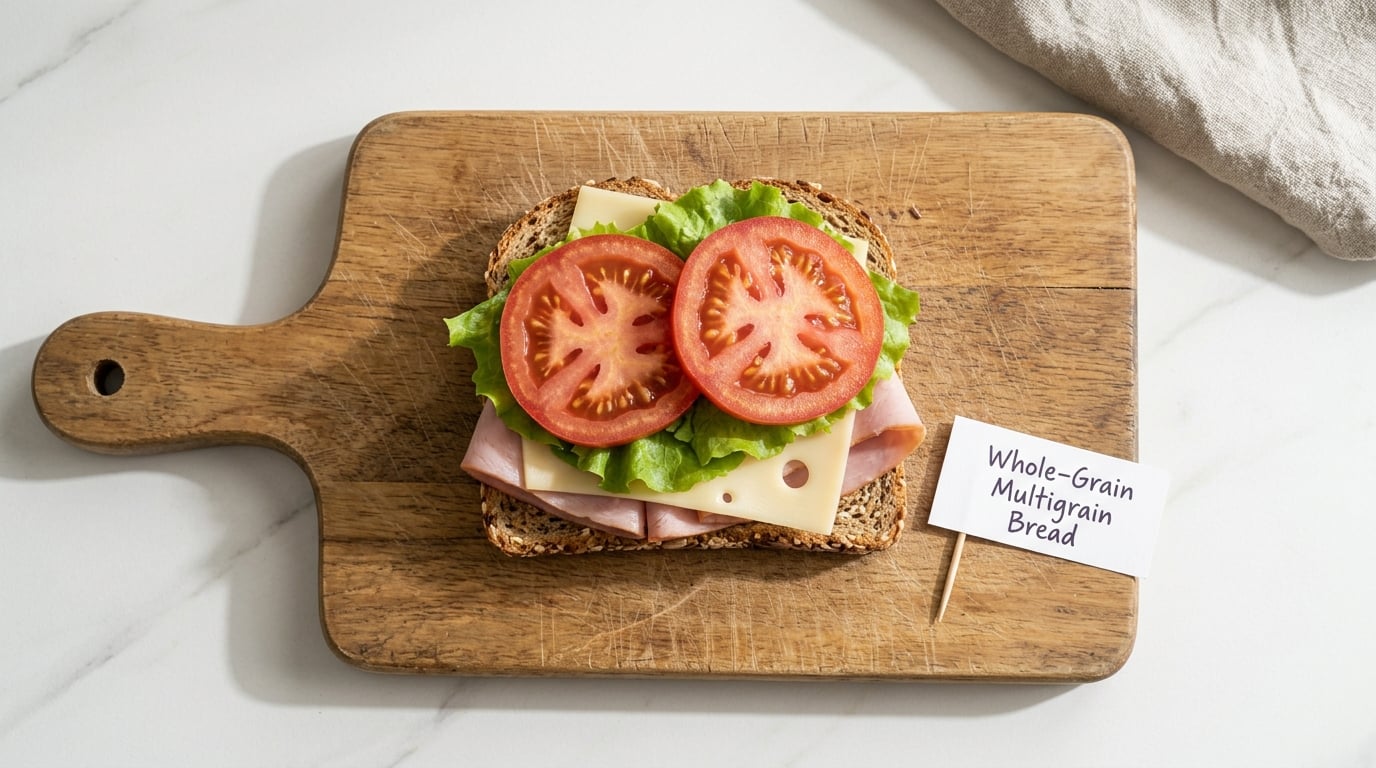
Whole-grain multigrain bread is the most forgiving loaf on the list, because the mix of wheat, seeds, and grains adds structure to the crumb rather than weight to it.
That makes it the workhorse. A slice of ham, cheese, lettuce and tomato holds together through a lunchbox without a wrapper, and the same loaf handles a thick hummus and roasted vegetable sandwich just as well. The flavor is mild with a faint sweetness, so almost nothing tastes wrong on it.
The one thing to check is the seed load. A moderate blend of flax, sunflower, and pumpkin seeds adds welcome texture. A loaf packed with whole seeds on top and through the crumb is a different animal: it is denser, it crumbles when you spread the cut face hard, and the seeds fall out into the toaster.
For a children’s lunchbox, this is the style most likely to survive the morning. A moderate seed blend holds a tall sandwich together without the snap you get from a soft white pan loaf at the corner.
6. Sprouted Einkorn Bread
Sprouted einkorn has a nutty flavor and a tight, dense crumb, and that tight crumb is what makes it good for open-faced sandwiches and smaller portions rather than tall stacks.
Einkorn is an ancient wheat. It has less gluten than modern wheat, which is part of why the crumb stays tight and moist instead of stretching, and it carries a distinctly nutty, almost honeyed sweetness that comes through even in a plain slice.
Density cuts both ways here. It is a problem if you try to build a double-decker with three inches of turkey, because the slice will bow. It is an advantage for an open-faced lunch, where one slice has to stay flat under cream cheese, avocado, radish, and a soft-boiled egg.
Slice it thin and use it where structure matters more than softness. A caprese-style open face on sprouted einkorn is excellent.
7. Whole-Grain Barley Bread
Whole-grain barley bread is chewy with a malty, nutty flavor, and it holds up to thick, wetter fillings better than any wheat loaf here.
Barley gives the crumb a chew that stays chewy even after toasting, and the malt adds a deeper, breadier flavor than plain wheat. It is a sturdy loaf. Tuna salad, meatballs, thick cheese, a soup-and-half-sandwich: these are the fillings it was made for.
The practical problem is slicing. A firm barley crumb dents a dull knife and compresses under a serrated one. Use a sharp chef’s knife and cut thin, sawing gently, and you get clean slices. Cutting thick defeats the point, because the chew becomes a slab.
Barley is also the easiest of these grains to buy un-sprouted. Check the label for a sprouted version if that matters to you, because the word sprouted is not automatic on every barley loaf.
8. Sprouted Oat Bread
Sprouted oat bread is mild, soft, and faintly sweet, which makes it the best of this group for breakfast sandwiches and anything soft.
Oats contain almost no gluten, so they do most of the binding work in the crumb. That is why the slice stays soft and springy instead of tight, and why it has a slightly cakelike finish. Sprouting the oats keeps that softness and cuts the oat heaviness that puts people off oat bread.
It is at its best with banana and peanut butter, which turns the faint sweetness into an asset. Grilled fruit with cream cheese works well too, and so does a chicken salad sandwich, where the mild crumb lets the mayo and celery do the talking.
It is the least structural loaf here, so keep the filling modest and put it in a lunchbox only if the sandwich will be eaten within a few hours.
9. Whole-Grain Spelt Bread
Whole-grain spelt is soft and light in flavor, which makes it pleasant with delicate fillings, but you have to read the label because many spelt loaves are mostly refined flour.
Spelt is an ancient relative of wheat. It has less gluten, and a spelt crumb tends to be tender, slightly airy, and mild enough that it disappears under a filling. For an egg and cheese breakfast sandwich or a cucumber and butter tea sandwich, that mildness is a real advantage.
Here is the catch. Spelt is a marketing word that is now attached to plenty of loaves whose first ingredient is wheat flour rather than whole-grain spelt flour, and sprouted spelt is a smaller category again. Whole-grain spelt sourdough from a regional bakery exists, but the everyday spelt loaf in a plastic bag usually is not sprouted at all.
Turn the bag over. If whole spelt or sprouted grain is the first ingredient, you have a genuinely whole-grain loaf. If wheat flour leads, treat it as a mild white loaf that happens to taste nutty.
10. Sprouted Seeded Bread
A sprouted seeded loaf combines sprouted grains with a seed blend, and the seeds are what keep the slice from flattening under a heavy filling. This is the sturdiest bread in the list.
You are getting two textures at once: a dense, moist crumb underneath and a scatter of crunch on top from flax, sunflower, pumpkin, or sesame. The flavor is rich and toasty, closer to a hearty artisan loaf than to sandwich bread, and that means it stands up to strong fillings without disappearing.
It works with creamy spreads, sliced vegetables, grilled chicken, and fruit preserves. Grilled chicken with pickled onions on seeded sprouted bread is a good test, because the bread holds the dressing instead of letting it soak through.
The honest drawback is spreadability. A heavy seed load makes the crumb tear when you drag a knife across it, which is why a softer seeded loaf is usually the better pick for a grilled cheese. That is a fair call for a griddled sandwich, and a poor reason to skip this loaf for a cold one.
How to Choose a Bread That Holds Up in a Sandwich
Sprouted bread for sandwiches: five things to check on the label
- Read the first ingredient, not the front of the bag. Whole grain, sprouted, organic, and multigrain are all claims that can sit on the front while refined flour leads the ingredient list.
- Decide whether you want sprouted or just whole grain. Sprouted means the grain was soaked and allowed to begin germinating before milling, which softens the crumb and makes some of the grain’s nutrients easier to absorb. If the loaf is not sprouted, that is fine, it just behaves more like conventional whole wheat.
- Look at slice thickness. Thin-sliced loaves fold and bend, which is what you want for a lunchbox or a wrap. Thick-cut slices stand up to a griddle but shatter if the crumb is dense.
- Count the seeds. A few seeds add texture. A dense layer of them adds weight and crumbles when spread.
- Scan for added sugar and sodium. In a flavored loaf, both tend to sit in the first five ingredients. Honey, molasses, raisins, and dried fruit in a savory bread is worth knowing about.
One more label note. Sprouted bread is made from wheat and other sprouted grains, so it contains gluten. A small number of almond-based sprouted loaves are made without it, and those are the ones to check for if gluten is the reason you are here, but talk to your doctor or a registered dietitian about your own situation rather than reading a bread label as medical advice.
Why sprouted bread goes soggy in a sandwich
Sogginess is moisture moving from the wet filling into the crumb, and denser whole-grain crumbs absorb it faster than soft white bread does. Four fixes, in order of how much they help:
- Toast the slice first. Toasting dehydrates the surface and forms a seal, which is the single biggest improvement. Toast it lightly rather than dark, or you trade sogginess for a hard shell.
- Use a barrier spread. Mayonnaise or butter on the cut face slows the move. Salsa, mustard, and runny dressings do not.
- Double the slices. Use two thinner slices with a layer of parchment or deli paper between the filling and the bread. It costs almost nothing and it works.
- Build it close to eating. Assemble in the morning for an afternoon lunch, not the night before. If you must prep ahead, keep the bread in the fridge and fill it at the last moment.
Dense is not a dealbreaker: handling the heartiest loaves
Density is the most common complaint about this category, and it comes up constantly in baking and sandwich threads. Home bakers report that sprouted whole-wheat dough needs higher hydration and better flour to avoid denseness, which is a fair hint that the density belongs to the category rather than to any one brand.
Three things fix it. Toast the slice, which firms the outside and stops it tearing. Spread from the crust inward with a dull knife so you are compressing rather than slicing. And press the sandwich after assembling, which glues the layers together and turns a structural problem into the point of the meal.
What does not help is forcing a dense slice into a tall stack. One thick filling, cut to fit the slice, beats three that overhang.
When a conventional whole-grain loaf beats sprouted
A soft conventional whole-grain loaf or a mild pan loaf is the better tool for a grilled cheese with a mayo-heavy deli stack. The soft crumb squashes to the shape of the filling and the two slices stay bonded, which is exactly what a grilled cheese needs. A sprouted seed loaf will not do that job as well, and no amount of toasting changes it.
That is not a failure of sprouted bread. It is a different tool. Keep a soft whole-grain loaf in the house for deli stacks and grilled cheese, and buy the sprouted or denser loaf for open-faced meals, pressed sandwiches, and anything you want to eat that is not just bread with stuff between it.
On keeping bread fresh: a loaf at room temperature in a sealed bag stays good for a few days. Sliced bread goes stale faster than a whole loaf, so if you buy a dense sprouted loaf and only eat half of it, keep the rest whole and slice as you go. Freezing works well on these dense breads, which thaw without turning to sawdust, and it suits meal prep: freeze the bread separately from the filling and assemble from frozen.
Frequently Asked Questions
What is the best sprouted bread for everyday sandwiches?
Sprouted whole-wheat bread is the most reliable everyday choice because the sprouted crumb stays soft and springy rather than crumbling, and the flavor is mild enough for turkey, ham, or egg salad. A sprouted seeded multigrain is the runner-up for a lunchbox, since the seed blend keeps a taller sandwich from collapsing. Avoid dense ancient-grain styles such as sprouted einkorn for daily packed lunches, and save those for open-faced meals.
Is sprouted bread healthier than regular whole-grain bread?
Both are made from whole grains, and both bring more fiber and nutrients than a loaf made mostly from refined flour. Sprouting starts digestion inside the seed, breaking down some starch and phytic acid before the grain reaches your gut, so some of the grain’s nutrients are more readily absorbed. That is a real difference, but it is modest rather than dramatic, and the overall pattern of your diet matters far more than one slice. For personal advice, ask your doctor or a registered dietitian.
Which whole-grain bread is least likely to fall apart?
Soft-sliced sprouted whole wheat and ordinary soft whole-grain pan bread fall apart least. Dense sprouted and seeded loaves, especially spelt, einkorn, and heavily seeded rye, crumble when you spread them because the crumb lacks the gluten and moisture to flex. Toasting the slice first firms the surface and prevents tearing, and pressing the assembled sandwich glues the layers together. Cut dense loaves thin with a sharp knife rather than trying to spread thick slices.
Should I toast whole-grain bread before making a sandwich?
Toast it when the sandwich is for eating within the hour or when it is going on a griddle. Toasting dehydrates the surface of the crumb, which slows moisture moving out of wet fillings and forms a seal against sogginess. For a sandwich sitting in a lunchbox for several hours, leave the bread untoasted, because a toasted slice stiffens and cracks as it cools. Light toasting is the aim; a dark toast turns a dense loaf into a shell.
How do I keep sprouted and whole-grain bread fresh?
Keep the loaf sealed at room temperature and it will stay good for a few days. Dense sprouted and whole-grain breads stale more slowly than soft white bread, so keeping half a loaf unsliced and cutting as you go helps a lot. Freeze the bread rather than the assembled sandwich, and wrap slices individually if you are prepping several lunches at once. Thaw at room temperature or straight in a toaster; these dense loaves reheat well.
Which bread is best for grilled cheese and toasted sandwiches?
For a grilled cheese, a soft conventional whole-grain loaf or a mild pan bread beats most sprouted loaves, because a soft crumb squashes to the filling and the slices stay bonded under the pan. Among the sprouted and whole-grain options, a soft sprouted whole wheat or a mild whole-grain sourdough toasted lightly gives the best result, and both handle a buttered exterior better than a seeded loaf. Dense seeded and ancient-grain styles are the ones that shatter, so leave them for cold sandwiches.
Conclusion
Start with a soft sprouted whole-wheat loaf if your sandwiches are mostly deli meat, cheese, and avocado, and with a sprouted seeded multigrain if you are packing lunches that have to survive a bag all morning. Both fold, both spread without tearing, and both disappear under the filling.
Move to whole-grain sourdough, spelt, einkorn, or barley when you want structure instead: pressed sandwiches, grilled cheese, open-faced stacks, and thick wetter fillings. Those loaves are the ones worth the extra toasting step, and they are worth it as long as you slice thin, toast first, and press the sandwich shut.