
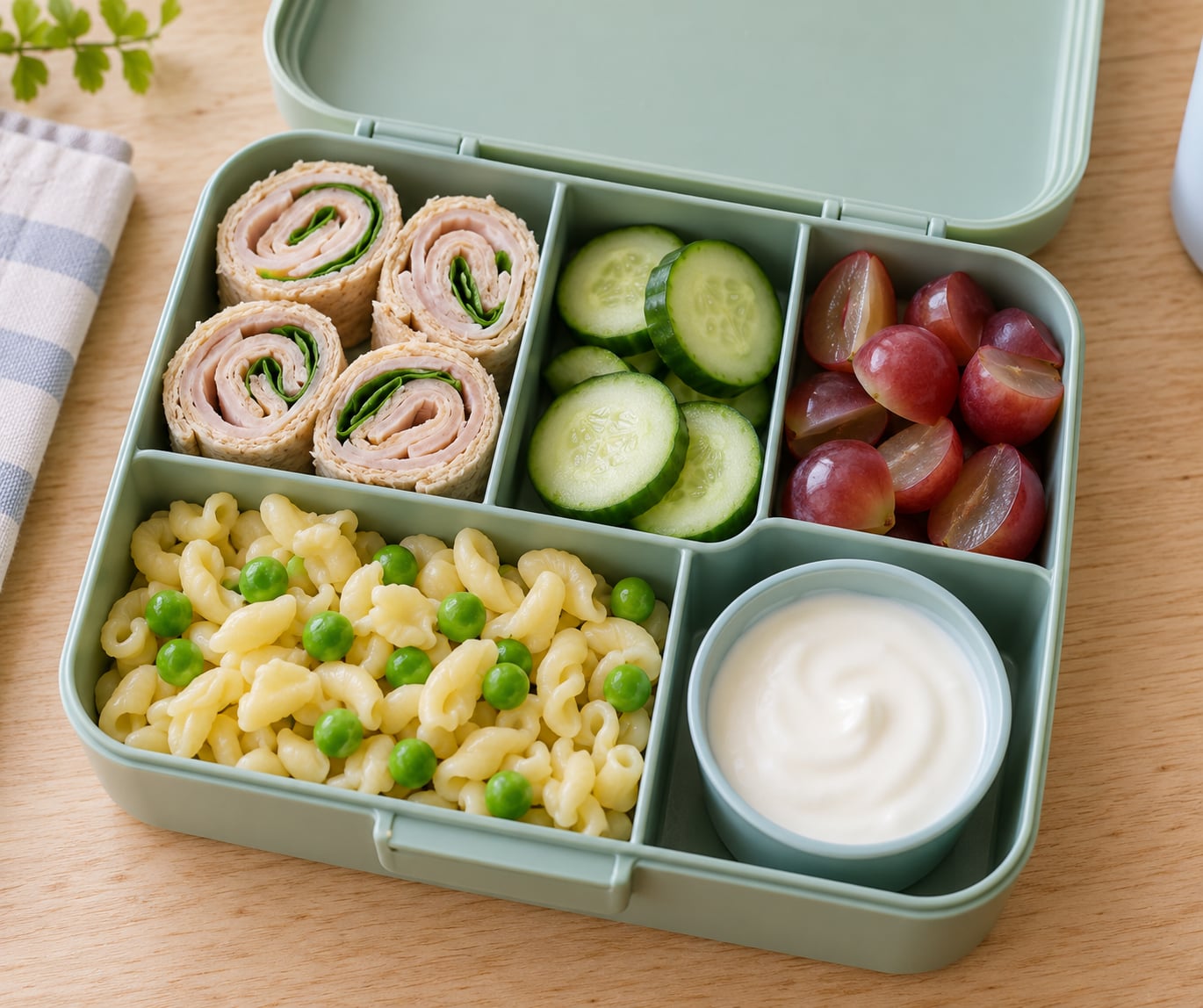
Packing lunch for daycare comes down to four parts: one protein, one easy carb or healthy fat, one piece of produce, and one snack. Build every lunch from those four slots and you get a balanced meal that survives the trip, needs no reheating, and that a 12- to 36-month-old can manage with fingers or a spoon. The twelve toddler lunch ideas for daycare below are grouped by that formula, with prep time, mess level, storage notes, and the allergens to watch.
Before you pack anything, read your center’s handbook. Some daycares reheat food, many do not. Some require a serving from every food group and charge a fee when a component is missing, and most are strictly nut-free. Those rules change the list, not the method.
Table of Contents
- Toddler Lunch Ideas for Daycare at a Glance
- 1. Soft Turkey and Creamy Cheese Pinwheels
- 2. Mini Chicken and Avocado Sandwiches
- 3. Cucumber, Cream Cheese, and Turkey Tea Sandwiches
- 4. Berry Yogurt Snack Box
- 5. Mini Caprese Stacks with Soft Ingredients
- 6. Tuna Melt Pockets
- 7. Soft Pasta with Peas and Cheese
- 8. Breakfast-for-Lunch Egg Bites
- 9. Hummus and Soft Vegetable Lunchbox
- 10. Turkey, Apple, and Soft Cheese Plates
- 11. Mini Quesadillas with Black Beans and Corn
- 12. Oatmeal and Banana Cups
- Frequently Asked Questions
- What are good toddler lunch ideas for daycare that are easy to eat?
- How should I pack perishable toddler lunches for daycare?
- Which foods should I avoid sending for a toddler?
- How can I plan lunches for a child with food allergies?
- How long can a toddler lunch sit out at daycare?
- What should I do if my toddler refuses the packed lunch?
- Start With One Familiar Lunch
Toddler Lunch Ideas for Daycare at a Glance
This table compares all twelve lunches by prep method, time, storage, mess level, and allergen notes so you can pick quickly on a busy morning.
| Lunch idea | Prep method | Prep time | Storage | Mess level | Allergen notes |
|---|---|---|---|---|---|
| Turkey and cream cheese pinwheels | No-cook assembly | 5 minutes | Fridge, 2 days | Low | Contains dairy; check deli meat ingredients for gluten and soy |
| Chicken and avocado sandwiches | Uses cooked chicken | 10 minutes | Fridge, eat same day | Medium | Contains dairy; check bread for egg and wheat |
| Cucumber, cream cheese, turkey tea sandwiches | No-cook assembly | 7 minutes | Fridge, 1 day | Low | Contains dairy; cucumber skin may be skipped |
| Berry yogurt snack box | No-cook assembly | 5 minutes | Keep cold with ice pack | Medium | Contains dairy; check cereal for wheat |
| Mini caprese stacks | No-cook assembly | 6 minutes | Fridge, 1 day | Low | Contains dairy; no skewers ever |
| Tuna melt pockets | Stovetop or microwave | 12 minutes | Fridge, 2 days | Low | Contains dairy and fish; pick low-mercury tuna |
| Soft pasta with peas and cheese | One-pot cook | 15 minutes | Fridge, 3 days, or freezer | Medium | Contains dairy and wheat |
| Breakfast-for-lunch egg bites | Bake a batch ahead | 25 minutes per tray | Fridge 3 days, freezer 2 months | Low | Contains egg and dairy; common early allergen |
| Hummus and soft vegetable box | No-cook assembly | 6 minutes | Keep hummus cold | Medium | Contains sesame; a top nine allergen |
| Turkey, apple, and soft cheese plate | No-cook assembly | 6 minutes | Fridge, 1 day | Low | Contains dairy; check deli meat for gluten |
| Mini black bean and corn quesadillas | Pan or oven | 15 minutes | Fridge, 3 days | Low | Contains dairy and wheat; check corn for allergens |
| Oatmeal and banana cups | No-cook assembly | 5 minutes | Keep cold with ice pack | High | Contains dairy if added; check certified gluten-free oats |
1. Soft Turkey and Creamy Cheese Pinwheels
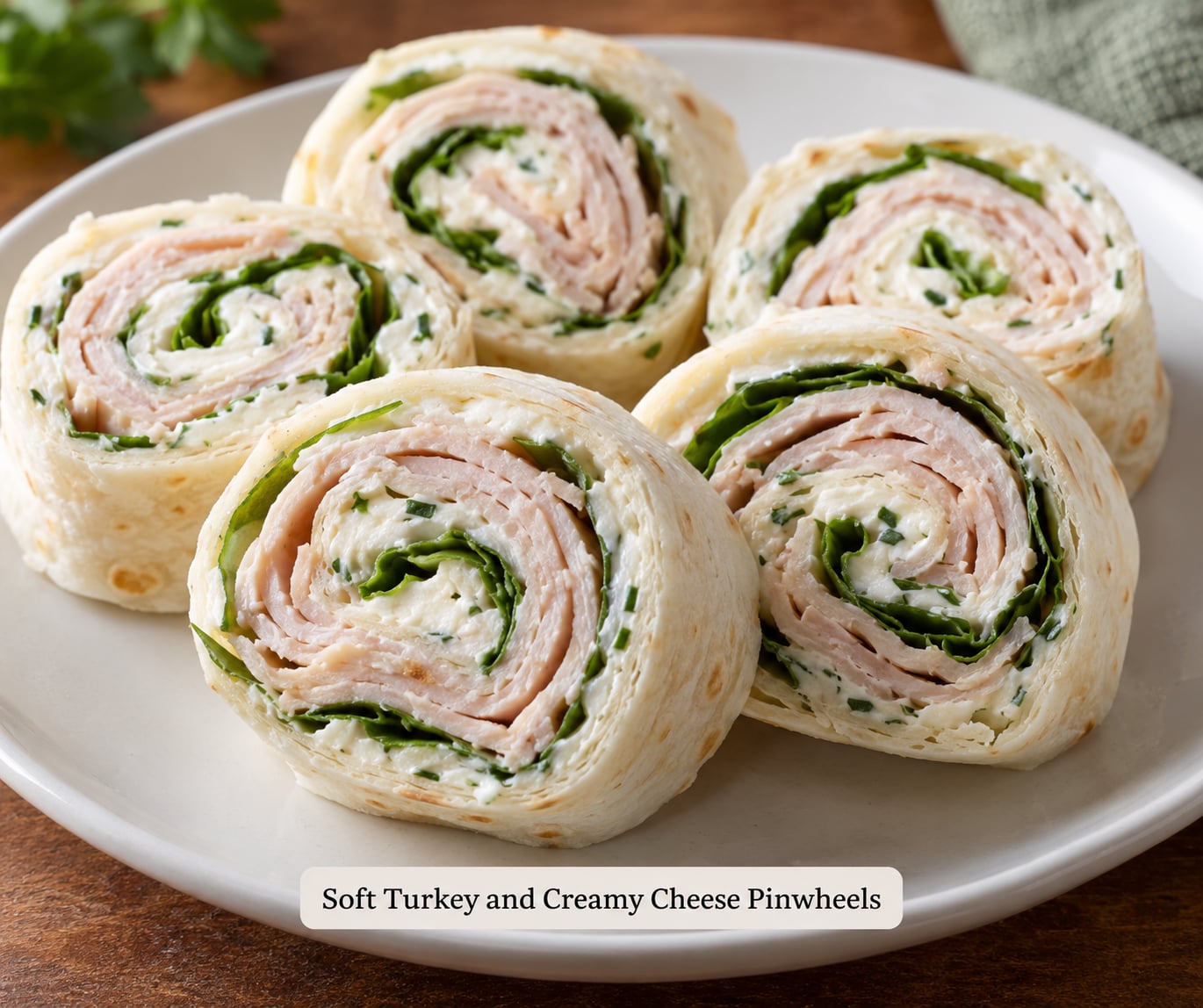
Pinwheels are the easiest sandwich to hand a small child because there is nothing to fall apart. Spread a thin layer of cream cheese or soft shredded cheese on a flour tortilla, lay two slices of thinly sliced turkey on top, roll it up snugly, and cut it into coin-width rounds with about half an inch of tortilla on each side of the filling.
Serve the rounds cut side up so the layers are visible, which makes them far more likely to be picked up. If your child is under 18 months or still working on chewing, mash the filling with a fork before rolling so it holds together instead of sliding out.
For a school-safe version, use a wrap labeled nut-free and a turkey brand that lists no gluten or soy in the deli meat. Thin-sliced chicken or a soft vegetarian spread works the same way.
2. Mini Chicken and Avocado Sandwiches
Shredded chicken with mashed avocado makes a soft, moist filling that sticks to bread instead of sliding off it. Use a soft roll or a slice of toasted sourdough cut into quarters, spread a thin layer of avocado, then add the chicken and a thin slice of tomato if your center allows tomatoes.
The sogginess problem comes from watery tomato and from wet avocado. Mash the avocado with a squeeze of lemon and drain the tomatoes on a towel first. Cut the finished sandwich into finger-width pieces so a 12-month-old can pick it up and eat it without a fight.
Check two things before you make this a regular. Many daycares treat egg as a common allergen and require an action plan or a separate table, and nearly all restrict tomatoes for younger groups because of the choking risk with raw round slices.
3. Cucumber, Cream Cheese, and Turkey Tea Sandwiches
Three ingredients on a small round of bread makes a lunch that looks like a treat to a toddler and takes almost no time. Cut cucumber into paper-thin rounds, spread cream cheese on mini bread or a small bagel half, add one cucumber round and a small square of turkey, and top with a second cucumber round.
To cut down on mess, keep the cucumber slices between the spreads rather than on top so moisture stays inside the sandwich. A muffin-tin liner pressed into the well of each cup keeps the rounds from sliding apart on the way to the table.
Peel the cucumber if your child dislikes the skin or has a sensitive mouth. Dairy is the main allergen here, so the turkey-and-cheese swap applies for anyone avoiding milk: use a thin layer of mashed avocado instead.
4. Berry Yogurt Snack Box
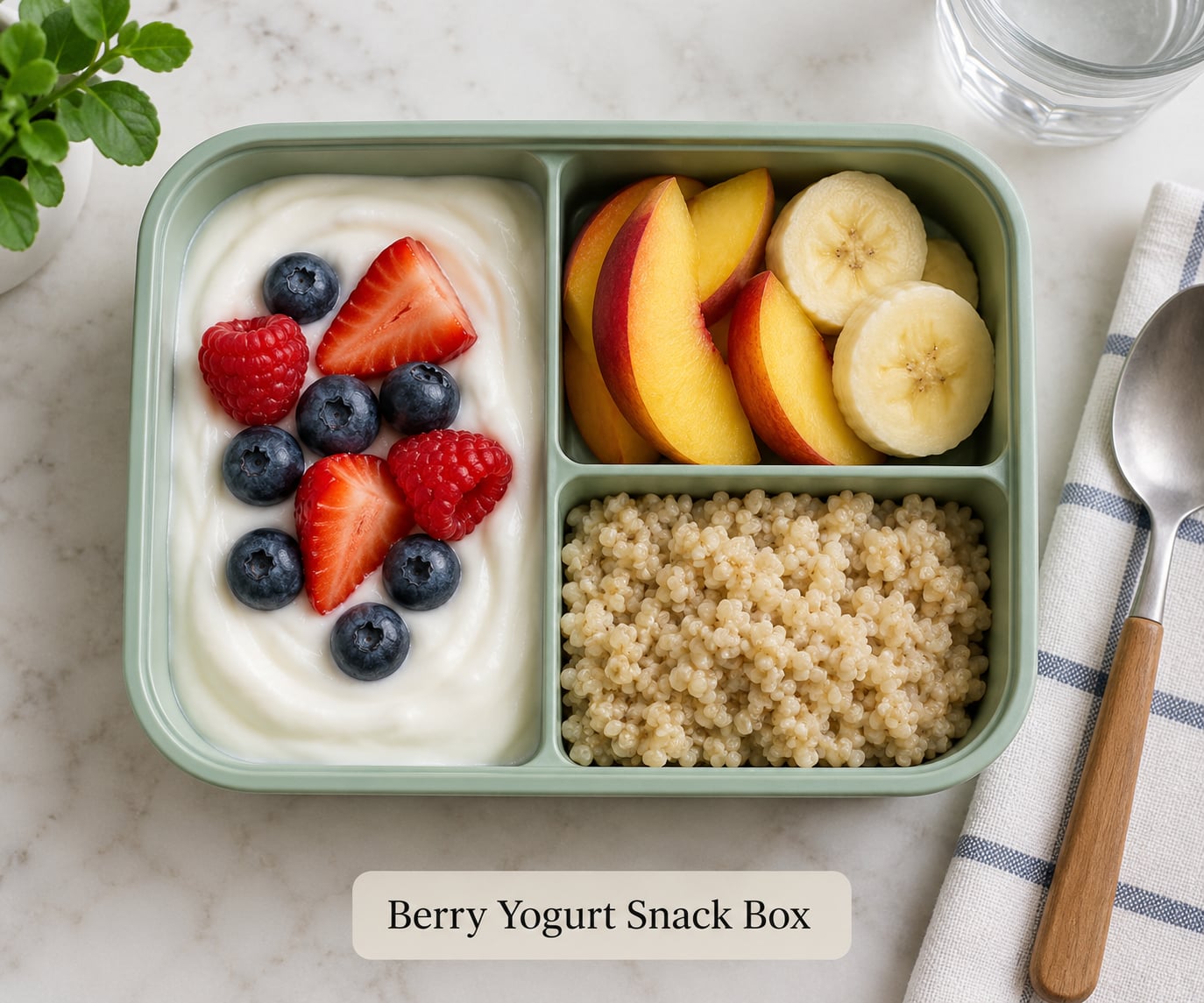
Not every daycare lunch needs to be a sandwich. A divided container with plain yogurt, quartered soft berries or ripe banana, a small handful of puffed cereal, and one soft grain makes a lunch your child can largely eat with a spoon, which matters on days when everything else ends up on the floor.
Skip added sugar. Berries and banana carry enough sweetness on their own, and flavored yogurt at this age is usually more sugar than dairy. If you want crunch, use a soft oat or multigrain cereal rather than anything hard and sharp.
Dairy is the allergen to plan around, and it is one of the most common early allergies. Sunflower seed butter thinned with a little warm water makes a decent yogurt topper for a dairy-free child, though it is a top-nine allergen in many center policies, so ask first. Keep this box cold from leaving the house until it is eaten.
5. Mini Caprese Stacks with Soft Ingredients
Take a classic caprese and make it toddler-sized: half a small mozzarella pearl, a soft tomato piece cut into quarters, a cucumber slice, then repeat the stack twice. Set each stack on a small lettuce leaf or a cracker if you want it to hold together.
Leave the skewer out entirely. Wooden and bamboo picks come up in nearly every choking conversation I have, and a toddler can push a pick forward and get it in her mouth. Stacking the ingredients on a flat base avoids the problem altogether.
Halve or quarter the tomatoes lengthwise and then again, rather than slicing them into rounds, so there are no round pieces of any size. Drain mozzarella pearls well and check with the center first, since dairy and tomato often come up together in their allergen rules.
6. Tuna Melt Pockets
A mild tuna and cheese filling turns a pocket of pita into a warm lunch in about twelve minutes, or it can be served cold with no reheating at all. Mix flaked light tuna with a spoonful of plain yogurt or mayonnaise, fold in shredded cheese, and spoon it into a small pita pocket or a split mini pita.
Tuna carries mercury, so stick with light tuna and keep portions small, roughly a quarter to a third of a small can for a toddler serving. The FDA advises choosing from the best choices list, which includes light tuna and skipjack.
Keep the filling from drying out by mixing it just before serving, and hold the finished pockets in an insulated bag with an ice pack if you are sending them cold. Watch for tuna, dairy, and any wheat in the pita, and if dairy is out, use avocado or mashed white bean in place of the cheese.
7. Soft Pasta with Peas and Cheese
This is the one-pot lunch that pays for itself. Boil short pasta in lightly salted water, add frozen peas for the last two minutes, drain, and stir in a small amount of melted cheese or a spoonful of milk so it clings. Serve warm, or let it cool and pack it cold since pasta salad travels well.
Use a short shape like rotini or shells over long strands, which are harder to pick up and eat cleanly. If your child is under 18 months, mash the pasta with a fork first; older toddlers can manage the pieces whole.
Dairy and wheat are the allergens, and both are easy to adjust: skip the cheese and use olive oil or butter, and swap in a gluten-free pasta if wheat is restricted. Cool pasta to room temperature before it goes into the box, and do not seal it while it is still steaming.
8. Breakfast-for-Lunch Egg Bites
Egg bites are the make-ahead workhorse. Blend eggs with a little milk, fold in finely grated cheese and small amounts of finely chopped spinach, zucchini, or bell pepper, and pour into a mini muffin tin. Bake until set, then cool before you pack them.
Cut each bite in half or into quarters depending on age. If you reheat a cooked egg at the center, bring it to 165 degrees Fahrenheit first, and let it cool before handing it over. Cool it fully on the counter, then chill it quickly rather than leaving it out for hours.
Egg is one of the most common allergens in the first year, and many centers ask that eggs come in a separate sealed container or be avoided in shared rooms. Have that conversation before egg bites become your weekly default. Cheese in the mix means dairy is in there too.
9. Hummus and Soft Vegetable Lunchbox
Smooth hummus with soft, well-cooked vegetables is easy to assemble and easy to eat with fingers. Pack two or three tablespoons of hummus in a small leakproof cup with the vegetables beside it rather than under it, so nothing turns to mush on the ride in.
Use vegetables that are soft enough to crush between fingers: steamed carrots, zucchini, sweet potato, or soft bell pepper strips with the seeds scraped off. Skip raw carrot sticks and whole cucumber spears until your child can actually chew through them.
Hummus is made with sesame, which is a top-nine allergen and one many centers treat strictly. If you need a substitute, use mashed white bean, avocado, or a smooth sunflower seed dip with an equally thick texture so it still scoops.
10. Turkey, Apple, and Soft Cheese Plates
A deconstructed sandwich is useful on days when a wrapped or rolled food arrives untouched. Slice soft deli turkey into small strips, dice a peeled apple or ripe pear into tiny pieces, and cut cheese into thin batons you can pinch or fold.
Peel the apple and remove the core completely, including the seeds, then dice finely so the pieces stay under about a quarter inch. Pear skin is thinner and often acceptable, but watch your child the first few times.
Dairy is present with the cheese, and check the turkey label for gluten and soy. Keep the fruit and the meat in separate compartments so the apple does not make the turkey wet and slimy by lunchtime. Shredded chicken or flaked tuna swaps in easily for a rotated version.
11. Mini Quesadillas with Black Beans and Corn
Mash black beans with a little corn and mild seasoning, spread half onto a small tortilla, add a little cheese, fold, and press in a skillet or a preheated oven until the outside browns. Cut into quarters so the filling stays put.
The trick to soft quesadillas for toddlers is to press them firmly and cut them while still warm, before the cheese re-hardens and the wedges pull apart. Cool to room temperature before packing, and let any steam out of the container in the car rather than sealing it tight.
Beans and corn both carry allergy questions at some centers, and cheese adds dairy. Rinse canned beans well to keep the sodium down and to keep the flavor mild. For a dairy-free version, use a small amount of avocado or plain cooked sweet potato instead.
12. Oatmeal and Banana Cups
A cup of oatmeal with mashed banana, a pinch of cinnamon, and no added sugar is a no-cook lunch you can build in the morning. Cook the oats on Sunday and portion five small cups in the fridge, or send them dry with a wide-mouth insulated bottle so they can be mixed with warm water at the center.
Expect this to be the messiest of the twelve. Use a lidded cup, a spoon with a short handle, and a placemat if the center allows one. A thick, sticky oatmeal sits better in a cup than a runny one, so aim for consistency closer to thick oatmeal than to porridge.
Check the oats are certified gluten-free if wheat is restricted, since regular oats are frequently cross-contacted with wheat. Add milk only after you know dairy is fine, and skip honey entirely, since honey is off limits before the first birthday.
How to Make These Toddler Lunch Ideas for Daycare Easier
Ask the center four questions before your first packed lunch. Can they refrigerate food and send it back cold at lunch? Can they reheat anything, or is it cold-only? Do they provide cups, spoons, and plates? And do they require a serving from every food group?
That last one catches families by surprise. Some centers, particularly those operating under state licensing rules, expect all five food groups and may charge a fee for each component that is missing. A lunch of turkey pinwheels, apple, and crackers might satisfy them while a pasta box does not. Ask what counts as a grain serving and what counts as a dairy serving in their eyes.
Then set up a system. Label every container and lid with your child’s name and the date. Use leakproof divided compartments so wet and dry foods stay separate. Pack an ice pack for anything perishable, and treat it as non-negotiable in warm months.
For prep, most of these ideas freeze well: pasta, egg bites, cooked chicken, and muffin-sized pancakes can be batched on a Sunday, portioned, and thawed in the fridge overnight. Write a note in your phone about which items went uneaten, because the pattern is usually obvious after a week and it saves you packing the same rejected food every day.
If you want school-safe versions of these same meals, the nut-free school lunch ideas list covers the swaps in more detail. For a child who mostly rejects anything new, try the school lunch ideas for picky eaters approach of two familiar foods plus one new one. And if your mornings are rushed, the guide to making a sandwich in the morning that still tastes fresh at lunch helps with the sogginess problem several of these ideas share.
Frequently Asked Questions
What are good toddler lunch ideas for daycare that are easy to eat?
Sandwich-style foods that hold together without falling apart work best, such as turkey and cream cheese pinwheels, soft quesadilla wedges, tuna melt pockets, and mini chicken and avocado sandwiches. Cut everything into finger-width pieces, use a spoon for yogurt and oatmeal, and pack two or three items your child already eats at home rather than three new ones.
How should I pack perishable toddler lunches for daycare?
Use an insulated lunch bag with at least one cold pack, and keep cold packs above or beside the food rather than underneath it. Send yogurt, eggs, deli meat, hummus, and cooked vegetables in a leakproof container, and take perishable items out of the bag when you pick your child up. Most centers can refrigerate, but many cannot reheat, so plan for cold lunches.
Which foods should I avoid sending for a toddler?
Avoid whole grapes, uncut cherry tomatoes, whole nuts, raw carrot sticks, popcorn, whole hot dog pieces, hard raw vegetables, sticky whole pieces of fruit, and anything that is a coin or marble sized. Choking risk depends on both the food and the preparation, so quarter grapes lengthwise, flatten meatballs, shred cheese, and toast bread until it is firm.
How can I plan lunches for a child with food allergies?
Get the center’s written allergen policy and ask whether your child needs an individual action plan, a separate eating table, or a labeled container. Swap dairy for avocado or mashed white bean, sesame for sunflower seed dip, and wheat for certified gluten-free bread or rice cakes. Discuss any change with your child’s pediatrician or a registered dietitian before making it a habit.
How long can a toddler lunch sit out at daycare?
Perishable foods should not sit at room temperature for more than two hours, or one hour when the room is warmer than 90 degrees Fahrenheit. A packed lunch left out on a counter all morning is the main risk, so pack cold items with ice packs and do not send a lunch you would be uneasy about eating yourself after three hours.
What should I do if my toddler refuses the packed lunch?
Write down what actually comes home for a week before changing anything. Often the food is fine and the problem is timing, a too-full box, or eating in a loud room. Offer two familiar foods plus one new food, keep the total volume small, and never pressure a toddler to eat. Talk with your pediatrician if a pattern of not eating at all goes on.
Start With One Familiar Lunch
Pick the one lunch your toddler already eats without argument, pack it twice this week, and get the system working before you add variety. Labels, compartments, and the ice pack routine matter more than which recipe goes in the box.
Once that runs smoothly, add one new idea every few days, using the table above to skip anything that needs reheating or breaks a rule at your center. Your child’s age, texture skills, health needs, and the center’s own policies should decide what goes in the box, not the list.