
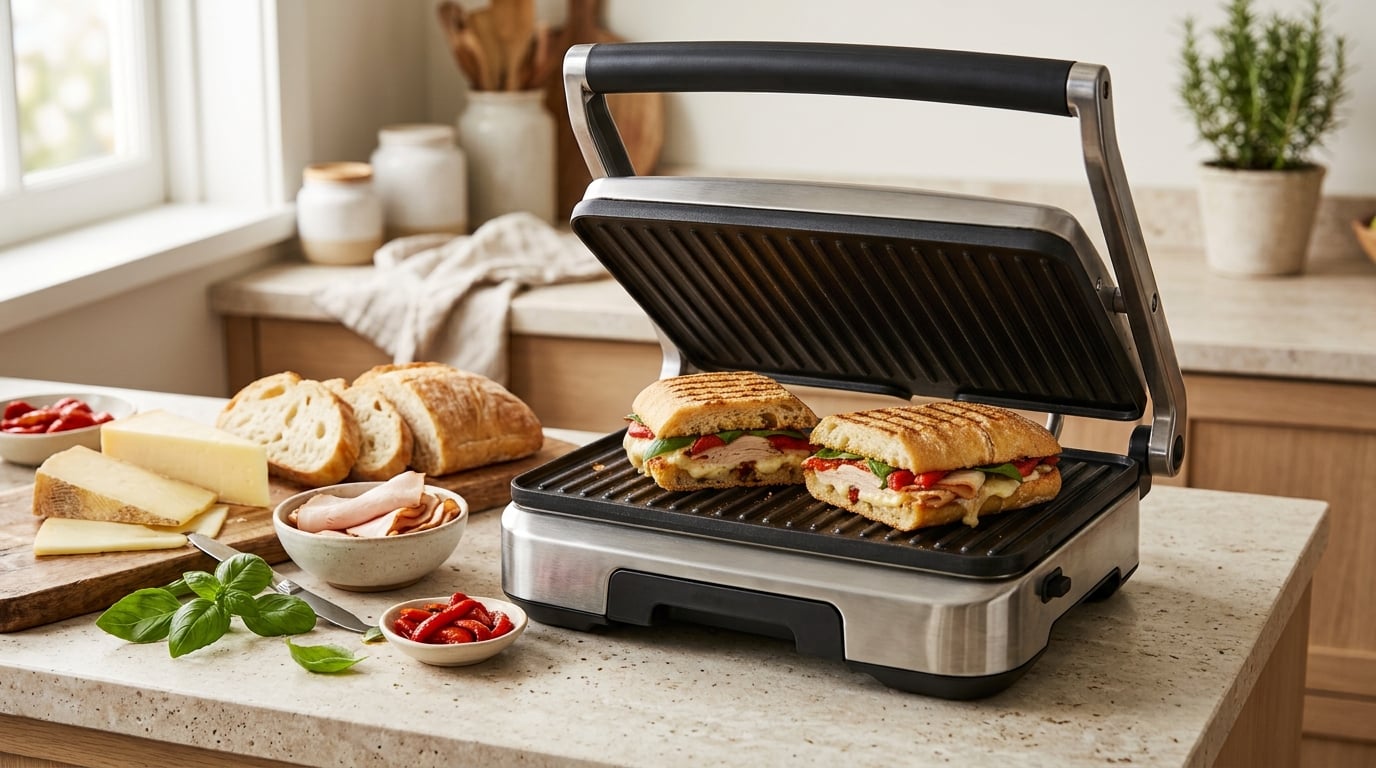
The best hot sandwiches you can make in a panini press are the ones built from crusty bread, a slice or two of cheese that actually melts, and a filling you have already cooked. A panini press is an electric contact grill that clamps a closed sandwich between two heated plates, toasting both faces and melting the cheese in three to five minutes, with no pan, no oil and no flipping.
That combination of heat and even downward pressure is what a toaster or a dry skillet cannot do. The bread toasts on both sides at once, the cheese melts through the whole sandwich instead of in one spot, and pressure pushes liquid out of wet fillings rather than trapping it in the middle.
What follows is a list of twelve builds, each with the bread, cheese, pressing time and the visual cue that tells you it is done. Some are weeknight lunches, some are ways to use up a roast, and a couple are not really sandwiches at all.
Table of Contents
- Best Hot Sandwiches You Can Make in a Panini Press at a Glance
- 1. Classic Turkey and Swiss
- 2. Reuben Pressed Sandwich
- 3. Grilled Chicken and Mozzarella
- 4. Tuna Melt
- 5. Italian Sausage and Pepper
- 6. BLT with Cheddar
- 7. Turkey Club
- 8. Chicken Pesto Press
- 9. Ham and Cheddar
- 10. Caprese
- 11. Pulled Pork and Cheddar
- 12. Portobello and Goat Cheese
- Frequently Asked Questions
- How to Cook a Panini Without a Press
Best Hot Sandwiches You Can Make in a Panini Press at a Glance
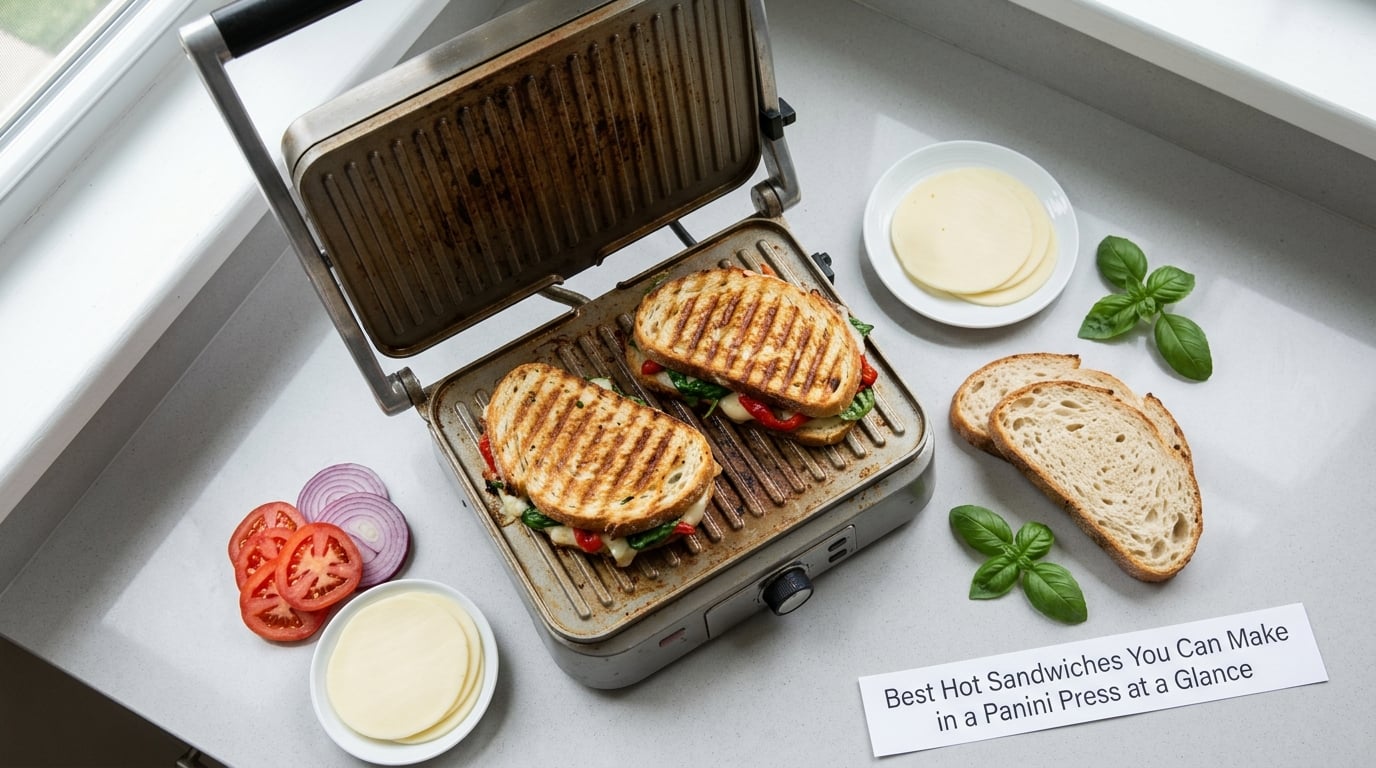
This table answers the quick version. Pressing times assume a preheated press and a filling that is already cooked or roasted.
| Sandwich | Main flavor profile | Bread and cheese | Pressing time |
|---|---|---|---|
| Classic Turkey and Swiss | Savory, tangy, mild and creamy | Ciabatta, Swiss | 3 to 4 minutes |
| Reuben | Sour, salty, rich | Rye, Swiss | 5 to 6 minutes |
| Grilled Chicken and Mozzarella | Herbaceous, milky, light | Ciabatta roll, fresh mozzarella | 4 to 5 minutes |
| Tuna Melt | Savory, creamy, tangy | Rye or sourdough, cheddar | 4 minutes |
| Italian Sausage and Pepper | Peppery, sweet, smoky | Sub roll, provolone | 5 minutes |
| BLT with Cheddar | Smoky, crisp, tangy | Sourdough, sharp cheddar | 3 minutes |
| Turkey Club | Rich, salty, layered | Thick-cut sourdough, cheddar and mayo | 5 to 6 minutes |
| Chicken Pesto Press | Garlicky, herby, bright | Focaccia or ciabatta, mozzarella | 4 to 5 minutes |
| Ham and Cheddar | Sweet-salty, sharp, simple | Country white or sourdough, cheddar | 3 to 4 minutes |
| Caprese | Clean, milky, sharp-sweet | Ciabatta, mozzarella and provolone | 4 minutes |
| Pulled Pork and Cheddar | Smoky, sweet, tangy | Brioche roll, sharp cheddar | 4 to 5 minutes |
| Portobello and Goat Cheese | Earthy, garlicky, tangy | Sourdough, goat cheese | 5 minutes |
1. Classic Turkey and Swiss
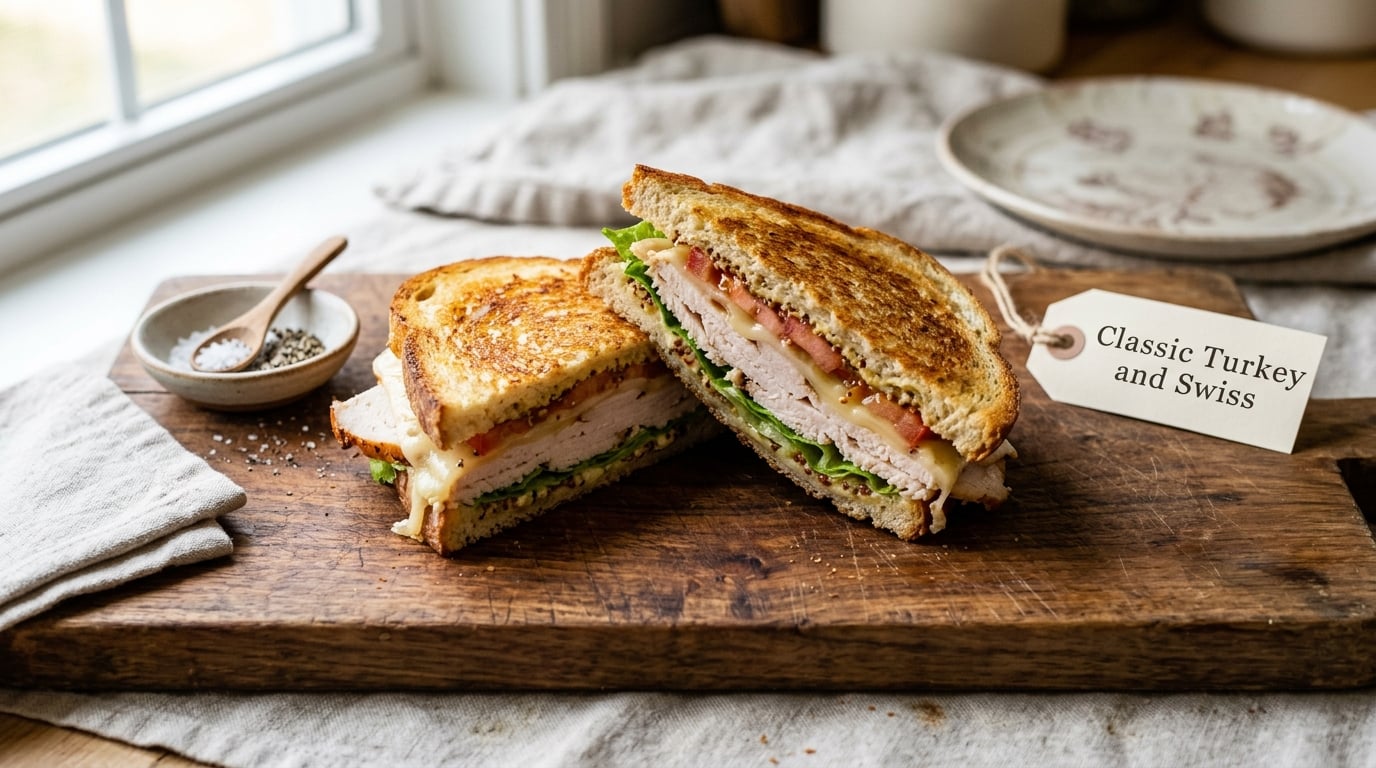
Turkey and Swiss is the sandwich to make first, because it teaches you the whole method and it cannot really go wrong. Three to four minutes is enough for the cheese to melt and the bread to take grill marks without drying out the turkey.
Use a ciabatta roll or a thick slice of sourdough, cut about half an inch thick. Butter the outside or brush it with olive oil, then layer mustard on the inside face so it does not slide. Two or three slices of deli turkey, two slices of Swiss, and a thin tomato cut with the seeds removed, which is where most of the water comes from.
Add lettuce only if you are eating it immediately. It gives off moisture the moment it hits heat, so a sandwich that sits five minutes before you bite it will have a soft bottom.
The doneness cue: the outside of the bread is golden with darker lines where the press ribs sit, and when you press the top slice lightly with a fingertip it feels springy, not hard. Let it rest a minute on a rack before you cut it diagonally, or the cheese pulls out of the seam instead of staying in the slice.
2. Reuben Pressed Sandwich
A Reuben is a heavier sandwich than most presses were built for, which is exactly why it works so well when you thin the filling. Corned beef, Swiss, sauerkraut and Russian or Thousand Island dressing, pressed until the edges of the cheese brown slightly and the bread goes rigid.
Drain the sauerkraut properly. Squeeze it in a towel or a strainer until the liquid stops running, and if it is fresh sauerkraut rather than jarred, rinse it once first. Wet sauerkraut is the single most common reason a Reuben comes out of the press soggy in the middle.
Build on rye or pumpernickel, which is dry and dense enough not to steam. Swiss goes directly against the meat, sauerkraut on top of that, and a thin spread of dressing on the inside face of the top slice. Five to six minutes, longer than most sandwiches here, because rye needs the time.
The doneness cue: the sauerkraut has gone from wet grey to darker at the edges, and the Swiss has started to run slightly past the bread line. Pull it out then, not after, because reheated cheese goes rubbery fast.
3. Grilled Chicken and Mozzarella
Pressed chicken and mozzarella comes out of the press in four to five minutes with a crisp exterior and a hot, milky center, as long as the chicken is cooked before it goes in. A raw chicken breast in a panini press will still be pink in the middle at the point where the bread is properly browned.
Season and pre-cook thin chicken cutlets in a skillet until they are just opaque all the way through, then let them cool a few minutes. Warm chicken in the press finishes the job; cold chicken steams the bread and prolongs the cook.
Use a ciabatta roll, since it holds up to the moisture better than a soft roll. Fresh mozzarella sliced thin, not torn, torn pieces release their whey unevenly and leave a wet patch under one corner. Add roasted red pepper, a slice of tomato patted dry, and fresh basil after pressing, or before if you like it wilted.
For food safety, poultry needs to reach 165 F internally, which is why the pre-cook step matters rather than being optional. The doneness cue: mozzarella fully liquid and bubbling at the edges, with the bread golden and firm enough that it does not dent when you press the top.
4. Tuna Melt
A tuna melt is a four-minute sandwich that works in a press more often than people expect, and the whole game is how you mix the filling. The filling should hold together in a slice, not drip out of it.
Use oil-packed tuna drained well, plus mayonnaise or plain Greek yogurt. Yogurt gives you the same creaminess with less fat and a little tang. Add finely diced celery, a spoonful of Dijon, and a squeeze of lemon. Mix it until it is spreadable, then chill it for fifteen minutes, because a cold, firm filling presses far better than a warm one.
Skip the wet stuff. No chopped tomato, no pickle brine, no sweet pickle slices unless you pat them dry. Cheese is cheddar, or Swiss if you want a nuttier version, and it goes on the outside against the bread so it forms a seal.
Press four minutes on sourdough or rye. The doneness cue: the cheddar has melted into a continuous layer and the top slice no longer slides when you nudge it. Cut diagonally and eat it right away, since tuna sandwich filling softens as it sits.
5. Italian Sausage and Pepper
Sausage, peppers, onions and provolone is a hearty sandwich that needs its filling cooked twice, and most failures come from skipping the first cook. Raw sausage pressed between bread steams instead of browning, and onions turn sweet and watery rather than caramelized.
Brown the sausage links in a skillet and slice them thin. Sauté the onions until soft and golden, then add peppers and let them blister. Season with a little oregano, garlic powder and red pepper flakes. Cook off any liquid in the pan before the filling touches the bread, because liquid is what makes the bottom slice heavy.
A split sub roll or a short Italian roll is the right bread, and provolone goes on the inside faces. Five minutes, and use a medium weight on the press if your model has one, since a dense filling under full pressure can squirt provolone out the sides.
The doneness cue: provolone melted and lightly blistered on the surface, sausage heated through and no longer pink, and the roll crust golden. Rest it a minute before cutting, or the cheese seam will pull apart.
6. BLT with Cheddar
A BLT in a panini press takes three minutes, and the trick is keeping the lettuce crisp enough to still be a lettuce. Think of it as a pressed grilled cheese with bacon in it rather than as a cold sandwich put under a weight.
Crisp the bacon in a skillet until it is deeply browned and firm, then drain it on a paper towel. Thick-cut bacon stays crisp; thin slices turn to nothing under heat. Shred sharp cheddar and layer it thickly on the inside faces of the bread, which creates a moisture barrier and gives the sandwich a cheese pull that a plain BLT never has.
Bacon goes on the cheese, then tomato. Add lettuce after the press, or add it only if you are eating within a minute. Mayonnaise on the inside face of the top slice is fine, but keep it away from the tomato.
The doneness cue: cheddar fully melted, bread golden with visible grill lines, bacon still visibly crisp at the cut edge. Press under medium pressure rather than full, so the top slice stays in contact with the filling instead of bowing away from the cheese.
7. Turkey Club
A turkey club is tall, and height is the only real problem with pressing one. Three slices of bread, turkey, bacon, lettuce, tomato and a creamy spread stack up to two inches, and once the filling compresses, the top slice can arch up out of contact with the press.
Solve it by pressing in two stages. Assemble the full club, put it in the press, and let the heat and weight do the first two minutes. Open it, push the top slice down flat with the back of a spatula, close the press again, and give it the remaining three to four minutes. That second pass toasts the surface that was hidden.
Use thick-cut sourdough, which has enough structure to hold the stack, and a spread of mayonnaise mixed with a little horseradish or mustard. Turkey and bacon first, cheddar or provolone next, and the vegetables last. Cheddar melts and binds the layers, which keeps the sandwich from sliding apart when you cut it.
The doneness cue: the exposed edges of the bread are golden, cheese is melted at the seams, and the sandwich holds together when you lift it without a filling falling out. Cut with a serrated knife and a firm sawing motion, then hold it together with a pick.
8. Chicken Pesto Press
Chicken, pesto, mozzarella and roasted red pepper is the sandwich to make when you want something that tastes like a restaurant lunch without a restaurant. Four to five minutes gets the chicken hot, the mozzarella liquid and the bread crisp, while the pesto stays bright green rather than turning dark and oily.
Use store-bought basil pesto, but go easy on it. Pesto made with a lot of olive oil will soak through the bread in a press, where a drier pesto such as a sundried tomato or spinach variety holds up better. Two tablespoons per sandwich is plenty.
Prewarm sliced chicken breast or thigh in the skillet until cooked through, then assemble on focaccia or a ciabatta roll: pesto on the inside face, chicken, sliced mozzarella, roasted red pepper. Focaccia works well because its olive oil in the crumb seasons the whole sandwich, and it compresses into a dense, stable layer under pressure.
The doneness cue: mozzarella completely melted, pepper slightly darkened at the edges, and the pesto darkening only slightly. Add a handful of arugula or fresh basil after the press, and add a squeeze of lemon to cut the richness.
How to press sandwiches evenly without a soggy center in a panini press
Almost every soggy panini comes down to four things: a wet filling, a soft bread, too much pressure too early, or a press that was never fully preheated. Fix those and the rest is small adjustments.
Preheat properly. Give a press three to five minutes at medium heat with the lid closed. A press that has only just switched on will brown the outside before the cheese softens, which is exactly the combination that produces a hard shell over a cold center. An indicator light is not always a reliable sign, so wait out the time if your model has no thermostat you can hear click.
Dry the filling, not just the bread. Pat tomato and roasted peppers on a towel, drain sauerkraut until the liquid stops, and press tuna mixtures firm before they go in. Every gram of water you remove here is a gram of steam you avoid.
Add fat to the outside only. Butter or olive oil on the outer faces of the bread is what makes it crisp. Sauce, mayonnaise and pesto belong on the inside face. If the outer slice feels dry after four minutes, the outside was not oiled. If the bottom slice is damp, the inside was too wet.
Build even layers. Cheese on both inside faces acts as a moisture barrier and keeps the filling from soaking upward. Thick, uneven mounds cook unevenly, so spread the filling to the edges of the bread and keep the total stack under about an inch and a half.
Ramp the pressure. Start at medium weight, then add more at the halfway mark. Slamming a tall sandwich down under full pressure squeezes melted cheese and wet fillings out the sides before the bread has set, and that is where most of the leaks come from.
Judge by sight and touch, not only time. You are looking for an even golden surface with darker lines where the ribs sit, and a top slice that feels firm under a fingertip. If the bread is done and the cheese is not yet soft, lower the pressure and add thirty seconds rather than piling on heat, which browns the bread faster and does nothing for the inside.
Rest before cutting. One minute on a wire rack lets the cheese set slightly and the steam escape. Cut in half diagonally with a serrated knife and saw gently, rather than pressing a knife straight down and pushing the filling out the far side.
9. Ham and Cheddar
Ham and cheddar is the sandwich to make when the press is dirty and you have four minutes. It is also the one most people overcook, because they wait for the bread to reach a deep brown and by then the cheese has gone stringy and the ham has dried out.
Three to four minutes on medium heat does it. Use country white bread, sourdough, or a split English muffin if you want two small ones, and pick a cheddar with some age, since young cheddar melts smoothly but tastes of almost nothing.
Layer it simply: mustard on the inside face of the bottom slice, ham, a thick slice of cheddar, and thinly sliced apple or a tomato patted dry. Apple gives a sweet-sour contrast that works especially well with a sharp cheddar, and it holds its shape under heat better than most vegetables.
The doneness cue: cheese melted with a faint sheen on the surface, bread golden and crisp at the edges, and the ham hot through. If you want a richer version, add a thin slice of brie under the cheddar; it softens into the melt and adds a note that plain ham and cheddar never has.
10. Caprese
A pressed Caprese takes four minutes and is the most elegant sandwich on this list, but it is also the one most likely to turn into a puddle. Fresh mozzarella and tomatoes release a surprising amount of water once they meet heat and pressure.
Drain fresh mozzarella in a strainer for thirty minutes if you have time, and slice it thin rather than tearing it. Salt the tomato slices lightly and lay them on a paper towel for ten minutes, then blot them dry before assembly. A teaspoon of balsamic glaze goes on after pressing, not before, because it burns in a press in under two minutes.
Use a ciabatta roll or a small Italian loaf, and add provolone for a stronger melt and a better seal against the bread. Fresh basil after pressing, or tucked in before if you want it softened by the heat.
The doneness cue: provolone melted, bread golden, and the cut face showing distinct layers rather than a uniform wet mass. Garlic-infused olive oil on the outside of the bread is a good move, and it is the difference between a good Caprese and an ordinary one.
11. Pulled Pork and Cheddar
Shredded pork, barbecue sauce and sharp cheddar is the best way to use pork that is a couple of days past its best, and it presses in four to five minutes. The sauce is the risk, so this one needs a firm hand with the amount.
Use about a third of a cup of shredded pork per sandwich and toss it with only a spoonful of barbecue sauce before it goes in. Put the rest of the sauce on after pressing, or serve it on the side. Sweet, wet sauce under pressure turns to steam and drips onto the lower plate.
Sharp cheddar goes on the inside faces, then pork, then a few pickles or a small handful of slaw. Pickles cut the fat, and slaw adds crunch that survives the press better than lettuce.
Use a brioche roll, which toasts well and has enough sweetness to stand up to smoke, or a sesame roll for a slightly lighter option. Five minutes, and let the sandwich rest a full minute, since barbecue sauce and cheese keep moving as they cool.
The doneness cue: cheddar melted and running slightly, bread golden, pork heated through and steaming at the cut. If your pork was dry to begin with, mix a little mayo or sauce into it before pressing, which keeps it from turning to cardboard under the heat.
12. Portobello and Goat Cheese
Roasted portobello, goat cheese and spinach is a vegetarian sandwich that presses in five minutes and holds up better than most meat-free builds, because the mushrooms have already released their water in the oven. That one step is the difference between a good portobello panini and a soggy one.
Roast the caps at a high heat until they are browned and collapsing, about fifteen to twenty minutes, then drain them on a rack. Sauté them briefly with garlic and thyme afterward if you want more flavor, and season with salt and a little balsamic. Skip the soaking step entirely, since a soaked mushroom is wetter than an unsoaked one.
Goat cheese melts at a lower temperature than most cheeses and does not need to fully liquefy, so watch it early. Crumble it on after the mushrooms, add wilted spinach, and press on sourdough with a thin spread of mayo or pesto on the inside faces.
The doneness cue: goat cheese soft and slightly flowing, bread golden, and the cut face showing mushroom slices still intact. Serve with a small salad, because this one is rich enough to stand on its own.
Frequently Asked Questions
What temperature should a panini press be set to?
Set a panini press to medium, around 350 F, and let it preheat for three to five minutes with the lid closed. High heat browns the outside of the bread before the cheese softens, which gives you a hard shell over a cold center. On a press with no thermostat, wait out the full preheat and check the bread at the four-minute mark.
How long does it take to press a sandwich in a panini press?
Most sandwiches take three to five minutes at medium heat. Thin builds like ham and cheddar or a BLT finish in three to four minutes, while heavier ones such as a Reuben, a turkey club or a portobello with goat cheese need five to six. The clock is a guide, not the test. Press until the bread is evenly golden with darker grill lines and the cheese is fully melted, then rest the sandwich for a minute before cutting it diagonally.
What bread is best for a panini press?
Crusty bread about half an inch thick works best: ciabatta rolls, sourdough slices, Italian or sub rolls, small focaccia, and a split baguette. You want structure, since soft bread compresses and steams before it can toast. Skip thin sandwich bread and anything very soft, and if your loaf is a full round ciabatta, cut it into halves, since a compact press will not close properly on a whole roll.
How do you keep a panini press sandwich from getting soggy?
Most soggy paninis come from wet fillings rather than from the press itself. Drain sauerkraut until the liquid stops, pat tomato and roasted peppers dry, chill tuna mixtures before assembling, and keep sauce on the inside face of the bread rather than the outside. Add fat only to the outer faces, since butter or olive oil is what makes bread crisp, and serve the sandwich within a few minutes of pressing it.
What are good fillings for a panini?
Good fillings fall into five slots: bread, fat, cheese, protein and an accent. Bread and fat give you the crisp exterior, cheese gives you the melt and holds the layers together, protein supplies the weight, and the accent supplies the contrast, which is usually mustard, a pickled item, caramelized onion or fresh herbs. Provolone, mozzarella, Swiss, cheddar, fontina and Gruyere are the cheeses that melt most reliably in a press.
What should you not put in a panini press?
Avoid wet or raw fillings, anything that needs long cooking, and tall stacks. Raw chicken and sausage, watery tomatoes, undrained sauerkraut and freshly mixed tuna steam instead of browning, and a sandwich more than about an inch and a half thick cooks unevenly. Skip soft cheeses such as burrata, which release a lot of whey, and add sugary spreads like Nutella after pressing, since they burn quickly.
How to Cook a Panini Without a Press
If you do not own a panini press, the same sandwiches still work. A heavy skillet over medium-low heat with a second pan or a couple of weights on top of the sandwich does the same job, and so does an air fryer at 400 F for six to eight minutes, which crisps the bread well but does not press the filling flat.
An outdoor grill works too, with the sandwich wrapped in foil and a foil-wrapped brick or a cast iron pan on top. The pressure is the part that matters most, since heat alone only gives you a toasted sandwich rather than a pressed one.
A contact grill such as a countertop grill does everything a panini press does, with a larger cooking surface and more control over the weight, so if you press more than one sandwich at a time it is the better tool.
Start with a turkey and Swiss. Press it once and you will know your machine’s timing, which is the only thing that changes from there. Slice it diagonally, eat it while the cheese is still soft, and adjust the next one by thirty seconds.