
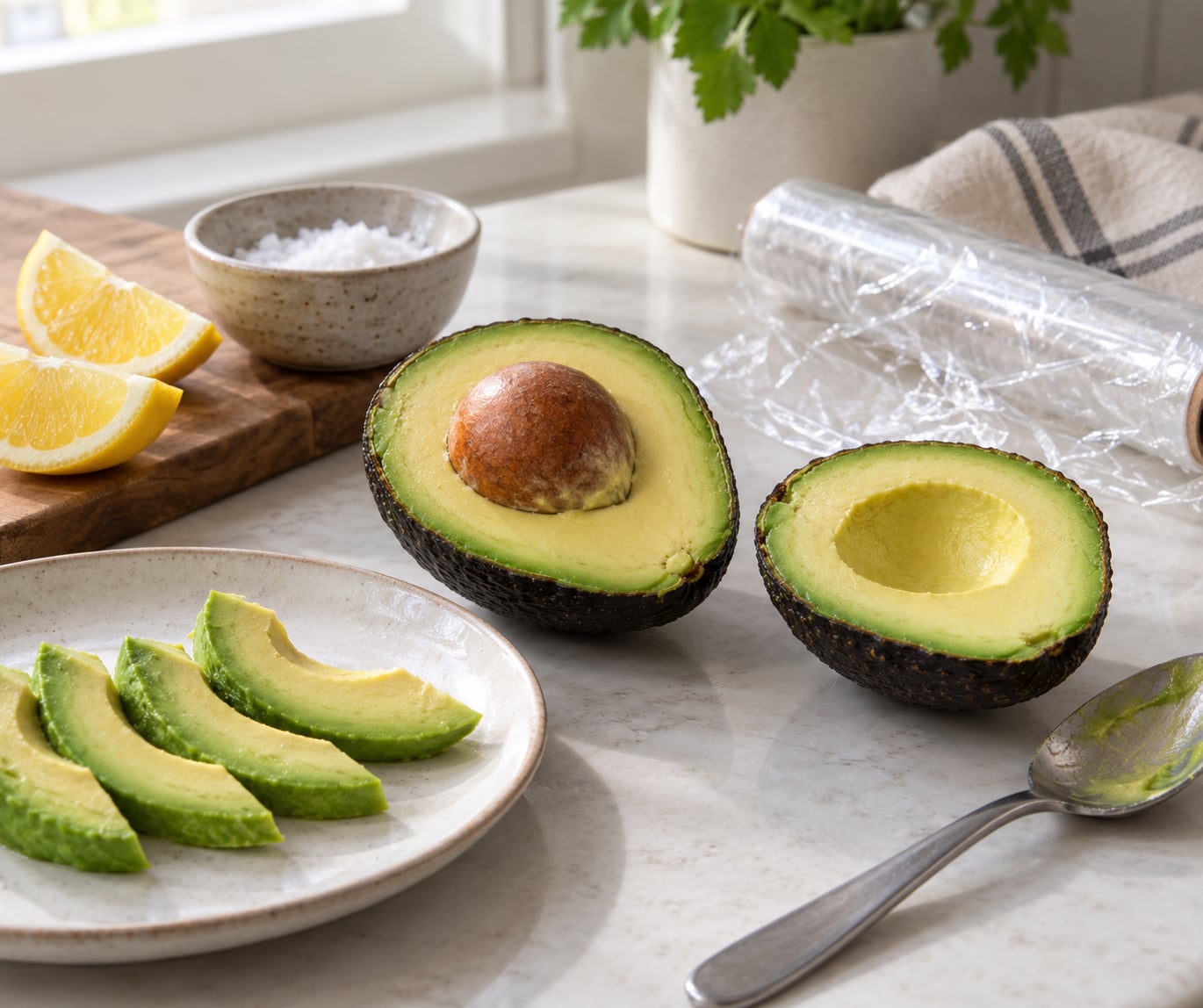
To keep avocado from turning brown, coat the cut flesh lightly with lemon or lime juice, press plastic wrap right against the surface, and refrigerate it within about two hours. Acid slows the enzyme that causes browning, the wrap keeps air away, and the fridge cools everything down. Ten seconds of work buys you a day or two of green avocado.
The order matters less than doing all three. Skip the acid and the wrap does most of the work. Skip the wrap and you are chasing brown patches around the edges all afternoon.
Table of Contents
What You Need
None of this is specialised equipment. Pick the acid that suits the dish and you are set.
- Lemon or lime juice — the single most useful item here. Bottled works in a pinch, fresh is stronger.
- Fine salt — a small pinch helps a little and seasons at the same time.
- Plastic wrap or an airtight container — cling film pressed onto the flesh beats any lid that leaves an air gap.
- A sharp knife — a dull blade crushes cells, and damaged flesh browns faster.
- A spoon — scooping the flesh out leaves the skin as its own cover.
- A bowl of ice water — optional, for the quick dip in Step 6.
Step-by-Step: How to Keep Avocado from Turning Brown
Step 1: Choose the Best Method for Your Avocado
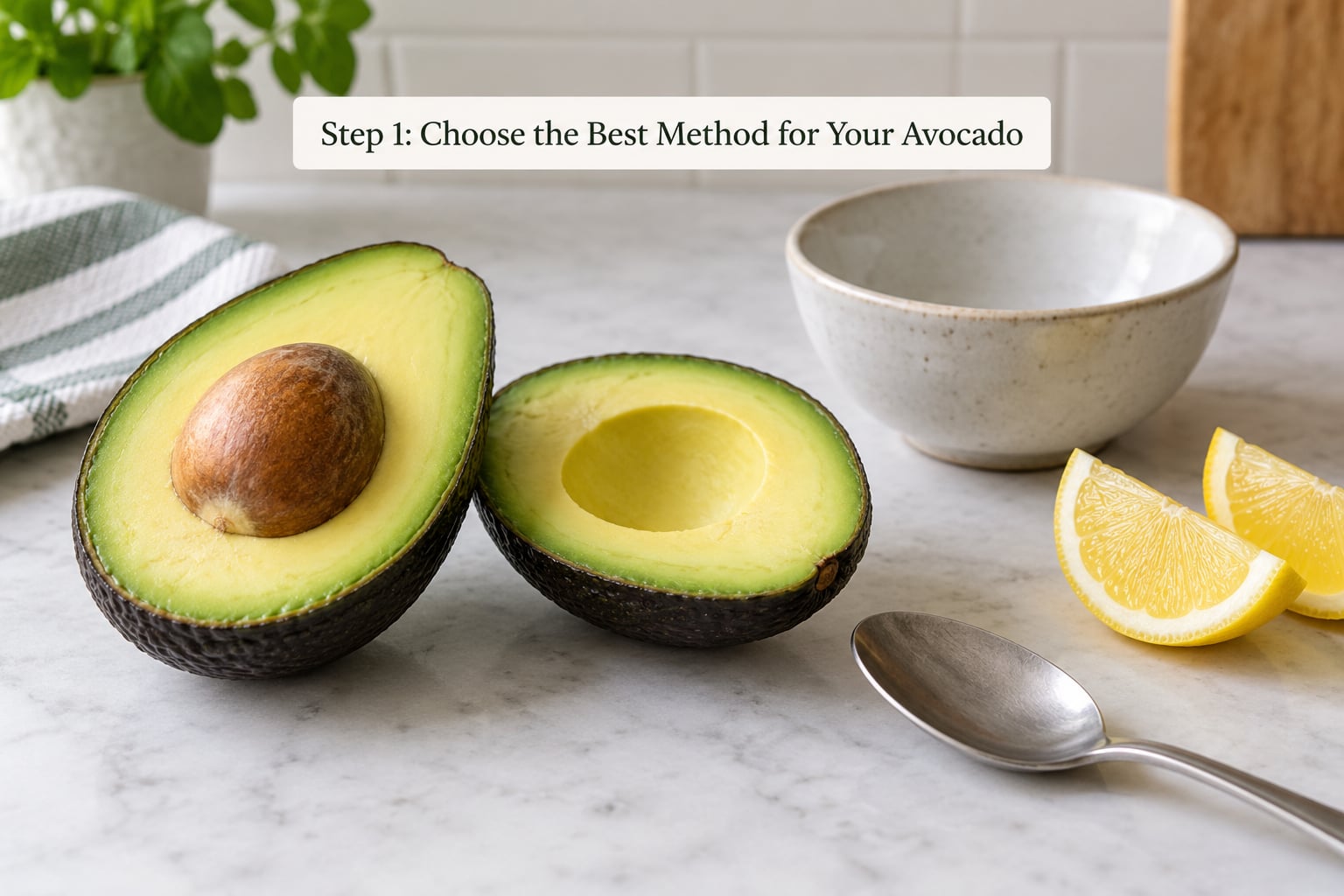
Whole and unripe needs almost nothing. Leave it on the counter in a paper bag if you want it ripe tomorrow, because room temperature is what ripens it.
Halved with the pit still in gets the pit, a thin coat of lemon, and plastic wrap pressed straight onto the cut face. That is the most forgiving setup and usually holds green for a day.
Sliced for sandwiches has more exposed surface area, so acid matters more here. Brush the slices, and if you are building lunch boxes, think about the order you pack them in too — how to keep sandwiches from getting soggy covers that side of things.
Diced and mashed for meal prep are the hardest to protect because every cube is a wound. Mashed guacamole needs acid, salt, a tight lid and the fridge on the same day you make it.
Step 2: Brush or Toss Cut Avocado with Acid
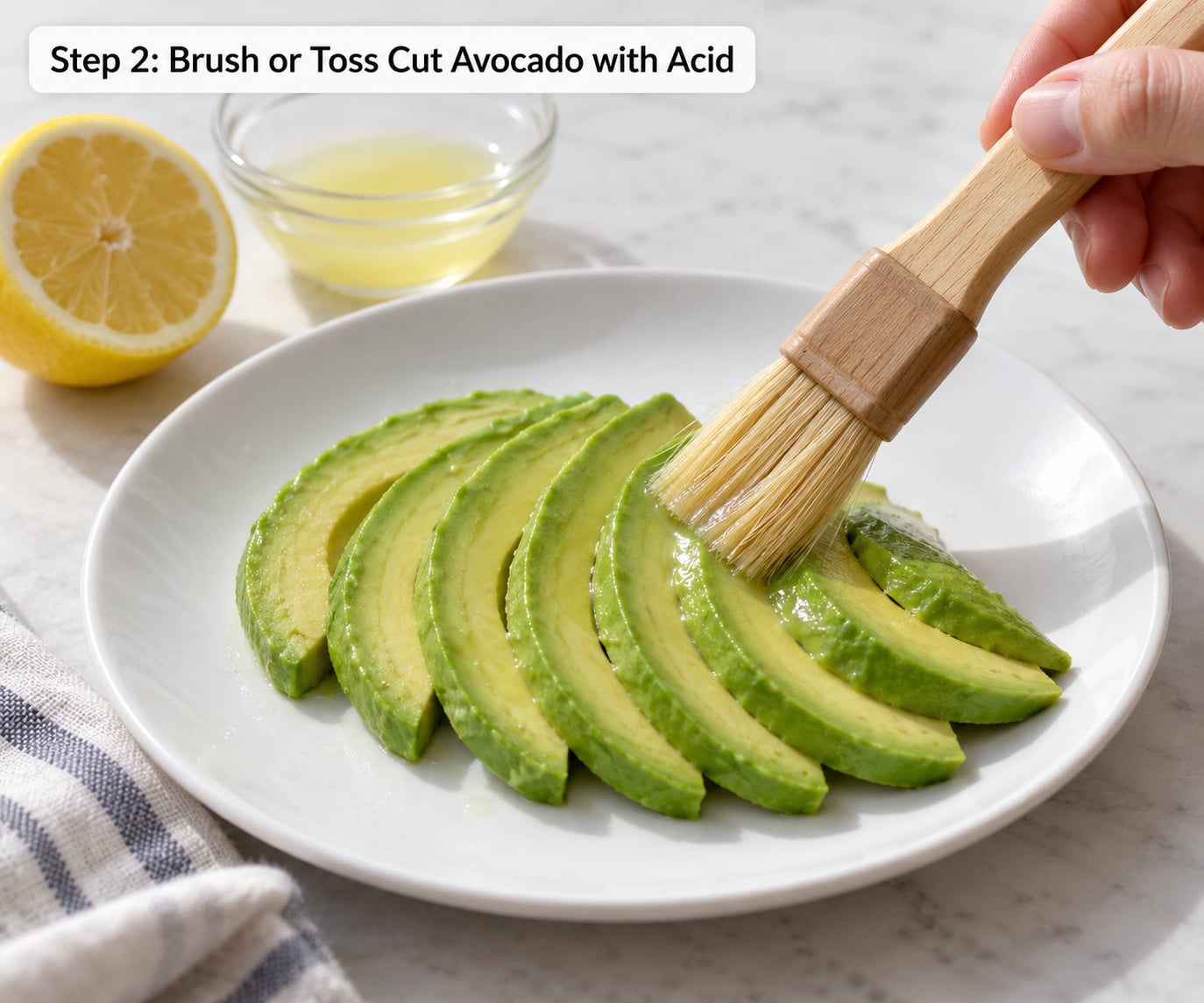
Citric acid denatures the enzyme responsible for enzymatic browning, so the flesh simply stops reacting with oxygen. Roughly half a lemon per avocado is plenty.
For slices, a pastry brush or the back of a spoon spreads a thin film faster than pouring. For diced avocado or guacamole, toss with the juice in a bowl so every piece gets touched.
Coat it lightly. Puddled juice sitting in the hollows of a half turns the flesh sour within hours, and no amount of draining fixes it. Lime is the better choice when the fruit is going into a salsa or a bowl of chips, because the flavour sits closer to the dish.
Step 3: Add Salt or Another Safe Seasoning
A small pinch of salt goes on after the acid. It seasons the flesh, draws a little moisture to the surface, and it will not make anything taste odd in a sandwich or a salad.
Be more careful with the rest of the seasoning board. Black pepper, smoked paprika and chilli flakes add flavour but no protection, and finely ground garlic powder starts to smell sharp after a day in the fridge.
If you want a barrier rather than seasoning, use the Step 4 trick instead: a thin film of olive or neutral oil poured over the flesh and pushed to the edges. Home cooks rate it for staying neutral-tasting, which is exactly why it works on toast.
Step 4: Minimize Air Contact
Browning only happens where air touches the flesh, so cut the air off. Press cling film directly onto the cut surface and rub out the air pockets with your thumb. Wrapping a bowl and leaving a loose dome over it is the most common version of this and it barely helps.
Pressing a diced mound onto the inside of the lid, flesh against plastic, works better than a sealed tub where the cubes sit in a cloud of air.
For a half avocado, push the spoon between the flesh and the skin so the cut face sits flush against the skin. Leave the pit in as well. The pit only guards the small circle of flesh directly around it, which is a fair bit less coverage than most people assume.
Aluminum foil pressed tight around a half is the same idea with a stiffer material. Wrap tightly, crimp it at the edges, and it holds better than plastic for a half that will sit for a day.
Step 5: Refrigerate Cut Avocado Promptly
Cold slows the reaction right down, so get cut avocado into the fridge within about two hours. Whole unripe fruit is the exception — the fridge will not ripen it, and if you still want it soft in a day, leave it out.
Ripe whole avocados tolerate a few days refrigerated without any treatment. Once you cut into one, the clock starts.
| Form | Counter | Fridge | Freezer |
|---|---|---|---|
| Whole, unripe | About 3 to 5 days to ripen | Slows ripening, does not finish it | Not worth freezing |
| Whole, ripe | About 1 to 2 days | About 2 to 3 days | Not worth freezing |
| Half, pit in, wrapped | A few hours | About 1 day, sometimes 2 | Flesh only, texture suffers |
| Sliced or diced, coated in lemon | About 2 to 3 hours | Roughly overnight | Usable in smoothies |
| Guacamole | About 2 hours | About 1 to 2 days | About 3 months as puree |
Look at it before you eat it rather than trusting the clock. Green under the skin and only faintly tan at the edges means it held. An even tan film across the whole half is oxidation, which is cosmetic. Fuzzy patches, a sour smell or slimy texture is spoilage, and that one goes in the bin.
Step 6: Use the Ice-Water Shortcut for Slices
When you need sliced avocado that stays green for a plate right now, dip the slices in ice water for 10 to 15 seconds, drain them well, and pat them dry. Chilling and rinsing slows the reaction enough to buy you the 30 minutes a salad or a platter needs.
This is a dip, not storage. Holding avocado submerged under water for hours is a different practice entirely, and food safety guidance from the FDA warns against storing produce in water because bacteria can grow on the surface in cool, wet conditions.
Keep that boundary clear in your head and the ice-water step is completely fine to use.
Common Mistakes
Almost every brown avocado traces back to one of these.
- Wrapping loosely instead of pressing tight. Fix: push the film onto the flesh and pinch out air pockets. The skin of a half counts as a cover too.
- Rinsing and storing the cut avocado in water. Fix: a 10-second ice-water dip is fine, but store it dry in the fridge. The FDA advises against water storage for cut produce.
- Pouring on a large amount of lemon juice. Fix: coat, do not soak. Half a lemon per avocado is the working amount.
- Using no acid at all. Fix: even a teaspoon of juice on diced avocado slows browning noticeably.
- Storing beside strong-smelling foods. Fix: cut avocado picks up raw onion, fish and ripe melon aromas within hours. Give it its own box.
- Leaving cut avocado out through lunch. Fix: refrigerate within about two hours, sooner if the room is warm.
- Refrigerating unripe whole avocados too early. Fix: leave them on the counter to ripen, then move them to the fridge once they yield to a gentle press.
If you are buying a lot at once, freezing is the better lever than preserving. Scoop the flesh, mash it with a squeeze of lemon, press it into an ice cube tray and freeze. Portions thaw in a few minutes and go straight into smoothies, where the slightly soft texture does not matter.
Frequently Asked Questions
Is avocado safe to eat after it turns brown?
Usually yes. Enzymatic browning is a reaction at the surface only, so a thin tan or grey film with no smell change and normal texture underneath is harmless. Discard it if you see mould, notice a sour or rancid smell, or the flesh feels slimy or watery. The smell test matters more than the colour, because spoilage fungi show up long before obvious mould does.
How do you keep half an avocado fresh for tomorrow?
Leave the pit in, run the cut face around the edge with a sharp knife, brush lemon juice into the flesh, and press plastic wrap directly onto the surface so no air pockets remain. Refrigerate it. In a good fridge that usually holds green for about a day, sometimes into a second day if the fruit was only just ripe when you cut it.
Does lemon juice really stop avocado browning?
It slows browning rather than stopping it outright. The citric acid denatures the enzyme that reacts with oxygen, so slices brushed with lemon usually stay green overnight while untreated slices go brown in a couple of hours. The catch is flavour: more than about half a lemon per avocado will make the flesh noticeably sour within hours.
How long does cut avocado last in the fridge?
Untreated, cut avocado is reliable for a few hours and can be grey by the next morning. Coated in acid, covered tightly and refrigerated, sliced or diced pieces last roughly overnight and a halved avocado with the pit in and wrap on the cut face lasts about a day. Guacamole keeps one to two days with lime juice and a tight lid.
Can you freeze avocado?
Yes, and it is the best answer to the leftover half. Scoop the flesh, mash it, mix in a squeeze of lemon to slow browning, and freeze it in portions. It works well in smoothies and dips where a softer texture is not a problem. Freezing sliced or diced avocado without mashing leaves the texture watery once thawed, so frozen cubes suit blended recipes only.
Should I refrigerate avocados before they are ripe?
Not if you want them ready to eat. Ripening happens at room temperature, and a whole unripe avocado in the fridge will simply stall. Leave unripe fruit on the counter, or in a paper bag with a banana or an apple if you want it faster. Once it is ripe, move it to the fridge and it will hold for about two to three days without any treatment at all.
Conclusion
The fastest reliable method is the one you can repeat without thinking: brush the cut avocado lightly with lemon or lime juice, press plastic wrap right onto the flesh with no air gaps, and refrigerate it within two hours. Start with whichever treatment matches how you plan to use the fruit, and you will usually get a full day of green out of an avocado you would otherwise have browned on the counter.