
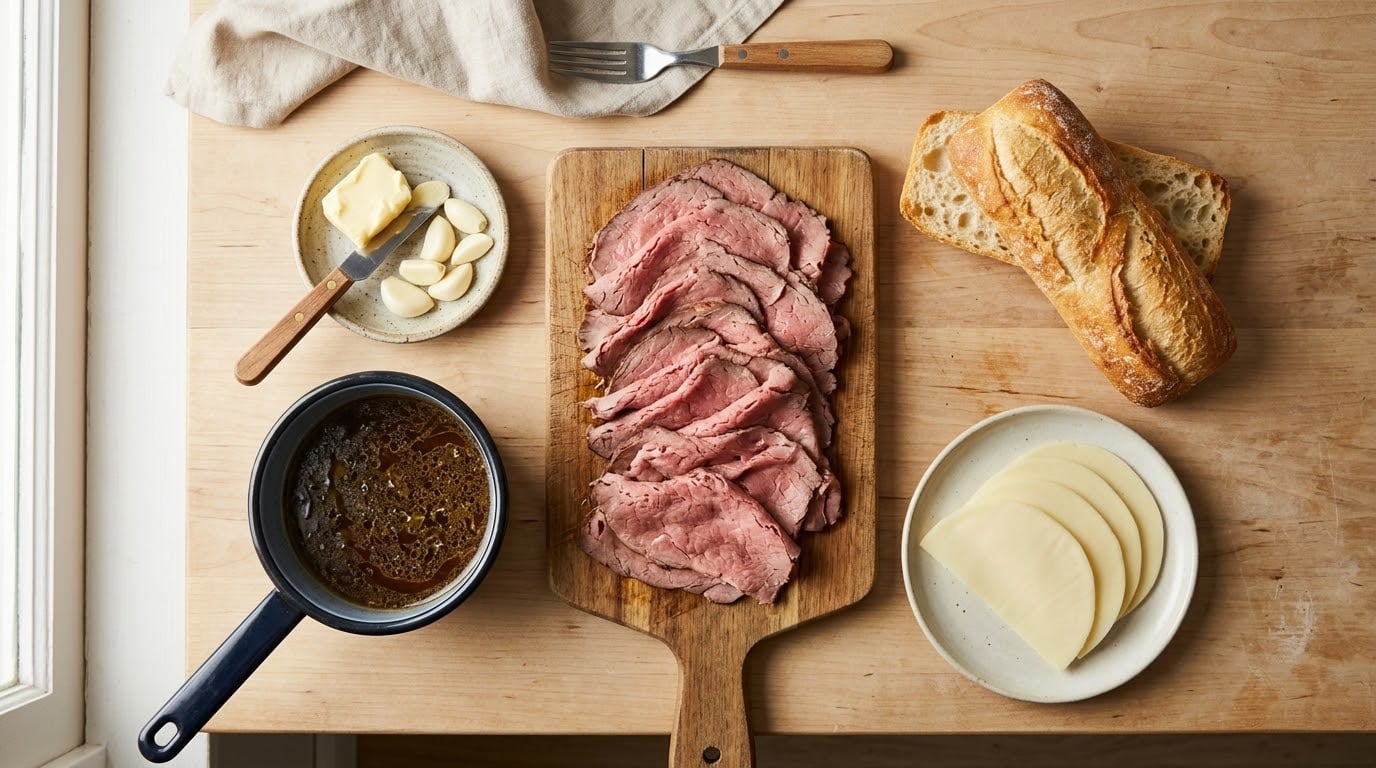
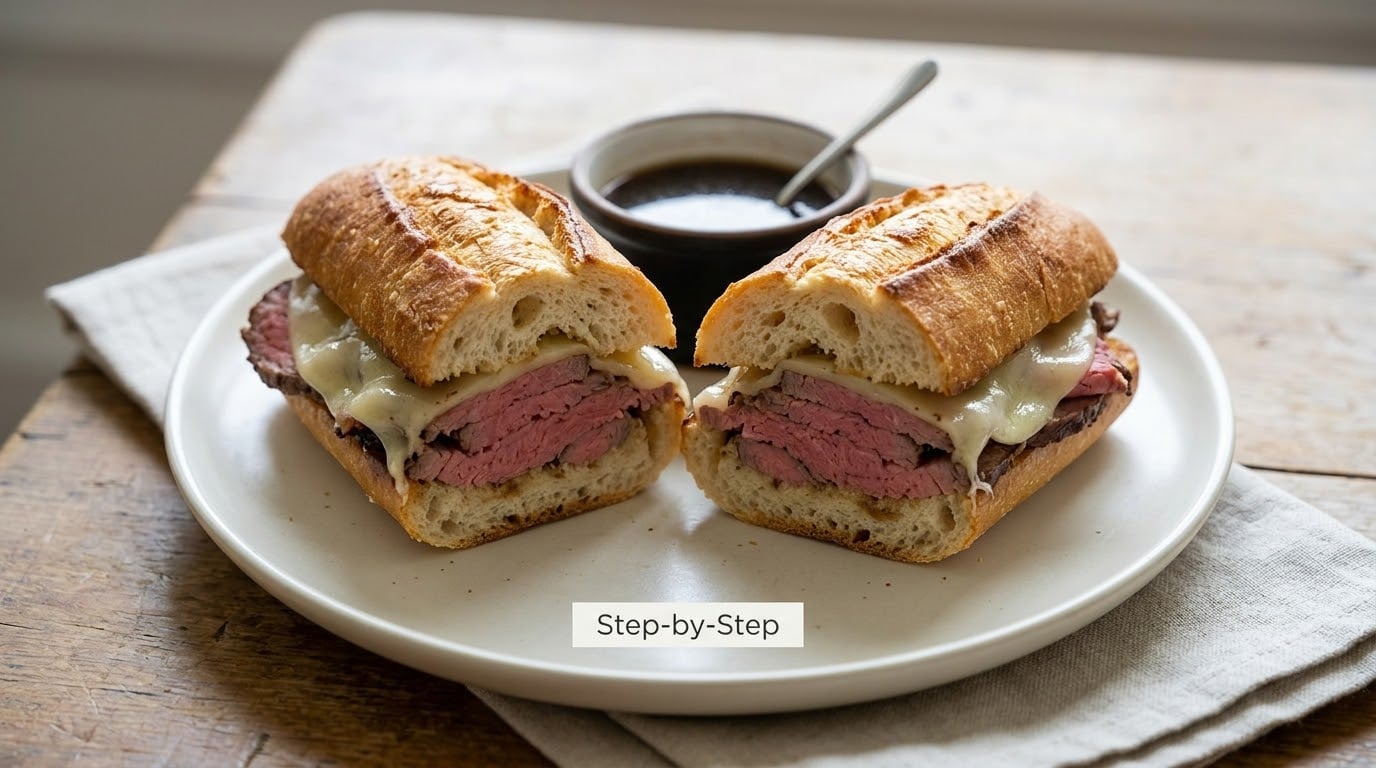
A French dip sandwich is shaved or sliced roast beef piled onto a crusty split roll with melted cheese, served with the savory pan liquid it cooked in — au jus — for dunking. To make a French dip sandwich at home, season and roast a chuck roast until it hits 195°F to 205°F for a tender, sliceable result, then use the drippings for the jus. Allow about 20 minutes of hands-on work plus 3 to 4 hours of roasting.
The one thing that trips people up isn’t the beef or the cheese. It’s the bread. If you build the sandwich an hour early or pour the jus over it at the kitchen counter, you’ll hand people a soggy roll. Everything below is built around avoiding that.
Table of Contents
What You Need
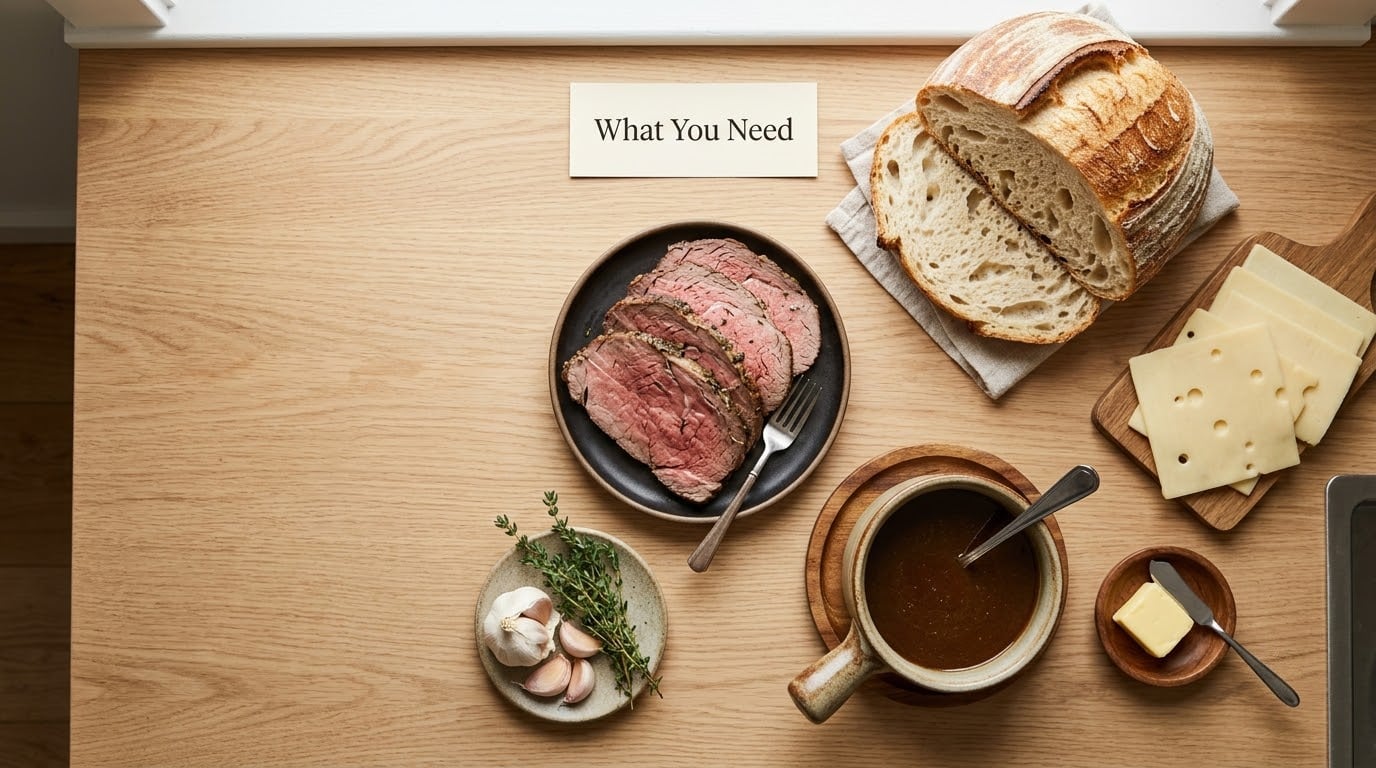
This recipe makes about 4 sandwiches. The ingredient list is short, and most of it you probably already have.
The beef
- 1 chuck roast, 3 to 4 pounds
- Kosher salt and black pepper
- 1 to 2 tablespoons neutral oil for the sear
Chuck is the right call because it carries enough fat and connective tissue to stay juicy through a long roast. A rump roast works and costs less, but it’s leaner, so watch it closely and don’t run past 200°F. Sirloin and other lean cuts are a bad idea here; they dry out before they get tender. If you want to know more about the tradeoffs before you shop, how to make an overstuffed sandwich hold together covers how much filling a roll can actually carry.
Liquids and seasoning
- 2 cups low-sodium beef broth
- 1 tablespoon Worcestershire sauce
- 4 to 6 cloves garlic, smashed
- 1 bay leaf
- 1 tablespoon chopped fresh thyme
Assembly
- 4 to 6 crusty French rolls, hoagie rolls, or a split baguette
- 8 to 12 slices provolone, or Swiss, mozzarella, or fontina
- 4 tablespoons soft butter
- Salt to taste for the finished jus
Provolone is the classic because it melts without separating and stays mildly milky. Swiss gives you nuttier flavor and melts cleanly too. Mozzarella pulls into long strings, which some people love and others find stringy. Fontina is rich and a little sweet.
Equipment
A roasting pan with a wire rack, or a Dutch oven, plus a carving board and a fine mesh strainer for the jus. A small whisk or a cornstarch slurry in a cup will help you control thickness.
Step-by-Step
How to Make a French Dip Sandwich at Home: Season and Roast the Beef
- Trim the roast. Pull off the thick cap of loose fat and any silverskin you can see — that fat turns into grease in the pan, not flavor in the sandwich. Leave a thin layer behind.
- Season hard. Salt the whole surface generously and grind pepper over it. If you have time, do this a few hours ahead and leave the roast uncovered in the fridge. Dry brining is what separates a good roast from a forgettable one.
- Sear. Heat the oven to 325°F. Get the roasting pan or Dutch oven ripping hot, add the oil, and lay the roast in. Give it 3 to 4 minutes per side, untouched, until a deep brown crust forms.
- Add liquid and aromatics. Pour in the broth, then add the garlic, bay leaf, thyme, and Worcestershire. The liquid should come about a quarter of the way up the side of the roast, not higher.
- Roast, covered, about 3 to 4 hours, until a probe slides into the thickest part with almost no resistance.
Whole cuts of beef need to reach 145°F to be safe to eat, and that is the floor, not the target. Roast beef is braised muscle with collagen in it, and collagen only melts well past 190°F. Push to 195°F to 205°F and the roast will shred and slice clean instead of snapping off the knife. Pull it too early and you get a safe, chewable roast that disappoints everyone at the table.
Check temperature every 30 minutes in the last stretch. Rest the roast on a board for 15 to 20 minutes before slicing; cutting it hot dumps the juice on the counter.
How to Make the Au Jus
The jus is the point of the sandwich. Recipe writers call it a side, but restaurant staff will tell you the liquid is the dish.
- Lift the roast out and set it aside. Spoon off and discard most of the fat that floats on top of the liquid.
- Set the pot over medium heat and let the remaining liquid simmer. Tastes too weak? Add a splash more broth; tastes too rich? Simmer it down.
- Strain through a fine mesh strainer into a small saucepan. You want roughly a cup and a half of clear liquid.
- Thicken if needed: mix 1 teaspoon cornstarch with 2 teaspoons cold water, whisk in, and simmer 30 to 60 seconds until it coats the back of a spoon.
- Taste, then salt. This is the moment people oversalt.
Salt accumulates from the broth, the Worcestershire, the seasoning on the roast, and the drippings. Pick one or two of those sources rather than all four. Using low-sodium broth and a light hand on the seasoning gives you room to correct at the end. If you want a deeper, almost maltier au jus without a bouillon packet, reduce the strained liquid by a third and finish with a teaspoon of soy or Worcestershire.
How to Assemble and Toast the Sandwich
- Slice the roast thinly against the grain. Look for the direction the fibers run and cut perpendicular to it — this is the single biggest difference between tender and chewy.
- Butter the cut sides of the rolls and give them a quick toast in the oven or a dry pan, about 2 minutes, until the edges just color.
- Layer cheese on the bottom half, beef on top, more cheese if you like. Salt the beef lightly if it was seasoned sparingly.
- Wrap the assembled sandwich in foil for 10 minutes at 375°F, then unwrap and broil 1 to 2 minutes, watching it the entire time, until the cheese runs and the top of the roll blisters.
You know it’s right when the cheese is fully melted with no cold patches and the roll is golden, not brown. The foil step is what makes the bread soft on the inside and crisp on the outside, and it’s what restaurant ovens do at volume.
Serve the au jus in small bowls for dunking, never poured on top. Hold the toasts until the last minute. If you are packing these for lunch, the layer between them matters a lot — there is a good method in make a sandwich that stays fresh until lunch that will keep the bread intact.
Common Mistakes
- The beef is dry or tough. Almost always an underdone roast or a cut that’s too lean. Hit 195°F minimum and stop testing every ten minutes. If you’re using deli roast beef instead, how to make a Philly cheesesteak at home has the same slicing discipline.
- The beef is greasy. You left the fat cap on, or you skimmed nothing. Trim the cap before roasting and skim the liquid before reducing.
- The bread is soggy. Build too early, or dunk too long. Toast late, serve the jus alongside, and dunk only the edge you’re about to bite.
- The cheese separates or never melts. Cheap pre-shredded cheese won’t cooperate. Use slices, and give the broiler your full attention; it goes from perfect to burnt in seconds.
- The au jus is too salty. Stacked broth, mix, Worcestershire, and salted drippings. Use low-sodium broth, skip the packet, and salt the finished liquid only.
- The au jus is thin and watery. You didn’t reduce it. Simmer it for 5 to 10 minutes, or use the cornstarch slurry above.
Two habits fix most of this. Rest the meat, and toast the bread last.
For a make-ahead cook, roast the beef a day ahead, slice it, and keep it in an airtight container with the juices. Store the rolls in a separate bag at room temperature, and re-crisp them in a hot oven right before serving. That separation is what keeps day-old beef from making day-old bread.
Frequently Asked Questions
What cut of meat is best for a homemade French dip?
Chuck roast is the best all-around choice. It has enough marbling and connective tissue to braise down to 195°F and come out juicy and sliceable. Rump roast is leaner and cheaper, so pull it closer to 195°F and rest it longer. Bottom round is workable. Sirloin and eye round are too lean and will turn dry and chewy in a long roast.
Can I use a deli roast beef instead of cooking a chuck roast?
Yes, and you will have a sandwich in about fifteen minutes. Thinly sliced deli roast beef works, though it lacks the connective texture of a braised roast, so add a spoonful of the pan juices or a horseradish aioli for moisture. Ask the counter for it sliced thin, and toast the roll right before assembling so the whole thing lands hot.
How do I keep the bread from getting soggy?
Serve the au jus in small bowls for dunking instead of pouring it onto the sandwich. Toast the cut sides of the roll just before assembly, not an hour ahead, and wait to build sandwiches until people are at the table. For transport or lunch, keep the bread in a separate bag from the beef so steam never reaches the crust.
Can I make French dip sandwiches ahead of time?
Yes. Roast the beef a day ahead, slice it, and store it airtight with its juices in the fridge for up to three days. Keep the rolls at room temperature in their own bag, and hold the au jus separate and refrigerated. Rebuild and toast everything shortly before serving so the bread stays crisp and the cheese melts fresh.
How should I reheat a French dip sandwich?
Wrap the sandwich in foil and warm it in a 350°F oven for 10 to 12 minutes, which heats the beef through and softens the cheese without drying the roll. Unwrap and broil for a minute to crisp the top. Warm the au jus separately in a small pan on the stove, and skip the microwave if you can, since it turns bread rubbery.
Can I freeze the roast beef or au jus?
Yes, both freeze well. Cool the sliced roast completely, spread it on a tray to freeze individually, then bag it and keep it for up to three months. Freeze au jus in a freezer-safe container or ice cube tray, leaving headroom for expansion. Thaw overnight in the fridge and reheat the jus gently, whisking in a splash of broth if it thickened.
Conclusion
Start with the roast, because everything else follows from it. Trim and season a chuck roast, sear it hard, then give it three to four hours in a 325°F oven until a probe slides in without resistance at 195°F to 205°F.
Rest it, slice it thin across the grain, and turn the pan drippings into a strained, reduced au jus that you salt only at the end. Toast the rolls last, pile on the beef and cheese, and put the jus in small bowls on the table. That last detail is what makes it taste like the restaurant version.