
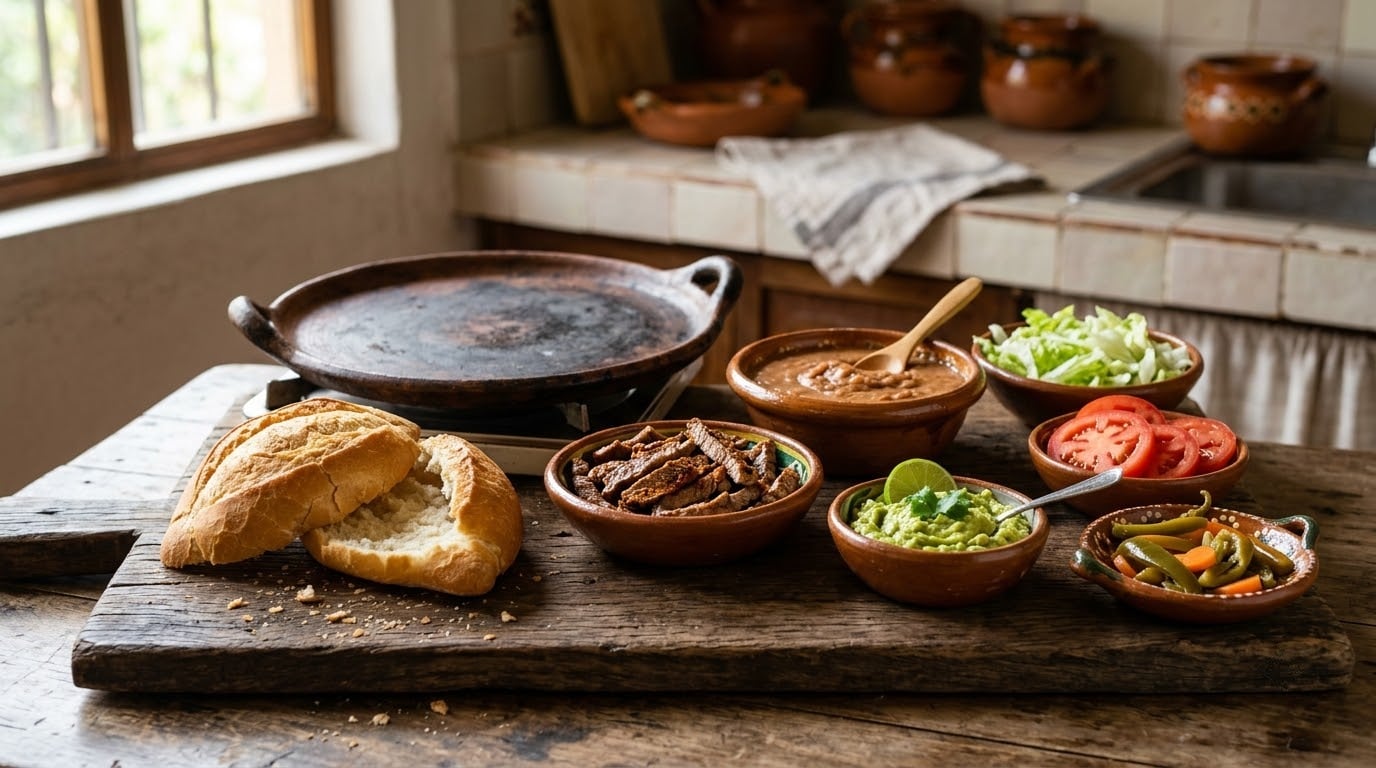
A torta is a warm Mexican sandwich built on a crusty bolillo or telera roll, layered with refried beans, cooked meat, cheese, fresh vegetables and salsa. To make one, toast the split roll, spread beans on the bottom half and mayonnaise on the top, pile on the filling and toppings, then press it on a comal or skillet until golden and slice it in half. Prep takes about 20 minutes, and the whole thing is done before your coffee goes cold.
The piece most home cooks miss is not an ingredient, it is structure. A torta is tall, and tall sandwiches fall apart if you stack the wet stuff against the bread. Get the layer order right and the sandwich holds together from first bite to last.
What You Need
A classic torta is really five categories of ingredient. Once you know the role each one plays, you can swap freely without losing the shape of the sandwich.
- Bread: 1 bolillo or telera roll, or a small French-style baguette. Telera is flatter with a split top and a soft crust, bolillo is rounder with a crackly crust and a soft interior.
- Spread: 2 tablespoons mayonnaise, plus 1/3 cup warm refried beans. Chipotle mayo or a thin layer of crema both work.
- Protein: about 1/2 lb cooked filling, such as ground chorizo with egg, a fried milanesa, carne asada, carnitas, or sliced ham.
- Fresh toppings: shredded iceberg lettuce, sliced tomato, thin onion, mashed avocado or guacamole.
- Extras: queso fresco or Oaxaca cheese, pickled jalapeños, salsa verde or salsa roja, and cilantro.
Every protein named above has its own cooking method, but only one of them requires a thermometer. Chorizo and ham arrive ready to eat, carne asada and carnitas come off a grill or a pot, and milanesa is breaded and fried just before assembly.
If you are using raw chicken, ground beef or pork, whole cuts of meat, or fish, cook to the safe minimum internal temperature: 165°F (74°C) for poultry, 160°F (71°C) for ground meat, and 145°F (63°C) for whole cuts of meat and fish. A food thermometer in the thickest part is the only way to be sure.
Beyond ingredients you need a comal, cast iron skillet, or grill pan for toasting, a wide spatula for flipping, a serrated knife for clean slices, and a small bowl for the salsa. A tostada press or a second pan makes pressing easier, but a heavy skillet lid works nearly as well.
Step-by-Step
The build runs in one order, and it matters. Cook the filling first, toast the bread while the filling rests, spread the base flavors on each half separately, then stack in order from dry to wet.
1. Choose and Prepare the Filling
Season the filling in the pan, not on the bread. Chorizo gets a pinch of oregano and a squeeze of lime near the end so it stays sharp rather than greasy, and carne asada gets salt, garlic and cumin before it ever hits the comal.
You will know it is ready by color, aroma and texture. Chorizo crumbles and turns deep red, carne asada darkens on the outside with a hint of pink gone from the centre, and milanesa is golden and firm enough to slice without falling apart. Use a thermometer when there is any doubt about raw poultry, ground meat, whole cuts or fish.
Slice meat thinly and lay it flat rather than piling it. Resting cooked meat for a few minutes before slicing keeps the juices in the sandwich instead of on the cutting board, which is the main reason a home torta tastes dry when compared to a good one.
2. Toast the Bread Until Firm
Split the roll lengthwise, leaving the bottom hinge intact, and toast both cut sides on a hot comal or in a dry skillet. The visual cue is a golden-brown face with the crust still looking like crust, not a brown-grey bake.
Watch it. Bolillo goes from perfect to bitter in about fifteen seconds once the crumb starts catching, and the sandwich is thin enough that the inside can go dry while the outside still looks fine. Pull it when the surface is golden and the cut side feels slightly springy when pressed.
3. Spread the Base Flavors
Beans go on the bottom half, mayonnaise on the top half. That split is the whole trick to keeping a torta from going soft, because the two moist halves never touch each other and neither one sits against a bare edge of bread.
Warm the refried beans first and spread them thin, about a third of a cup for a single roll. A thick layer pushes everything sideways when you press it, and cold beans taste flat. Do the same with avocado: mash with a fork and a squeeze of lime, then spread it like butter rather than dropping chunks in.
Keep wet ingredients about half an inch away from the crust all the way around. That margin keeps the sandwich from weeping onto a plate, and it is also the trick behind keeping an overstuffed sandwich together in general.
4. Layer the Protein and Cheese
Spread the meat in a single even layer from the crust edge to about half an inch short of it. Even layers hold; a mound in the middle makes the torta lean, and the first slice cuts through nothing but air and one overloaded corner.
Cheese goes on with the meat so it warms through while the sandwich presses. Queso fresco and cotija crumble and stay cool-tasting, which suits a hot filling like chorizo. Oaxaca and Chihuahua melt and turn the whole sandwich creamy, which suits a drier filling like carne asada or milanesa.
If you are building two sandwiches at once, divide the filling before you start layering rather than after. You will get two equal tortas instead of one tall one and one thin one.
5. Add Vegetables and Fresh Toppings
Lettuce goes on next as a dry barrier between the meat and anything juicy above it. Shredded iceberg is the standard because its watery cells hold structure; romaine works, soft leaf lettuce does not.
Tomato is the ingredient most likely to ruin the bread, so treat it accordingly. Pat the slices dry, and read why tomatoes make sandwiches soggy and what to do about it before you slice. Salting the slices first and draining them for five minutes draws off surface liquid and buys you a much better sandwich.
Thin onion, pickled jalapeños, salsa and cilantro all belong on top, added just before you close it. Pickled chiles bring acid that cuts the richness of the meat, and a spoon of salsa at that stage keeps it from soaking downward.
6. Close, Press, and Serve the Torta
Close the sandwich and press it flat on the comal or in the skillet, weighted with a lid or a second pan, for two to three minutes. The exterior should print a golden rectangle onto the bread and the layers should compress into a single solid block.
Slice with a long serrated knife in one firm sawing motion after the press, not before. A hot torta that has just been set is still full of steam and it will squish; two minutes off the heat lets it settle enough to cut cleanly. Wipe the knife between halves so the cut face stays tidy.
Finish with a drizzle of crema, a few crushed pepitas, or extra pickled onion if you like. Serve it in the same minute. Torta is a sandwich you eat hot off the comal, and it has no business sitting on a plate for an hour.
Common Mistakes
Almost every disappointing torta traces back to one of a handful of problems.
The Bread Goes Soggy
Too much spread, wet ingredients touching the crust, or slicing too early. Spread thin, leave the crust margin, and press before you cut. If the sandwich already feels heavy in the hand, you have too much filling, and no amount of toasting will fix it.
The Filling Slides Out
Overloading and uneven layers do this. Level the filling, keep the protein inside the crust boundary, and press the sandwich long enough to set it. A torta built flat and wide holds far better than one built tall.
The Beans Are Watery
Drain canned beans well and mash them yourself with a little oil or fat, cooking them down until they hold a spoon upright. Thin bean water is the single most common reason a home torta feels sloppy in the middle.
The Meat Tastes Bland
Season during cooking, not after. Salt, acid and fat are all doing work before the sandwich is built, and a finished torta has nowhere to hide under beans, mayo and salsa.
It Only Toasts on One Side
You flipped it too early or the pan was too cool. Give the comal a full minute to heat, then press and leave it alone for the whole two to three minutes before turning.
Slicing Too Early
The filling is still moving and the bread has not set. Two minutes off the heat is enough.
For making ahead, cook and season the meat, and keep the salsa separate. Store both in the fridge and use them within three to four days; use the cooked filling within two days for the best texture.
Assemble the dry layers (toast, beans, meat, cheese) up to four hours ahead and refrigerate them. Keep lettuce, tomato and avocado out of that prep, and add them just before eating. Reheat the finished torta in a dry skillet for two to three minutes per side, or in a 350°F (175°C) oven until the cheese softens; microwave leaves the bread tough.
If you are planning a party platter, build the tortas early, slice them, and serve the salsa and crema in small bowls on the side. It is the same move as making a Cuban sandwich for a group, where the individual pieces matter more than the whole.
Frequently Asked Questions
What bread is best for a Mexican torta?
A bolillo or telera is the traditional choice. Bolillo is rounder with a crackly crust and a soft, fluffy interior, while telera is flatter with a split top and a softer crust. Either works, and both toast well on a comal. If you cannot find them, a small French-style baguette is the closest match. Skip sandwich bread, which has too little structure to hold a tall filling.
Can I make a torta ahead of time?
Yes, with a split strategy. Cook the filling and keep the salsa separate in the fridge for up to three to four days. Build the dry layers, beans, meat and cheese, up to four hours ahead and refrigerate. Add lettuce, tomato and avocado only when you are ready to eat, because those are what turn the bread soft. Reheat in a dry skillet for the best crust.
How do I keep a torta from getting soggy?
Spread beans on the bottom half and mayonnaise on the top half so the two moist sides never touch. Keep wet ingredients about half an inch away from the crust. Drain canned beans and pat tomato slices dry. Toast the bread, press the sandwich for two to three minutes to set it, then wait two minutes before slicing so the steam escapes instead of soaking through.
What cheese goes on a Mexican torta?
Queso fresco is the most traditional choice, and it crumbles rather than melts, which keeps a hot filling like chorizo readable. Oaxaca and Chihuahua melt into a creamy layer and suit a drier filling such as carne asada or milanesa. Cotija adds a salty, dry crumble on top. Use a light hand, about two tablespoons per torta, since the beans and salsa already carry plenty of salt.
What sauce goes well with a torta?
Mayonnaise is the standard base, and chipotle mayo made by stirring in a teaspoon of chipotle paste adds smoke without much effort. Salsa verde brings tang, salsa roja adds heat and body, and salsa macha, an oil-based chili and garlic sauce, is the most aggressive of the three. Crema thinned with a splash of lime works as a cooling drizzle on top rather than a spread.
Conclusion
The sequence that makes a torta work is short: cook the filling safely and season it in the pan, toast sturdy bread until golden, spread beans on one half and mayonnaise on the other, layer the meat and cheese evenly, and add the moist toppings last. Press it, let it settle, then slice.
Build that simple version once and you will know exactly where the limits are. After that you can move to milanesa on a weekend, a breakfast torta with chorizo and egg, or a meatless version built on guacamole and refried beans, and the structure will hold.