
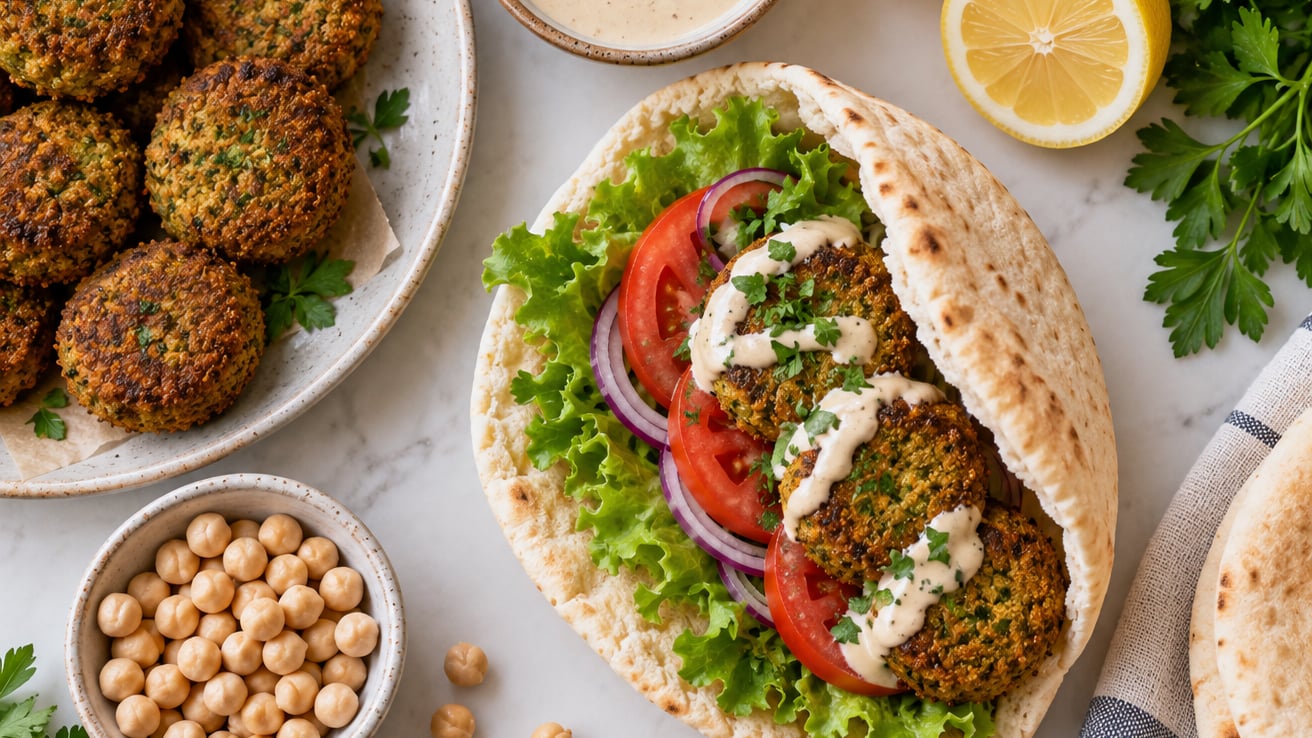
Falafel pita sandwiches are warm pocket bread filled with deeply crisped chickpea falafel, crunchy vegetables, something pickled, and a creamy sauce drizzled on at the very end. Learning how to make falafel pita sandwiches well comes down to two separate skills: getting a coarse, well-seasoned falafel mix that fries to a golden shell, and layering it so the bread stays flexible instead of turning to mush.
Budget about an hour of active time, plus overnight soaking. Nothing here needs special equipment beyond a food processor and a pot, and the method below gives you a clear cue at every stage, so you can tell what the falafel, the sauce and the pita should look like before you commit to serving anyone.
Table of Contents
What You Need
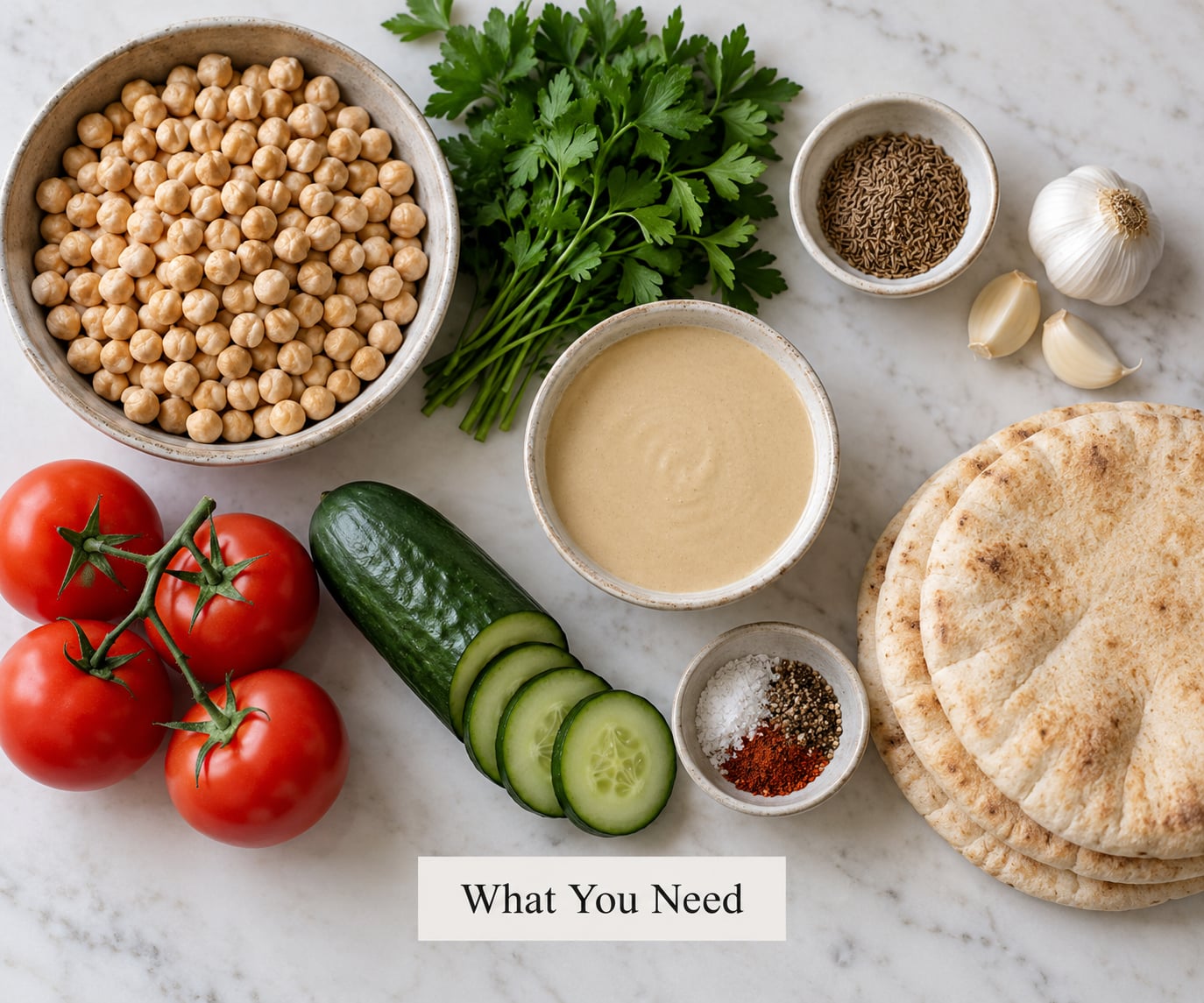
Quantities below make four sandwiches. The single most important line is the first one: use dried chickpeas, not canned. Canned chickpeas are already hydrated and packed in water, which is exactly the state you spent twelve hours trying to avoid.
For the falafel
- 1 cup dried chickpeas (garbanzo beans), soaked overnight in 6 cups cold water
- 3 garlic cloves
- 1/2 small red onion, roughly chopped
- 1/2 cup fresh parsley, leaves and tender stems
- 1/4 cup fresh cilantro
- 1 teaspoon ground cumin
- 1 teaspoon ground coriander
- 1 teaspoon salt, plus more for the sauce
- 1/2 teaspoon baking powder, added right before you shape
For the tahini sauce
- 1/2 cup tahini, which is simply sesame paste
- 3 tablespoons fresh lemon juice
- 1 garlic clove, grated or mashed
- 1/4 cup cold water, plus more as needed
For assembly
- 4 pita breads
- 1/2 cup hummus, thinned with a spoon of water and used as a moisture barrier
- 1 cup shredded romaine or butter lettuce
- 1/2 cup diced tomato and 1/2 cup diced cucumber
- Quick-pickled red onion or sliced pickles or pickled turnips
If you have not bought pita specifically for stuffing, pick pocket-style loaves that are soft and pliable, not the sturdy Greek bread that is more pizza base than sandwich. My picks and comparisons are in best pita and flatbreads for stuffed sandwiches.
Equipment
A food processor, a heavy pot with 2 inches of oil, a slotted spoon, a wire rack set over a plate, a baking sheet, and a small dish for extra sauce. For shaping, a disc-shaped scoop or the palm of your hand both work; flat discs cook more evenly than hand-rolled balls because they sit flat against the oil.
How to Make Falafel Pita Sandwiches: Step by Step
1. Soak the chickpeas and prepare the vegetables
Cover the dried chickpeas with several inches of cold water and leave them at room temperature for 12 to 14 hours, or overnight. They are ready when they have roughly doubled in size and bend easily between your fingers with no hard bite at the center.
For the quick method, boil the chickpeas for about 90 seconds, drain them, cover with fresh cold water, and let them stand for an hour or two. It works, but overnight soaking gives a creamier interior.
Drain the chickpeas in a colander for 15 minutes and blot the surface dry. Any water clinging to them will water down your mixture. While they drain, chop the parsley, cilantro, onion, tomato and cucumber, and stir together the quick-pickled onions.
2. Blend the falafel mixture
Put the drained chickpeas, garlic, red onion, parsley, cilantro, cumin, coriander and salt in the food processor. Pulse in short bursts, scraping down the sides, until the mixture looks like coarse damp sand with chickpea pieces still visible, roughly 60 to 90 seconds of total pulsing.
This is the step that decides whether your falafel holds together. If you run the machine until everything becomes a smooth paste, the falafel will taste like hummus, shed oil into the pan, and fall apart in the fryer. Stop while it still feels grainy. Pinch a spoonful between two fingers: if it holds its shape but crumbles with a light press, it is ready.
At this point the mixture is workable but fragile. Chill it for 30 to 45 minutes so the starch firms up, which also firms the crust when it fries.
3. Shape the falafel and make the tahini sauce
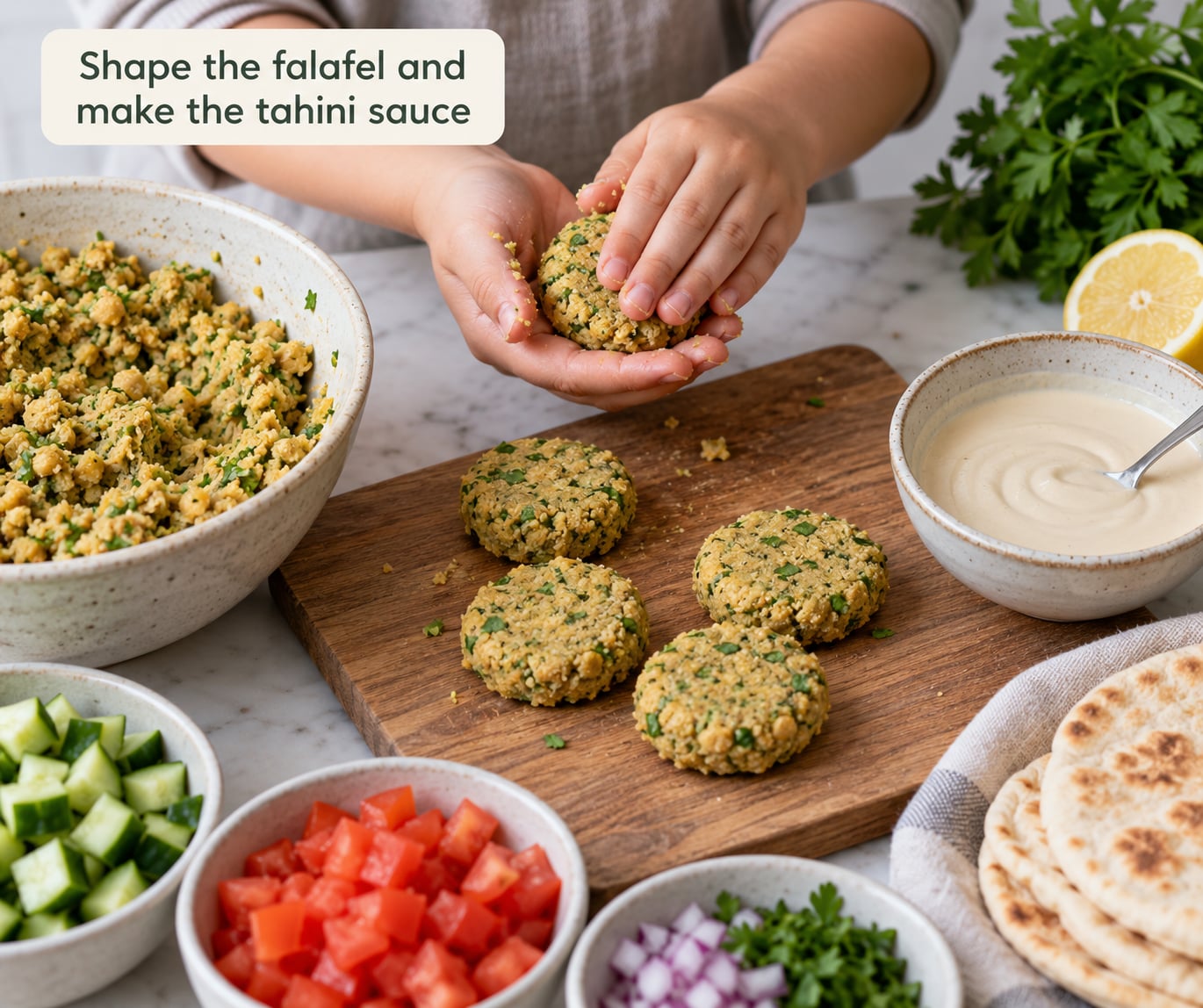
Stir the baking powder into the cold mixture right before you shape, a teaspoon or two at a time, because it loses its lift once it sits wet. Scoop about a heaped tablespoon per piece, roughly 18 falafel for four sandwiches, and press each into a disc about two inches wide and half an inch thick.
Then mix the sauce. Whisk the tahini and lemon juice together first and expect it to seize into a thick paste, which is normal and temporary. Add the grated garlic and a pinch of salt, then trickle in the cold water while whisking. Keep going until the sauce is pale, loosened, and falls in a slow ribbon off the whisk. If it stays pasty, more water; if it runs flat and watery, a tablespoon more tahini.
4. Fry the falafel until crisp
Heat 2 inches of oil in a heavy pot to 350F (175C). The temperature is the whole ball game: oil that is too cool soaks the falafel and turns it greasy and pale, oil that is too hot burns the outside while the center stays cold and raw.
Drop in no more than six pieces at a time, leaving room to move. They should hit the surface with a steady sizzle, not a violent splash. Fry for 2 to 3 minutes per side, turning once, until each piece is deep golden brown all over with no dark patches. If a piece browns in under 90 seconds, pull the batch early and let the oil cool for five minutes before adding more.
Move finished falafel to a wire rack over a plate, never to paper towels, so steam escapes instead of pooling under the shells and softening them. Salt them while they are hot.
Two other methods work fine if you would rather skip a pot of oil:
- Baking: 400F (205C) on a parchment-lined sheet with a light spray of oil, 22 to 25 minutes, flipping at the halfway mark. The crust is lighter and less lacy but still crisp.
- Air fryer: 375F (190C) for 12 to 15 minutes, shaking the basket twice. Best of the dry methods, and the closest to a fried result.
5. Warm the pita and assemble the sandwiches
Warm the pitas so they flex without cracking. A damp paper towel wrapped around the stack and 10 to 15 seconds in the microwave works best; a skillet over medium heat for 20 seconds a side or 300F (150C) in the oven for 5 minutes also gives you better browning. Cut each loaf in half with a serrated knife and open the pocket by hand rather than cutting, so the seam stays intact.
Now build in this order, and it is the order that keeps everything crisp:
- Barrier: spread a thin layer of hummus or tahini on both cut faces, sealing the bread against moisture
- Falafel: two or three warm pieces per half, placed in the pocket immediately so they toast the bread
- Crunch: lettuce, then tomato and cucumber
- Acid: pickled onion, pickles or pickled turnips
- Sauce last: one or two tablespoons per sandwich, with the rest in a dish on the side
That sequence matters because moisture moves downward. Sauce on the top of a salad inside a pocket drips straight to the bottom of the bread within a minute. Put it on last, in small amounts, and the pickle acid cuts the richness of the fried coating.
Fold the pita closed, press it gently for ten seconds to set the layers, and cut in half on the diagonal. Serve immediately. If you are packing these for later, store every component separately and assemble at lunchtime, which also lines up with the sauce-and-fillings approach in sandwiches to make ahead for the whole week.
Common Mistakes and How to Fix Them
Falafel falls apart in the oil or in the pita
The mixture was too wet or too finely processed. Mix in a tablespoon or two of chickpea flour and chill the mixture for another 30 minutes before forming. Hold each piece in the oil for a few seconds with the spoon so a crust sets before you let go, and handle formed pieces with dry hands.
Wet, pasty or gummy interior
Over-processing, or using canned chickpeas. Canned beans carry too much water and contain less intact starch structure, so they turn the mixture to paste. Use dried chickpeas soaked overnight, pulse in short bursts, and stop at the coarse-sand stage.
Falafel tastes greasy
Either the oil was below temperature when the pieces went in, or too many went in at once and the temperature dropped. Test with one piece first, work in batches of six, and make sure the center of the interior is steaming hot before you call it done.
Crispy outside, raw inside
Large pieces and hot oil are the culprits. Use walnut-sized portions or two-inch discs, and let the oil come back to temperature between batches. A meat thermometer is overkill; simply break one open and check that the middle is hot and steaming with no chalky bite.
Grainy tahini sauce
Sesame paste seizes when it goes from emulsified to clumped, and cold water fixes it. Whisk tahini and lemon juice together first, expect a thick paste, then add the water a spoonful at a time. A small splash of warm water at the end loosens it further without dulling the flavor.
Watery sauce turning the sandwich to soup
Start with one tablespoon per half, not two or three, and keep extra on the table. Also drain anything wet: blot the diced tomato on a paper towel before it goes in. More on the general mechanics of a wet sandwich is in why your tomatoes make sandwiches soggy.
Torn pita pocket
The bread was cold and brittle, or you forced the opening. Warm the pitas first, cut in half, and open the pocket with your fingers, working gently from the edge. Never push a whole ball through a small pocket; two or three halves per sandwich, not a stuffed whole.
Sandwich falls apart halfway through eating
Too loose in the middle. Dip the falafel in sauce for half a second before adding it, which coats the cut end, and finish with the pickles pressed against the closing fold. Wrapping it in foil for ten minutes sets everything into a single shape for transport.
Quick tips
- Test the oil with one test piece before committing the batch, and adjust your burner for the size of your pot, not the recipe.
- Drain on a wire rack over a plate, not on paper towels, and hold the falafel uncovered for no more than 20 minutes before assembly.
- Always keep extra sauce at the table. It solves thin sauce, dry falafel and over-ripe tomatoes in one move.
- Keep the components cool while you prep the vegetables, and assemble in the last five minutes before eating.
Frequently Asked Questions
Do I need dried chickpeas to make falafel pita sandwiches?
For the crispest shell and a tender center, yes. Dried chickpeas soaked 12 to 14 hours absorb water slowly and keep enough intact structure to hold shape in the fryer. Canned chickpeas are already hydrated and carry excess water, so they process into a paste that fries unevenly and often falls apart. If you have no dried chickpeas, a just-add-water falafel mix works as a shortcut.
Can I bake falafel instead of frying it?
Yes, and it is the easiest way to avoid a hot pan of oil. Bake at 400F (205C) on a parchment-lined sheet with a light spray of oil for 22 to 25 minutes, flipping at the halfway mark. An air fryer at 375F (190C) for 12 to 15 minutes gives a closer result to deep frying. The crust will be lighter and less lacy, but it still crisps well.
How do I keep a falafel pita from getting soggy?
Build in a fixed order and keep the quantities small. Spread a barrier of hummus or tahini on the bread first, add warm falafel next, then lettuce and vegetables, then pickles, and add one or two tablespoons of sauce last with the rest on the side. Steam from hot falafel gets trapped in the pocket, and free moisture from tomato and sauce soaks into the bread, which is why they go on top and in small amounts.
What kind of pita works best for falafel sandwiches?
Soft pocket-style pita that is still flexible works best. Warm it first, in the microwave, skillet or oven, so it opens without cracking. Very thin flatbread tears easily under the weight of filling and does not hold a pocket, while thick Greek-style bread is better as a pizza base. Mini pitas work well for a party platter, with one or two falafel pieces each.
How long do leftover falafel and assembled pita sandwiches keep?
Store falafel in an airtight container in the refrigerator for up to four days, or freeze it on a tray first and keep it for up to three months. Reheat at 400F (205C) for 8 to 10 minutes or in an air fryer for 5 to 6 minutes so the crust comes back. Assembled sandwiches are best eaten within a few hours; packed lunches should keep components separate until you eat.
Conclusion
Four decisions separate a good falafel pita from a disappointing one. Keep the mixture coarse rather than puréed, fry in small batches until the color is deep golden all over, drain on a wire rack so steam escapes, and add the sauce last in small amounts over the pickles.
Start tonight with the overnight soak for the dried chickpeas, and chop the parsley, tomato, cucumber and onion while you are at it. Everything after that happens in about an hour, and you will be eating a sandwich that crunches all the way through.