
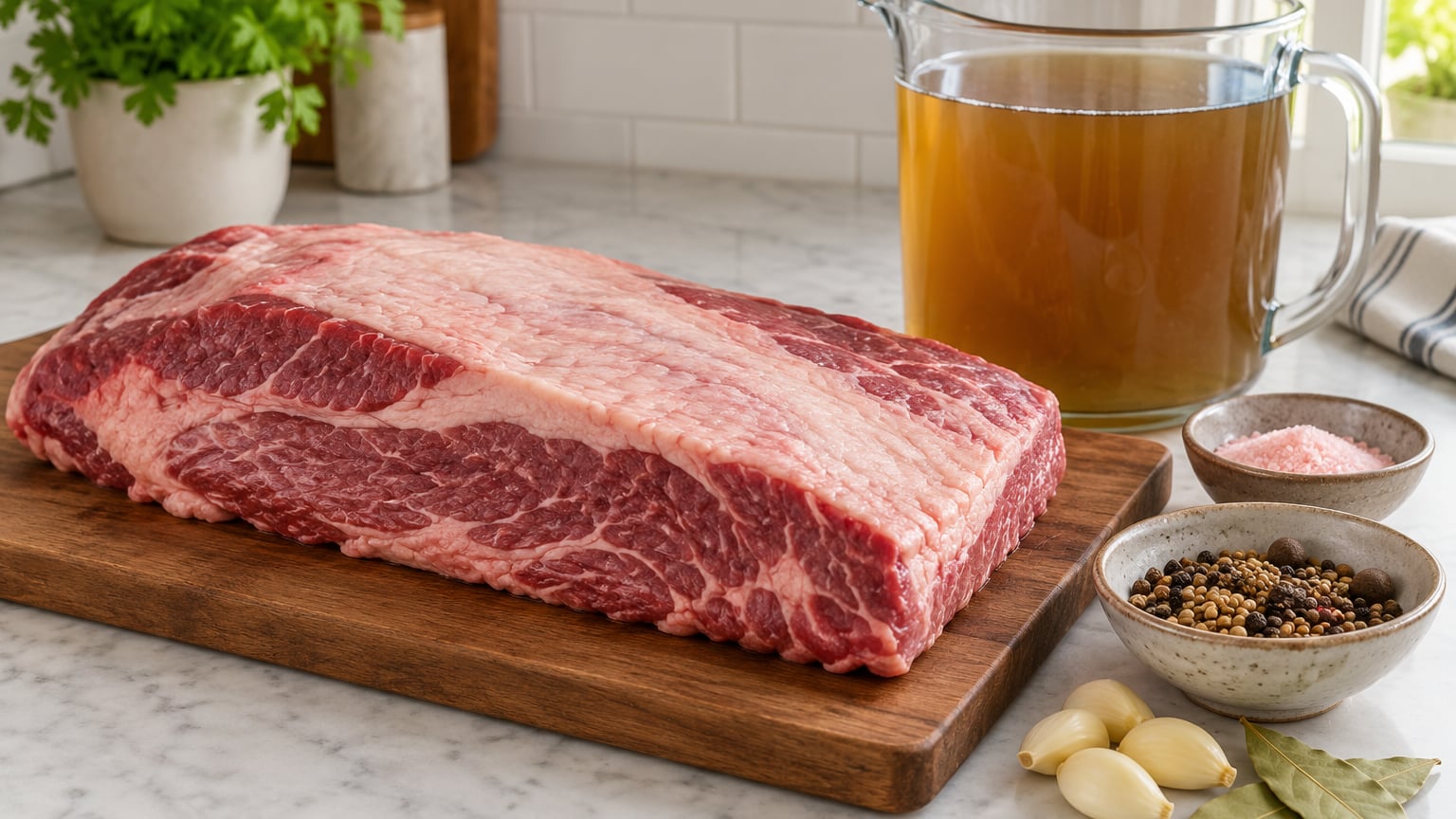
To make corned beef from brisket, cure a trimmed brisket in a cold salt brine with pickling spices for 5 to 7 days in the refrigerator, then simmer or braise it gently until a probe slides through without resistance. The cure does the hard work; the cooking just finishes the job.
Corned beef and fresh brisket are the same cut of beef. What changes is the cure: concentrated salt draws moisture out of the muscle, seasons it all the way to the center, and turns the raw pink meat a deeper rosy color. Skip the cure and you have a seasoned roast, not corned beef.
Plan backwards from the day you want to eat. A 4-pound brisket cured for 6 days, then braised for about 3 hours, is roughly a 9-day project. Start on a Sunday and it lands on the following Sunday without any scrambling.
Once you have the basics down, the same cooked meat goes into a Reuben, gets topped with cabbage and mustard for St. Patrick’s Day, or gets turned into a pot of soup the next day. If you like pastrami’s crust better than corned beef’s pink edge, our pastrami vs corned beef sandwich comparison covers the difference.
Table of Contents
- What You Need
- How to Make Corned Beef from Brisket Step by Step
- Common Mistakes
- Frequently Asked Questions
- Can I make corned beef from a regular brisket without curing salt?
- How long should brisket cure before cooking?
- Do I need to soak corned beef before cooking it?
- Can I cook corned beef in a pressure cooker or Instant Pot?
- How long does homemade corned beef last in the refrigerator?
- Why is my corned beef tough after cooking?
What You Need
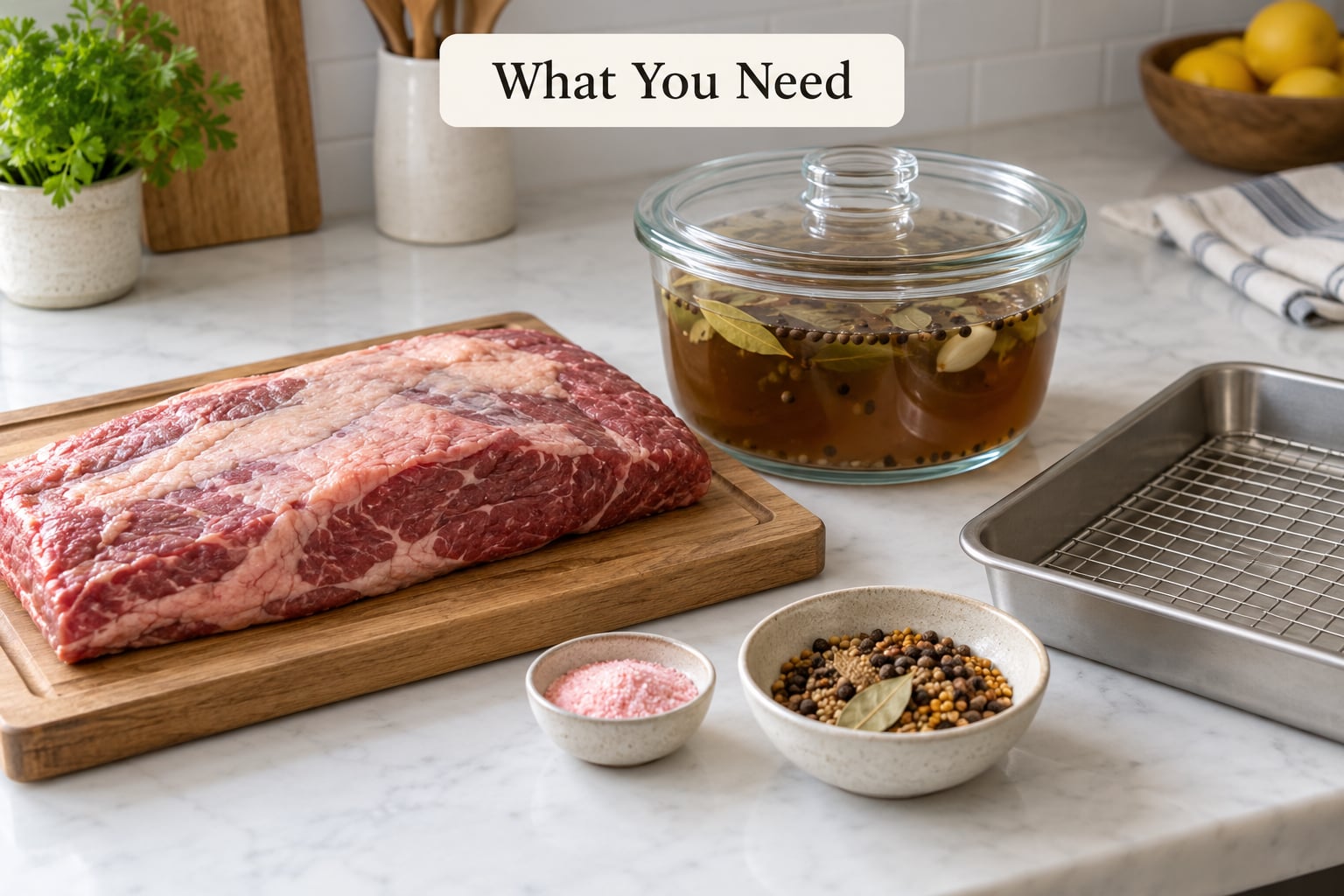
Most of the equipment is ordinary. A large glass, stainless steel, or food-safe plastic container that holds the brisket fully submerged, plus a kitchen scale, does everything.
Equipment
- A container deep and wide enough to lay the brisket flat and cover it with brine by at least 1 inch
- A plate or pie weight plus a couple of unopened cans to hold the meat under the brine
- A kitchen scale accurate enough to read ounces
- A long knife and a cutting board for trimming
- A food thermometer for the final cook
Stay away from plain aluminum and reactive metal, which can dull or discolor the brine. A glass baking dish, a large glass jar, or a food-safe bucket liner all work.
Cure ingredients, per pound of trimmed brisket
| Ingredient | Amount per lb trimmed meat | Note |
|---|---|---|
| Kosher or pickling salt | 0.4 oz by weight (2.5% of meat weight) | Weigh it. Volume measures are where most batches get too salty. |
| Pink curing salt (Prague Powder #1, Instacure) | 0.04 oz (1/4 tsp per lb) | Not table salt, not a substitute for it. Weigh it in a separate dish. |
| Brown sugar | 1/4 cup | Rounds the salt and colors the surface. |
| Pickling spices | 1 to 2 tbsp | Mustard seed, coriander, peppercorns, allspice, bay leaf, cloves, cinnamon. |
| Garlic | 4 to 6 cloves, crushed | Optional but worth it. |
| Water | About 1 gallon | Enough to cover the meat completely. |
The curing salt number is small and it matters. That 0.25% by weight is the amount that keeps the meat safe through a multi-day cure; going over it is both a salt problem and a safety problem. If you cannot weigh it, use 1/4 teaspoon per pound and do not round up.
A 3- to 4-pound trimmed brisket is the practical starting size for a home kitchen. Bigger is fine, but you need a container with real room to spare and enough refrigerator space for the cure to stay at a steady temperature.
How to Make Corned Beef from Brisket Step by Step
How to Choose and Trim the Brisket
Ask the butcher for a flat or point brisket that is well marbled but not overly fatty, and pick one you can carry home in two trips. A flat is easier to slice thin and leaner; a point has more fat and more flavor. Both cure well.
Trim before you cure, not after. Pull off the loose fat cap on the top and any thick seams of fat, and leave a thin layer of fat and silver skin on the sides. Trimmed weight is what your cure ratio is based on, so weigh the meat after trimming and before seasoning.
The finished raw piece should look even and mostly lean with a light fat cap. If a large flap of fat remains, it will turn to mush and block the salt from reaching the meat beneath it.
How to Make the Curing Salt and Spice Mix
Brisket that has only been surface-rubbed is not cured. To do this properly, dissolve the salt into water first rather than packing a dry rub onto cold meat, which tends to cure unevenly from the outside in.
Warm about 1 gallon of water, stir in the weighed kosher salt, brown sugar, and crushed pickling spices, and stir the pink curing salt in last. Let it cool completely before it touches the meat.
The brine must be cold before contact with raw beef. Anything above refrigerator temperature raises the temperature of the meat itself, and warm brine is both a quality mistake and a safety one. Chill the brine overnight if you are in a hurry.
For color, a cup of beet juice or strained purple sauerkraut juice gives you the rosy look without dye. Apple juice or a splash of red wine in place of some water changes the flavor more than the color.
How to Cure the Brisket
Put the trimmed brisket in the container, pour the cold brine over it, and place a weight on top so the meat stays under the surface. A whole brisket floats even when the meat itself is denser than the brine, and whatever sits above the surface cures hardest and turns blotchy.
Cover and refrigerate at 40°F or below for 5 to 7 days. Turn the meat once a day and give the container a gentle swirl so the brine moves around it. Check submersion every day, too, since the surface sometimes shifts as the muscle tightens.
Cure time depends on thickness and on how cold your refrigerator actually is. This is the range most home cooks land on:
| Brisket thickness | Refrigerator at 36-38°F | Refrigerator at 40-42°F |
|---|---|---|
| 2 to 3 inches (thin flat) | 4 to 5 days | 5 to 6 days |
| 3 to 4 inches (standard home size) | 5 to 6 days | 6 to 7 days |
| Over 4 inches (party-size packer) | 7 to 8 days | 8 to 10 days |
You will know it is close when the meat feels noticeably firmer than raw beef and resists a finger press. That firmer texture, not a specific day count, is the real signal.
Curing is a preservation step, not a cooking step. Salt-cured beef sitting in a refrigerator is not safe to eat raw, no matter how long it cured. Everything gets cooked to temperature before serving.
How to Cook the Corned Beef
Rinse the brisket under cold running water for a minute or two, then soak it in fresh cold water if it seems salty. Pat the surface dry. Now cook it low and slow, just below a boil.
Cook it fat side down so the fat cap renders down onto the meat instead of forming a rubbery layer on top. Put it in a pot with just enough water to come most of the way up, plus a handful of peppercorns, a bay leaf, and a sliced onion if you have them.
Bring the water to a bare simmer, skim the foam, then hold it there. A rolling boil tightens the muscle and leaves you with a tough result no matter how long you go.
| Method | Setting | Time for a 4 lb brisket | How to know it is done |
|---|---|---|---|
| Stovetop pot or Dutch oven | Bare simmer, partially covered | 3 to 3.5 hours | Probe slides in with no resistance |
| Slow cooker | Low, water to the halfway mark | 7 to 8 hours | Fork twists with almost no pressure |
| Oven | 275°F, covered, braising pan | 3 to 4 hours | Probe slides in with no resistance |
| Pressure cooker | High pressure, 15 minutes natural release | 45 to 55 minutes total | Probe slides in with no resistance |
Whole cuts of beef should reach 145°F before serving, and corned beef usually goes well past that. Aim for 190-205°F in the thickest part for connective tissue that actually breaks down.
Every method works. The oven is the easiest to leave alone, the stovetop gives you the most control, the pressure cooker wins on time, and the slow cooker is forgiving but never the fastest option.
How to Rest, Slice, and Serve It
Rest the meat 15 to 20 minutes on a cutting board. It is hot, it is easier to slice, and the juices settle back into the muscle instead of running onto the board.
Slice against the grain, thinly, about a quarter inch. Find the direction the fibers run on the flat surface before the first cut, then slice across them at a slight angle. Cutting with the grain is the single biggest reason home-cured corned beef tastes chewy when the cook was fine.
Thin slices stay tender. If you are serving a big group, slice what you need and keep the rest whole in the pot, refrigerated, for up to 4 days.
Eat it alongside boiled cabbage, potatoes, and carrots for a St. Patrick’s Day plate, pile it on rye with sauerkraut, Swiss cheese, and Russian dressing for a Reuben, or serve it cold in thin slices with mustard and pickles. Any of the cold cooked meat also becomes a hash or a soup the next day.
Once you have the slicer out, the same knife skills carry over to other sandwich meat. Our picks for best roast beef for sandwiches, deli counter vs homemade sort out which options are worth slicing thin, and if you want the pressed-and-seared version instead, how to make a Philly cheesesteak at home that tastes like philly covers the same hot-sandwich build.
Store the cooked brisket in a sealed container in the refrigerator for 3 to 4 days, or slice it and freeze it in portions for 2 to 3 months. Reheat gently in a little liquid, and skip extra salt when reheating because the meat already carries plenty.
Common Mistakes
Nearly every disappointing batch traces back to one of these. Work down the list and the fix is usually simple.
Using table salt instead of curing salt
Table salt has no sodium nitrite, so it seasons the meat without protecting it through a long cure. Weigh kosher or pickling salt for the bulk of the flavor and add a measured amount of pink curing salt on top of that. Never swap one for the other, and never double the curing salt because the flavor seems weak.
Pouring warm brine over the meat
Warm brine raises the meat’s temperature and gives bacteria a head start. Make the brine a day ahead and refrigerate it, or at minimum cool it completely before it touches the raw beef.
Letting the brisket float
Any part sticking above the brine cures differently from the rest, and you get a salted band and a bland band in the same cut. A plate plus two canned goods as a weight solves it in a minute.
Cutting the cure short to hit dinner time
Rushing the cure is where most disappointing batches start, because an under-cured brisket never softens no matter how long you cook it. Cure the recommended number of days, and start earlier next time. If you must eat before the cure is finished, brine a smaller piece, which cures faster than a big packer brisket.
Boiling hard
A hard boil tightens muscle protein and turns tender meat chewy. Hold the water at the edge of a simmer and cover the pot partially so it never sees a rolling boil.
Slicing with the grain
The cure makes the muscle tender but does nothing to the direction of the fibers. Look for the grain on the cut face, and slice across it. This one habit fixes more problems than any other step.
Treating a finished cure as finished cooking
Cured meat in a refrigerator is still raw meat. It must reach 145°F at minimum and usually 190-205°F to be properly tender, and it should come out of the pot hot.
Over-salting the brine
Home corned beef runs saltier than the deli version, and it is the most common complaint from first-time corners. Weigh your salt at 2.5% of trimmed meat weight, then soak the finished brisket in cold water for 12 to 24 hours, changing the water every 8 hours, before cooking. Skipping that soak is the single easiest way to end up with a batch nobody wants a second slice of.
If you have over-cured it badly, a longer cold soak pulls more out, but you cannot get back the cure you skipped. Weigh from the start.
Two habits prevent most of the above. Weigh everything on a scale instead of measuring by spoon, and keep a photo of the brine setup on your phone so you can repeat the exact same ratios next time.
Frequently Asked Questions
Can I make corned beef from a regular brisket without curing salt?
You can, and the flavor will be close, but you trade away safety margin and color. Pink curing salt is 6.25% sodium nitrite and it is what makes a multi-day refrigerator cure safe. Without it, keep the cure shorter, around 3 to 4 days, and treat the result as a seasoned roast that happens to be salty. It will not cure pink and it will not keep as long.
How long should brisket cure before cooking?
Five to seven days for a typical 3 to 4 inch home brisket in a refrigerator at 40°F or below. A thin 2 to 3 inch flat reaches good flavor in 4 to 5 days, while a packer brisket over 4 inches thick usually needs 8 to 10. Turn it once a day, keep it submerged, and go by firmness rather than the calendar.
Do I need to soak corned beef before cooking it?
Only if it seems salty, which homemade batches often are. Soak the rinsed brisket in cold water for 12 to 24 hours and change the water every 8 hours. That pulls surface salt without stripping the seasoning that has worked into the meat. If your brine was weighed carefully at 2.5% of meat weight, a short rinse is enough.
Can I cook corned beef in a pressure cooker or Instant Pot?
Yes, and it is the fastest route from fridge to table. Cook on high pressure for about 15 minutes per pound, then release naturally for a full 10 to 15 minutes before opening. A 4 pound brisket is done in 45 to 55 minutes. Check the thickest part with a probe; it should slide through with no resistance.
How long does homemade corned beef last in the refrigerator?
Cooked corned beef keeps 3 to 4 days in a sealed container in the refrigerator, and you should eat it within that window even though it is heavily salted. Freeze it in slices for 2 to 3 months for longer storage. Reheat gently in a little broth or water, and skip extra salt because the meat already has plenty.
Why is my corned beef tough after cooking?
Four things cause it. A hard boil tightens the muscle, slicing with the grain leaves long fibers intact, an under-cured brisket never softened in the first place, and cooking to only 145°F leaves connective tissue standing. Hold a bare simmer, push the internal temperature to 190-205°F, rest 15 minutes, and slice thinly across the grain.
Start with the brisket. Weigh the trimmed meat, hit 2.5% kosher salt and 0.25% pink curing salt by weight, and get it into cold brine the same day. Six days later you rinse it, simmer it gently until a probe goes through without argument, rest it, and slice it thin across the grain.