
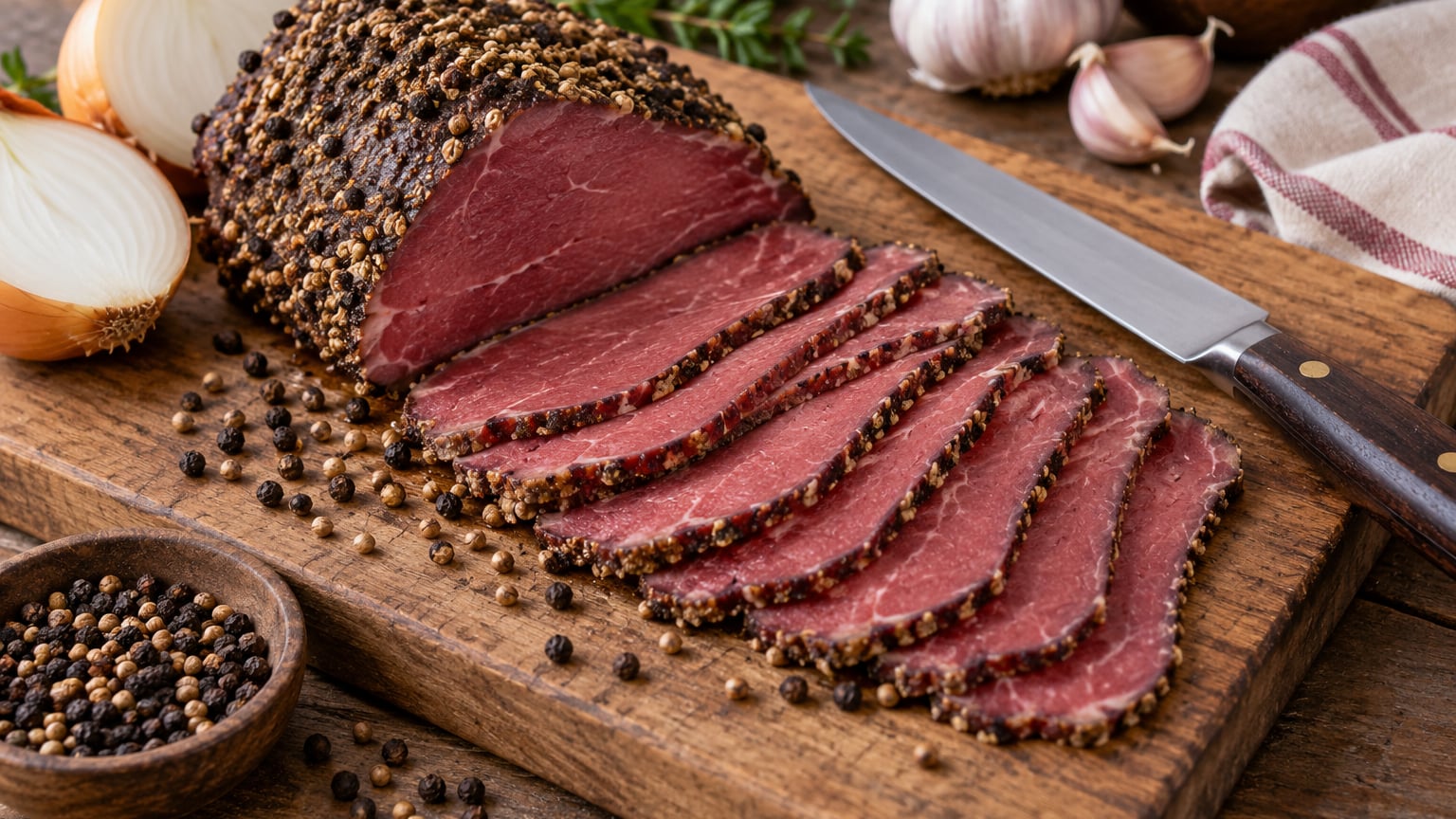
Pastrami is cured, smoked, and steamed beef. To make it at home you salt the brisket for 3 to 10 days, coat it in a coarse pepper and coriander rub, cook it low and slow until the bark sets, then wrap it in foil and steam it until a probe slides through with no resistance. Total time is 4 hours of cooking plus however many cure days you choose, and the work is mostly waiting.
Below is how to make pastrami at home the way I do it in a Dutch oven on the stovetop, plus an oven route and a no-smoker version if you don’t own one. Every stage tells you what to look for, because the temperature is only part of the signal and the texture is what actually decides it.
Table of Contents
How to Make Pastrami at Home: Quick Facts
- Yield: about 2 pounds of sliced meat from a 6-pound brisket flat
- Cure time: 24 hours for store-bought corned beef, 4 to 7 days for a home-cured brisket
- Smoke or roast: 250 to 275 degrees F until the bark forms and the center hits 150 to 165 degrees F
- Steam: 275 to 300 degrees F, covered, until probe tender at 195 to 205 degrees F
- Rest: 30 to 45 minutes before slicing
- Best cut: brisket flat, 5 to 8 pounds
What You Need
The meat is the easy part. Buy a brisket flat, which is the leaner rectangular half, and avoid the point if you can, since the extra fat makes a pastrami sandwich greasy. Six pounds is a good size for a first attempt because it cooks evenly and gives you roughly a dozen sandwiches worth of sliced meat.
Chuck roast works as a substitute and costs less, but it has more connective tissue woven through it, so plan on an extra 30 to 60 minutes of cooking and trim the loose fat before you start.
For the cure
- Brisket flat, 5 to 8 pounds, trimmed of most surface fat
- 1 cup kosher salt for every 5 pounds of meat
- 2 tablespoons pink curing salt (Prague powder) per 5 pounds of meat
- 1/2 cup sugar per 5 pounds of meat, plus 2 tablespoons pickling spice
- Enough water to cover the meat completely, plus 2 ounces of the brine per pound of meat
- A brining bucket, or a stockpot-shaped container that fits the meat in one layer
For the rub
- 1/3 cup coarsely ground coriander seed
- 1/4 cup coarsely ground black pepper
- 2 tablespoons garlic powder
- 1 tablespoon onion powder
- 1 tablespoon paprika
- 2 teaspoons dill seed
- 1 teaspoon mustard powder
- Kosher salt for the surface, to taste
- Yellow mustard and a splash of water or cider vinegar, as a binder
Equipment
A heavy Dutch oven with a tight lid does the whole job, plus a probe thermometer, a cutting board, and a sharp slicing knife. A smoker is optional. If you have one, the same steps run at a steady 250 degrees F with a wood chunk of your choice.
Three ways to get there
| Method | Time before cooking | Difficulty | Result |
|---|---|---|---|
| Home-cured brisket | 4 to 10 days | Easy, mostly waiting | Deep seasoning, mild salt, deli flavor |
| Store-bought corned beef | 24 hours of soaking | Easiest | Very good, noticeably saltier |
| Oven with liquid smoke | 24 hours of soaking | Easy | Smoke flavor is lighter and more even |
If you are curious how the finished meat compares to the other cured beef option, my pastrami or corned beef comparison covers the differences in a sandwich.
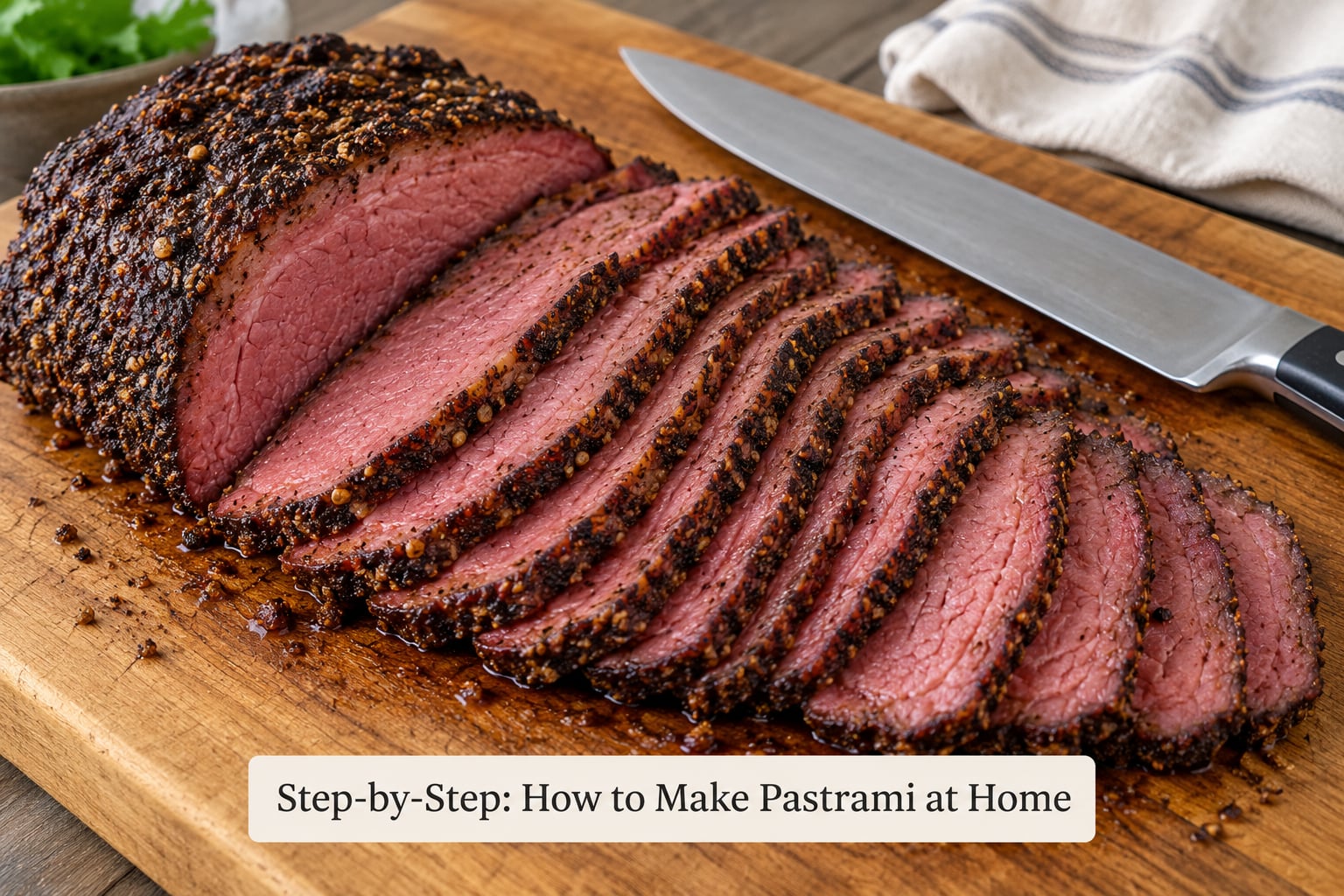
Step-by-Step: How to Make Pastrami at Home
Step 1: Choose and Trim the Beef
Look for a brisket flat with a decent layer of fat on top, since that fat renders into the meat during the long cook. Trim the surface fat down to about a quarter inch, but leave it. Trim hard and the meat dries out over six hours of covered heat.
Take a minute to find the grain. It usually runs lengthwise along the flat, and slicing across it later is the difference between tender pastrami and chewy shavings. Mark the direction with a small cut in the fat cap so you remember.
Step 2: Apply the Rub and Cure the Meat
For the full cure, mix the kosher salt, pink curing salt, sugar, and pickling spice together and rub the mix all over the meat, then into any seams. Dissolve 2 ounces of that seasoning in enough water to cover the meat and pour it over the top in the container.
Weigh the meat down with a plate or a sealed bag of water so it stays submerged, and keep the container in the coldest part of your refrigerator, below 40 degrees F. Four days gives you seasoning through a thin brisket flat, and 7 to 10 days gives the deeper, more even cure that delis use. If you skip the home cure, buy a corned beef brisket and soak it in cold water for 24 hours, changing the water two or three times, which pulls out enough salt to leave room for the rub.
Step 3: Add Aromatics and Liquid
Rinse the meat if you brined it, then pat it dry. Mix the mustard with a splash of water or cider vinegar to make a spreadable paste, coat the meat all over, then press the rub on top of that. The mustard is a binder; without it the pepper flakes fall off in the second hour.
For a Dutch oven method, break up two onions and a head of garlic directly in the pot and lay the beef on top. Add a cup of water or beef stock so the liquid reaches about a third of the way up the meat. You want moisture in the pot, not a bath, because the covered heat and the fat cap are what steam the meat at the end.
Step 4: How to Make Pastrami Until Fork-Tender
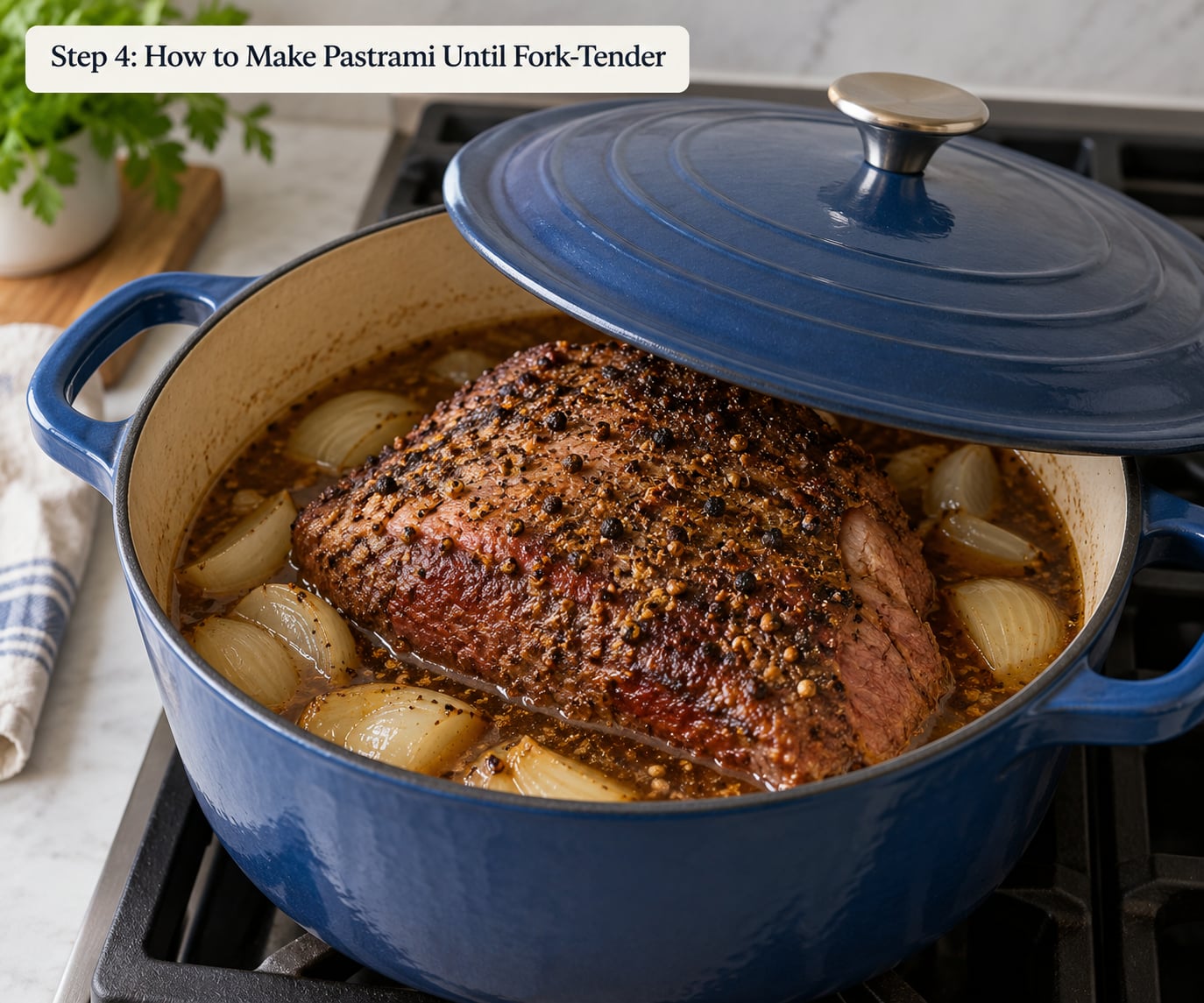
Put the covered pot on the stovetop over medium-low heat, or in an oven at 275 degrees F, and let it cook until the center of the meat reaches 150 to 165 degrees F. Expect three to four hours for a six-pound brisket, and use the thermometer, not the clock.
At that point the bark is dark mahogany and smells of pepper rather than raw garlic. If it darkens past that point, lower the heat or move the meat to a foil pan for the rest of the cook.
Now the steam stage. Transfer the meat to a sheet pan, pour a cup of water or stock into the pan, and wrap it tightly in foil or in two layers of butcher paper. Set it back in the pot or oven at 275 degrees F and cook until a probe slides into the thickest part with no resistance, somewhere between 195 and 205 degrees F. Two more hours is typical. Do not skip this step, since moist covered heat is what turns the connective tissue into gelatin.
If you are wondering whether you can simply boil the meat instead, the answer is that you can, and a gentle simmer in the wrapping liquid for two to three hours gets you to the same place, though it adds less smoke flavor than a wrapped roast.
Step 5: Crisp the Exterior
Unwrap the meat and drain the juices from the pan. Broil it under a high-heat oven setting for 3 to 5 minutes, or sear it on all sides in a hot cast iron skillet with a little oil, until the outside darkens and crackles between your fingers.
You are looking for a hard, papery crust with a pale rosy interior right at the cut face. This step is about surface texture only, so keep it short and watch it closely, since the sugar in the bark burns in seconds once it takes color.
Step 6: Slice and Serve
Rest the meat 30 to 45 minutes, then slice it as thin as you can with a sharp knife, cutting across the grain you marked in Step 1. Thin slicing is what makes a deli sandwich, and it is easier to do cold or just barely warm than hot off the heat.
Serve it piled on rye with yellow mustard, or build a Reuben with sauerkraut, melted Swiss, and Russian dressing. For the rest of the sandwich lineup, my Philly cheesesteak at home guide uses the same knife-and-thin-slicing technique.
The No-Smoker Oven Method
If you do not own a smoker, this is the route most people actually use. Rinse and soak the meat as described, apply the mustard and rub, and set it in a foil pan with a cup of water in a 275 degree F oven.
Add 1 to 2 tablespoons of liquid smoke to the pan, not more, and close the foil tent over the meat so the vapor stays with it. Cook to 165 degrees F, then wrap and steam as above. If you use a gas grill instead of an oven, put a small pan of liquid smoke chips in a covered tray away from the direct heat zone so the meat never sits over an open flame, which is what causes a bitter, acrid smoke flavor.
You will get less smoke flavor than a pellet or wood-fired smoker. You will still get the peppery bark, the tender texture, and everything that makes pastrami pastrami.
Common Mistakes to Avoid
| What went wrong | Why it happened | Fix it next time |
|---|---|---|
| Meat is far too salty | Store-bought corned beef was not desalinated, or the brine was left 12 days | Soak 24 hours with 2 to 3 water changes, and taste a small slice of the soak water |
| Dry, chewy slices | The wrap and steam stage was rushed or skipped | Steam to probe tender at 195 to 205 degrees F, no less |
| Bark burned by the end | Rub has sugar in it and the cook ran hot | Drop to 250 degrees F after the bark sets, or wrap early |
| Uneven seasoning | Rub was not pressed on with a wet binder | Slather with mustard first and press the rub on firmly |
| No smoke ring | Gas or oven cook with no smoke at all | Expect no ring outside a real smoker; use liquid smoke for flavor |
| Slices turned out tough | Cut with the grain instead of across it | Find the grain on the raw meat and mark it before cooking |
| Chunks of gristle left in slices | Trimmed the fat cap down to bare meat | Leave a quarter inch of fat and trim silver skin only |
Wood choice, if you smoke
| Wood | Flavor | Verdict |
|---|---|---|
| Hickory | Strong, classic barbecue | The traditional pastrami choice |
| Oak | Rounded and neutral | Good if pepper is already the star |
| Cherry | Mild, slightly sweet | Nice for a lighter result |
| Pecan | Sweeter than hickory | Works well for pastrami |
| Mesquite | Very sharp and resinous | Too overpowering for 4 hours |
A few safety notes worth repeating
Keep the brine below 40 degrees F the whole time, which means the coldest part of the refrigerator rather than the door. Never boil the cure. Pink curing salt is sodium nitrite, use exactly the amount given, keep it away from children, and note that it turns the finished meat pink, which is expected and harmless.
Beef cooked whole needs to reach 145 degrees F for safety, and pastrami goes far past that on purpose, to 195 to 205 degrees F, because collagen only converts to gelatin in that range. Reheated cooked meat should come back to 165 degrees F.
Storing and Reheating Pastrami
Cool the sliced meat uncovered in a single layer for about 30 minutes, then move it to a container. It keeps in the refrigerator for 3 to 4 days, and frozen in airtight bags for up to 3 months, which is the better option if you cured a whole brisket.
Reheating is where sliced pastrami usually goes wrong. A dry microwave makes it leathery, so put a splash of water or broth in the pan, cover it, and warm it over low heat for a few minutes, turning once. For a crisp edge, sear the slices in a hot skillet after they warm through. A microwave with a cup of water alongside for 30 to 60 seconds works when you are in a hurry.
If you are building a big tray of the stuff, the homemade deli platter guide has ideas for arranging sliced cold cuts and sides so it looks intentional.
Frequently Asked Questions
How long does it take to make pastrami at home?
Plan on about 4 hours of active cooking plus the cure. A full home cure runs 4 to 10 days in the refrigerator, and the cook itself takes 3 to 4 hours to reach the bark stage plus another 2 hours of steaming. A store-bought corned beef shortcut cuts the calendar down to 24 hours of soaking plus one cook day.
Can I make pastrami from chuck roast?
Yes. Chuck roast has more connective tissue than brisket, which is a benefit once it cooks long enough. Buy a center-cut chuck roast, trim the loose surface fat, and treat it exactly like a brisket flat. Add 30 to 60 minutes to the cook and expect a slightly coarser texture, but the flavor and the crust are the same.
Do I have to smoke pastrami?
No. Smoking builds flavor but it is not what makes the meat tender. A 275 degree F oven with a teaspoon or two of liquid smoke in the pan gives you the peppery bark and the steam finish, and pellet cookers make it even closer. The cure, the rub, and the wrapped steam stage are the parts that are essential.
Is pink curing salt safe to use?
Yes, when you measure it correctly. Pink curing salt is sodium nitrite and it keeps cured meat safe during the long refrigerated cure. Use about 2 tablespoons per 5 pounds of meat alongside the kosher salt, weigh it if you can, keep it sealed and away from children, and never boil the brine. It turns the finished meat pink, which is normal.
How long does pastrami keep, and how do I reheat it?
Sliced cooked pastrami keeps in the refrigerator for 3 to 4 days and freezes well for up to 3 months in airtight bags. Reheat it gently: warm the slices in a covered pan with a splash of water or broth over low heat, or microwave for 30 to 60 seconds with a cup of water alongside. Sear in a hot skillet afterward if you want crisp edges.
Can I make pastrami ahead of time?
Yes, and it is better for it. Cure the brisket several days ahead, and cook and steam it a day before serving. Rest it overnight wrapped in foil in the refrigerator, then slice cold just before you build sandwiches, which gives you the thinnest, cleanest cuts. Reheat only the slices you are actually serving.
Conclusion
Start by picking up a brisket flat and mixing the cure, because those two things take the longest and everything else happens in a single afternoon. Salt the meat, refrigerate it, and give it at least four days before you cook.
Then remember the method in three words: cure, smoke, steam. The rub builds the bark, the wrapped steam stage at 195 to 205 degrees F builds the tenderness, and a short high-heat finish cracks the surface. Slice it thin against the grain, and the sandwich takes care of itself.