
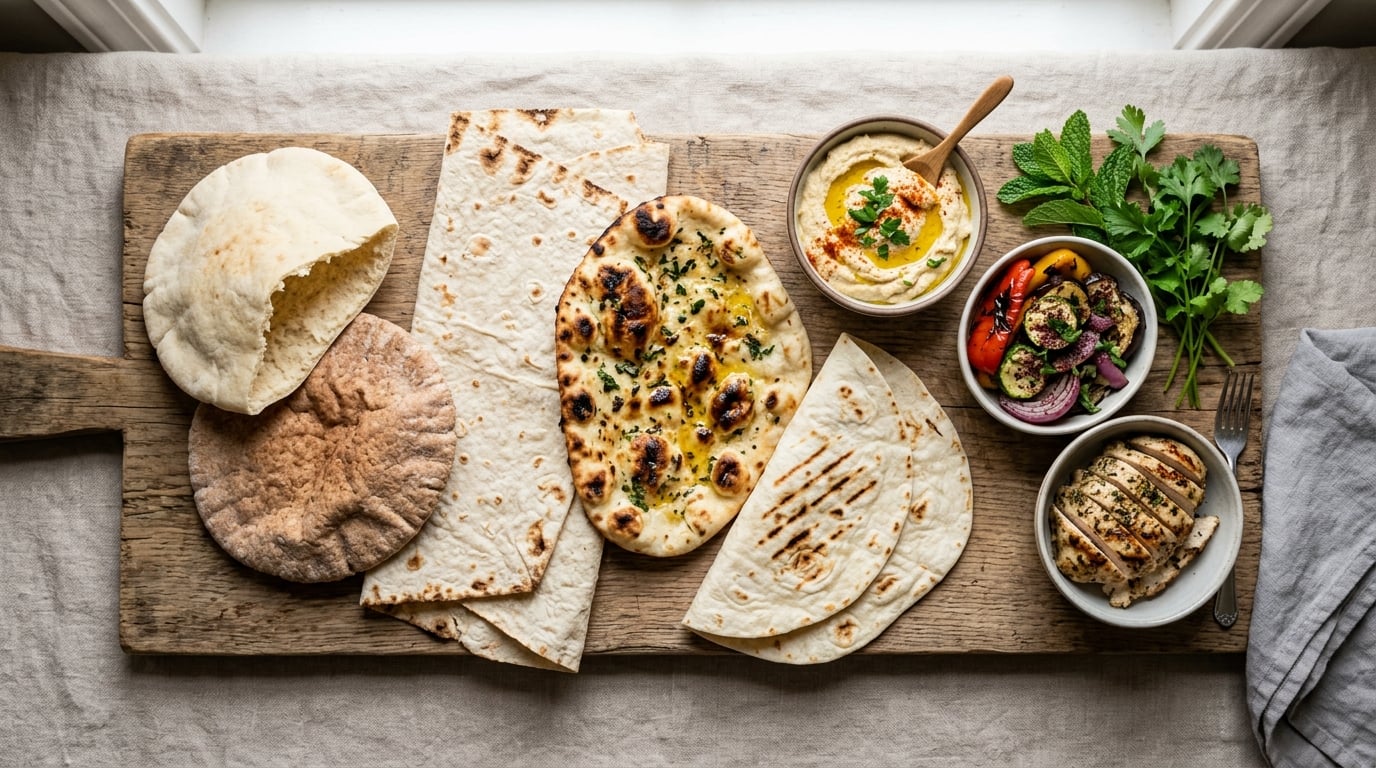
The best pita and flatbreads for stuffed sandwiches come down to one thing: how wet your filling is and whether you want a pocket or a wrap. A thick pocket pita holds a full gyro. A thin lavash takes a dressed salad without turning to mush. Chewy naan takes melted cheese better than almost anything else in the bread aisle.
Most of us buy the first bag of pita we see and then wonder why it cracked open on the counter. I have made a lot of lunch sandwiches with a lot of mediocre bread, and the pattern is boring: the ones that work were warm, pliable and matched to the filling weight. That is what this list is about.
Table of Contents
- Best Pita and Flatbreads for Stuffed Sandwiches at a Glance
- 1. Classic White Pita for Everyday Stuffed Sandwiches
- 2. Whole-Wheat Pita for Heartier Sandwiches
- 3. Thin Pita for Delicate Wrapped Fillings
- 4. Greek Pita for Bold Mediterranean Fillings
- 5. Naan for Cheesy, Toasted Sandwiches
- 6. Lavash for Crisp Edge-to-Edge Sandwiches
- 7. Whole-Grain Tortilla for Sandwich-Style Wraps
- 8. Flour Tortilla for Warm, Folded Sandwiches
- 9. Spinach Tortilla for Colorful Savory Sandwiches
- 10. Herbed Flatbread for Mediterranean-Inspired Lunches
- 11. Sourdough Flatbread for Chewy, Toasted Sandwiches
- 12. Garlic Naan for Strongly Seasoned Fillings
- How to Choose the Right Bread for Your Filling
- Frequently Asked Questions
- Conclusion
Best Pita and Flatbreads for Stuffed Sandwiches at a Glance
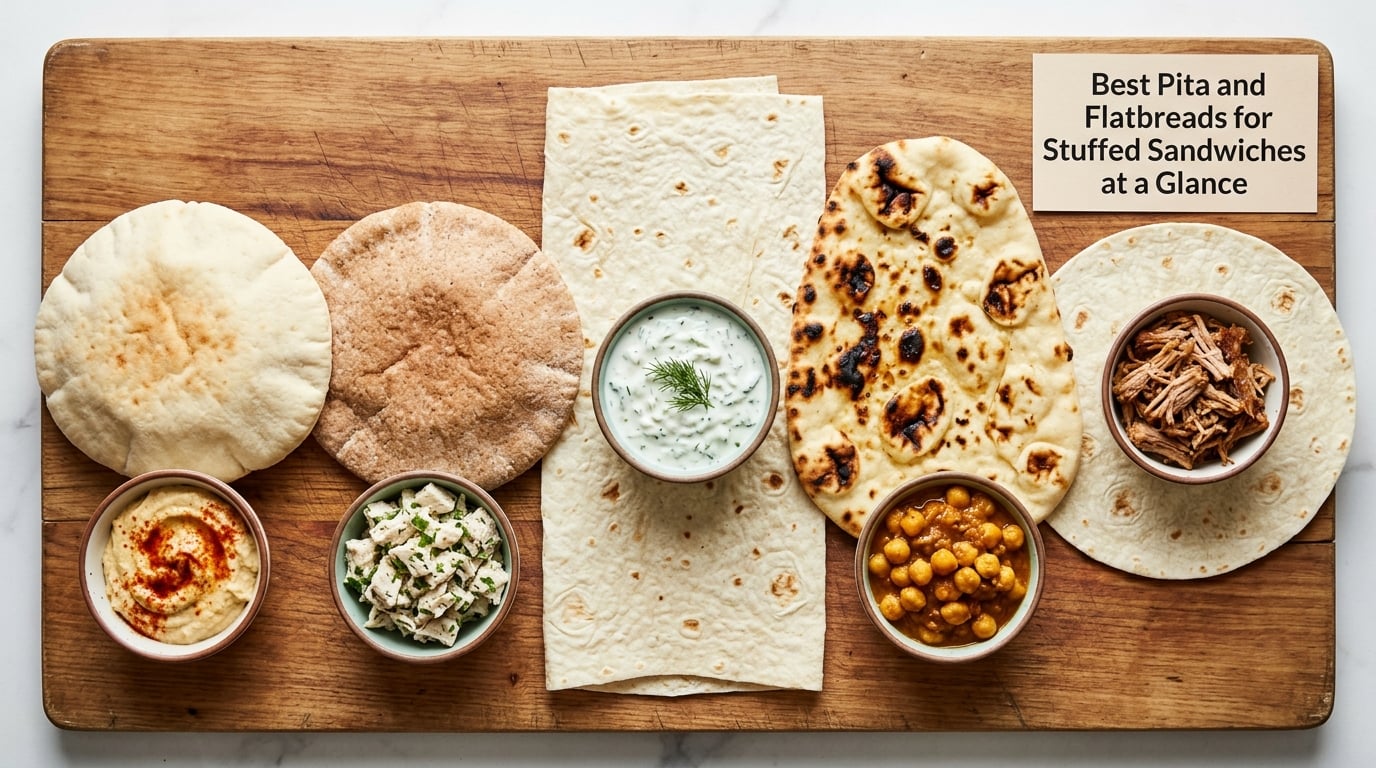
Here is the short version. If you want a container, pick a pocket pita. If you want a wrap, pick lavash or a tortilla. If you want heat and melted cheese, pick naan.
| Bread | Best texture | Ideal filling | Serving style | Main advantage |
|---|---|---|---|---|
| Classic white pita | Soft, thick, foldable | Chicken, hummus, falafel | Forgiving and easy to find | |
| Whole-wheat pita | Firm, nutty, sturdy | Tuna, chicken salad, cheese | Pocket or cut into wedges | More fiber, stays intact longer |
| Thin pita | Delicate, light, pliant | Tuna salad, cucumber, egg salad | Rolled wrap | Rolls without cracking |
| Greek pita | Thick, soft, spongy | Gyro meat, souvlaki, tzatziki | Warm pocket | Built for a heavy filling |
| Naan | Chewy, blistered, pillowy | Cheese, spiced vegetables, chicken | Folded and toasted | Holds melted cheese |
| Lavash | Paper-thin, crisp when toasted | Grilled vegetables, kebab, hummus | Rolled or folded | Largest surface for the price |
| Whole-grain tortilla | Flexible, bouncy, nutty | Deli meat, cold fillings, wraps | Cold wrap | Holds wet cold fillings well |
| Flour tortilla | Soft, warm, pliable | Quesadilla-style, pulled meat, beans | Warm and folded | Warm-pressed and griddled |
| Spinach tortilla | Flexible, mild, vegetable colored | Egg, grilled vegetables, creamy spreads | Cold or toasted wrap | Green color, no strong flavor |
| Herbed flatbread | Soft, flecked, fragrant | Tuna, chicken, roasted vegetables | Open or folded | Adds aroma to mild fillings |
| Sourdough flatbread | Sturdy, tangy, springy | Roast meat, strong cheese, pickles | Toasted | Does not go limp when toasted |
| Garlic naan | Chewy, soft, garlicky | Chicken tikka, butter, mild cheese | Warm and folded | Seasoning needs no extra work |
A note on the column that matters most: texture. Every soggy sandwich I have assembled was a bread-and-filling mismatch, not a bad ingredient.
1. Classic White Pita for Everyday Stuffed Sandwiches
Classic white pita is the reliable default. The crumb is soft enough to fold, thick enough that a fork of chicken salad will not escape, and it splits into a pocket without a knife once it has warmed up.
Use it with fillings that need a container: chicken and mayo, tuna salad, hummus with cucumber and tomato, or falafel. Warm it first so the pocket opens clean. I pair mine with a thick spread of hummus, sliced chicken, shredded lettuce and a spoon of tzatziki, and the pocket holds it without a single tear.
2. Whole-Wheat Pita for Heartier Sandwiches
Whole-wheat pita is firmer and nuttier than white, which is exactly why it suits heavier, drier fillings like tuna, chicken salad or a firm block of cheese. It also holds its shape longer in a lunchbox.
The problem is density. A whole-wheat pita straight from the bag can taste dry and crack at the fold, so give it 15 seconds in a dry pan or a few seconds under a hot grill before you fill it. A thin layer of tahini or hummus on the inside also does two jobs: it adds moisture and creates a barrier that slows sogginess.
3. Thin Pita for Delicate Wrapped Fillings
Thin pita is the answer when the filling is dressed and light. Rolled around tuna salad, egg salad, cucumber and herb cream cheese, it closes like an envelope instead of bursting like a balloon.
The trick is to dress the filling lightly and wrap it while the filling is still cool. If you are slicing it open rather than rolling it, thin pita is a poor choice: it tears and it leaks. Save it for wraps and cut it at an angle with a serrated knife.
4. Greek Pita for Bold Mediterranean Fillings
Greek pita is thicker and spongier than a standard pocket pita, and it has more character in the crumb. That thickness is what makes it the right bread for a full gyro plate: sliced meat, onions, tomato, tzatziki and fries all at once.
Warm it well before opening. A properly warmed Greek pita yields a big pocket with almost no crumbling at the edge, and the extra thickness means a salty filling or a heavy tzatziki drizzle will not soak through in the two minutes it takes to eat it.
5. Naan for Cheesy, Toasted Sandwiches
Naan is not a pita, but it is the best flatbread in the aisle for a sandwich that gets melted. The blistered, chewy surface browns well, holds melted cheese in its dimples and folds over a filling without splitting.
Warm it directly on a griddle or in a dry pan, fill with cheese plus grilled vegetables, spiced potato, chicken tikka or sliced steak, then fold and press. Give it another minute on the pan and you have a toasted sandwich with a crisp, blistered outside and a soft middle.
6. Lavash for Crisp Edge-to-Edge Sandwiches
Lavash is a paper-thin unleavened bread, and a full sheet covers more surface than any pocket pita of the same size. Roll it around kebab meat, roast chicken, or grilled vegetable strips and it makes a long, tight, street-food style wrap.
Toasted briefly, it turns crisp and stays crisp for a few minutes, which makes it the best option for a sandwich that has to survive a commute. Keep one thing in mind: very thin lavash and very wet filling is a bad combination, so drain tomatoes and drain the yogurt first.
7. Whole-Grain Tortilla for Sandwich-Style Wraps
Whole-grain tortillas are the practical answer for cold sandwiches. The flexible, slightly springy sheet rolls around deli meat, cheese, lettuce and condiments and survives hours in a bag, which is why plenty of home cooks reach for a tortilla over pita for a cold-packed lunch.
The trade-off is flavor. A whole-grain tortilla is nuttier and less aromatic than pita, so it works best with fillings that carry their own flavor: sharp mustard, strong cheese, olives, roasted red pepper. Warm it briefly first and the nuttiness rounds out.
8. Flour Tortilla for Warm, Folded Sandwiches
Flour tortillas are the workhorse of warm folded sandwiches. A hot flour tortilla pressed on a griddle with cheese and beans or shredded meat becomes a quesadilla-style sandwich that is crisp outside and soft within.
There is no pocket, so this is a fold-and-seal format rather than a fill-and-eat one. Press the folded tortilla seam-side down first so it seals, and keep the portion generous. A single flour tortilla stretches further than most people expect.
9. Spinach Tortilla for Colorful Savory Sandwiches
Spinach tortillas are flour tortillas with spinach or vegetable powder folded into the dough. The color is bright green and the flavor is mild, which makes them a pleasant base for fillings that should taste like themselves.
Egg salad, grilled vegetables, chicken with a creamy herb spread, or simply butter and jam for a savory-adjacent breakfast sandwich all work well. Because the flavor is mild, a strong filling like feta, olives or roasted peppers is welcome rather than competing.
10. Herbed Flatbread for Mediterranean-Inspired Lunches
Herbed flatbreads are dusted with dried oregano, thyme, rosemary or a za’atar-style blend before baking, and they are fragrant the moment they hit a warm pan. That aroma does the seasoning work for you.
Tuna with chopped olives, chicken with roasted vegetables, or soft goat cheese with honey and cracked pepper all benefit. Because the bread already tastes seasoned, keep the filling simple and slightly wet, and hold back on adding dried herbs yourself. A light drizzle of olive oil and a squeeze of lemon finishes it.
11. Sourdough Flatbread for Chewy, Toasted Sandwiches
Sourdough flatbread has the tang and the chew that make a toasted sandwich feel substantial. It is sturdy enough that it does not collapse when toasted, which is the opposite of a soft white flatbread under a heavy filling.
The catch is heat. Toasted too long, it turns hard and brittle rather than crisp. Toast it on one side only, fill it while the toasted side faces up, and eat it soon after. Its sturdiness makes it a good fit for roast beef, strong cheese and pickles, and a poor fit for a delicate egg salad.
12. Garlic Naan for Strongly Seasoned Fillings
Garlic naan is the most flavorful bread on this list, and that is both its selling point and its limitation. The garlic, butter and coriander arrive already done, so the filling has to be compatible rather than competing.
Mild, creamy and warmly spiced fillings are the match: butter chicken, tikka masala with rice, grilled cheese with a mild cheese, or simply a thick spread of labneh. A sharp filling like pickled onions, hot chili oil or sun-dried tomato will fight the bread. If you want contrast, eat the garlic naan on the side.
How to Choose the Right Bread for Your Filling
Pick the bread by asking two questions: how wet is the filling, and do I want a pocket or a wrap? A wet filling needs a fat barrier and a thicker crumb. A dry filling can go on anything thin.
Matching pita and flatbreads for stuffed sandwiches to the filling
Wet filling means a thicker bread and a barrier layer. Dry, crumbly filling means a thinner bread and a fold. Here is how the formats line up in practice:
- Gyro, souvlaki, shawarma, kebab: Greek pita or a thick classic white pita, warmed until the pocket opens.
- Falafel or sabich: classic white pita, with pickles and tahini on the inside face.
- Arayes, the grilled stuffed pita: a sturdy pita or lavash, because it goes back on a hot dry pan and needs to hold together while it chars.
- Tuna or chicken salad, cold: thin pita rolled, or a whole-grain tortilla if it is going in a bag for several hours.
- Grilled vegetables and hummus: lavash, toasted, with the vegetables drained well.
- Cheese, spiced vegetables, potato: naan or a flour tortilla, warmed and folded.
- Lunchbox sandwiches for kids: whole-wheat pita or a tortilla, since both survive the morning better than a soft white round.
How to warm pita so the pocket stops tearing
Cold pita is stiff, and a stiff pita cracks the moment you press a thumb into the seam. Three steps fix it:
- Flick water onto both sides. A few light sprays, or a quick pass under the tap, is enough. You want damp, not wet.
- Wrap it in a clean tea towel. The cloth holds steam against the surface.
- Microwave 15 to 20 seconds on high. The water turns to steam inside, the crumb relaxes and the pocket opens along its natural seam instead of splitting. Rest it a minute before handling.
No microwave? Wrap the dampened pita in foil, put it in a 350 F oven for about five minutes, then unwrap it. A dry skillet works too, though the crumb stays drier.
The fat barrier layer that stops sogginess
The reason a store pita turns to mush is that water-based sauces have nothing to slow them down. Hummus, labneh, tahini and thick yogurt all create a fat layer the bread absorbs instead of soaking through, and they carry flavor at the same time.
Layer in this order, from the bottom up: spread the fat barrier across the whole inner face, add the wetter items next such as tomato, cucumber and pickles, add the protein core, add the fresh dry top like lettuce or sprouts, and drizzle any oily sauce at the very end. Sogginess starts with moisture meeting a bare surface, and this order removes that contact every time.
For poultry in any of these sandwiches, cook to an internal temperature of 165 F, and use a refrigerator thermometer for reheated leftovers. Store wrapped pita at room temperature for a day or two, freeze it for longer, and refresh a frozen loaf in a hot pan for a few seconds on each side.
Frequently Asked Questions
What is the best bread for a stuffed pita sandwich?
A pocket pita is the best container because the steam-baked pocket holds a filling without a wrapper. For wet or heavy fillings choose a thick Greek pita, which resists soaking. For dressed or light fillings choose thin pita or lavash, rolled rather than stuffed. Warm the bread first so the pocket opens without cracking.
How do I keep a stuffed pita from getting soggy?
Spread a fat barrier across the inner face before anything wet goes in. Hummus, labneh, tahini and thick Greek yogurt all work because the bread absorbs the fat instead of the water. Layer in order: barrier, wet items, protein, fresh dry greens, then any oily sauce last. Assemble right before serving and eat within the hour.
Can stuffed flatbread sandwiches be made ahead?
You can prepare components ahead but assemble close to serving. Warm the bread, make the filling, and dress the leafy items separately in the fridge; a stack of assembled pockets will compress and soak by lunchtime. For a packed lunch, roll cold filling in a tortilla rather than stuffing a pocket, since tortillas hold their shape longer in a bag.
Should I toast pita or flatbread before adding the filling?
Warm it, yes; toast it, only sometimes. Warming for 15 to 20 seconds with a little water softens the crumb and makes the pocket open cleanly, which is what you want for every filling. Toasting adds flavor and structure, and suits cheese, meat and grilled vegetable fillings. Leave lightly toasted bread for salad-style fillings, which taste better soft.
Which bread is easiest to use for a sandwich wrap?
Lavash and tortillas are the easiest because they have no pocket to open and no seam that can split. Lavash is thinner and crisp, which suits grilled meat and roasted vegetables, while a flour tortilla is thicker and more forgiving for warm, folded sandwiches. Warm either for a few seconds first and they roll tightly without cracking.
How should pita and flatbread be stored?
Keep pita sealed in its bag or an airtight container so it does not dry out, and use it within a couple of days for best texture. Thin breads and naan stiffen faster than thick pocket pitas. Freeze bread that will not be used soon, in a freezer bag, and reheat straight from frozen in a hot dry pan for a few seconds on each side.
Conclusion
Start with the filling, not the bread. Wet and heavy means a thick pocket pita or Greek pita with a fat barrier spread on the inside. Dry and crumbly means a thin pita or lavash, rolled. Cheese and warm fillings mean naan or a flour tortilla, pressed on a pan.
Then warm the bread for 15 to 20 seconds with a flick of water before you open it, and assemble the sandwich right before you eat it. Those two habits fix most of the problems people have with stuffed pita and flatbread sandwiches.