
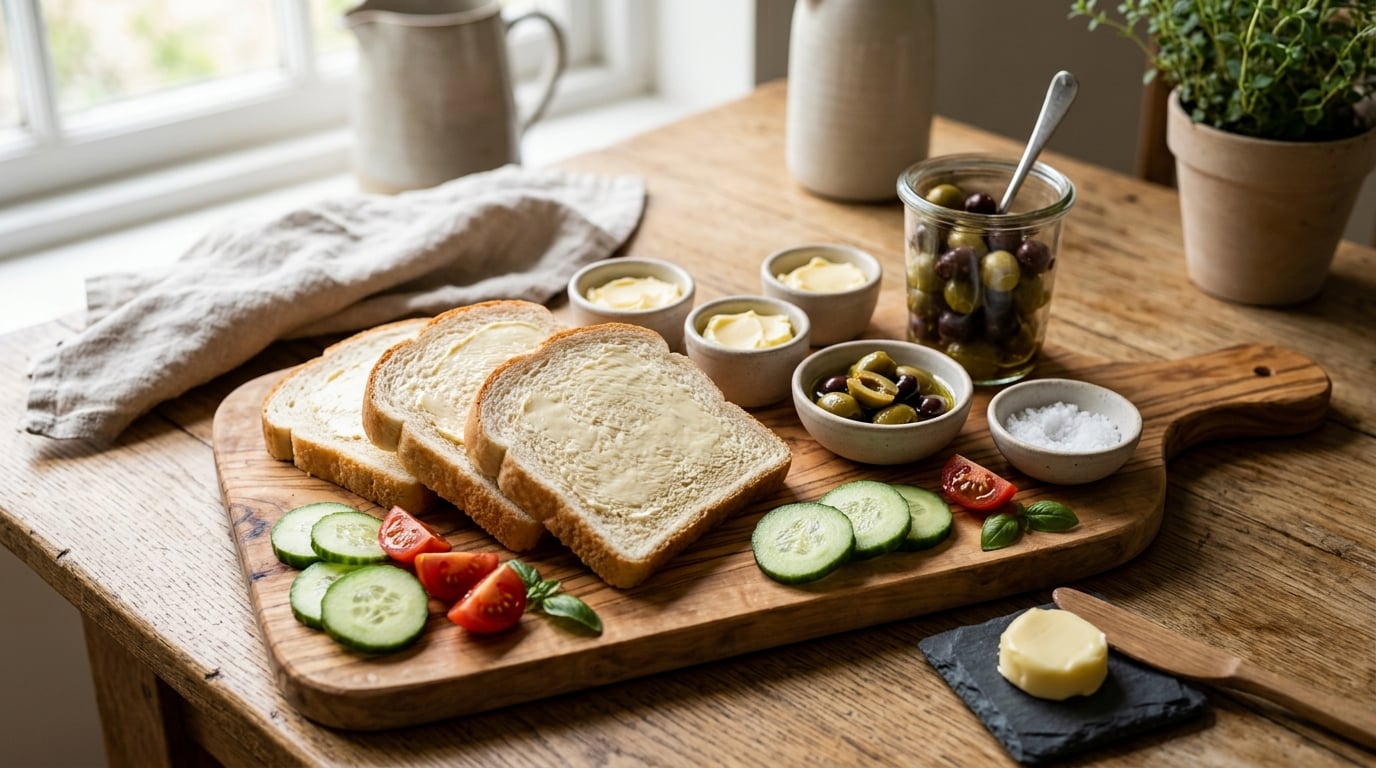
Bread gets soggy because its crumb is porous and pulls water inward, and wet fillings give it water to pull. The fix is a fat-based spread, applied in a thin, even coat to both inner faces of the bread, because fat and water do not mix. The barrier film buys you hours, and it costs one spoon of something already in your fridge. Below are the best spreads to keep bread from getting soggy, ranked by how well each one blocks moisture and how easy it is to shop for.
This matters if you pack lunch, meal prep on Sundays, or bring sandwiches to the office. It matters even more if you have ever unwrapped a sandwich at noon and found the bottom slice wet enough to split in half.
Updated for October 2026.
Table of Contents
Best Spreads to Keep Bread from Getting Soggy at a Glance
| Spread | Why it protects the bread | Best pairing | Key drawback |
|---|---|---|---|
| Mayonnaise | Emulsion forms a firm water-repellent film; high fat content | Chicken salad, tuna, egg salad, cucumber | Heavy flavor, not for anyone avoiding egg |
| Unsalted butter | Solid fat layer slows moisture migration, adds richness | Toast, grilled cheese, berry preserves | Melt-through on warm bread, no salt for seasoning |
| Cream cheese | Soft spreadable fat film, sticks well to crumb | Bagels, fruit, vegetable sandwiches | Very soft, easy to overfill |
| Hummus | Oil and sesame give a moderate barrier, thick texture holds | Chicken, roasted vegetables, peppers | Water content can soak thin slices |
| Pesto | Olive oil base seals the surface, nuts add texture | Tomato, mozzarella, grilled vegetables | Loose homemade pesto leaks |
| Avocado spread | Creamy fat layer, mild barrier that softens slowly | Eggs, bacon, cucumber, chili flakes | Does not block moisture on its own |
| Olive oil | Simple fat film, no water to absorb | Bruschetta, focaccia, cheese, vegetables | Very thin film, no flavor body of its own |
| Peanut butter | Dense fat-and-protein layer, excellent adhesion | Jelly, banana, apple, celery | Allergen risk, thick if spread cold |
| Sunflower seed butter | Fat-forward, smooth, nut-free barrier | Fruit, honey, savory spreads | Can taste bitter or roasted |
| Soft cheese spread | Moist fat layer in a spreadable form | Crostini, fruit, grilled vegetables | Wet varieties need drier bread |
A note on the ordering. The top entries are fat-forward and shelf-stable enough for a lunch bag; the bottom entries work but need help from drier bread or crisper fillings. Hummus and avocado sit in the middle because they are creamy and flavorful but carry their own water.
1. Mayonnaise
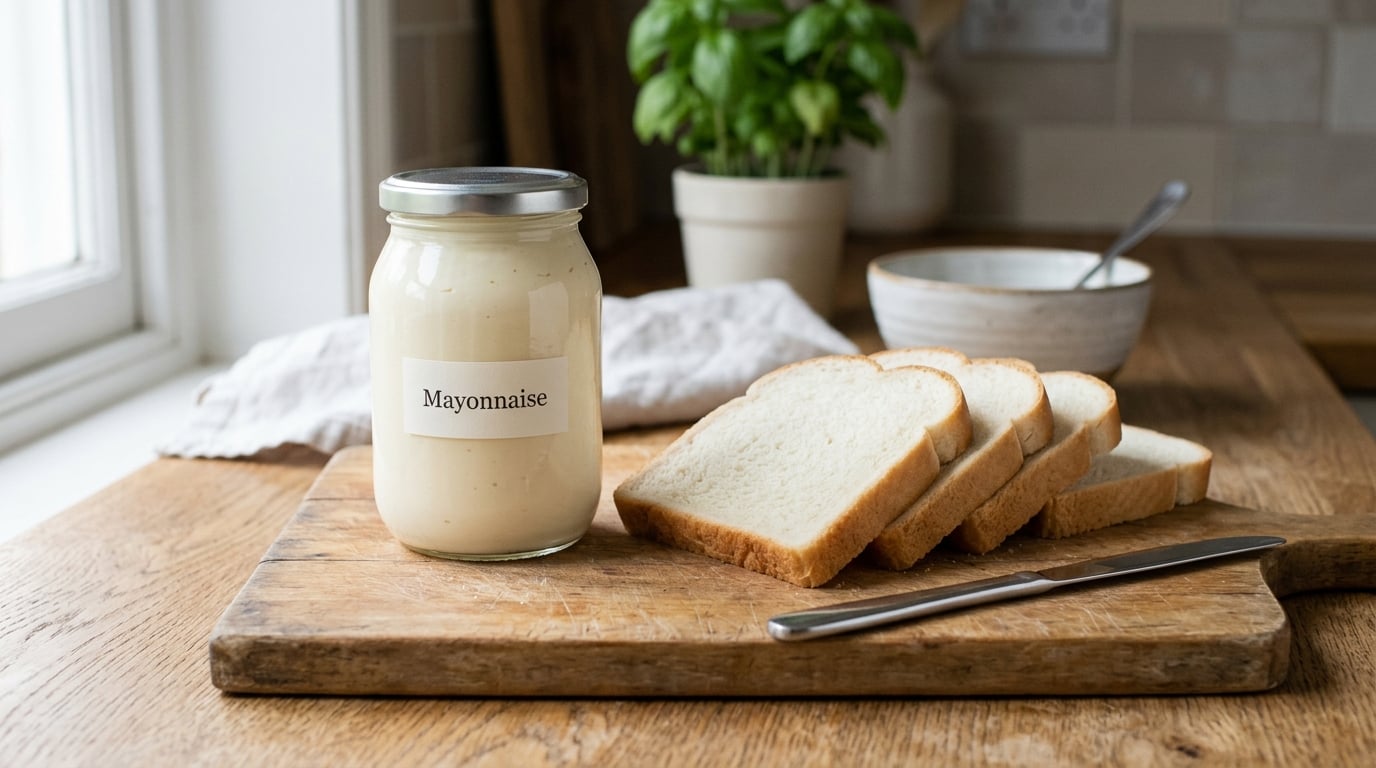
Mayonnaise is the strongest everyday barrier you can buy, because it is an oil-in-water emulsion that sits on the crumb as a continuous film rather than soaking in. A single layer is enough; you do not need a thick one.
Best spreads to keep bread from getting soggy: how mayonnaise performs
For a sandwich, use roughly one tablespoon per slice and spread it right to the crust. The butter trick people reach for works too, but mayo wins on consistency: it spreads cold and evenly, it holds pepper or paprika, and it does not tear the crumb when you drag it across. One poster on r/Sandwiches described the habit in one line, mayo on both halves of the bread so it helps repel water, and that is the whole method.
It pairs with anything already wet. Chicken salad, tuna salad, egg salad, cucumber with salt, tomato with the seeds scooped out. For a packed lunch, put the mayo on the bread and keep the wet filling in the center zone so nothing pools against the slice.
The drawback is that mayo tastes like mayo. It is not a neutral barrier, and it is off the table for anyone with an egg allergy. Grilled cheese is its quiet win: mayo on the outside browns better than butter and never goes soggy, a trick that circulates constantly on r/LifeProTips.
2. Unsalted Butter
Butter slows moisture migration the same way, with one trade-off. Applied warm it melts into the crumb and genuinely seals it, but applied cold on room-temperature bread it just sits there as a solid fat layer that keeps working for a couple of hours.
Use a thin, even coating, about half a teaspoon per slice, and push it into the crumb with the back of the knife rather than laying it on top. Toast is butter’s home turf. Grilled cheese and any pressed sandwich benefit from the melted-on version, and a thin butter layer under preserves keeps a berry jam sandwich from staining the bread pink all the way through.
Choose unsalted if the spread is doing barrier work rather than seasoning work, since you want to taste the filling. Its weakness is warmth: butter on toast straight from the toaster melts into a greasy puddle, and on a hot day a buttered sandwich wrapped in foil goes slick fast. That is why so many sandwich regulars have quietly switched to mayo.
3. Cream Cheese
Cream cheese is a spreadable fat film that grips the crumb better than almost anything else you can soften with a knife. It is a genuinely useful barrier on softer, holey breads where a thin liquid film would just sink in.
It shines on bagels, where you are already dealing with a dense crumb and a hole in the middle that collects moisture. It works for a fruit sandwich with strawberries or figs, and a plain-sliced version under cucumber, radish and sprouts is a deli-standard build I use more than I expected to.
The catch is that it is very soft. Too thick a layer squeezes out from the sides and slides down onto the plate, taking structure with it. Keep it to about a tablespoon and spread it to the edge so the crust is pinned to the filling. Also worth knowing: plain cream cheese is tangy and salty, which means it usually needs no extra salt.
4. Hummus
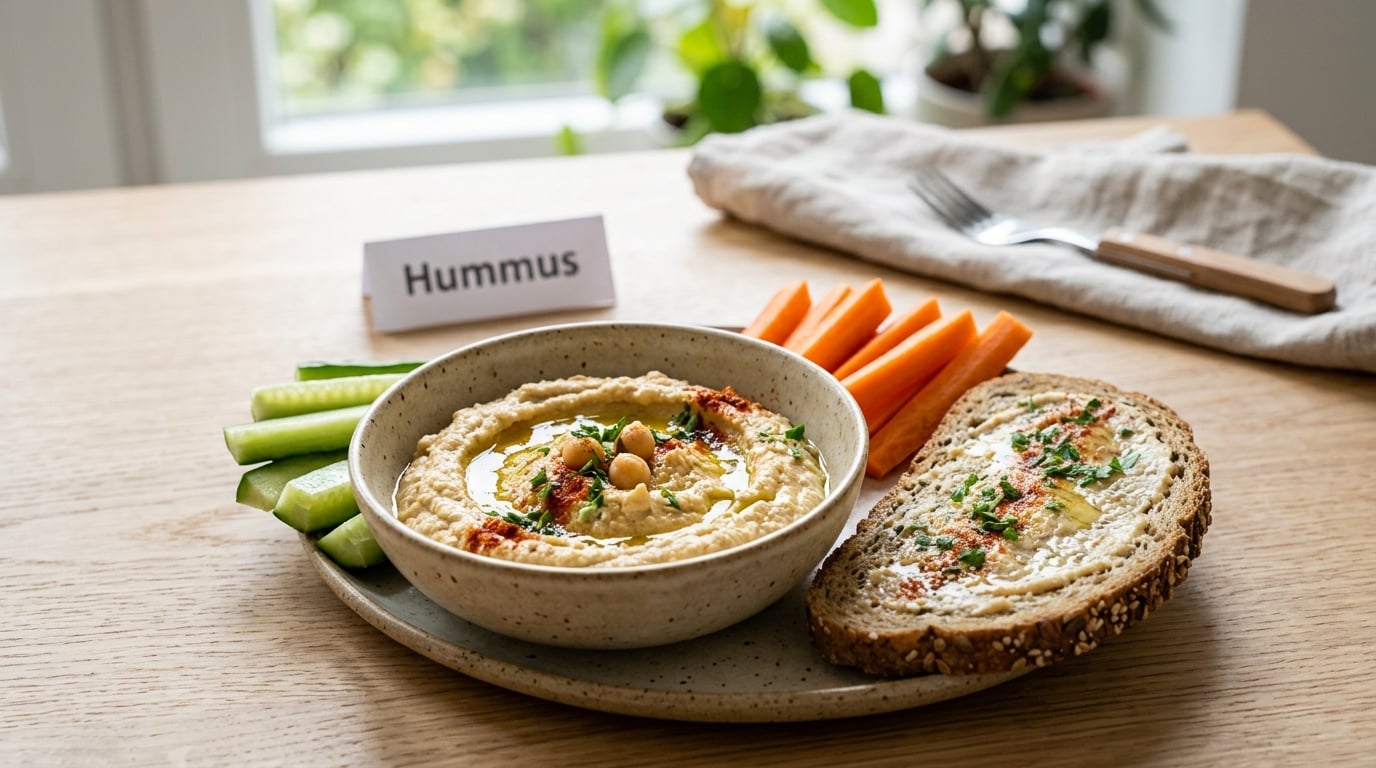
Hummus is a decent barrier, not a great one. The tahini and olive oil give it real fat, and its thickness is the part that works, because a dense spread stays put instead of migrating. The water in chickpeas is what works against you.
Three things improve the odds. Drain it well if the tub is watery, spread it thinner than feels wrong, and use denser bread such as sourdough, ciabatta or thick-cut whole wheat, since an airy sandwich loaf drinks it up. A layer of crisp lettuce underneath, which shows up in almost every sandwich forum, adds a second barrier.
Pair it with chicken, roasted red pepper, cucumber, carrot sticks, falafel, or a soft-boiled egg. Hummus also works as a base for a grilled sandwich, since the oil browns the bread and keeps the interior from steaming.
Will hummus make bread soggy? On white sandwich bread, left overnight in a bag, yes, more often than mayo will. On denser bread, eaten within a few hours, rarely. It is a barrier you eat the same day, not one you pack for the afternoon.
5. Pesto
Real pesto is mostly oil, and oil is the barrier. Basil, toasted pine nuts or walnuts, and grated hard cheese add flavor, body and adhesion, so the spread holds in place while the oil film slows water moving down from tomato or fresh mozzarella.
Check the jar before you spread. Basil pesto made with oil rather than water is a good barrier. Some jarred varieties and most homemade ones are loose enough to ooze, and a loose pesto on bread becomes a slip-and-drip problem rather than a protection problem. Press it on with the back of the spoon and keep the layer thin.
Pair it with tomato, fresh mozzarella, grilled zucchini, roasted mushrooms, or a chicken cutlet. Pesto is the best option here for a caprese-style sandwich that has to survive a commute, since mozzarella and tomato are both moisture sources and the pesto handles both.
Dry pesto sauces, which are unusual but exist, offer flavor with almost no barrier at all. Treat them as a seasoning, and add a butter layer underneath if the sandwich has to travel.
6. Avocado Spread
Mashed avocado makes a creamy, pleasant layer that softens bread gradually. It is worth being clear about the limit: avocado is not a real moisture barrier. It does slow drying out of the bread, but it will not stop a wet filling from soaking through by lunchtime.
Work with that rather than against it. Mash with a fork and a squeeze of lime, which keeps it from browning, spread it only on the bread that faces the filling, and add crisp ingredients on top. Radish, cucumber, shredded lettuce, crisp bacon and pickled onions all keep water moving away from the slice. Eggs and chili flakes are a good pairing.
Use it the day you make it. Avocado browns, weeps, and slides, and the weeping is the sogginess. If you need to prep ahead, mash it with lemon or lime juice and press cling film straight onto the surface, then refrigerate for up to a day.
7. Olive Oil
Olive oil is the simplest barrier on this list and the thinnest. A brushed or drizzled film has no water in it at all, so nothing moves toward the bread until the oil is overwhelmed, which is why it works well for anything with a low or moderate moisture load.
Brush it on for even coverage; drizzle if you want the flavor to land unevenly, which is the point on bruschetta. Focaccia takes a heavier hand because the crumb is dimpled and thirsty. For a cheese and vegetable sandwich, oil on the bread, then cheese, then the vegetables, gives you a clean two-layer defense.
On its own it will not rescue a tomato sandwich, since oil plus a wet filling is still a wet filling. Use it as the first layer and put a firmer barrier like cheese or lettuce on top of it.
8. Peanut Butter
Peanut butter is a dense fat-and-protein layer with real adhesion, which makes it one of the more effective barriers in any kitchen. The oil fraction resists water, and the thick paste stays put instead of sliding.
Smooth is the better barrier because it fills the crumb holes evenly. Crunchy works too, though the pieces can leave dry patches where moisture finds a path. Let it sit out briefly in cool weather; cold peanut butter fights the knife and spreads unevenly, and uneven coats leak.
For jelly, spread the peanut butter first and put the jelly on top so it sits in the center rather than soaking into bare bread. Banana, apple with cinnamon, celery with raisins, and a smear on a grilled sandwich all work. The PB and J sandwich is one of the classic soggy sandwiches, and it survives travel best when both spreads are on the bread.
Two real constraints: it is a serious allergen, so it does not work for a mixed-safe lunch environment, and a very thick application can tear soft bread when you close the sandwich.
9. Sunflower Seed Butter
Sunflower seed butter does the same job as peanut butter without the nuts, which makes it useful for school lunches and nut-free tables. The texture is fat-forward and smooth, so it forms a barrier comparable to a thin nut butter layer.
Application is the difference. Run the knife under the jar’s lid first to loosen the top, then spread it warm rather than cold for an even coat. Some brands are noticeably darker and roasted, with a bitterness that shows up against sweet fillings; a lighter variety pairs better with fruit.
Try it with apple slices and honey, banana, or strawberry preserves. Savory builds work too, and it makes a decent base under sharp cheddar and apple on a toasted rye, where the seed flavor reads as nutty rather than sugary.
10. Soft Cheese Spread
Soft cheeses like brie, whipped ricotta, goat cheese spread and whipped cottage cheese add a moist fat layer that protects bread in the same way butter does, with more flavor and more moisture of their own. Spreadable goat cheese and whipped cottage cheese are the two I use most.
The rule is to match the wetness to the bread. Very soft, wet cheeses need denser or drier bread such as sourdough, toasted baguette or crackers, and the cheese goes on closer to the filling rather than as a thick outer layer. A thin brie slice under a chicken filling is a real barrier, not just a garnish.
Add the filling and eat reasonably soon. A stacked sandwich made entirely of soft cheese sweats on the way to work, and the liquid ends up in the wrapper. If you must build ahead, hold the cheese in a separate container and assemble at lunchtime.
Frequently Asked Questions
What spread keeps bread from getting soggy?
Any fat-based spread applied in a thin, even coat to both inner faces of the bread. Mayonnaise is the strongest everyday option, with butter, cream cheese and nut butters close behind. Olive oil works as a light film. The coat matters more than the brand, and wet ingredients belong in the center of the sandwich, not touching the crumb.
Is mayonnaise or butter better for keeping sandwiches from getting soggy?
Mayonnaise, for most sandwiches. It is an emulsion that spreads evenly cold, grips the crumb without tearing it, and holds up at warm temperatures, while cold butter can sit on the surface in patches and melted butter can soak through soft bread. Butter wins on flavor with toast and preserves, and on richness in a grilled sandwich, where a thin melted layer seals the crumb.
Does any spread make bread completely waterproof?
No. A fat barrier slows moisture migration and buys you hours; it does not block it permanently. A tomato or tuna filling will eventually work through any spread, especially on airy sandwich bread. To extend the time, use a thinner coat that still covers every edge of the crumb, place a second barrier such as lettuce, cheese or deli meat above the spread, and choose denser bread.
How do I keep a sandwich from getting soggy until lunch?
Spread both inner faces with mayo, butter, hummus or pesto, then stack wet ingredients in the center with a dry barrier like lettuce or a cheese slice between them and the bread. Never add warm filling, since heat causes condensation inside the wrapper. Wrap the sandwich in a paper towel first, then put it in a bag or foil, and keep anything refrigerated or perishable chilled until you eat it.
What is the best spread for toast, bagels, and gluten-free bread?
For toast, butter is the flavor answer and mayo is the texture answer. For bagels, cream cheese holds best because it grips a dense, holey crumb. Gluten-free bread is thinner and more fragile than wheat bread, so a soft spread such as cream cheese or avocado is easier on the slice than anything with seeds or chunks in it, and you should press rather than saw with the knife.
Start with a thin, even fat layer on both inner faces of the bread, then add the wet ingredients last and keep them in the center. Mayonnaise and butter handle most builds, hummus and pesto handle the vegetable ones, and a slice of lettuce or cheese above the spread buys you extra time. Make that one habit once and the soggy sandwich problem stops following you around.