
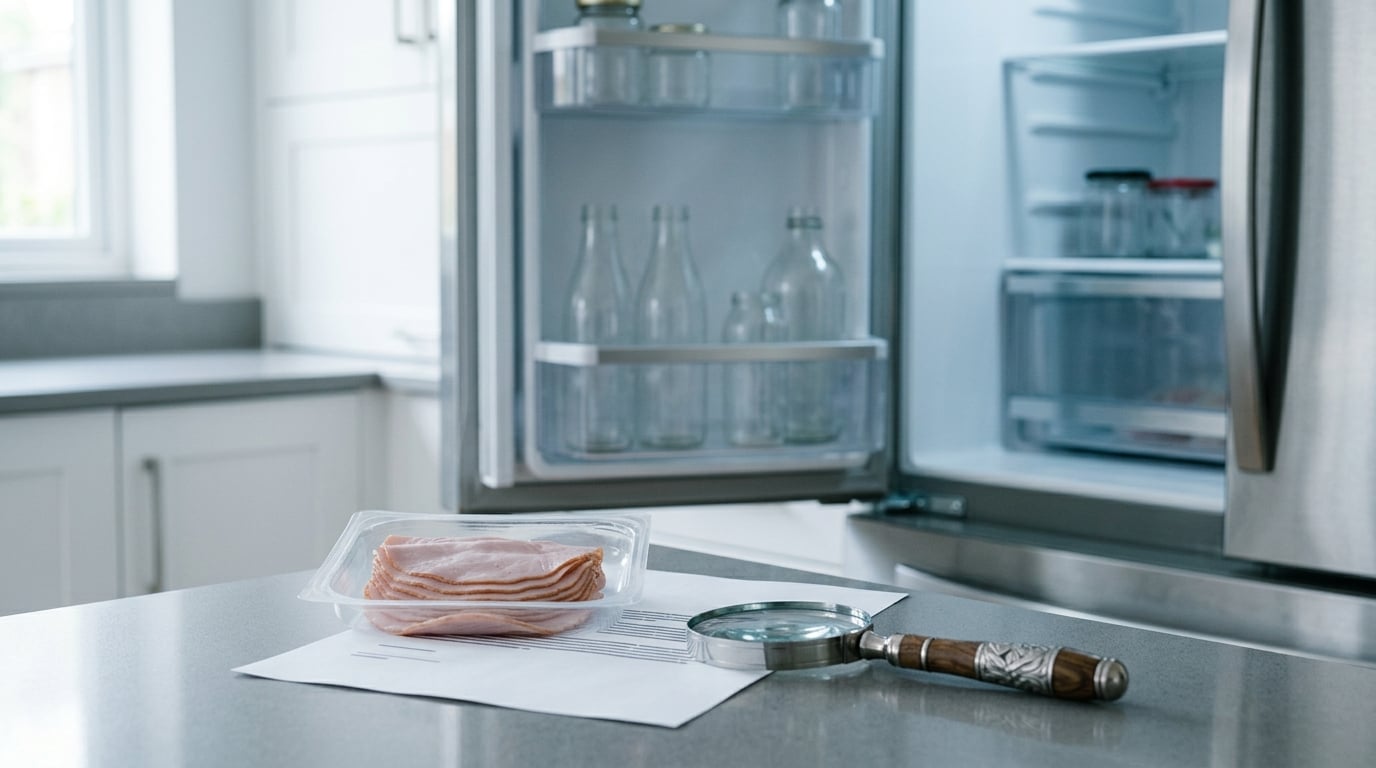
Short answer: yes, for most shoppers, with conditions. The 2024 recall applied to specific products from the Jarratt, Virginia plant, not to every Boar’s Head item in every case, and that plant has been rebuilt and is producing again. What the recall did damage is trust, and the inspection records published since then are the reason reasonable people still hesitate. This is a food-safety question, so the details below come from USDA FSIS, the CDC, Consumer Reports and current news reporting, and none of it is medical advice.
Status as of 2026: the Jarratt plant is operating under federal inspection, the company says it rebuilt the facility and raised its own listeria control above the federal baseline, and Strassburger Brand Liverwurst is permanently discontinued. Read on for what changed, what did not, and how to check the package in your hand.
Table of Contents
- Is Boar’s Head Still Worth Buying After the 2024 Listeria Recall?
- Which Boar’s Head Products Were Recalled?
- How Do You Check Whether a Boar’s Head Product Is Affected?
- Is Boar’s Head Safe to Eat If It Was Not Recalled?
- What Should Higher-Risk Shoppers Do?
- How Should You Store and Serve Boar’s Head Deli Meats?
- Is Boar’s Head Still Worth Buying for Everyday Sandwiches?
- Frequently Asked Questions
- Conclusion: Check the Product, Not Just the Brand
Is Boar’s Head Still Worth Buying After the 2024 Listeria Recall?
Boar’s Head is still a reasonable buy for most people in 2026, because the recall was limited to defined products and dates from one plant, that plant is open again, and the company’s response was a rebuild rather than a denial. It is a much harder call for pregnant readers, anyone 65 or older, and anyone with a weakened immune system, and it is a harder call still for people who simply do not want to think about their lunch meat at all. Check the code on the package before you buy, not after.
Two things to hold in your head while you read. First, a recall is a legal designation with a specific list attached, so “recalled” and “bad” are not synonyms. Second, no brand, premium or budget, is recall-proof, because sliced ready-to-eat meat can pick up listeria in the room where it is sliced and packed, after the kill step has already happened.
What Happened in the 2024 Boar’s Head Listeria Recall?
The CDC traced a national listeriosis outbreak to deli meats sliced at delis, and testing in a Baltimore-area store found a positive Strassburger Brand Liverwurst sample made at the Jarratt, Virginia plant. The outbreak ran from January through July 2024 and sickened 61 people across 19 states, killing 10.
FSIS first recalled about 207,528 pounds on July 26, 2024, then expanded the recall repeatedly. By the time it was finished, more than 7 million pounds of ready-to-eat meat and poultry products from the Jarratt plant were covered, including ham, bologna, salami, mortadella, roast beef, capicola and several sausage and frankfurter products.
Boar’s Head stopped making liverwurst altogether and closed Jarratt indefinitely in September 2024. The plant resumed limited operations roughly 17 months later after a rebuild that included new floors, drains and air filtration, separated raw and ready-to-eat production areas, and what the company describes as about 12,000 listeria swabs taken after the rebuild.
Which Boar’s Head Products Were Recalled?
The scope is the part most shoppers get wrong. The recall covered products from the Jarratt plant, not the whole Boar’s Head line, and the practical identifiers are on the package.
| Product type | What to look for on the package | Where to verify |
|---|---|---|
| Sliced ham, including Virginia Ham and Cappy Style Ham | Sell-by date range listed in the FSIS notice, plus the Jarratt establishment number | FSIS recall page for notice 023-2024-EXP |
| Bologna, garlic bologna, salami and mortadella | Product name, package size, sell-by date and lot or UPC code | FSIS notice, then your state health department |
| Roast beef, capicola and steakhouse roasted bacon | Same identifiers, plus the sliced-at-your-store wording where applicable | FSIS notice and the CDC outbreak page |
| Hot unsmoked sausage, knockwurst, bratwurst and frankfurters | Sell-by date and lot code on the tray or stick | FSIS recall search by brand and date |
| Strassburger Brand Liverwurst | No longer produced, so any package you find is an old one | Discard regardless of date if it came from Jarratt |
Anything bought counter-sliced is harder, because the original wrapper may be discarded and the meat may be rewrapped in store packaging. Boar’s Head meat sold that way at a deli that carried Jarratt product during the recall window is treated as covered by the notice, not as an exception to it.
How Do You Check Whether a Boar’s Head Product Is Affected?
Five steps, about three minutes, and they work for any packaged deli meat in your fridge, not just this brand.
- Pull the package out and read the product name. Match it against the recalled product list, including size. A 4-ounce pack and a 10-ounce pack are listed separately.
- Find the establishment number. It sits in the bottom corner of the label as “Est. P-196” style lettering, and the Jarratt plant carries its own number. The brand name alone does not identify the plant.
- Check the sell-by date. Recall notices specify date ranges, and a date inside the range is what matters most. Many packages also carry a lot or code number printed near the date.
- Search the FSIS recall database by brand and date range. The recall notice for this event is numbered 023-2024-EXP. The CDC outbreak page is the second source worth checking.
- Decide what to do with a match. If it matches, do not taste-test it. Return it to the store for a refund or discard it, wash your hands and clean the knife, board and fridge shelf that touched the package.
If you cannot find an establishment number on counter-sliced meat, assume the worst case for the recall window and ask the deli where it was sliced and on what date.
Is Boar’s Head Safe to Eat If It Was Not Recalled?
Not being on the recall list is not a safety guarantee, but it is the only evidence-based screen a shopper has. The more useful framing is how this category works: Boar’s Head is a ready-to-eat product, meaning the plant cooks the meat and then slices, packages and ships it, and contamination can happen after cooking in the slicing and packing areas, which is why FSIS treats post-lethality sanitation as the control point that matters.
Food Safety News reported in June 2026 that inspection records released through records requests show sanitation and listeria-control problems at the Jarratt plant dating back to at least 2019, with repeats through 2024, including product residue, insects, water leaks, condensation and a 2022 finding of holes, mold and rust that inspectors called an imminent threat to product. Associated Press reported that separate 2025 records show noncompliance findings, such as dripping condensation and lapses in written listeria testing, at Boar’s Head’s other plant in Petersburg, Virginia. Those are the facts that make the honest answer “verify, then decide” rather than “it’s fine.”
Federal inspectors are on site at the reopened plant, and the company says it adopted a higher voluntary listeria standard than the federal baseline. Whether that is enough is a judgment call, and Consumer Reports food policy director Brian Ronholm has been blunt about how much trust a rebuild can buy back.
What Should Higher-Risk Shoppers Do?
If you are pregnant, 65 or older, caring for a young child, or immunocompromised or on immune-suppressing medication, Consumer Reports advises avoiding sliced deli meats broadly, not just the recalled ones. Listeria causes mild symptoms in most healthy adults and serious, sometimes fatal illness in these groups, and during pregnancy it can also cause miscarriage or harm to the fetus.
What that looks like in practice, based on current CDC and USDA guidance:
- Treat all sliced, ready-to-eat deli meat as a food you can choose to skip, whatever the brand.
- Opt for whole cooked meats, eggs, canned tuna and smoked salmon, or vegetables, when you want a sandwich that carries less risk.
- Heat cold cuts until steaming before eating them if you want to keep eating them. Many people in pregnancy forums describe microwaving slices for 30 seconds as a compromise, and the reasoning behind it is sound.
- Talk to your doctor or midwife about your own risk, especially if you have had a previous listeria infection. This article cannot answer that question for you.
How Should You Store and Serve Boar’s Head Deli Meats?
Storage habits do more for your actual exposure than the brand on the label. Keep the package sealed until you are ready to open it, or transfer the meat to a covered container if the original wrap is torn, and keep it at 40 degrees F or below on the coldest shelf rather than the door.
Use a clean knife and a clean cutting board for every session, and wash both with hot soapy water afterward. Slice only what you will eat in that sitting, and put the rest straight back in the fridge rather than leaving it on the counter while you make sandwiches.
Discard any package that is swollen, leaking, discolored or smells off, and discard meat that sat warm for more than two hours, or an hour above 90 degrees F. A package that arrives cold from the store and goes straight into the fridge is the baseline you want.
On heating, keep the two cases separate. Eating cold sliced meat cold is not a cooking step, so the 165 degrees F safe minimum internal temperature for poultry does not apply. If you are reheating deli meat to reduce listeria risk, that is a mitigation step, not a serving guideline, and no temperature makes a recalled product safe to keep.
Is Boar’s Head Still Worth Buying for Everyday Sandwiches?
Here is the honest trade. Boar’s Head still wins on flavor and texture for a lot of people, and on the quality of a ham and provolone or a capicola sandwich it is genuinely a step above most store-brand cold cuts. What it lost is the easy answer. Before 2024 you could buy it on reputation alone; now every purchase carries a small amount of work, namely reading the code on the package and being comfortable with how much weight to put on a company’s rebuild versus a regulator’s inspection history.
The price premium is the other half of the question, and it is the loudest thread in every deli meat discussion forum. Plenty of shoppers who swore by the brand before the recall have moved to store-brand ham, a regional Italian cold cut maker, or a retailer in-house label, mostly because the quality gap narrowed while the premium did not. If the premium bothers you, that is a perfectly good reason to switch, independent of the recall.
My own read, for a shop like ours: keep it on the menu, keep it in stock, and stop pretending the question is settled. Ask the supplier for current inspection status, tell customers plainly which products came from Jarratt during the recall window, and give at-risk customers an easy out by offering cooked options. For a small food business the supplier conversation matters more than any brand loyalty, because the records that matter are the ones you can ask for in writing.
Frequently Asked Questions
Is it safe to buy Boar’s Head now?
It is legal to buy and USDA inspectors remain on site at the Jarratt plant, which reopened after a full rebuild. Safety is a judgment, not a yes or no. Check the establishment number and sell-by date on the package against the FSIS recall notice, and skip the brand entirely if you are pregnant, 65 or older, or immunocompromised.
Is Boar’s Head safe to eat in 2026?
Products outside the recall are not automatically unsafe, and there is no evidence of a current outbreak tied to the brand. Weigh it this way: federal inspection is ongoing, the company reports a rebuilt plant and a higher voluntary listeria standard, but records published in 2026 document sanitation problems at the plant dating back to at least 2019. Buy with the code checked, not on brand reputation.
What is the safest deli meat brand to eat?
No brand is risk free, because sliced ready-to-eat meat can be contaminated after the kill step. Lower-risk options include whole cooked meats you slice yourself, canned tuna, smoked salmon and eggs, plus any packaged meat from a plant with a clean current inspection record. For anyone in a high-risk group, the common guidance is to skip sliced deli meat entirely rather than shop for the cleanest brand.
Does cooking deli meat kill listeria?
Heating cold cuts until they steam hot is a common risk-reduction step, and USDA lists 165 degrees F as the safe minimum internal temperature for reheating deli meat for hot dogs and deli meats. Cold meat eaten cold is not reheated, so that temperature does not apply to a sandwich filling eaten straight from the package. No cooking step makes a recalled package safe to keep.
What happened to the Boar’s Head liverwurst and Jarratt plant?
Boar’s Head permanently discontinued Strassburger Brand Liverwurst and closed the Jarratt, Virginia plant in September 2024 after it was linked to the outbreak. The plant was rebuilt with new floors, drains and air filtration, separated raw and ready-to-eat areas, and resumed limited operations roughly 17 months later under federal inspection. Separate 2025 records show findings at the company’s Petersburg, Virginia plant.
Conclusion: Check the Product, Not Just the Brand
Is Boar’s Head still worth buying after the 2024 Listeria recall? For most households, yes, provided you check the establishment number and sell-by date against the current FSIS notice before it goes in the cart, keep it cold, and slice it clean. For pregnant readers, readers over 65, and readers with weakened immune systems, the sensible default is to skip sliced deli meat and choose alternatives.
Do that first: look up your exact product, confirm it is not on the recall list, buy only what is not affected, refrigerate it promptly and follow the package instructions. Everything else on this page is context.
Sources checked for this article
- USDA FSIS recall notice 023-2024-EXP, Boar’s Head Provisions Co. expanded recall for ready-to-eat meat and poultry products
- CDC outbreak page, Listeria outbreak linked to meats sliced at delis
- Consumer Reports, Boar’s Head deli meats recalled due to risk of listeria, updated September 2024
- Associated Press, Boar’s Head reopens troubled Virginia deli meat plant
- Food Safety News, June 2026, Boar’s Head inspection documents show years of safety problems preceded outbreak
This article is informational only and was not written or reviewed by a medical professional. It is not medical advice. For guidance about your own risk, talk to your doctor, and for the official list of affected products, rely on the FSIS and CDC recall pages rather than any article, including this one.