
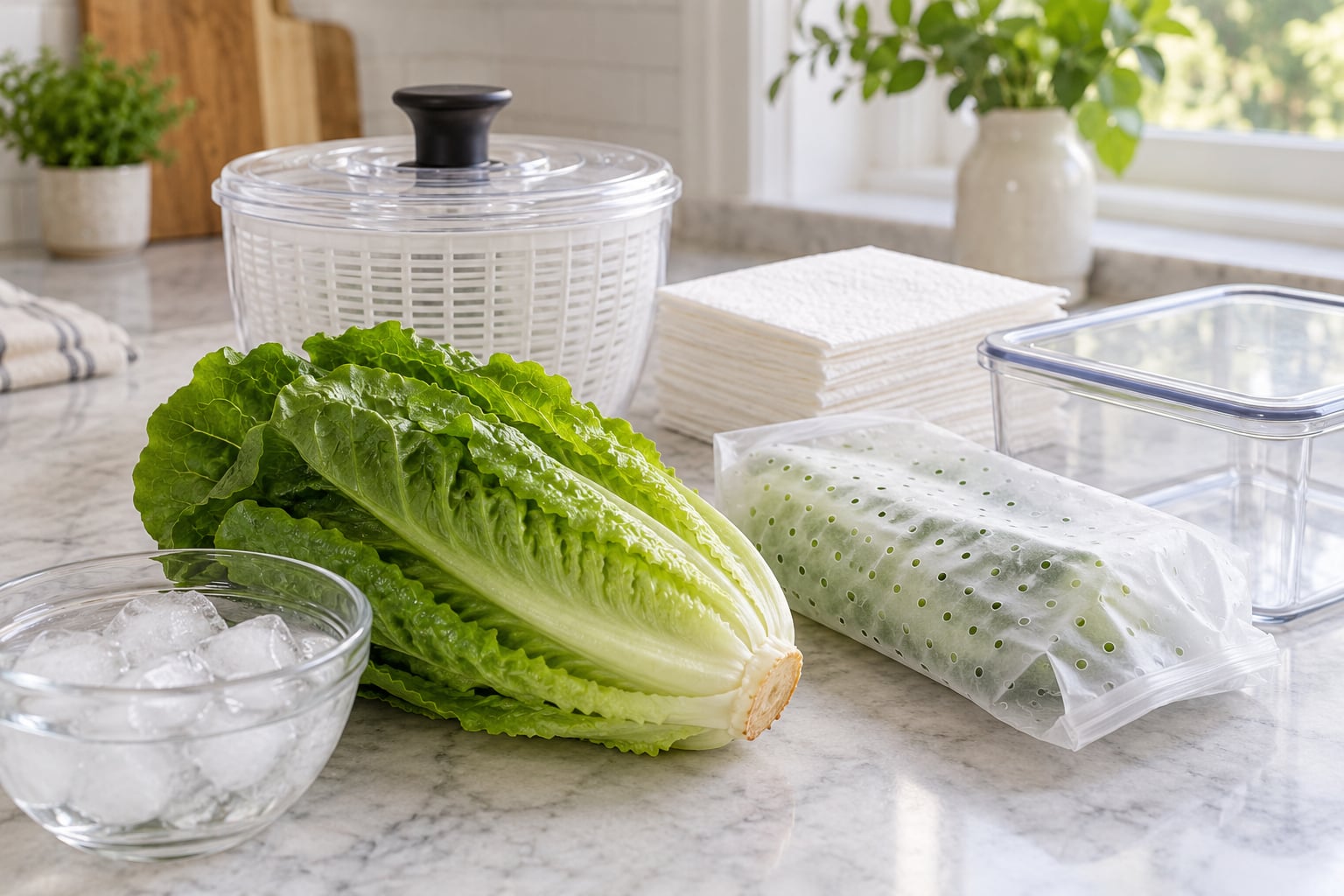
Lettuce goes limp and slimy in your fridge for one main reason: moisture. To keep lettuce fresh longer, wash it, dry it until there is no surface water left, then store it in the refrigerator lined with dry paper towels, either in a perforated produce bag or in a container with the towels kept away from the leaves. Give it airflow, keep it away from fruit, and expect 7 to 14 days for most home kitchens instead of two or three.
There is a second factor most people never consider: ethylene gas. Apples, bananas, tomatoes and other ripening fruit release it into the fridge, and lettuce responds to it by wilting and browning faster. It is why a head of romaine stored next to a bunch of bananas looks tired by Sunday.
This guide covers whole heads, loose leaves, chopped lettuce and bagged pre-washed greens, because they do not all want the same treatment. It takes about ten minutes of active work the first time, and almost no effort after that.
Table of Contents
- What You Need
- Step-by-Step: How to Keep Lettuce Fresh Longer
- Step 1: Choose Fresh Lettuce and Remove Damaged Leaves
- Step 2: Wash the Lettuce Without Soaking It
- Step 3: Dry the Lettuce Thoroughly
- Step 4: Store Whole Leaves in a Perforated Bag
- Step 5: Store Chopped Lettuce in a Layered Container
- Step 6: Refresh Lettuce That Has Started to Wilt
- Common Mistakes When Keeping Lettuce Fresh Longer
- Frequently Asked Questions
- Conclusion
What You Need
None of this is special equipment, and that is the point. Every item below already sits in most kitchens, and you can do a perfectly good job with nothing but a clean towel and a plastic container with a loose lid.
- A salad spinner or a clean, dry towel. The spinner is faster, the towel works just as well for a single head.
- Paper towels. One dry sheet at the bottom of a bag or container, one on top for cut lettuce. Swap them out every few days.
- A perforated produce bag or the perforated inner bag from a clamshell pack. The holes matter more than the bag itself.
- An airtight container with a loose or vented lid for chopped lettuce, plus somewhere to keep the paper towel away from the leaves.
- A crisper drawer set to high humidity, if your fridge has one. Most people leave it on the low setting and wonder why greens dry out.
- Aluminum foil, optional, mainly useful for romaine hearts and long heads you want to keep a week or more.
- A vacuum sealer, optional and the only method that genuinely changes the shelf life in a big way.
You do not need a lettuce keeper, a produce box, or a branded anything. A zip-top bag with a few holes poked in it, or a bowl covered with a plate, will do the same job.
Step-by-Step: How to Keep Lettuce Fresh Longer
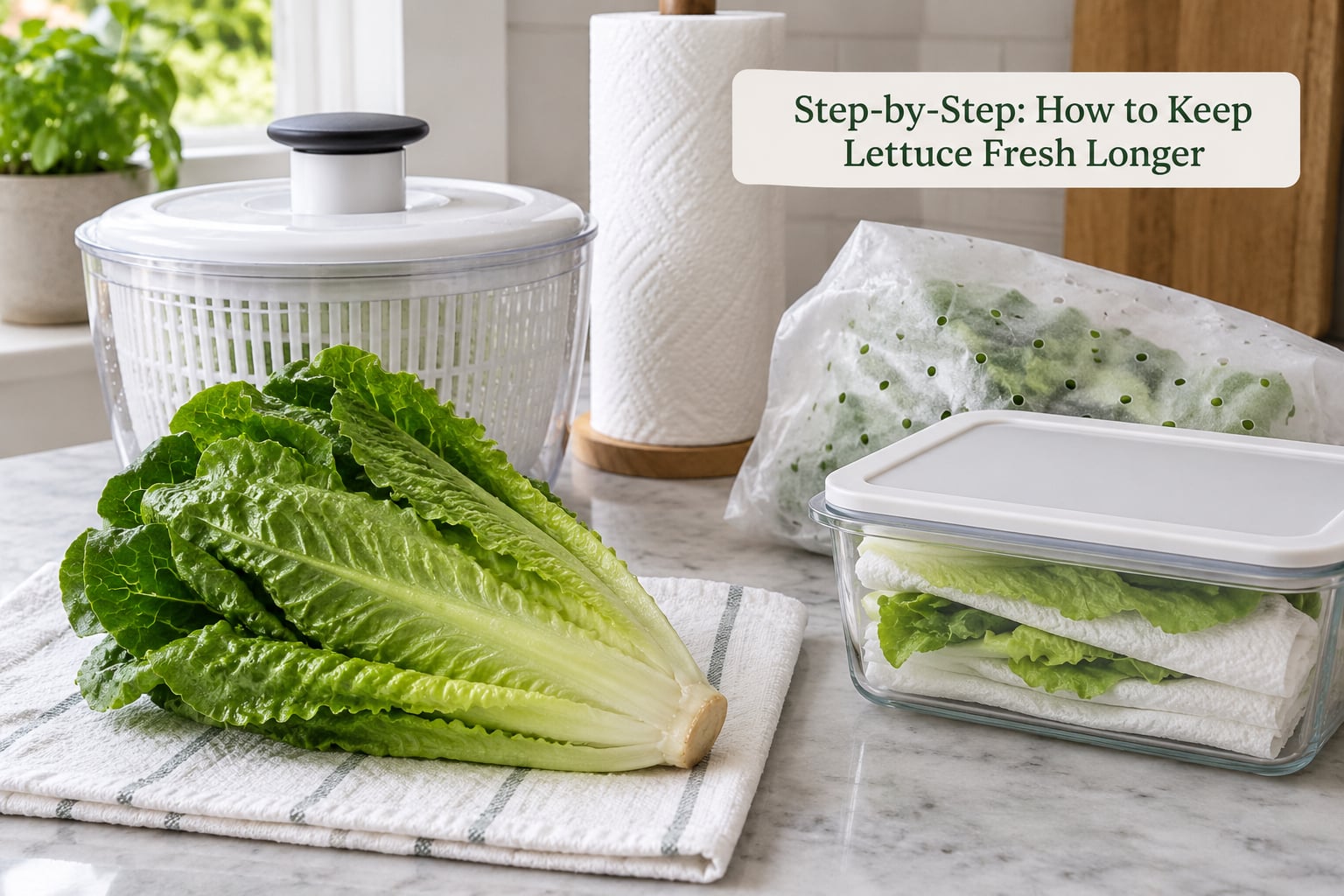
Step 1: Choose Fresh Lettuce and Remove Damaged Leaves
Start with lettuce that is crisp and bright, with ribs that snap rather than bend. Skip anything with a soft or slimy feel, brown or black spots along the cut edge, or outer leaves that have gone translucent at the tips.
Back home, strip the damaged outer leaves before anything else. They are already on their way out and they will spread that to the rest of the head within a day or two.
Then separate the leaves by cutting through the base of the core with a long knife, and peel them away one at a time. Work down the ribs rather than pulling the leaves apart, because torn edges brown faster than clean cuts.
You do not have to cut the core out. Home cooks argue about whether removing it helps, since some say lettuce decays from the core outward. Cut edges are exposed tissue either way, so a clean knife cut and a torn root score about the same.
Step 2: Wash the Lettuce Without Soaking It
Rinse each leaf under cool running water and rub the leaves gently between your fingers. Running water carries away soil and any insects hiding in the folds without letting the leaves sit in water and absorb it.
Do not soak lettuce, and do not add soap or detergent of any kind. A head left submerged for ten minutes holds enough water in its veins to stay soggy for days, and the residue is exactly what feeds the bacteria that turn leaves slimy.
Two exceptions are worth knowing. A whole head of iceberg is usually best stored unwashed and rinsed only when you are about to use it, because the intact outer leaves already protect the inside. Bagged pre-washed or triple-washed greens do not need a second wash either, and rewashing them shortens their life rather than extending it.
Check every leaf as you drain it. Anything slimy, dark, or sour-smelling goes in the bin, no matter how small the spot is.
Step 3: Dry the Lettuce Thoroughly
This is the step that decides whether the rest works. A salad spinner gives you the best result in about thirty seconds: fill it no more than halfway, spin, dump, and repeat until the leaves stop leaving water on the counter.
Without a spinner, lay the leaves in a clean towel, roll it up, and press firmly for a few seconds. Then pat the ribs and the cut edges dry with paper towels, since that is where water hides.
Air drying on a rack works too, but it takes closer to an hour and it only helps if the kitchen itself is dry and cool. A humid kitchen is working against you there.
Test before you store: a properly dried leaf feels dry and cool, not cool and slick. If your fingers come away damp, keep going.
Step 4: Store Whole Leaves in a Perforated Bag
Put a dry paper towel in the bottom of a perforated produce bag, lay the leaves in loosely, and fold or clip the top so the bag stays open to the air. Keep the whole thing in the crisper drawer, set to high humidity if the fridge offers that choice.
The paper towel pulls condensation off the leaf surfaces before it turns into a wet mat. The perforations let the leaves respire, which matters more than people expect: lettuce continues to breathe after harvest, and sealed-with-no-air conditions suffocate it faster than the refrigerator keeps it cold.
That is why a bag beats a container for whole leaves, and why a container beats a bag for chopped lettuce. For whole leaves, you want airflow. For cut lettuce, you want to slow moisture loss, and you manage that with the towels rather than the seal.
| Storage method | Best for | Expected fridge life |
|---|---|---|
| Whole head, dry, unwashed, crisper drawer | Iceberg, romaine, butterhead | 7 to 14 days |
| Whole head, washed and fully dried, bag with paper towel | Romaine, loose leaf | 5 to 7 days |
| Washed leaves in airtight container with paper towels | Chopped and sliced lettuce | 5 to 7 days |
| Aluminum foil wrap, tucked at the cut end | Romaine hearts, long heads | 7 to 10 days |
| Perforated bag, nothing else | Loose leaf | 3 to 5 days |
| Vacuum sealed with a dry towel inside | Bulk buys, garden harvests | 3 to 4 weeks |
| Sealed plastic bag with no towel and no airflow | Nothing | 2 to 3 days |
Aluminum foil is the method people ask about most, and the reason is simple barrier physics. A tight foil wrap slows water vapor escaping from the leaf, so the head loses less moisture and the cut base does not dry out. It blocks light too, which slows the browning you get on exposed ribs. It is a good trick for a half-used romaine heart you want on Sunday.
Vacuum sealing is the strongest option you have at home. Pulling the air out of the bag raises the carbon dioxide level inside and lowers the oxygen, and lettuce stored that way keeps noticeably longer. Cut edges still brown after about a week, but the leaves themselves stay crisp, and a full iceberg heart has reportedly held up for a month in a sealed bag. It only works if the lettuce is bone dry before it goes in, so a bag with water in it just seals in the rot.
If you buy lettuce in bulk from a warehouse club, this is the method worth the small equipment cost. If you buy one head a week, the perforated bag does the same job for nothing.
Place the drawer away from fruit if you can. A crisper drawer is a separate compartment and helps on its own, but if your fridge has open shelves and a bowl of apples, move the greens to the other side rather than relying on the closed door to hold the ethylene back.
Step 5: Store Chopped Lettuce in a Layered Container
Put a dry paper towel flat on the bottom of the container, add the chopped lettuce, and lay a second dry towel on top. The bottom towel catches anything dripping from the leaves, and the top one keeps condensation from dripping back down onto them.
Here is the part most guides skip. Leave the lid cracked open for 20 to 30 minutes before you seal it, if the lettuce is at all damp. That window lets trapped moisture evaporate at room temperature instead of condensing inside a closed box.
Then seal the container, press out the excess air, and refrigerate it promptly. Chopped lettuce keeps longer this way than a whole head does, because the cut surfaces are already exposed and the towels handle the moisture they release.
| Format | Bag | Container | Clamshell from the store |
|---|---|---|---|
| Whole leaves | Best, if perforated | Fine if vented | Fine, leave the vent open |
| Chopped or shredded | Poor, holds moisture | Best with paper towels | Good for a day or two |
| Sandwich topping | Dry napkin in a bag | Small tub, towel on top | Not worth it |
| Shelf life gained | +2 to 3 days | +3 to 5 days when dry | Whatever the label says |
For meal prep, portion the chopped lettuce into single-serve containers rather than one large tub you keep reopening. Every open-and-shake cycle lets warm air in and wets the towel again, and by day four a big container usually looks like the brown mush so many people complain about. Single portions also freeze badly, so leave one or two out of the freezer and freeze the rest.
Restaurant kitchens do a few things home cooks usually skip. They break heads down into leaves immediately, wash in cold water, spin dry, and hold everything under ice or in a refrigerated cabinet at a steady low temperature. They also keep lettuce in shallow hotel pans with damp towels underneath and ice on top, so the leaves sit on a raised rack rather than in standing water, and they portion it daily rather than in week-long batches.
None of that is hard to copy at home. The parts that matter are the dryness, the cold, and not letting the pile get so deep that the leaves at the bottom are crushed.
Sandwich toppings get their own rule, because a lettuce leaf that survives in a salad bowl does not always survive a lunchbox. Pack it dry, wrap it in a paper napkin or a slice of bread, and keep the tomato and any wet ingredient in a separate container until lunchtime. The layering detail matters a lot; our guide on the sandwich layering order that keeps bread from going soggy covers how to build it so the greens stay dry in the first place, and we also walk through building the sandwich in the morning so it still tastes good at lunch.
Step 6: Refresh Lettuce That Has Started to Wilt
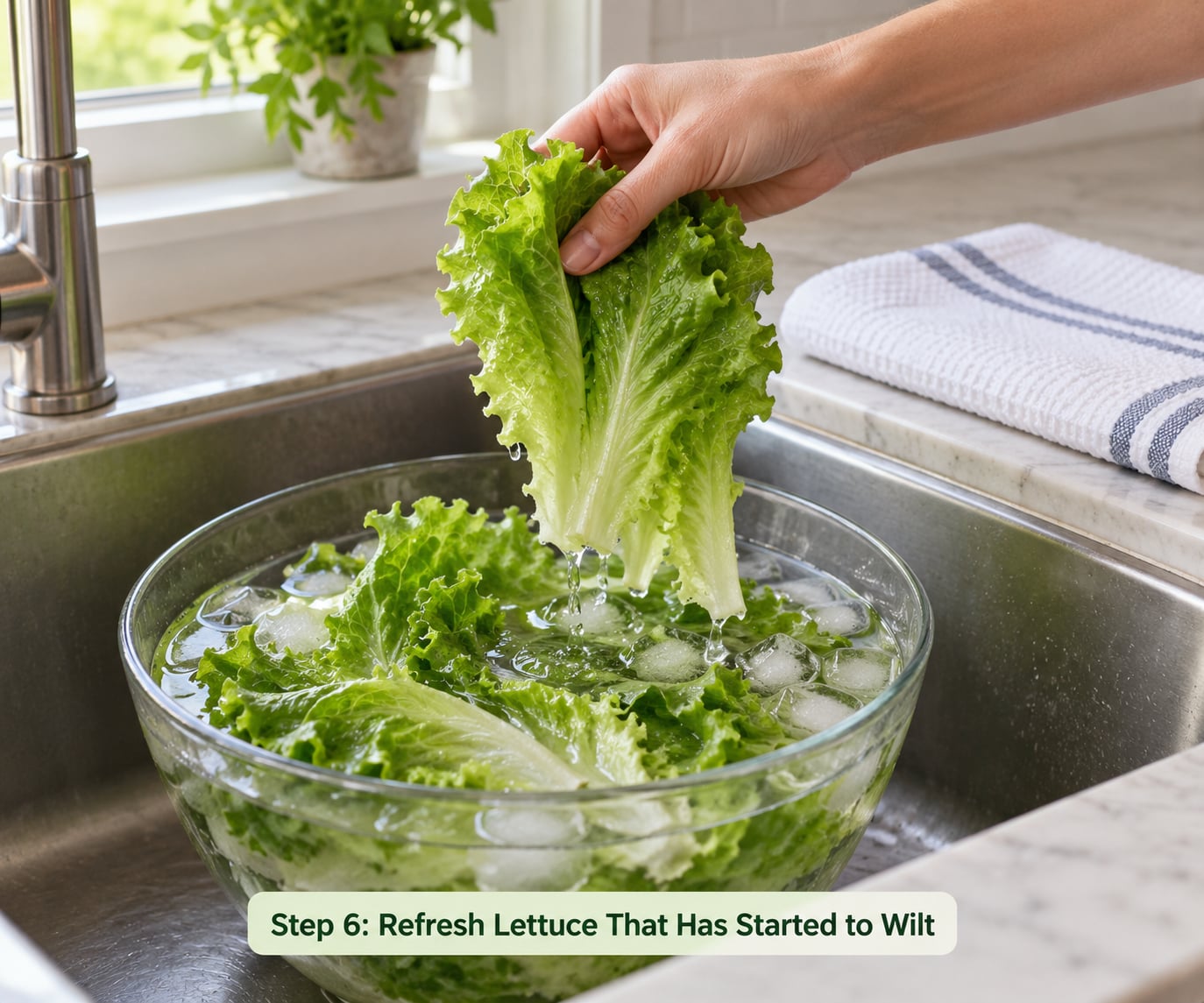
Lettuce that has gone soft from a day or two of warmth will crisp back up. Fill a large bowl with cold water and ice, submerge the leaves, and add weight with a plate or another bowl on top so the leaves stay submerged.
Wait 10 to 30 minutes. Small leaves usually firm up in about ten; a whole romaine heart or butterhead can take the full half hour. Lift one out and test the rib: it should snap, not bend.
Drain the leaves in a colander and dry them again, completely, using the same method as step 3. This part is where a lot of people undo the revival, since wet leaves straight back into the bag are limp within hours.
Revival only works on leaves that are otherwise sound. If the leaf is slimy, dark at the edges, or smells sour, the water is not going to fix it. Brown and pink discoloration is mostly cosmetic, but sliminess and odor are not, and those leaves belong in the compost.
Common Mistakes When Keeping Lettuce Fresh Longer
- Washing days ahead. Dry, unwashed lettuce lasts the longest. Most home refrigerators handle a head much better than they handle a wet one, so if you are not eating it for a week or more, keep the wash for the day you cook.
- Storing leaves wet. This is the number one cause of slimy lettuce. Water trapped against the leaf surface breeds bacteria at fridge temperature. Dry every leaf, every time, and use the towels.
- Sealing warm lettuce. A closed container holding warm leaves traps steam that condenses as it cools. Cool the lettuce fully first, or leave the lid cracked for half an hour.
- Overfilling the container. A packed tub crushes the leaves at the bottom and cuts off airflow. Leave headroom, and keep a loose towel between layers if you have a tall container.
- Storing lettuce next to fruit. Apples, bananas, peaches, papayas, cantaloupe and tomatoes all release ethylene gas, and lettuce picks it up fast. A separate crisper drawer or a different shelf solves it.
- Leaving the crisper on the low setting. Low humidity dries leaves out and makes them limp. High humidity holds enough moisture in the air to keep leaves plump without touching them.
- Leaving the bag open on the counter. Lettuce at room temperature loses its crispness within a couple of hours and picks up bacteria quickly. Refrigerate it as soon as it is dry.
- Ignoring the paper towel after a few days. The towel works by being dry. When it feels damp, swap in a fresh one and the container keeps going.
- Rinsing bagged pre-washed greens again. Triple-washed greens are already clean, and the extra handling and water shorten their life.
- Storing bruised leaves. A bruised edge never recovers, and the damaged tissue goes first. Pull bruised and torn leaves out before storage rather than using them up first.
Two smaller problems come up often. Pink or rust-colored ribs usually mean oxidation at the cut edge, and a squeeze of lemon juice in the rinse water slows it down, though it changes the flavor slightly. Browning at the edges is the same problem without color, and the only real fix is to store the leaves drier and use them sooner.
When you end up with more lettuce than the week can absorb, freezing works for cooked dishes but not for salads. Blanch the leaves for about 30 seconds, squeeze out the water, and freeze them flat in a single layer so they do not clump, then bag them once solid. They keep roughly six months and are fine in soups, stews and sautés, but thawed lettuce has no crunch, so keep it out of anything served cold.
Frequently Asked Questions
How long does lettuce last in the refrigerator?
A whole unwashed head stored dry in the crisper drawer keeps 7 to 14 days. Washed leaves in a container with paper towels last 5 to 7 days, and chopped lettuce lasts a similar 5 to 7 days sealed properly. Loose leaf varieties are the shortest at 3 to 5 days, while iceberg and romaine hold the longest. Buy the freshest head you can find, and start the clock only once it is dry and cold.
How long does washed lettuce last in the fridge?
Washed lettuce lasts 5 to 7 days when you dry it completely and store it in a sealed container with dry paper towels above and below. Washing removes the protective outer surface and any water you miss accelerates spoilage, so well-dried washed lettuce loses a few days compared with a whole unwashed head. If the towel feels damp when you check, replace it and the container keeps going.
How should I store cut lettuce for meal prep?
Chop the lettuce, spin or towel it dry, then layer it in a container with a dry paper towel on the bottom and another on top. Leave the lid cracked for about 30 minutes to let moisture escape, then seal and refrigerate. Portion it into single-serve tubs rather than one large container, and plan on 5 to 7 days, which covers most meal prep windows. Refresh the towel every few days.
How do I keep lettuce from getting soggy in a lunchbox?
Pack the leaves completely dry and separate from anything wet. A dry paper napkin around the lettuce, or a slice of bread as a buffer, absorbs stray moisture during the morning commute. Keep tomatoes, dressings and pickles in a separate container and add them at lunch. If you are packing a whole sandwich the night before, the layering order matters as much as the lettuce itself.
Can you freeze lettuce?
Yes, but only for cooking. Blanch the leaves for about 30 seconds, cool them, squeeze out the excess water, and freeze them flat on a tray before bagging so they do not clump. Frozen lettuce keeps around six months and works well in soups, stews and cooked dishes. It turns soft and watery when thawed, so it is not worth freezing for salads or sandwich toppings.
How do you tell if lettuce has gone bad?
Sliminess, a sour or fermented smell, and wet brown or black edges all mean the leaves are no longer safe or pleasant to eat. Browning or pink rib edges on their own are cosmetic oxidation, and those leaves are still fine to eat. Discard anything that feels slimy rather than merely soft, and smell the bag before you decide. A head that is a little limp can be revived in ice water, but a head that smells sour cannot.
Conclusion
Start with dry lettuce. Everything else in this guide is a variation on that one rule, and a head that is properly dry will last several times longer than one that went into the fridge wet.
For whole heads and loose leaves, put a dry paper towel in a perforated produce bag and keep it in the crisper drawer on high humidity, away from fruit. For chopped lettuce, layer it in a container with dry towels above and below, leave the lid cracked briefly, then seal and refrigerate.
Use it inside the window that fits your method: 7 to 14 days for a dry whole head, 5 to 7 days for washed or chopped leaves, and up to a month if you vacuum seal. When leaves go a little soft, a 10 to 30 minute ice water bath brings most of them back. That is the whole method, and it costs about ten minutes the first time you do it.