
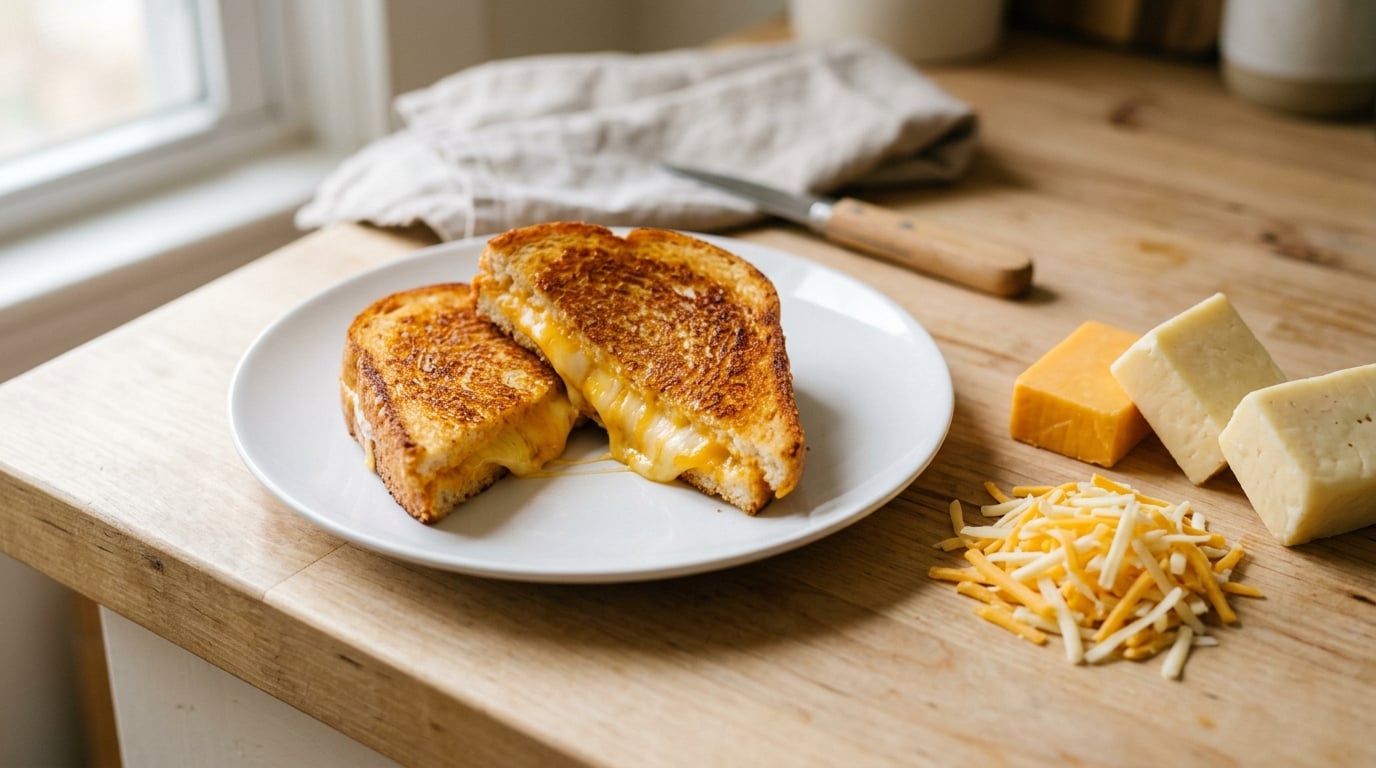
The best cheese combinations for grilled cheese always split the work in two: a strong, flavorful cheese for seasoning and browning, plus a moist, low-age cheese for the melt and pull. Sharp cheddar with Havarti is the one I come back to most, because the Havarti turns creamy without getting greasy and the cheddar keeps the sandwich from tasting like a bag of plain melted cheese.
That said, the right pairing depends on what you want. A kid who needs a mild melt and an adult who wants a tangy, grown-up sandwich can share the same skillet if you build two sandwiches. Below are ten pairings, each with a ratio, a bread that suits it, and one add-in to keep things balanced.
Table of Contents
- Best Cheese Combinations for Grilled Cheese at a Glance
- 1. Cheddar and Mozzarella
- 2. Gruyere and Emmental
- 3. Parmesan and Mozzarella
- 4. Cheddar and Colby
- 5. Brie and Cheddar
- 6. Goat Cheese and Cheddar
- 7. Havarti and Cheddar
- 8. Feta and Cheddar
- 9. Pepper Jack and Cheddar
- 10. Swiss and Cheddar
- Frequently Asked Questions
- Conclusion
Best Cheese Combinations for Grilled Cheese at a Glance
| Combination | Flavor profile | Ideal bread | Sandwich personality |
|---|---|---|---|
| Cheddar and Mozzarella | Sharp, tangy, milky | Country white or sourdough | The all-rounder |
| Gruyere and Emmental | Nutty, earthy, alpine | Rye or medium sourdough | Adult and woodsy |
| Parmesan and Mozzarella | Savoury, nutty, stretchy | Thick-cut white | Cheese-tastic, deli style |
| Cheddar and Colby | Mild to sharp, buttery | Soft white sandwich bread | Kid-proof classic |
| Brie and Cheddar | Creamy, earthy, tangy | Neutral country loaf | Fancy party centrepiece |
| Goat Cheese and Cheddar | Tangy, lemony, rich | Sourdough or ciabatta | Bright and grown-up |
| Havarti and Cheddar | Buttery, creamy, sharp | Soft white or brioche | The best all-round melt |
| Feta and Cheddar | Salty, briny, tangy | Rye or multigrain | Punchy and savoury |
| Pepper Jack and Cheddar | Mild, peppery, mellow | Multigrain or white | Flavour without the bite |
| Swiss and Cheddar | Nutty, mild, clean | Multigrain or pumpernickel | Balanced and lunchbox-friendly |
1. Cheddar and Mozzarella
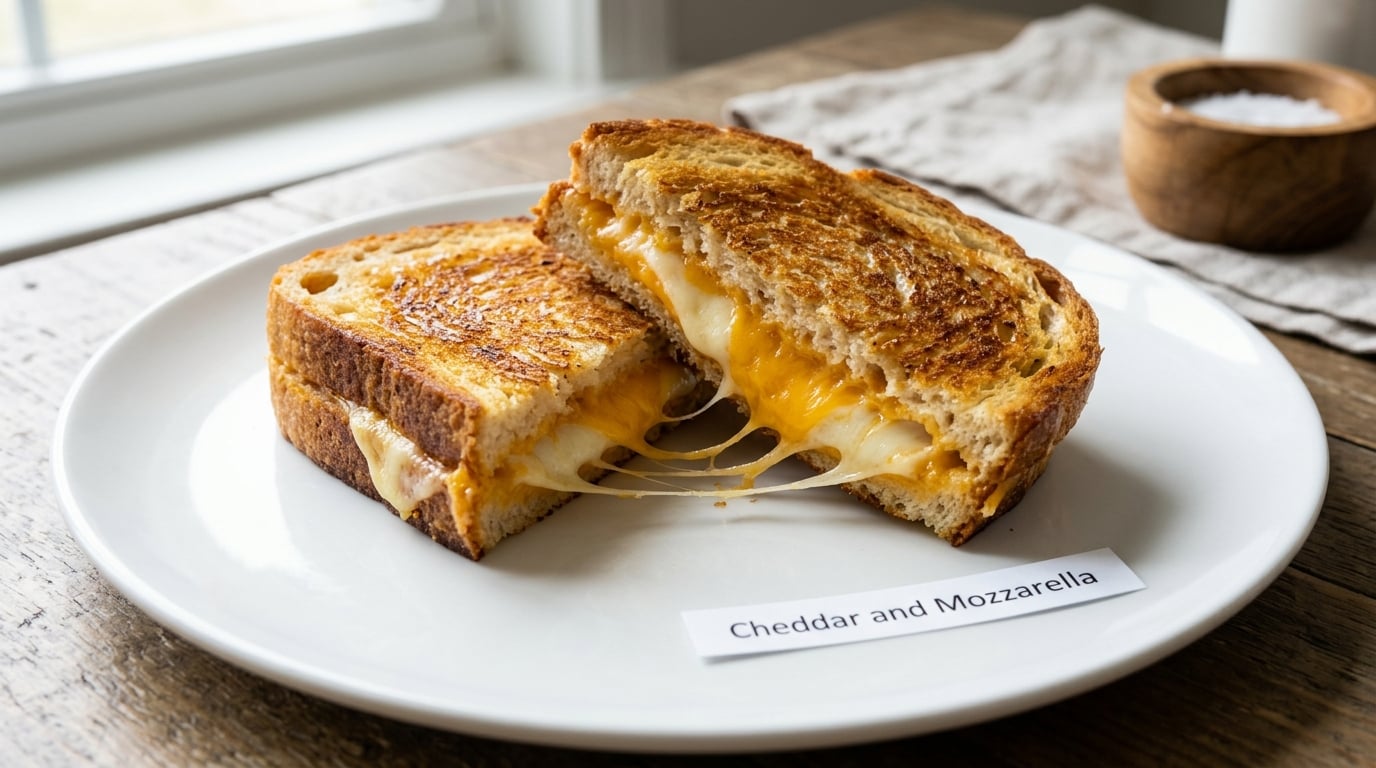
Cheddar and mozzarella is the most forgiving pairing in the kitchen, and the one I hand to anyone making their first grilled cheese. Sharp aged cheddar gives the sandwich a seasoned, slightly tangy bite that survives the heat of the pan, while whole milk mozzarella melts into a smooth, milky layer that stops the cheddar from drying out.
Use roughly two parts cheddar to one part mozzarella by weight, and grate both from the block. That extra fat and moisture from the mozzarella is what keeps a lean sharp cheddar from turning the sandwich oily instead of melty.
The best cheese combination for grilled cheese, and how to layer it
Layer the cheddar on the bottom slice, the mozzarella on top, then add a thin spread of Dijon or mustard on the inside of the top slice. The acid cuts the richness, and it keeps the sandwich from reading as a single heavy note. Serve it on country white or a soft sourdough with butter or mayonnaise spread on the outside.
2. Gruyere and Emmental
Gruyere and Emmental is the alpine pairing to use when you want a sandwich that tastes like a Swiss chalet rather than a diner. Both cheeses are semi-hard, both melt cleanly at low heat, and both bring a nutty, slightly sweet depth that gets better the longer the sandwich sits.
Combine them in equal parts, one part each by weight. Gruyere does most of the flavor work and Emmental keeps the texture even, so the melted layer slices cleanly instead of breaking into strings. Bring the heat up slowly on a medium setting; high heat scorches the outside before the middle of the sandwich has softened.
Rye or a sturdy country loaf is the right bread here, and a thin layer of grain mustard on the inside pairs well with the nuttiness. A small handful of toasted hazelnuts in the layer adds crunch and pushes the sandwich toward a salad-course flavor without leaving the grilled cheese format.
3. Parmesan and Mozzarella
Parmesan and mozzarella is the answer when you want the sandwich to read as one clear, loud cheese rather than a blend. Shaved Parmesan adds salty, nutty savor that survives the pan, and whole milk mozzarella supplies the stretch that keeps it from being a dry pile of shreds.
Shave the Parmesan as thin as you can rather than grating it, and keep it to about a third of the total weight. Too much hard cheese and the sandwich turns crumbly; the mozzarella should still be the majority. This is the one combination where a light hand matters more than anywhere else on the list.
Use a medium-thick slice of white bread so the cheese layer has somewhere to sit. A thin spread of pesto on the inside of the top slice turns it into a cheese toastie without adding another cheese, and a handful of arugula pressed into the layer after the pan comes off the heat adds a peppery note against the fat.
4. Cheddar and Colby
Cheddar and Colby is the pairing to make when the sandwich has to please a child and an adult at the same table. Colby is mild, buttery and melts evenly with no pulling, and the cheddar on top adds just enough sharpness to keep the whole thing from being bland.
Go two parts Colby to one part mild or sharp cheddar. Colby has a higher fat content than a lean sharp cheddar, so it does the melting and the cheddar handles the flavor, and the order matters more here than in most pairings.
Soft white sandwich bread is the right call, since a thick artisan loaf will make the sandwich too hard to bite and a chewy loaf hides the melt. A thin smear of yellow mustard on the inside is the classic pairing, and a slice of crisp apple or pear on the plate keeps the salt in check.
5. Brie and Cheddar
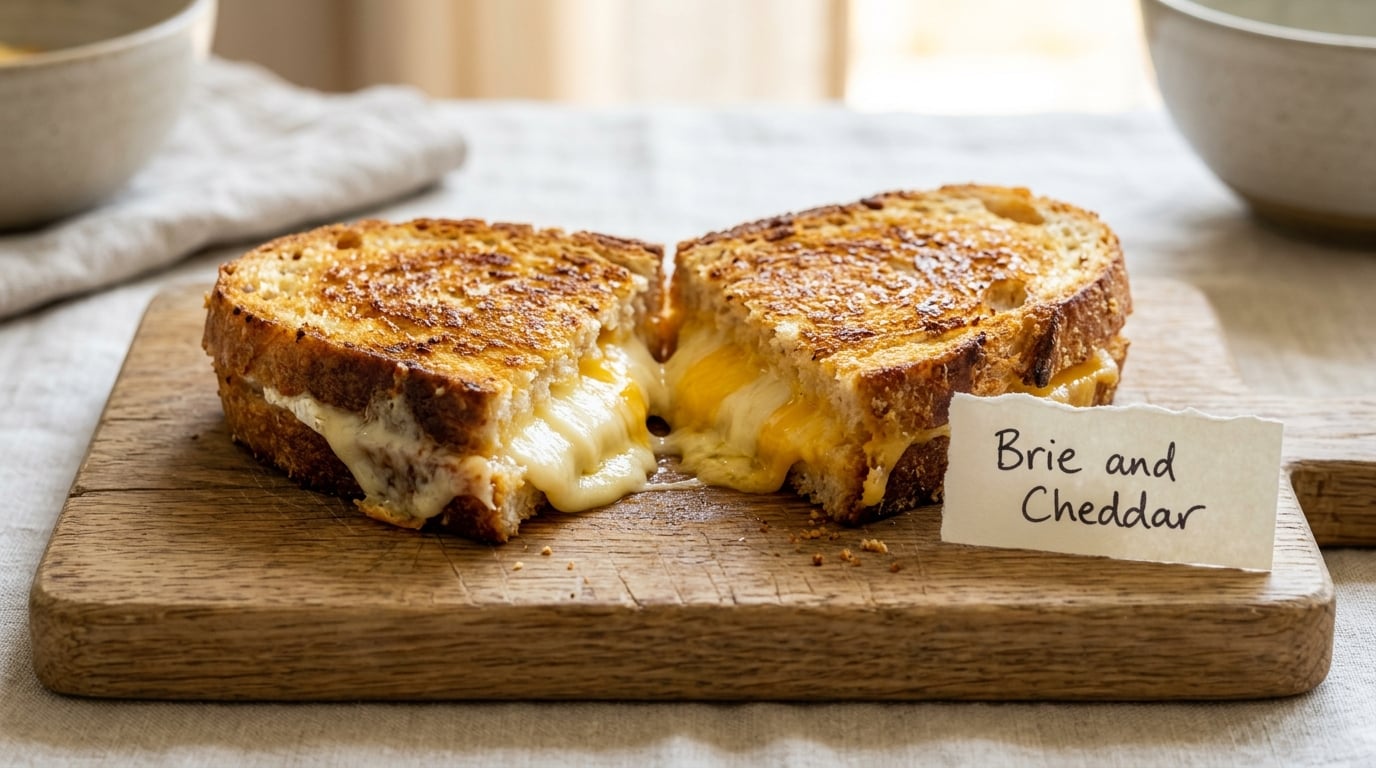
Brie and cheddar works because the two cheeses are opposites: the brie is soft, bloomy and almost custardy, while the cheddar is firm, dense and sharp. Four parts cheddar to one part brie is the ratio worth starting from, and it is the one that shows up most often in restaurant versions.
How to keep brie from going soft
The problem with brie is that it was already soft, so a hot pan turns it into a spread. Trim the rind, slice the brie thin, and keep it under the cheddar layer rather than on top, where it is the first thing to liquefy. Press the sandwich with a spatula for a minute after the crust browns, and let it rest off the heat for two minutes before cutting so the cheese firms up enough to hold a shape.
Add something acidic to stop the richness from catching. A few thin apple slices, a spoonful of honey, or a smear of fig jam on the inside all work. People who make this build regularly often start with a triple cream brie and a roasted fig, which is sweet enough to balance the salt without a sweet sauce.
6. Goat Cheese and Cheddar
Goat cheese and cheddar is the bright, tangy option on this list, and it is the one people are most surprised by. Goat cheese adds a lemony acidity and a creamy texture that cuts straight through the fat of the cheddar, and the cheddar gives the sandwich a rounded, savoury base so it does not taste like a salad.
Use one part soft goat cheese to two parts cheddar, and crumble or thin-slice the goat cheese rather than grating it. A thin layer is all it needs, and too much of it makes the sandwich crumbly on the second bite.
Sourdough or ciabatta is the right bread, since the crumb catches the soft cheese that would otherwise squeeze out. A drizzle of honey with a few cracked black peppercorns is the add-in to reach for, and toasted walnuts give it a bitter edge that works in the same direction as the pepper.
7. Havarti and Cheddar
Havarti and cheddar is the best all-round combination on this list, and the one I would hand to a nervous cook. Havarti melts into a smooth, buttery pool with a gentle pull, and it has enough fat to stay glossy instead of splitting, while the cheddar supplies the seasoning that a mild cheese on its own cannot.
Use one part Havarti to one part cheddar. Equal parts is what makes this one special, and going heavier on the cheddar is the usual mistake, because a sharp cheddar needs the Havarti underneath it to stay creamy rather than grainy.
Getting a smooth melt without a greasy finish
The grease in a bad grilled cheese comes from three places: too much fat rendered out of an already fatty cheese, too much butter on the outside of the bread, and heat that is too high. Cut one of those and the problem mostly disappears. With this pairing, a very thin butter layer, a medium-low heat, and about a third of a cup of shredded cheese per slice is plenty.
Soft white bread or a light brioche is the best match, and a thin layer of honey mustard inside balances the butter. Let the sandwich sit for a minute off the heat before cutting, and the Havarti sets up into that clean, creamy pull rather than running across the plate.
8. Feta and Cheddar
Feta and cheddar is the salt-forward pairing, and it is best for people who think a grilled cheese should taste like lunch rather than a snack. Feta is crumbly, briny and does not melt on its own, so it works as an accent that seasons the whole sandwich rather than as the cheese that creates the pull.
Keep feta to about a quarter of the total weight and crumble it fine, mixing it through the shredded cheddar before it goes in the pan. That distributes the salt and the brine, and it stops you biting into a pocket of feta that has stayed cold in the middle of the sandwich.
Rye or multigrain bread is the right base, since the grainy, earthy flavor of the bread matches the feta. Add a thin slice of red onion or a spoonful of chopped olives to the layer, and finish with a side of crisp salad so the salt has something to land on.
9. Pepper Jack and Cheddar
Pepper jack and cheddar gives you flavor without a sharp cheese, which is exactly what you want for a sandwich that should taste grown-up but not challenging. Pepper jack is mild, creamy and melts like a dream, and the little cracked peppercorns in it add a slow warmth that builds as you eat.
Use one part pepper jack to one part cheddar, and pick a mild or medium cheddar rather than an aged one. A very sharp cheddar next to a creamy pepper jack makes the whole sandwich taste like two separate ingredients rather than one, so keep the aged flavor on the mild side.
Multigrain or plain white bread both work, and a thin spread of pepper jelly on the inside is the add-in that ties it together. Pickled jalapenos on the side rather than in the sandwich keep the heat in the bites you choose, and a few of them cut the fat of the cheese nicely.
10. Swiss and Cheddar
Swiss and cheddar is the quiet, balanced pairing, and the one that works best when you are making several sandwiches at once. Swiss brings a mild nuttiness and an unusually clean stretch, and the cheddar adds a deeper, savoury note that keeps the sandwich from being bland.
Use two parts Swiss to one part cheddar. Swiss has a lower fat content than most melters, so the cheddar is what stops the layer from going tight and rubbery, and a slightly firmer Swiss melts into a smooth sheet rather than separate strings.
Multigrain or pumpernickel is the best bread match, and both sit well against the nuttiness without competing with it. Add a thin smear of whole grain mustard and a handful of thin apple slices, and this combination becomes a fairly convincing answer to what to serve with a bowl of tomato soup.
Frequently Asked Questions
What is the best cheese mixture for grilled cheese?
Sharp cheddar and Havarti is the best general mixture. The cheddar provides the flavor and browning while the Havarti melts into a smooth, stretchy layer that stays creamy instead of splitting into oil. Roughly equal parts by weight, grated from the block, on medium-low heat.
What two cheeses go well together for grilled cheese?
Any strong cheese paired with a moist, low-age cheese works. Cheddar with mozzarella, cheddar with Havarti, gruyere with Emmental, and Swiss with cheddar are the most reliable. The rule is simple: the sharper cheese seasons it and the moister cheese melts it, and you want one of each.
What are the best three cheeses for grilled cheese?
Use one flavor cheese, one melt cheese and one accent cheese. Cheddar plus mozzarella plus a small amount of goat cheese works, as does Gruyere plus fontina plus a few crumbles of blue. Keep the accent cheese to roughly a quarter of the total weight so the first two still register separately.
What cheese melts best for grilled cheese?
Low-age, high-moisture cheeses melt best, which is why mozzarella, Havarti, provolone, fontina and processed American cheese pour evenly. Aged cheddar, Gruyere and Swiss melt more slowly and need lower heat. Parmesan, feta and other dry cheeses barely melt at all and are best used as accents.
Why does my grilled cheese turn out greasy?
Grease usually comes from three things: too much fat rendered out of the cheese, too much butter on the outside of the bread, and heat that is too high. Use medium-low heat, a thin butter layer, and about a third of a cup of grated cheese per slice. Rest the sandwich before cutting.
Should I shred my own cheese for a grilled cheese?
Yes, in almost every case. Bagged pre-shredded cheese is mixed with anti-caking agents such as cellulose, which keep the shreds separate and stop them from melting into one layer. Block cheese grated at home melts faster, smoother and with a better pull, and it costs less for the same sandwich.
Conclusion
Start with the best cheese combinations for grilled cheese, which is sharp cheddar and Havarti in equal parts, grated from the block, on soft white bread with a thin butter layer and medium-low heat. That combination is the safest way to get a golden crust and a clean, stretchy center on your first try.
After that, pick by what you want more of. Cheddar and mozzarella for the all-rounder, Gruyere and Emmental for nuttiness, goat cheese and cheddar for tang, feta and cheddar for salt, and brie and cheddar when you are feeding people and want the sandwich to look like it took effort. Whichever one you choose, grate it yourself, keep the heat moderate, and let the sandwich rest for a minute before you cut it.