
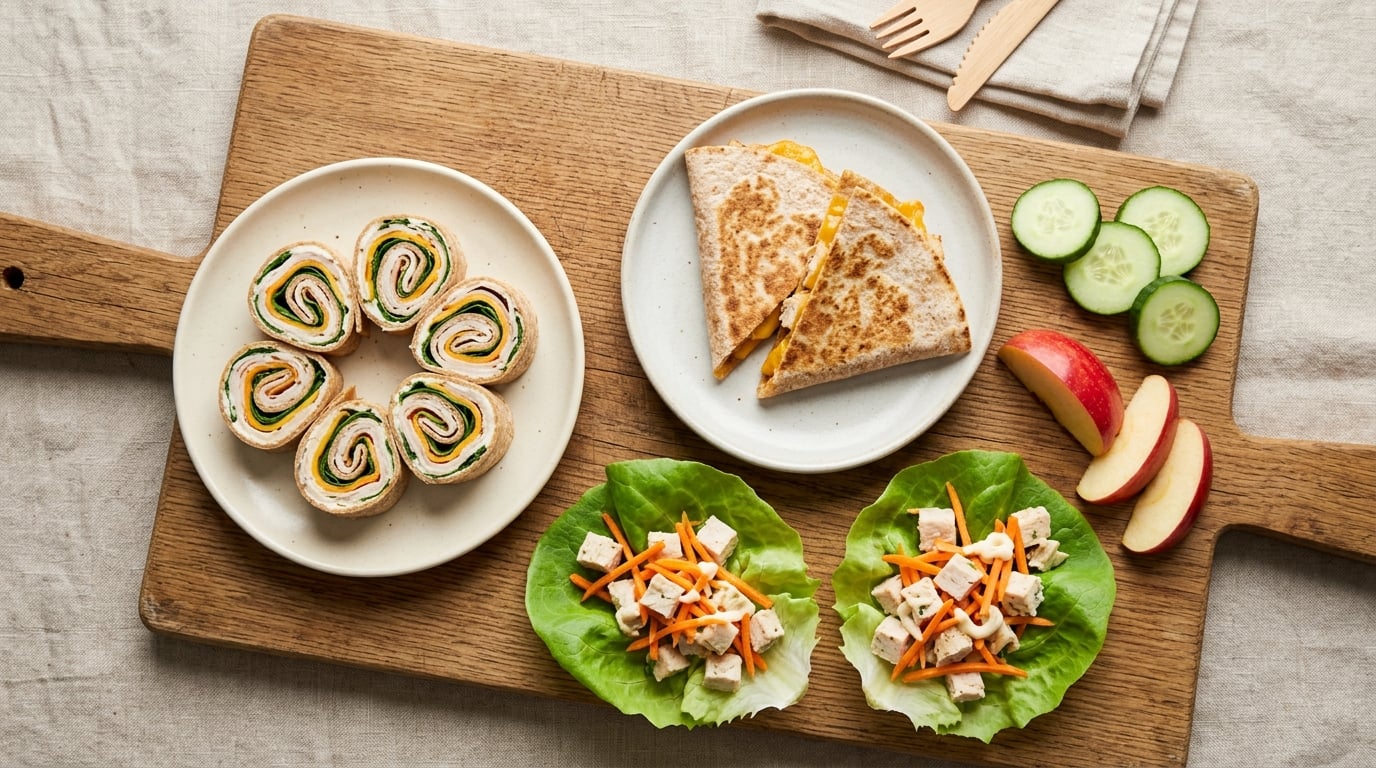
If your child turns sandwiches down but happily eats a cucumber slice with cream cheese, the problem is rarely the food. A stacked sandwich asks a kid to commit to chewy bread, a cold wet filling and whatever crunch is in there, all in one bite. Change the shape and the same ham, cheese and bread suddenly get eaten.
These are the best sandwiches for kids who don’t like sandwiches. Every one is built from ingredients a selective eater probably already accepts, then reworked so there is no stack, no crust, no big portion, or nothing that squishes out. Most take under five minutes.
Table of Contents
- Best Sandwiches for Kids Who Don’t Like Sandwiches at a Glance
- 1. Ham and Cheese Pinwheel Sandwiches
- 2. Mini Pizza Pockets
- 3. Grilled Cheese and Apple Sandwiches
- 4. Chicken and Avocado Wraps
- 5. Nut-Free Banana and Cream Cheese Toastedies
- 6. Turkey and Hummus Pinwheels
- 7. Pizza Quesadilla Sandwiches
- 8. Fruit and Cream Cheese Tea Sandwiches
- 9. Chicken Salad Lettuce Cups
- 10. Warm Bean and Cheese Toasted Sandwiches
- Frequently Asked Questions
- What are some good lunch ideas for kids who don’t like sandwiches?
- What can I give my kids instead of sandwiches for lunch?
- What are some good sandwich fillings for picky kids?
- What are some ideas for lunches that are not sandwiches?
- How do you make a sandwich for a picky eater?
- How long does a packed sandwich stay safe in a lunchbox?
- Conclusion
Best Sandwiches for Kids Who Don’t Like Sandwiches at a Glance
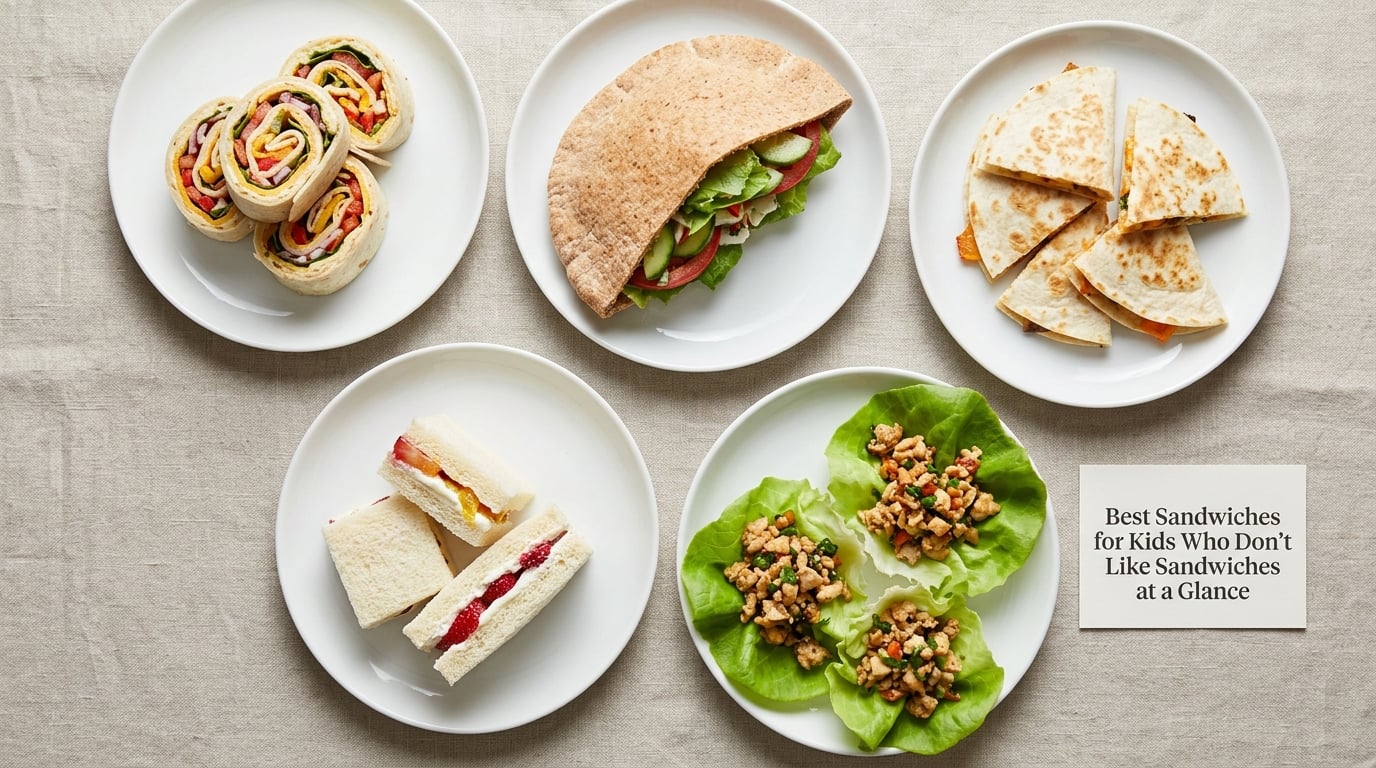
The table below sorts all ten by format and texture, so you can jump straight to the one that matches your child’s complaint.
| Sandwich | Format | Main ingredients | Texture | Best age or situation | Why a selective eater may accept it |
|---|---|---|---|---|---|
| Ham and cheese pinwheels | Rolled and sliced | Tortilla, ham, sliced cheese | Soft, springy | 2 and up, lunchbox | Filling is locked inside, so nothing falls out mid-bite |
| Mini pizza pockets | Folded pocket | Pita or tortilla, cheese, tomato sauce | Soft with a melted centre | 3 and up, hot or cold | Pizza flavours in a form that has no open edge |
| Grilled cheese and apple | Pressed flat | Soft bread, cheese, thin apple | Soft with a crisp edge | 2 and up, breakfast or lunch | Two foods they already eat, pressed instead of stacked |
| Chicken and avocado wraps | Rolled wrap | Soft tortilla, shredded chicken, avocado | Creamy, uniform | 3 and up | Every bite is the same texture all the way through |
| Banana and cream cheese toastedies | Toasted, cut small | Bread, banana, cream cheese | Soft, sweet, warm | 2 and up, nut-free | Sweet, no nut smell, no nut policy problem |
| Turkey and hummus pinwheels | Rolled and sliced | Tortilla, turkey, hummus, cucumber | Soft with one crunch | 3 and up, make-ahead | Hummus replaces mayo, so there is no slippery layer |
| Pizza quesadillas | Flat triangle, cut | Tortilla, cheese, tomato sauce, chicken | Chewy, cheesy, warm | 3 and up | Same pizza flavours in a completely different shape |
| Fruit and cream cheese tea sandwiches | One thin slice | Bread, cream cheese, banana, pear or strawberry | Soft, moist | 2 and up, party or snack | Small enough that a whole one is not a commitment |
| Chicken salad lettuce cups | Bread-free | Chicken, mayo or yoghurt, lettuce | Moist, no bread | 2 and up | For the child who has decided bread itself is the problem |
| Warm bean and cheese toastedies | Toasted, cut | Bread, refried beans, cheese | Soft, warm, mild | 2 and up, fibre-friendly | Slow, savoury and gentle, with nothing sharp in it |
1. Ham and Cheese Pinwheel Sandwiches
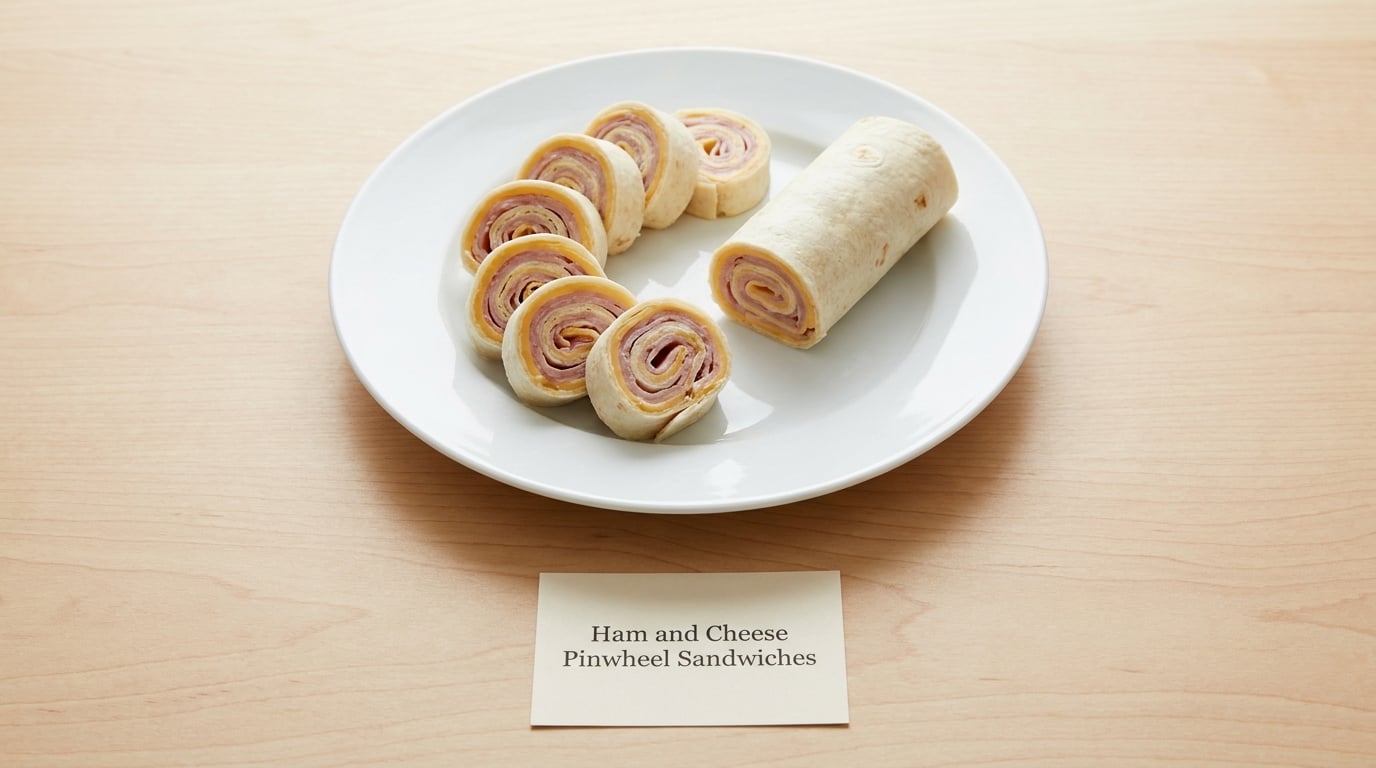
A rolled tortilla sliced into coin-sized rounds is the most reliably accepted “sandwich” I have served to a child who refuses sandwiches. Nothing is stacked, nothing drips, and each round is small enough to feel like a snack rather than a meal.
Spread a thin layer of mayo or cream cheese on a soft flour tortilla, lay two slices of ham and one slice of cheese on top, roll it up snugly, and cut into rounds about a centimetre thick. A lollipop stick or a cocktail stick makes them easier to pick up and less likely to be dropped halfway to the mouth.
Swap the filling to keep the format and change the food: turkey with cream cheese, cucumber rounds with cream cheese, or banana with a thin drizzle of honey for a nut-free version. Skip the honey entirely under age one, per standard pediatric guidance.
2. Mini Pizza Pockets
Mini pizza pockets use a soft pita or a tortilla, so the whole thing is one chewy layer with melted cheese in the middle rather than a sandwich with open edges. Kids who say no to sandwiches will often say yes to a pocket, because nothing needs to be held together with two hands.
Split a pita, spread a little tomato sauce on the inside of each half, add a small handful of grated cheese, then press the two sides together. Warm in a dry pan for a couple of minutes per side until the cheese melts, or in an oven until the edges crisp lightly. Pepperoni is a fine addition for children who eat it; leave it out for the under-fives who treat it as too spicy.
Cut each pocket in half so a preschooler is not handed something the size of a dinner plate. Grilled chicken or chopped cooked chicken can stand in for the pepperoni, cooked to 165 F / 74 C.
3. Grilled Cheese and Apple Sandwiches
A grilled cheese and apple sandwich is a cheat, and it works because both halves are already accepted. A thin apple slice melts into the cheese and the whole thing is pressed flat, so there is no layer of cold wet between two soft slices.
Use white bread or a very soft roll rather than anything seeded or wholegrain, and slice the apple as thinly as you can manage. A mandarin segment, drained and torn into small pieces, works if raw apple is refused outright.
Cut it into fingers or small triangles rather than halves. A half sandwich that falls apart mid-bite becomes a no; a quarter does not. Thin apple is also a choking-safety consideration for very young children, so keep slices paper-thin or cook them slightly in the pan.
4. Chicken and Avocado Wraps
Chicken and avocado wraps feel nothing like a sandwich, which is exactly the point. The tortilla rolls into a soft tube and the filling is creamy enough that every bite tastes the same, with no dry bread meeting a wet centre.
Mix shredded chicken with mashed avocado and a squeeze of lime, spread it down the middle of a soft tortilla, and roll tightly. Cut on a sharp angle so the open end shows the filling, or leave it whole for a child who does better with a lollipop style. Cook the chicken to 165 F / 74 C first, every time.
If avocado itself is the sticking point, swap it for plain yoghurt, cream cheese, or finely diced cucumber. The wrap format survives the swap, which is the whole point: you are changing one ingredient, not rebuilding the meal.
5. Nut-Free Banana and Cream Cheese Toastedies
Banana and cream cheese toastedies are the safest thing in this list for a nut-free classroom. There is no nut, no nut butter, and no nut flavour, so cross-contact worries mostly disappear.
Spread cream cheese on one slice of soft bread, lay two or three banana slices on top, close it, and toast lightly in a dry pan or a toaster oven until the outside is just warm. Cut into small squares or thin fingers.
For allergy-conscious variations, use a sunflower seed butter in place of cream cheese where the school allows seeds, or swap the banana for thinly sliced pear. If the classroom bans both nuts and seeds, stick with cream cheese and fruit, which needs no special labelling. Check with the school on its specific policy before the first packed week, since rules about seed butters vary.
6. Turkey and Hummus Pinwheels
Turkey and hummus pinwheels solve a specific problem: kids who find mayo slippery or cold. Hummus is thick, stable and barely wet, so the roll holds together and the texture stays even from the first round to the last.
Spread hummus over the tortilla, add folded slices of turkey and a few thin cucumber or bell pepper strips, roll, and chill for 20 minutes before cutting. Chilling matters more than it sounds; a cold roll slices cleanly instead of squashing.
To reduce the crunch objection, shred the cucumber finely or skip it and add a second roll of turkey instead. For a soggy-lunchbox morning, pack the cucumber separately in a compartment and let the child add it. Hummus pinwheels freeze well on a tray, then move to a bag for the month, which makes them the easiest item here to batch.
7. Pizza Quesadilla Sandwiches
A pizza quesadilla is the same flavours in a shape that does not read as a sandwich at all, and the change of shape alone is often enough to get a refusal reversed.
Spread a thin layer of tomato sauce over half a tortilla, add grated cheese and a little chopped cooked chicken or pepperoni, fold the empty half over, and cook in a dry pan for two to three minutes a side until the cheese runs and the outside is spotted brown. Keep the chicken to 165 F / 74 C.
Cut into small triangles and cool to a safe eating temperature before serving. Four small triangles read as a snack plate, which is the point. A thin spread of sauce rather than a heavy layer keeps the middle from turning to wet cardboard by lunchtime.
8. Fruit and Cream Cheese Tea Sandwiches
Fruit and cream cheese tea sandwiches are small, soft and sweet, and the size is the selling point. A child who will not face a full sandwich will often eat two of these without negotiating.
Cut one thick slice of soft white bread into a round with a biscuit cutter, spread it with cream cheese, and top with a very thin slice of banana, pear or strawberry. Cut each one into four finger-width strips so the portion is small.
Remove every pip, seed, stone and hard core, and slice strawberries lengthways rather than across. Round pieces are a common choking risk in young children, and a hard bit inside a soft sandwich is easy to miss. Offer water or milk alongside rather than juice, and put the fruit on the side if the child eats better that way.
9. Chicken Salad Lettuce Cups
Lettuce cups are the fallback for children whose objection is bread itself, not the filling. If your child has joined the kids at school who treat any slice of bread as suspicious, a bowl of the same chicken salad in a leaf often works where a sandwich never will.
Use small butter lettuce or romaine hearts, keep the filling moist with mayonnaise or plain yoghurt so it can be scooped rather than grabbed, and dice the chicken small. Cook it to 165 F / 74 C, then cool the salad before packing.
Pack the cups in a compartment box and the dressing or yoghurt on the side in a small pot, so nothing wilts into a puddle by 12:30. Add a small handful of grated cheese on top for a kid who wants something familiar in the cup.
10. Warm Bean and Cheese Toasted Sandwiches
Warm bean and cheese toastedies are a mild, filling option that works when a sandwich needs to be filling rather than fun. They are also naturally free of the most common allergens that get left out of school lunches.
Mash or thin refried beans with a splash of water so they spread easily, add a mild grated cheese, and toast on a buttered or oiled pan until the cheese melts and the bread is golden. Season with a pinch of cumin or mild paprika if your child tolerates it; skip strong seasoning entirely for a first taste.
Cut into quarters or thin fingers. Warm sandwiches belong in a thermos, and they are one of the few lunchbox ideas that tastes better at midday than at breakfast.
How to Serve These Ideas to Picky Eaters
Serve a small portion first, not a full one. One pinwheel on a plate, offered alongside something you know they will eat, is a much easier yes than a whole sandwich. A few parents describe the same food in a new shape as the thing that finally worked, so change the form before you change the food.
Let the child choose one element. The shape, the cut, or whether the filling goes on the side are all decisions that hand over a small amount of control, and control is often the thing actually being fought over.
Keep sides separate. Cheese cubes, carrot sticks and fruit in their own compartment stop the wet-meets-dry problem happening anywhere in the box.
Do not call it healthy, better, or a treat. A frame of improvement turns a meal into a lesson. Just put it on the plate.
When the lunchbox comes home untouched, do not lecture over it. A short, unpressured line about offering something different next week gets more response than a debrief. Short lunches are also the reason many children eat one thing and stop; that is a time problem more than a taste problem, and a smaller, familiar second item often gets eaten when the first one is not.
Frequently Asked Questions
What are some good lunch ideas for kids who don’t like sandwiches?
The best sandwiches for kids who don’t like sandwiches keep the food familiar and change only the shape. Try rolled pinwheels, folded pita pizza pockets, cut quesadilla triangles, soft fruit and cream cheese tea sandwiches, or lettuce cups. Serve a small portion next to a food your child already eats, and keep wet and dry items in separate lunchbox compartments so nothing turns to mush by midday.
What can I give my kids instead of sandwiches for lunch?
Most families land on a mix rather than a swap. Cheese cubes with crackers, mini sausages, oatcakes, plain yoghurt, pasta, small quiche wedges, sausage rolls, a handful of fruit and a drink make a reliable lunchbox. A compartment box works best here, since it keeps soft items from sitting against anything wet. Offer one familiar item plus one new thing rather than a full plate of unknowns.
What are some good sandwich fillings for picky kids?
Stick to the flavours your child already eats, then change the format rather than the ingredients. Cream cheese, mild cheddar, butter, banana, honey over age one, plain yoghurt, hummus, and smooth refried beans are reliable. For meat, folded turkey or ham with no added texture works better than anything crumbly. Add crunch last and only if your child tolerates it, and put it in a separate compartment.
What are some ideas for lunches that are not sandwiches?
Lunches that are not sandwiches include mini sausage rolls, cheese and vegetable muffins, small quiche slices, pasta with butter or a mild sauce, crackers with cheese, cut fruit, yogurt, and snack plates of a few finger foods. Quesadillas and pinwheels sit between the two categories, since they use sandwich fillings in a form that most children accept. Rotation matters more than novelty, so build a five-day plan and repeat what gets eaten.
How do you make a sandwich for a picky eater?
There are five reliable changes: take the crust off, cut it into small pieces, deconstruct it so the filling sits beside the bread instead of inside, roll it into a pinwheel, or serve it open-faced with the topping spread thinly. Pick one change at a time so you know what worked. Portion size matters as much as ingredients, and a quarter sandwich beats a whole one for most young children.
How long does a packed sandwich stay safe in a lunchbox?
Treat anything perishable, including ham, chicken, egg, dairy and cooked beans, as needing refrigeration for the whole morning. Pack it with a frozen ice pack in an insulated box, and use a separate pot for yoghurt or dressing. Two hours at room temperature is the usual limit, and a full school morning is longer than that. Cook poultry to 165 F / 74 C before it goes in the box.
Conclusion
If your child refuses sandwiches, start with the rolled and sliced formats. Ham and cheese pinwheels or turkey and hummus pinwheels are the two to try first, because they are soft, they hold together, and they use food most households already keep in the fridge.
Then change one thing at a time. Cut the crust off before you change the filling, and make the portion smaller before you add anything new. One small, pressure-free choice next to a familiar food is a better start than a plate of sandwich ideas in 2026, and repeating what actually gets eaten beats trying something new every morning.