
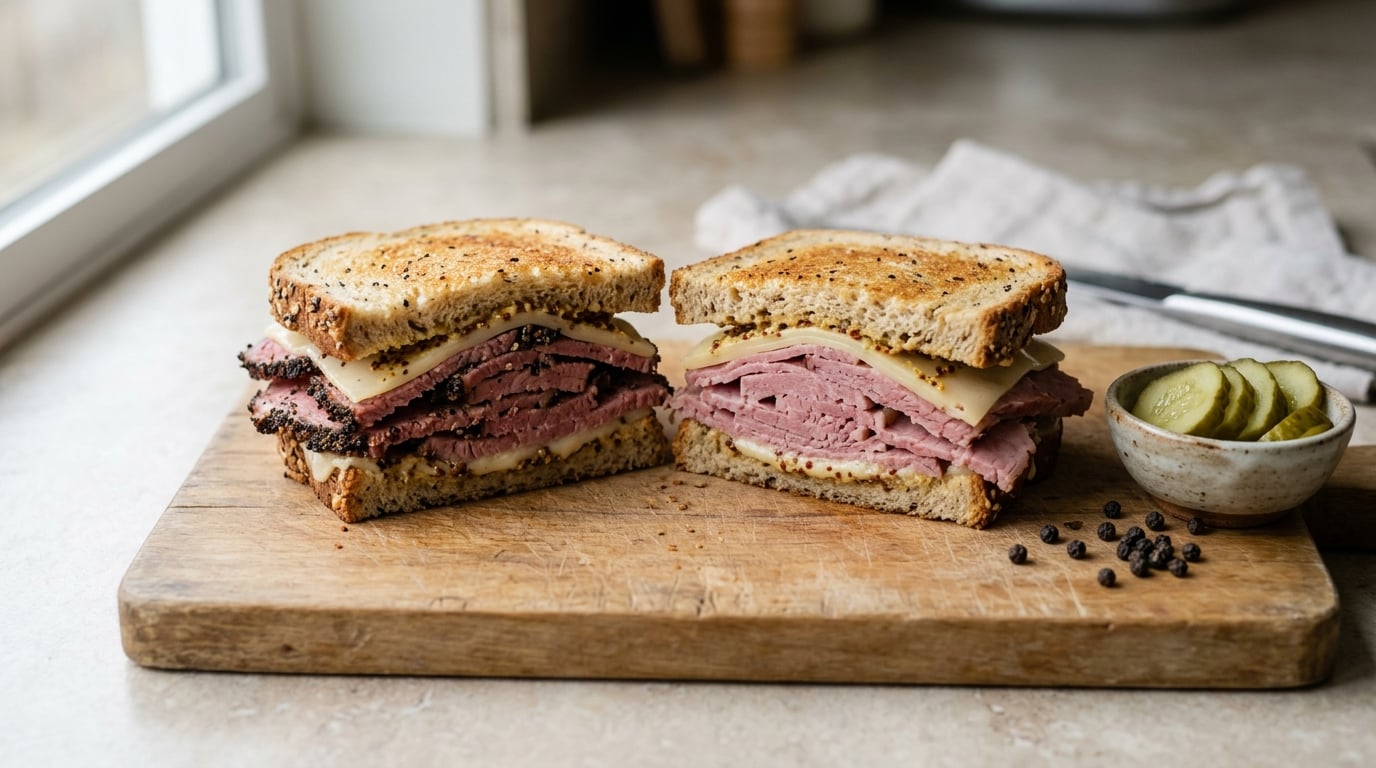
Pastrami makes the better hot sandwich at home, but only if you steam it first. Corned beef wins the same contest when you plan to press it on a griddle, and it is the correct meat for a Reuben. The difference is not seasoning, it is how each one reacts to heat, and we build hot sandwiches every day at the shop, so this is the short version before the long one.
Both meats start life as the same animal. Pastrami or corned beef, you are looking at cured beef brisket, and a good hot sandwich is decided in the last five minutes of cooking, not the ten days of curing that came before it.
This guide covers how to pastrami and corned beef taste different, which one has the better texture, how to warm each one without wrecking it, and what to do with the leftovers. Updated for 2026 because the steam timing below is the part most home cooks get wrong.
Table of Contents
- Pastrami or Corned Beef: Which One Makes the Better Hot Sandwich at Home? at a Glance
- How Do Pastrami and Corned Beef Taste Different?
- Which Meat Has the Better Texture?
- Which One Is Easier to Make at Home?
- Pastrami or Corned Beef for a Hot Sandwich
- Which Sandwich Is More Filling?
- How Should You Store Leftover Meat?
- Which Should You Choose?
- Frequently Asked Questions
- Is pastrami or corned beef better for a hot sandwich?
- Do I need to soak corned beef before making a sandwich?
- How do I keep corned beef or pastrami from becoming too salty?
- What is the best way to reheat sandwich meat?
- Which bread goes best with pastrami and corned beef?
- Can I make hot pastrami or corned beef sandwiches ahead of time?
- Conclusion
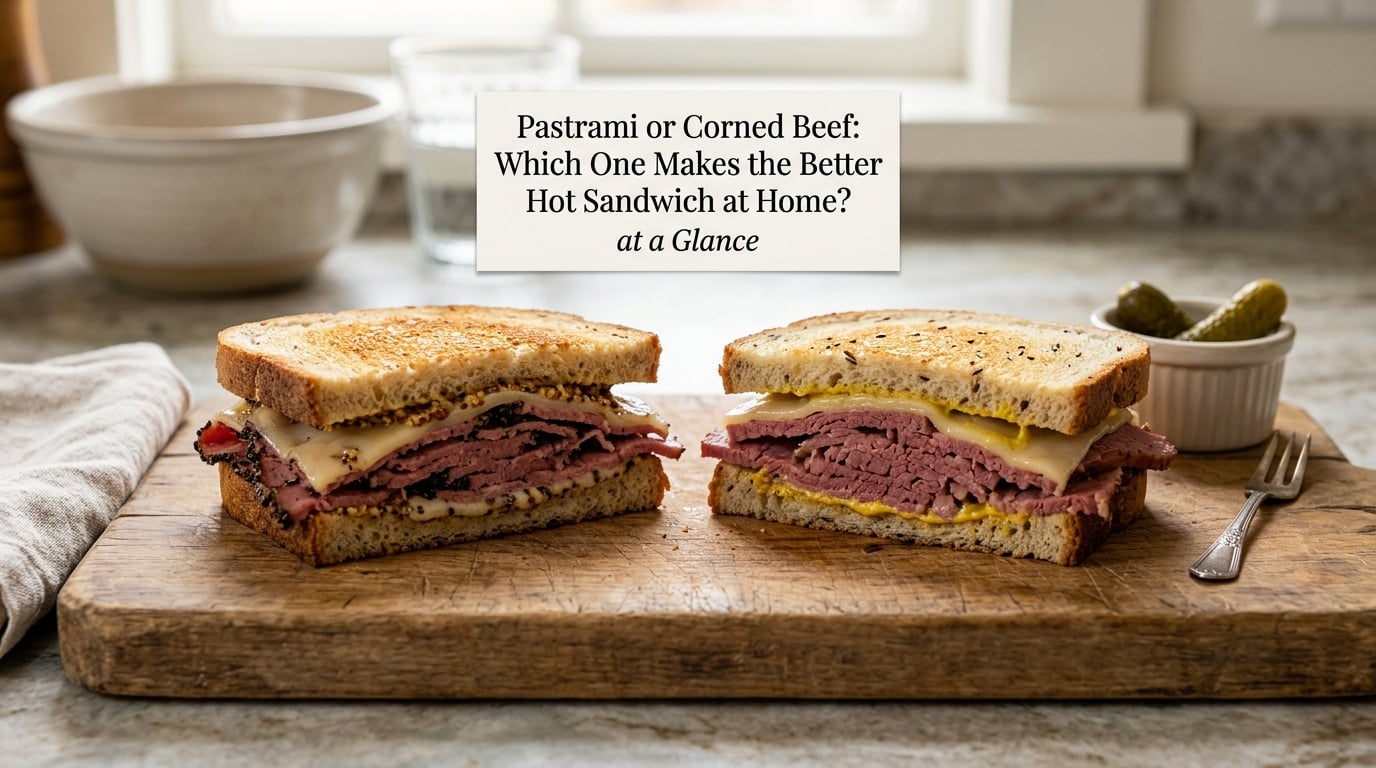
Pastrami or Corned Beef: Which One Makes the Better Hot Sandwich at Home? at a Glance
| Factor | Pastrami | Corned Beef |
|---|---|---|
| Flavor | Smoky, peppery, sharply spiced bark | Briny, savory, spiced but mellow |
| Texture | Firm but tender, crumbles under pressure | Lean, dense, chewy, slightly rubbery when cold |
| Seasoning | Coarse black pepper and spice rub, often coriander, garlic, mustard seed | Mustard seed, pickling spice, sometimes bay and sugar in the cure |
| Typical cut | Brisket, frequently the navel with internal fat | Brisket, often the point or a trimmed flat |
| Finish | Smoked, which dries the surface | Boiled or braised, which keeps it moist |
| Preparation effort | Harder. Curing and smoking take days and a smoker | Easier. Curing then a long simmer in a pot |
| Heat tolerance | Fragile. Straight to a hot pan dries it out | Forgiving. Takes high heat and a press well |
| Best reheat method | Steamed, covered, about 10 minutes | Skillet or griddle, 1 to 2 minutes a side |
| Sandwich suitability | Best on rye with mustard and horseradish | Best in a Reuben, with sauerkraut and Russian dressing |
| Serving temperature | Hot but barely warm through, 140 to 150F | Hot, 150 to 160F, crisp at the edges |
| Refrigerated storage | 3 to 5 days for deli slices | 3 to 5 days for deli slices |
That table is the whole argument in condensed form. Pastrami is a spice-forward, smoke-forward meat that asks to be treated gently. Corned beef is a brined, boiled meat that has already survived a long cook once and can handle another.
How Do Pastrami and Corned Beef Taste Different?
Pastrami tastes like smoke and pepper. The cure is a dry brine, then the meat gets a heavy rub of coarse black pepper with coriander, garlic and mustard seed pressed into the surface, and that rub forms the dark bark you see on a good slice.
Corned beef tastes like salt, spice and time. The cure is a wet brine using curing salt, and corning has nothing to do with corn despite the name. The word comes from the coarse salt crystals that looked like kernels of corn, and the brine usually carries mustard seed, pickling spice and sometimes a little sugar.
The difference in the sandwich is what happens after the cure. Pastrami gets smoked, so its flavor concentrates and darkens. Corned beef gets boiled or braised, so it stays pale, briny and honest, which is why it takes on dressings and sauerkraut without fighting them.
Which one handles rye, mustard and horseradish
Pastrami is the better match for rye and a sharp mustard. The pepper crust has enough bite to stand up to whole-grain rye, and yellow or Dijon mustard cuts the fat. Horseradish works on both, and a little grated horseradish on pastrami is the closest a home sandwich gets to a Katz’s counter.
Corned beef pairs better with the sour and creamy end of the condiment list. Russian dressing or Thousand Island, Swiss, sauerkraut or kimchi, and a pickle on the side. If you put Dijon on corned beef and nothing else, it can taste flat and slightly sour.
Dill pickles or a sharp sliced pickle work with either meat. What does not work is a heavy sweet relish on pastrami. The sugar kills the pepper.
Which Meat Has the Better Texture?
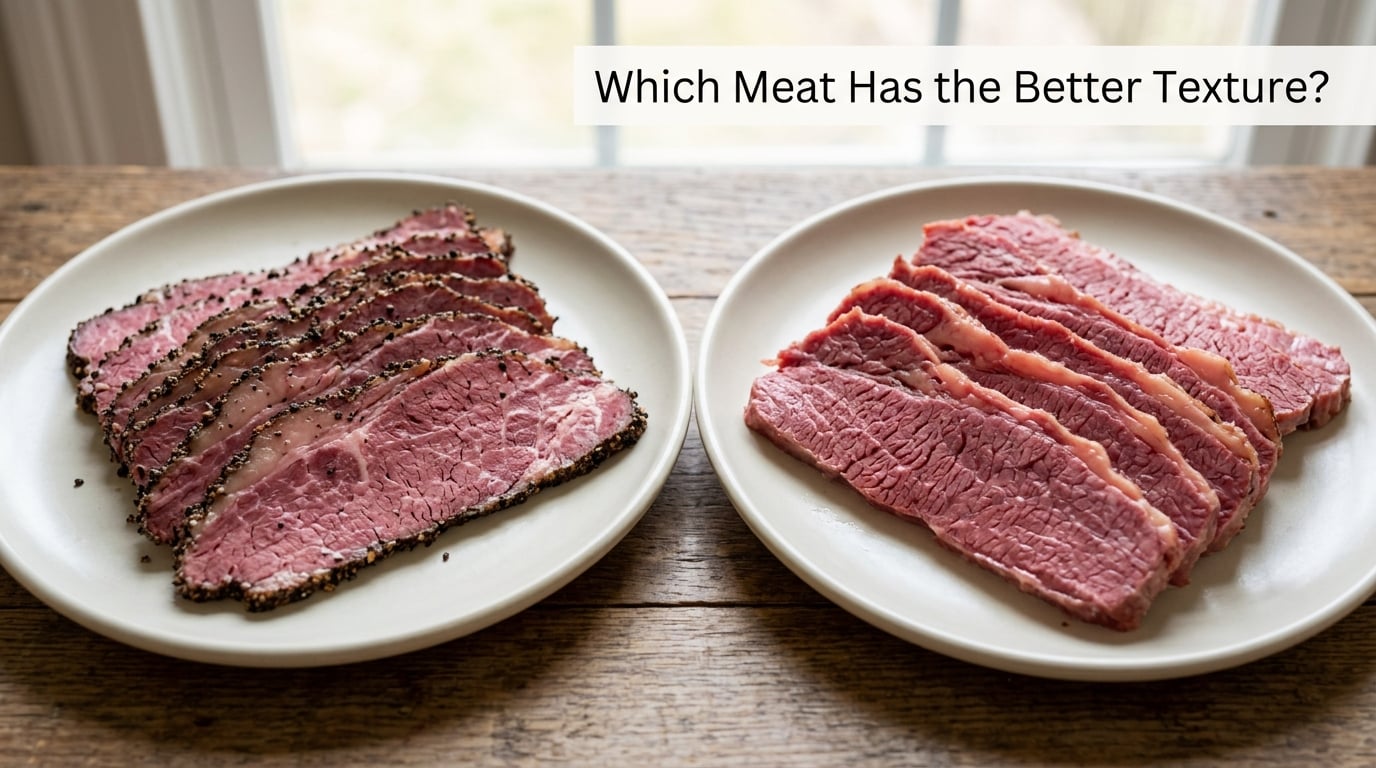
Corned beef is generally the more forgiving texture, and pastrami has the better texture when it is handled right. Texture is decided by two things: how lean the cut was, and whether you added moisture back before the meat saw high heat.
Corned beef is leaner and denser, so it chews more and holds its shape. That firmness is exactly what you want in a pressed sandwich, because the slices stay in a stack instead of collapsing into the bread.
Pastrami carries more fat, especially if it came from the navel, and that internal fat is the reason the meat stays tender. Deli folks point at the navel cut for the same reason: the fat sits inside the muscle rather than on it, so the smoke seasons the whole thing evenly and the finished meat keeps its moisture through a reheat.
Soaking matters too. If you are working with a whole cooked brisket that was salted hard, a short soak in cold water draws off the surface salt and nothing else. Ten to twenty minutes is plenty. Leave it overnight and you have thrown away the seasoning you paid ten days of curing for.
Slicing behavior is the last difference. Pastrami slices thin and shred a little, which is fine on a sandwich. Corned beef wants a firm saw cut, and a dull knife compresses it into a rubbery sheet.
Which One Is Easier to Make at Home?
Corned beef is easier, with no argument. A brisket submerged in corning brine for several days, then simmered gently with pickling spices until a probe slides in, is a one-pot process you can start on a Sunday. Most of the work is waiting.
Pastrami at home is a different project. The dry cure is faster than a wet brine, sometimes only a day or two, but then you need a smoker holding steady heat for many hours. Without a smoker, the honest alternative is to buy pastrami from a deli counter and treat the reheating as the cooking.
Shopping for pastrami is mostly about looking. You want a dark pepper crust with some red or brown pastrami showing underneath, slices that hold together when you lift them, and meat that smells of smoke rather than of the refrigerator. Reject anything pale, wet-looking or uniformly grey.
Shopping for corned beef is about salt. Good corned beef is deep pink to red and smells of mustard seed and spice. If the piece in the case is white and stiff, it will be too salty once you heat it, so ask the counter for an end piece or ask them to trim it.
Beginners should start with store-bought meat. Making either from scratch is rewarding, but it is a weekend project, and the hot sandwich is a different skill set from the curing one.
Pastrami or Corned Beef for a Hot Sandwich
Warm the meat first, toast the bread second. Most home attempts fail because the sandwich hits a hot pan with cold meat, the bread burns, and the middle stays cool. Two minutes of warming the meat changes everything.
How to warm pastrami without drying it out
Pastrami is smoke-dried on the surface, so it needs moisture added back. Set the slices in a single layer in a strainer, put the strainer over a pot of water that is not touching the meat, cover it, and steam for about 10 minutes. The slices come off the heat steaming and soft, with the pepper crust still intact.
While they steam, toast your rye. Then butter the toast, pile on the meat, and add mustard. That is a hot pastrami sandwich, and it takes about fifteen minutes start to finish.
How to warm corned beef for a griddle
Corned beef does not need steaming. Put a cast iron skillet over medium-high heat, add the slices in one layer, and let them sit undisturbed for a minute or two until the edges brown. Flip once, and that is it.
Build it hot. Swiss or Muenster, sauerkraut well squeezed dry, Russian dressing, and a lid on the pan for a final minute if you want the cheese melted. Corned beef is the meat that can take a sandwich press, a panini iron or a heavy cast iron weight on top.
Three reheat methods, ranked for a home kitchen
Steam is first for pastrami and fine for corned beef, because it leaves the edges soft. A griddle is first for corned beef and wrong for pastrami unless you add a splash of water to the pan. An oven at 350F works for both, and it is the only method where you must cover the meat or it dries out within ten minutes.
A microwave works and nobody will stop you, but expect to eat a warm sandwich rather than a hot one. Thirty seconds at half power, covered with a damp paper towel, is the least damaging version.
When in doubt, keep the meat at 140 to 150F for pastrami and let it get closer to 160F for corned beef. USDA guidance is 165F for leftovers, which is a floor for safety, not a target for texture on cured meat.
Which Sandwich Is More Filling?
Corned beef fills you up more for the same volume, and the reason is moisture rather than protein. Dry pastrami gives you a lighter sandwich that feels like it evaporates by the second bite, which is the single most common complaint we hear about reheated pastrami at home.
A properly steamed pastrami sandwich closes that gap almost completely. Adding fat helps too, and mustard or horseradish on the side slows down how fast you eat.
Topping balance matters more than the meat. A Reuben with sauerkraut, Swiss and Russian dressing is a bigger meal than three ounces of plain meat on bread, and a pastrami sandwich with just mustard and pickles will run out of steam halfway through.
For most people, three to four ounces of meat on two slices of rye is the portion that holds. Go past that and the sandwich becomes hard to eat, which is the other complaint that shows up constantly on sandwich forums.
How Should You Store Leftover Meat?
Refrigerate sliced deli meat in a sealed container and use it within three to five days, per USDA guidance. Cooked brisket you made yourself keeps three to four days. Anything older than that goes in the freezer, and frozen pastrami loses a little of its crust aroma but reheats well.
Store the meat and the bread separately. A sealed box makes the crust soft and the meat damp within an hour, and that is how you get a disappointing sandwich on day two.
Reheat only what you are about to eat, in small batches. Sliced meat in the fridge dries out from the cut face, and it does so faster than most people expect, so storing the meat in one piece if you can is a genuine improvement.
On salt, a two-day-old sandwich will taste saltier than the same sandwich on day one even though nothing was added. If that happens, soak the sliced meat in cold water for ten minutes, drain it, and pat it dry before it goes back in the bread.
Which Should You Choose?
Choose pastrami if you can steam it and you want aroma. It is the better hot sandwich for bold flavor, for rye, and for mustard and horseradish. Choose corned beef if you are pressing the sandwich, if you are feeding people who like a firm bite, or if you are making a Reuben.
For tenderness, pastrami wins once it has been steamed properly. For a beginner, corned beef is the safer buy because it cannot be ruined by a hot pan. For traditional rye sandwiches, pastrami on rye with mustard is the version most people picture, and corned beef on rye is the version that survives being toasted.
For leftovers, corned beef is more forgiving. It reheats well on day three and holds up in a hash. If you only buy one meat, buy pastrami and steam it, then buy corned beef the following week.
One more option nobody writes about, and it is my favorite. Build the Adam and Eve, half pastrami and half corned beef in the same sandwich, mustard on one side and Russian dressing on the other. The two meats sit next to each other instead of blending, and it solves the indecision completely.
Frequently Asked Questions
Is pastrami or corned beef better for a hot sandwich?
Pastrami is better hot if you steam it first, because smoke-dried lean beef loses its moisture quickly under direct heat. Corned beef is better hot if you are griddling or pressing the sandwich, since its boiled, denser texture holds up to high heat without turning dry. Pick by technique rather than preference.
Do I need to soak corned beef before making a sandwich?
Only if the meat is noticeably salty. A ten to twenty minute soak in cold water draws off surface salt and leaves the interior seasoning alone. Skip the soak if your corned beef tastes balanced, and never soak overnight, which rinses away flavor you spent ten days of curing to build.
How do I keep corned beef or pastrami from becoming too salty?
Soak sliced meat in cold water for ten minutes, drain, and pat dry before it goes in the bread. That removes surface salt without touching the cure. Also watch portion size, since salt accumulates across layers of a tall sandwich, and skip added salt in any sauce you use.
What is the best way to reheat sandwich meat?
For pastrami, steam slices covered over hot water for about ten minutes. For corned beef, sear in a hot cast iron skillet for one to two minutes a side. Both keep more moisture that way than microwaving, which heats unevenly and drives moisture out of lean cured beef.
Which bread goes best with pastrami and corned beef?
Rye is the classic for both, and its sourness cuts the fat. Sourdough or a good marble loaf works well for a hotter, crisper sandwich, and the tang pairs with the brine in corned beef. Toast the bread separately from the meat so the crumb does not go soft.
Can I make hot pastrami or corned beef sandwiches ahead of time?
Yes, but store the meat and the bread separately in the fridge, and build to order. Assembled sandwiches go soggy within a few hours. You can steam pastrami about 30 minutes ahead and hold it covered, and slice the corned beef while it is still warm from the pan for the best texture.
Conclusion
For a hot sandwich at home, pastrami wins, and it wins clearly enough that we would put it first on the menu. Buy a pound with a dark pepper crust, steam the slices covered for about ten minutes, toast rye separately, and add mustard.
If you are pressing the sandwich, making a Reuben, or buying for someone who cannot be trusted near a steam basket, buy corned beef instead. The good news is that pastrami or corned beef at home is not a long commitment. One pound, one technique, about fifteen minutes.