
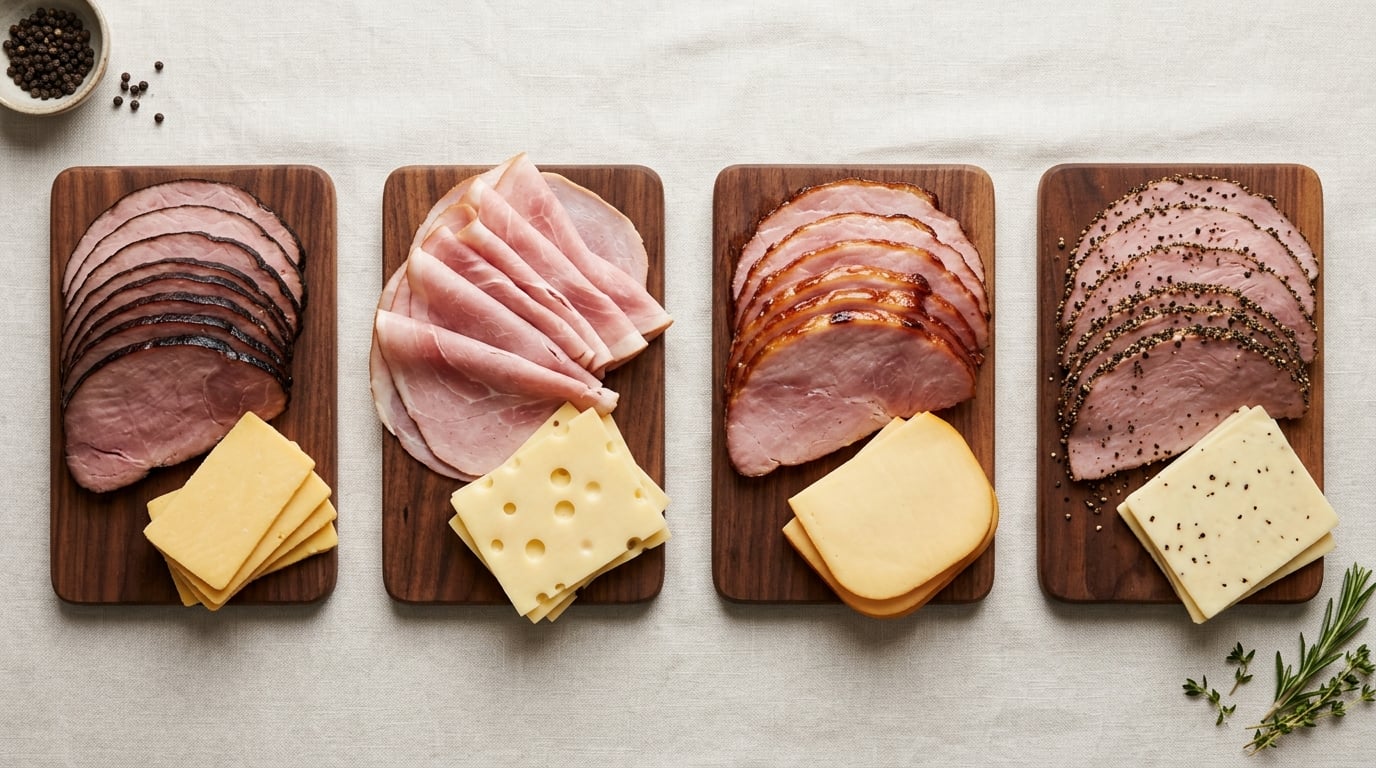
The best ham for sandwiches comes down to the flavor you actually want in the morning: Black Forest for real smoke, Virginia ham for a clean cured deli bite, honey ham for mild sweetness, and tavern ham for a firm, peppery melt. All four start as hind leg, get cured, and get sliced thin, so the difference is almost entirely in the smoke, the salt, and how the meat handles heat.
That last part is the one most comparisons skip. A ham that tastes wonderful cold can dry out and go leathery under a panini press, and a ham that is too soft to slice cleanly will squish out of a sub on the walk to work.
I have built sandwiches from all four styles often enough to have strong opinions, and this guide breaks each one down by flavor, texture, heat performance, and the specific builds each one wins. Updated for October 2026.
Table of Contents
- Best Ham for Sandwiches: Black Forest vs. Virginia vs. Honey vs. Tavern Ham at a Glance
- What Is Black Forest Ham?
- What Is Virginia Ham?
- What Is Honey Ham?
- What Is Tavern Ham?
- How Do Black Forest, Virginia, Honey, and Tavern Ham Taste?
- Which Ham Has the Best Texture for a Sandwich?
- Which Ham Is Best for Grilling or Melting?
- How Do You Choose the Best Ham for Sandwiches?
- Which Should You Choose?
- Frequently Asked Questions
- Conclusion
Best Ham for Sandwiches: Black Forest vs. Virginia vs. Honey vs. Tavern Ham at a Glance
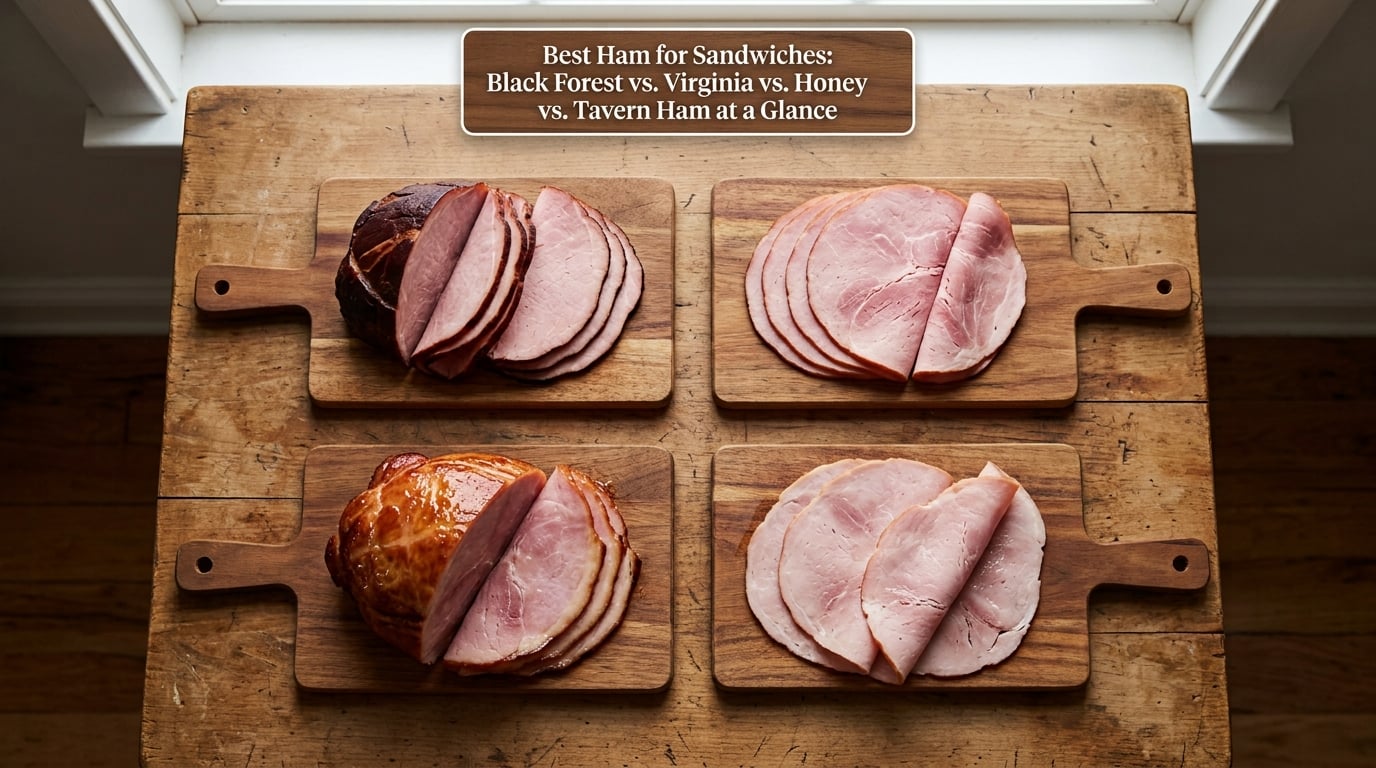
Here is the short version. Black Forest wins on smoke, Virginia wins on a clean cured-meat bite, honey ham wins on approachability, and tavern ham wins on structure.
| Attribute | Black Forest | Virginia | Honey | Tavern |
|---|---|---|---|---|
| Flavor | Deep, smoky, savory, faintly sweet | Mild, clean, cured and slightly nutty | Mildly sweet, glaze-forward | Seasoned, peppery, savory, low smoke |
| Texture | Firm, dense, occasionally dry at the edge | Tender, smooth, uniform slices | Very tender, soft, sometimes slippery | Firm, fibrous, holds shape when hot |
| Cure and smoke | Dry-cured, smoked over pine or fir | Cured, then roasted or lightly smoked and aged | Brine or dry cure with honey and sugar added | Dry-cured with a salt, garlic and pepper rub, then briefly smoked |
| Best sandwiches | Ham and cheese, grilled cheese with ham, club builds | Classic deli sub, ham and butter, tea sandwich | Lunchbox sandwiches, kid builds, ham and cheese | Panini, pressed melt, Cuban-style build, sliders |
| Best served | Cold or lightly toasted | Cold | Cold | Hot, pressed or melted |
| Watch out for | Can overpower mild cheese | Can taste flat next to bold mustard | Added sugar can burn on a hot press | Sodium runs high, and it is not widely stocked |
What Is Black Forest Ham?
Black Forest ham is a German-style ham, usually made from boneless hind leg, that is dry-cured and then smoked. The traditional version is smoked over pine or fir and rubbed with salt, garlic, juniper, coriander and pepper.
The result is a ham that tastes unmistakably like campfire and cured pork, with a dark, almost blackened exterior in the traditional style. The smoke is assertive rather than a background note, and the meat underneath is firm and dense.
Because the smoke is loud, Black Forest ham does best with sandwiches that can carry it. Swiss, Gruyere, aged cheddar and mustard all hold their own. It is a weak match for a plain turkey-style deli build or for anything delicate like cucumber or avocado, where the smoke takes over the whole sandwich.
What Is Virginia Ham?
Virginia ham is an American cured ham in the Smithfield tradition, made from hind leg and cured, then either roasted or lightly smoked and aged. It is the closest of the four to a classic deli ham, and it is the one most people mean when they picture sandwich meat.
Flavor is mild, slightly sweet from curing and aging, and noticeably clean. The texture is tender and smooth, which makes it easy to slice and layer evenly, and it holds up in a sandwich without competing with the bread.
Virginia ham is the safest all-rounder of the four. It works cold in a ham and cheese, it works in a ham and butter on crusty bread, and it lets the cheese and condiment do the talking instead of the meat.
What Is Honey Ham?
Honey ham is a cure-and-glaze style: the leg is cured, then finished with honey, sugar, or both, which produces a faint sweet glaze and a noticeably tender texture.
The sweetness is mild, not candy-sweet, and it is the reason honey ham shows up in so many lunchboxes. It is a favorite with kids and with anyone who finds sharp mustard or smoked meat too aggressive on a weekday morning.
It pairs well with mild cheeses like Swiss, provolone and cheddar, and with fruit preserves. The one thing to watch is heat: honey and sugar brown quickly, so honey ham goes from good to burnt in a panini press faster than any other style on this list.
What Is Tavern Ham?
Tavern ham is the least understood style of the four. It is not a place and not a legal category. It is a marketing name for a dry-cured ham finished with a coarse rub of salt, garlic, black pepper and often juniper, then given a short smoke.
Because there is no protected standard, one tavern ham can taste quite different from the next. The better ones are firm and fibrous, seasoned rather than sweet, and hold their shape under heat better than anything else here. That is why tavern ham has become the default recommendation for a pressed sandwich.
The catch is availability. It is a deli-counter style more than a grocery-aisle style, and it is not always easy to find outside of a good deli. If your counter does not stock it, ask whether they have another dry-cured, seasoned ham they can slice instead.
How Do Black Forest, Virginia, Honey, and Tavern Ham Taste?
Ranked by smoke, from most to least: Black Forest, then tavern (barely), then Virginia, then honey. Ranked by sweetness, it reverses almost exactly: honey, Virginia, Black Forest, tavern.
Salt is the axis most people underrate. Honey ham and Virginia ham are the mildest, Black Forest sits in the middle with a sharper cured edge, and tavern ham is usually the saltiest of the lot because of that rub.
Choosing the best ham for sandwiches by flavor
- Want smoke? Black Forest. It is the only one of the four where smoke is the first thing you taste.
- Want a clean, cured pork bite? Virginia. Mild, savory, and it lets the toppings speak.
- Want something mild with a little sweetness? Honey ham, especially with Swiss or provolone.
- Want the most seasoned bite? Tavern, with pepper and garlic carrying the flavor instead of smoke or sugar.
- Want to feed people with different tastes? Build two sandwiches rather than compromising on one style. A Virginia ham and a smoked Black Forest covers the widest range.
Which Ham Has the Best Texture for a Sandwich?
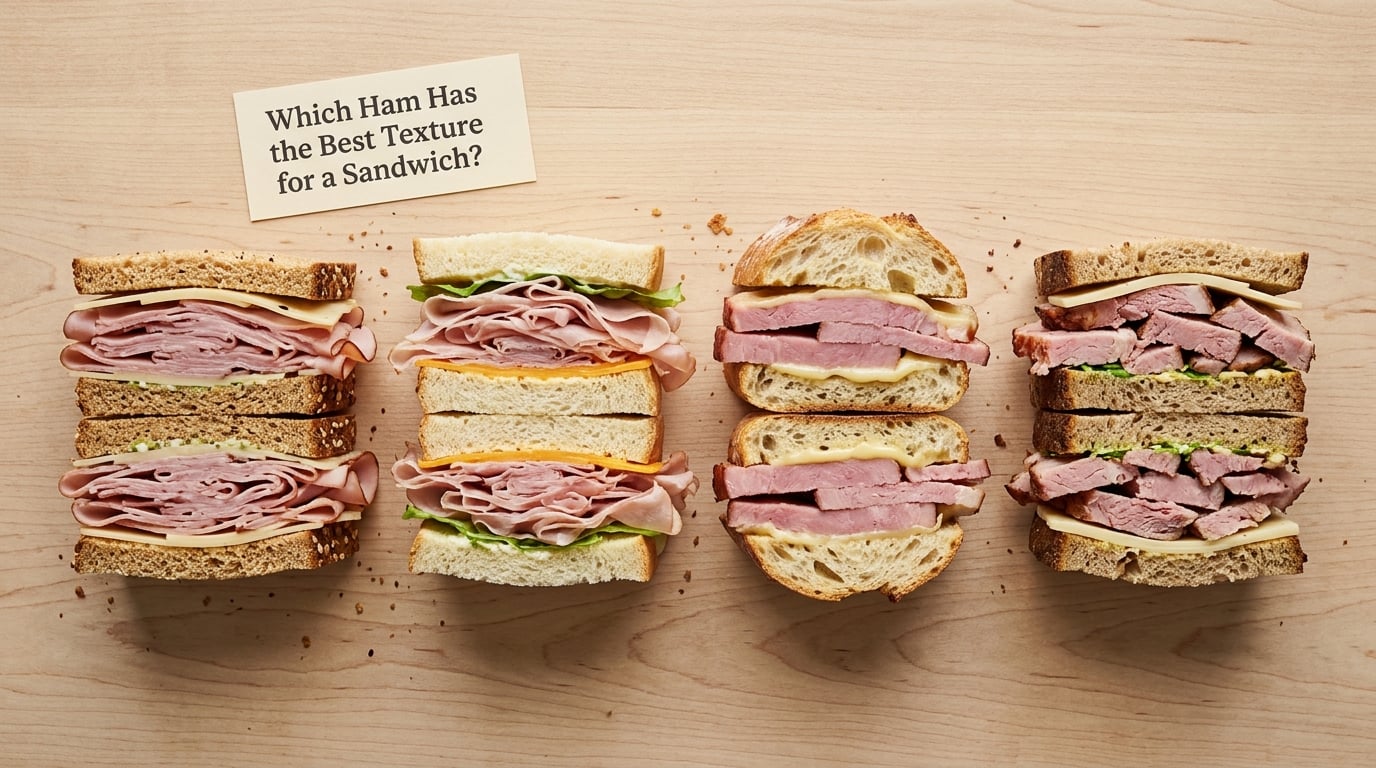
For a cold sandwich, texture matters more than flavor. You want slices that lay flat, stay put and do not push the bread out of shape.
Virginia ham slices the most predictably. Black Forest is denser and can tear if it is sliced too thin, and honey ham is the softest, which sometimes makes it slide in a sub. Tavern ham has the most bite and the most structure, holding thickness through a press or a panini.
Slice thickness changes everything. Ultra-thin slices disappear in a thick sandwich and dry out in toasted bread. Hand-carved or thicker slices need fewer of them, and they turn a ham and cheese into something closer to a meal. As a rule of thumb, thin for cold and lunchbox builds, thicker for anything you plan to heat.
A quick quality check at the counter is aroma. Good ham smells like cured meat. Ham that smells of almost nothing is usually cheaper, wetter, and worth skipping, and a surface that feels slimy or slick rather than moist usually means added water and binders rather than better quality.
Which Ham Is Best for Grilling or Melting?
Tavern ham is the best ham for grilling or melting. The firm texture and coarse pepper rub mean it browns at the edges, keeps its shape under a press, and does not turn rubbery the way softer hams do.
Black Forest is the second best for heat. The smoke intensifies when the ham is warm, which is exactly what you want in a grilled cheese with ham or a toasted sub, though watch for it going dry on long contact with a hot pan.
Honey ham is the most temperature-sensitive. Sugar and honey in the glaze means it will caramelize nicely in the first minute and then scorch. If you want it hot, warm it gently in a low oven or in a wrapped foil packet rather than pressing it directly on a hot griddle.
Virginia ham is best served cold. It does fine in a warm sandwich, but it gains nothing from heat and its mild flavor does not develop the way the other three do.
For food safety, treat any deli ham you reheat as a perishable food and bring the center of the sandwich to 165 degrees Fahrenheit before serving it hot.
How Do You Choose the Best Ham for Sandwiches?
Start with the sandwich, not the ham. Cold and mild is Virginia or honey. Smoked is Black Forest. Pressed, panini or melted is tavern, with Black Forest second.
Then decide counter versus package. A deli counter gives you a fresher, denser ham sliced to the thickness you want, and the person behind the counter can tell you what is in stock. Pre-packaged slices are cheaper per pound, more consistent week to week, and handier when you are packing six lunches. The gap narrows every year, but the counter still wins on aroma and on slice quality.
At the counter, ask for the ham by name rather than by a generic term, ask for a thickness that matches your bread, and ask whether the ham is counter-sliced from a whole muscle or machine-sliced in a plant. Those three questions get you a better sandwich than brand shopping does.
On the label, four words are worth reading closely:
- Uncured means the meat was not treated with curing agents. It does not mean nitrate-free, and it is not automatically a health upgrade.
- No nitrites added means cured with natural celery extract, which supplies nitrite. It is a different process, not the absence of one.
- Naturally smoked means real smoke over wood, usually listed on the label.
- Smoke flavoring means liquid smoke was added. Cheaper, and noticeably less interesting on a grilled sandwich.
Honey ham labels will show added sugars that the other three do not. That is a flavor decision, not a quality one, but it is worth knowing if you are counting sugar or watching sodium.
Finally, think about storage. Keep deli slices sealed and refrigerated and eat them within three to five days of opening. Freeze the rest in a single layer first so the slices separate later, which is the cheapest way to keep quality high across a busy month.
Which Should You Choose?
- Smoky sandwich: Black Forest, on rye or wheat with Swiss and mustard.
- Classic deli lunch: Virginia ham, sliced thin on rye with cheddar, or thick with tomato and lettuce.
- Sweet everyday sandwich: honey ham, with provolone, or with a thin layer of apricot jam.
- Hearty melt: tavern ham on a roll or a panini, with a sharp cheese and a little mustard.
- Mixed taste around the table: build a half Virginia and half Black Forest, and keep the honey ham for the kids.
Frequently Asked Questions
What type of ham is best for sandwiches in general?
Virginia ham is the most versatile of the four because it is mild, slices cleanly and does not fight the cheese or the bread. Choose Black Forest if you want smoke, honey ham if you want mild sweetness, and tavern ham if the sandwich will be pressed or melted.
Is Black Forest ham better than Virginia ham?
It depends on what you want. Black Forest is more flavorful, with real smoke and a denser texture that suits toasted sandwiches and strong cheese. Virginia is milder and cleaner, which is why it works better for cold deli builds and for people who find smoke heavy. Many sandwich shops serve both for that reason.
What is tavern ham, and why is it hard to find?
Tavern ham is a name rather than a defined style. It generally means a dry-cured ham finished with a coarse salt, garlic and pepper rub, then given a short smoke. Because there is no legal standard behind the name, recipes vary a lot by maker, and it is sold mainly through delis rather than grocery aisles.
Is deli counter ham better than pre-packaged ham?
Counter ham is usually fresher and can be sliced to the thickness your bread needs, and you can smell it before buying. Pre-packaged ham is more consistent, cheaper per pound, and saves time when you are packing several lunches. Buy packaged for routine lunches and go to the counter for sandwiches where the ham is the point.
Is slimy deli ham okay to eat?
A slick or slimy surface usually means added water and binders rather than fat and moisture, and it is a sign of a highly processed ham rather than a spoiled one. It is still safe within its use-by date, but the texture is watery, so buy a different brand if you dislike it.
Conclusion
Choose by flavor and by heat. Black Forest for smoke, Virginia ham for a clean classic deli bite, honey ham for mild sweetness in a lunchbox, and tavern ham for a hearty pressed melt. Buy counter-sliced for the best texture, packaged for convenience, and match the slice thickness to the bread rather than to the label.