
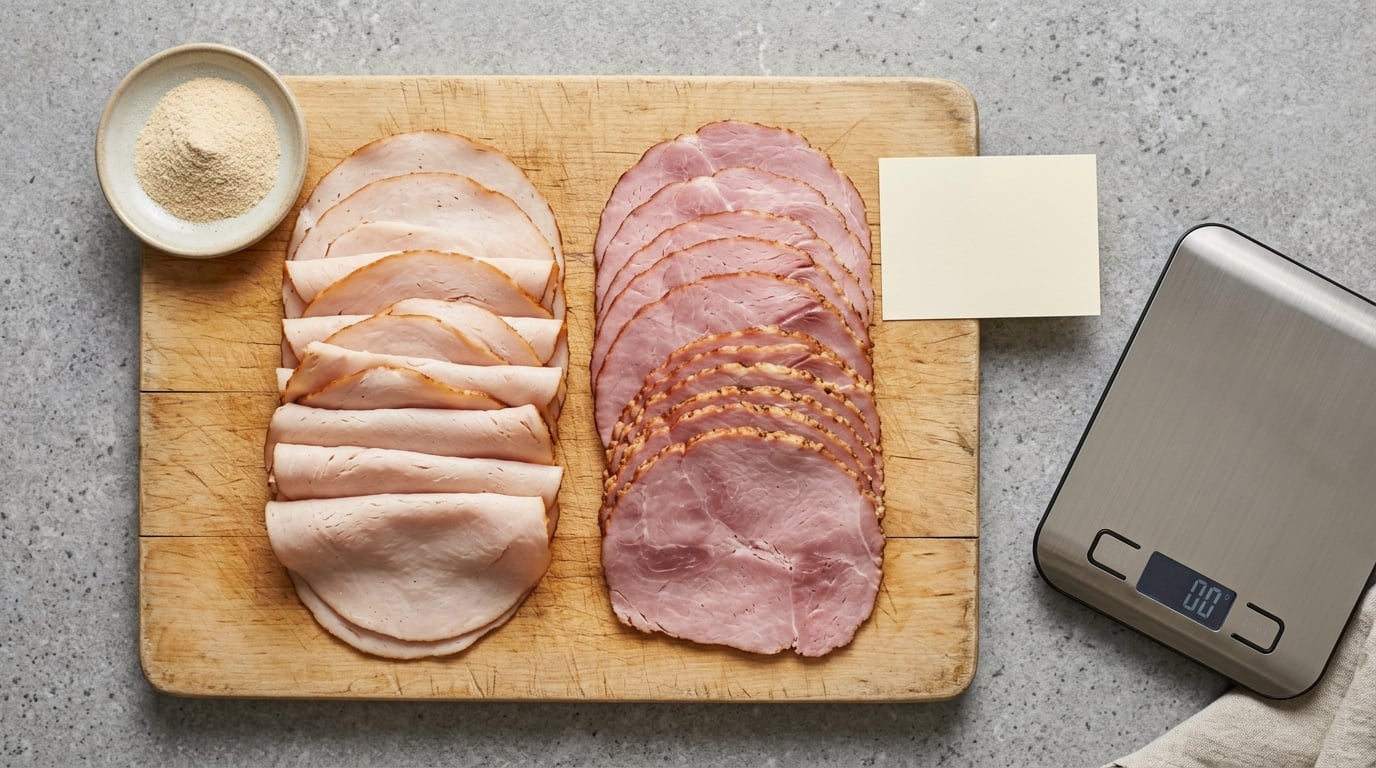
Short answer: usually no, not for the reason on the label. Uncured and nitrate-free lunch meats are preserved with plant-derived nitrate, usually from celery powder, which chemically does the same job as the synthetic sodium nitrite in conventional cured meat. Consumer Reports tested 31 packaged deli meats and found the uncured ones averaged essentially the same nitrate and nitrite levels as the cured ones.
So when you are weighing uncured vs cured lunch meat, you are usually comparing two versions of the same chemistry at a noticeably higher price per ounce. The exceptions are products that are genuinely uncured because nothing was added at all, and premium meats where the extra money buys organic, humane or no-antibiotics sourcing rather than nitrate claims. Here is how to tell those apart.
Table of Contents
- Are Uncured and Nitrate-Free Lunch Meats at a Glance?
- What Does “Uncured” Mean on a Lunch-Meat Label?
- What Does Nitrate-Free Mean for Processed Lunch Meats?
- How Do Uncured and Nitrate-Free Meats Compare on Nutrition and Safety?
- Are the Taste, Texture, and Shelf Life Different?
- Which Should You Choose?
- Frequently Asked Questions
- Is uncured lunch meat the same as raw lunch meat?
- Does nitrate-free mean the lunch meat is sodium-free?
- Is uncured or nitrate-free lunch meat healthier for children?
- How do I compare the price of lunch meat per serving?
- How long should opened lunch meat be kept in the refrigerator?
- Does uncured lunch meat taste different from conventional lunch meat?
- So Is the Premium Worth It?
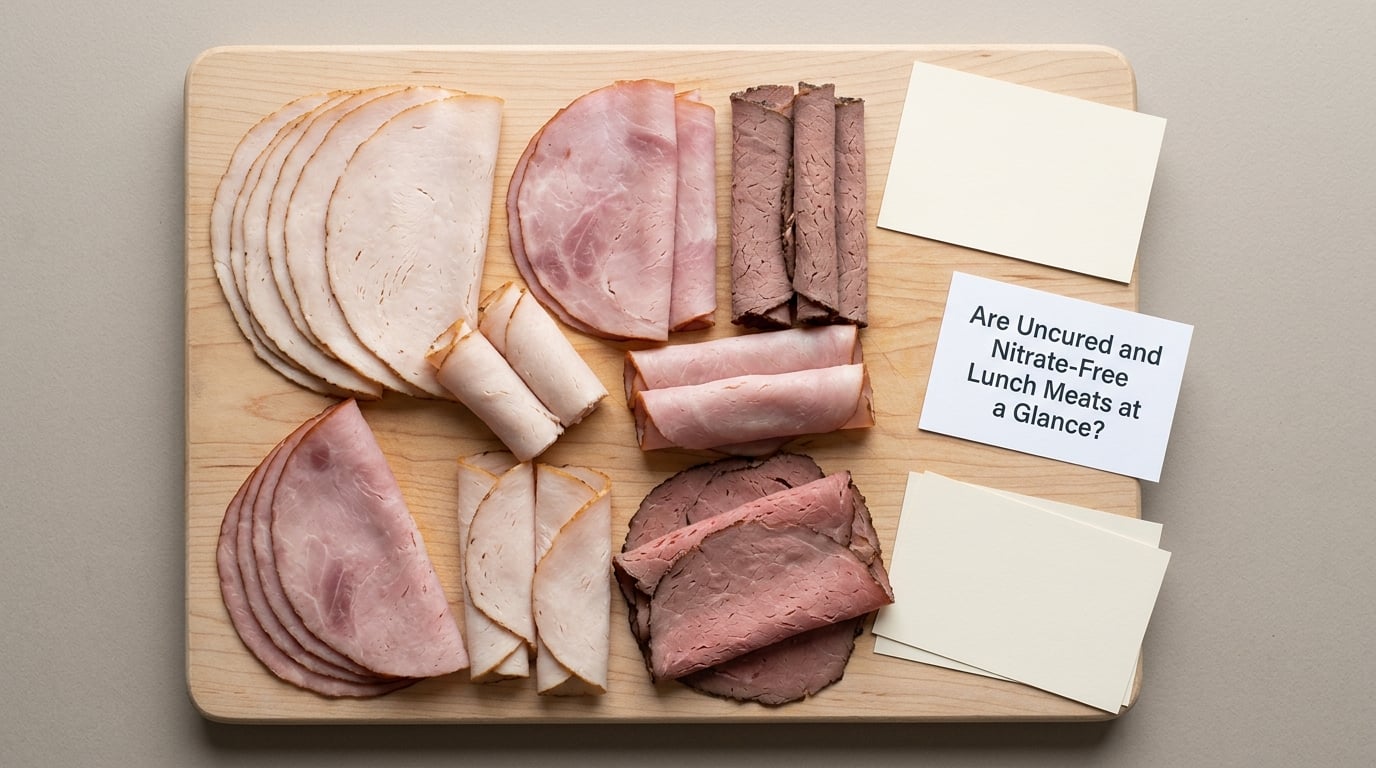
Are Uncured and Nitrate-Free Lunch Meats at a Glance?
| Criterion | Conventional cured | Uncured (naturally cured) | No nitrates or nitrites added |
|---|---|---|---|
| What preserves it | Synthetic sodium nitrite, often with sodium nitrate | Naturally occurring nitrate from plants, usually celery powder | Nothing added for preservation; relies on salt, cold handling and shorter shelf life |
| Legal limit on nitrate and nitrite | Yes, capped by USDA FSIS rules | No equivalent cap on the plant-derived nitrate | Not applicable |
| Sodium per serving | Typically high | Typically high, sometimes similar or higher | Still high; not the same as sodium-free |
| Label fine print | None needed | An asterisk that discloses natural nitrates, easy to miss | None, which is the point of the claim |
| Color | Pink or reddish from curing | Paler, sometimes greyish-pink | Pale, closer to fresh cooked meat |
| Flavor and texture | Familiar cured tang, springy | Milder, sometimes softer or more crumbly | Mildest, most like freshly roasted meat |
| Refrigerated shelf life | Longest | Similar | Shortest, follow the package date |
| Best use case | Everyday sandwiches when price and availability matter | Shoppers who want to avoid synthetic curing agents | Shoppers avoiding added nitrate and nitrite entirely |
| Main reason to pay more | None, it is the base price | Marketing, unless organic or welfare certified | A real ingredient difference, plus often better sourcing |
Two things to notice in that table. The terms are not interchangeable: uncured describes a preservation method, while no nitrates or nitrites added describes an ingredient claim. And the only column where the health story is genuinely different is the one where nothing was added at all.
What Does “Uncured” Mean on a Lunch-Meat Label?
Under USDA rules, a meat labeled uncured has not been treated with the curing agents used in conventional processed lunch meat. Instead, the manufacturer relies on nitrate that occurs naturally in vegetables, almost always delivered as celery powder or celery juice powder.
Celery powder is not a neutral filler. It is high in naturally occurring nitrate, and in a curing starter culture that nitrate converts to nitrite during processing. The nitrite then does the same three jobs synthetic nitrite does: it blocks the growth of harmful bacteria, it holds the pink color, and it slows the off flavors that make refrigerated sliced meat taste stale.
Uncured is not raw, unseasoned or unprocessed
This is the single most common misunderstanding. Uncured ham is still cured in the everyday sense of the word: salted, seasoned, cooked and packaged. It is not raw, it is not unseasoned, and it is not fresh meat in any way that would change how you handle it. It still needs refrigeration, and it is still a processed meat.
Some shoppers also assume the asterisk on the package is a loophole hiding something. It is not hiding anything, but it is easy to miss. Fine print along the ingredient list usually reads something like “uncured pork prepared with celery powder and celery juice powder” or “no artificial nitrites, except those naturally occurring in celery.” That disclosure tells you the nitrate came from a plant instead of a lab, which is the entire difference.
Why the uncured label exists at all
The label came out of the 1970s and 1980s, when manufacturers trying to avoid synthetic nitrites were producing meat that turned grey, tasted flat and spoiled quickly. Celery powder solved the color and safety problems in one ingredient, and products carrying it got to market first with a friendlier-sounding name. The name stuck, and it now functions mostly as a marketing term.
Uncured vs cured lunch meat: the same compound, a different source
Here is the detail that surprises people. Conventional cured meats are subject to legal limits on how much nitrite and nitrate they may contain. Celery-cured products labeled uncured are not subject to an equivalent cap on the plant-derived nitrate they carry. So in a narrow technical sense, the uncured label can be the less regulated one.
The National Organic Standards Board has also had to make a judgment call about this. In October 2019 the board voted 11 to 1 to keep celery powder allowed in organic products, which is why you now see organic uncured meat. That is a sourcing and processing standard, not a nitrate-free standard. If you want the strongest signal on organic sourcing, the USDA organic seal means more than the word uncured.
What Does Nitrate-Free Mean for Processed Lunch Meats?
Nitrate-free, more precisely no nitrates or nitrites added, means no curing nitrate or nitrite was added during processing. It is an ingredient claim, not a health claim, and it does not mean the meat contains zero nitrate. Meat and the plants animals eat contain nitrate naturally.
Most nitrate-free lunch meat is preserved with salt, cold storage and a shorter shelf life rather than a curing agent. That is why the ingredient list is shorter, why the color is paler, and why the package date on these products tends to be closer than on cured meat.
It also does not mean the product is sodium-free or lower sodium. The salt doing the preserving work is still salt, and the sodium per serving in a nitrate-free turkey roll is often in the same range as a cured one. Lower-sodium and nitrate-free are separate claims, and a package can carry either one without the other.
Five plant ingredients that act as nitrate sources on a label
Celery dominates commercially because it is unusually nitrate-dense and barely flavored. But it is not the only one. When you decode a panel, look for these:
- Celery powder or celery juice powder – by far the most common, and listed plainly in the ingredients
- Celery salt – a seasoning made from celery and salt, and a nitrate source in its own right
- Beet or beetroot powder – works, but it shifts the color of the finished meat
- Spinach powder – used less often, and it can darken the product
- Cultured or fermented ingredients – a starter culture can supply nitrate indirectly, so cultured celery extract and fermented vegetable powders belong on the list too
Home curing experiments follow the same pattern. People who try beet and radish powder at home report the finished meat tastes like the vegetable and changes color, which is exactly why celery took over the category.
How Do Uncured and Nitrate-Free Meats Compare on Nutrition and Safety?
On the nutrition panel, the differences between these categories are small enough to be disappointing. Protein, fat and serving size tend to track closely across versions of the same meat, because the muscle is the same. The number that stands out is sodium, and not in the direction the premium suggests.
Consumer Reports reported that deli meats average roughly 8 to 11 times more sodium than comparable fresh meat. That gap exists across the whole category, cured or not, because curing and salting are the same act. Paying more for an uncured version does not reliably lower the sodium number on the panel.
On the nitrate question itself, the testing is the important part. Consumer Reports lab-tested 31 packaged deli meats across nine major brands and found the products labeled uncured carried essentially the same nitrate and nitrite levels as the cured products. The label did not deliver the measurable difference buyers assume they are paying for.
There is a wider regulatory context worth knowing. The International Agency for Research on Cancer classifies processed meat as a Group 1 carcinogen, the same category as tobacco smoke, and health bodies including the World Health Organization and the American Institute for Cancer Research tie regular processed meat consumption to increased colorectal cancer risk. That concern applies to processed meat as a category. It does not disappear when the nitrate comes from a vegetable, and it is not the same as a claim that any single sandwich is dangerous.
Two other risks sit alongside nitrates and get less attention. Sodium nitrite and sodium nitrate are what keep C. botulinum from growing in low-acid meat, which is why cured meat is safe to eat without cooking it through. Deli meat can also carry Listeria monocytogenes after slicing, which is why pregnant people, older adults and anyone immunocompromised are advised to reheat deli meat to a steaming 165°F before eating it.
If you have a specific health condition, are on a prescribed diet, or are making a switch for a child, talk it through with a doctor or registered dietitian rather than relying on a package claim. General label reading cannot tell you what your body needs.
Are the Taste, Texture, and Shelf Life Different?
Yes, and most of the difference runs the direction you would not expect. Nitrite does more than preserve; it also drives cured flavor and binds water in the muscle. Remove it and you get a milder, sometimes softer, sometimes more crumbly slice. Color lightens too, which is why nitrate-free bologna looks closer to a pale roast than to the pink deli standard.
Some shoppers love that, because the sharper cured taste is exactly what they were trying to escape. Others find the result bland, and they are not wrong. Uncured is not a flavor upgrade, it is a different target.
Shelf life depends on the product, not the label alone. Cured and celery-cured meats usually have the longest refrigerated life, and they are sold with a use-by date you should still respect. Genuinely uncured products spoil faster and are dated more tightly. The package instructions are the authority in every case, and opened sliced meat belongs in the refrigerator and not the door shelf.
Which Should You Choose?
Choose conventional cured lunch meat when price per ounce, shelf life and the flavor your family already likes come first. There is nothing wrong with it, and the nutrition panel is on the package so you can decide with the actual numbers in front of you.
Choose uncured when avoiding synthetic curing agents is your priority and you are comfortable accepting that the nitrate still arrived through a vegetable. Read the fine print first: if it discloses celery powder, you know exactly what you are buying.
Choose no nitrates or nitrites added when the ingredient itself is the dealbreaker. This is the one category where the label describes a real difference, and it is usually also where you find organic, humane or no-antibiotics sourcing that is worth paying extra for.
Before you pay the premium, do three things. Compare the nutrition panels of the two versions side by side, and ignore the claim while you read them. Divide the shelf price by the number of servings so you are comparing cost per serving rather than sticker shock. Then read the ingredient list twice, once for sodium and once for the plant nitrate sources listed above.
If you buy lunch meat at a counter, the same logic applies. Ask what is in the meat rather than what it is called. Many counters will slice a plain roasted turkey breast or ham from the cooler, which skips the curing step entirely and is often the best nitrate-free option in the building.
And for a real reduction in risk and sodium, none of these labels compete with swapping in grilled chicken, tuna, egg salad made from scratch, hummus or leftover roast meat. Those changes move the numbers; the uncured label mostly moves the price.
Frequently Asked Questions
Is uncured lunch meat the same as raw lunch meat?
No. Uncured means no synthetic curing agent was used, not that the meat is raw or unprocessed. It is still salted, seasoned, cooked and packaged, and it still needs refrigeration. Treat it exactly like any other deli meat, and reheat it to a steaming 165F if a health authority advises you to.
Does nitrate-free mean the lunch meat is sodium-free?
Not at all. Nitrate-free refers only to curing ingredients. The salt used to preserve nitrate-free meat is still salt, so sodium per serving is often in the same range as conventional cured lunch meat. Check the sodium line on the panel and look for a separate reduced-sodium or low-sodium claim if that matters to you.
Is uncured or nitrate-free lunch meat healthier for children?
Neither label makes processed meat a health food. Uncured products still contain nitrate from celery powder, and nitrate-free products still carry high sodium and belong to the processed meat category. For a school lunch, choose lower-sodium options, keep portions sensible, and ask your pediatrician about a diet with more fresh, unprocessed protein.
How do I compare the price of lunch meat per serving?
Divide the shelf price by the number of servings listed on the package, then multiply by the ounces in a serving. Do this for both the conventional and the premium version of the same meat. Comparing two different cuts or two different serving sizes gives you a misleading number, so keep the meat and the portion identical.
How long should opened lunch meat be kept in the refrigerator?
USDA guidance for opened deli meat is three to five days in the refrigerator at or below 40F, and less if the product is genuinely uncured, since those items are dated more tightly. Keep it sealed, store it on a shelf rather than in the door, and follow the use-by date on the package when it comes sooner.
Does uncured lunch meat taste different from conventional lunch meat?
It usually does, and not only because of the nitrate. Cured meat gets a sharp tang, a firm springy texture and a stable pink color from the curing salt. Uncured versions come out milder, paler and sometimes softer or more crumbly. People who want a gentler flavor tend to like that. People who want the classic deli taste do not.
So Is the Premium Worth It?
For most sandwich shoppers, no. The uncured label swaps synthetic sodium nitrite for celery powder that delivers the same nitrate, and the testing shows no meaningful difference in the finished product. Do one thing before you pay more this week: turn the package over, read the ingredient list, and look for celery powder. If it is there, you are buying a label.
If it is not there, and the product is organic, humane or no-antibiotics certified, the premium buys something real about how the animal was raised. That is a fine reason to spend more. Just know which one you are paying for.