
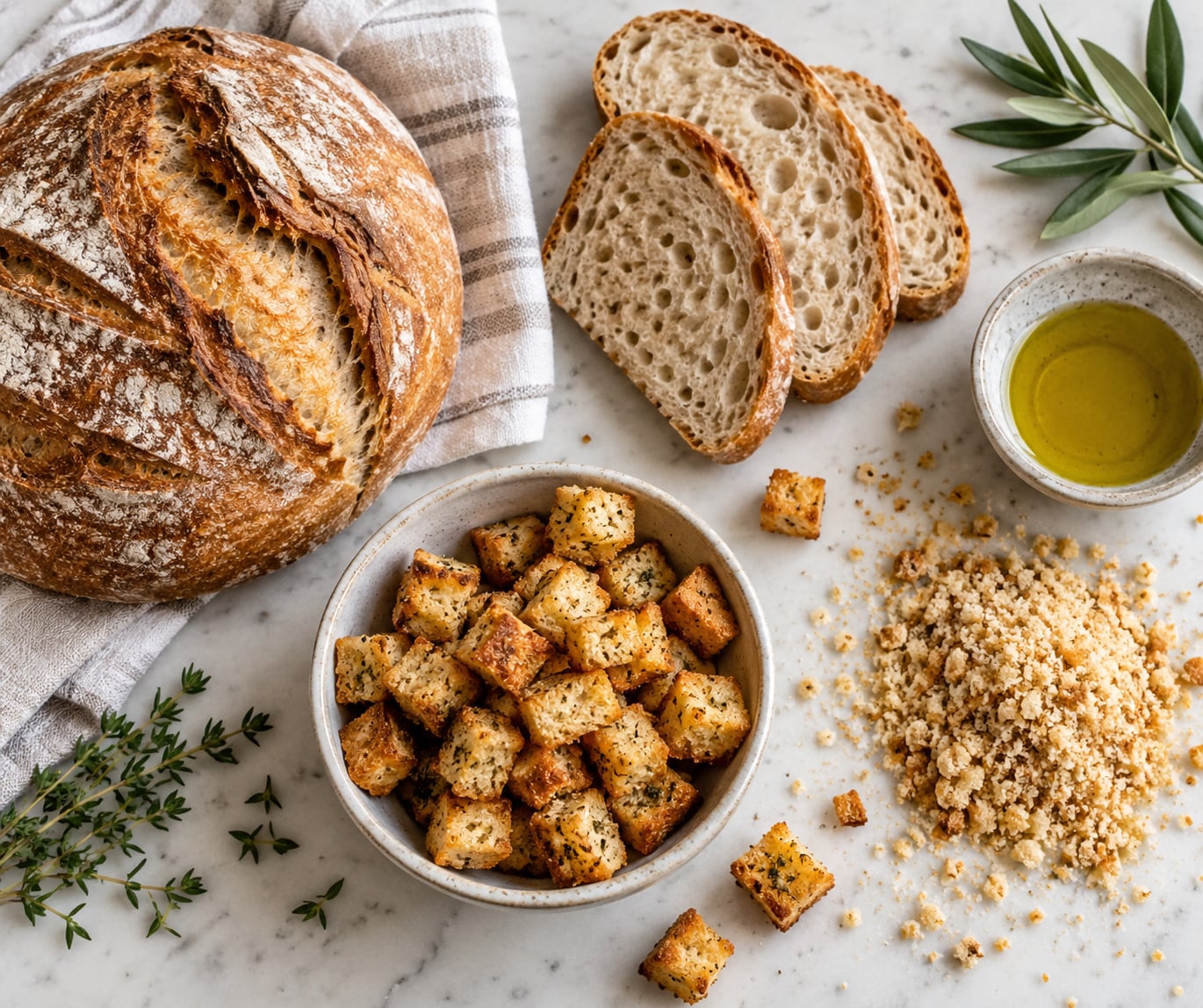
If you have a loaf going stale on the counter, here is the short answer: 15 ways to use up stale bread, from no-cook croutons to a savory strata that feeds the weekend. Stale bread is safe to eat and good for at least 15 different things. Once a loaf dries out and hardens, it stops being good toast and becomes a great ingredient: croutons, breadcrumbs, French toast, bread pudding, meatballs, soup thickener. Bread goes stale because the starch in it recrystallises as moisture moves out of the crumb, which is why day-old bread soaks up custard, broth and dressing better than a fresh loaf.
The one rule from the USDA is simple: bread that is merely dry is fine, bread with mold, slime, or a musty smell gets discarded. Hard crusts and torn ends count as stale, not spoiled, so they go in the breadcrumb jar, not the bin.
Below is the list I keep coming back to, ordered by how much time each one takes. The first five need a bowl or a pan and less than half an hour. The rest are real cooking, the kind that makes a loaf of day-old bread the best ingredient in the house.
Table of Contents
- 15 Ways to Use Up Stale Bread at a Glance
- 1. Make Crispy Homemade Croutons
- 2. Turn Stale Bread Into Crunchy French Toast
- 3. Make Breadcrumbs for Meatballs, Casseroles, and More
- 4. Add Moisture and Flavor to Casseroles
- 5. Bake a Simple Bread Pudding
- 6. Use Stale Bread in a Savory Strata
- 7. Make Bruschetta or Crostini
- 8. Blend Stale Bread Into Tomato Soup
- 9. Create a Bread-Based Frittata
- 10. Form Stale Bread Into Meatballs or Meatloaf
- 11. Make Pan-Breaded Fish or Chicken Cutlets
- 12. Make Panzanella or a Rustic Bread Salad
- 13. Use Stale Bread as a Thickener in Soups and Stews
- 14. Bake Stale Bread Into a Simple Focaccia or Flatbread
- 15. Turn Stale Bread Into a Savory Bread Pudding
- Frequently Asked Questions
- Start With the Smallest Batch
15 Ways to Use Up Stale Bread at a Glance
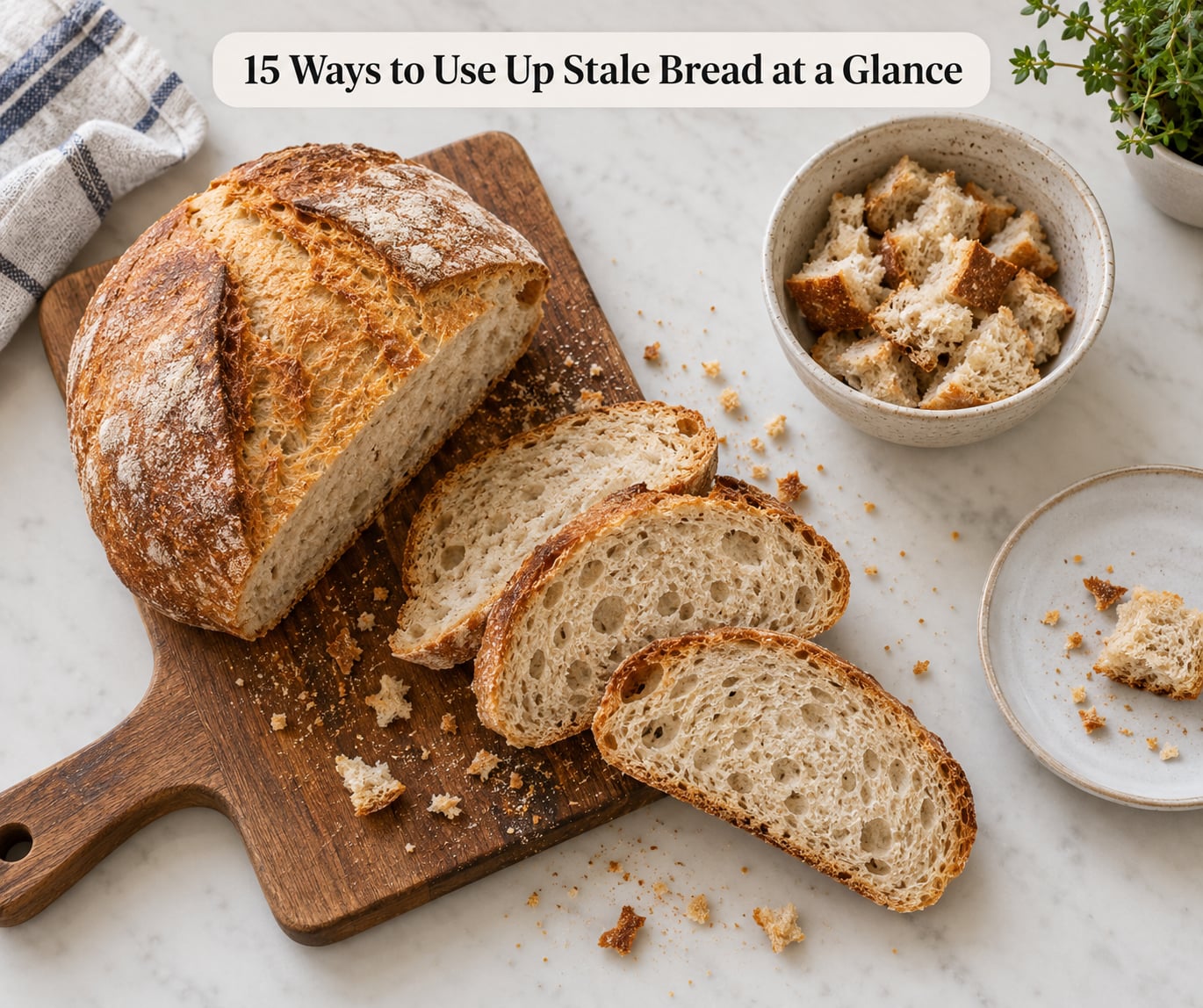
Quick table for 15 ways to use up stale bread
| Use | Best bread type | Total time | Effort |
|---|---|---|---|
| Croutons | Sourdough, ciabatta, baguette ends | 25 min | Easy |
| French toast | Sandwich loaf, day-old brioche | 20 min | Easy |
| Breadcrumbs | Any loaf, crusts and torn ends | 15 min | Easy |
| Casseroles | Thick sandwich bread, sourdough | 45-60 min | Easy |
| Bread pudding | Day-old white or brioche | 60 min | Medium |
| Strata | Sourdough, ciabatta | 55 min | Medium |
| Bruschetta or crostini | Baguette, sourdough slices | 15 min | Easy |
| Tomato soup | Any bread, torn pieces | 40 min | Easy |
| Frittata | Stale sandwich bread | 25 min | Medium |
| Meatballs and meatloaf | Any bread, blitzed | 40 min | Medium |
| Pan-breaded cutlets | Sourdough, day-old white | 35 min | Medium |
| Panzanella | Ciabatta, sourdough, day-old baguette | 15 min plus rest | Easy |
| Soup thickener | Stale bread, croutons | 5 min | Easy |
| Focaccia or flatbread | Hard sourdough, dense rye | 35 min | Medium |
| Savory bread pudding | Ciabatta, sourdough, day-old rolls | 55 min | Medium |
Rye and seeded loaves are not in the table because they are too dense to cube cleanly. Blitz them for breadcrumbs, or grate them, and they behave fine.
1. Make Crispy Homemade Croutons
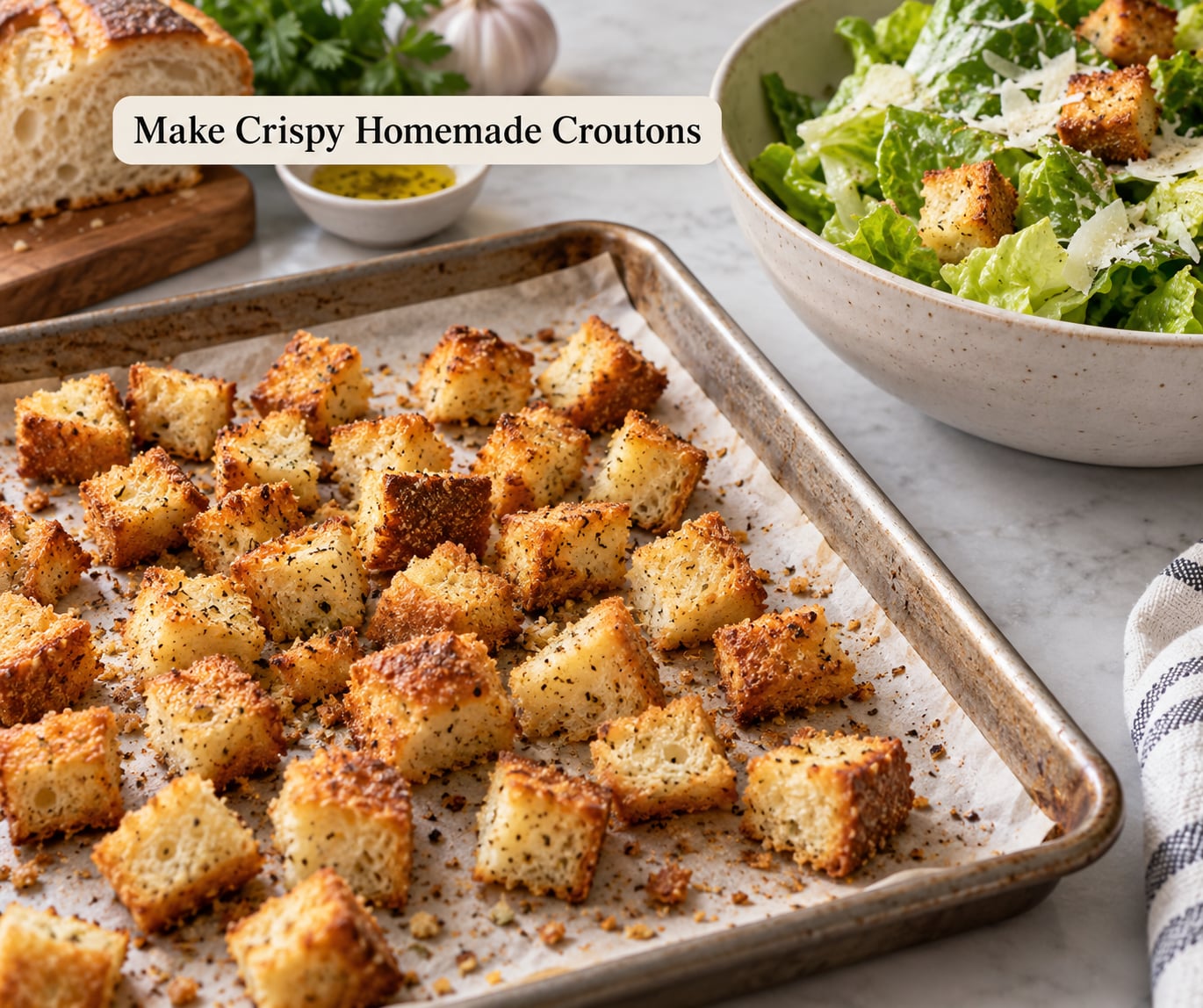
Croutons are the fastest win. Cut stale bread into 1 cm cubes, or tear baguette and ciabatta into rough pieces so the edges catch oil, then toss with a couple of tablespoons of olive oil and a pinch of salt.
Bake at 350°F for 12 to 18 minutes, turning once, until the outside is deep gold and the middle is dry. A food processor works too: pulse to crumb size, spread on a sheet, and bake at 325°F for 15 minutes.
Cool them completely on the pan before you jar them, or the steam softens the crunch. Stored airtight they keep about a week, and they freeze fine for a month.
2. Turn Stale Bread Into Crunchy French Toast
Whisk two eggs with a cup of milk, a tablespoon of sugar, and a splash of vanilla. Soak each stale slice for 20 to 30 seconds per side, which is longer than you would for fresh bread, then cook in a buttered skillet over medium heat for 2 to 3 minutes a side.
Thick-cut sourdough needs longer soaking than you think. If it is rock hard, soak it in the custard for a full minute before it hits the pan. Brioche soaks fast and burns fast, so use medium-low heat and a little more butter. Whole grain and seeded slices want the pan a touch hotter to keep them from going pale.
Cook to 160°F if you are serving it to anyone pregnant, elderly or immunocompromised, and check the thickest part of the slice with an instant-read thermometer.
3. Make Breadcrumbs for Meatballs, Casseroles, and More
Blitz dry bread in a food processor, pulsing and scraping down twice, until you hit the texture you want. Stop at coarse crumbs for breading and meatball binders. Keep going to a fine powder for topping casseroles, filling a meatloaf, or thickening a sauce.
Dry the crumbs first if you want them to stay crunchy: 300°F for 5 to 8 minutes on a sheet pan cools them and drives off the last moisture.
Keep them in a sealed jar in the pantry for up to a month, or freeze in a flat bag for up to two months. Crusty ends and soft middle slices together make the best mixed batch, and keeping separate types in separate jars stops the whole jar turning to crumbs. If you are buying storage rather than salvaging what you already have, my roundup of the 10 best bread boxes to keep bread fresh longer covers the shapes worth having on the counter.
4. Add Moisture and Flavor to Casseroles
Day-old bread is a structure ingredient, not a topping. Tear it into rough pieces and let it soak up the liquid in the dish so it cooks into the casserole instead of sitting dry on top.
For a chicken and spinach casserole, layer broth and cream with torn bread and cheese. Potato casseroles take a thin layer of buttered cubes under the potatoes, which brown the top while staying soft inside. Breakfast casseroles work best with cubed bread that has been dried in the oven first, so it does not turn to mush under the custard.
Two slices per serving is a reasonable portion for a family dinner, and the dish keeps for three to four days in the fridge.
5. Bake a Simple Bread Pudding
Tear six cups of stale bread into pieces and let it sit in a bowl with half a cup of milk for 10 minutes so it softens. Whisk four eggs with three cups of milk, half a cup of sugar, a teaspoon of vanilla, and a pinch of salt and cinnamon, then pour it over the bread.
Add a handful of raisins or currants and push everything into a buttered baking dish. Bake at 350°F for 45 to 55 minutes. It is done when a knife inserted near the center comes out clean and the top has pulled slightly from the edges of the dish.
Let it sit 10 minutes before serving so the custard sets. Warm vanilla sauce or a scoop of ice cream hides any gaps between the bread pieces, which vary a lot depending on the loaf.
6. Use Stale Bread in a Savory Strata
A strata is an egg casserole built on bread, and it is the reason I keep a slightly stale loaf around on weekend mornings. Cube day-old bread, layer it with spinach, roasted peppers, mushrooms, or cooked sausage, then pour over an egg mixture made of six eggs to six cups of milk with salt, pepper, and any grated cheese you have.
Let the whole thing stand 20 minutes before it goes in the oven. That rest is what stops the bread from floating to the top in a soggy raft. Cover with foil for the first 25 minutes at 350°F, then uncover until the top browns, about 20 minutes more.
Assemble it the night before and refrigerate, unbaked. It also freezes unbaked for a month, which turns a stale loaf into two future breakfasts.
7. Make Bruschetta or Crostini
Slice stale bread about 1 cm thick, brush both sides with olive oil, and toast at 400°F for 6 to 8 minutes until the edges are crisp and the center no longer bends. Crostini want to be crunchy right through, so give those another two minutes in a dry oven after they crisp.
Rub a warm slice with a cut garlic clove for bruschetta, then pile on chopped tomato, basil, and a drizzle of olive oil. Good combinations for crostini are sautéed mushrooms with thyme, aged cheddar with a thin slice of apple, whipped ricotta with honey, or fig with a walnut crumb.
Salt the tomato mixture just before serving and drain it in a colander for 10 minutes first. That one step is the difference between a crisp crostini and a soggy one.
8. Blend Stale Bread Into Tomato Soup
Toast torn bread at 300°F for 10 minutes until it is dry and pale gold. Add the dried pieces directly to simmering canned tomatoes with olive oil, garlic, and a splash of stock, and simmer 20 minutes.
Blend with an immersion blender right in the pot. The toasted bread gives the soup body and a nutty depth that a puree of raw bread never manages, and it thickens without cream.
Adding it after the soup is blended is the common mistake. It clouds the soup and leaves you with a grainy bowl. If you prefer a lighter soup, add the bread before the tomatoes and blend with only half the liquid.
9. Create a Bread-Based Frittata
Sauté two cups of cubed stale bread in olive oil for 5 to 7 minutes until the edges crunch, then pour beaten eggs over the top in a skillet and finish under the broiler. The bread becomes a built-in crust that keeps the frittata from turning rubbery.
Soaking is the other route. Torn bread that has been soaked in milk with eggs goes into the pan raw, which gives a softer, custardy texture closer to a strata.
Ground meat or sausage in the pan must reach 160°F, and eggs should set to 160°F as well. For a frittata, take the skillet off the heat a minute or two early, since residual heat keeps cooking the center.
10. Form Stale Bread Into Meatballs or Meatloaf
Soak half a cup of torn stale bread in milk or broth for 5 minutes, then squeeze out the excess and mix it into ground meat. It soaks up the juices the meat would otherwise lose, which is why a meatball made this way stays tender.
For meatballs, a quarter cup of soaked bread per pound of meat is enough, and too much makes them fall apart or turn bouncy. Meatloaf takes more, closer to a cup per pound, because the loaf needs to hold its shape. Blend the soaked bread straight into the meat in a food processor for the smoothest texture.
Cook ground meat to 160°F, and check the thickest part of the meatball with a thermometer rather than guessing from the outside.
11. Make Pan-Breaded Fish or Chicken Cutlets
Coarse crumbs stick best, and stale bread crumbs are drier and crunchier than store-bought ones. Pat the fish or chicken dry, season it, then dip it in flour, egg, and crumbs. Pressing each side firmly in the crumb bowl for a second or two is what keeps the coating on.
Give the crumb layer a thin mist of cooking spray before the pan goes in. It sets the crumbs into a single crust instead of letting them scatter.
Pan-fry in a thin layer of oil over medium heat for 3 to 4 minutes a side, and hold chicken at 165°F. Fish is done at 145°F, which usually happens well before the crust colors, so start checking early with a thermometer.
12. Make Panzanella or a Rustic Bread Salad
Panzanella is a tomato salad built on bread, which is why it wants day-old bread rather than fresh. Toast torn ciabatta or baguette at 350°F for 10 minutes so the outside firms up, then let it cool. Warm bread and cold tomatoes make a watery salad.
Dress the tomatoes first, let them sit 10 minutes to release juice, then toss with the bread just before serving. Add basil and a handful of olives right at the end.
Fattoush follows the same logic with stale pita or flatbread, plus parsley, crisp lettuce, cucumber, and a lemon dressing. For either salad, hold the dressing back until the table, and pass extra alongside so nobody ends up with a soup bowl.
13. Use Stale Bread as a Thickener in Soups and Stews
Crumbs dropped into a simmering soup thicken it without flour. Start with a quarter cup of coarse crumbs per quart of liquid and simmer 10 minutes before deciding whether you need more.
This suits ribollita, split pea, gazpacho, and any stew that has boiled down a little. Season the crumbs with salt and pepper first if the soup is already well seasoned, and add them off the heat for gazpacho so they soak without cooking.
Leftover soup thickens further in the fridge. Loosen it with a splash of broth or water while it reheats, and use the reheated batch in a frittata or a strata rather than pouring it away.
14. Bake Stale Bread Into a Simple Focaccia or Flatbread
Hard bread that refuses to knead is perfect for focaccia. Soak three cups of cubed stale bread in warm water for 15 minutes until it breaks apart, then squeeze it dry and stir in flour, olive oil, salt, and yeast, and knead briefly.
A second option skips the dough entirely: blitz soaked bread with olive oil, salt, and a little flour into a rough paste, press it onto a sheet pan, and let it rise 20 minutes. Either way the oil keeps the crumb tender and the top browns fast.
Dimple the surface with your fingers, add toppings like salt, rosemary, cherry tomatoes, or olives, and bake at 425°F for 18 to 22 minutes. You want a crisp, deeply colored edge with a soft, damp middle.
15. Turn Stale Bread Into a Savory Bread Pudding
Savory bread pudding is the same dish as the sweet version with different liquid and seasoning. Cubes of stale ciabatta or sourdough go into a baking dish with onions, mushrooms, cooked bacon, and grated cheese.
Whisk six eggs with two cups of broth or milk, a spoonful of Dijon, salt, pepper, and thyme, then pour it over. Rest for 20 minutes so the bread drinks the liquid, and bake at 350°F for 40 to 50 minutes until the center sets.
Serve it warm with soup, or let it cool and cut it into squares. Refrigerate for up to three days and reheat at 325°F for 15 minutes, covered, so the edges do not dry out. It freezes well unbaked.
Frequently Asked Questions
How long is stale bread good for?
Dry, hard bread at room temperature stays perfectly safe to eat for several days, and freezing it airtight keeps it usable for up to two months. The real cutoff is mold, not staleness: if you see green, white, or blue fuzz, or the loaf smells musty or sour, throw it out. Loaves I froze myself turn into excellent bread pudding bases once thawed.
Is it safe to eat bread that is 3 days past its expiration date?
Usually yes, because a date label on bread is a quality guideline rather than a safety deadline. A slice that is three days old, hard, and free of mold is staled but perfectly edible. Moisture loss causes staleness; mold growth causes spoilage, and they are separate problems. Sniff it, look at it, and if either fails, discard the loaf.
How long does bread stay good in the pantry?
A loaf stored at room temperature in a paper bag or on a counter stays eatable for roughly two to four days before it hardens. An airtight container or a bread box buys you another two or three days by limiting airflow. Bread should never go in the refrigerator, which speeds up staling more than any counter ever will. For longer storage, slice it and freeze.
Can you compost stale bread?
Yes, and it is one of the better last resorts. Plain bread, crusts, and mold-free pieces compost fine, though they can take a couple of months to break down in a cold pile. Tear it into small pieces so it decomposes faster, and bury it under greens and other scraps to speed things up. Keep it out of the pile if it is heavily buttered, stuffed, or full of dairy, which attracts pests.
What do Italians do with day-old bread?
They rarely waste it. Tuscan ribollita is a soup built on yesterday’s bread boiled with tomatoes and cannellini beans, pappa al pomodoro thickens tomato soup with fried bread, and a leftover loaf gets turned into crostini for bruschetta. Stale bread also becomes pangrattato, a toasted crumb topping scattered over pasta. Italians call bread that has gone stale pane raffermo, and it is treated as an ingredient, not a loss.
How do you revive bread that is as hard as a rock?
Lightly spritz the loaf with water, wrap it loosely in foil, and bake at 350°F for 5 to 10 minutes. The steam softens the crumb and the dry heat re-crisps the crust. Unwrap for the last two minutes so the outside dries out. It will not be as good as a fresh loaf, but it softens enough for slicing or toast, and it is a fair emergency shortcut.
Start With the Smallest Batch
If you have a few slices, start with croutons or a bowl of crumbs. They take fifteen minutes, they use up the crusty end pieces nobody wants, and the crumbs keep for a month in case you feel like breading something on Thursday.
If you have half a loaf and the weekend ahead, make bread pudding or a savory strata. Both improve the next day, which means day-old bread turns into two meals instead of competing with itself.
Whatever you pick, sort first. Moldy, slimy, or off-smelling bread goes in the bin or the compost pile, and it is not worth an argument. What is only hard and dry is fine, and if the fridge is already full of meals built on it, a bread box keeps the next loaf edible for a few extra days, or I would skip the soggy-sandwich problem entirely with a spread that holds its own. The 10 best spreads to keep bread from getting soggy covers that, and how to meal prep sandwiches for the week without soggy bread is the plan I use when the bread pile gets out of hand.
Stale bread is not food waste until you call it waste. Fifteen ways to use up stale bread later, the bin is the only place it belongs.