

Shakshuka is a North African and Middle Eastern dish of eggs poached in a spiced tomato and bell pepper sauce, cooked and served straight from the same skillet. If you are learning how to make shakshuka, the whole thing takes about 40 minutes and uses one pan, so it is a genuinely beginner-friendly breakfast that works just as well at lunch.
The reason most first attempts go wrong is speed. Cook the eggs too fast or the pan too hot and the whites turn rubbery before the yolks catch up, and that is the complaint I hear most often from people working through this for the first time.
So here is the method I use: build the sauce first, taste it, and only then crack the eggs in. Give the sauce enough time to thicken before it meets the eggs, and the rest is mostly waiting.
Table of Contents
- What You Need
- Step-by-Step
- Common Mistakes
- Frequently Asked Questions
- Do I need to cover shakshuka while the eggs cook?
- Can I make shakshuka without a cast-iron skillet?
- Which tomatoes work best for a thick shakshuka sauce?
- How spicy should shakshuka be, and how do I adjust the heat?
- Can I use tofu or another egg substitute in shakshuka?
- How long does leftover shakshuka keep in the refrigerator?
- Conclusion
What You Need
This makes about four servings. Prep is roughly 10 minutes, cooking takes about 30, and everything happens in a single 12-inch skillet or Dutch oven with a lid.
Ingredients
- 2 tablespoons extra virgin olive oil
- 1 large yellow onion, diced (about 1 cup)
- 1 red bell pepper, diced (about 1 cup)
- 3 garlic cloves, thinly sliced
- 2 teaspoons ground cumin
- 1 teaspoon sweet or smoked paprika
- 1/2 teaspoon ground coriander
- 1/4 teaspoon cayenne or red pepper flakes (optional)
- 1 tablespoon harissa (optional)
- 1/4 teaspoon sugar (optional, tames tomato acidity)
- 1 large (28 ounce) can crushed tomatoes, or 6 fresh tomatoes
- 1/2 teaspoon salt, plus more to taste
- 6 large eggs
- 1/3 cup crumbled feta (optional)
- 1/4 cup chopped fresh parsley or cilantro (optional)
- Pita or crusty bread, for serving
Fresh tomatoes make a brighter, looser sauce and crushed canned tomatoes make a thicker, more consistent one. Both work, and neither is the wrong choice.
Substitutions
Swap feta for halloumi, pecorino or any crumbly salty cheese you have. If you have no harissa, mix 1 teaspoon paprika with a small pinch of cayenne. Cilantro stands in for parsley, or use both. Mushrooms, spinach, chickpeas or white beans can go into the sauce with the peppers, and cooked chorizo or breakfast sausage is a common addition if you want it richer.
Handling the eggs
Crack each egg into a small bowl first, then tip it into the sauce. Shell fragments are almost impossible to fish out of a chunky tomato sauce, and this way you can discard any broken yolk before it lands. Wash your hands, and keep the yolks in the pan and not on a counter, which is the same rule as any egg dish.
Step-by-Step
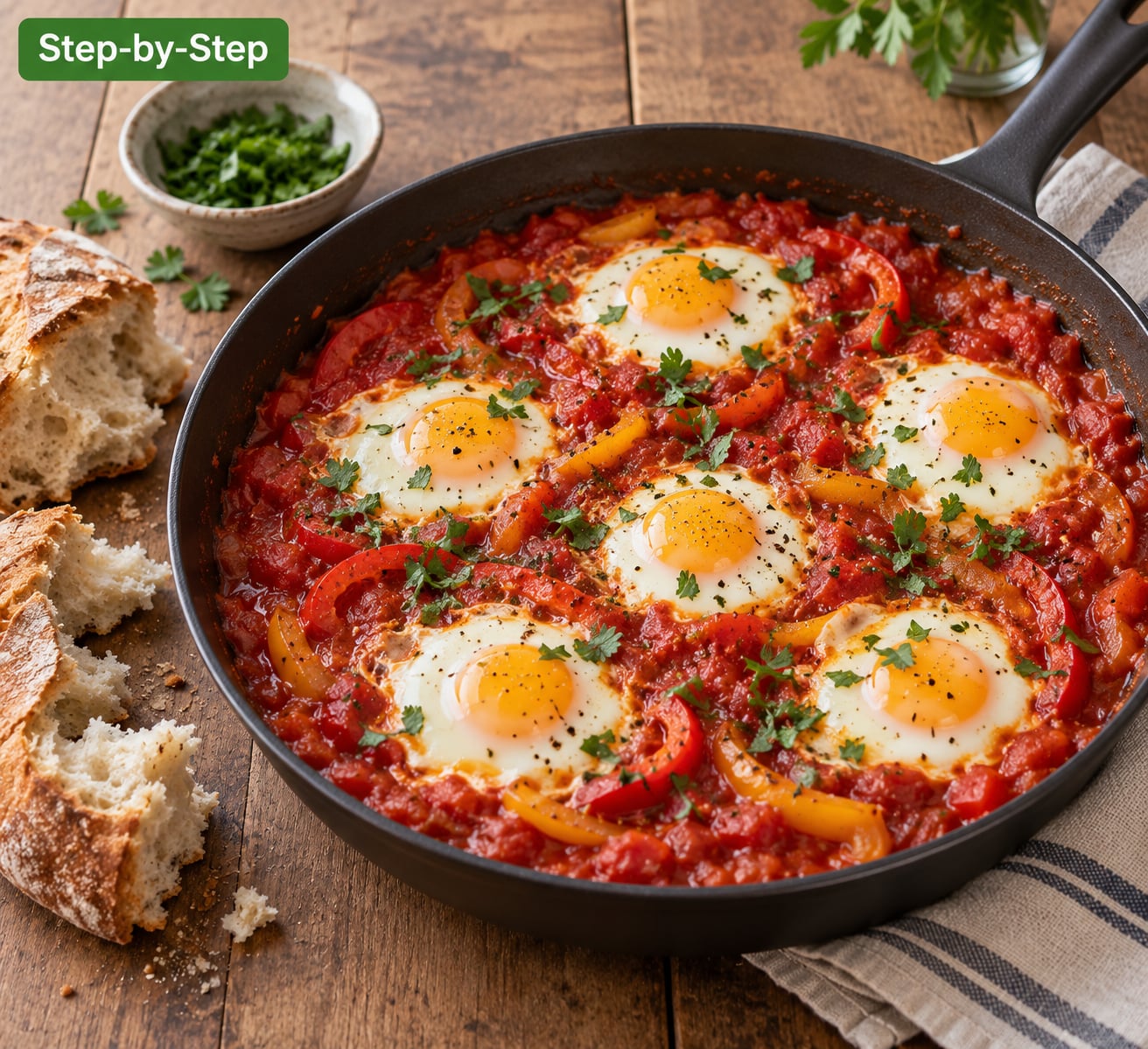
How to Make Shakshuka Eggs Just Right
Shakshuka is done when the egg whites are set and the yolks are still runny. That single cue is the whole test, and the minutes below tell you when to expect it.
- 4 minutes under the lid: whites just turning opaque, yolk completely liquid and loose in the center.
- 5 to 6 minutes: whites fully set, yolk still soft and flowing when you cut into it. This is where most people want to stop.
- 7 to 8 minutes: whites firm, yolk jammy and thick, holds its shape but still moves.
- 9 minutes or more: yolk set and dull, the edges turning chalky. Past this point you are into rubbery territory.
To protect the yolks, crack the eggs into the wells rather than dropping them from height, and stir nothing after this point. Lower the heat to medium-low before the eggs go in, since a hard simmer will set the whites long before the centers catch up.
And remember carryover cooking. The eggs keep setting for the minute or two after the pan leaves the heat, so if you like a truly runny yolk, pull the skillet a minute earlier than the clock says you should. There is no internal temperature shortcut for a runny yolk, and that is fine; for anyone eating a fully set egg, cook to 160 degrees Fahrenheit.
Step 1: Soften the onions and peppers
Heat the olive oil in your skillet over medium heat. Add the onion and bell pepper with a pinch of salt and cook for 6 to 8 minutes, stirring every couple of minutes, until they are soft and translucent and the edges start to color. If you add the garlic now it can scorch, so wait.
Step 2: Bloom the spices
Add the garlic and cook for 30 seconds until fragrant. Stir in the cumin, paprika, coriander, cayenne and harissa, and keep everything moving for another 30 to 60 seconds. You will smell the spices before you see any change, and that smell is the signal that they are ready for liquid.
Step 3: Simmer and thicken the sauce
Pour in the crushed tomatoes, add the sugar if using, and season with salt. Bring it to a bubbling simmer, then turn the heat down to medium-low and let it cook uncovered for 15 to 20 minutes.
Stir every few minutes and watch the bottom of the pan, because tomato sauce scorches fast once the water cooks off. The sauce is ready when it is thick enough that a spoon dragged through it leaves a visible trail that stays open for a couple of seconds. If it looks thin, give it another 5 minutes. This step is where most impatience costs people, and the sauce needs to be able to hold a well before the eggs arrive.
Step 4: Make wells and add the eggs
Turn the heat down to medium-low and stir in a little more salt. Use the back of a spoon to make six indentations in the sauce, spaced about 2 inches apart. Six eggs in a 12-inch skillet leaves enough room that the whites do not merge into one sheet, which is a common complaint on cooking forums.
Crack each egg into a bowl, then tip it into a well. Season with a little salt and black pepper.
Step 5: Poach the eggs
Cover the pan and cook for 5 to 6 minutes for runny yolks, checking at the 4-minute mark by lifting the lid at one edge. The sauce should be bubbling gently around the eggs, not boiling. If it is boiling hard, move the skillet to a lower burner for a minute.
Step 6: Garnish and serve
Scatter the feta and herbs over the top and take the pan to the table. Toast or tear bread for dipping, and if you are serving a bigger group, put out a board of olives, labneh and cucumber alongside it. I keep the pan on a trivet with a spoon for everyone, which saves washing a serving dish.
If you like your mornings to be planned rather than improvised, the breakfast sandwiches you can make ahead and freeze pair well with a slower weekend cook like this. And for feeding a crowd without cooking all day, building a deli-style platter at home that looks catered takes the pressure off the main dish entirely.
Common Mistakes
The sauce is thin and the eggs slide around
The sauce was not reduced enough, so the wells filled in and the eggs drifted. Simmer it uncovered for another 5 to 10 minutes before adding eggs, and test with a spoon trail rather than by eye.
The eggs are rubbery
That is heat, not time. Drop to medium-low before the eggs go in, cover rather than leave the pan open, and pull the skillet one minute before the clock. Overcooked eggs cannot be rescued once they happen.
The eggs cooked unevenly
Usually too many eggs in too small a pan, so the middle eggs cook in the residual heat of the sauce. Six eggs in a 12-inch skillet is comfortable. If you have more eggs than that, use two pans or cook in batches.
The sauce tastes bland
It needed salt, and the salt went in too early with the tomatoes rather than at the end. Taste the finished sauce and season again after the eggs are in.
The sauce tastes bitter or sharp
Either it cooked too long and scorched on the bottom, or the spices sat and burned. The fix next time is the same: keep the heat moderate during the simmer and keep stirring.
A metallic taste, and it is not the pan brand
Long tomato sims in seasoned cast iron can pick up a flat metallic note. If that is what you taste, use stainless steel, enamel-coated cast iron or nonstick instead. This is a real report from home cooks, and switching cookware is the actual fix rather than adjusting the recipe.
The eggs broke and merged into the sauce
Cracked yolks and too little space. Crack into wells in a properly thickened sauce, and give each egg room.
Tips worth remembering
Choose crushed tomatoes over whole ones for a smoother sauce, or hand-crush whole peeled tomatoes for a chunkier result. If you use zucchini, eggplant or mushrooms, cook them separately and drain them well, since extra water thins everything. A 14-ounce can works for two servings; a 28-ounce can is right for four to six, and leftover sauce keeps about 3 to 4 days in the refrigerator.
Reheat leftovers in a covered pan over low heat until steaming throughout, about 165 degrees Fahrenheit, knowing the yolks will be firmer than when you first cooked them. The sauce reheats better than the eggs, so many people make the sauce ahead and add fresh eggs to order.
Frequently Asked Questions
Do I need to cover shakshuka while the eggs cook?
Yes. Covering the pan traps steam and gently poaches the eggs, which is what gives you set whites and runny yolks at the same time. Without a lid, the whites set unevenly and the yolks take much longer. If you have no lid, drape a baking sheet over the skillet. Check at 4 minutes either way.
Can I make shakshuka without a cast-iron skillet?
Easily, and a non-reactive pan is often better. Stainless steel, enamel-coated cast iron and nonstick all work well for a long tomato simmer. Unseasoned cast iron is the one to watch, since a long acidic simmer can give the sauce a flat metallic taste. Any pan with a tight-fitting lid will do.
Which tomatoes work best for a thick shakshuka sauce?
Crushed tomatoes give the most reliable thick, even sauce and are what I use most often. A 28-ounce can suits four to six servings, and a 14-ounce can suits two. Whole peeled tomatoes, hand-crushed, give a chunkier texture. Fresh tomatoes work but need extra simmering to thicken, so plan on 10 more minutes.
How spicy should shakshuka be, and how do I adjust the heat?
Start mild. One tablespoon of harissa with a quarter teaspoon of cayenne gives a gentle warmth most people like, and you can always add more at the table. For a hotter version use two tablespoons of harissa plus extra red pepper flakes. For no heat at all, leave both out; the cumin and paprika still carry plenty of flavor.
Can I use tofu or another egg substitute in shakshuka?
Yes, and firm tofu pressed for 15 minutes works better than soft tofu, which releases water into the sauce. Tear it into rough chunks, salt it in the wells and simmer 10 to 12 minutes. It will not poach the same way, so add it later than eggs. Chickpeas and white beans are an easier meat-free swap.
How long does leftover shakshuka keep in the refrigerator?
Three to four days in a covered container, which is the standard window for cooked egg dishes. Reheat only the portion you plan to eat, in a covered pan over low heat, until it reaches 165 degrees Fahrenheit. Expect the yolks to be firmer than they were fresh. The sauce keeps longer than the eggs do, so a big batch of sauce alone can stretch into a week.
Conclusion
Start with the sauce. Give it the full 15 to 20 minutes to thicken, taste it for salt, and only then make the wells and add your eggs. That one habit fixes most of what goes wrong.
From there, keep the heat at medium-low, cover the pan, and take the skillet off a minute before the clock says to. Tear bread for dipping, scatter herbs and feta over the top, and eat it straight from the pan. Once the basic version works for you, adjust the heat level, add a sausage or skip the cheese, and keep the rest exactly the same.