
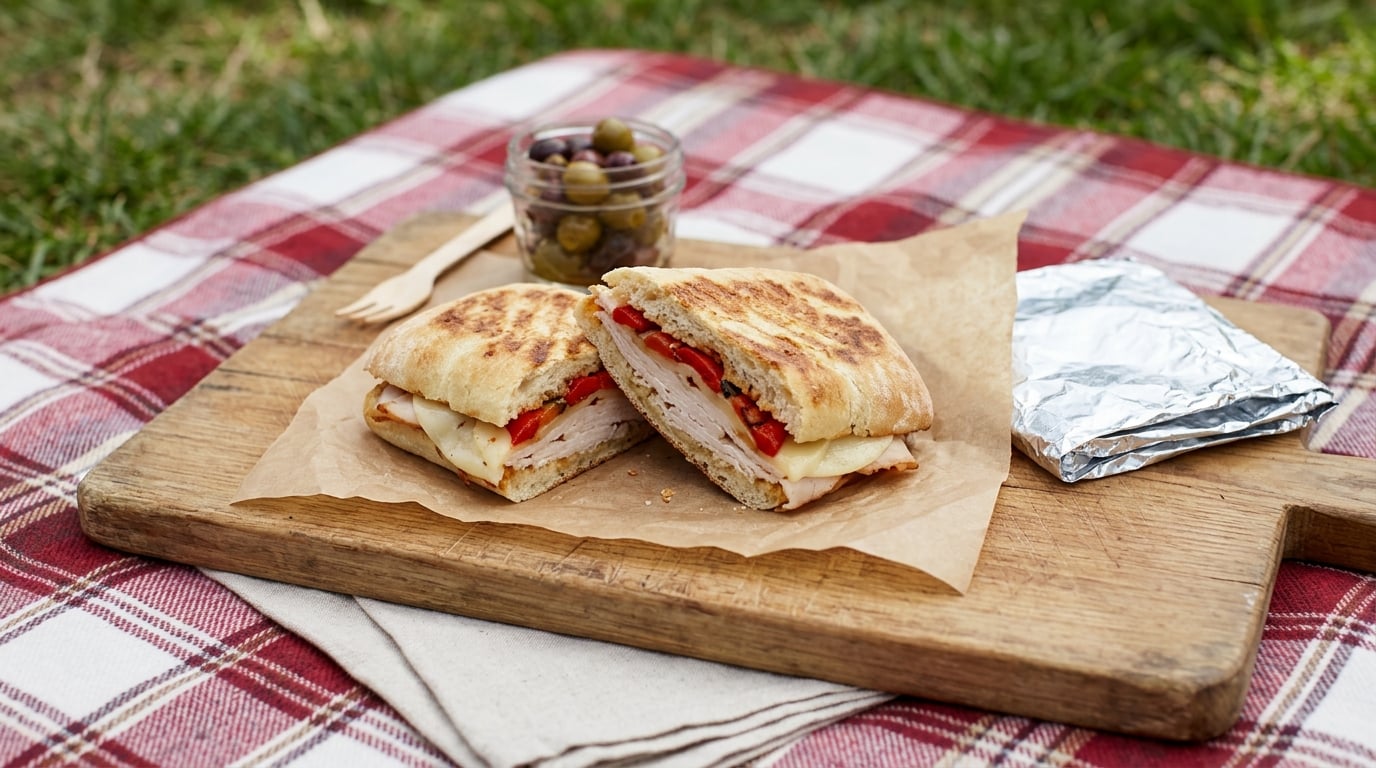
A pressed picnic sandwich that travels well is built from sturdy bread and low-moisture filling, cooked on a hot panini press or skillet until the outside crisps and the layers fuse into one dense slab, then wrapped so it still holds together three or more hours after you leave home. That fusion is the whole trick: heat pushes moisture out of the bread surface while pressure compacts the filling, and the result is a sandwich you can carry in one hand, eat cold or warm, and unwrap on a blanket without it collapsing.
Most packed sandwiches fail twice. The bread softens because moisture from tomatoes, lettuce, and sauces migrates into it, and the filling slides out the moment you cut in. Pressing solves both at once, and the extra five minutes of prep buys you a sandwich that still tastes right at hour four.
Below are ten combinations I keep coming back to, rated for how they hold up in transit and how long they are safe unrefrigerated. Every one of them eats fine cold, which matters because there is no reheat station at a picnic.
Updated for October 2026.
Table of Contents
- Best Pressed Picnic Sandwiches That Travel Well at a Glance
- 1. Classic Turkey and Swiss Pressed Sandwich
- 2. Italian Sub with Turkey, Pepperoni, and Provolone
- 3. Grilled Chicken, Pesto, and Mozzarella
- 4. Roast Beef and Cheddar
- 5. Ham, Apple, and Brie
- 6. Tuna and Egg Pressed Sandwich
- 7. Mediterranean Chickpea and Olive Sandwich
- 8. Pulled Pork and Slaw Pressed Sandwich
- 9. Caprese Pesto Pressed Sandwich
- 10. Peanut Butter and Banana Pressed Sandwich
- Frequently Asked Questions
- Conclusion
Best Pressed Picnic Sandwiches That Travel Well at a Glance
The table below ranks each sandwich by transport durability, filling stability, and best serving temperature. “Unrefrigerated” means the USDA two-hour rule, cut to one hour when it is above 90 F outside.
| Sandwich | Best for | Transport rating | Safe unrefrigerated | Serve it |
|---|---|---|---|---|
| Turkey and Swiss | All-purpose default | Excellent | 2 hours | Warm or room temp |
| Italian Sub | Road trips and big appetites | Excellent | 2 hours | Warm |
| Grilled Chicken and Pesto | Same-day outings | Good | 1 hour, cold only | Warm |
| Roast Beef and Cheddar | Cool weather | Excellent | 2 hours | Warm |
| Ham, Apple, and Brie | Afternoon spreads | Very good | 2 hours | Room temp |
| Tuna and Egg | No-cook lunches | Very good | 1 hour, cold only | Cold |
| Chickpea and Olive | Meatless | Excellent | 2 hours | Room temp or warm |
| Pulled Pork and Slaw | Group picnics | Very good | 1 hour, hot only | Warm |
| Caprese and Pesto | Summer days | Fair | 1 hour, cold only | Cold |
| Peanut Butter and Banana | Kids and hiking | Excellent | All day | Room temp |
Two things decide most of these ratings: how much water the filling releases, and how fragile the filling is when you cut the sandwich. Anything that is wet or crumbly loses points on both counts.
1. Classic Turkey and Swiss Pressed Sandwich
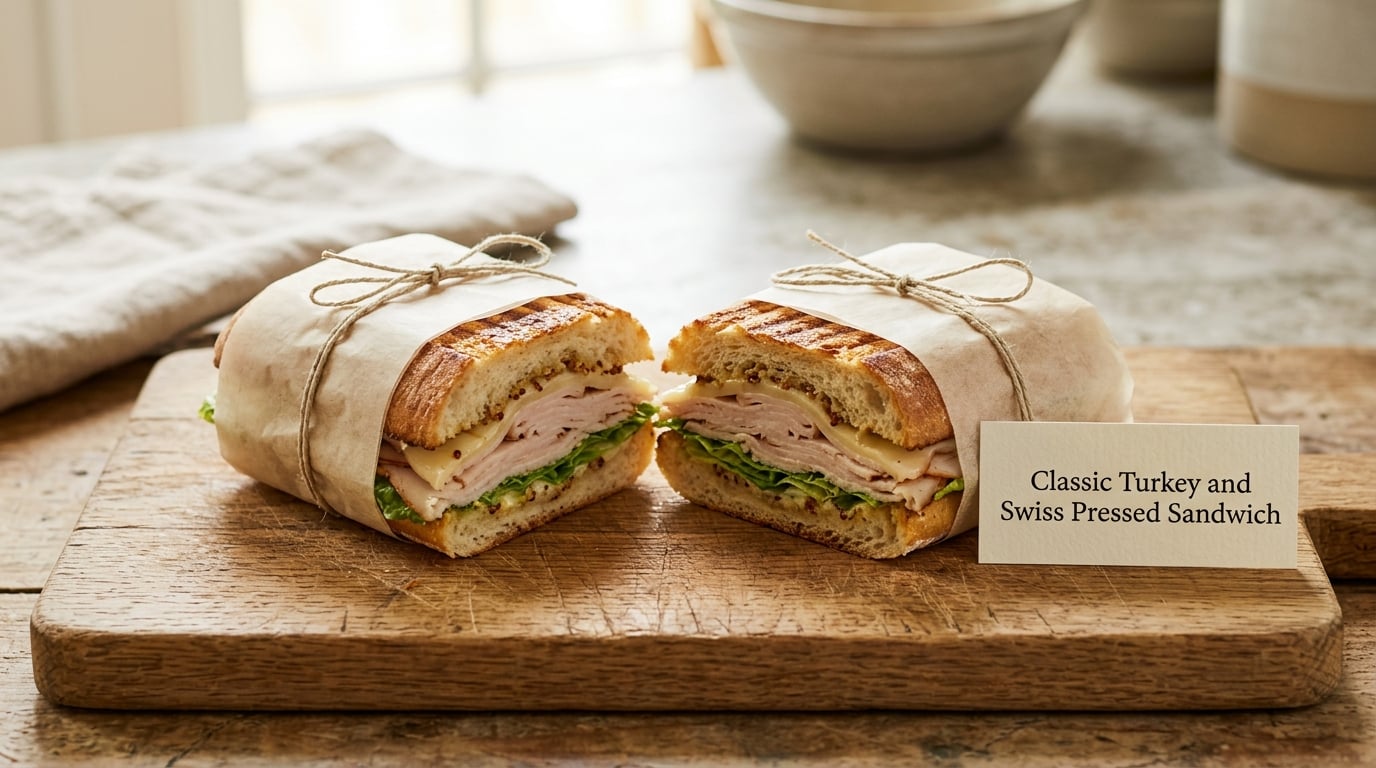
This is the sandwich to build when you do not know what the day holds. Turkey is firm, Swiss does not run, and the pair survives temperature swings that turn other fillings to paste.
Use a seeded or whole-grain roll rather than a soft white one, and press it only until the cheese melts and the ridges mark. Dry the turkey slices on a paper towel first, and keep iceberg or crisp lettuce in a separate little container so it never touches the bread.
Pack lettuce in separately and add it on the blanket. That single habit does more for sandwich quality than any press setting.
2. Italian Sub with Turkey, Pepperoni, and Provolone
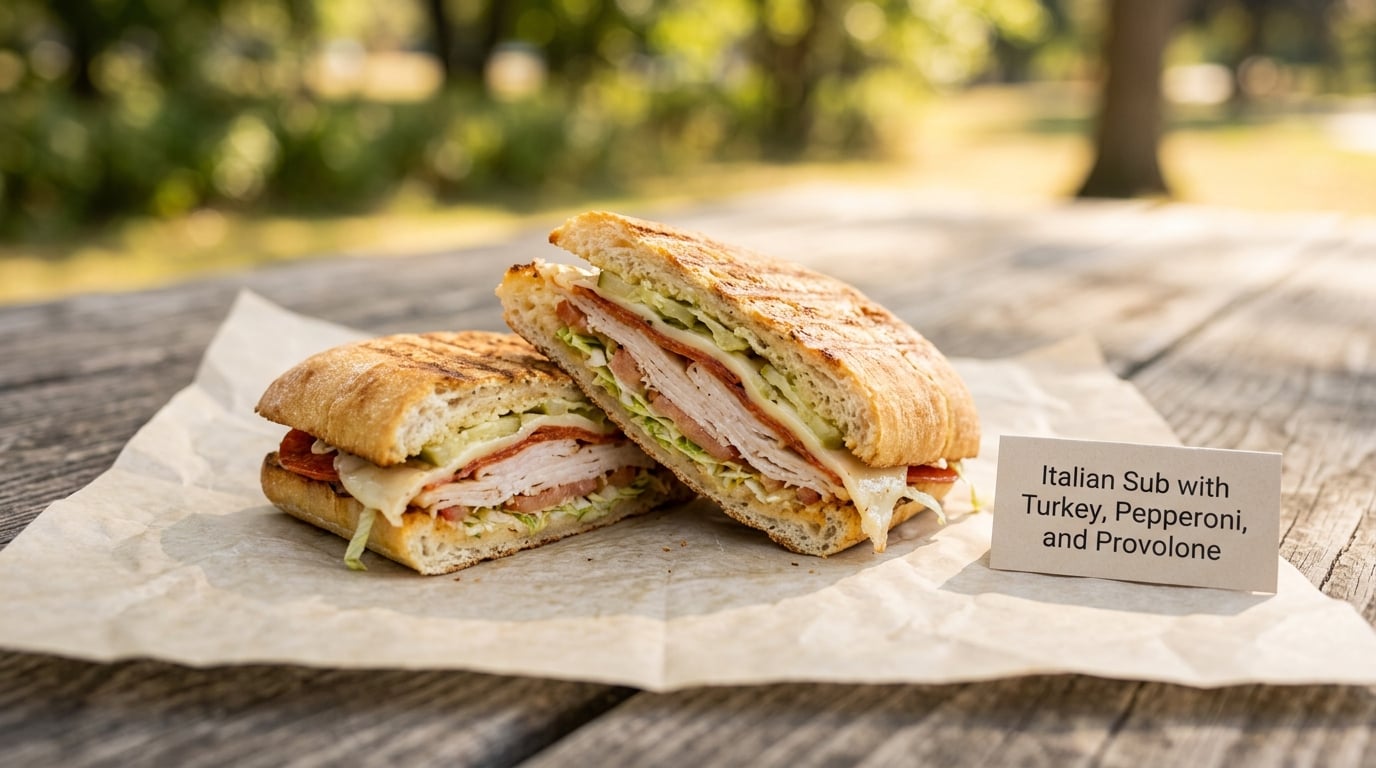
An Italian sub travels well for the same reason a good road-trip sandwich always has: the filling is cured, salty, and already firm. The risks are oil and pickles, so both need managing rather than avoiding.
Drain the pepperoni and pat it dry, slice the turkey and provolone evenly so the layers sit flat, and slice mild pickles paper thin. Toast the bread lightly instead of dark, then press for a short time so the sub heats through without the cheese breaking into a rubbery sheet.
Wrap the halves separately in parchment and set them seam-side down. Two people carrying sandwiches is the failure point, not one.
3. Grilled Chicken, Pesto, and Mozzarella
This one is genuinely best on the day you make it. Cooked chicken is a perishable, and pesto brings both oil and water with it, which makes this the least forgiving of the meat sandwiches.
Grill the chicken first, cool it completely, and shred it. Never press a sandwich around hot chicken, because the trapped steam is what softens the bread fastest. Spread pesto on the bread rather than the chicken so it toasts instead of soaking in, and use fresh mozzarella only if you are eating within a few hours.
Take it in a cooler with an ice pack and eat it warm or cold from the same container. If you cannot keep it cold, swap in a different sandwich.
4. Roast Beef and Cheddar
A dense, cold-weather option. Roast beef has almost no water in it, cheddar melts into a binder that holds everything else, and the combination improves rather than suffers after a few hours.
Pick a sturdy round or kaiser roll. Spread mustard or horseradish on the bread in a thin layer instead of a thick one, because a heavy spread squeezes out the moment you cut the sandwich in half.
Fold the beef rather than piling it loosely, and press long enough that the cheddar reaches the edges. Slice it after pressing, not before, and you get a clean cross-section that stays together on the way to the car.
5. Ham, Apple, and Brie
The sweet and savory option that still looks good after three hours at room temperature, which most cheese sandwiches do not. Brie softens pleasantly rather than turning into a problem.
Toss the apple slices with a squeeze of lemon to keep them from browning. Brie behaves better in thin slices, so shave it rather than cutting thick slabs, and press gently so the brie does not ooze out the seam.
Wrap it well and serve it at room temperature. This is the one on the list that I would not bother rewarming.
6. Tuna and Egg Pressed Sandwich
A no-cook sandwich that looks like more work than it is. Well-drained tuna is a dense, slightly moist filling that presses into a stable layer, which is exactly what you want in a lunch that sits in a car until noon.
Drain the tuna thoroughly and mix it with chopped hard-boiled egg. Never use raw egg, and treat this as a cold-only sandwich: it needs an ice pack, and it should be eaten within an hour of leaving cold storage.
Add celery or a little pickle for crunch and a short squeeze of lemon for acidity. Press it lightly. A heavy press squeezes the water out of the tuna and turns the bread to damp cardboard.
7. Mediterranean Chickpea and Olive Sandwich
The meatless option that travels the best of everything here. Mashed chickpeas behave like a spread that sets, and brined olives add salt and structure without adding water.
Mash the chickpeas with lemon, olive oil, and a little garlic rather than blending them smooth, so there is something to hold the layer together. Use a sturdy flatbread or a thick roll, and drain the olives before they go in.
Roasted peppers are fine if you blot them first, and feta is better crumbled on after pressing than melted inside. This one is good cold and just as good rewarmed.
8. Pulled Pork and Slaw Pressed Sandwich
Good for a picnic with a group, where you want one sandwich that feeds people without a knife and a board. Shredded pork is moist, so the slaw is what has to earn its place.
Drain the slaw well and squeeze it in a clean towel, then pack the filling tight against the meat. A loosely packed sandwich compresses in the bag and the bottom half soaks up everything.
Use a sturdy bun, press firmly but briefly, and keep it hot. This is a same-day warm sandwich with a one-hour window, and it needs an insulated container if you want it warm on arrival.
9. Caprese Pesto Pressed Sandwich
The best summer option and the worst traveler on the list, and the gap is entirely about water. Fresh tomato is what softens bread faster than anything else you can put in a sandwich.
Salt the tomato slices, lay them on a towel for ten minutes, and blot them dry. That one step removes most of the water. Fresh mozzarella should go in thick slabs with the tomato between the cheese and the meat or lettuce, never against the bread, and the pesto goes on the bread where it toasts.
Pack this one for a short trip, keep it cold, and eat it within an hour. On a hot day with a long drive, choose the chickpea sandwich instead.
10. Peanut Butter and Banana Pressed Sandwich
The dependable one. No refrigeration, no assembly time, nothing to leak, and kids can hold it without a napkin. It is the correct answer for a long hike or a car trip with a fussy passenger.
Use slightly stale or firm bread, since very fresh bread compresses under the press and squashes out the filling. Spread the nut butter all the way to the crust on both sides so it acts as a moisture barrier, and add the banana after pressing if you want it to stay distinct.
Wrap in foil and it survives a whole day in a backpack. Do not press this one hot. A warm nut butter sandwich is a mess in a way a cold one never is.
Frequently Asked Questions
How do you transport pressed sandwiches without making them soggy?
Let the sandwich cool completely on a rack before you wrap it, since sealing a warm sandwich traps the steam that softens bread. Wrap it in parchment, then foil, and put it in a hard-sided container so nothing presses on the crust. Keep wet ingredients like tomato, pickle, and lettuce in a separate small container and add them when you eat. On a picnic, a cold or warm insulated bag beats a soft tote every time.
How long can a pressed sandwich sit out safely?
Perishable fillings such as deli meat, cooked chicken, egg salad, tuna, and cut fruit should not sit unrefrigerated for more than 2 hours, or 1 hour when the air temperature is above 90 F. A sandwich built only from shelf-stable items such as nut butter, whole fruit, cured meat, and hard cheese keeps much longer. If the outing is longer than the safe window, an insulated bag with a frozen pack keeps it cold the whole way.
Do pressed picnic sandwiches that travel well need to be refrigerated?
Most do, and the press does not change that. Heat kills bacteria on the surface but does not sterilize the filling, so a chicken and pesto panini is as perishable after pressing as before. Cured meats with aged cheese, and nut butter sandwiches, are the exceptions that travel unrefrigerated without worry. If the sandwich includes anything cooked or anything cut from a plant, treat the cooler as part of the picnic kit.
How do you keep a sandwich from getting soggy in a lunchbox?
Four habits fix most soggy lunches. Toast the bread first, spread mayo or nut butter on both cut faces as a moisture barrier, and put wet items such as tomato between the meat and the lettuce rather than against the bread. Finally, dry your lettuce and meat before assembly, and do not seal a warm sandwich in a container. Separate bread and filling if you are packing lunch a full day ahead, then assemble it on the spot.
Can pressed sandwiches be made the night before?
Yes, with one adjustment. Store the bread and filling separately, wrapped individually in the refrigerator, and press the sandwich in the morning. Pressed bread reabsorbs steam and goes soft overnight no matter how well it is wrapped, so pressing the night before works against the very crispness you were after. Packaged cold cuts, roasted peppers, and chopped vegetables all refrigerate fine overnight.
Conclusion
For a general afternoon picnic, go with turkey and Swiss or the chickpea and olive for a meatless table. Save the Italian sub for a road trip where the filling needs to be substantial, and skip the Caprese when the drive is long or the day is hot.
The rules that decide whether any of them survive the trip are simple. Choose sturdy bread, keep wet ingredients in a separate container, press only until the filling is bound, cool the sandwich before you wrap it, and pack it in something hard-sided. For anything with cooked meat, egg, or cut produce, bring an ice pack and eat it inside the USDA two-hour window, or one hour when it is above 90 F.
Get the pressing right and the sandwich takes care of itself for the next three hours.