
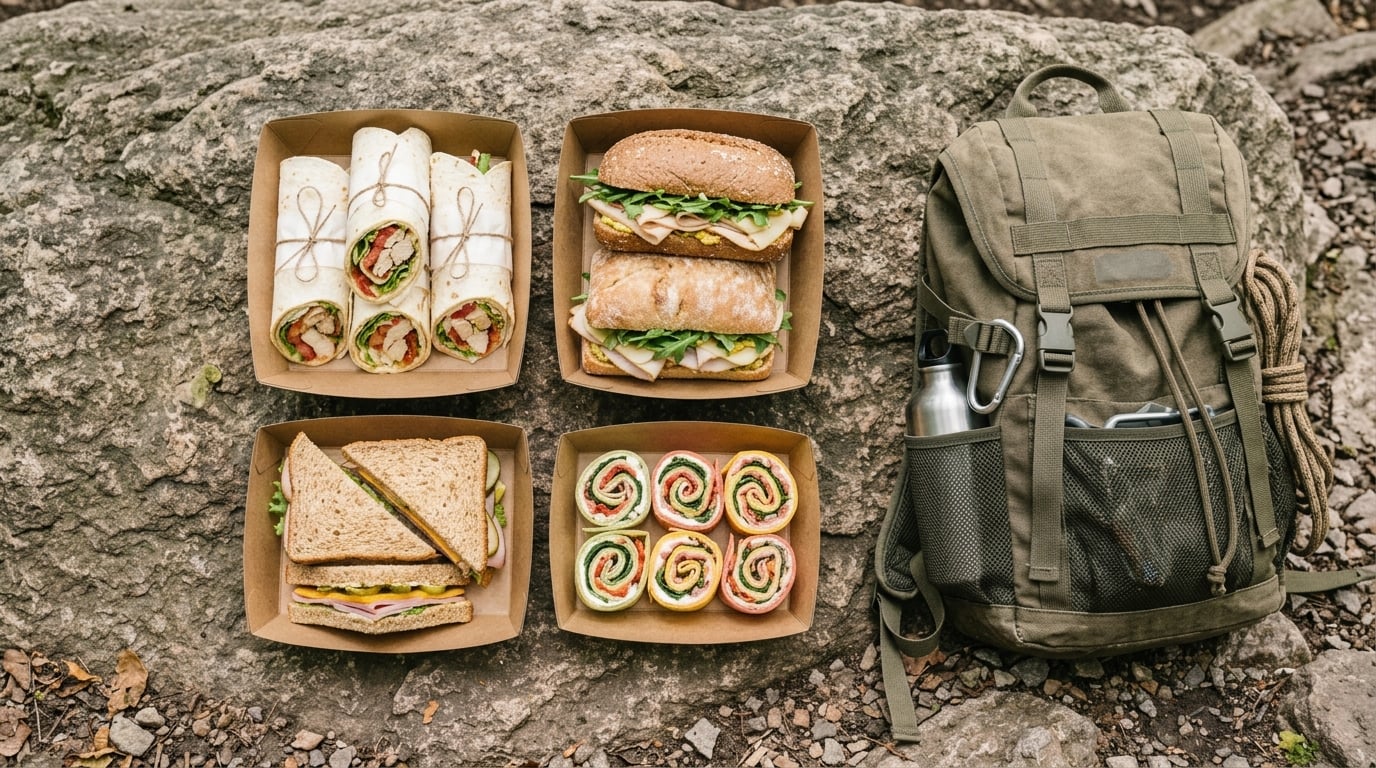
Most trail sandwiches die the same three ways: crushed flat by your sleeping bag, soaked through by a wet filling, or unsafe because a cheese went warm for three hours. The best sandwiches for hiking dodge all three by building on a wrap, hard roll or flatbread and filling them only with shelf-stable ingredients. These ten do that, and each one tells you how to pack it.
A backpack is a compression device with a hungry person attached. Everything inside it gets pressed against everything else, so a sandwich that looks fine at the trailhead can arrive at lunch as a flat, greasy rectangle. What follows is ordered by durability rather than by how good the sandwich tastes at a picnic table.
Table of Contents
- Best Sandwiches for Hiking That Survive a Backpack at a Glance
- 1. Classic PB&J on Whole-Grain Bread
- 2. Cheddar and Apple Sandwiches
- 3. Hummus and Veggie Wraps
- 4. Tuna Salad Sandwiches on Whole-Wheat Bread
- 5. Creamy Chicken and Lettuce Wraps
- 6. Nut Butter and Banana Sandwiches
- 7. Smoked Salmon and Cream Cheese Bagels
- 8. Pepperoni, Provolone, and Pepper Sandwiches
- 9. Vegetarian Sun-Dried Tomato and Mozzarella Pinwheels
- 10. Apple Cheddar and Walnut Sandwiches
- Frequently Asked Questions
- Conclusion
Best Sandwiches for Hiking That Survive a Backpack at a Glance
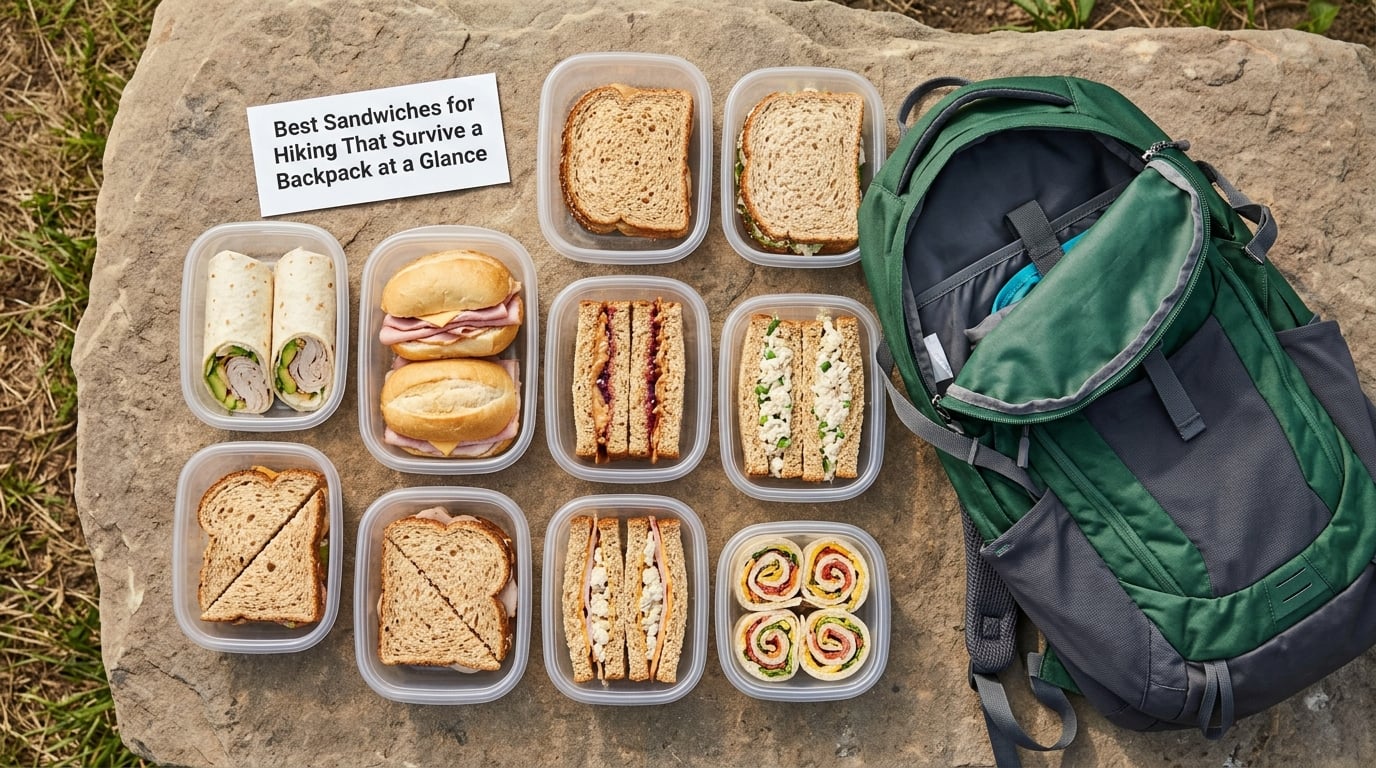
| Sandwich | Crush resistance | Filling stability | Prep effort | Best use |
|---|---|---|---|---|
| 1. PB&J on whole-grain bread | Low | Very high | 5 minutes | Day hike, kids |
| 2. Cheddar and apple | Medium | High | 7 minutes | Day hike, portable calories |
| 3. Hummus and veggie wrap | Very high | Medium | 10 minutes | Day hike, vegetarian |
| 4. Tuna salad on whole wheat | Medium | Low, needs cold | 10 minutes | Cold trail lunch |
| 5. Chicken and lettuce wrap | Very high | Low, needs cold | 15 minutes | Overnight with cooler |
| 6. Nut butter and banana | Low | High | 4 minutes | Shorter hikes, quick fuel |
| 7. Smoked salmon and cream cheese bagel | High | Low, needs cold | 8 minutes | Short trip with ice |
| 8. Pepperoni, provolone and pepper | Medium | High | 8 minutes | Hearty no-cook lunch |
| 9. Sun-dried tomato and mozzarella pinwheels | Very high | Medium, needs cold | 12 minutes | Overnight, vegetarian |
| 10. Apple, cheddar and walnut | High | High | 8 minutes | Shorter window, gourmet |
Read the crush column as the honest one. Wraps and pinwheels score high because a rolled tube bends instead of snapping, and a hard roll or bagel scores high because the shell keeps distributing pressure outward. A two-slice sandwich on soft bread is always the weakest option in the pack, no matter what you put between the slices.
1. Classic PB&J on Whole-Grain Bread
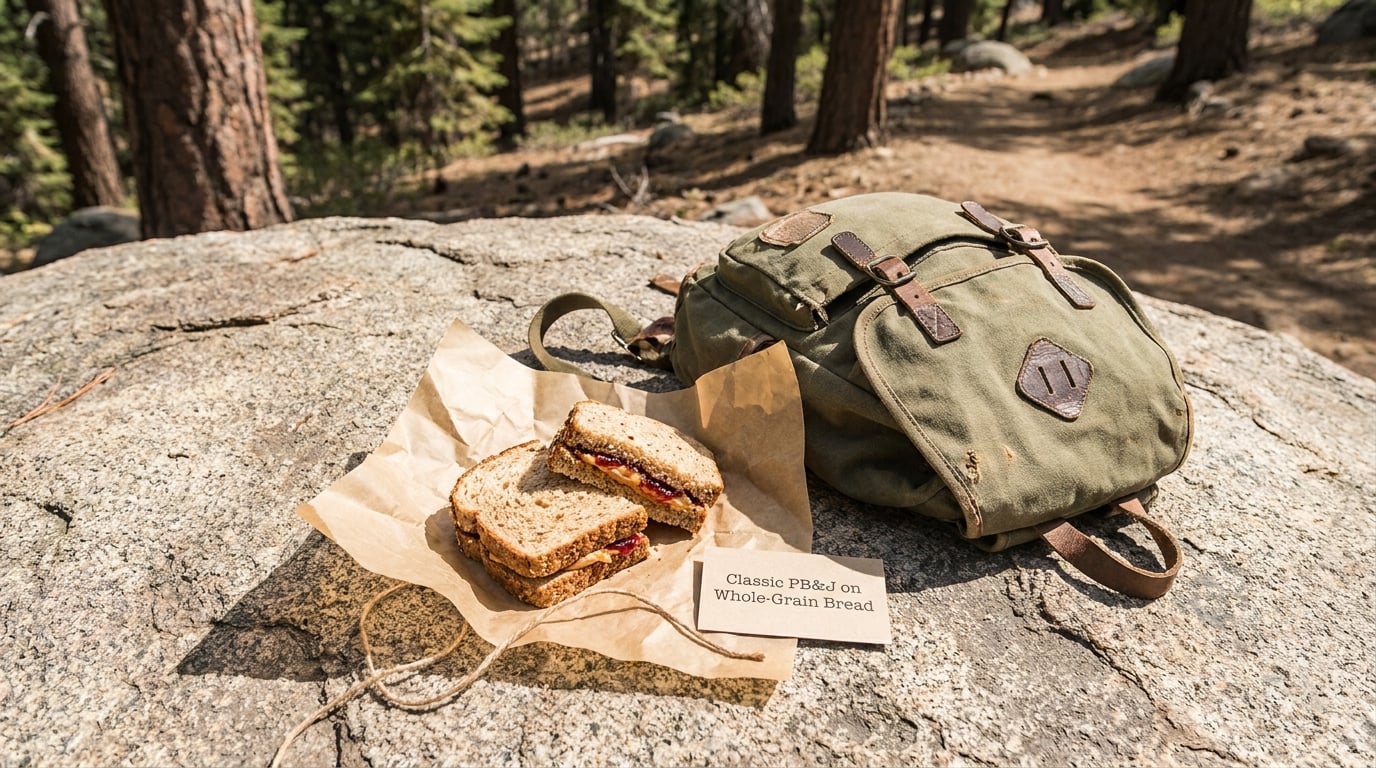
Peanut butter and jelly is the correct default because both fillings are shelf-stable and neither one leaks. The problems people remember are mechanical, not culinary: the bread crushed, or the jelly soaked through and made the paper wrapper glue.
Fix the crushing by spreading each filling to within about half an inch of the crust edge. That margin is what keeps the sandwich from splitting at the seam when your water bottle presses into it. Whole-grain bread is denser than white, which helps, though a seeded loaf packed at the top of the pack still turns to brick.
Fix the sogginess by using less jelly than feels right and choosing a firm jelly rather than a runny one. Some hikers spread the filling on each slice separately before sealing, which slows the wet migration into the bread.
Pack it in wax paper or parchment, then wrap the whole thing in a zip-top bag with as little air as you can squeeze out. A nut butter pouch on both sides keeps two sandwiches from merging into one brick.
Best for day hikes with kids, and for anyone who wants zero thinking at 11 a.m. on a ridge. Swap in almond or sunflower butter for a nut-free version, and honey instead of jelly for a slightly firmer spread.
2. Cheddar and Apple Sandwiches
Sharp cheddar with thin apple slices is sweet, savory, and surprisingly tough. Aged cheddar does not soften or weep at trail temperatures the way a soft cheese does, and it adds fat and protein alongside the apple’s carbs.
The only real risk is apple moisture, which migrates into bread and turns the bottom slice damp within a few hours. Two things prevent it: toss the apple slices with a squeeze of lemon juice to slow browning and moisture release, and lay the cheese directly against the apple so the cheese forms a moisture barrier on one side.
Use a hard, crumbly cheese you can slice thin. A thick slab of cheddar in a sandwich is unchewable at mile 8, so thin slices matter more here than anywhere else on this list.
Wrap it in parchment and keep it out of the pack’s damp bottom. Best for a day hike or an overnight when you want calories that don’t require a cooler.
3. Hummus and Veggie Wraps
Why wraps hold up better than sliced bread
A wrap survives because it is a single flexible sheet rather than two fragile slabs joined by a seam. Roll it tight, and compression from your gear presses against a continuous surface with no joint to split. That is the entire reason trail veterans roll peanut butter in a flour tortilla instead of making it on bread.
Hummus is a good spread for the same reason it works in a picnic: it is thick, stable, and salty enough to taste good cold. Choose the thickest hummus you can find, not the whipped kind, and spread it in a thick layer rather than a thin smear.
Add sturdy vegetables only. Roasted red pepper, carrot ribbons, cucumber, and olives travel fine. Raw tomato, lettuce, and fresh berries release water on the trail and turn the wrap into a damp tube by mid-morning.
Roll it tightly, tuck the end underneath, and cut it into four or five short segments. Short segments are easier to eat one-handed while walking, and if the wrap splits you lose a piece rather than the whole thing.
Best for vegetarian day hikes and for anyone who wants more vegetable than a deli sandwich provides.
4. Tuna Salad Sandwiches on Whole-Wheat Bread
Tuna is the highest-protein no-cook option and it packs a serious calorie count per ounce, which matters on long days. Mixed with a little olive oil instead of mayonnaise, it stays edible for hours.
Control the moisture by draining the tuna well and mixing it with something absorbent, such as chopped celery or a spoonful of pickle relish. A tuna sandwich that leaks oil through the bread is the fastest way to ruin the wrapper and three other items in the pack.
Be clear-eyed about the cold chain. Cooked tuna and oil-packed tuna both want to stay at or below 40°F, so treat this as a cold trail lunch. It works fine on a cool morning with an ice pack, and it is a poor choice for a hot desert ridge at mile 6.
Whole-wheat bread holds up better than white, and double-wrapping in parchment before the zip bag keeps any oil where it belongs.
Best for a cool-weather day hike or a cold lunch on an overnight with a cooler. Serve it with something crisp, like apple slices, to make it feel less like a school lunch.
5. Creamy Chicken and Lettuce Wraps
Chicken makes a wrap substantial in a way hummus alone cannot, and using the wrap instead of a bun keeps the whole thing under one hand. Shredded rotisserie chicken works, as does canned chicken packed in water.
The two things that ruin it are the lettuce and the sauce. Iceberg and romaine hold up reasonably well for a few hours, but creamy sauces like ranch or blue cheese will weep out of the bottom of a roll. Use a thick dressing or a dry seasoning like pepper, salt, or a little mustard powder instead.
Keep the filling cold until the last possible moment. Cooked chicken needs to stay at or below 40°F, and it should hit 165°F during cooking. If you have no cooler, pull the chicken out of the ice at the moment you break for lunch rather than carrying it cold all day.
Pack the wrap in a rigid container or a doubled zip-top bag, and eat it in the first four hours of a warm day.
Best for overnights and short multi-day trips where you are carrying a cooler anyway.
6. Nut Butter and Banana Sandwiches
This is the fastest fuel on the list and the one most hikers eat at mile 3 when they should be eating at mile 6. Nut butter is calorie-dense, shelf-stable, and it does not leak. Banana adds potassium and a sweetness that keeps the whole thing from tasting like paste.
Ripeness is the variable. A banana that is ready to eat today will be a smear by tomorrow, so use firm bananas for anything carried more than a few hours, and slice them just before rolling.
To keep it from turning to mush, spread a thick layer of nut butter first, lay the banana slices on top, and roll immediately. The nut butter fat slows the banana from releasing water into the tortilla. Wrapping the finished roll in wax paper and then foil adds another barrier.
A softer option is a honey and banana roll, which some hikers on r/trailrunning describe as the breakfast version of the same trick. Nutella and banana works the same way if you want it sweeter.
Best for shorter hikes and fast days where you want calories without prep. It is also the sandwich kids will eat when they have decided PB&J is not happening.
7. Smoked Salmon and Cream Cheese Bagels
A bagel is a strong structural choice. The dense, chewy crumb absorbs moisture instead of dissolving, and the round shape means pressure from your pack presses evenly across the surface instead of finding a corner to crush.
That toughness is also the drawback hikers mention: a whole frozen bagel is genuinely hard to eat while walking. Toasting it first, then slicing it thin, makes a real difference. Cut it into thin segments rather than trying to bite a whole round.
Smoked salmon and cream cheese both need a cold chain. Keep them at or below 40°F with ice packs and eat the sandwich within a few hours of leaving the cooler, not at the far end of a long afternoon. Fish is a no-go in summer heat without ice.
Spread the cream cheese on the cut face as close to assembly time as you can, so it does not slide out onto the bagel during the walk.
Best for a short trip where you have ice and want to feel like you are on holiday. Skip it on a hot no-cooler hike.
8. Pepperoni, Provolone, and Pepper Sandwiches
This is the build backpackers reach for when they want a lunch with actual weight to it. Cured pepperoni and provolone are both shelf-stable at room temperature for a day or two, and the combination is salty enough to need no sauce at all.
Grease is the enemy here. Pepperoni releases oil as it warms, and that oil migrates into bread and then into everything wrapped beside it. Keep the slices cold until the last minute, pat off excess oil with a paper towel, and wrap the sandwich twice.
Adding banana peppers or pickled jalapenos cuts the salt and cuts the grease perception, and the acidity keeps a thick cheese slice from tasting flat after four hours.
A hard roll or a split hoagie-style roll handles this filling better than sliced bread, since the filling sits in a cavity rather than pressing directly on the crumb.
Best for hikers who want a hearty, no-cook, no-cooler lunch and do not mind a slightly oily wrapper.
9. Vegetarian Sun-Dried Tomato and Mozzarella Pinwheels
A pinwheel is simply a wrap rolled and sliced into rounds, which makes it the most forgiving format on this list. There is no seam, no hinge, and nothing to fall out between two bread slices.
Sun-dried tomatoes bring concentrated savory flavor in a form that does not release water the way fresh tomatoes do. Squeeze them dry before rolling, and blot excess oil from the mozzarella, because that oil is what makes the tortilla greasy and slippery by lunchtime.
Use a flour tortilla rather than a corn one. Corn tortillas crack along the seam when you try to roll them tightly, and that crack becomes a split tube in your pack. A large flour tortilla also gives you a wider surface, which means more filling per roll.
Slice the finished roll into thick rounds and lay them flat in a container rather than stacking them on their edges. Flat rounds resist compression far better than a single big roll does.
Fresh mozzarella is a perishable dairy item, so this one wants a cooler and a four-hour window. Shredded low-moisture mozzarella or provolone travels better if you are going without one.
Best for overnights and family trips where someone has already eaten the last of the pepperoni.
10. Apple Cheddar and Walnut Sandwiches
Of everything here, this is the sandwich most likely to still taste composed at hour six. Aged cheddar stays firm, apple slices hold their shape if you treat them, and walnuts add fat and a strong flavor that does not fade when everything else is warm.
Toast the walnuts briefly in a dry pan before adding them. It removes some of the raw, slightly bitter edge and improves the aroma, which matters more than you would think when everything in your pack smells like damp nylon.
Skip the toasted walnuts entirely if anyone in your group has a tree nut allergy, or use pumpkin seeds instead. Cheddar and apple works fine without them, and so does a version with dried cranberries in place of fresh apple for a longer trip.
This is a shorter-window sandwich. Fresh apple starts to turn and weep past four hours in a warm pack, so eat it on the same day or move it to a container where it will not crush anything else.
Best for a same-day hike where you want something that looks and tastes special without a stove.
Frequently Asked Questions
What is the best type of sandwich for a day hike?
A flour tortilla wrap with a shelf-stable filling is the safest bet: roll it tight, wrap it in wax paper, and it will not crush, split, or leak. Classic PBu0026amp;J on whole-grain bread is a close second if kids are coming. Skip anything with fresh tomato, lettuce, or mayo unless you are eating it within a couple of hours.
How do I keep sandwiches from getting soggy in a backpack?
Spread filling in a thinner layer and stop about half an inch short of the crust edge, and keep wet ingredients like tomato and lettuce out entirely. Wrap in wax paper or parchment first, squeeze the air out of a zip-top bag, and store condiments separately. Toasted or dehydrated bread also resists moisture far better than soft slices.
Do I need to refrigerate a sandwich while hiking?
Only for perishable fillings. Cooked chicken, tuna, smoked salmon, fresh mozzarella, soft cheese, and anything with mayonnaise need to stay at or below 40 F, so they need ice or a cooler. Nut butter, honey, dried fruit, hard cheese, cured meats, and jam are shelf-stable and fine without refrigeration.
Are wraps better than bread for backpack lunches?
For most trips, yes. A rolled tortilla is a single flexible sheet with no seam to split, so pressure from your gear compresses it evenly instead of cracking it apart. Bread still wins on flavor and on calories per cubic inch, so use it for short hikes or when a sandwich is eaten within the hour.
What food safety rules should backpackers follow with meat, tuna, eggs, and dairy?
Keep perishable foods at or below 40 F with ice packs and eat them within two hours of leaving that cold chain, or one hour if the temperature is above 90 F. Cook poultry to 165 F, ground meat to 160 F, and whole cuts and fish to 145 F. If you cannot keep it cold, do not carry it.
Conclusion
Start with a tortilla roll if the trip is anything past a couple of hours, and stay with nut butter, hard cheese, cured meat, and dried fruit so you never need a cooler. Save the chicken, tuna, and fresh dairy builds for nights when you have ice in the pack.
Match the rest to your trip: pinwheels and hard rolls for a family group that needs to be fed fast, cheddar and apple for a same-day hike where you want something that still looks like lunch at mile 6, and PB&J or nut butter and banana for anyone carrying a heavy pack and needing fuel quickly. Whichever you choose, roll or wrap it tight, leave a crust margin, double-wrap it, and put it at the top of the pack where nothing presses down on it.