
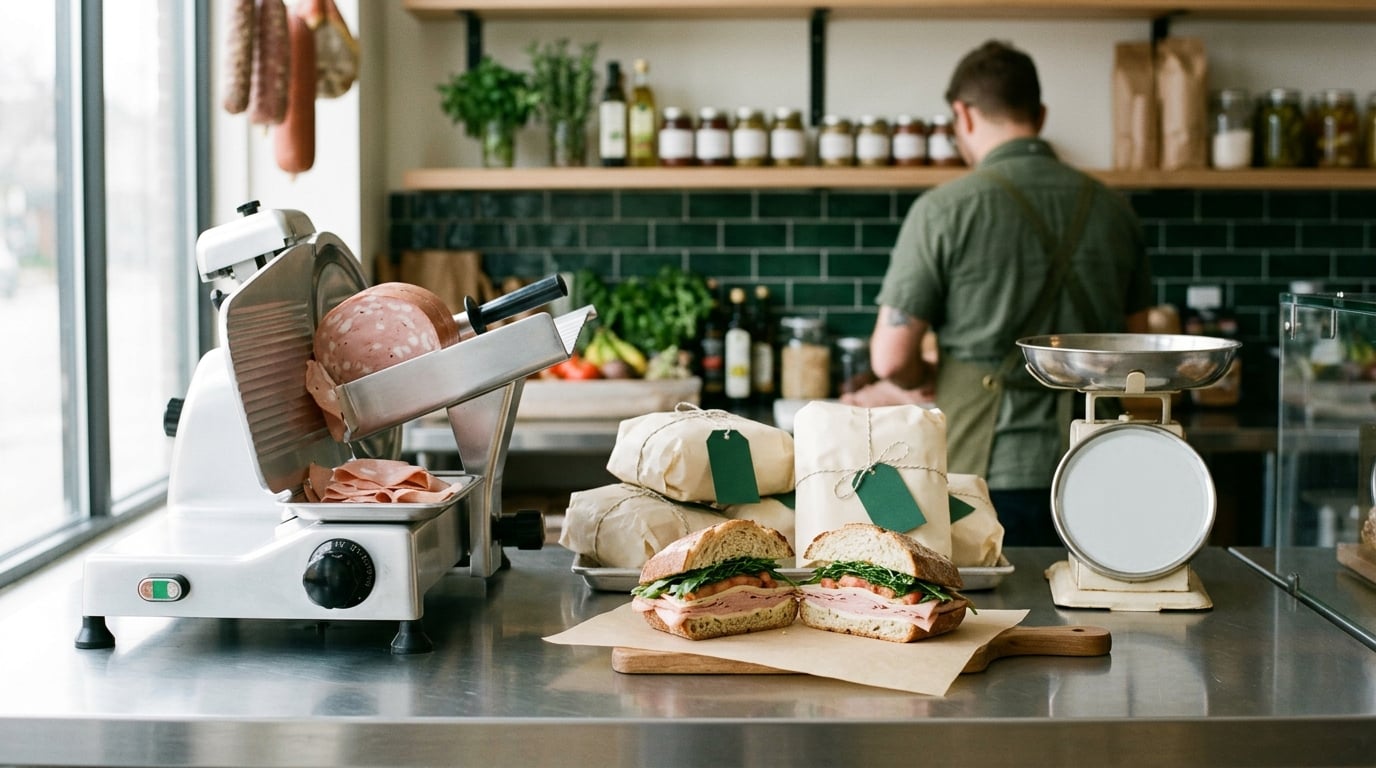
To order at the deli counter like a regular, say three things in this order: the item, how thick you want it sliced, and how much you want by weight. Something like “half a pound of oven-roasted turkey, thin sliced, please” is a complete order, and it takes about eight seconds to say.
That is genuinely all there is to it. The rest of this guide is about the small things that make counters run smoother: how to say a fraction of a pound, how to show thickness with your fingers, how to ask for a re-slice without apologizing, and what changes once the workers know your name.
A deli counter is the in-store service area where someone slices cold cuts and cheeses to your specifications, usually by weight and by thickness. If you have ever stood there silently hoping the person behind you would order first, this is for you.
Table of Contents
- What You Need Before You Reach the Counter
- Step-by-Step: How to Order at the Deli Counter Like a Regular
- 1. Know What You Want Before the Line Moves
- 2. Listen for Your Number or Ask What the Regulars Order
- 3. Give a Complete Order in a Natural Order
- 4. Ask Questions Instead of Guessing
- 5. Confirm Special Instructions Out Loud
- 6. Pay, Move Aside, and Confirm the Order Is Labeled
- 7. Build a Repeatable Signature Order
- The slice thickness words, and what they actually mean
- Tipping at the deli counter
- Common Mistakes—and How to Fix Them
- Frequently Asked Questions
- Conclusion
What You Need Before You Reach the Counter
Most counter stumbles happen in the ten seconds before you speak. You get to the front, the worker is waiting, and the whole menu is a wall of wax paper packages behind glass. Decide these six things first and the conversation takes care of itself.
- The item. Name the specific cut, not the category. “Turkey breast” beats “turkey.” If you want a brand, ask whether they carry it that week — counters rotate products on a schedule and the display is not the whole inventory.
- The thickness. Shaved, thin, medium, thick, or extra thick. Pick one now.
- The weight. The scale measures pounds, so order in pounds, not in slices. Six to eight ounces per person is the usual amount for sandwiches.
- The extras. Cheese, extra pickles, sauce in a separate cup, cut in half, wrapped in two pieces of paper instead of wax paper.
- Dietary needs. No pork, no shellfish, gluten-free bread, low sodium. Say these early, not at the register.
- How it will be used. Today, or packed for five lunches? That changes the amount more than anything else you say.
How to say a fraction of a pound out loud
Say the numbers plainly and nobody blinks: “three-quarters of a pound” is the easiest way to say .75 lb, and “a pound and a quarter” works for 1.25. “Point seven five pounds” sounds like a math problem, and “a quarter and a quarter” is a real deli idiom that some workers will understand and others will not.
How much to order
Plan on roughly three to four ounces of meat per sandwich, so a pound gives you three good sandwiches or four lighter ones. Two people ordering a lot of different items beat one person ordering everything, both for queue speed and for freshness.
| How many people you are feeding | Meat per person | Total to order |
|---|---|---|
| 1 | 4 oz | 1/4 lb |
| 2 | 4 oz | 1/2 lb |
| 4 | 3 oz | 3/4 lb |
| 6 | 3 oz | 1 1/8 lb, so ask for 1 1/4 |
| 10, a party platter | 2.5 oz | 1 1/2 lb across two or three meats |
Order meat the day you plan to use it, or slice enough for two lunches at a time. Sliced cold cuts keep about three to four days in the refrigerator at 40°F or below, and you want the trip home shorter than two hours in a warm car.
Step-by-Step: How to Order at the Deli Counter Like a Regular
Learning how to order at the deli counter is less about memorizing a script and more about knowing the order of operations: item, thickness, weight, then confirmations. Walk through it once and it becomes boring in the best way.
1. Know What You Want Before the Line Moves
Scan the case while you are in line, not at the counter. If the case is a wall of twenty packages and you have no idea where anything starts, walk to the far end and work backward from what you already know you like — ham, turkey, roast beef — then look at what sits next to it.
Have your phone out with the plan written on it if that is your style. A note that says “1/2 lb turkey, medium, provolone, no onions” removes every hesitation at the register. There is no shame in it, and plenty of regulars do it during a busy lunch hour.
2. Listen for Your Number or Ask What the Regulars Order
Two systems are common. Some counters use numbers on little paper tickets: you take one from the pile, write your order on it, and hand it over. Others are pure voice, where the worker calls your name or number when the sandwich is done. Watch what the person ahead of you does before you step up, and follow that pattern.
If the case is unlabeled, ask one small question: “What comes on the house special?” or “What do people usually get?” Workers are glad to answer, and the question is a compliment to whatever is in the case. It is also the fastest way to learn the rotation without spending your own money on a bad experiment.
3. Give a Complete Order in a Natural Order
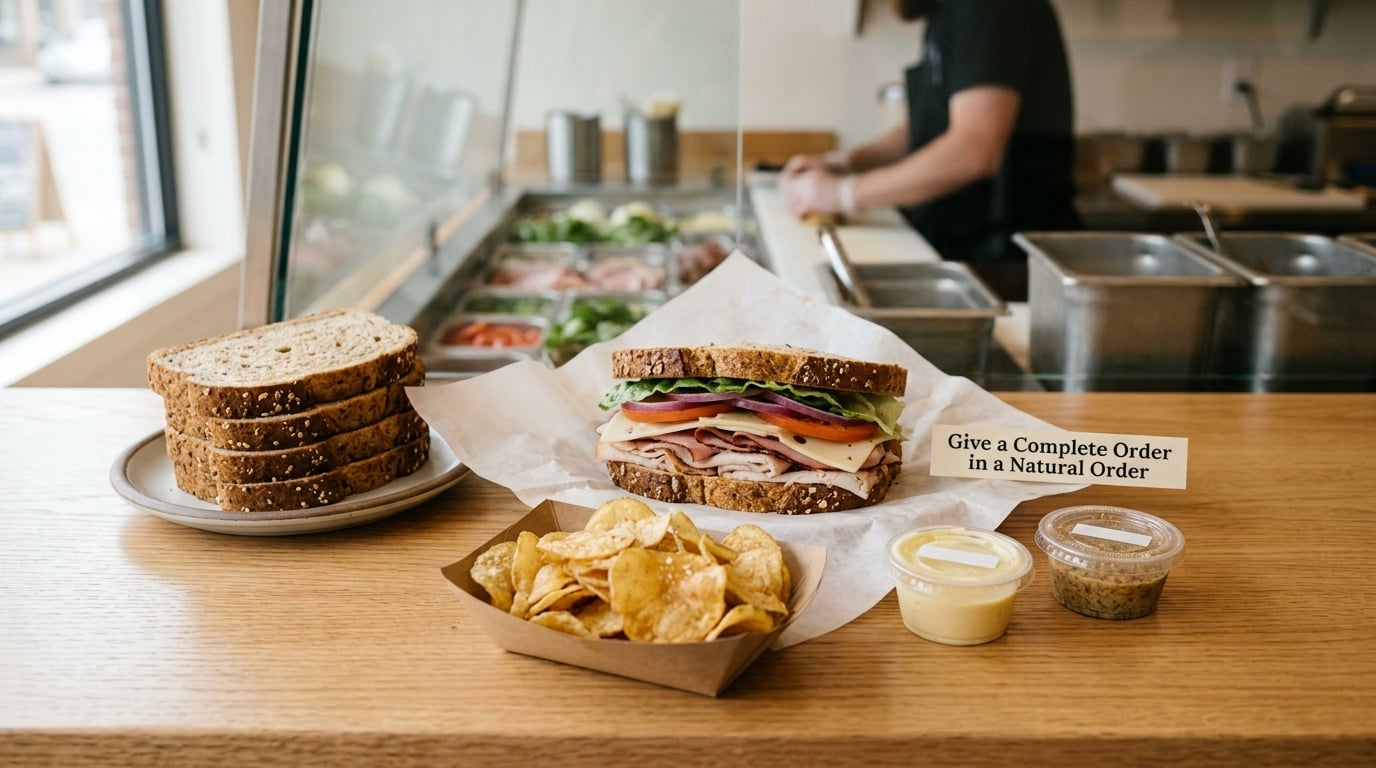
Say the item first, then the thickness, then the weight. That order feels natural because it goes from the specific to the general, and workers parse it the fastest this way.
The whole sentence, verbatim: “Half a pound of oven-roasted turkey, thin sliced, please.” Swap in your own words for a sandwich built on rye with salami, Swiss, and banana peppers, and you have the same structure.
Three more that sound like a regular and cover most situations:
- “Quarter pound of provolone, thick cut, for a kid who eats slow.”
- “Half pound of rare roast beef, medium, and a pound of turkey breast for sandwiches this week.”
- “Eight ounces of ham, thin, not shaved — and can you leave the mustard packets on the side?”
4. Ask Questions Instead of Guessing
Asking is not clueless. It is the thing regulars do, because the answer tells you what to order next time. Useful questions at the counter: how spicy is this pepperoni, is there a low-sodium version of this turkey, is this cheese the sharp one or the mild one, does that come with mayo or without, and can you hold a slice up so I can see the thickness.
Samples are fine to ask about when the queue is short, which is why people tend to ask at 10am rather than at noon. Ask for a slice or two of something unfamiliar, not a tasting of six items, and the answer is usually yes.
5. Confirm Special Instructions Out Loud
Once the worker starts slicing, restate the details that would ruin the order if you got them wrong: no onions, sauce in a separate cup, extra pickles, allergy concerns, cut in half, toasted. Do it while the slicer is still in their hands, because that is the cheapest moment to change a decision.
For a real allergy rather than a preference, say the allergen by name and ask what the machine is cleaned with between products. A worker who answers carefully is doing you a favor; one who shrugs is telling you something useful too. Bring an epinephrine auto-injector if your doctor has prescribed one, because sliced meats share equipment with dozens of other products.
6. Pay, Move Aside, and Confirm the Order Is Labeled
Step to the side after you pay instead of standing at the register. The pickup spot keeps the line moving, and the workers will find your order by the name or number on the label — so give your last name, or the number on your ticket, when you order.
Before you walk away, glance at the label. A quick check takes a second and saves a trip back to the counter with a sandwich you did not order. It is also the moment to catch a thickness that looks wrong, which is far easier to fix while the meat is still in the case.
7. Build a Repeatable Signature Order
Here is where “like a regular” actually happens. Pick a sandwich you genuinely like, eat it two or three times, and then say it in the same words every visit: “Usual — three-quarters pound of ham, thick cut, Swiss, on rye, no tomato, cut in half.” Regulars are not people who order more complicated things. They are people whose order takes four seconds and never has a question attached to it.
Ask whether they keep a standing order list. Plenty of neighborhood counters will note your order and pull the meat before you arrive, which saves a wait and often gets you better cuts. Give your name at the counter, use the same name every time, and show up at roughly the same hour. That is the whole trick — people are recognized by repetition, not by volume.
The slice thickness words, and what they actually mean
Thickness is the one thing customers most often leave vague, and the words for it are not standardized. These are the working definitions behind a grocery deli counter, and asking for a demonstration is always allowed.
| What you say | Roughly | What it looks like | Best for |
|---|---|---|---|
| Shaved | Under 1/16 inch | Nearly transparent, bends easily | Roast beef, turkey, big sandwiches |
| Thin | About 1/16 to 1/8 inch | Light, drapes on the bread | Any cold cut, a lighter sandwich |
| Medium | About 1/8 inch | Holds its shape on the slicer | Ham, turkey, salami, everyday use |
| Thick | About 1/4 inch | Solid, stands up in the bag | Roast beef, corned beef, hearty sandwiches |
| Extra thick | About 3/8 inch | Nearly a slab, best for open-faced | Meat-heavy sandwiches, a few slices only |
If a number matters more than a word, pinch your index finger and thumb to the gap you want, hold it up, and say “about this thick.” Workers will slice one piece, hold it against your fingers, and adjust the gauge. The gauge is a numbered dial on most slicers, so you can also ask what number they are on and request a setting one or two clicks up or down.
Tipping at the deli counter
At a grocery store counter behind the deli case, tipping is not expected — those workers are on a store salary and there is usually no tip jar. At a classic sandwich shop where someone slices and assembles your order for you, a few dollars in cash handed over before they wrap is the local custom, and it varies enormously by city. When in doubt, watch the person ahead of you for a week and match them. Ten percent on a small order is not a rule anywhere, and treating it like one is what makes people uncomfortable.
Common Mistakes—and How to Fix Them
Almost every deli counter story I have heard involves one of the same five things going wrong. Each has a straight correction.
Deciding at the register. You reach the counter with no plan and end up pointing at the nearest package, which is how people end up with seven single slices of assorted items and a sandwich that tastes like nothing. Fix: choose the item before you step up, and order by weight rather than by slice. Workers notice and appreciate it, because slice-by-slice requests are the slowest way to fill an order.
Saying “a pound of turkey” and leaving it there. That is the single most common vague order, and it comes back however the gauge happened to be set. Fix: add a thickness word every time. “A pound of turkey breast, medium” is a complete order and takes one extra word.
Using gestures instead of words. Pinching your fingers to show thickness is a helpful second signal, but doing it without saying anything looks like you are unsure you are allowed to speak. Fix: say the word and use the hand as confirmation.
Forgetting the dietary line. Mentioning an allergy after the sandwich is wrapped changes nothing. Fix: put dietary needs in your opening sentence, before the slicer comes out of the case.
Not checking before you leave. The label says a name, the name is not yours, or the sandwich is cut in half when you wanted it whole. Fix: read the label at the pickup spot, and if something is wrong, say so while the worker is still behind the counter. A short “this says turkey but I ordered ham — could you fix that?” is a completely normal request and does not need an apology attached to it.
Two more small things that make people read as experienced: order your bread and condiments at the same time as the meat, because a counter that makes sandwiches will want the whole request in one pass. And put condiments on the bread before the meat and lettuce, not after, so the sandwich does not turn soggy by noon.
Frequently Asked Questions
What should I say if I do not know what to order at a deli?
Say the item, the thickness, and the weight, and skip the rest. Half a pound of turkey breast, thin sliced, is a complete order that works at almost any counter. If the case is confusing, ask what the house favorite is or what the person ahead of you ordered. Workers answer these questions all day and it costs you nothing.
How do I tell a deli worker about a food allergy?
Name the allergen out loud at the start of the order, before anything is sliced, and say it is an allergy rather than a preference. Ask whether the slicer is cleaned between products and whether the case holds any shared equipment. Most counters handle a serious allergy carefully, and the ones that do not are telling you something you need to know.
Does ordering at the deli counter like a regular get me better service?
Usually yes, and mostly because regulars ask for what they want instead of deciding in front of the worker. Repeatability speeds you up, and workers remember the names of people who order clearly. The bigger perk is that some counters will keep a standing order list and have the meat ready before you arrive.
What if the sandwich I receive is not what I ordered?
Check the label at the pickup area before you walk away, and if it is wrong, say so while the worker is still behind the counter. Keep it short: this says turkey and I ordered ham. Correcting an order is part of the job, not a confrontation. If the meat itself was sliced wrong, a re-slice is usually an easy fix at the same counter.
How can I quickly reorder the same sandwich on my next visit?
Say the same sentence in the same order every time: item, thickness, weight, then extras. After a sandwich works, repeat it twice more and it becomes your usual. Ask whether they keep a standing order list, give your last name at the counter, and come back at roughly the same hour. Recognition comes from repetition, not from ordering more.
Conclusion
The formula is short enough to memorize on the walk to the counter: item, thickness, weight, then say your dietary needs before anything gets sliced. Pick your sandwich components in line, not at the register, and read the label before you head out.
Get those four pieces right and you already know how to order at the deli counter like a regular. The rest — the standing order, the name, the hour you show up — happens the third or fourth time you walk in.