
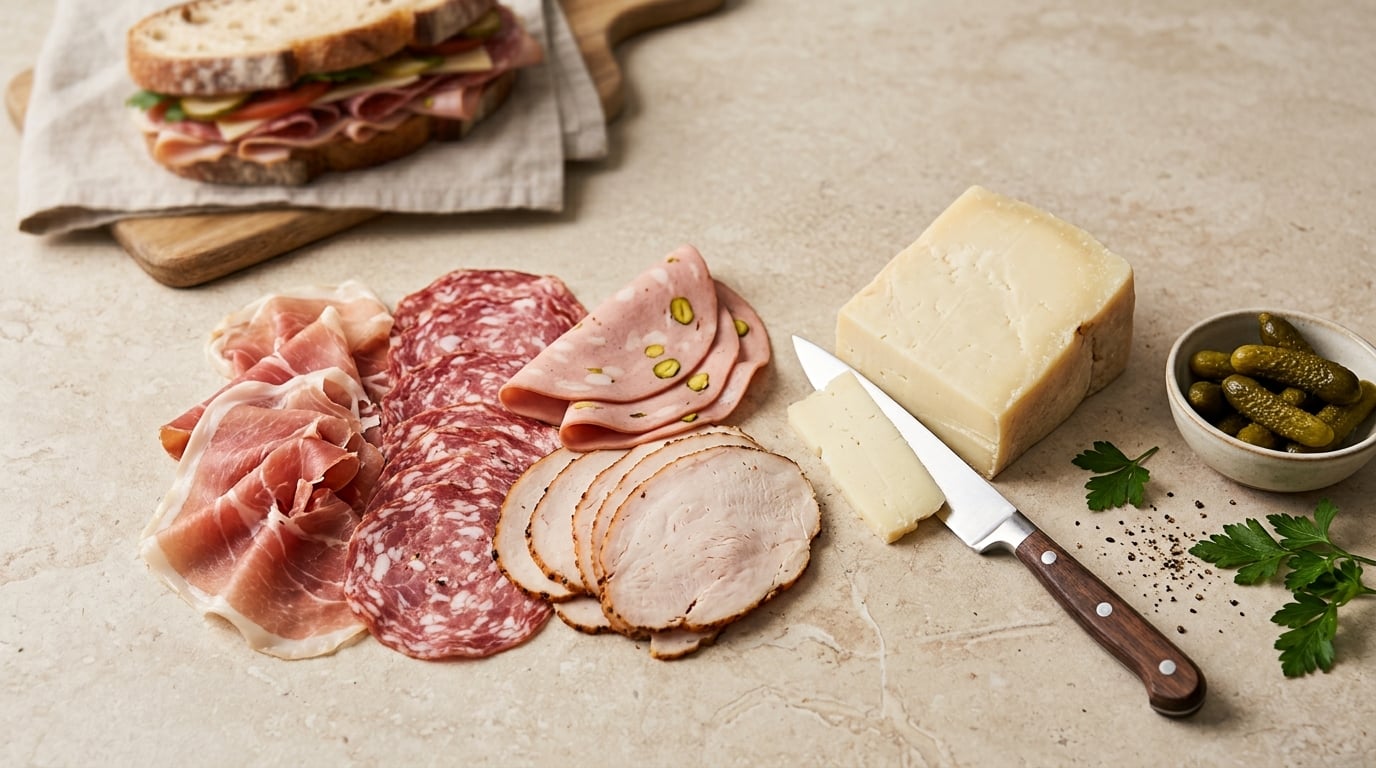
Boar’s Head costs roughly two to three times more per pound than most grocery store deli meat, and for most weeknight sandwiches the difference disappears the moment the bread is toasted. A store-brand turkey breast, a value-pack ham, or a regional label like Dietz & Watson, Kretschmar, or Margherita will land right next to Boar’s Head on a blind taste test for a fraction of the per-pound cost. The one place that stops being true is roast beef, and I’ll say more on that below.
I’ve been buying deli meat for sandwiches for years and the brands I actually finish are almost never the premium ones. A former Kretschmar salesperson in r/eatsandwiches described running blind cuttings of ten different cuts against Boar’s Head and Dietz & Watson and reporting the differences were often negligible. That matches what the buying guides and the taste-test videos in this space keep circling: nobody can reliably identify the premium brand in a sandwich.
Here are the ten cheaper alternatives to Boar’s Head that hold up in a real sandwich, a lunchbox, or a party tray, with what each one is, why it works, and where it quietly falls short. Prices shift constantly, so compare the unit price on the package rather than trusting any number you read online.
Table of Contents
- Cheaper Alternatives to Boar’s Head That Taste Just as Good at a Glance
- 1. Store-Brand Turkey Breast
- 2. Value-Pack Black Forest Ham
- 3. Budget Roast Beef
- 4. Pre-Sliced Chicken Breast
- 5. Everyday Salami
- 6. Classic Bologna or Mortadella-Style Lunch Meat
- 7. Value-Pack Bacon
- 8. Turkey and Ham Blend Lunch Meat
- 9. Low-Cost Smoked Turkey or Turkey Ham
- 10. Store-Brand Provolone and Other Sandwich Cheeses
- How to Choose an Alternative That Still Tastes Good
- How to Make Budget Deli Meat Taste Better
- Frequently Asked Questions
- What is the cheapest alternative to Boar’s Head turkey?
- Are store-brand deli meats as flavorful as premium turkey and ham?
- What should I look for when buying inexpensive deli meat?
- Which budget deli meat is best for sandwiches and wraps?
- How long can opened deli meat and sliced cheese be stored?
- Can I use cheaper deli meat for a party or charcuterie board?
- Conclusion
Cheaper Alternatives to Boar’s Head That Taste Just as Good at a Glance
Every row below is a real swap you can find at a chain grocery or a regional butcher. Use the flavor and texture column to match the meat to the sandwich, and the last column as your pre-purchase check.
| Alternative | Product type | Price positioning | Best uses | Flavor and texture | Check before buying |
|---|---|---|---|---|---|
| Store-brand turkey breast | Oven-roasted white meat, pre-sliced | Lowest tier | Lunchbox sandwiches, wraps, meal prep | Mild, moist, close to deli-counter turkey | Look for oven roasted in the first ingredient |
| Value-pack black forest ham | Uncooked cured ham, pre-sliced | Low to mid | Deli sandwiches, snack plates, party trays | Sweeter and smokier than oven-roasted ham | Compare moisture, not package size |
| Budget roast beef | Cooked, cured beef, pre-sliced | Mid | Hero sandwiches, party platters, cold plates | Saltier and firmer; less marbled | Skip anything that is mostly filler and starch |
| Pre-sliced chicken breast | Cooked, seasoned chicken, pre-sliced | Low to mid | Wraps, salads, high-protein lunches | Drier and more seasoned than turkey | Check for white meat versus dark meat blend |
| Everyday salami | Dry fermented or cooked salami | Mid | Italian sandwiches, crackers, boards | Firmer, spicier, denser than deli-sliced ham | Slice thin; hard salami improves in flavor when cold |
| Classic bologna or mortadella-style meat | Emulsified luncheon meat | Lowest tier | Bologna sandwiches, kids lunches | Smooth and mild; needs strong condiments | Smaller package, eat it fast |
| Value-pack bacon | Uncured or standard cured bacon | Low to mid | Breakfast sandwiches, BLT-style lunches | Sweeter cured varieties; saltier thick-cut | Compare slices per pound, not slice thickness |
| Turkey and ham blend lunch meat | Blended and emulsified tray pack | Lowest tier | Everyday sandwiches, large gatherings | Balanced savory flavor, uniform texture | Blends vary widely; read the protein count |
| Smoked turkey or turkey ham | Smoked, cured turkey products | Low to mid | Club sandwiches, snack plates, wraps | Smoky and dense, firmer than oven-roasted | Check whether it is turkey ham, which is cured and salty |
| Store-brand provolone and sliced cheeses | Provolone, Swiss, cheddar, muenster | Low to mid | Every sandwich type, melts, party platters | Milder and less stretchy than premium cheese | Compare meltability and slices per pound |
Regional names worth knowing if your area has them: Kretschmar, Margherita, DiLusso, and Troyers are the four that come up most often in deli circles as genuinely close to Boar’s Head. Availability is regional, so check the deli case before you plan around one.
1. Store-Brand Turkey Breast
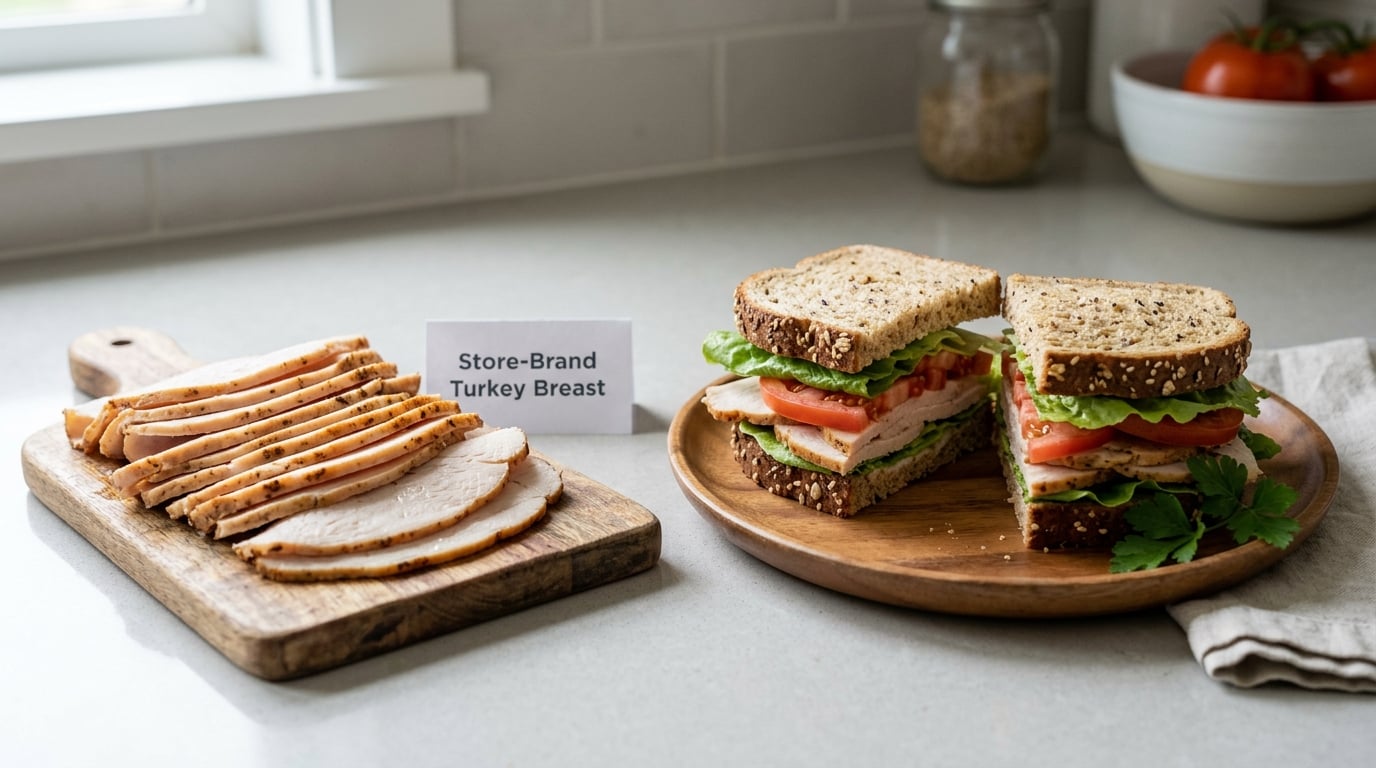
A store-brand oven-roasted turkey breast is the single most reliable swap in this whole list, and it is the answer to the most common version of this question. The big chain private labels make turkey breast from whole muscle, roast it, and slice it thin, which is the same basic process a deli counter runs. The flavor is milder and slightly firmer than the countertop version, but in a sandwich with mustard and lettuce you will not pick the difference.
What to look for: the words oven roasted should appear near the front of the ingredient list, and the first ingredient should be turkey breast, not a blend with turkey thigh or a filler-heavy mixture. If the package says simply roasted and seasoned with no added water or broth ahead of the meat, that is a better buy.
Watch the package weight rather than the sticker price. A smaller tray pack of genuinely turkey breast often costs less per pound than a big tray of turkey thigh blend, even when the numbers on the shelf look reversed. For lunchboxes, this is the best pick because the flavor never has to fight with other ingredients, and it holds up cold without a sauce.
2. Value-Pack Black Forest Ham
Black forest ham is the most underrated substitution on this list because it is not trying to imitate oven-roasted turkey at all. It swaps the flavor profile instead: more sweetness, a deeper smoke, and a curing flavor that reads as ham rather than as lunch meat. On a sub with mustard, provolone, and pickled onions, a decent value ham gives you everything the premium version would.
Texture is where the two tiers differ most. Good ham is wet enough to stay tender in a sandwich and slippery enough to bind the bread. Cheap ham can be dry at the edges and overly slick in the middle, which is usually a moisture-retention trade: producers add water and phosphate to keep it soft on the shelf. If the tray lists water above salt in the ingredient list, expect a softer, less hammy taste.
For snack plates and party trays, value ham works well because nobody is analyzing it. Cut it thicker than you think you should, fan the slices, and add a few crackers and some sharp mustard. That combination hides small quality differences better than a plain sandwich does.
3. Budget Roast Beef
Roast beef is the hard one, and it is worth being straight about it. A former member of the Hoagie Gurus group put it plainly: the only product where the premium brand clearly does better is roast beef. Most households buying deli meat weekly can swap any other product on this list without noticing, and cannot swap roast beef one-for-one.
Where cheaper alternatives to Boar’s Head fall short on roast beef
The gap is about aging and marbling, not about the meat itself. Premium roast beef is usually cooked from larger aged cuts, giving it a deep beefy flavor and a tender, almost creamy texture from fat that has broken down over time. Budget roast beef is typically cooked from leaner, younger cuts, so it lands firmer, saltier, and more aggressively seasoned to cover the difference.
There are two ways around it. First, buy a small good roast beef package and treat it as a splurge ingredient on hoagies, where a little goes a long way. Second, buy a whole cooked roast from a grocery meat case or a regional butcher and slice it yourself, which is the advice a group of Asheville Foodies members gave for anyone trying to move off the premium brand without losing the flavor.
If you want to spend your savings here, spend it on the roast and the cheese, and cut back on the turkey and ham, where the swap is invisible. That is the trade I make.
4. Pre-Sliced Chicken Breast
Pre-sliced chicken breast is a better lunch meat than most people give it credit for, and it costs a fraction of what a premium deli chicken costs. It is seasoned, usually well seasoned, and the seasoning is the point. Where turkey is a blank canvas, pre-sliced chicken brings garlic, pepper, and paprika to the sandwich, which means fewer condiments and a more interesting lunch.
The trade-off is moisture. Chicken breast is lean, and lean means it dries out faster in a sandwich that sits. Store it in the coldest part of the fridge, keep it in the sealed package until you need it, and skip the lunchbox on a Friday afternoon if you can. Adding a little mayo or a soft roll absorbs what moisture is left and keeps the sandwich from getting tough.
Check the label for the cut. Products listing white meat only tend to be milder and firmer, while blends with dark meat in them have more flavor and stay juicier, which is usually the better trade for a sandwich. If you are using it hot, reheat leftovers to 165 degrees Fahrenheit, the same internal temperature the USDA recommends for poultry.
5. Everyday Salami
Everyday salami is a value pick that most people skip because they assume deli meat should be thin and pale. Actually, a hard dry salami from the grocery shelf is a bargain, keeps for weeks, and does something no lunch meat does: it holds its own structure. That makes it the best option for a sandwich that has to survive a commute without turning into a wet pile.
Flavor intensity is the dividing line. Deli-sliced ham is mild, so a mild salami competes with nothing. A dry cured salami is assertive, peppery, and fermented, so it stands up to strong cheese and sharp mustard. Match the intensity to the sandwich: mild salami with provolone and lettuce, spicy salami with hot peppers and a slice of provolone, or a hard salami with crackers and cheese at a party.
Slice it thin. Salami bought at room temperature shaves cleanly with a sharp knife and tastes better than the same salami cut thick from the deli case. If the package is in the fridge, let it sit at room temperature for about fifteen minutes before cutting. That is the whole trick.
6. Classic Bologna or Mortadella-Style Lunch Meat
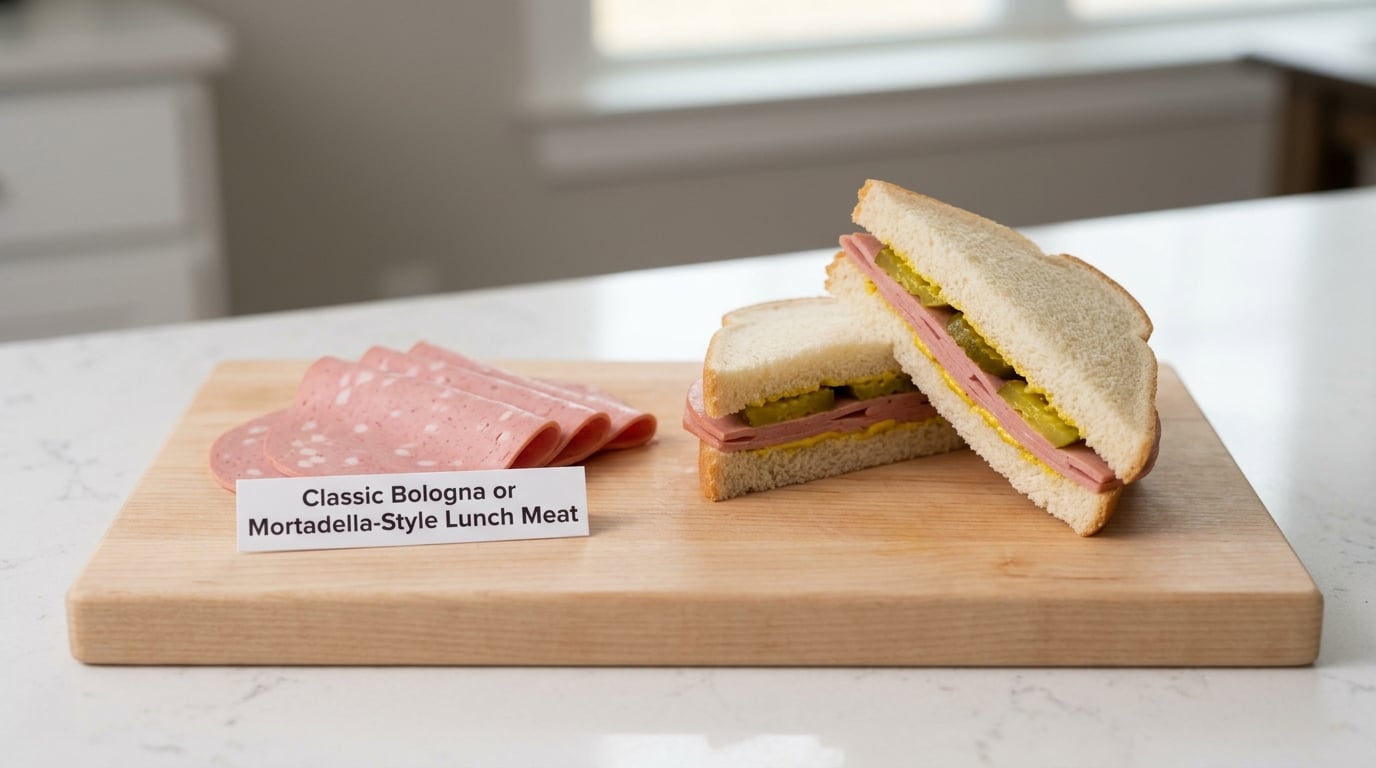
Bologna is the cheapest option on this list and the one that most needs help. A budget bologna is smooth, mild, and emulsified, and by itself it is not especially satisfying. The good news is that bologna is a blank slate that absorbs everything around it, which makes it a great base for a sandwich built with a serious mustard, a pickle, and some heat.
My rule for budget bologna: yellow mustard, a thick pickle slice, a few griddled onions, and a sprinkle of black pepper. That turns the cheapest bologna sandwich in the house into something people ask about. A fried egg works too, and a slice of provolone melted on top under the broiler is the move that gets closest to a deli counter version.
Know when to skip it. If you are serving a party tray where people will taste several meats side by side, bologna has nowhere to hide and premium bologna is genuinely better. For weeknight lunchboxes and kid sandwiches, it is unbeatable value. Buy the smaller package, because this is a meat that you will not finish.
7. Value-Pack Bacon
Bacon is where the price gap between tiers gets widest, and it is the one place I would say spend a little more. Premium bacon is worth it for texture, because good bacon is crisp before it is chewy, and bad bacon goes chewy first.
Compare the label instead of the package. Slices per pound tells you how much meat you actually get, and it is a better number than the slice thickness printed on the front, which is mostly marketing. A thick-cut value bacon at a lower per-pound cost will beat a thin-cut premium bacon if the price per pound is close.
Curing style changes the flavor more than the brand does. Standard cured bacon leans salty, while uncured and nitrate-free styles taste a little sweeter and smokier. Nitrate-free is a real preference difference rather than a marketing one, and it is why many people who switched away from the premium brand after a nationwide recall landed on uncured value bacon.
For lunches, bake it flat on a sheet pan instead of in a waving pan, and cool it on a rack. Flat bacon stays flat, gets crisp edges, and ends up tasting noticeably better for a weekday BLT.
8. Turkey and Ham Blend Lunch Meat
Blend lunch meat is the practical answer when you are feeding six people on a Saturday and the only thing that matters is that everyone likes it. A turkey and ham blend splits the difference between a meat that is too mild on its own and one that is too salty, and the emulsification process gives it a texture that holds together in a sandwich rather than tearing into dry shreds.
The quality range here is the widest of any product on the list, so read the label carefully. A blend that lists a meaningful protein number per serving is built on real meat. One that lists a long ingredient string with starches and binders early is mostly filler, and it will taste like it no matter what you put on it. Compare protein per serving between two brands and the difference in cost per serving of actual protein becomes obvious.
Use it where flavor is not the point: kids lunches, a big sub cut into eight, a sheet-pan dip platter, or a catering tray that will be eaten fast. Pair it with a sharp cheese and a crunchy topping so the sandwich has structure the meat does not provide.
9. Low-Cost Smoked Turkey or Turkey Ham
Smoked turkey and turkey ham solve a specific problem: making a plain sandwich taste like a club sandwich. Real hardwood smoke flavor is concentrated in this category, and it survives a cold sandwich well because the smoke is in the meat rather than in a sauce.
Turkey ham is the underrated one. It is cured, not just roasted, which means it has real ham flavor and a saltier profile, and it costs a fraction of the per-pound cost of a premium smoked ham. Check the sodium per serving, because the curing salt shows up there, and adjust the condiments accordingly.
The difference between smoked turkey and turkey ham is worth understanding. Smoked turkey is simply roasted turkey with smoke applied, so it is lean and mild. Turkey ham is a cured product that reads as ham, so it is denser, saltier, and holds up better on a sub. For a club sandwich, smoked turkey. For something that should taste like ham but costs like turkey, turkey ham.
10. Store-Brand Provolone and Other Sandwich Cheeses
The cheapest improvement you can make to any sandwich is swapping the cheese, and store-brand provolone does more for flavor than most people expect. Premium sandwich cheese is often chosen for melt and stretch, which are texture features rather than taste features. Store-brand provolone is milder, with a slightly tangier, less salty bite that reads as cheese rather than as a topping.
For melt, look for a low moisture label, since low moisture cheeses shred and melt evenly and do not turn rubbery under a broiler. High moisture cheese is better for a cold sandwich because it stays soft. Swiss, muenster, and a mild cheddar round out the cheap options that pair well with everything in this list.
Match cheese to the meat rather than to the bread. Provolone with turkey, ham, or roast beef. Sharp cheddar with smoked turkey and bacon. Muenster or Swiss with chicken breast. And compare slices per pound, since a thin-sliced value pack often gives you more usable slices than the premium brand at twice the cost.
How to Choose an Alternative That Still Tastes Good
How to read a deli meat label without guessing
Turn the package over and read the first three ingredients, then the ingredient list down to the salt. The first ingredient tells you what the product mostly is, and if it is not a cut of meat you recognize, that is the whole story. Everything after the meat, salt, and water is a decision the manufacturer made to improve texture or shelf life.
Next, check the protein per serving. This is the number that actually predicts whether a sandwich will satisfy you, and it is the fastest way to compare a big tray against a small tray. Divide the package weight by the serving size to see how many servings you get, then work out the cost per serving rather than the cost per package.
What uncured, no nitrates, and whole muscle actually mean
Uncured means the meat was not treated with synthetic curing salts, which is the main thing many people are looking for on a label. It is a real distinction, though it is not a health judgment, and uncured meat is still processed meat.
No nitrates or nitrites means the manufacturer used a natural alternative such as cultured celery powder to get the same preserving and flavoring effect. It is not additive-free; it is a different additive, and the taste difference between the two is small. Treat it as a preference, not a verdict.
Whole muscle means the meat was not emulsified with other meat, fat, starch, and water into a uniform paste. It is the most useful quality signal on the whole page, and it is the reason a tray of whole muscle chicken breast tastes like chicken while a blend does not.
Price per pound is the only fair comparison
Package price lies. A ten-pound family pack at a low per-pound rate can cost more than a three-pound premium tray, and shoppers comparing sticker prices end up paying more for less quality. Divide the package price by the net weight in pounds, then do the same for the premium product. That single calculation settles most comparisons before you ever take a bite.
Ignore any online price in a roundup, including this one. Per-pound rates change by region, by season, and by store, and the only number that matters is the one on the package in front of you.
Why Boar’s Head costs what it costs
Three things drive the premium. It sells through a staffed deli counter rather than mass retail, so the price covers a service model that most grocery chains have cut. It uses whole-muscle meat and does its own curing, which is a slower, more skilled process than mixing and molding. And it has marketing and brand recognition worth a real amount of money to the manufacturer.
None of that means the flavor premium is proportional. Blind tastings, including the ten-cut comparison described in r/eatsandwiches, suggest the gap is real but small, and it is smallest in the products that are mild enough to hide it.
How to Make Budget Deli Meat Taste Better
Cold meat, thin slices, one warm element
Serving temperature does more for flavor than any brand decision you make. Meat left out on a counter until lunch reaches room temperature, and the starches in processed deli meat turn pasty there. Chilling the package for an hour before serving tightens the texture and brings out the smoke and cure flavors.
Slice thin, with a sharp knife, and get the slices as even as you can. A thin, even slice spreads across the whole sandwich instead of hogging one bite. If the meat is a bit dry, a light spread of mayo or mayo plus mustard on the bread before assembly adds moisture and acid in the same move.
Then add one warm element. Toasting the bread, grilling the sandwich in a pan, or melting cheese under the broiler gives you the browning and crunch that the meat itself does not have. That contrast is the single biggest upgrade to a budget sandwich, and it costs pennies.
Build contrast: acid, fat, salt, crunch
Good sandwiches in general are not built from better meat alone, they are built from contrast. Give a mild, smooth meat something to argue with, and it stops tasting cheap. Sharp mustard, pickles, and pickled onions supply acid. A sharp cheese supplies salt and fat. Raw onion, shredded lettuce, or crisp cucumber ribbons supply crunch.
A practical formula: one rich thing, one sharp thing, one crunchy thing. Roast beef plus sharp mustard plus raw onion. Turkey breast plus provolone plus pickle. Blended lunch meat plus yellow mustard plus grilled onions. The pattern is identical every time, and it works whether the meat came off the cheapest tier or the premium one.
Chill the finished sandwich for about ten minutes before you cut it. Cold sandwiches hold together better, and the flavors read distinctly instead of blending into mush.
Frequently Asked Questions
What is the cheapest alternative to Boar’s Head turkey?
A store-brand oven-roasted turkey breast is usually the cheapest credible swap, since most chain private labels roast and slice the same way a deli counter does. Check that oven roasted and turkey breast appear near the front of the ingredient list, and compare the per-pound rate rather than the package price. For a different flavor profile, a value-pack smoked turkey or turkey ham costs slightly more and brings real smoke or cured ham flavor.
Are store-brand deli meats as flavorful as premium turkey and ham?
In most cases, yes, especially in turkey and ham, where the flavor is mild enough that the condiments do most of the work. Blind taste tests, including the ten-cut comparison described in r/eatsandwiches, suggest the premium brand advantage is real but small. The difference shows up most in roast beef, where aging and marbling genuinely affect texture and depth, and least in mild packaged turkey.
What should I look for when buying inexpensive deli meat?
Read the first three ingredients, then look for whole muscle meat, oven roasted, and a solid protein number per serving. Skip anything that lists water or starch above the meat. Check sodium if you eat a lot of cured products, and compare slices per pound or servings per package. Finally, divide the package price by the net weight in pounds, because package price is a poor proxy for value.
Which budget deli meat is best for sandwiches and wraps?
Pre-sliced chicken breast and value-pack ham are the best all-round picks for wraps, because both hold together better than turkey does. Chicken breast adds real seasoning so a wrap does not need much beyond mayo and crunch, and ham gives you a sweeter, smokier base. For a lunchbox that sits until afternoon, stick with deli-sliced turkey breast, which stays tender cold without a sauce.
How long can opened deli meat and sliced cheese be stored?
Cold cuts and pre-cooked deli meat keep in the refrigerator for about three to four days after opening, according to USDA and FDA guidance, and pre-cooked ham or turkey roasts hold about three to five days. Sliced cheese keeps considerably longer, roughly three to four weeks, while hard cheeses last even longer with the cut side wrapped. Freeze deli meat you cannot finish in a few days, in portions, and thaw it in the fridge.
Can I use cheaper deli meat for a party or charcuterie board?
Yes, with one exception: skip value bologna on a tray, because it has no strong flavor to stand next to cured and smoked meats. Turkey, ham, roast beef, salami, and hard cheeses all hold their own on a board, and low moisture provolone or muenster works well for a cheese side. Add something sharp like a mustard or a pickle relish so the board is not all mild.
Conclusion
Start with turkey breast, ham, chicken breast, and sliced cheese. Those four swaps cover most of what a household buys weekly, they are the ones the blind tastings cannot tell apart, and the savings show up immediately when you compare per-pound rates on the shelf. Keep spending on roast beef if you like it, or slice a whole roast yourself, which is the move that actually matches the premium texture.
Then do the same two things every time: check the first three ingredients and the protein per serving, and price everything by the pound. That is the whole method behind these cheaper alternatives to Boar’s Head, and it takes about fifteen seconds per package.