
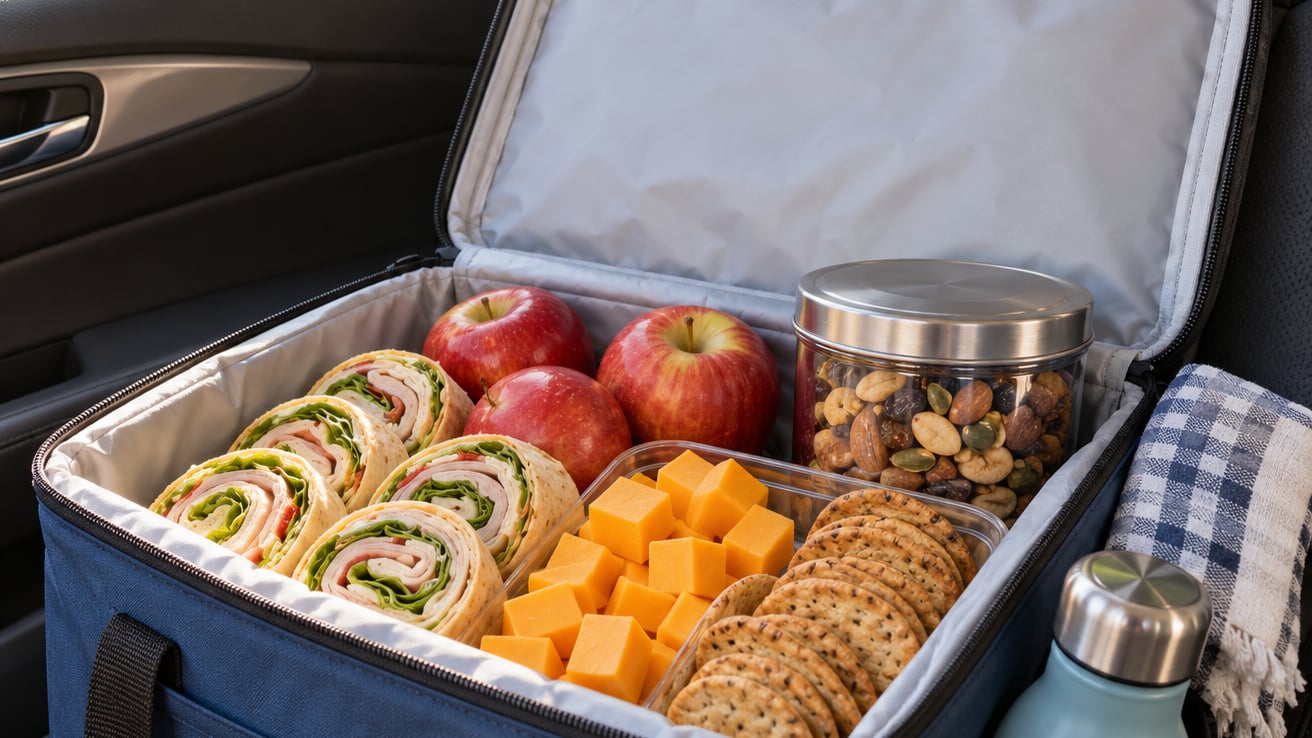
A parked car in summer heat can climb past 120°F, and that is where most grocery store road trip snacks give up. Road trip snacks that won’t melt are the ones with low moisture, no chocolate or yogurt coating, and packaging that survives being sat on. The fifteen picks below run from cooler-dependent sandwiches to genuinely shelf-stable mixes, so you can match each one to how much cold storage your trip actually has.
I’ve packed for enough long drives to know the failures. Chocolate turns into a gray film on the wrapper. Yogurt-coated pretzels fuse into one solid brick. Anything with mayonnaise goes limp within an hour and starts smelling like a locker room by mile 200. None of that has to happen.
The table below sorts all fifteen by type, heat tolerance, packing method, and whether you need a cooler. The cooler-required items are still road trip snacks that won’t melt, they just need ice kept under control. The shelf-stable ones work fine in a hot cabin if the trip is under a few hours.
Table of Contents
- Road Trip Snacks That Won’t Melt at a Glance
- 1. Chilled Turkey-and-Hummus Pinwheels
- 2. Sturdy Mediterranean Sandwiches
- 3. Nut Butter and Honey Apple Wedges
- 4. Cheddar and Apple Crackers
- 5. Cold Ranch Snack Wrap
- 6. Mozzarella and Cherry Tomato Snack Box
- 7. Dried Fruit and Seed Trail Mix
- 8. Peanut Butter and Pretzel Packs
- 9. Shelf-Stable Oat and Honey Bites
- 10. Rice Cakes with Nut Butter
- 11. Dark Chocolate and Pretzel Mix
- 12. Shelf-Stable Tuna Lettuce Cups
- 13. Cold-Held Creamy Egg Spread Cups
- 14. Pressed Chicken Salad Lettuce Cups
- 15. Vacuum-Sealed Cheese and Cracker Pack
- Frequently Asked Questions
- Start With Your Cooler Setup
Road Trip Snacks That Won’t Melt at a Glance
| Snack | Type | Heat resistance | Packing method | Cooler required |
|---|---|---|---|---|
| Turkey-and-hummus pinwheels | Cold wrap | Low, needs cold holding | Rigid container with cold pack | Yes |
| Mediterranean sandwiches | Cold sandwich | Low, needs cold holding | Moisture barrier, rigid container | Yes |
| Nut butter and apple wedges | Cold fresh | Medium, fruit browns | Cut ahead, lemon juice, flat container | Preferred |
| Cheddar and apple crackers | Cold cracker board | Medium, firm cheese holds | Chilled block, separate cracker sleeve | Preferred |
| Cold ranch snack wrap | Cold wrap | Low, soggy risk | Sauce packed separate, tight roll | Yes |
| Mozzarella and tomato box | Cold box | Low | Drained tomatoes, divided tray | Yes |
| Dried fruit and seed mix | Shelf-stable | High, no coating | Portioned pouches, sealed tin | No |
| Peanut butter and pretzel packs | Shelf-stable | High | Single pouches, rigid tin | No |
| Oat and honey bites | Shelf-stable | High | Wrapped individually, flat tin | No |
| Rice cakes with nut butter | Shelf-stable | High | Thin spread, snap lid container | No |
| Dark chocolate and pretzel mix | Part shelf-stable | Medium, blooms not melts | Insulated pouch, small portions | No |
| Shelf-stable tuna cups | Sealed protein | Medium, unopened only | Lettuce separate, forks included | No while sealed |
| Creamy egg spread cups | Cold spread | Low | Small cups, cold pack | Yes |
| Pressed chicken salad cups | Cold salad | Low | Well drained, lettuce separate | Yes |
| Vacuum-sealed cheese and crackers | Sealed cold pack | Medium | Sealed pouch upright in cooler | Yes |
1. Chilled Turkey-and-Hummus Pinwheels
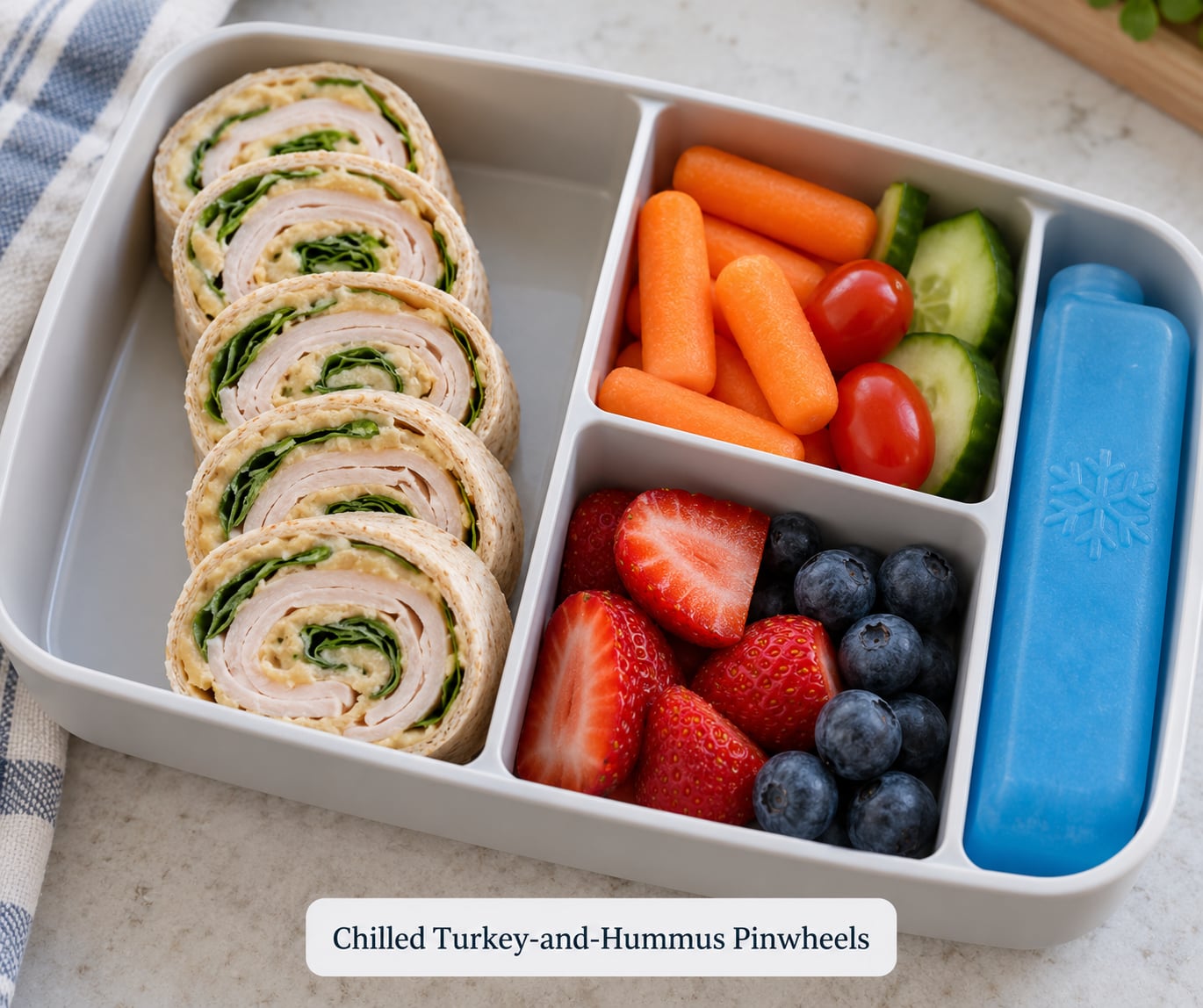
These are the sandwiches that survive being cut, which matters when you are eating one-handed at a stoplight. Roll them the night before, spread a thick layer of hummus right to the edges so the tortilla rolls tight instead of sloshing, and add the turkey last. Chill the finished log for an hour before slicing so it holds its spiral when you lift a piece out with a fork.
Hummus also replaces mayonnaise as the binder, which cuts the sogginess problem in half. Pack the pinwheels in a rigid container with a cold pack on top, since cold sinks. If you want more ideas along these lines, our cold lunch ideas for road trips covers the same ground with different fillings.
2. Sturdy Mediterranean Sandwiches
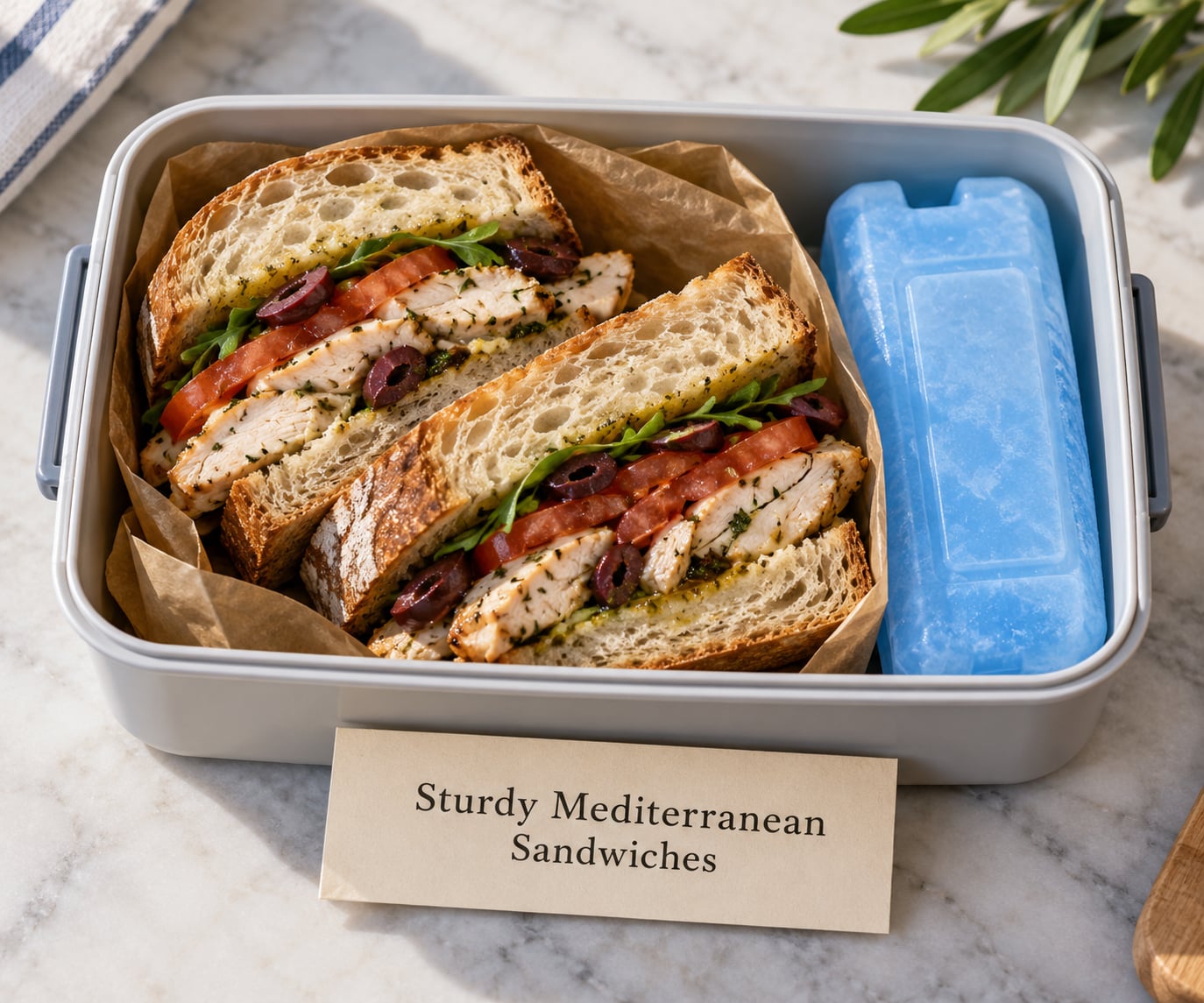
The trick to a sandwich that does not turn into a brick by hour three is bread density and a moisture barrier. Use a thick rustic loaf or a ciabatta rather than a soft white roll, and put the wet ingredients in the middle with lettuce or a leaf of greens acting as a barrier on both sides. That keeps tomato water out of the bread.
Skip the mayonnaise. A thin layer of pesto, hummus, or olive oil and vinegar does the same job without the oil saturation. Our guide to pressed picnic sandwiches that travel well has the pressing and layering technique in detail. Cooked chicken and olives are safe here because they go in already chilled, and they are a good protein pick for the driver.
3. Nut Butter and Honey Apple Wedges
Apples are one of the few fresh fruits that genuinely tolerates a day of travel, but only if you prep them. Cut the wedges at home, toss them with a squeeze of lemon juice to slow browning, and lay them flat in a container so the cut sides do not press against each other.
Then skip the jar. A quarter cup of peanut or almond butter stirred with honey right before you eat is easier to control, and a jar of anything left open in a hot car is a mess waiting to happen. Pre-portioned nut butter cups work if you want zero utensils.
4. Cheddar and Apple Crackers
Cheddar is more heat-tolerant than soft cheese because firm aged varieties hold their shape longer. Cube a block of it at home, keep it in a sealed container in the cooler, and let people build their own cracker stacks. That is a lot less prep than assembling forty little cracker sandwiches before you leave.
Use sturdy crackers such as water crackers, wheat thins, or crispbread instead of thin rice crackers that snap in the bag. Keep the crackers in their own sleeve so condensation off the cheese does not soften them. For a hot-car trip, chill the cheese block the night before and pack it against a cold pack.
5. Cold Ranch Snack Wrap
A wrap eats fine cold, which makes it a good back-seat food for anyone who does not want a sandwich. The failure point is the tortilla going soggy, and the fix is keeping the wet stuff away from it. Pack the dressing in a small lidded cup and the lettuce in a separate compartment, then let each person add them right before eating.
Roll the finished wrap tightly in parchment or wax paper so it stays spiral-shaped in the container. Shredded chicken and a mild cheese work well here because they are not watery at room temperature. This one needs a cooler, no question.
6. Mozzarella and Cherry Tomato Snack Box
A divided tray of low-moisture mozzarella, cherry tomatoes, olives, and a few pieces of cucumber looks like a party platter and eats like a salad. The entire box travels well as long as it stays cold. For tips on holding it there, see our pick of lunch boxes that keep food cold all day.
The food safety side matters more here than in the shelf-stable picks. Keep every component at or below 40°F, use a cooler thermometer rather than guessing, and expect to use this box within the first few hours of the trip. USDA guidance is that perishable food should not sit above 40°F for more than two hours, or one hour when the air temperature is above 90°F. Cut tomatoes that have sat in a warm car are not worth the gamble, so dump them rather than taste-test them.
7. Dried Fruit and Seed Trail Mix
How to pack trail mix without rancid nuts
The classic trail mix mistake is including chocolate-coated pieces. Even in a mild day, the coating softens and glues the mix into a single clump. Build yours from dried fruit, roasted nuts, seeds, and something savory like wasabi peas or roasted chickpeas, and it will still be fine in a hot cabin.
The bigger heat issue is rancidity in the oils. Nuts go off faster in warmth, and rancid nuts taste like old crayons and smell like a garage. Portion the mix into small resealable pouches at home, press out the air, and keep them in a shaded spot rather than a dashboard pocket. Freeze the pouches overnight before you load the car if you are driving through the desert in midsummer.
8. Peanut Butter and Pretzel Packs
A twist of peanut butter inside a pretzel is dense, salty, and holds together better than almost anything else you can stuff in a bag. Buy the small paired packs rather than a jar. The jar requires a knife, a surface, and about ten minutes you will never get back.
Crumb control is the real issue with pretzels. Keep them in a rigid tin or container with a tight lid instead of the bag they came in, because shards find the seat rails and stay there. For nut allergies, sunbutter or a seed butter packet works in the same format.
9. Shelf-Stable Oat and Honey Bites
No-bake bites made from oats, honey, and a nut or seed butter travel remarkably well. They are chewy rather than crisp, so heat does not ruin them the way it ruins crackers. Roll them into walnut-sized balls and wrap each one individually so nobody is prying apart a sticky clump at the rest stop.
The refrigeration question depends on your recipe. A version with dried fruit, oats, seeds, and honey keeps fine in a cool car for a day or two. Once you add fresh fruit, yogurt, or a soft cheese filling, keep it at or below 40°F. Pack them flat in a tin so they keep their shape.
10. Rice Cakes with Nut Butter
This is the lightest option on the list, which matters when you are three hours into a drive and everything else feels heavy. Use thin rice cakes rather than the thick ones, and spread nut butter on as a thin layer right before eating. A thick layer cracks the cake into fragments and coats your fingers.
The crunch holds at car temperatures, and the whole thing fits in a small container with a snap lid. Watch portions, though. Thin rice cakes are easy to eat four at a time without noticing.
11. Dark Chocolate and Pretzel Mix
Chocolate is the one item most readers expect to see here, so here is the honest version. Milk chocolate softens around body temperature and melts in a hot car. Dark chocolate with higher cocoa content holds its shape much longer, and what it does in extreme heat is bloom, turning a dull gray-white on the surface while staying edible underneath.
That is why it makes the list as a controlled quantity rather than a main supply. A small dark chocolate square paired with pretzels feels like a treat without wrecking your shirt. Keep it in an insulated pouch away from ice packs, since condensation on the wrapper makes a mess of its own.
12. Shelf-Stable Tuna Lettuce Cups
Single-serve pouches of tuna packed in water travel fine while they stay sealed, and they need no cooler at all. At the stop, spoon it onto a lettuce leaf, add a little olive oil and pepper, and you have something that resembles a salad at the roadside. Pack a few folded napkins and a plastic fork in the container.
Once opened, tuna is a refrigerated food. Get it into the cooler with ice packs and follow the package’s use-by guidance rather than relying on smell alone. Pouches also mean you are not dealing with a leaking can and its fishy car smell.
13. Cold-Held Creamy Egg Spread Cups
A smooth egg spread on a water cracker is a genuinely good road breakfast. Cook the eggs to 165°F, mash them with a little mayonnaise or yogurt and salt, and spoon the mixture into small cups. Small cups matter because you open one at a time instead of exposing the whole batch.
This dip is perishable and belongs in the cooler the entire trip. Nothing about a sealed container makes it shelf-stable. Give people a squeeze of lemon on top, because the acid cuts the richness and it tastes fresher after four hours of driving.
14. Pressed Chicken Salad Lettuce Cups
Chicken salad gets blamed for soggy road sandwiches, but that is a draining problem, not a chicken problem. Press the cooked chicken in a colander for a good ten minutes, then dress it lightly with a vinaigrette rather than a mayonnaise-heavy dressing. Pack the lettuce separately and assemble each cup at the stop.
This one is the cooler-dependent alternative for anyone who wants the protein of a sandwich without bread. Hold it below 40°F for the length of the trip, and discard it if it has been unrefrigerated beyond the two-hour limit.
15. Vacuum-Sealed Cheese and Cracker Pack
A small vacuum-sealed portion of cheese is a genuinely useful travel format. It travels cleaner than a block in a loose bag, it does not shed brine, and a flat packet slides into the side pocket of a cooler without taking up real space. Pair it with a sleeve of sturdy crackers.
Be clear about the limit: the seal keeps the cheese from leaking and from picking up odors, but it does not make it shelf-stable. Cut cheese still needs to stay at or below 40°F, so it belongs in the cooler.
Frequently Asked Questions
How cold does a cooler need to be for road trip snacks that won’t melt?
Keep perishable snacks at or below 40°F, and check with a cooler thermometer rather than by feel. The USDA 40-to-140°F range is the danger zone where bacteria multiply quickly, and it includes the temperature of a car interior on a warm afternoon. A cheap thermometer is worth more than guessing at an ice pack that looks full.
How long can perishable snacks sit in a hot car?
The USDA rule is two hours unrefrigerated at most, and only one hour when the outside temperature is above 90°F. A parked car in summer heat climbs fast, so for anything with meat, dairy, egg, or cut fruit, treat the first stop as the deadline. Put those items in a cooler before you set off rather than after.
Do I need to refreeze ice packs, or will a frozen water bottle work?
A frozen water bottle does the same job as an ice pack and costs less, but it only works well when it is fully frozen before the trip. Re-freezing at home between drives is where most people let their cold chain down. Pack ice on top, since cold sinks, and restock from a store stop if you have a long day ahead.
Which snacks can I pack without a cooler at all?
Trail mix built without chocolate, rice cakes with nut butter, oat and honey bites, dried fruit, roasted chickpeas, pretzels, jerky, and sealed tuna pouches all travel without refrigeration for a day or two. What you give up is freshness and variety. Mix at least two of these with one cooler item per person so nobody gets bored before lunch.
How do I stop crumbs and wrappers from ruining the car?
Crumbs come from crackers, chips, and anything brittle, so keep them in a rigid container with a lid rather than the bag they came in. A shower caddy or a divided tackle box for the console is the classic move. Wipe down sticky surfaces with a damp wipe while you have a break, because dried honey and ranch go onto upholstery worse than they go onto a tray.
Start With Your Cooler Setup
The first decision is trip length, not menu. A two-hour drive in mild weather can be handled almost entirely by shelf-stable snacks from items 7 through 12. Once you are past four hours in summer heat, treat the cooler as required equipment and build around the sandwiches, wraps, and cold boxes in the first half of this list.
Whatever the trip, pack wet ingredients in their own compartments, keep perishable food at or below 40°F, and eat the cooler items early while they still taste good. That is the difference between road trip snacks that won’t melt and a bag of crumbs by mile 200.