
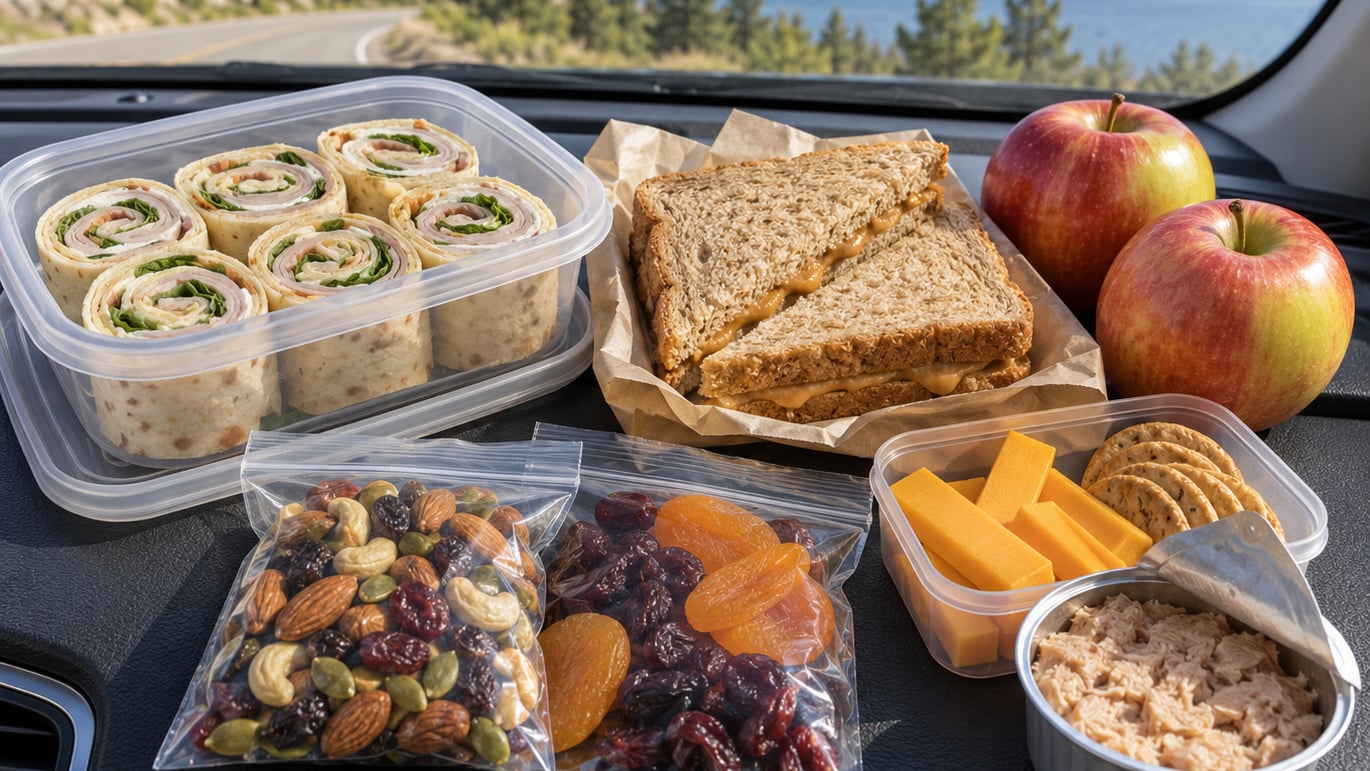
Road trip meal ideas that don’t need a fridge all start the same way: with shelf-stable food. Canned tuna and beans, nut butter, crackers, dried fruit, jerky, granola bars, rolled wraps. Nothing has to be kept cold and nothing has to be cooked. Three rules decide whether a meal qualifies — no cooling, no cooking, no mess — and every pick below passes all three.
That last rule is where most packing plans fall apart. A sandwich that dissolves at mile 300 is not a plan, and a cold-sore sandwich in July needs an ice pack you don’t have. So the list leans on dried, canned, roasted and vacuum-packed food, plus a few fresh items that travel fine for a few hours if you eat them first and keep them out of direct sun.
One safety note before the list. USDA guidance treats anything perishable as safe at room temperature for about two hours, or one hour once the air temperature passes 90°F/32°C, as on a closed-up car in summer. Everything in this list is either shelf-stable by nature or is a fresh item flagged with a short window and an insulated-bag plan.
Table of Contents
- 12 Road Trip Meal Ideas That Don’t Need a Fridge at a Glance
- 1. Turkey and Hummus Pinwheels
- 2. Peanut Butter and Honey Sandwiches
- 3. Tuna and White Bean Rice Cups
- 4. Shelf-Stable Bagel Pizza
- 5. Ham, Cheese, and Pickle Subs
- 6. Caprese Skewers With a No-Cold Dip
- 7. Trail Mix and Dried Fruit Plates
- 8. Apples, Cheddar, and Crackers
- 9. Oatmeal Energy Bites
- 10. Shelf-Stable Pasta Salad Cups
- 11. Fruit, Nut, and Goat Cheese Snack Boxes
- 12. Make-Ahead Burrito Bowls
- Frequently Asked Questions
- How long can food sit out in a car without a cooler?
- What can I eat without a fridge or microwave?
- Is peanut butter safe without refrigeration?
- What are the best snacks to keep in the car for a trip?
- How do I keep food from spoiling in a hot car?
- What non-perishable foods work for picky eaters and dietary restrictions?
- Conclusion
12 Road Trip Meal Ideas That Don’t Need a Fridge at a Glance
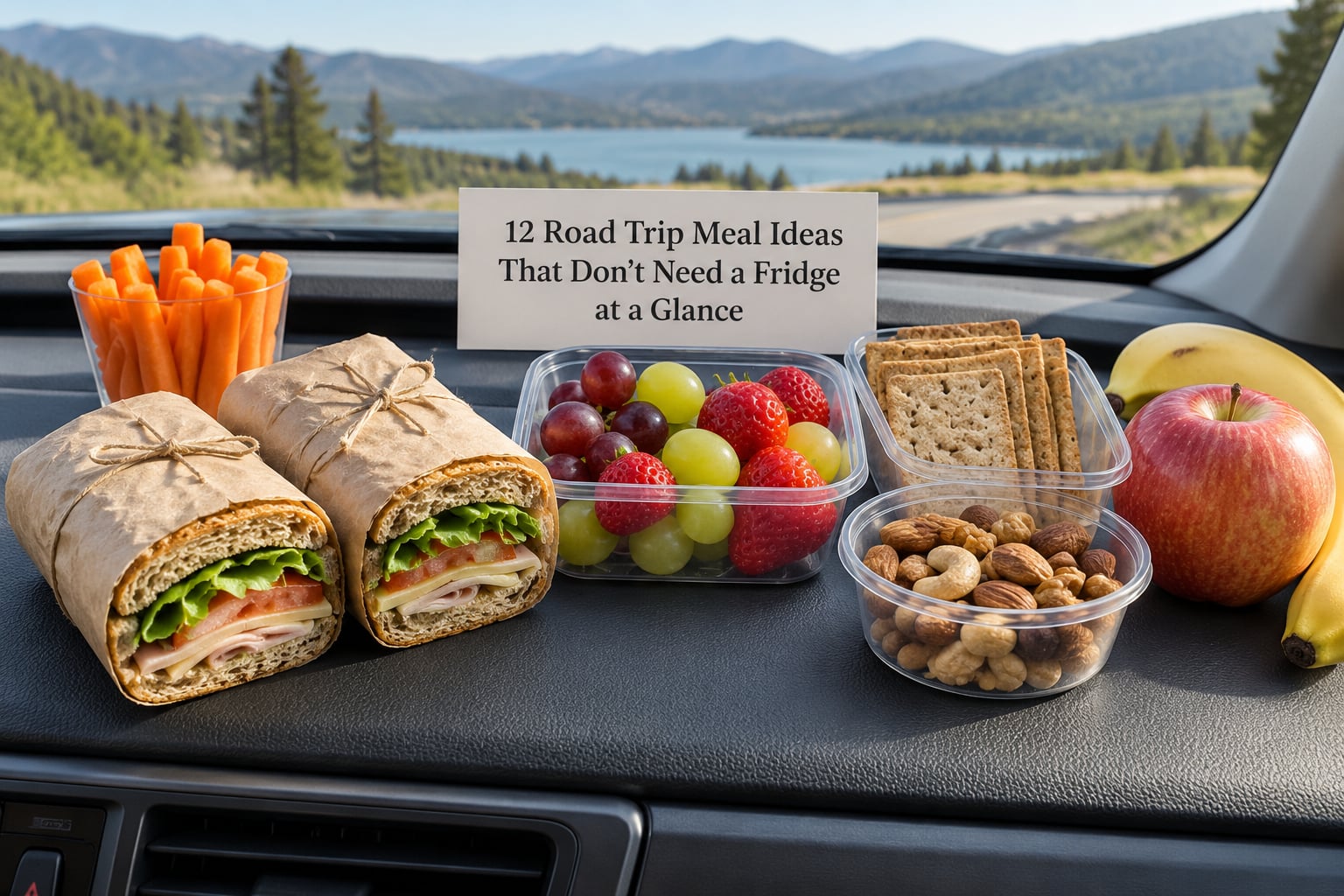
| Meal | Best for | How to pack it | Filling? | Car or backpack |
|---|---|---|---|---|
| Turkey and hummus pinwheels | Lunch, kids | Sliced rounds standing in a lidded cup | Yes, for a few hours | Car |
| Peanut butter and honey sandwiches | Any meal slot | Cut into wedges, wrapped in parchment | Yes | Both |
| Tuna and white bean rice cups | Dinner, high protein | Wide-mouth leak-proof cup | Yes | Car |
| Shelf-stable bagel pizza | Dinner, picky eaters | Cooled, wrapped in foil | Yes | Car |
| Ham, cheese and pickle subs | Lunch | 4-inch segments, foil-wrapped | Yes | Car |
| Caprese skewers with vinaigrette | Lunch, picnic stop | Slim box, sauce in a flip-top | Light | Both |
| Trail mix and dried fruit plates | Snacking, driving fuel | Half-cup portions in zip bags | Moderate | Both |
| Apples, cheddar and crackers | Snacking, no utensils | Cheese cut at home, wrapped | Moderate | Both |
| Oatmeal energy bites | Breakfast, pre-drive | Airtight tin, parchment layers | Yes | Both |
| Shelf-stable pasta salad cups | Dinner or side | Lidded cup, dressing separate | Yes | Car |
| Fruit, nut and goat cheese boxes | Passenger snacks | One small box per person | Moderate | Car |
| Make-ahead burrito bowls | Dinner, big appetite | Wet base and dry toppings split | Yes | Car |
1. Turkey and Hummus Pinwheels
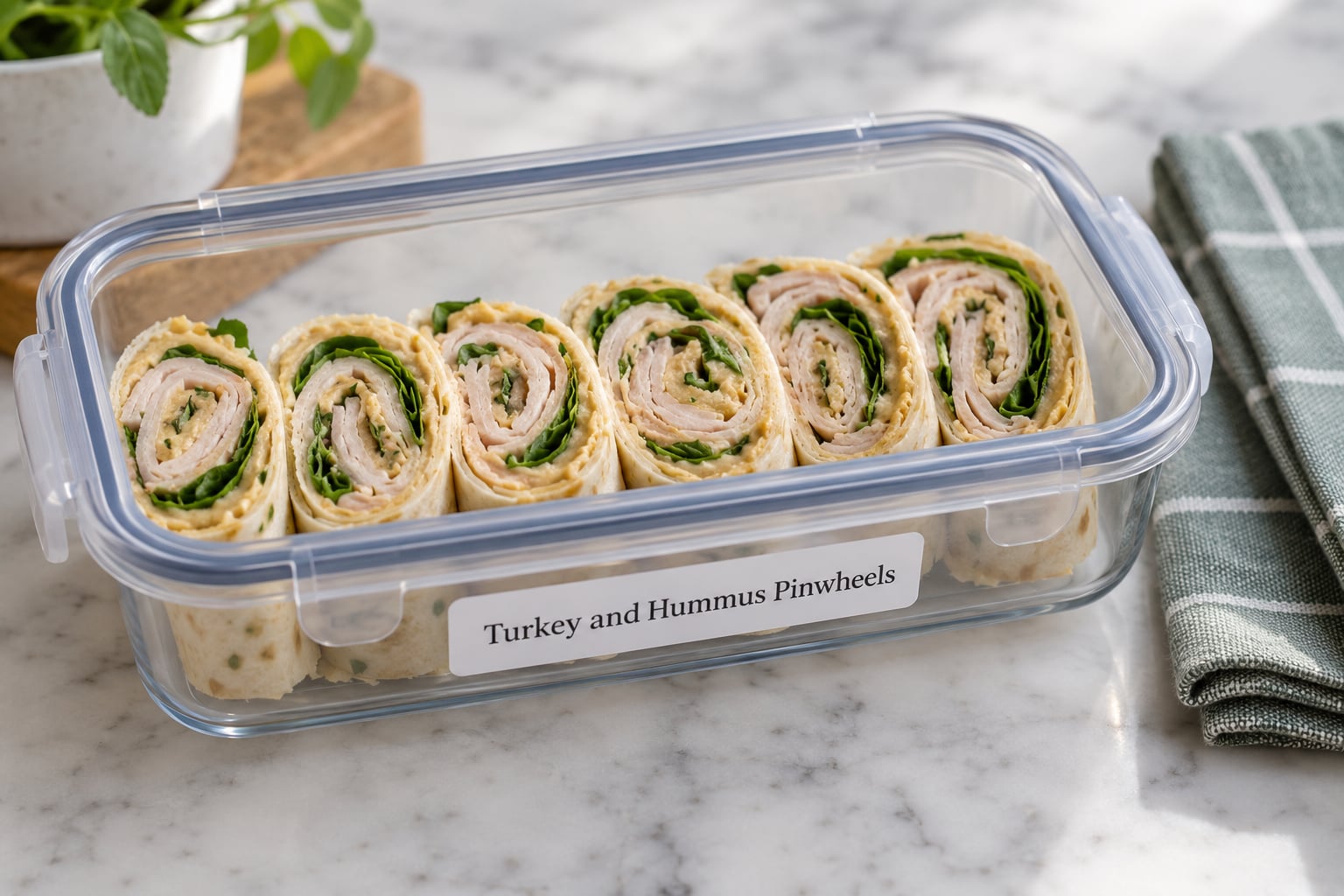
Hummus replaces mayonnaise, and that swap is what makes this a no-fridge meal. It is shelf-stable, it adds fat and protein, and it stops a tortilla from turning limp by lunchtime.
Spread hummus about a quarter-inch thick on a tortilla, add two slices of deli turkey and a small handful of sturdy vegetables — shredded lettuce, thin bell pepper strips, or a few pieces of roasted red pepper. Skip cucumber and tomato, which release water and turn the bottom of the roll into mush within two hours.
Roll it tight, wrap the whole log in plastic, and chill it for 20 to 30 minutes before slicing. Cold pinwheels slice cleanly instead of smearing. Stand the rounds upright in a leak-resistant container with a folded napkin at the bottom and a lid on top.
Turkey is perishable, so this is a first-day meal. If the trip runs hot, put the container in an insulated bag with a frozen gel pack and eat it in the morning.
2. Peanut Butter and Honey Sandwiches
Nothing on this list is more boring, and nothing works harder. Store-bought peanut butter and honey are both shelf-stable, neither needs a cooler, and neither melts at car temperatures the way chocolate does.
Honey also solves the squish problem that jams sandwiches. It soaks into the bread instead of pushing out of it, so a sandwich that spends six hours in a wrapper still holds together.
Cut each sandwich into quarters or thin wedges, wrap them individually in wax or parchment paper, and stand them in a flat container. For nut allergies, sunflower seed butter behaves almost identically in texture and taste. If you want more staying power, slice an apple at the last minute and tuck the pieces in with a small packet of butter.
One caution on homemade nut butter: it lacks the processing that makes commercial jars shelf-stable, so pack only jars bought sealed.
3. Tuna and White Bean Rice Cups
This is the highest-protein dinner in the list, and it costs very little. Cook rice the night before, spread it on a tray to cool fast, then refrigerate or eat it within a couple of hours.
Mix it with rinsed white beans, tuna packed in water rather than oil, diced jarred peppers, a spoon of olive oil, a splash of vinegar, and salt and pepper. A fork works better than mayonnaise here — mayo-based fillings weep and mayonnaise itself is perishable.
Pack it in a wide-mouth container so you can eat it straight from the cup with a plastic fork. Lettuce and fresh tomato go in at eating time, not packing time.
Cooked rice is perishable too, so treat this as an early-dinner meal. On a three-day trip, make it on day one.
4. Shelf-Stable Bagel Pizza
Split a plain bagel, spread it with shelf-stable pizza sauce from a pouch or jar, add shredded cheese and pepperoni or dry salami, and bake at 400°F/200°C for eight to ten minutes.
If the trip has no oven at all, turn it into an open-face sandwich: a soft bagel, a thick layer of tomato-and-cheese spread, and a slice of pepperoni. Both spreads keep at room temperature.
Cool them completely before wrapping, or the trapped steam softens the crust into cardboard. Wrap each one in foil or parchment and eat within a few hours for the best texture.
Skip frozen pizza slices. Thawed in a warm car they leak grease, and reheating one usually turns the crust leathery. If you want a hot meal with no kitchen, more on that below.
5. Ham, Cheese, and Pickle Subs
Mustard instead of mayonnaise, low-moisture cheese, and pickle spears instead of tomatoes. That combination is the whole trick to a sub that tastes fine at hour five.
Assemble at home in under ten minutes, then cut the sub into four-to-six-inch segments and wrap each segment like a piece of candy. Short segments eat without a knife and fit in a glovebox or a door pocket.
For trips longer than three or four hours, or any warm-weather driving, slide the container into an insulated bag with a cold pack. Ham and sliced cheese are perishable, so insulated storage buys you hours rather than days.
If you want more cold-meal ideas that travel, we wrote up a full set of cold lunch ideas for road trips with no-mess picks.
6. Caprese Skewers With a No-Cold Dip
A classic caprese relies on cold cheese and a cold vinaigrette. Road-trip version: cherry tomatoes, whole mozzarella pearls or halved baby mozzarella, basil leaves, and a vinegar-and-olive-oil dressing with oregano in a two-ounce flip-top bottle.
Blanch cherry tomatoes for 30 seconds and peel them to cut the water content in half. Build the skewers at home, cap both ends with a thick cucumber slice or a wine cork so nothing slides off, and slide them into a slim container that holds them upright.
Fresh mozzarella is perishable. Keep it in an insulated bag with a cold pack, eat it within a couple of hours of leaving, or swap it for marinated artichoke hearts and olives, which turn the skewers into a Mediterranean version that needs no cold chain at all.
7. Trail Mix and Dried Fruit Plates
Trail mix becomes a meal component when you build it like one instead of grabbing a bag off a shelf. Start with a protein anchor — nuts, pumpkin seeds, roasted edamame — then add dried cranberries, raisins or chopped dried mango.
Finish with a crunch anchor: pretzels, cereal squares, or toasted corn. A little dark chocolate goes in last and stays out of the sun, since chocolate at 120°F is a melted puddle in the glovebox.
Portion into half-cup amounts in zip bags rather than one big bag for the car. What runs out first gets refilled from the kitchen before you leave, which beats a glovebox scavenger hunt at the state line.
Looking for mixes that hold up when they are not in a car? Our list of sandwiches and snacks that survive a backpack covers the same durability rules from the other direction.
8. Apples, Cheddar, and Crackers
Whole apples need no refrigeration and no knife if you eat them over the sink or out the window. Cut the cheddar into sticks at home so nobody has to work a wheel in a parking lot.
Pair the two with sturdy crackers — plain, wheat, or a rice cracker if gluten is an issue — and you have a plate with fiber, fat and protein, which holds far longer than a bag of chips and a soda.
Add one or two single-serve nut butter packets and this becomes a genuinely filling rest-stop meal. Wash apples before they go in the car, and pack cut slices separately from anything wet so they do not go soft or pick up smells.
9. Oatmeal Energy Bites
A no-bake mix of rolled oats, nut butter, honey or maple syrup, dried fruit, seeds and a pinch of salt is a two-bowl, ten-minute job. Mix, rest for ten minutes so the oats hydrate, roll into golf-ball sizes, then chill until firm.
Store them in an airtight container with parchment between the layers, and they keep their texture for days. Cocoa powder plus chocolate chips is the version that gets past a picky child, and pumpkin seeds do the work of nuts for anyone with a nut allergy.
Make them the night before and they become breakfast you can eat at 6 a.m. without a bowl or a spoon. Pack a few extra, because they get eaten.
Whatever container you use, pick one with a real seal. Our notes on containers that don’t squish your lunch apply just as well to a tub of homemade bites.
10. Shelf-Stable Pasta Salad Cups
A vinegar-based pasta salad is a genuinely shelf-stable dinner, which surprises people who assume salad means something wet and fragile. It is also one of the easiest road trip meal ideas that don’t need a fridge to put together.
Cook pasta the night before, rinse it under cold water to stop the cooking, then drain it twice. Add olives, drained roasted red peppers, dried tomatoes, chopped celery, and fresh herbs.
The dressing is olive oil, red wine vinegar, mustard, salt and pepper — no mayonnaise, no dairy, nothing that spoils in a warm car. Pack the dressing in a small bottle if you want the pasta to stay firm, or toss it in at the last minute if you do not.
Fill cups about three-quarters full so nothing sloshes over in the cupholder. Pasta salad is at its best in the first day and still perfectly edible on day three.
11. Fruit, Nut, and Goat Cheese Snack Boxes
Build one small box per person rather than one bowl for the car. Per-person boxes stop the rummaging, stop the fights over the last handful of nuts, and give everyone something to do at a rest stop.
A good box holds a whole apple or clementine, one or two crackers, a small portion of nuts, and individually wrapped cheese. Goat cheese logs and cheese portions wrapped in foil travel without a plate.
Fresh cheese is perishable, so for a long or hot drive, put only the cheese in an insulated bag with a cold pack. Fruit and crackers stay out with everything else.
12. Make-Ahead Burrito Bowls
The most flexible dinner in the list, because you build it from parts that all keep. Plain rice, canned black beans rinsed and drained, corn, shelf-stable jarred salsa, shredded carrots, quick-pickled onions made with vinegar, and crushed tortilla chips as the crunch.
Sogginess is the only real risk. Put the wet base — beans, corn, salsa — in one leak-resistant container and the dry rice and toppings in another, then pour them together at eating time. Oil packets replace sour cream, and a spoon of Greek yogurt is the only cold addition if you have a cooler.
Eat it at a rest stop, at a picnic table, or parked with the windows down. It is the meal that scales from two people to five without changing the shopping list.
Frequently Asked Questions
How long can food sit out in a car without a cooler?
USDA guidance is simple: perishable food can sit at room temperature for about two hours, or one hour when the outside temperature is above 90°F/32°C, as it often is inside a parked car in summer. Shelf-stable items such as canned tuna, nut butter, dried fruit, crackers and granola are not affected. Fresh meat, cheese, cut fruit and cooked rice are, so eat those early and use an insulated bag with a cold pack for anything you cannot.
What can I eat without a fridge or microwave?
Everything on this list works cold and uncooked. Wraps and pinwheels, peanut butter and honey sandwiches, tuna and white bean rice cups, snack plates of nuts, fruit, crackers and cheese, energy bites, and burrito bowls assembled from shelf-stable parts all qualify. The one thing to plan for is a knife and a surface, so cut cheese and skewers at home and pack napkins.
Is peanut butter safe without refrigeration?
Commercially sealed jars of peanut butter do not need a refrigerator and keep for months in a warm car. Two things do matter. Store-bought only: homemade or freshly ground nut butter lacks the processing that makes it shelf-stable, so skip it for a no-fridge trip. And buy small jars or packets, because a part-used jar that a spoon has been in and out of is a different story than a sealed one.
What are the best snacks to keep in the car for a trip?
The best road trip snacks combine a protein, a carb and a crunchy element so they hold you until the next stop: trail mix with nuts and pretzels, roasted edamame, jerky with dried fruit, whole grain crackers with cheese portions, apples with peanut butter packets, and granola or protein bars. Portion them before you leave, keep chocolate and nuts out of direct sun, and pack the trash bag at the same time.
How do I keep food from spoiling in a hot car?
Choose shelf-stable foods and keep the car cool and shaded, which means using the trunk or a bag rather than the dashboard or seat. Never leave the car closed up with perishable food inside during a warm day. For the few fresh items you really want, an insulated bag with a frozen gel pack extends the window from two hours to most of a day. And if something has sat warm past those limits, throw it out rather than tasting it.
What non-perishable foods work for picky eaters and dietary restrictions?
Build an assembly line instead of one opinionated meal. Pack plain crackers, individual cheese portions, nut butter packets, seed butter for nut allergies, dried fruit, roasted edamame, and plain bagels, then let everyone build their own plate. That handles gluten-free, dairy-free, vegan and vegetarian travelers at the same time, because the components are separate and nobody has to eat somebody else’s sandwich.
Conclusion
Start with three and add from there: peanut butter and honey sandwiches, turkey and hummus pinwheels, and apples with cheddar and crackers. Those three cover breakfast, lunch and snacking, cost almost nothing, and survive a car with no cooler in it.
Once that works, add one make-ahead meal the night before — a burrito bowl or tuna and white bean cup — so dinner is solved rather than improvised at a rest stop. Keep wet ingredients in their own container, eat anything perishable early in the trip, and pack the trash bag before you pack the food. Most of these road trip meal ideas that don’t need a fridge come out of the same two-hour safety window, so what you eat first should be what is freshest.