
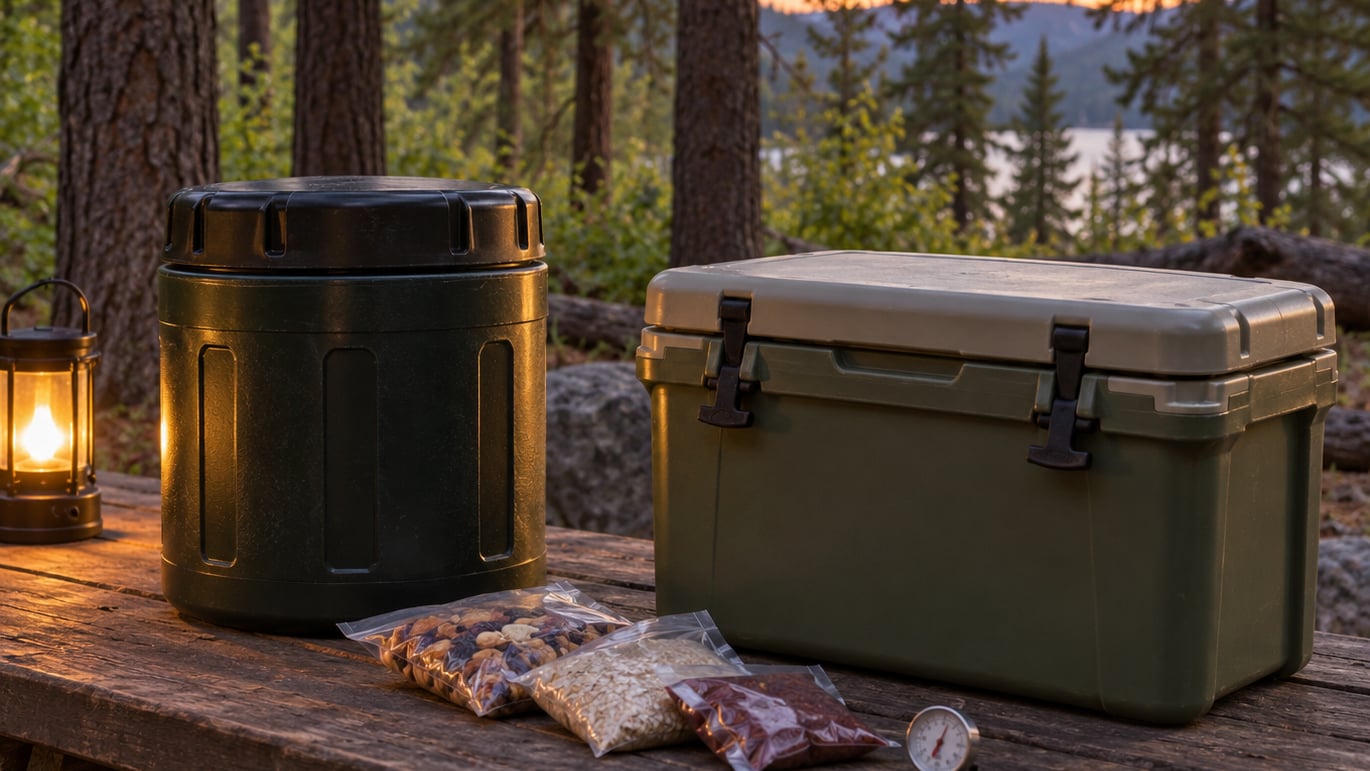
To keep food safe from bears while camping, every item with a smell goes into one of three approved places: a certified bear-resistant canister, a metal campground bear box, or a bag hung well off the ground and away from the trunk. Nothing edible or fragrant stays in your tent, your cooler, or your car overnight. That single rule, followed for the whole trip, is most of the job.
The rest is about the cold chain, because a bear-safe dinner that gave you food poisoning is still a bad dinner. USDA guidance keeps perishables at or below 40°F (4°C), and food that sits warmer than that for more than two hours gets tossed. Bear-safe and food-safe are two separate jobs, and most campers only plan for one of them.
What follows works whether you are car camping with a full cooler or walking in with a canister and a tent stake. Where the rules change, local wildlife agencies set the standard, and in most parks that standard is law rather than advice.
Table of Contents
- What You Need
- Step-by-Step: How to Keep Food Safe from Bears While Camping
- How to Keep Food Safe from Bears While Camping Before You Leave
- Set Up the Cooler and Maintain the Cold Chain
- Store All Food in an Approved Bear-Resistant Container
- Prepare and Eat Food Without Leaving an Attractant
- Secure Trash, Toiletries, Pet Food, and Other Odors
- Check Temperatures and Watch for Bear Activity
- Clean Up and Leave No Accessible Food
- Common Mistakes
- Storing Food or Scented Items in Your Tent
- Treating Your Car as Automatic Bear Storage
- Assuming Coolers and Plastic Bins Are Bear-Proof
- Leaving Food or Trash Between Uses
- Using Melted Ice as a Temperature Check
- Cooking and Eating After Dark in an Exposed Area
- Leaving Camp Without a Complete Sweep
- Final Campsite Safety Checks
- Frequently Asked Questions
- Do bear canisters guarantee that bears will not open them?
- Can I hang food from a tree instead of using a bear canister?
- Is keeping food and trash inside my vehicle safe from bears?
- How do I keep refrigerated food cold when the ice in my cooler melts?
- What should I do if a bear approaches my campsite or cooler?
- How far should the food canister be from my tent and cooking area?
- Conclusion: Use This Order Every Trip
What You Need
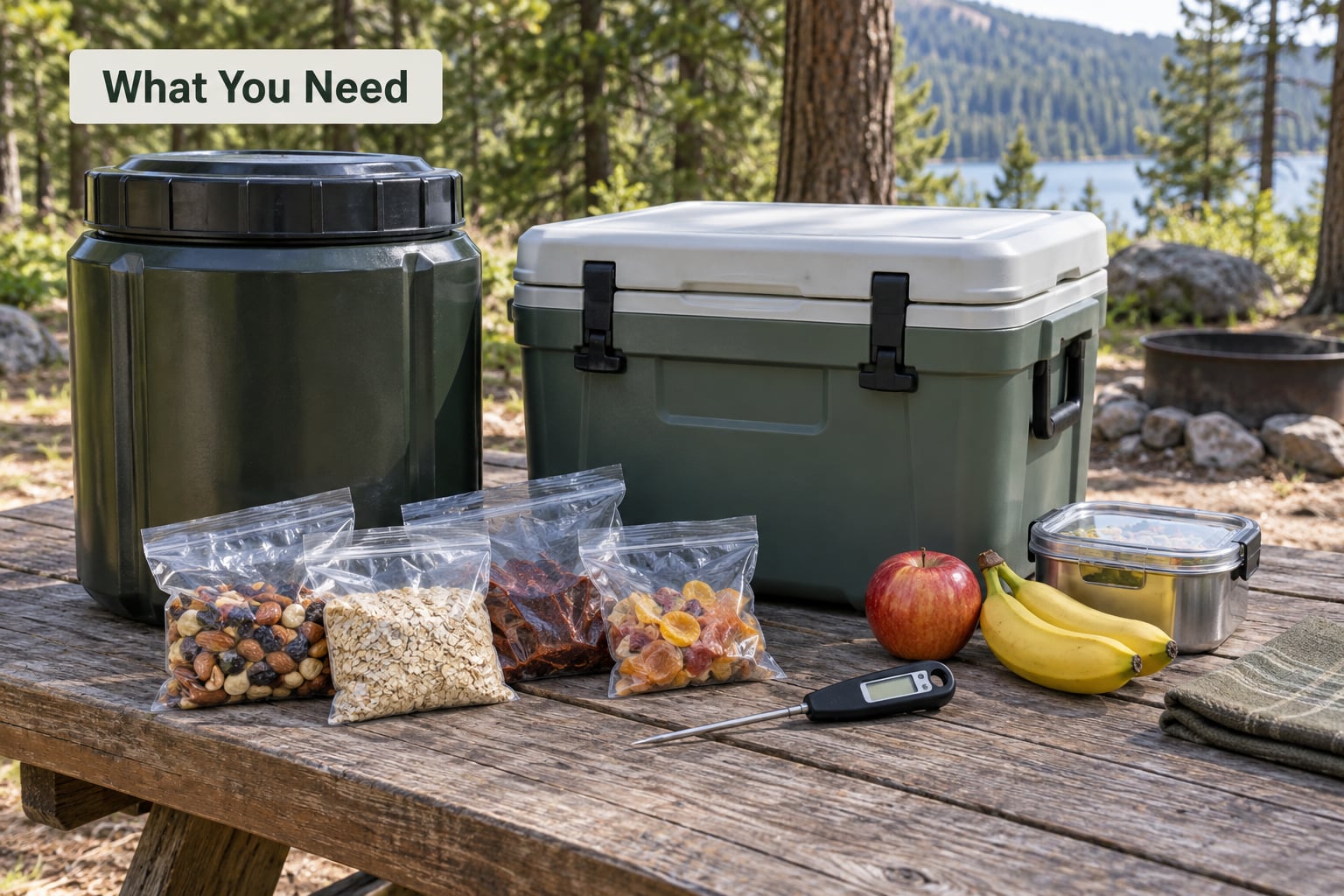
Start with whatever storage your destination actually requires, and check before you pack. The National Park Service, BearWise and state wildlife agencies each publish the rules for their own lands, and requirements differ enough between parks to surprise you. Some sites run a bear box at every pad, some mandate canisters for the whole backcountry, and a few still accept a properly made hang.
The gear list is short, and most of it you would pack anyway:
- A locally approved bear-resistant container. That is either a certified hard-sided canister or the metal locker built into the campsite. Read the distinction carefully: a lockable box that a bear can chew, pry, or muscle open is not bear-resistant, even if you need a key to get in.
- A tested cooler setup with a good seal, frozen ice or gel packs, and room for the meltwater to drain instead of sitting against your food.
- An instant-read thermometer. Touch tells you nothing about the middle of a block of cheese.
- A cleanup kit: a sponge, dish soap, a small bucket, a packable trash bag, and a spray bottle of diluted bleach solution.
- Sturdy bags or bins so a punctured package never turns into a trail of rice.
- Your local storage rules, read before you leave rather than at the trailhead.
One thing people under-pack is capacity. A single canister generally holds about a week of food and toiletries for one person, so a couple of people on a longer trip need two. If your math does not fit inside the containers you own, cut the menu rather than planning on a bear-resistant bag you do not have.
Keeping the cold side of this straight is easier if you already have a feel for the gear. Our picks for ice packs that hold a steady chill and for thermoses for soup and sandwich lunches are worth a look for the smaller meals, and camping sandwiches that travel well saves you from hauling a whole cooler for one meal.
Step-by-Step: How to Keep Food Safe from Bears While Camping
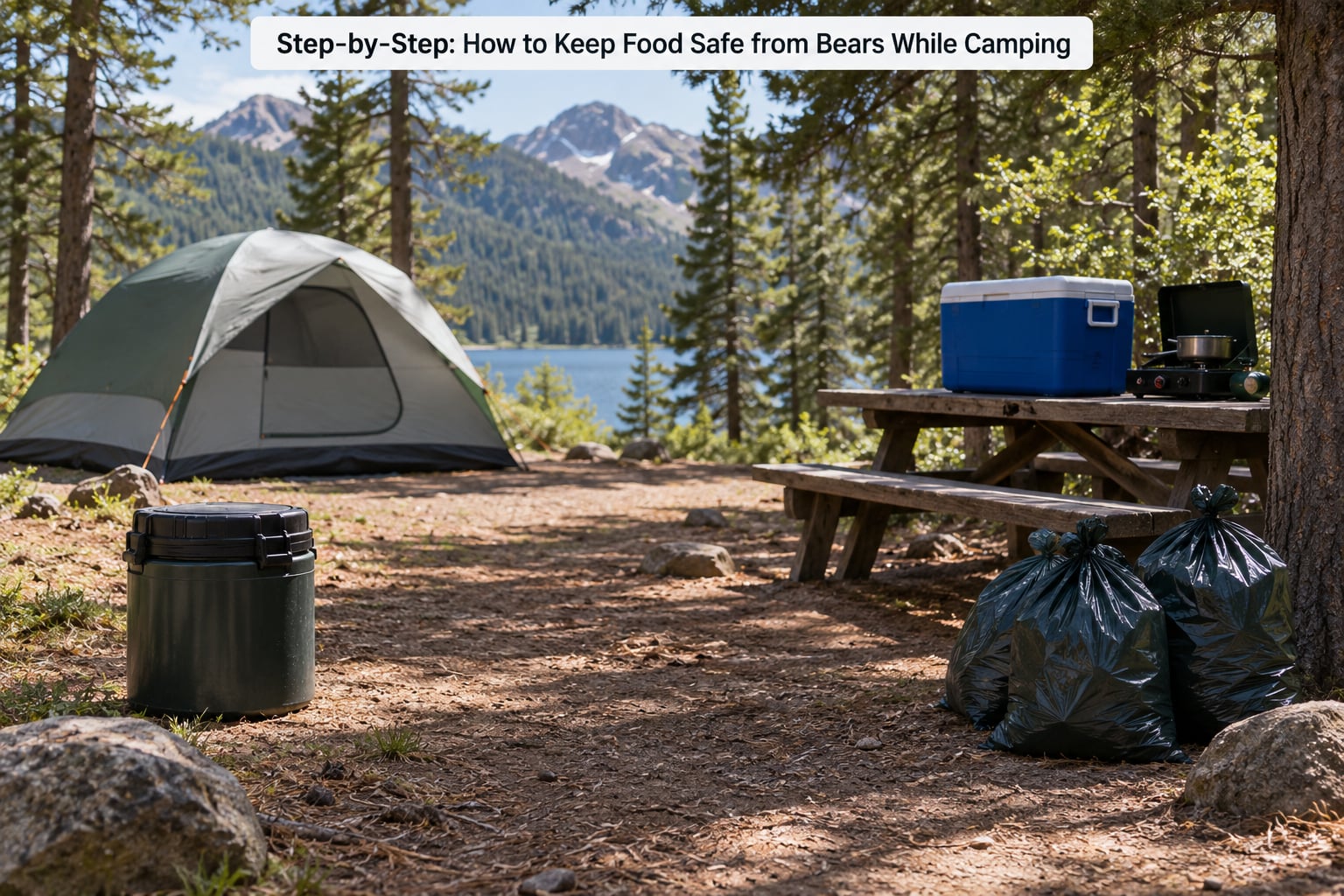
Each step below follows the same three-part shape: what to do, how to do it, and the visible sign that it worked. Check the signs, not the intentions.
How to Keep Food Safe from Bears While Camping Before You Leave
Read the storage rules for every leg of the trip, not just the park where you are sleeping. A five-night route can cross three different management areas with three different requirements, and the strictest rule on the route is the one that applies.
Then inventory. Write down every item that goes into the canister or box: food, drinks, condiments, pet food, trash bags, toiletries, sunscreen, insect repellent, lip balm, cooking oil, stove fuel, and anything scented you would rather not explain. Divide the load into small groups, put each group in its own bag, and label nothing with your name.
Freeze what you can freeze the night before, including the meat, and pre-chill the cooler with ice you will actually use. A full cooler that starts at 40°F (4°C) gives you far more hours than a warm one that started at 60°F.
The sign it worked: every food item, every trash item, and every scented non-food item has a named destination in your approved storage, and the total volume fits inside it.
Set Up the Cooler and Maintain the Cold Chain
Perishables live at or below 40°F (4°C), which is the USDA line between safe and risky. Frozen items act as your cold reserve, so pack them in the center of the cooler surrounded by everything else rather than where they get opened first.
Keep the cooler closed as much as possible. Every open lid lets warm air in, and a cooler that sits in direct sun works against you all day. Keep a drain plug handy so you can empty meltwater, because a cooler half full of lukewarm water is a warmer cooler than the same cooler empty.
USDA guidance is clear on the toss decision: discard perishable food that has been above 40°F (4°C) for more than two hours, or for more than one hour when the outdoor temperature is above 90°F (32°C). In summer heat that is a short leash, and it applies whether or not a bear ever showed up.
The sign it worked: you can put the thermometer into the center of the coolest food and read 40°F (4°C) or below without guessing.
Store All Food in an Approved Bear-Resistant Container
Use the container your regulations require, and use it the way it was tested. A canister has to sit on level ground, fully closed, far enough from your tent that a bear investigating it cannot reach your sleeping area in the same pass.
Pack cooked food and ready-to-eat items separately and sealed. Those carry the strongest odor and they are the items bears most often break into tents for. Store the container away from your cooking area too, so your sleep zone and your food zone never overlap.
Where a hang is permitted, put the food in a bag, hang it at least 10 to 15 feet above the ground and at least 4 feet from the trunk, using a branch strong enough to hold the load. You will see older videos recommending 20 feet high and 10 feet out, and that is not wrong; it is simply the older, more conservative version of the same rule. Use the height your local agency specifies, and if it says 20 feet, use 20 feet. Outfitters report that traditional hangs fail more often now because bears in some corridors have learned to work them.
The sign it worked: every lid latches, and nothing edible, no wrapper, no utensil, and no scented item remains outside the container.
Prepare and Eat Food Without Leaving an Attractant
Build one food-preparation zone at camp, use it for every meal, and stay with the whole process from the first slice to putting the plate away. Bears follow scent trails back to the source, and a cook zone that gets used once at dusk is still an open invitation by morning.
Prepare only the portion you will actually eat. Scraps, peels, wrappers, and grease go straight into a sealed bag inside your storage, not onto the ground. Never eat inside the tent, and never keep a snack in the tent overnight, however small.
Wash the cookware, the cutting board, and the eating surface right after the meal. A rinse with cold water does not do it; use soap and hot water, then wipe the table with a diluted bleach solution.
The sign it worked: you can run a gloved hand over the table and come away with nothing on it.
Secure Trash, Toiletries, Pet Food, and Other Odors
Most break-ins start with something that was not food. Toothpaste, sunscreen, lip balm, insect repellent, lotion, and deodorant all smell interesting to a bear, and campers leave them in tents far more often than they leave a steak out. Bird seed and pet food attract too, and pet food often sits in a bowl on the ground.
Everything on that list goes into the same approved container as your food. Double-bag trash so a puncture in the outer bag does not end with shredded garbage across your site. Keep recyclables, dirty diapers, baby wipes, and cleaning products under the same rule, since all of them carry scent.
Skip the scented deterrents. There is no smell a bear reliably hates, and repellents, citronella, and hanging toiletries do not substitute for storage. Scent control by removal is the entire strategy.
The sign it worked: you can go through your pack and account for every scented item, and each one has a storage location.
Check Temperatures and Watch for Bear Activity
Check the cooler when you wake up, when you arrive back at camp, and before you go to bed. If you find it warmer than 40°F (4°C), find out how long it sat there before deciding to keep the food, and remember the two-hour and one-hour rules above.
Do not pop a canister open the moment you walk into camp. Look first from a distance, confirm nothing is circling the site, and open it in one deliberate motion rather than several half-open ones that advertise what is inside.
Fresh bear sign around camp means act now: fresh scat, a torn stump, a rubbed tree, an overturned rock, or claw marks on a tree you planned to use for a hang. Pick a new site or change your storage entirely, and check with local authorities about current activity before you continue.
Cook to the USDA minimum internal temperatures: 165°F (74°C) for poultry, 160°F (71°C) for ground meat, and 145°F (63°C) for whole cuts and fish. Fish and wild game sit closer to the 145°F (63°C) line, and there is no penalty for going a little higher.
The sign it worked: you checked before opening anything, and you can say whether the cooler held temperature without guessing.
Clean Up and Leave No Accessible Food
Departure is the step most people rush, and it is the step that decides whether the next group arrives to a clean site or to a bear that already ate.
Account for every person and every pet. Pack out usable food or store it according to the local rules, wash and dry your dishes, then sweep the site for wrappers, scraps, grease spots, tissues, and dropped food. Check the fire ring and the ground under your chairs, since food falls off tables more often than anyone expects.
Clean the cooler, drain it, and close it. Burying food and burning scraps are both prohibited and both ineffective; a bear digs, and a fire does not consume enough to leave nothing behind.
The sign it worked: every item on your food-and-waste inventory is either packed with you, disposed of legally, or inside approved storage.
Common Mistakes
Storing Food or Scented Items in Your Tent
Putting a sandwich in your jacket pocket for the night is the single most common cause of bears entering tents. Bears that learn to break into tents in daylight stop worrying about people entirely. Store all food, drinks, and scented items in the approved container, every night, including the night you are tired and convinced nothing will happen.
Treating Your Car as Automatic Bear Storage
A hard-sided vehicle is meaningfully safer than a tent, and it is the standard for many car campers. It is not bear-proof. Campers on forums report bears in the Cascades breaking into vehicles, and habituated bears have learned to operate door handles and tear doors off. A vehicle you sleep in is also a vehicle with an open door at 3 a.m. and an accessible box behind the seat. Lock windows, hide everything, and treat a car as a temporary backup rather than your primary storage.
Assuming Coolers and Plastic Bins Are Bear-Proof
Soft coolers, pop-up campers, and standard plastic tubs are not bear-resistant, no matter how well you latch the lid. If your regulations require an approved container, a hard cooler with a clip lid does not satisfy them. Read what your site actually requires rather than what is convenient.
Leaving Food or Trash Between Uses
A cooler left open on the picnic table at lunch is a bear problem by dinner. Bring small amounts out, eat them, and return the rest to storage immediately. The same goes for a roll of paper towels or a bag of chips that stayed out while you hiked.
Using Melted Ice as a Temperature Check
If your ice has melted into a pool of water, you have no idea what temperature the food next to it is holding. Keep at least one frozen block intact for emergency cooling, and use the thermometer to make the call on the rest. Ice that has melted is not a cold pack.
Cooking and Eating After Dark in an Exposed Area
Visibility helps you spot a bear before it reaches you, and darkness hides smells that would otherwise push a bear away from your cooking zone. Prepare food before dark where you can, and if you must cook later, keep the area tight, lit, and minimal.
Leaving Camp Without a Complete Sweep
Most campers sweep the table and miss the ground under it, the trash bag in a corner, and the toothpaste on the tent floor. Walk the site, look under furniture, and check the fire ring. Ten minutes here prevents a bear from teaching itself your camp is worth breaking into.
Final Campsite Safety Checks
Before you turn in, confirm five things: approved storage is closed and in the required location, the cooler is at or below 40°F (4°C), no food or scented item is in the sleeping area, all trash is inside storage, and the cook zone is clean and dry.
Local wildlife agencies, park rules, and situation-specific guidance take priority over anything written here. Bear species, activity, and storage requirements vary by location and change season to season, so check your destination before every trip.
Frequently Asked Questions
Do bear canisters guarantee that bears will not open them?
No. A certified canister is tested by agencies including the IGBC against real bear behavior, but no container has a zero-failure guarantee. Bears have damaged some canisters, and bears habituated to camps are more persistent than the ones used in testing. Treat a canister as the best option available, use it correctly on level ground, and still avoid storing food anywhere else.
Can I hang food from a tree instead of using a bear canister?
Only where your regulations allow it. Many backcountry areas now require canisters outright because bears have learned to defeat traditional hangs. Where hangs are legal, put food in a bag at least 10 to 15 feet above the ground and 4 feet or more from the trunk, using a strong branch. Check the local rule first; a hang is not a substitute in a canister-only zone.
Is keeping food and trash inside my vehicle safe from bears?
Safer than a tent, but not risk free. Hard-sided vehicles resist most opportunistic bears, and car campers on forums report few incidents. Habituated bears have been documented opening doors and tearing them off, and window or door left open creates the access route. Lock up, hide everything, and never assume a car counts as approved storage where a canister or box is required.
How do I keep refrigerated food cold when the ice in my cooler melts?
Check with a thermometer before you decide, because a pool of meltwater tells you nothing about the food’s temperature. Keep at least one frozen block untouched for emergencies, drain meltwater so the cooler is not sitting in lukewarm water, and keep the lid closed and shaded. If perishables have been above 40°F for more than two hours, or one hour above 90°F, discard them per USDA guidance.
What should I do if a bear approaches my campsite or cooler?
Stay calm and do not run. Make yourself look larger, speak in a firm low voice, and back away slowly toward a secure area with your bear spray ready. Never approach, feed, or crowd the bear, and keep dogs leashed and away. If the bear is actively eating your food, let it; take notes or photos from a safe distance and report the break-in to park staff, because habituated bears are usually relocated or killed.
How far should the food canister be from my tent and cooking area?
Far enough that one bear investigating the food cannot reach your tent in the same pass. Agency guidance commonly points to about 100 yards between your sleeping area and your food-preparation zone, which is roughly a 70-step walk. If the walk feels short at your site, move it. Laying out sleep, cook, and storage as three separate zones is the simplest habit that solves this.
Conclusion: Use This Order Every Trip
Four actions, in this order, cover almost every trip. Check your destination’s storage rules before you leave. Secure every attractant before you set up camp, and keep food, trash, and scented items in one approved container away from your tent. Watch the cold chain with a thermometer rather than with your hands. Then sweep the site on the way out.
That is how to keep food safe from bears while camping, and the version that actually holds up is the boring one: food, waste, and scented items treated as a single storage system instead of three separate errands. Check the local wildlife agency for your next destination, since their rules are the ones that count.