
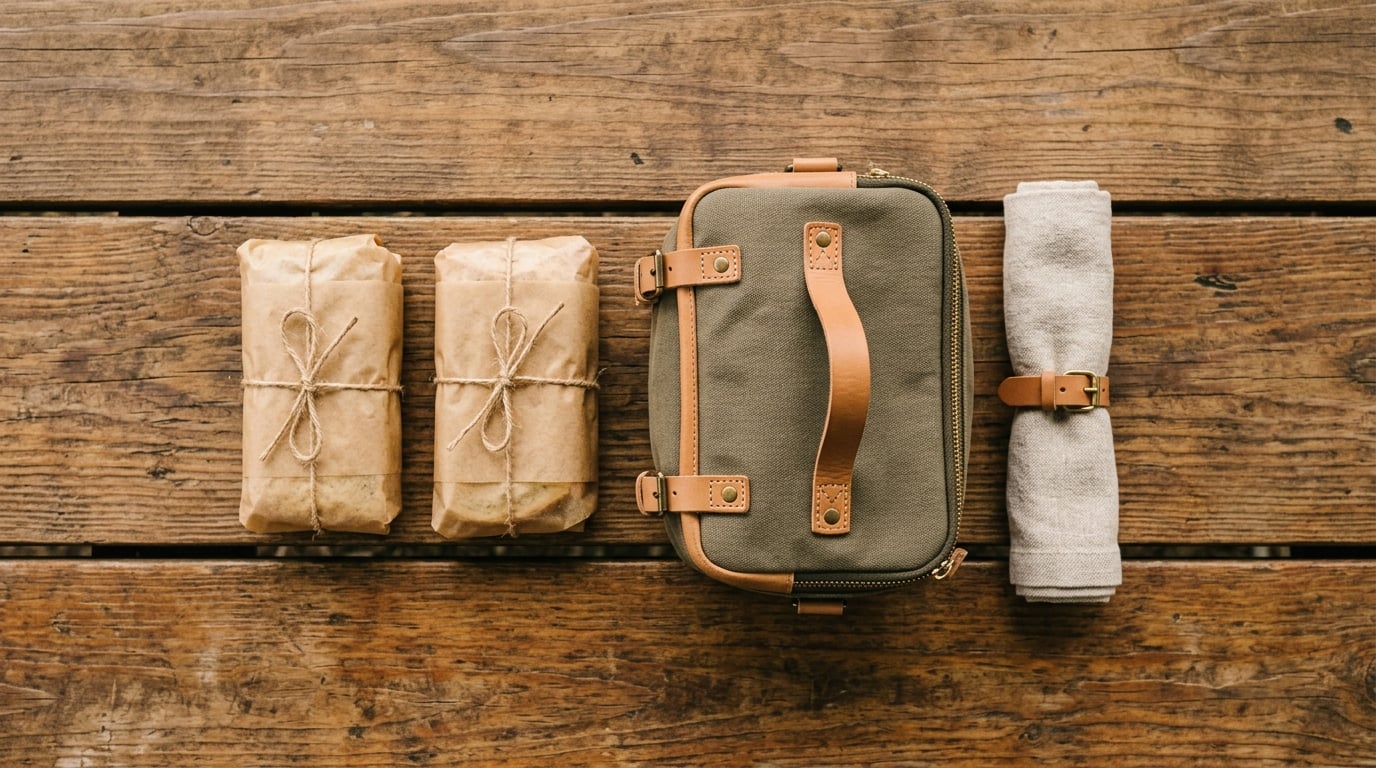
The best sandwiches for camping trips are the ones built for transport, not for a kitchen counter: sturdy low-moisture bread, fillings that do not leak or weep, and a cold-chain plan for anything perishable. Get those three things right and a sandwich survives a cooler, a day pack, and a campfire grate. Get them wrong and you end up eating compressed, damp bread with filling squeezed out of the sides.
I have packed sandwiches for enough trips to know where the usual favorites fail. A soft white loaf in a cooler turns to sponge by hour four. Mayo on that same loaf guarantees it. On the other hand, a tortilla wrap packed the night before, eaten cold at mile six, is one of the most reliable lunches in my pack.
So what makes a camp sandwich different from a normal one? Three things. The bread has to resist crushing, the filling has to resist moisture, and perishable ingredients have to stay below 40°F (about 4°C) or get eaten within two hours. Everything below is organized around those constraints, and every entry tells you whether it needs a cooler, how long it takes, and whether it suits a backpack or a campground table.
If you are planning a trip right now, skim the table first, then jump to the one or two that match your setup.
Table of Contents
- Best Sandwiches for Camping Trips at a Glance
- 1. Classic Peanut Butter and Jelly
- 2. Ham and Cheese on a Durable Roll
- 3. Tuna and White Bean Sandwich
- 4. Chicken Salad with Grapes
- 5. Mediterranean Vegetable and Hummus Wrap
- 6. Smoked Turkey and Havarti Sandwich
- 7. Caprese Sandwich with Basil and Tomato
- 8. PB&J Banana Camping Wrap
- 9. Creamy Egg and Cucumber Sandwich
- 10. Nut-Free Sunflower Seed and Apple Sandwich
- Frequently Asked Questions
- Conclusion
Best Sandwiches for Camping Trips at a Glance
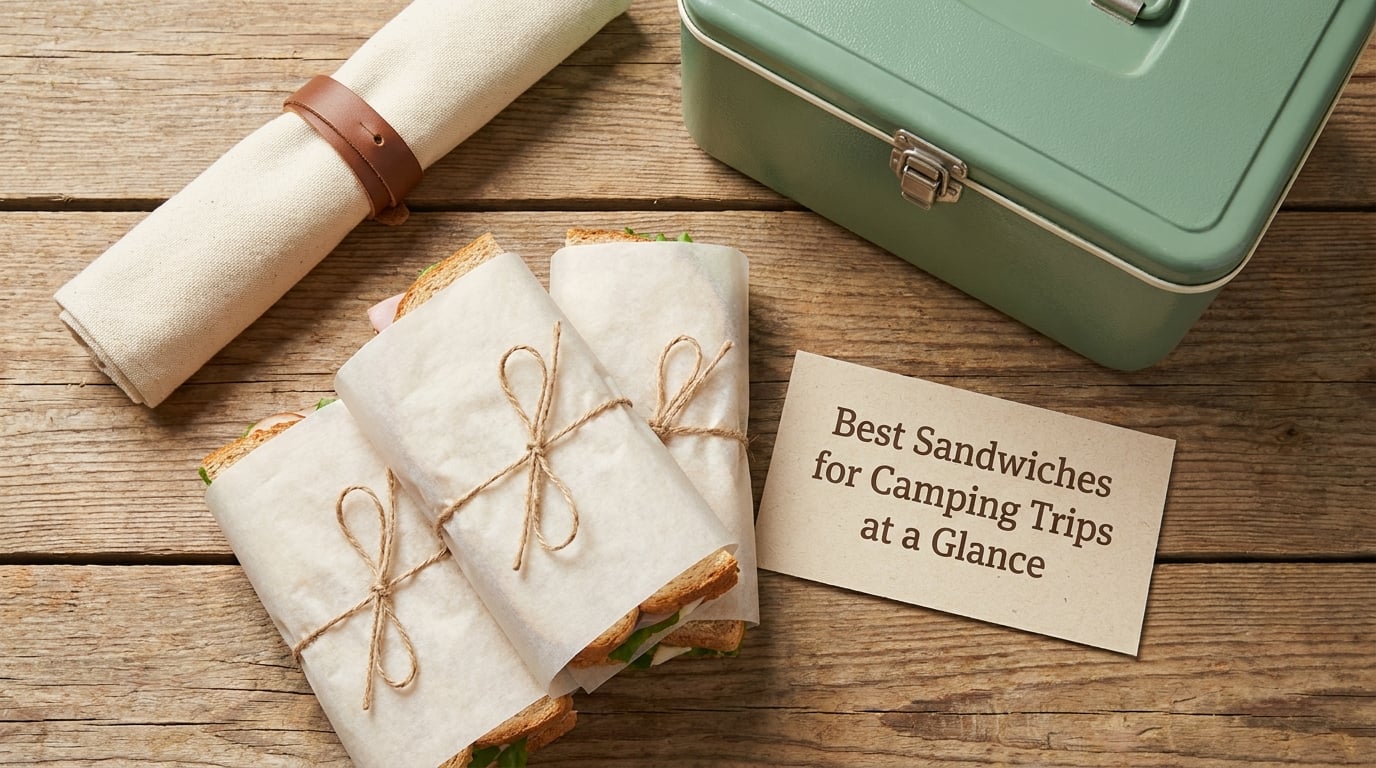
| Sandwich | Main ingredients | Needs refrigeration | Best for |
|---|---|---|---|
| 1. Peanut butter and jelly | Nut butter, jelly, sturdy bread | No | Day hikes, kids, backpacking |
| 2. Ham and cheese roll | Deli ham, firm cheese, ciabatta or roll | Yes | Car camping, picnics |
| 3. Tuna and white bean | Canned tuna, white beans, pita or flatbread | Yes | Groups, pantry meals |
| 4. Chicken salad with grapes | Cooked chicken, grapes, creamy dressing | Yes | Make-ahead lunches, picnics |
| 5. Mediterranean hummus wrap | Hummus, roasted vegetables, olives, greens | Keep vegetables cold | Vegetarians, hot days |
| 6. Smoked turkey and havarti | Sliced turkey, firm cheese, apple or cranberry | Yes | A cooler with real ice in it |
| 7. Caprese with basil and tomato | Fresh mozzarella, tomato, basil, olive oil | Yes | Assembling on site at a campsite |
| 8. PB&J banana wrap | Nut butter, banana, tortilla | No | Long days, high energy needs |
| 9. Egg and cucumber | Hard-boiled eggs, cucumber, creamy spread | Yes | Camp breakfast, cold lunches |
| 10. Sunflower seed and apple | Seed butter, apple, honey or seed spread | No | Nut-free tables, school groups |
How We Picked the Best Sandwiches for Camping Trips
Five things decided the list. First, bread durability: does it survive being stacked, sat on, and left in a damp cooler? Second, filling moisture: wet or oily fillings destroy bread fast. Third, the cold-chain load: a sandwich that demands constant ice is useless to someone carrying a 15-pound pack.
Fourth, cleanup. Camp meals should not create a dish pile. Fifth, group scaling: most of these can be doubled for a family of four without turning into forty minutes of kitchen work.
Campers weighing these options are usually also choosing between a car setup and a backpack setup, so each entry names which one it suits.
1. Classic Peanut Butter and Jelly
This is the default answer for a reason. It needs no cooler, no utensils, and almost no prep, and two sandwiches weigh almost nothing. Campers who post about trail lunches tend to name it first, describing it as a backpacking and car-camping staple that holds up great in a pack.
The version that works uses a dense bread, not the squishy sandwich loaf. Sourdough, a whole-grain roll, or lightly toasted bread all hold. Skip anything soft and sugary, because it compresses into a brick by lunchtime.
On nut-butter safety, treat it like any other perishable-prone food in heat. Natural nut butters with no stabilizers can separate and go rancid faster than stabilized ones, so pack small jars for a trip longer than a weekend and keep them somewhere shaded. For anyone at the table with a nut allergy, option 10 covers the same ground with seed butter.
Prep time is about five minutes, and one person can make a dozen in ten minutes flat.
2. Ham and Cheese on a Durable Roll
Ham and cheese is the most underrated camp sandwich, and the reason most people skip it is bread. Put it on a sturdy ciabatta roll or a crusty baguette-style roll and it holds beautifully cold. Put it on white sandwich bread and it is a casualty by the second hour.
The filling matters more than people expect. Firm sliced cheese like cheddar, provolone, or Swiss does not ooze; a soft fresh mozzarella slice will slide out and wet the bread. Add a few apple slices, a couple of dill pickles, or a swipe of mustard for sharpness, and skip the mayo.
This one needs a cooler. Deli ham and cheese should stay at or below 40°F (4°C), or be eaten within two hours of leaving it out. It is a car-camping and picnic sandwich, not a backpack lunch. Warm it at camp on a skillet and it becomes a different meal entirely.
3. Tuna and White Bean Sandwich
Canned tuna plus pantry staples is how you feed a group without a stove. Drain a can of tuna, add white beans, a little olive oil, and whatever you packed for flavor, and you have a filling that costs little and keeps for the whole trip in its unopened cans.
Pita or flatbread beats sliced bread here for a practical reason: there is no bottom slice to fall out when someone takes a bite. Cut the pita into wedges and people eat them like little sails. Hummus and roasted pepper are a good base instead of mayo, which also keeps the bread drier.
Once mixed, tuna salad is a perishable food, so it needs a cooler and should be eaten within two hours otherwise. Bring a can opener that works without a counter, and eat the mixed salad early in the trip rather than saving it for day four.
4. Chicken Salad with Grapes
This is the sandwich that makes a camp lunch feel like a picnic instead of a packed lunch. Cooked chicken, halved grapes, a celery rib for crunch, and a light creamy dressing makes a mix that tastes better after a day in the cold than it did at home.
Make it the night before and let it chill overnight, so the chicken picks up the grape flavor. Use mayo or a mayo-based dressing rather than vinegar, since acid-based dressings pull water out of the bread over several hours.
Poultry safety applies. Keep the finished salad at or below 40°F (4°C) in a cooler, eat it within two hours of sitting out, and use it up before you leave for the trailhead home. On a warm day above 90°F (32°C), that window drops to an hour. For a hot-weather camp, the hummus wrap in option 5 does the same job with a fraction of the risk.
5. Mediterranean Vegetable and Hummus Wrap
For a meat-free lunch that still feels substantial, hummus is the workhorse. Spread it thick on a flour tortilla, add roasted red peppers, cucumber, olives, and a handful of greens, and roll it up. Hummus is also shelf-stable enough that it does not need the cooler for a short outing.
Sogginess is the whole game here. Use spinach or romaine rather than wet tomato slices, pat any fresh vegetable dry, and add the crunchy or wet items only if you are eating it within a few hours. If the sandwich will sit for a day, add the cucumber and tomato at the other end.
Wrap it in parchment or a beeswax wrap rather than foil, which traps condensation. Cut it in half with a clean knife at the trailhead and eat the halves separately so a crushed second half never ruins the first. This is the most portable sandwich on the list for a pack.
6. Smoked Turkey and Havarti Sandwich
Think of this as the upgrade for a trip with a properly packed cooler. Sliced smoked turkey with a firm, mild cheese like havarti or provolone, plus a thin layer of apple chutney or cranberry spread, gives you a sandwich that tastes deliberately nice rather than merely convenient.
Skip the soft cheese here too, and keep any spread to a thin layer. Thick spreads slide out when the sandwich is warm, and smoked turkey already carries a lot of moisture.
This is the most demanding entry on the cold chain. Sliced turkey is a ready-to-eat meat that must stay at or below 40°F (4°C); if you plan to reheat it in a skillet, cook it to 165°F (74°C) first. Bring a separate sharp knife and cutting board for deli meat, keep it sealed until you are ready, and expect to use one of your ice blocks for it.
7. Caprese Sandwich with Basil and Tomato
A Caprese sandwich is a poor travel sandwich and a great campsite sandwich. Fresh tomato releases water, which is exactly what ruins bread, so the trick is to keep the components separate and assemble at the table.
Pack the sliced cheese and a small container of tomato, a few basil leaves wrapped in a damp paper towel, and a drizzle of olive oil and balsamic vinegar. At camp, you slice the tomato fresh, salt it, and layer everything. It takes about five minutes and tastes like you set a table.
Fresh cheese needs cold the whole time. If you are not sure your cooler will hold 40°F (4°C) for the length of the trip, make this a car-camping sandwich only.
8. PB&J Banana Camping Wrap
Same flavors as the classic, built on a tortilla instead of bread, and the difference is large. A wrap has no seam to split, no crumb to shed, and it bends back into shape after being stuffed in a pack. This is the version I eat on long days when the trail gets slow.
Ripeness decides the texture. A firm, barely yellow banana holds its shape; a very ripe one turns the wrap into a sticky mess within a few hours. Add the banana at the last possible moment if you are packing the night before, and roll the nut butter on first so it forms a moisture barrier against the tortilla.
No refrigeration needed, and it carries the same calorie density as a classic PB&J. For a nut-free table, use sunflower seed butter in the same build; it behaves nearly identically. Anyone in the group with a sesame allergy should pick a corn or rice tortilla rather than a wheat-flour one, which usually contains sesame.
9. Creamy Egg and Cucumber Sandwich
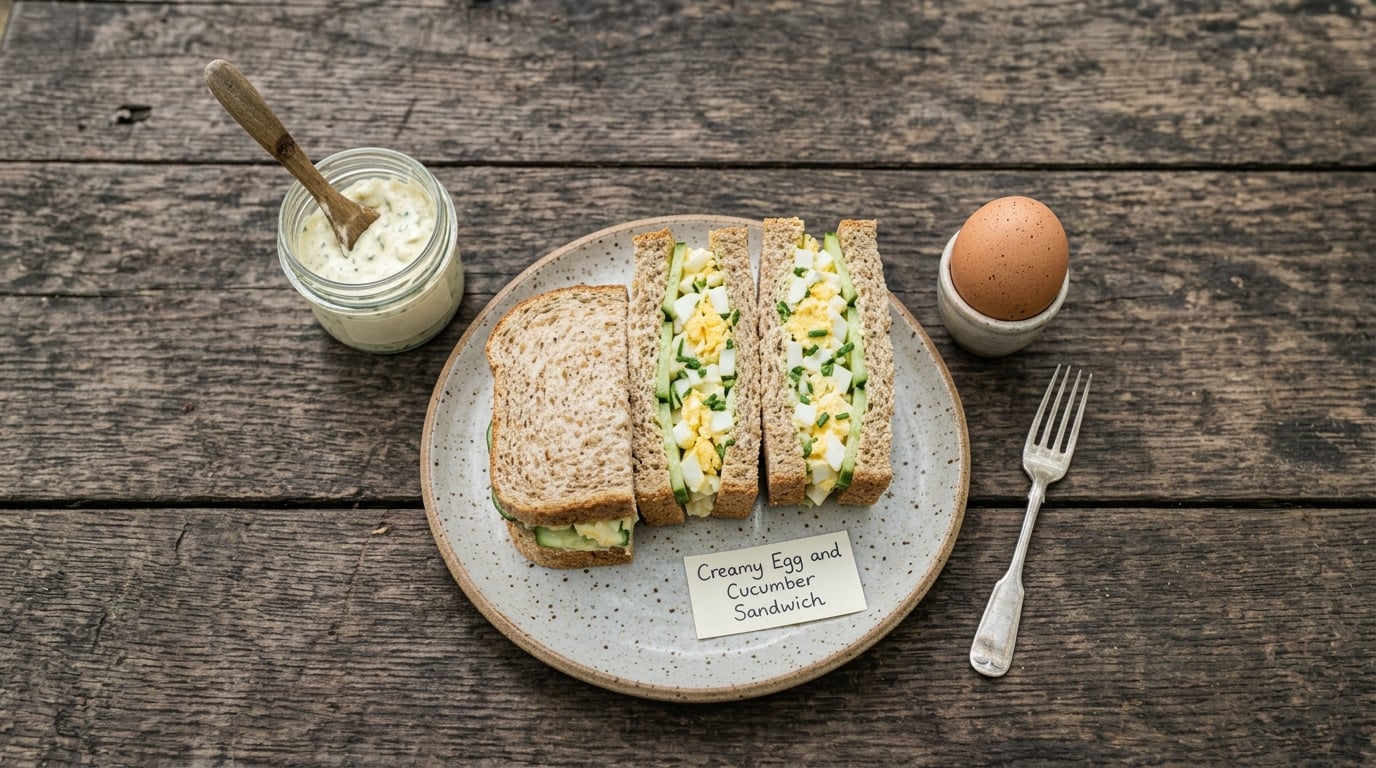
Egg salad is the best camping breakfast sandwich and almost nobody packs it. Hard-boiled eggs mash with a little creamy dressing and a pinch of salt, and thin cucumber slices give it the freshness that keeps it from tasting like a leftover.
The bread choice is the difference between good and terrible. Use a crusty roll or toasted sourdough. Soft white bread absorbs the moisture from the eggs and cucumber and turns to paste within a couple of hours, which is a genuinely unpleasant discovery at mile four.
Hard-boiled eggs keep well, but a mixed egg salad is perishable. Keep it cold in the cooler and eat it in the morning, not at midnight. There is no need to reheat it.
10. Nut-Free Sunflower Seed and Apple Sandwich
Sunflower seed butter does what peanut butter does in a sandwich, and it is what you want when a school group, a shared table, or a family member with an allergy rules out nuts. It is not a perfect substitute for flavor, but in a camp sandwich with apple and a little honey, nobody notices.
Dice the apple small so it distributes evenly, and add a thin layer of honey or a seed-based spread for sweetness. Tart apple varieties such as Granny Smith hold their texture better and offset the sweetness of the butter.
No refrigeration required, and this travels as well as any sandwich on the list. If you are packing for a table with a serious allergy, buy the seed butter in a facility that states it, and pack it sealed and separate from other nut products to reduce cross-contact. It is a simple precaution that costs nothing.
How to Pack Camping Sandwiches Safely
Cold is the part people get wrong, and the rules are simple enough to memorize. Keep perishable food at 40°F (4°C) or below. Food that sits in the danger zone between 40°F and 140°F (4°C and 60°C) for more than two hours should be thrown away, and above 90°F (32°C) that window shrinks to one hour. This applies to meat, poultry, tuna salad, egg salad, and cut fruit and vegetables.
Order of operations matters. Build your sandwich before it goes near ice, wrap it in parchment or a waxed wrap rather than foil, and put it above your ice blocks in the cooler so meltwater never drips onto it. Soggy sandwiches are usually a packaging order problem before they are a bread problem.
Separate the wet from the dry. If a sandwich has tomato, cucumber, or a wet spread, carry those in a small lidded container and add them at the table. Use a bag of ice plus a block of ice, keep the block on top, and limit cooler opening to a few times a day rather than grazing all afternoon.
If you are reheating meat or fish at camp, cook poultry to 165°F (74°C), ground meat to 160°F (71°C), and whole cuts or fish to 145°F (63°C). Use a separate board and knife for anything you plan to eat cold, and keep raw meat sealed and separate from ready-to-eat sandwiches.
For a three-day trip, pack your no-cook shelf-stable sandwiches for the first day, make one cooler-dependent sandwich per day on site, and freeze the last sandwich. It thaws by morning and travels better frozen than it ever does fresh. On a five-day trip, plan two cooler meals and three shelf-stable ones, because the cooler loses efficiency by the back half of any trip.
Frequently Asked Questions
Which camping sandwiches do not need refrigeration?
The nut-butter sandwiches do best here. Peanut butter and jelly and the PBu0026amp;J banana wrap both travel without a cooler, as does the sunflower seed and apple version. Hummus is also fine for a day or two in moderate heat, and whole uncut apples do not need cooling. Anything with meat, poultry, canned fish mixed with dressing, egg salad, cut vegetables, or fresh cheese needs a cooler at 40F or below.
How do I keep sandwiches from getting soggy in a cooler?
Three fixes handle almost all of it. Use sturdy, low-moisture bread such as sourdough, ciabatta, or a tortilla instead of soft sandwich loaf. Keep mayo to a thin layer, or swap it for mustard, hummus, or oil. Pack the sandwich above your ice so meltwater never reaches it, and carry wet ingredients like tomato and cucumber in a separate container until serving time.
What sandwiches work for backpacking with no cooler?
Focus on calorie density and weight. Nut butter and jelly on a dense roll, the PBu0026amp;J banana wrap, and the sunflower seed and apple sandwich need no ice at all. A hummus and dry vegetable wrap is close behind if you pack a small ice pack. Skip anything with deli meat, fresh cheese, egg salad, or cut fruit, because keeping those cold eats both weight and pack space.
What should I pack for sandwiches on a three day camping trip?
Pack two shelf-stable sandwiches for the first and last day, and keep one cooler-dependent sandwich per day in reserve. A tuna and white bean pocket made on site and a chicken salad with grapes made at home both travel well for a day or two at a time. Freeze the sandwich for day three; it thaws by morning and holds up better than a fresh one. Rotate them so nothing sits in the cooler past the second day.
Can you make a grilled cheese sandwich on a camp stove?
Yes, and it is one of the best hot camp meals you can cook on a small stove. Use a cast iron skillet or a griddle over coals, butter the outside of the bread rather than the inside, and keep the heat medium so the cheese melts before the bread burns. Put the skillet between two cold rinsed cans to save fuel, and wrap the finished sandwich in foil to hold the heat for a few minutes.
Conclusion
If you are backpacking, start with the PB&J banana wrap or the sunflower seed and apple sandwich; they need no ice and they come back intact from a pack. If you have a car and a cooler, the ham and cheese roll on ciabatta or the smoked turkey and havarti is the move, and the Caprese is worth building fresh at the table.
Whichever you pick, decide the bread, the moisture level, and the cold chain before you leave home. Those three decisions fix nearly every camping sandwich problem before it happens, and they will keep the best sandwiches for camping trips simple: sturdy bread, low-moisture fillings, and cold food that stays cold.