
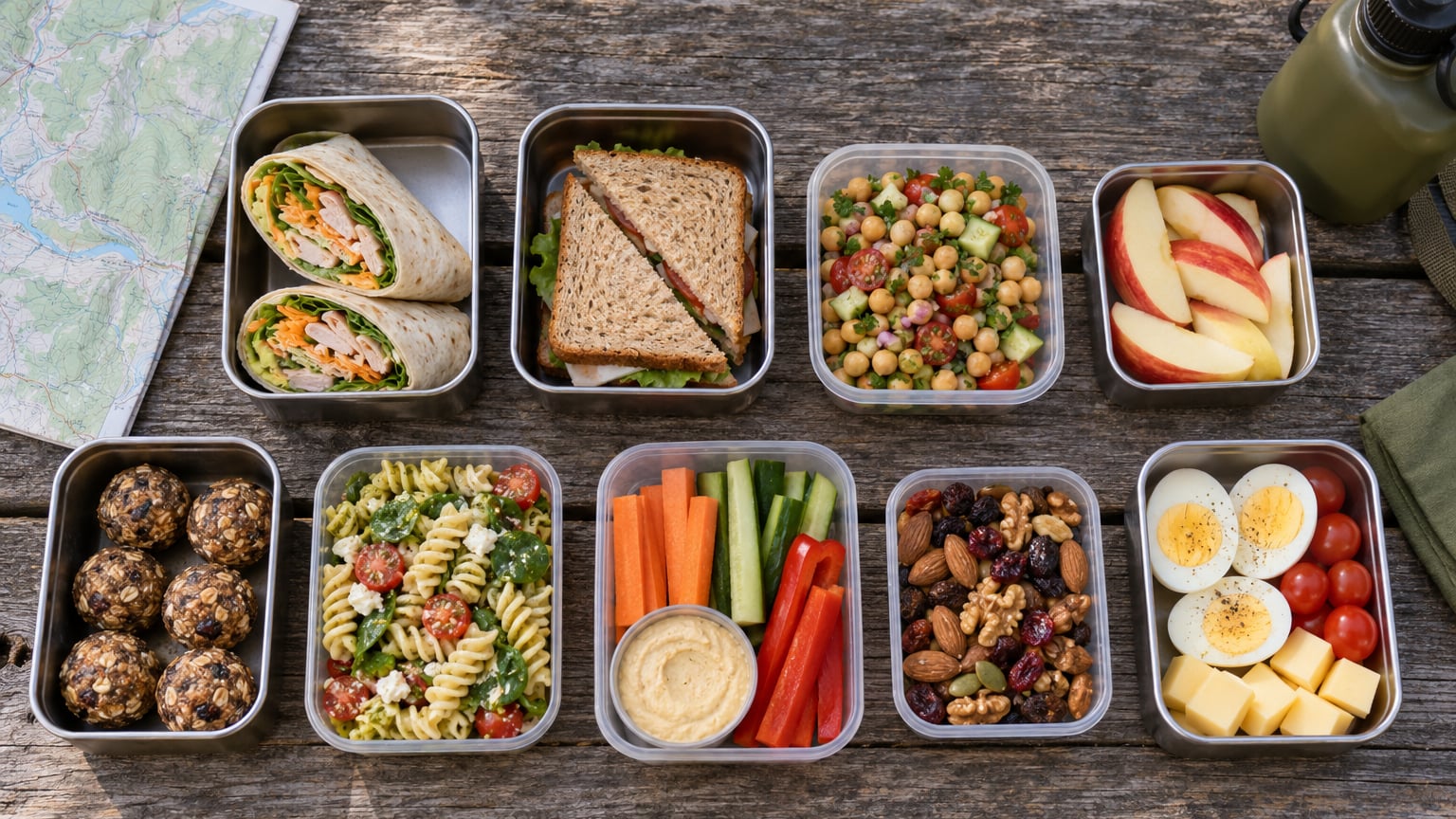
The best day hike lunches are no-cook meals that survive four to eight hours in a warm pack without a fridge: a wrap or sandwich built around protein, a sturdy carbohydrate, and something crunchy, eaten with one hand and no utensils. The ideas below all pack flat, hold their texture, and still taste good when you’re four miles past the last water source.
I’ve eaten a lot of mediocre trail lunches. The ones that ruined a day were never bad in the parking lot. They were limp sandwiches, sauce down a forearm, and a smelly tuna pouch nobody wanted to open at the turnaround. So these are the lunches I’d actually pack again, plus what to skip.
Table of Contents
- Day Hike Lunch Ideas at a Glance
- 1. Turkey and Hummus Wrap With Crunchy Veggies
- 2. Classic Turkey Sandwich With Lettuce and Tomato
- 3. Smoked Salmon Bagel With Cream Cheese and Cucumber
- 4. Mediterranean Chickpea and Olive Sandwich
- 5. Chicken Pita With Hummus and Crunchy Vegetables
- 6. Tuna and White Bean Salad in a Leakproof Container
- 7. Nut-Free Trail Energy Box With Sandwiches and Fruit
- 8. Caprese Pasta Salad With Chicken
- 9. Tofu and Vegetable Rice Bowl
- 10. Build-Your-Own Trail Lunch Box
- Frequently Asked Questions
- How much food should I bring for a day hike?
- Do I need to refrigerate my day hike lunch?
- What food does not spoil without refrigeration while hiking?
- Should I eat before a day hike or hike on an empty stomach?
- What are good vegetarian or vegan day hike lunch ideas?
- Why do hikers carry gummy bears and candy on the trail?
- Conclusion
Day Hike Lunch Ideas at a Glance
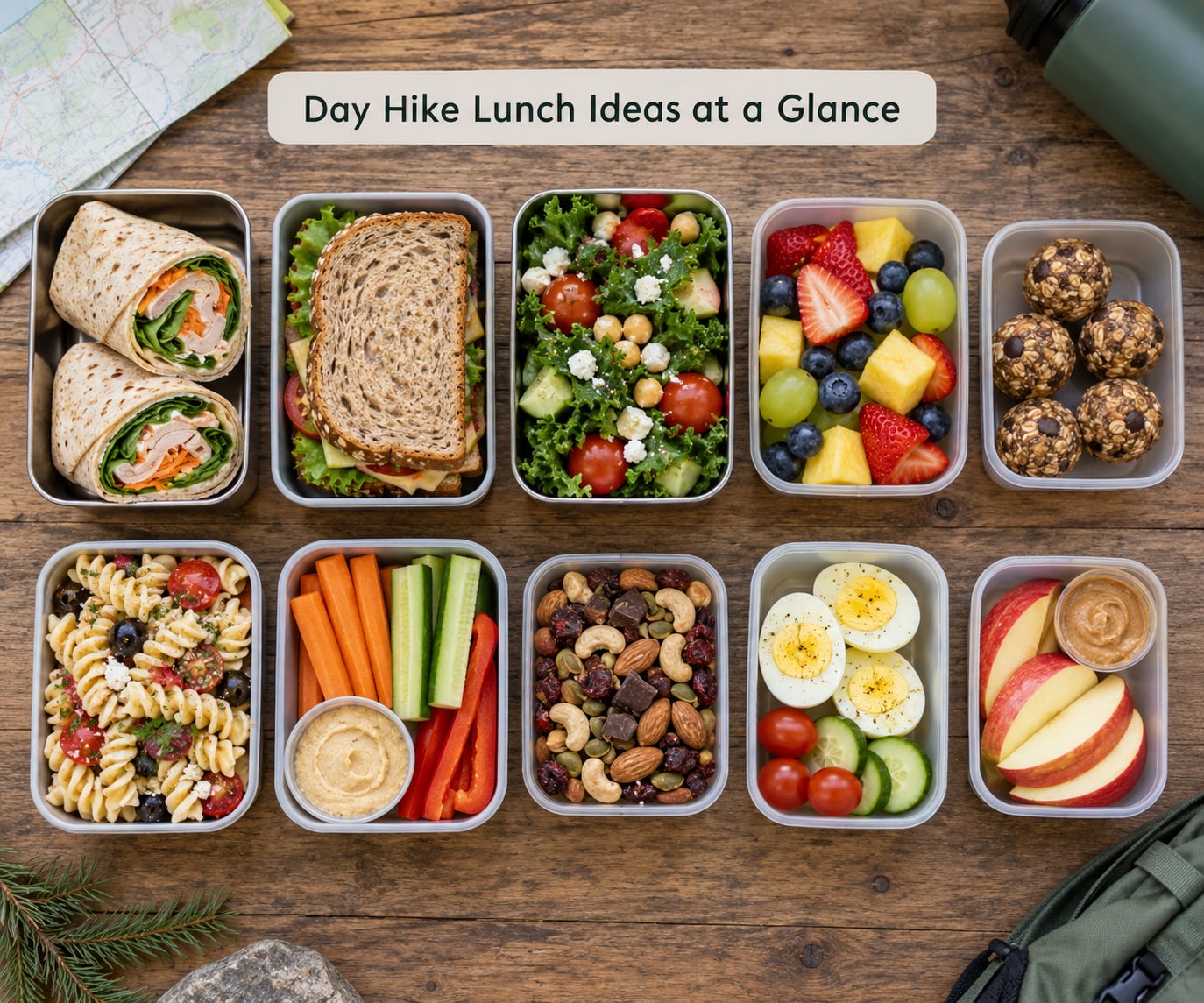
Sorting these ten by how they behave on the trail tells you more than the recipe does. Mess level, refrigeration needs and best conditions are the details that decide whether a lunch survives contact with a backpack.
| Lunch idea | Best for | Packing note | Mess level | Trail conditions |
|---|---|---|---|---|
| Turkey and hummus wrap | Moderate trails, all-day fuel | Pack wet ingredients separately | Low | Mild or warm |
| Turkey and lettuce sandwich | Easy morning hikes | Sturdy bread, lettuce in a separate cup | Low | Cool mornings |
| Smoked salmon bagel | Shorter, cooler hikes | Skip it if the pack runs hot | Low | Cool and dry |
| Chickpea and olive sandwich | Meatless hikes | Drain the chickpeas well | Low | Any |
| Chicken pita | One-handed eating | Hummus on the side, not in | Low | Any |
| Tuna and white bean salad | High-protein, no-cook lunches | Choose a container with a gasket | Medium | Warm, with an ice pack |
| Nut-free energy box | Shared trails and allergy-aware groups | Eat crackers and fruit before they soften | Low | Any |
| Caprese pasta salad | Long days and summit lunches | Keep below 40°F / 4°C with an ice pack | Medium | Warm, with ice |
| Tofu and vegetable rice bowl | Plant-forward, filling meals | Pack dressing separately | Low | Short to moderate hikes |
| Build-your-own lunch box | Anyone who wants control | Assemble layers in order of density | Low | Any |
1. Turkey and Hummus Wrap With Crunchy Veggies
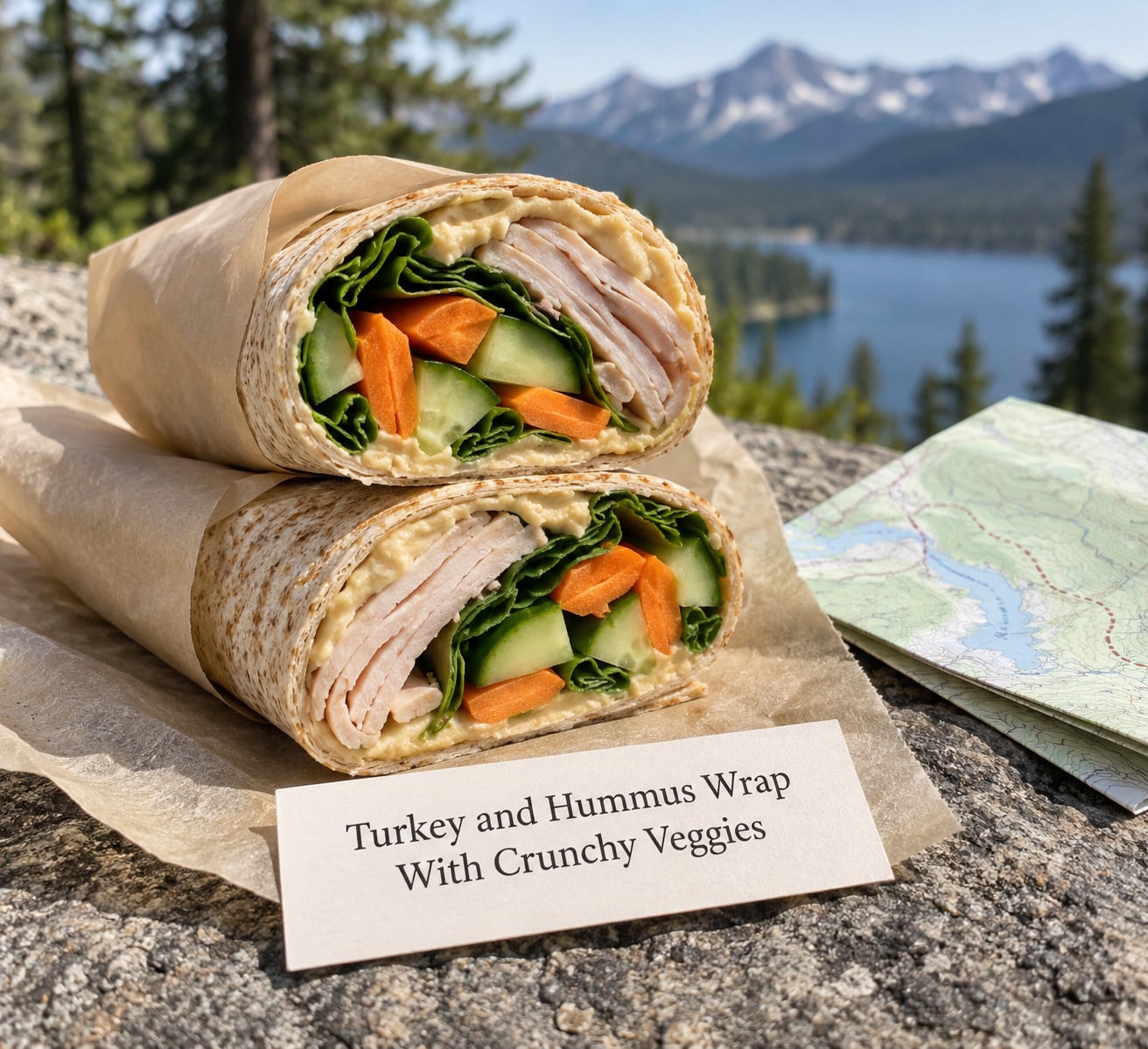
This is the default I’d hand to almost anyone. Turkey brings lean protein, hummus adds fat and fiber, and raw vegetables give you the crunch that keeps the whole thing from tasting flat after three hours of walking. One wrap holds roughly 300 to 350 calories, which is a decent chunk of what a moving hiker needs in a meal slot.
The protein does the heavy lifting on climbs. Muscles working uphill run partly on protein, not just carbs, and a wrap that leaves you hungry at the turnaround is the reason some hikers bail early.
How to Pack a Day Hike Lunch Wrap for the Trail
Wrap it tight, wrap it in parchment, and keep anything wet on the outside of the fold until you eat it. Use a flour tortilla rather than bread: it folds without tearing and weighs less, and it won’t crumble into your pack when you set it down for a photo.
- Spread hummus on the tortilla first, then add turkey, so the spread acts as a moisture barrier.
- Layer spinach or lettuce closest to the hummus, carrots and cucumber last.
- Roll from the edge farthest from you, fold the ends in, then roll again tight.
- Wrap in parchment or a beeswax wrapper and rest it flat in a lunch box so nothing presses on it.
- Keep any dressing or extra sauce in a separate container until the trail break.
2. Classic Turkey Sandwich With Lettuce and Tomato
A sandwich does the job as long as the bread holds up. That means a dense loaf such as sourdough, whole wheat or ciabatta, and lettuce packed in its own small container rather than on the bread from home. Soggy middle, crisp edge is the standard sandwich failure, and it happens by nine in the morning.
Skip the deli meat that needs refrigeration by midmorning and go with roast turkey breast from the cooler section. Add a slice of hard cheese for fat, a few slices of cucumber, and a spoonful of mustard. Mustard travels well, costs nothing in weight, and doesn’t leak.
This is also the best pick for beginners who want nothing complicated. If it survives the drive to the trailhead, it survives the hike.
3. Smoked Salmon Bagel With Cream Cheese and Cucumber
A smoked salmon bagel is compact, high in protein, and carries omega-3 fats that slow digestion and help with the tiredness hikers hit late in the day. Thinly sliced cucumber gives you volume and water content for very little weight.
The catch is heat. Cream cheese and salmon both belong in the fridge, and on a warm day they’d need an insulated lunch box with a frozen pack rather than an open daypack. On a cool spring morning or a shaded winter route, they pack beautifully.
Use a dense bagel, not a fluffy one. An everything or sesame bagel holds its structure when it’s loaded, and a round one rolls nicely inside a beeswax wrapper. Skip tomato on salmon; the acid and moisture turn it into a mess within an hour.
4. Mediterranean Chickpea and Olive Sandwich
This one is shelf-stable, meatless and cheap, and it travels in a jar as easily as on bread. Mash slightly seasoned chickpeas with a little olive oil and lemon, pile them on sturdy bread with sliced olives, roasted red pepper, cucumber and a handful of arugula, and you’re set.
Two details matter. Drain and mash the chickpeas properly so the filling holds together rather than rolling out of the bread, and go easy on the salt: olives plus salty bread plus a long walk is a recipe for a rough afternoon.
It also holds without any animal protein, which makes it useful for longer hikes and shared lunches where not everyone eats meat. If you’re vegan, swap the creamy cheese for mashed avocado and pack it in a separate tub.
5. Chicken Pita With Hummus and Crunchy Vegetables
A pita is the best bread for eating one-handed while walking, because you fold it into a pocket and everything stays inside. Fill it with shredded chicken, crunchy vegetables, and either hummus or a yogurt-based spread.
Keep the spread on the side for long hikes and let people dip rather than spread. That’s the difference between a pita that’s still good at hour five and one that’s a damp disappointment by noon.
Sliced chicken from the deli counter needs cold, so pack it in an insulated bag with a cold pack on warm days. Rotisserie chicken you cook at home is safer for anything longer than a couple of hours.
6. Tuna and White Bean Salad in a Leakproof Container
Mix canned tuna with rinsed white beans, diced celery, a little olive oil, lemon and black pepper, and you get a no-cook lunch with serious protein that costs almost nothing and weighs very little. It eats well cold straight from the container with a fork, or wrapped in a tortilla.
Choose a container with a rubber gasket seal and pack the lid tape under the clip if the closure is questionable. This is one of the few lunches where the mess level is genuinely medium, and a leak in a daypack means a bad afternoon.
Tuna needs cold, so this one belongs in a small insulated bag with an ice pack. Drain the tuna well and go light on the mayo-based dressings; mayo-heavy tuna salad is heavier, messier and short on staying power.
7. Nut-Free Trail Energy Box With Sandwiches and Fruit
This is the one to build when the group includes someone with a nut allergy, or when you’re hiking with kids who will eat almost anything but only if it’s cut into small pieces. The formula is simple: one mini sandwich, one piece of fruit, a few raw vegetables, and a shelf-stable snack.
Nut-free snacks travel well: pretzels, seeded crackers, dried mango, roasted chickpeas, or seed butter in single-serve packets. Every item sits in the box without leaking, and nothing needs a fork.
Pack soft crackers at the top so they don’t get crushed by fruit, and eat them early. A box works well when two hikers are sharing one lunch on a long out-and-back.
8. Caprese Pasta Salad With Chicken
A make-ahead pasta salad gets better overnight, so it’s genuinely useful for a hike where you want real flavor. Combine cooled rotini or penne with cherry tomatoes, mozzarella, fresh basil, a drizzle of olive oil and balsamic, then add sliced chicken breast on top.
Food safety is the part to take seriously. Cooked chicken must reach 165°F / 74°C internally and then stay cold; USDA guidance says perishable food shouldn’t sit unrefrigerated for more than two hours, or one hour in temperatures above 90°F / 32°C. Pack the whole thing in an insulated bag with a frozen gel pack and keep it under 40°F / 4°C.
Add the dressing as a separate packet so the pasta doesn’t go mushy, and give the container a good shake when you open it so the cheese and oil redistribute.
9. Tofu and Vegetable Rice Bowl
Cubed roasted tofu, cooked rice, roasted carrots and broccoli, and a sesame or soy dressing make a filling, plant-forward bowl that holds up better than most cold lunches. Rice keeps its texture for hours, and tofu picks up flavor from a night in the marinade.
Pack the dressing in a small pot or a folded zip bag and add it at the break. Pour it on at the start and you’ll be eating warm rice salad at the turnaround.
Pack the bowl cold for longer days, the same rule as the pasta salad. For a short hike on a mild day, a thermos of hot rice works too and stays safe longer than it looks like it should.
10. Build-Your-Own Trail Lunch Box
Once you’ve tried a few of the above, build your own. Pick one from each row and you get a complete day hike lunch that fits your preferences and dietary needs.
- Protein: turkey, chicken, canned tuna, hard cheese, hummus, roasted chickpeas, tofu, or smoked salmon.
- Starchy carbohydrate: tortilla, bagel, pita, crackers, bread roll, or cooked rice or pasta.
- Vegetables: cucumber, carrot sticks, bell pepper, cherry tomatoes, leafy greens, or broccoli.
- Fruit: apple, orange, banana, or dried mango.
- Crunch or sweet: trail mix without nuts, pretzels, roasted chickpeas, dried fruit, or an energy bar.
Layer the box so heavy, wet items sit at the bottom and crackers go on top. If you want more ideas for meals that travel in a cooler or a car, the cold lunch ideas that travel well guide covers the packing side in more detail, and our lunch ideas for hot weather days apply the same thinking to warm afternoons.
Frequently Asked Questions
How much food should I bring for a day hike?
A moving hiker burns roughly 300 to 450 calories an hour, so plan on about 150 to 200 calories per hiking hour plus your regular meals. That works out to roughly 600 calories for a three-hour morning hike and 1,200 to 1,400 for a full eight-hour day. If you’re packing one substantial lunch, make it calorie-dense and pair it with two or three snacks.
Do I need to refrigerate my day hike lunch?
Only for perishable items like cooked chicken, deli meat, tuna, cream cheese, smoked salmon, cut fruit, and cooked pasta or rice. USDA guidance says perishable food should not sit unrefrigerated longer than two hours, or one hour when temperatures climb above 90°F / 32°C. An insulated lunch box with a frozen gel pack keeps anything cold for the length of a normal day hike.
What food does not spoil without refrigeration while hiking?
Hard cheese, cured meat, nut and seed butter, roasted chickpeas, dried fruit, energy bars, jerky, crackers, tortillas, shelf-stable tuna and salmon pouches, and whole apples or oranges all hold up without cooling. Soft cheese, cut fruit, cooked meat and anything with mayonnaise-based dressing spoil quickly in a warm pack and belong in an insulated bag.
Should I eat before a day hike or hike on an empty stomach?
Eat a normal breakfast with carbohydrates and protein an hour or two before you start. Hiking fast on an empty stomach usually ends with a bonk somewhere on the trail and a much more appealing packed lunch eaten too late. A small snack thirty minutes before a long climb also works well.
What are good vegetarian or vegan day hike lunch ideas?
A chickpea and olive sandwich, a hummus and vegetable wrap, a tofu and vegetable rice bowl, or a nut-free energy box with crackers and fruit all work well. Keep the same rules as any other lunch: sturdy bread, wet ingredients packed separately, and something calorie-dense because plant-based trail food is easy to underpack.
Why do hikers carry gummy bears and candy on the trail?
Gummy candy is dense in sugar, weighs almost nothing, and dissolves without water, which matters at altitude or on a hot climb. Hikers use it for quick energy rather than as a meal. Pair it with something substantial so you’re not running on sugar alone for a full day.
Conclusion
Pick your day hike lunch by four things: how long the trail is, how warm the day will be, what you can refrigerate, and who you’re hiking with. For most people starting out, a turkey and hummus wrap or a sturdy turkey sandwich is the safest bet, since both tolerate a warm pack and a full day.
Save the pasta salad, tuna and rice bowl for hikes with a cold pack. Once you’re packing on purpose rather than out of habit, build your own box from the formula in idea ten and you’ll never eat the same lunch two hikes in a row again.