
How to politely decline food at a party comes down to three beats: thank the host, say a short no, and move the conversation somewhere else. You do not need a medical reason, a long story, or an apology on repeat. Most hosts are not keeping score, and the ones who push usually just want an easy yes.
This guide covers the awkward moments specifically. What to say before anyone hands you a plate, how to handle a second offer after you already took a bite, what to do when a relative insists, and how to turn down food and drink without making the refusal the story of the evening. It takes about a minute to read and about three seconds to use.
Table of Contents
- What You Need
- How to Politely Decline Food at a Party
- Common Mistakes
- Frequently Asked Questions
- Do I need a medical reason to decline food at a party?
- Is it rude to eat before you go to a party so you are not hungry?
- What do I say when a host puts food on my plate without asking?
- How do I refuse a second helping when someone keeps offering?
- How do I decline alcohol without explaining myself?
- Am I expected to eat a dish I dislike?
- Conclusion
What You Need
You need almost nothing, which is good, because the worst time to prepare is standing over a platter with a serving spoon in your hand.
First, decide whether you owe anyone an explanation. If the food has an allergen you cannot eat, a medical or religious restriction, or you have just eaten and are genuinely full, one short sentence closes the question. If you simply do not want the deviled eggs, no reason is required. People decline food constantly without narrating it.
Second, pick one sentence and use it a few times. Scripts that sound rehearsed work better than improvised ones, because improvised versions tend to trail off into justification. Say the same warm, flat, unembarrassed line each time and nobody treats it as a negotiation.
Third, have somewhere to go. A bathroom, a fresh drink, a conversation with someone else, a plate of something else entirely. The reason declining food feels exposed is that your hands stay empty while everyone else’s are full. Give them a job. If you are the host running a DIY sandwich bar, keep yourself busy with the food and this problem mostly disappears.
How to Politely Decline Food at a Party
Step 1: Decide Whether You Need a Reason
A reason helps when the stakes are real and gets in the way when they are not. Allergies, celiac, diabetes management, post-surgical restrictions, pregnancy, religious practice: say it plainly in one sentence and the conversation usually ends there. “I can’t have dairy, but this looks incredible” does more work than any soft deflection.
You can also skip the explanation entirely. “No thank you, I’m all set” is a complete answer at a cocktail party, a potluck, or a buffet line. The elaborate excuse hurts you twice: the person now thinks they have to argue you out of it, and you have to maintain a story all evening. Threads on the topic keep coming back to this. The simplest version, the one people land on most often, is a firm and friendly no without a medical explanation.
One warning about borrowing a reason. Using “I’m allergic” when you are not stops the pushing, and plenty of guests do it anyway. It works until somebody plates the dish for you with dairy melted on top.
Step 2: Decline Before Taking More
Thank first, decline second, and offer something in return. The pattern is consistent: “This smells amazing, and I have to pass. I’ll take a little of that other one instead.” Including a yes-to-something is the trick that keeps a refusal from feeling like a rejection of the cook.
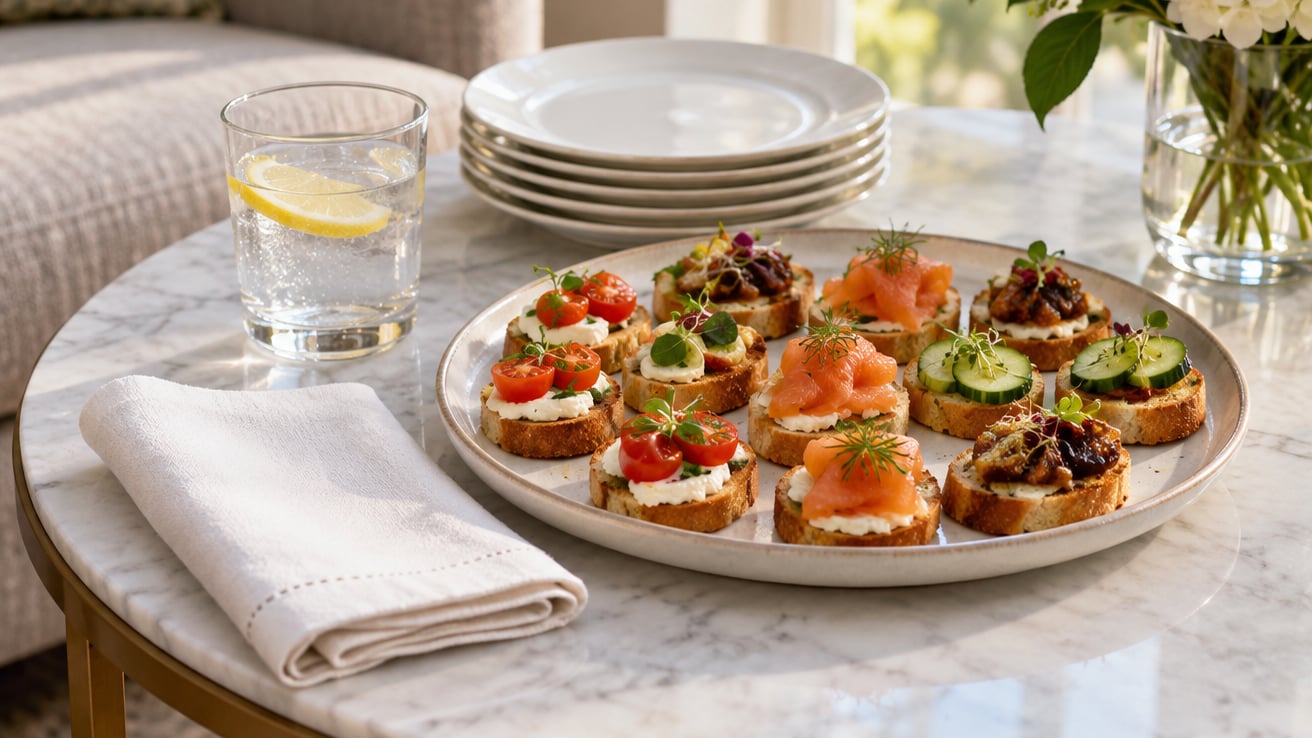
At a buffet or passed-appetizer table, take the smallest plate you can and fill it with one thing. Small portions of passed hors d’oeuvres, the sort of tray that shows up with sliders and the roll alternatives people actually want, are much easier to walk away from than a full plate you assembled yourself.
If a host puts food on your plate before you can answer, do not eat a piece you cannot eat to get out of it. Hand the plate back or set it aside and say, “I appreciate it, but I can’t eat this one.” Handling the plate rather than the person keeps the moment about logistics.
Step 3: Handle Seconds and Repeated Offers
Repeated offers are not really questions. They are a way of keeping the social moment open, and the way through is to answer the same way every time, without irritation and without a new argument.
Try: “I’m good, but thank you.” Then, if it continues: “I really am finished.” Then, if it continues anyway: “I appreciate the persistence. No thank you.” Most people stop at the second repeat because there is nothing left to negotiate. Get specific and it stops sooner: “Nothing more for me, but I’d take a cup of coffee.”
Do not add a joke about your figure, a diet, or someone else’s cooking. Self-deprecating lines invite encouragement, and they turn a private decision into a group topic.
Step 4: Redirect the Conversation Naturally
A decline is easier to swallow when it lands in the middle of something else. Compliment a specific detail, ask a question, or hand the spotlight to a third person: “Is that the potato salad from your sister? Tell me about it.” This is the difference between a guest who refused food and a guest who is enjoying the party at a slight angle.
Moving also takes pressure off. Step away to refill water, check on a kid, or go stand near the door for air. Nobody follows you across the room to insist you eat, and the return is usually much later when the topic has moved on.
Step 5: Decline When You Are Full, Uncomfortable, or Disliking the Food
Being full and disliking a dish are different situations, and each has a line that works.
When you are full, keep it simple and non-negotiable: “That was so good, I’m genuinely full.” You do not owe a reason for fullness, and arguing about capacity turns dinner into a fitness conversation.
When you are unwell, food noise is the worst possible sound to sit through, so get out of the room rather than performing politeness in a bad spot: “I’m not feeling great and I think I need to sit this one out. I’ll stay, just over there.” Leaving the party altogether is fine too.
When you dislike a dish, you have two honest routes. Take a no-thank-you portion, one bite to join in, then stop. Or simply say, “I don’t care for it, but I’m sure it’s a hit with everyone else.” Admitting dislike is less awkward than inventing a constraint, and it sidesteps the “you haven’t tried mine yet” argument entirely, which you cannot win.
Drinking works the same way, and it deserves its own version because you will get asked repeatedly. “I’m good, thanks” stops the question. If someone presses, “I just don’t drink tonight” is a fact, not a debate, and you do not owe them your reason. Alcohol-free options now cover most party tables, so nobody has to notice the gap in your glass.
And the last one, the thing nobody plans for: how to turn down leftovers. Taking food home is generous, but you do not have to accept a container just because someone is holding one out. “I’d love some, but I won’t be able to eat it before it goes off.” If you do take it and cannot eat it, do not pass it to the family dog or hand it to someone at the table, since what is safe for you may not be for them.
Common Mistakes
Inventing an elaborate excuse. A three-part story about a distant relative’s diagnosis is too much. One true sentence is enough, and where there is no true sentence, “no thank you, I’m all set” finishes the job.
Refusing before thanking. “No, I can’t eat that” opens with the rejection. “You made so much effort, and I appreciate it, but I have to pass” closes the same conversation warmly. Order matters more than wording.
Arguing the point. Debating whether you are hungry enough, or defending a restriction, tells the group your no is negotiable. Repeat the same short sentence instead. Repetition reads as settled; argument reads as an opening.
Saying “maybe later.” The second offer then becomes an argument about your word. If you will not eat it now, do not promise a later bite. Half-promises are harder to exit than a clean no.
Hovering near the food without taking anything. Standing a foot from a platter of pastries and saying nothing reads as an insult to the cook. Take a small piece, or step away from the table entirely.
Declining every shared activity. Refusing food, drinks, the toast, the photo, the group chat invitation, and the dance floor turns one no into a character. Take the first thing you are asked and the rest gets easier.
Leaving food to take home out of guilt. Accepting a container you will not eat creates a problem for your fridge instead of your host. Someone planning a spread in advance can tell you honestly, “I would not have made that much if I knew,” and a headcount-based serving plan keeps the extra out of the leftovers.
Frequently Asked Questions
Do I need a medical reason to decline food at a party?
No. Plenty of guests skip a dish because they do not care for it, have already eaten, or simply are not hungry. A short reason helps when an allergen, medical restriction, or religious practice is genuinely involved, because it ends the question in one sentence. Where nothing applies, ‘no thank you, I’m all set’ is a complete and polite answer.
Is it rude to eat before you go to a party so you are not hungry?
Not rude, and it is common among guests managing allergies, gluten-free diets, or diabetes. Plenty of people have a snack an hour before arriving so they can eat a little of everything without being pressured for seconds. Nobody can see what you did earlier, and you can still join in with a small portion when the food comes out.
What do I say when a host puts food on my plate without asking?
Thank them first, then handle the plate rather than the person. Say, ‘I appreciate it, but I have to pass on this one,’ and set the plate on the counter or hand it back. Clearing it yourself avoids making the host feel like their serving was rejected. If it contains something you cannot eat at all, say so plainly and immediately.
How do I refuse a second helping when someone keeps offering?
Answer the same way each time without irritation or new reasons. Start with ‘I’m good, thank you,’ follow with ‘I really am finished,’ and if it continues, add ‘I appreciate the persistence, but no thank you.’ Most people stop after the second repeat because there is nothing left to negotiate. Do not agree to a ‘little bit later’ unless you mean it.
How do I decline alcohol without explaining myself?
Say ‘I’m good, thanks’ and keep it moving. If someone presses, ‘I just don’t drink tonight’ is a complete fact that invites no follow-up. You do not have to mention health, recovery, pregnancy, medication, or religion, and repeating any of those details only opens more questions. Most hosts keep a few non-alcoholic options on the table anyway, so your glass will not stand out.
Am I expected to eat a dish I dislike?
No. You can take a small taste to join in and stop there, which is what people call a no-thank-you portion, or you can say plainly, ‘I don’t care for it.’ Trying something once with genuine curiosity is nice, but nobody is owed a second bite. Pressures like ‘you have not tried mine yet’ are about the cook’s effort, not your plate.
Conclusion
The whole skill comes down to one short move: thank the host, give a brief honest reason when you have one, say no clearly, and redirect before the pause gets long. Nothing else is required. Repeat the same sentence rather than adding arguments, and let a good host enjoy the evening instead of wondering what you did not like about their food.