
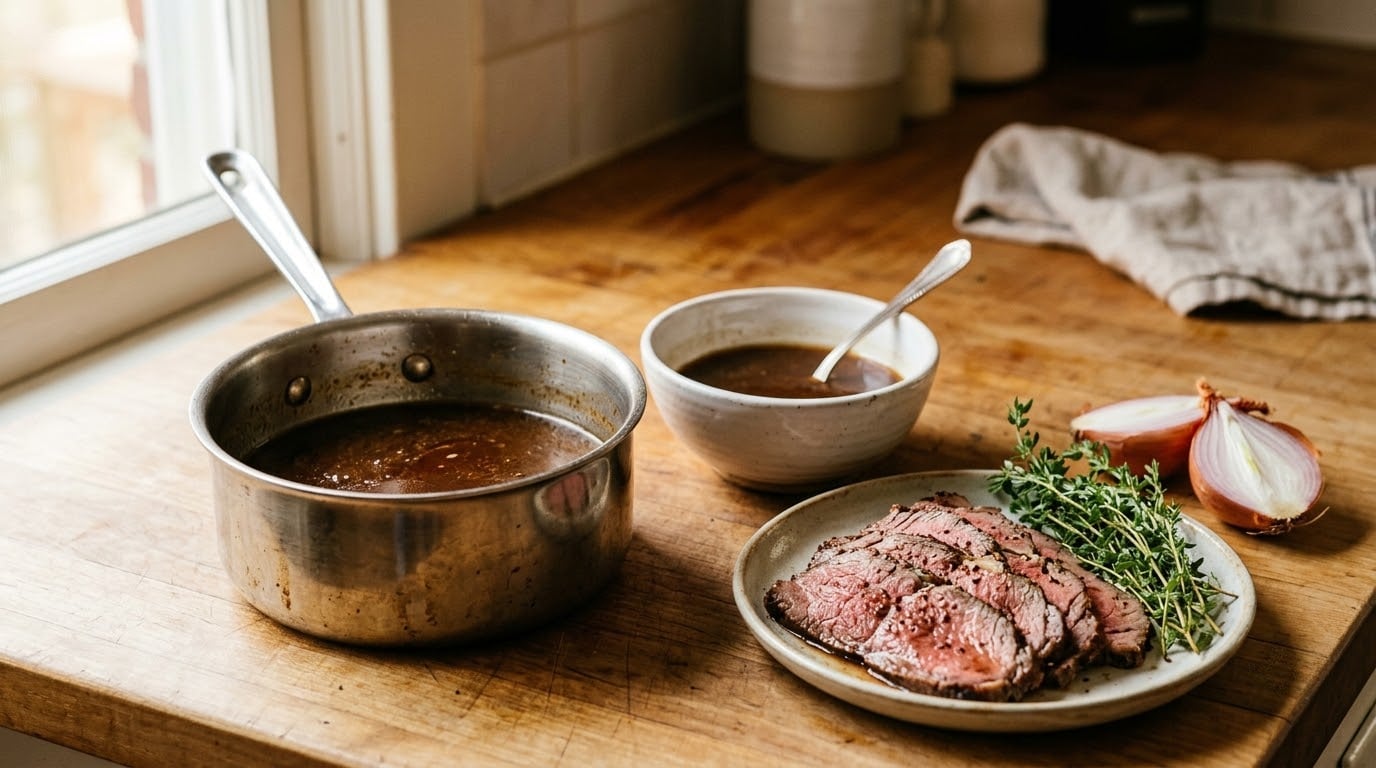
Yes, you can make au jus without drippings. Combine beef broth, butter and Worcestershire sauce in a saucepan, simmer for five minutes, and season with garlic powder, onion powder, salt and pepper. Thicken it with a roux or cornstarch slurry if you want gravy-like body.
The catch is that a broth-based sauce is a jus-inspired take, not a true drippings au jus. If your roast beef came out of a Dutch oven, an Instant Pot or a grill, there is no fond in the pan and nothing to deglaze, and this is exactly the version that works for you.
It also takes five minutes, which is less time than most people spend hunting for drippings. Below is the ratio I use, the roux method when you want something thicker, and the fixes for the two things that go wrong most: a thin sauce and a lumpy one.
If you are building this for a sandwich spread rather than a plated dinner, my notes on how to make a Philly cheesesteak at home that tastes real cover the sauce-in-a-sandwich workflow too.
Worth saying plainly before we start: the flavor gap is real. Drippings carry rendered fat, gelatin, and fond all at once, and no pantry shortcut reproduces all three at the same intensity. What it does reproduce is the savory, glossy sauce people are reaching for at the table. Most people cannot tell the difference once it is on a plate next to roast beef, which is the only test that matters.
The word au jus is French for with juice, and cooks use it loosely. Strictly speaking, a jus is the thinner, unstrained cooking liquid and a gravy is the thicker, flour-thickened version, but nobody at a dinner table is going to correct you either way. Treat the name as shorthand for a rich brown meat sauce.
Table of Contents
- What You Need
- What You Are Replacing, and With What
- Step-by-Step: How to Make Au Jus Without Drippings
- What If You Still Have a Pan With Brown Bits?
- Which Method Should You Use?
- Serving and Storing Au Jus Without Drippings
- Frequently Asked Questions
- What can I use instead of meat drippings to make au jus?
- Can I make au jus without stock?
- How do I make au jus thicker without creating lumps?
- What gives au jus its savory roasted flavor without drippings?
- How long does homemade au jus keep in the refrigerator?
- Can I make au jus ahead of time for a sandwich or roast dinner?
- Conclusion
What You Need
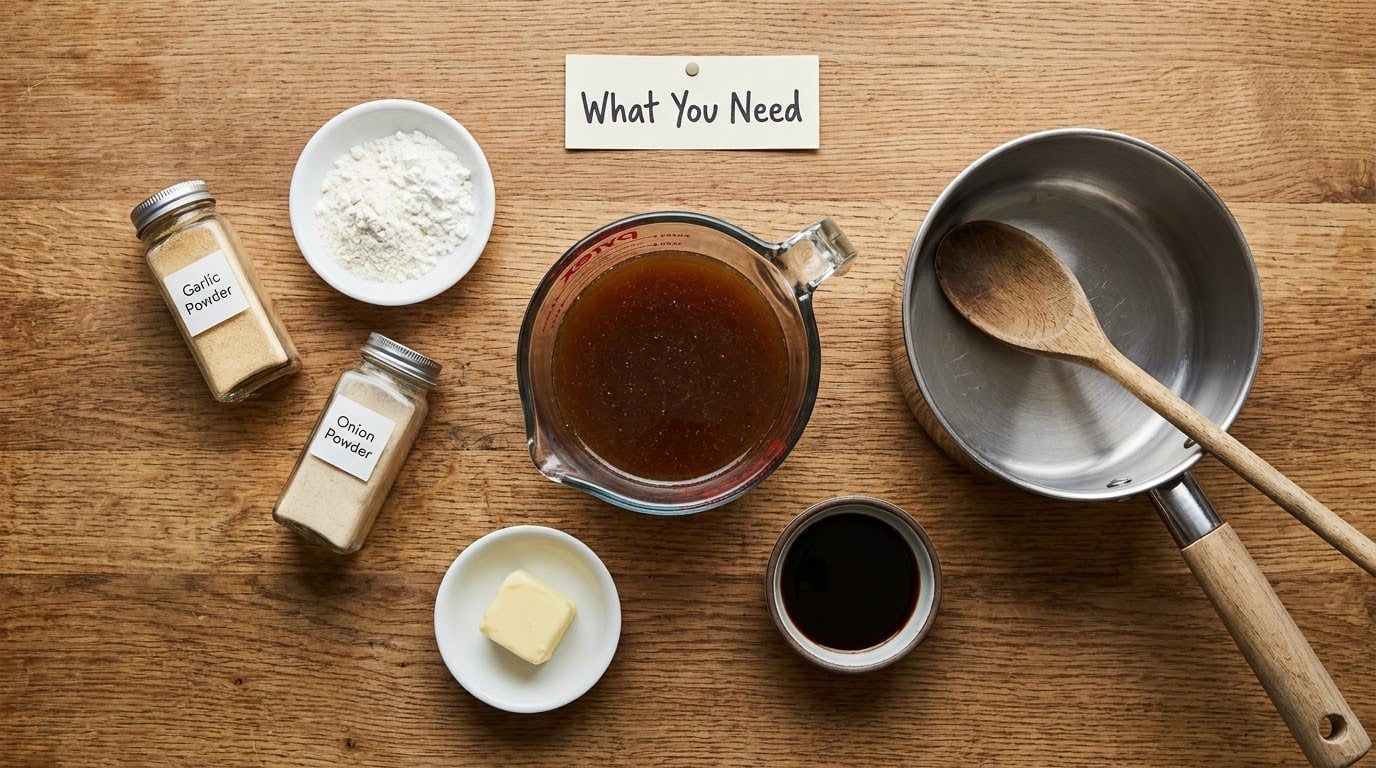
The base is stock, the fat is butter, and the seasoning is Worcestershire sauce. Everything else is a swap you make based on what you already have.
The core four
- 2 cups low-sodium beef broth — the liquid that replaces the meat juices. Low-sodium gives you room to season yourself.
- 2 tablespoons unsalted butter — stands in for the rendered fat in a roasting pan. Skimmed drippings are mostly fat, so this is a closer match than most recipes admit.
- 1 tablespoon Worcestershire sauce — the fermented anchovy and molasses in it do the umami work that fond would normally do.
- 1/4 teaspoon garlic powder and 1/4 teaspoon onion powder — savory background without chopping anything.
- Salt and black pepper to taste, plus optional soy sauce, red wine, or a splash of sherry.
For thicker sauces
Two tablespoons of all-purpose flour for a roux, or cornstarch for a slurry. A roux gives you a glossier, more restaurant-leaning sauce; a slurry is faster and keeps the flavor of the broth cleaner.
Tools
A small saucepan and a whisk. That is genuinely it. A strainer is nice if you built flavor from minced shallots or raw onion, since it catches the bits and leaves the sauce glassy.
What if you only have a packet of au jus mix?
Use it as the base instead of throwing it out. Make it up with half broth and half water instead of the full water on the packet, then stir in a tablespoon of butter, a splash of red wine or broth, and a teaspoon of Worcestershire. You cut the salt, deepen the flavor, and get the same body in the same amount of time. Store-bought mix is starch and salt until you fix it, and this is the fix.
If you are plating a whole spread rather than just sandwiches, try our deli platter guide for the same reason: the sauces are what make it read as a spread.
What You Are Replacing, and With What
Drippings do four jobs. Once you name them, the substitutions stop feeling like a compromise. Fat, liquid, fond, and seasoning each have a pantry answer.
- Pan fat becomes butter. Skimmed drippings are mostly rendered fat, and that is exactly what 2 tablespoons of butter contributes.
- Meat juices become beef broth or consomme. This is the biggest swap, and it is why the sauce tastes more like broth than roast. Simmer it longer and add butter to close the gap.
- Fond, the browned bits on the pan floor, becomes tomato paste or a splash of wine cooked until it darkens. A tablespoon stirred into the butter and cooked for a minute gives a roasted note that reads surprisingly close to fond.
- Seasoning becomes Worcestershire sauce plus soy sauce. Both are fermented and both carry the meaty umami that fond provides.
Soy sauce deserves more credit than it gets here. Half a teaspoon in the base recipe adds a depth that people read as slow-roasted, and it costs almost nothing. It also adds salt, so use it in place of some of the seasoning rather than on top of it.
Step-by-Step: How to Make Au Jus Without Drippings
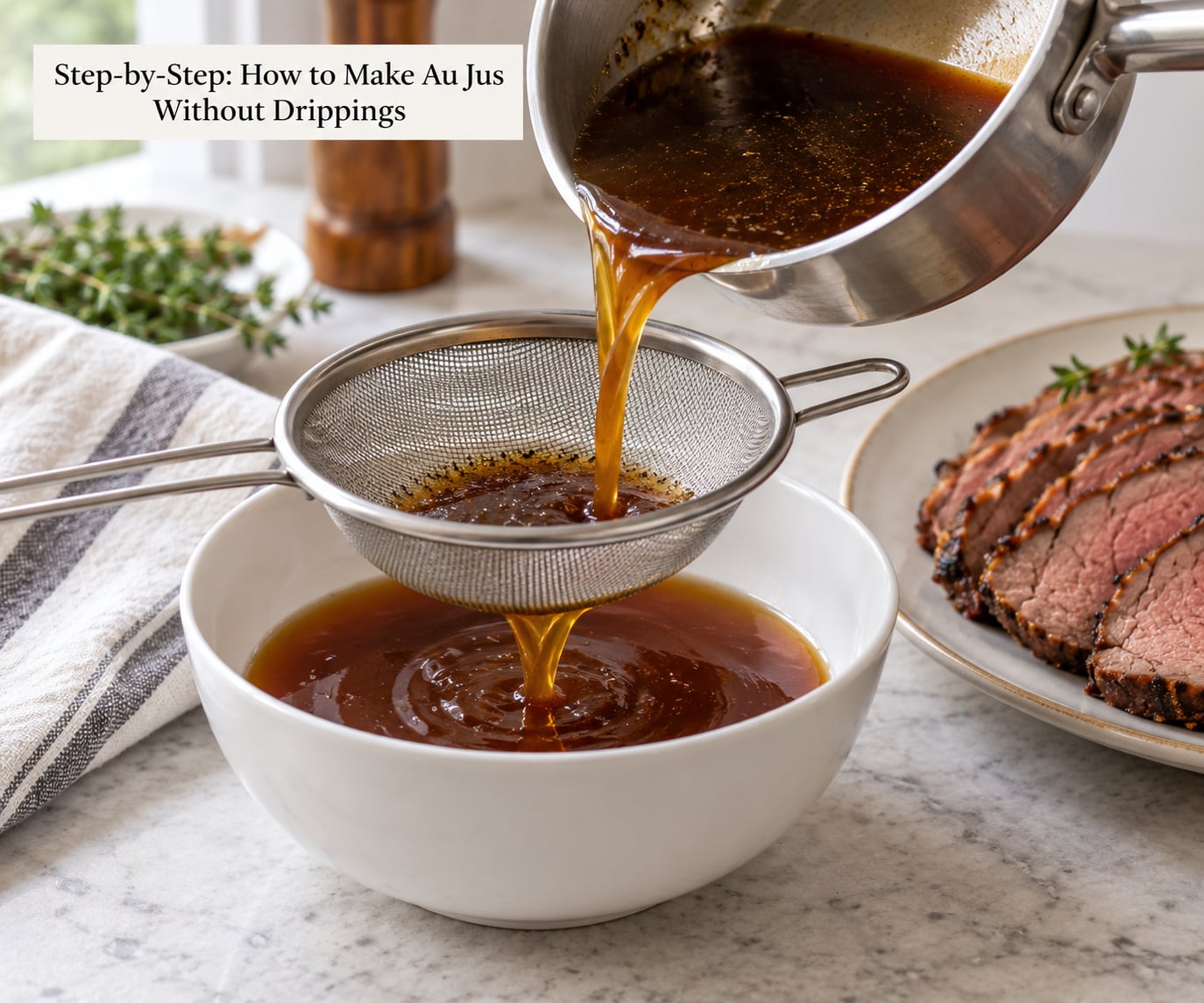
This is the base method: five minutes of work for about two and a half cups of sauce. It matches the proportions that show up in every search result for this query, so if you have read an AI-generated answer, this is what it described.
- Melt the butter over medium-low heat. Use a light saucepan so nothing scorches. Swirl it around until it foams and smells nutty, about 60 seconds.
- Add the Worcestershire, garlic powder and onion powder. Stir for about 15 seconds. This step is the one people skip, and it is where the sauce stops tasting like plain salty broth.
- Pour in the broth and bring it to a bare simmer. Use medium heat, not a hard boil. Once it steams and you see the first bubble at the edge of the pan, lower the heat.
- Simmer uncovered for 5 minutes. Stir once or twice. You are concentrating the flavor and cooking off a little water, not making a reduction. If it tastes thin, simmer 3 more minutes rather than adding a whole lot of thickener.
- Season and thicken. Add salt and pepper to taste, then start with a cornstarch slurry one teaspoon at a time if you want more body. Simmer 1 minute after each addition and it will thicken fast.
How you know it worked: the sauce coats the back of a spoon and sheets off it slowly, and it tastes savory with a rounded sweetness underneath the salt. If it tastes only salty, you added too much salt at step 5 rather than too little Worcestershire, and no amount of simmering will fix that.
Choose the Right Base: Beef Broth, Consomme, or Stock
The base does most of the work, so it is where you should spend your attention. Beef broth is the everyday answer: light, fast, and it lets your butter and Worcestershire show. Beef stock is darker and heavier, better when the sauce needs to stand up to a fatty roast. Consomme is clear and clean and tastes the most refined, which makes it a good choice for a plated dinner where the meat is the point.
Roast chicken and turkey need a different approach. Swap in chicken stock, leave the butter at 2 tablespoons, and add a teaspoon of poultry-friendly herbs like thyme or sage at the end. Mushroom stock works if you are serving it over a beef tenderloin and want an earthy note instead of a roasty one.
Chicken broth will make the sauce, but it will not taste like beef au jus. That is fine for a French dip built on roast chicken. Just know what you are making before you serve it to someone expecting prime rib.
Thicken the Au Jus: Roux, Cornstarch Slurry, or Reduction
Broth-based au jus is thin, and thin is the number one complaint people have about it. The fix depends on how you plan to serve it.
- Dipping sauce for a French dip: thin, almost broth-consistent, so the bread does not fall apart in the bowl. The 5-minute method as written is right here.
- Pour-over for sliced roast beef: coat the back of a spoon. Add 1 to 2 teaspoons of cornstarch slurry.
- Gravy for mashed potatoes or rice: a proper roux. Melt 2 tablespoons butter, whisk in 2 tablespoons all-purpose flour, cook 60 to 90 seconds until it smells nutty, then whisk in 1 cup broth at a time. Finish with the remaining broth and the Worcestershire.
A roux is flour and fat cooked together before liquid goes in, and it is what makes the sauce cling to the meat instead of running off it. Cook the flour at least a full minute or the sauce will taste raw and floury.
A slurry is cornstarch whisked into cold water, then poured in. The cold liquid matters: starch that hits a hot sauce clumps immediately, and a lumpy sauce is harder to fix than a thin one. Start with a teaspoon, stir, wait a minute, then decide if you need more.
For a sandwich you want to actually eat, my note on how to make an overstuffed sandwich hold together covers the same physics from the bread side. Wet bottom bun plus heavy filling equals a failure regardless of how good the sauce is.
The Red Wine Version
Red wine adds the roasted, tannic depth that people associate with restaurant au jus. Reduce half a cup of wine by half in a small pan, which takes about 4 minutes, then add 2 cups of beef broth and 1 tablespoon of Worcestershire and simmer 5 more minutes.
You do not need an expensive bottle. A dry red that is not terrible to drink will work. Skip dessert wines, which turn bitter when reduced.
No bottle open? Grape juice with a splash of red wine vinegar gets you the acidity without the alcohol. Straight red wine vinegar alone tastes sharp and vinegary, which is the most common complaint people have about that swap.
Common Mistakes and How to Fix Them
The sauce tastes salty. You almost certainly used regular broth and then added Worcestershire on top, which carries salt of its own. Low-sodium broth is the fix going forward. Right now, dilute: add half a cup of unsalted water or unsalted stock and simmer 2 minutes.
The sauce tastes like a marinade. Too much Worcestershire, usually two tablespoons or more. It is a seasoning, not the liquid. Cut back to 1 tablespoon and let the beef broth carry the body.
Lumps. The slurry went in hot, or the roux was only half whisked. Prevention only, sadly: whisk the slurry in cold water first, and add the roux liquid a cup at a time while whisking constantly.
Too thin, even after reducing. Broth that has simmered 15 minutes still will not thicken. Reduction concentrates flavor but not body. Once you have simmered it twice, add slurry.
Too thick. Whisk in warm broth or water a tablespoon at a time. It comes back faster than you expect.
Scorched flavor. The pan went too hot once the broth went in and you walked away. Pull it off the heat, add half a cup of cold broth, and taste again.
What If You Still Have a Pan With Brown Bits?
Sometimes there is no drippings but there is fond, such as when you seared a roast in a skillet and transferred it to the oven, or cooked on a sheet pan. Deglaze that pan with a cup of broth or half a cup of wine, scrape with a wooden spoon, and you have salvaged most of what the roast left behind.
Scrape every brown bit, including the ones stuck to the edges. Those edges usually hold the deepest flavor, and they are the difference between a sauce that tastes roasted and one that tastes like broth.
Once deglazed, strain out anything burnt, then finish the liquid with the butter, Worcestershire, and 3 minutes of simmering. Fond from a pan where the meat only seared is thinner and less gelatinous than fond from a full roast, so do not expect the same body. Add a teaspoon of slurry if it feels flat.
Which Method Should You Use?
| Method | Time | Key ingredients | Consistency | Best for |
|---|---|---|---|---|
| Broth and butter | 5 minutes | Beef broth, butter, Worcestershire | Thin, glossy | French dip, quick weeknight sauce |
| Roux method | 10 minutes | Butter, flour, broth, Worcestershire | Thick, gravy-like | Pouring over roast beef, mashed potatoes |
| Red wine reduction | 9 minutes | Red wine, broth, garlic | Thin to medium, tannic | Plated dinner, roast tenderloin |
| Pan fond deglaze | 8 minutes | Fond, broth or wine, butter | Medium | Cooking on a sheet pan or in a skillet |
| Doctored packet | 5 minutes | Au jus mix, broth, butter | Medium to thick | Last-minute sauce, cutting salt |
Read the table by how much time you have and how the sauce gets used. Five minutes and a dipping sauce means broth and butter. Nothing else in the list beats that combination for effort.
Serving and Storing Au Jus Without Drippings
Serve it over sliced prime rib or roast beef, spoon it onto roast chicken and thighs, or set it in a bowl beside a French dip built on a split French roll with roast beef and provolone. A little chopped parsley or sliced scallion on top is the whole garnish.
Keep it warm in a small saucepan over the lowest heat on your stove, not on the back burner where it will scorch. Stir it every few minutes. If it thickens too much from the reduction, whisk in a tablespoon of warm broth.
Refrigerate for three to four days in a sealed container, cool it quickly rather than leaving a hot pan on the counter, and reheat only what you need. Freeze it in an ice cube tray and move the cubes to a bag when they are solid, where they keep about three months.
Frequently Asked Questions
What can I use instead of meat drippings to make au jus?
Beef broth is the standard stand-in. Consomme or beef stock work if you want more body, and Worcestershire sauce plus a tablespoon of butter supplies the umami and richness that drippings would have provided. For the fond that a roast leaves behind, use a tablespoon of tomato paste cooked in butter, or deglaze whatever pan you did use. Knowing how to make au jus without drippings is really four swaps: fat, juice, fond and seasoning.
Can I make au jus without stock?
Yes, but you need liquid and something with body. Water alone tastes thin. Use water plus a beef bouillon cube, or a canned consomme, or unsalted beef broth reduced by half with the butter and Worcestershire added at the end. You can also doctor a packet of dry au jus mix with half broth and half water, which finishes in under five minutes. Avoid straight water with only seasoning, because that reads as salty broth rather than sauce.
How do I make au jus thicker without creating lumps?
Make a slurry with cold liquid. Whisk one tablespoon of cornstarch into a tablespoon of cold water until smooth, then pour it into the simmering sauce while stirring. Add a teaspoon at a time and wait a minute between additions so you do not overshoot. If you prefer a roux, cook the flour in melted butter for a full minute before adding broth, then whisk the liquid in a cup at a time. Hot liquid plus starch is what causes lumps, not the amount.
What gives au jus its savory roasted flavor without drippings?
Three things do most of the work: Worcestershire sauce for fermented umami, butter for the fat that drippings would have supplied, and enough simmer time to concentrate the broth. Garlic powder and onion powder add background savoriness, and a teaspoon of soy sauce deepens the meatiness further. Red wine reduced by half is the move if you want roasted depth. A tablespoon of tomato paste cooked into the butter also adds a dark, roasted note for very little effort.
How long does homemade au jus keep in the refrigerator?
Three to four days in the fridge, stored in a sealed container. Cool it quickly rather than leaving a hot saucepan on the counter, and reheat only the amount you are serving that meal. If it thickens noticeably as it cools, loosen it with a tablespoon or two of warm broth while it heats. You can also freeze it in an ice cube tray and transfer the frozen cubes to a bag, where they keep for about three months.
Can I make au jus ahead of time for a sandwich or roast dinner?
Yes, and it is better a day ahead. Broth-based sauce actually improves overnight because the flavors have time to settle together. Make it up to two days ahead, refrigerate it, and warm it gently over low heat with a splash of broth, stirring until it is pourable again. If you thickened it with a roux, whisk it smooth while it warms. A cornstarch sauce loosens fast, so start with less liquid than you think you need.
Conclusion
Start with the simple version: 2 cups low-sodium beef broth, 2 tablespoons butter, 1 tablespoon Worcestershire sauce, garlic powder and onion powder, simmered 5 minutes. That alone is a good au jus without drippings and it takes less time than boiling water.
Once you have that down, make one adjustment at a time. Add a roux if you want gravy body, a reduced splash of wine if you want restaurant depth, or a cornstarch slurry if it is going into a French dip. The base recipe never changes; only the finish does.