
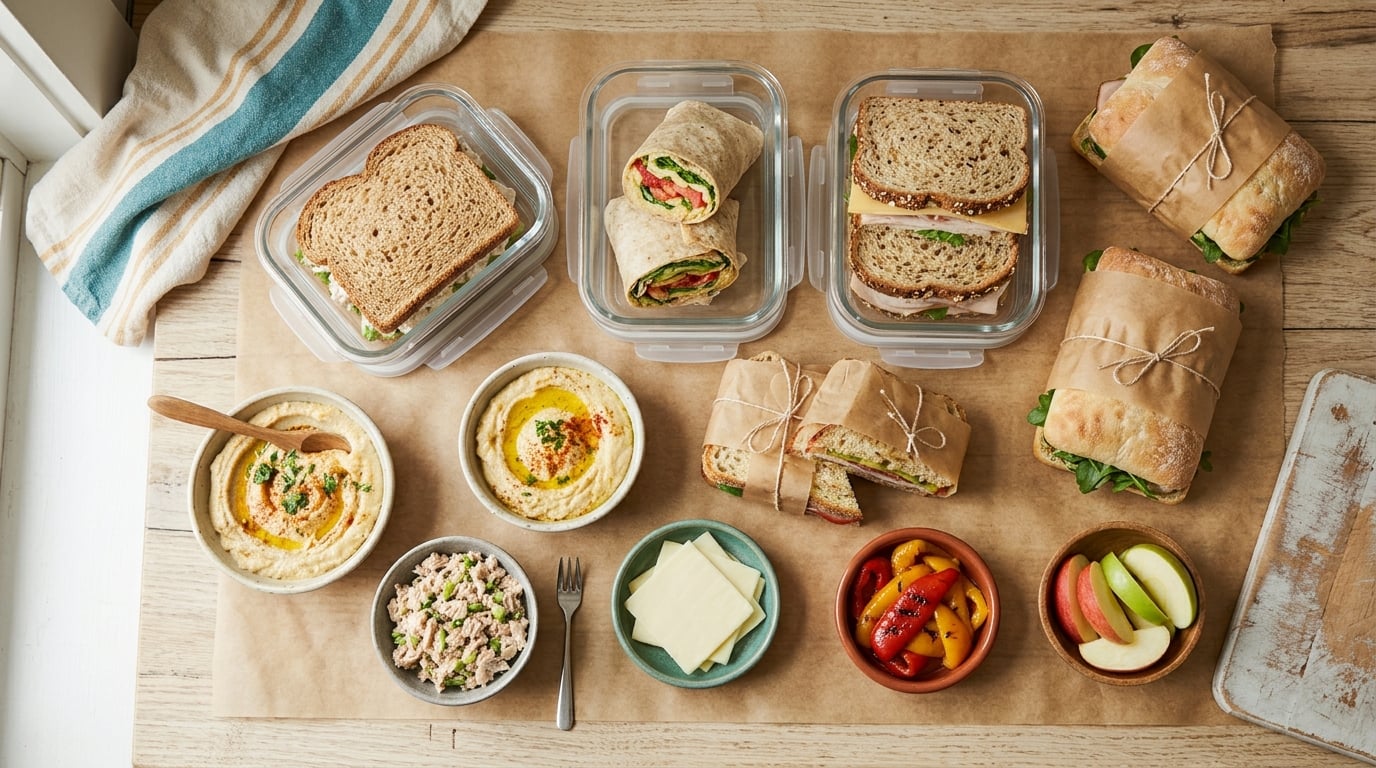
The best sandwiches to make ahead for the whole week are sturdy, low-moisture builds that comfortably survive four days in the fridge, with days four and five coming from the freezer instead of the cold shelf. Turkey wraps, tuna egg salad, roasted vegetable subs and pressed Capreses hold best; anything built around raw lettuce, tomato or avocado needs those ingredients packed on the side.
Here is the honest version nobody else says plainly: refrigerated homemade sandwiches with cooked meat, fish or egg are a four-day food. That is USDA guidance, not a limitation of your kitchen. Freeze Thursday’s and Friday’s portions on prep day and thaw them in the fridge overnight, and you cover Monday through Friday without ever touching day-five refrigerated food.
I assemble a week’s worth every Sunday for my family, and the same ten keep coming back. Meal prep forums are full of the same pattern: people build the dry base on Sunday, then add the wet stuff in the morning or pack it in a separate cup. That one habit solves most of the soggy-bread complaints I see.
Table of Contents
- Best Sandwiches to Make Ahead for the Whole Week at a Glance
- 1. Classic Turkey and Hummus Wrap Sandwich
- 2. Mediterranean Chicken Pita Sandwich
- 3. Tuna Egg Salad Sandwich
- 4. Italian Sub with Roasted Vegetables
- 5. Smoked Salmon Cream Cheese Bagel Sandwich
- 6. Black Bean and Corn Quesadilla Sandwich
- 7. Chicken Salad Apple and Walnut Sandwich
- 8. Caprese Pressed Sandwich
- 9. Peanut Butter Banana Oat Sandwich
- 10. Roast Beef, Horseradish, and Cheddar Sandwich
- How to Store and Pack Sandwiches for the Week
- Frequently Asked Questions
- How long do make-ahead sandwiches last in the fridge?
- Which sandwiches freeze best for a whole workweek?
- How do I keep sandwiches from getting soggy overnight?
- What meat and poultry temperatures should I use when preparing sandwiches?
- Can I prepare sandwiches the night before or several days ahead?
- What ingredients should I pack separately for lunchboxes?
- Conclusion
Best Sandwiches to Make Ahead for the Whole Week at a Glance
Fridge life below means days at or under 40°F (4°C) in an airtight container. Protein figures are rough per-sandwich estimates for a standard serving.
| Sandwich | Best For | Fridge Life | Freezes Well? | Key Prep Move |
|---|---|---|---|---|
| Turkey and hummus wrap | Work lunches that need to survive a locker | 4 days | Yes | Hummus as the moisture barrier, no raw veg |
| Mediterranean chicken pita | High-protein lunches | 3 days | Poorly | Pack cucumber and tomato separately |
| Tuna egg salad | Pantry lunches with no cooking | 3 to 4 days | Acceptable | Drain tuna well, use low-acid pickle relish |
| Italian sub with roasted vegetables | Crowd-pleasing vegetarian option | 4 days | Yes | Vinegar dressing instead of mayo |
| Smoked salmon bagel | Brunch-style lunches, no reheating | 2 days | No | Eat early in the week, keep cold |
| Black bean and corn quesadilla | Warm lunches you reheat yourself | 4 days | Yes | Cool fully before sealing the container |
| Chicken salad with apple and walnut | Balanced lunches with real crunch | 3 days | Acceptable | Toss apple in at the last moment |
| Pressed Caprese | Warm-weather lunches that eat cold or hot | 2 days | No | Salt the tomato and drain it |
| Peanut butter banana oat | Kids, allergies, no-cook days | 4 days | No | Keep banana out if you freeze it |
| Roast beef, horseradish and cheddar | Hearty lunches for adults | 3 days | Acceptable | Horseradish cream seals the bread |
1. Classic Turkey and Hummus Wrap Sandwich
Hummus instead of mayonnaise is the whole trick. It adds protein, costs less than deli mayo, and forms a moisture barrier that slows the bread softening. Spread it on both sides of a tortilla, add sliced turkey, shredded carrot and cucumber, roll tightly, and wrap individually in parchment or foil.
How to Keep This Make-Ahead Sandwich Sturdy
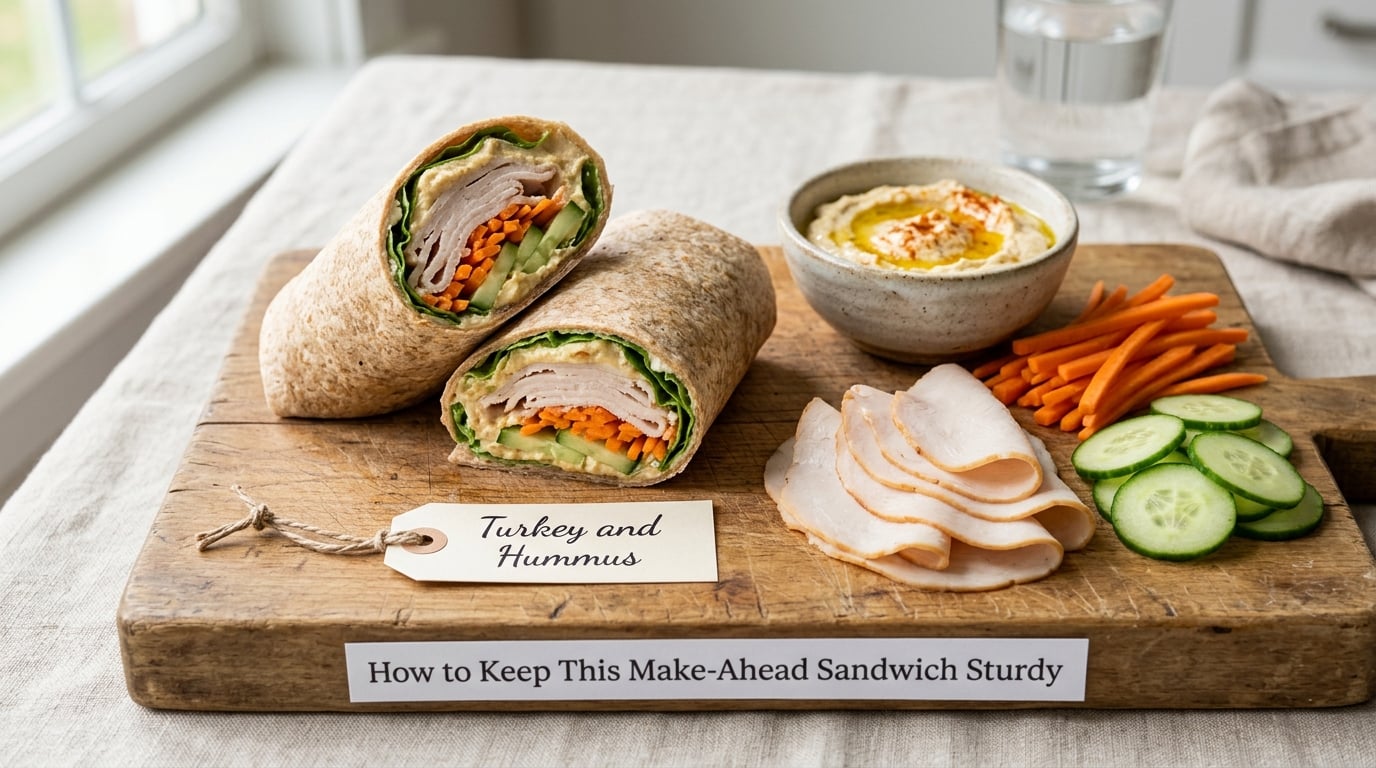
Three things decide whether a wrap holds up for four days: sturdy bread, controlled moisture, and cold storage all the way through. A flour tortilla or a whole wheat wrap handles a filling far better than soft sliced white bread, which compresses into nothing by Wednesday.
For moisture, pat the cucumber dry before it goes in and skip the tomato entirely. Mayo works as a seal too, and if you prefer it to hummus, a thin layer on both sides of the bread does more than a heavy layer in the middle. Store finished wraps seam side down in a rigid container so nothing shifts.
Eat days one and two straight from the fridge. Day three and four sandwiches reheat for 30 to 40 seconds in the microwave, or 5 minutes at 350°F (175°C) in a toaster oven for bread that still has a little give.
2. Mediterranean Chicken Pita Sandwich
This is the highest-protein option on the list and the one most likely to make a coworker ask what you brought. Roast a pound of chicken thighs at 400°F (200°C) until they hit 165°F (74°C) internal temperature, cool them, then slice or shred. Roughly a cup of cooked chicken per sandwich is a satisfying midday portion.
Chop feta, cucumber, tomato, kalamata olives and a little red onion together, then dress the mix with lemon juice, olive oil and a spoon of Greek yogurt. Hold that salad in a separate container and spoon it onto the pita at lunch. Cut the pita along the edge rather than through the middle so it opens like a book instead of spilling.
Plan on two to three days refrigerated. Chicken pita does not freeze well; the bread turns tough and chewy once thawed. If you need a fourth day, freeze the chicken and feta mix separately, skip the tomato, and use a fresh pita.
3. Tuna Egg Salad Sandwich
Tuna egg salad costs almost nothing and needs no cooking at all. The best version mixes canned tuna drained well, chopped hard-boiled eggs, celery, a spoon of pickle relish, a little mustard and fresh dill or parsley. Stirring the yolk through the mayo keeps the texture creamy and holds moisture in the filling rather than the bread.
Keep the refrigerator at or below 40°F (4°C) and pack the sandwich with an ice pack if it spends the morning in a locker. Three to four days is a realistic window, and day four is where texture starts dropping even though the filling is still fine.
Freezing works, but expect a softer, less distinct filling after thawing. Wrap the sandwich tightly in plastic wrap first, then foil, freeze flat, and thaw overnight in the fridge. Sourdough and sturdy rolls survive freezing better than soft white sandwich bread, which comes back chewy.
4. Italian Sub with Roasted Vegetables
This is the vegetarian-forward answer to a deli-meat week, and it holds up better than most. Roast zucchini, red pepper, red onion and mushrooms at 425°F (220°C) until browned and dry at the edges, then cool them fully before assembling. Moist filling is the enemy of a four-day sandwich, and roasted vegetables carry far less water than raw ones.
Use a sub roll or ciabatta for the base, provolone or sharp cheddar for the cheese, and add marinated artichokes, olives and pickled pepperoncini instead of fresh tomato. A vinegar-based dressing of red wine vinegar, olive oil, oregano and garlic resists sogginess far better than mayo.
Four days refrigerated, and this one freezes well because the filling has no dairy or mayo to break. Let the sandwich cool completely before wrapping, or you will trap steam inside the foil.
5. Smoked Salmon Cream Cheese Bagel Sandwich
A cold sandwich with no reheating is exactly what you want on the days your office microwave is busy. Spread cream cheese thickly on a split everything or sesame bagel, layer on smoked salmon, thin cucumber ribbons, fresh dill, a few capers and cracked black pepper. The capers are the point; their brine cuts through the fat of the cream cheese.
Keep this one cold from start to finish. Smoked salmon and cream cheese are both refrigerated ingredients, so give it two days at most and always an ice pack in the lunchbox. Cooked salmon and cream cheese do not freeze into anything worth eating.
If the week runs long, freeze the assembled bagel halves and add the cucumber and dill fresh. The salmon and cream cheese thaw cleanly in the fridge overnight.
6. Black Bean and Corn Quesadilla Sandwich
A quesadilla is really just a sandwich with a heat problem to solve. Mash black beans with corn, diced peppers, cumin and a little lime, spread over a flour tortilla, add shredded cheese, and fold in a half. A 10-inch tortilla makes two wedges, which is a reasonable single lunch portion.
Reheating is where this one usually goes wrong. Let the finished quesadilla cool completely before sealing it in a container, or condensation forms and the shell goes limp. Warm the wedges in a dry skillet over medium heat for 2 to 3 minutes a side, or 3 to 4 minutes at 350°F (175°C) in an air fryer, which keeps the shell crisp.
Microwave reheating softens the tortilla, so use it only if you do not mind a chewy texture. Four days refrigerated, and wedges freeze well laid flat on a tray before being bagged.
7. Chicken Salad Apple and Walnut Sandwich
Poached or roasted chicken, Greek yogurt or mayo, chopped celery, toasted walnuts, tart apple and a splash of cider vinegar and lemon juice. That mixture stays noticeably fresher than a mayo-heavy chicken salad because the acid and yogurt slow the growth of what makes chicken salad turn pasty by day four.
Two problems to solve. Dice the apple and toss it with a little lemon juice right before serving, because cut apple browns and goes watery in a fridge overnight. Build the salad a day ahead but hold the apple and walnuts until assembly day.
Three days refrigerated is honest and safe. Freezing softens the apple and dulls the walnuts, so freeze this one only if you have to. Apples bind to white bread, so a hearty loaf or a wrap is the better call.
8. Caprese Pressed Sandwich
Fresh mozzarella, sliced tomato, basil leaves, a pinch of salt and a drizzle of balsamic glaze, pressed until the bread is warm and the cheese is just melted. Cut the tomatoes and salt them in a colander over the sink for 10 minutes, then blot them dry. Skipping this step is the single reason make-ahead Caprese arrives as soup between two slices of bread.
This sandwich is at its best the day you make it and acceptable the next. Fresh mozzarella and basil degrade quickly, so count on two days refrigerated and eat it early in the week. To reheat safely, bring the assembled sandwich to 165°F (74°C) and let it sit two minutes, because reheating leftover deli meat or cooked fillings in a hot oven is the food-safety risk people skip.
Do not freeze this one. Fresh mozzarella turns grainy and tomato becomes watery on thawing.
9. Peanut Butter Banana Oat Sandwich
The no-cook, no-fridge-math option, and the one that works for a school lunchbox or a car commute. Mash a banana into peanut butter with a spoonful of oats for body, and add sunflower or pumpkin seeds if you want more staying power. On oatmeal bread it holds until lunch. On white bread it turns to paste by noon.
Two things to know. This is the sandwich to think carefully about if a nut allergy is anywhere in the picture, because sunflower seed butter can still be made in a facility that handles peanuts; a school-safe sunflower butter is the safer pick. And with banana and oats in the mix, refrigerate anything that will sit more than two hours.
Four days refrigerated. Freezing is fine but banana goes soft and grey, so freeze the peanut butter and oat layer on bread and slice fresh banana after thawing.
10. Roast Beef, Horseradish, and Cheddar Sandwich
The most adult sandwich here and the one with the biggest flavor payoff on day three. Pile thin-sliced roast beef with sharp cheddar, a spoon of prepared horseradish cream, lettuce and tomato on sourdough or a crusty roll. Horseradish cream is the engine of the whole thing: it is sharp enough to cut through the fat of the beef and it seals the bread against moisture.
Texture is the only real risk. Let the roast beef come to refrigerator temperature before assembling rather than straight from a warm roast, and grate the cheddar instead of using thick slices so every bite holds together.
Three days refrigerated, with an ice pack in the lunchbox, since deli meat and raw dairy are both cold-chain ingredients. Freezing is acceptable for the roast beef and cheddar, though the horseradish cream gets a little grainy. Build it on Wednesday and eat the frozen versions at the end of the week.
How to Store and Pack Sandwiches for the Week
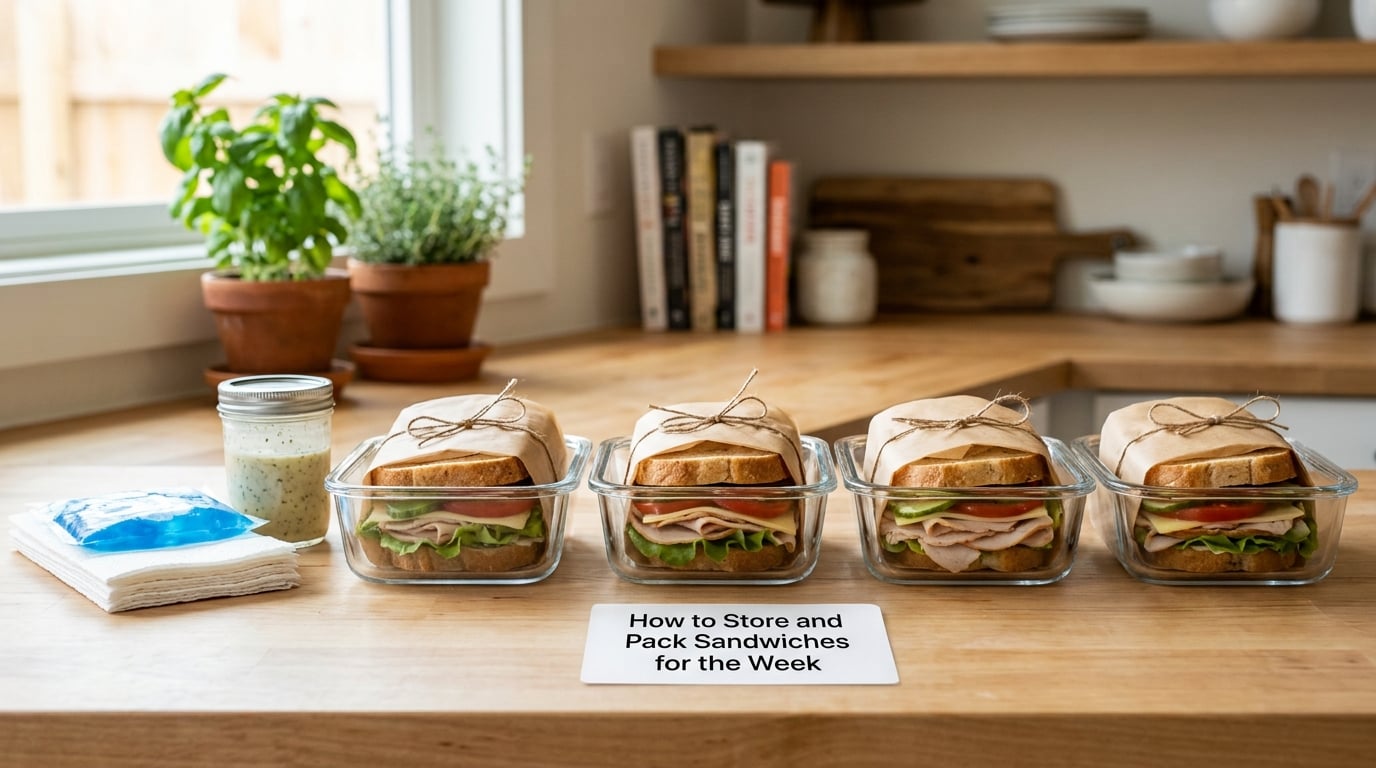
Why Sandwiches to Make Ahead for the Whole Week Go Soggy by Wednesday
Sogginess comes from three places: water released by vegetables, condensation trapped inside a closed container, and bread rehydrating against that moisture. Fix any one of the three and your sandwich improves. Fix all three and it holds for four days.
The system that works, and the one behind most of the best sandwiches to make ahead for the whole week I have packed: build the dry base on prep day, store wet ingredients separately, and add an ice pack for anything with meat, fish, egg or dairy. Paper towels or parchment under the sandwich absorb condensation that would otherwise soak the bread from underneath. Keep the container rigid, so nothing gets crushed against the lid, and take sandwiches out of the fridge in the order you will eat them.
Freezing rules are simple. Freezes well: turkey and hummus wraps, roasted vegetable subs, quesadilla wedges, pressed grilled sandwiches with cooked cheese. Freezes badly: anything with fresh mozzarella, avocado, tomato, cucumber, banana, or cream cheese. Flash-freeze each sandwich on a tray for 30 minutes, then bag them individually so you can pull out two days at a time instead of all five at once.
Reheating times from refrigerated, unless noted. Microwave: 30 to 45 seconds for a cold sandwich, 60 to 90 seconds for a frozen one. Toaster oven at 350°F (175°C): 8 to 10 minutes refrigerated, 14 to 16 minutes frozen. Air fryer at 350°F (175°C): 6 to 8 minutes refrigerated, 10 to 12 minutes frozen. Wrapping a sandwich in a damp paper towel before microwaving keeps the bread from turning rubbery.
Keep your refrigerator at 40°F (4°C) or below, refrigerate within two hours of assembling, and discard anything left at room temperature for longer than two hours. None of this changes from one year to the next; the USDA four-day rule has held for a long time.
Frequently Asked Questions
How long do make-ahead sandwiches last in the fridge?
Four days is the safe limit for homemade sandwiches containing cooked meat, fish or egg, as long as your refrigerator stays at or below 40°F (4°C) and you eat them within three to four days. Sandwiches built from shelf-stable ingredients such as peanut butter, hummus and canned tuna without mayonnaise can last a bit longer, but the filling still goes bland before it goes unsafe. For days four and five, freeze portions on prep day and thaw them in the fridge overnight.
Which sandwiches freeze best for a whole workweek?
Freezes well: turkey and hummus wraps, Italian subs with roasted vegetables, black bean and corn quesadilla wedges, and pressed grilled sandwiches with cooked cheese. Wrap each one tightly in plastic wrap, then foil, freeze flat on a tray for 30 minutes before bagging. Freezes badly: anything with fresh mozzarella, tomato, cucumber, avocado, banana or cream cheese, because those ingredients turn watery or grainy on thawing.
How do I keep sandwiches from getting soggy overnight?
Control moisture at three points: pat or salt your vegetables dry before assembling, spread a moisture barrier like hummus, mayonnaise or horseradish cream on both slices of bread, and line the container with parchment or a paper towel to absorb condensation. Avoid raw tomato and cucumber in sandwiches meant to last more than a day; pack them in a separate cup instead. Also refrigerate sandwiches flat rather than standing on their edges.
What meat and poultry temperatures should I use when preparing sandwiches?
Cook poultry to 165°F (74°C) internal temperature, ground meat to 160°F (71°C), and whole cuts of beef, pork, lamb and fish to 145°F (63°C) with a three-minute rest. Use a food thermometer in the thickest part, not the edge. Leftover cooked fillings that go back into a hot sandwich should also reach 165°F (74°C), which is why an oven or air fryer reheat is safer than a quick microwave blast.
Can I prepare sandwiches the night before or several days ahead?
The night before is safe and common for cold sandwiches, and three days ahead is about the limit for most cold fillings. Several days ahead works better if you split the job: make the filling, such as chicken salad, tuna egg salad or hummus roasted vegetable mix, up to three days early, and assemble the bread the night before. Store the filling and the bread separately and combine in the morning for a sandwich that tastes nearly fresh.
What ingredients should I pack separately for lunchboxes?
Pack lettuce, tomato, cucumber, avocado, sprouts and any fresh herbs separately, and add them at lunch. Also keep wet toppings like olives, pickles and marinated artichokes in their own small container so their brine does not soak into the bread. Sauces travel best in a leakproof cup rather than spread on the sandwich, and a wedge of lemon or lime for the avocado goes in the cooler with an ice pack.
Conclusion
Pick by preference: the turkey and hummus wrap for the most reliable work lunch, the chicken pita for protein, the roasted vegetable sub if you are skipping deli meat, the Caprese for a warm-weather change of pace, and the peanut butter banana oat for a lunchbox with no refrigeration involved.
Start with one sandwich, not ten. Make the filling a day ahead, keep the wet ingredients separate, and test it through day three before you commit ingredients for the whole week. Everything here follows the same four-day refrigerator rule and the same freezing plan for Thursday and Friday.